
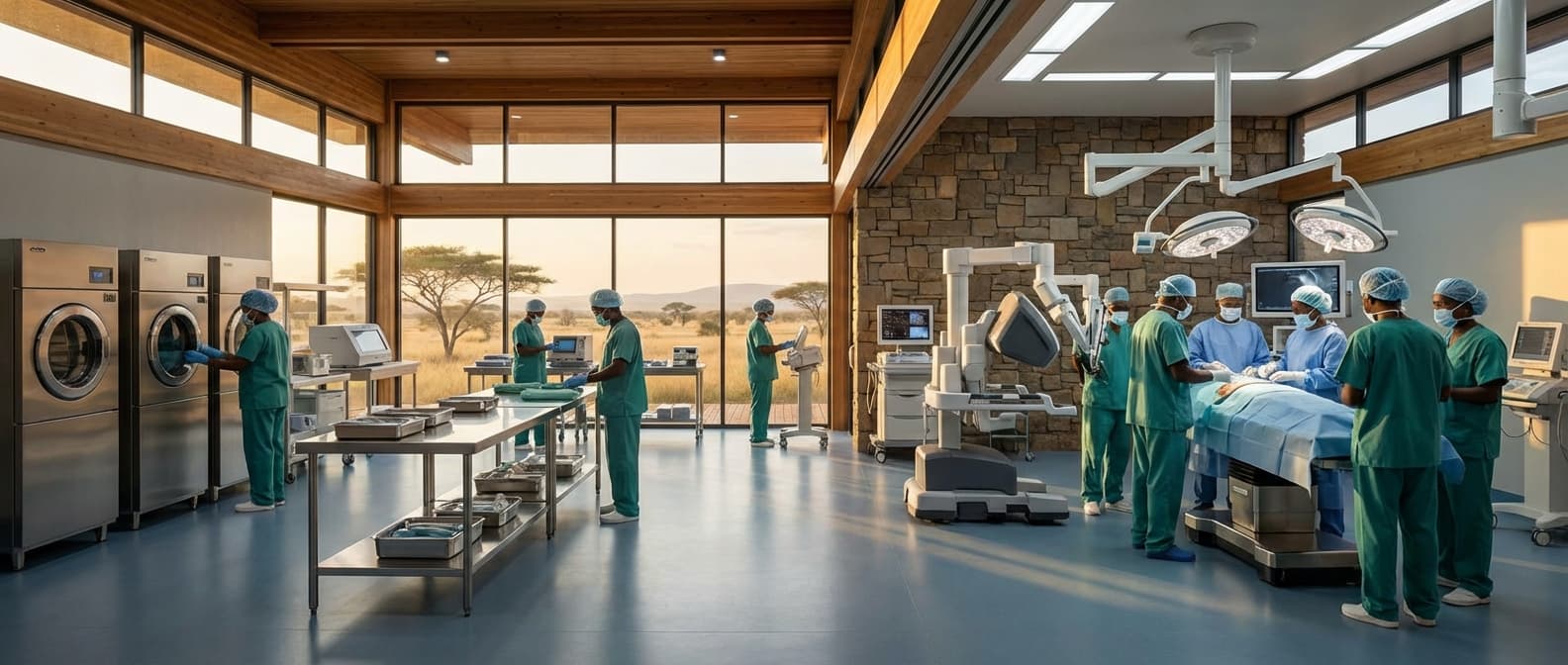
Endoscopy Reprocessing Validation in Zimbabwe
Engineering Excellence & Technical Support
AER validation, SOP development and compliance High-standard technical execution following OEM protocols and local regulatory frameworks.
Microbial Load Reduction Efficacy
Validated the effectiveness of the automated reprocessing system in achieving a statistically significant reduction in microbial load on flexible endoscopes, meeting international disinfection standards (e.g., Spaulding Classification) critical for patient safety in Zimbabwean healthcare facilities.
Disinfectant Concentration & Contact Time Verification
Implemented rigorous testing protocols to confirm the correct concentration and adequate contact time of high-level disinfectants used in the reprocessing cycle, ensuring complete inactivation of high-risk pathogens prevalent in the Zimbabwean context.
Process Consistency & Compliance Monitoring
Established and validated a robust monitoring system for consistent adherence to reprocessing protocols, including pre-cleaning, manual cleaning, automated disinfection, and rinsing steps, thereby ensuring reliable and repeatable disinfection outcomes across all validated endoscopes.
What Is Endoscopy Reprocessing Validation In Zimbabwe?
Endoscopy reprocessing validation in Zimbabwe refers to the documented, systematic process of verifying and confirming that automated or manual procedures for cleaning and high-level disinfection (HLD) of flexible and semi-rigid endoscopic instruments meet established performance standards and regulatory requirements. This validation is critical to ensure the safety and efficacy of reusable endoscopic devices, thereby preventing the transmission of healthcare-associated infections (HAIs) between patients. The process involves rigorous testing of cleaning efficacy (removal of organic and inorganic debris) and disinfection efficacy (inactivation of vegetative bacteria, mycobacteria, fungi, and non-enveloped viruses) under simulated worst-case scenarios. It encompasses validation of cleaning cycles, disinfection cycles (chemical or thermal), rinse water quality, and the integrity of the reprocessed instrument itself. The overarching objective is to provide objective evidence that the chosen reprocessing method consistently renders endoscopes safe for subsequent patient use.
| Stakeholder | Requirement/Benefit | Typical Use Cases |
|---|---|---|
| Healthcare Facilities (Hospitals, Clinics, Endoscopy Units) | Mandatory regulatory compliance, patient safety assurance, risk mitigation, prevention of HAIs, accreditation requirements. | Routine validation of new or modified reprocessing workflows, post-repair validation of equipment, annual revalidation, response to adverse events or audits. |
| Endoscopy Service Providers | Ensuring the safety and reusability of invested endoscopic equipment, maintaining service reputation, meeting client expectations. | Pre-installation validation of new equipment, validation of service and repair interventions, routine revalidation as per manufacturer recommendations. |
| Regulatory Bodies and Accreditation Agencies | Enforcement of infection control standards, public health protection, ensuring a baseline level of safety for medical devices. | Audits and inspections of healthcare facilities, review of infection control policies and procedures, assessment of compliance with national and international guidelines. |
| Manufacturers of Endoscopic Equipment and Reprocessing Devices | Providing validated reprocessing instructions, supporting customer compliance, ensuring product safety and efficacy. | Developing and documenting validated reprocessing instructions for their devices, conducting validation studies for their equipment, assisting customers with validation protocols. |
Key Components of Endoscopy Reprocessing Validation
- Cleaning Efficacy Verification: Assessing the ability of cleaning agents and cycles to remove critical bioburden (e.g., blood, proteins, organic matter) from lumens and surfaces.
- Disinfection Efficacy Verification: Demonstrating the inactivation of a broad spectrum of microorganisms, including potentially difficult-to-kill pathogens, using validated HLD agents and parameters.
- Process Parameter Verification: Confirming that automated washer-disinfector cycles or manual protocols consistently achieve critical parameters such as temperature, time, concentration of disinfectant, flow rates, and pressure.
- Water Quality Testing: Ensuring that rinse water meets specified microbiological and chemical purity standards to prevent recontamination.
- Equipment Performance Testing: Verifying the proper functioning of automated equipment (e.g., washer-disinfectors, sterilizers) and essential manual tools.
- Personnel Competency Assessment: Evaluating the training and adherence of healthcare personnel to established reprocessing protocols.
- Documentation and Record-Keeping: Maintaining comprehensive records of validation studies, calibration logs, maintenance schedules, and daily process monitoring.
Who Needs Endoscopy Reprocessing Validation In Zimbabwe?
Endoscopy reprocessing validation is a critical safety measure to prevent the transmission of infections in healthcare settings. In Zimbabwe, like any country with advanced medical procedures, ensuring the sterility of reusable endoscopic equipment is paramount. This validation process confirms that the cleaning and disinfection/sterilization protocols effectively eliminate all viable microorganisms, thereby safeguarding patients from potentially life-threatening infections. The need for this validation extends across various healthcare institutions that utilize flexible and rigid endoscopes for diagnostic and therapeutic procedures.
| Department | Endoscopic Procedures Performed | Reason for Validation Need |
|---|---|---|
| Gastroenterology | Gastroscopy, Colonoscopy, Sigmoidoscopy, ERCP | High risk of patient-to-patient transmission of gastrointestinal pathogens if reprocessing is inadequate. |
| Pulmonology | Bronchoscopy, Mediastinoscopy | Risk of transmitting respiratory infections, including tuberculosis and hospital-acquired pneumonia. |
| Urology | Cystoscopy, Ureteroscopy, Nephroscopy | Potential for transmitting urinary tract infections and other pathogens. |
| Gynecology | Hysteroscopy, Laparoscopy | Risk of pelvic inflammatory disease and other gynecological infections. |
| Ear, Nose, and Throat (ENT) | Laryngoscopy, Otoscopy, Rhinoscopy | Potential for transmitting upper respiratory tract infections. |
| Surgery (General and Specialized) | Laparoscopy, Thoracoscopy, Arthroscopy | Crucial for preventing surgical site infections and post-operative complications. |
| Infection Control Department | Oversight and Auditing of Reprocessing Practices | Ensures compliance with national and international infection control guidelines and patient safety protocols. |
| Central Sterile Supply Department (CSSD) | Centralized Reprocessing of Endoscopic Equipment | Responsible for implementing and validating all sterilization and disinfection processes for reusable medical devices. |
Target Customers and Departments Requiring Endoscopy Reprocessing Validation in Zimbabwe
- {"title":"Hospitals (Public and Private)","description":" All hospitals performing endoscopic procedures are primary beneficiaries. This includes tertiary referral hospitals, central hospitals, and private healthcare facilities offering specialized services."}
- {"title":"Specialty Clinics","description":" Clinics focusing on gastroenterology, pulmonology, urology, gynecology, and ENT (Ear, Nose, and Throat) that frequently use endoscopes."}
- {"title":"Diagnostic and Imaging Centers","description":" Facilities that offer endoscopic services as part of their diagnostic portfolio."}
- {"title":"Teaching Hospitals and Medical Schools","description":" Institutions involved in training future healthcare professionals, where adherence to the highest standards of patient safety and infection control is essential."}
Endoscopy Reprocessing Validation Process In Zimbabwe
The Endoscopy Reprocessing Validation process in Zimbabwe ensures that flexible endoscopes are effectively and safely reprocessed to prevent patient-to-patient transmission of infections. This process is critical for maintaining patient safety and adhering to international standards. The workflow typically begins with an inquiry from a healthcare facility or an internal directive to validate or re-validate their reprocessing procedures and equipment. This leads to a series of steps that involve assessment, testing, documentation, and ultimately, certification or recommendations for improvement.
| Phase | Key Activities | Objective | Responsible Parties | Deliverables |
|---|---|---|---|---|
| Inquiry and Scoping | Healthcare facility initiates request for validation. Define scope (e.g., specific endoscope types, reprocessing methods, facility). | Understand the need and establish the boundaries of the validation process. | Healthcare Facility, Ministry of Health (MoH) Representative or designated validation body. | Formal request, scope definition document. |
| Initial Assessment and Documentation Review | Review existing reprocessing protocols, policies, equipment manuals, staff training records, and previous validation reports. | Understand the current state of reprocessing practices and identify potential gaps or areas for focus. | Validation Team, Healthcare Facility's Infection Prevention and Control (IPC) team. | Assessment report on documentation, list of identified discrepancies. |
| Pre-Validation Site Visit | An initial, informal visit to observe the reprocessing area and workflow, identify major equipment issues, and engage with staff. | Gain a preliminary understanding of the practical implementation of reprocessing procedures. | Validation Team. | Observation notes, preliminary list of concerns. |
| Environmental and Equipment Assessment | Inspect the reprocessing environment (e.g., ventilation, water quality, storage). Assess all reprocessing equipment (e.g., washer-disinfectors, drying cabinets, leak testing devices) for functionality, calibration, and maintenance records. | Ensure a suitable environment and that equipment is functioning correctly and meets specifications. | Validation Team, Biomedical Engineers (if applicable). | Equipment audit report, environmental assessment report, list of required maintenance or calibration. |
| Process Observation and Staff Interviews | Observe the entire reprocessing workflow firsthand, from initial cleaning to high-level disinfection/sterilization and storage. Interview reprocessing staff to assess their understanding of protocols and practical application. | Evaluate the adherence to protocols, identify deviations, and gauge staff competency. | Validation Team, Reprocessing Staff. | Detailed observation records, interview notes, assessment of staff competency. |
| Microbiological Testing (if applicable) | Conduct tests on the reprocessed endoscopes to confirm the efficacy of the reprocessing cycle in eliminating microorganisms. This may involve swab testing or bioburden analysis. | Objectively verify the microbial reduction achieved by the reprocessing process. | Laboratory Technicians, Validation Team. | Microbiological test results, efficacy report. |
| Data Analysis and Reporting | Analyze all collected data, including documentation review, observations, equipment performance, and microbiological results. Compile a comprehensive validation report. | Synthesize findings and draw conclusions about the validation status of the reprocessing process. | Validation Team, Data Analysts. | Comprehensive Validation Report. |
| Recommendations and Corrective Actions | Based on the report, provide clear recommendations for any necessary improvements, modifications to protocols, equipment repairs, or additional staff training. | Guide the facility in addressing any identified deficiencies to achieve compliance. | Validation Team. | List of recommendations, action plan for corrective measures. |
| Re-validation and Certification | Once corrective actions are implemented, a re-validation process may be conducted to confirm that the identified issues have been resolved. Upon successful validation, a certificate or statement of compliance is issued. | Formally confirm that the reprocessing process meets the required standards and is safe for patient use. | Validation Team, MoH Representative or designated body. | Re-validation report, Certificate of Validation (if applicable). |
| Ongoing Monitoring and Audit | Implement a system for regular internal monitoring and periodic external audits to ensure continued compliance and maintenance of standards. | Ensure sustained adherence to reprocessing protocols and identify any emerging issues proactively. | Healthcare Facility IPC Team, MoH (periodic audits). | Internal monitoring logs, audit reports. |
Endoscopy Reprocessing Validation Workflow in Zimbabwe
- Inquiry and Scoping
- Initial Assessment and Documentation Review
- Pre-Validation Site Visit
- Environmental and Equipment Assessment
- Process Observation and Staff Interviews
- Microbiological Testing (if applicable)
- Data Analysis and Reporting
- Recommendations and Corrective Actions
- Re-validation and Certification
- Ongoing Monitoring and Audit
Endoscopy Reprocessing Validation Cost In Zimbabwe
Validating the reprocessing of endoscopic equipment is a critical step in preventing healthcare-associated infections. This process ensures that reusable endoscopes are thoroughly cleaned and disinfected to a level that eliminates pathogenic microorganisms. In Zimbabwe, the cost of this validation can vary significantly due to several factors, including the type of validation conducted, the laboratory performing the service, and the specific testing methodologies employed. These factors directly influence the pricing structure and the overall expense incurred by healthcare facilities.
Several key pricing factors contribute to the overall cost of endoscopy reprocessing validation in Zimbabwe:
- Type of Validation: Different validation methods carry different costs. This can range from basic environmental monitoring (swabbing surfaces) to more complex biological indicator testing or even sophisticated molecular detection methods. The more sensitive and specific the test, the higher the cost.
- Laboratory Accreditation and Expertise: Laboratories with higher levels of accreditation, advanced equipment, and experienced personnel tend to charge more for their services. Reputable labs are essential for ensuring the accuracy and reliability of the validation results.
- Scope of Testing: The number of samples taken and the range of tests performed (e.g., testing for specific bacteria, fungi, or viruses) will directly impact the total cost. Facilities may opt for a comprehensive validation or a more targeted approach based on their risk assessment.
- Reagents and Consumables: The cost of specialized reagents, culture media, and other consumables used in the testing process is a significant component of the overall expense.
- Turnaround Time: Express or urgent testing services often come with a premium charge compared to standard turnaround times.
- Geographical Location: While less of a direct cost for the service itself, transportation of samples to and from the laboratory can add to the overall expense, especially for facilities located far from major urban centers where accredited laboratories are more concentrated.
- Contractual Agreements: Some laboratories may offer discounted rates for long-term contracts or for high-volume testing, which can be beneficial for larger healthcare institutions.
| Validation Service Component | Estimated Cost Range (ZWL - Zimbabwean Dollar) | Notes |
|---|---|---|
| Basic Environmental Swabbing (per sample) | 1,500 - 4,000 | Covers basic bacterial and fungal culture. Higher end for more comprehensive plating. |
| Specific Pathogen Culture (e.g., MRSA, C. difficile - per sample) | 3,000 - 7,000 | Requires specialized media and longer incubation periods. |
| Biological Indicator Testing (per indicator) | 5,000 - 15,000 | Directly tests the efficacy of disinfection processes. Cost varies by type of indicator (e.g., chemical, biological). |
| ATP Testing (per sample) | 2,000 - 5,000 | Measures organic residue, indicative of cleaning effectiveness. Quick results. |
| Comprehensive Validation Package (e.g., multiple tests per cycle) | 20,000 - 100,000+ | May include a combination of swabbing, indicator tests, and water testing. Price is highly variable based on scope. |
| Consultation and Report Generation | 5,000 - 15,000 | Often a fixed fee or part of a package, covering interpretation and recommendations. |
Key Pricing Factors for Endoscopy Reprocessing Validation in Zimbabwe
- Type of Validation Conducted (e.g., environmental swabbing, biological indicators, molecular testing)
- Laboratory Accreditation Status and Technical Expertise
- Scope of Testing (number of samples, range of pathogens tested)
- Cost of Reagents, Consumables, and Media
- Required Turnaround Time (standard vs. urgent)
- Logistical Costs (sample transportation)
- Potential for Discounted Rates through Contracts
Affordable Endoscopy Reprocessing Validation Options
Ensuring the sterility of endoscopic equipment is paramount for patient safety and regulatory compliance. However, the validation of reprocessing procedures can be a significant expense for healthcare facilities. This document outlines affordable options for endoscopy reprocessing validation, focusing on value bundles and cost-saving strategies. We'll explore how to get the most out of your validation investments without compromising quality or safety.
| Strategy | Description | Potential Cost Savings | Value Proposition |
|---|---|---|---|
| Value Bundles (Service Packages) | Reputable validation companies often offer bundled services for reprocessing validation. These packages can include initial validation, periodic testing, and re-validation. Bundling can provide a more predictable cost structure and potential discounts compared to individual service purchases. | Up to 15-20% reduction on individual service costs. Predictable budgeting. | Streamlined process, consistent quality, and potentially lower overall cost per validation cycle. |
| In-House Validation Training & Kits | Invest in training your internal staff to perform routine validation checks and utilize pre-packaged validation kits. This can significantly reduce the need for external service calls for basic tests. | Reduces recurring external validation costs. Empowers internal team. | Increased operational efficiency, quicker turnaround times for routine checks, and development of in-house expertise. |
| Risk-Based Validation Approach | Instead of validating every single component and step exhaustively, focus validation efforts on the highest-risk areas identified through risk assessments. This targeted approach uses resources more efficiently. | Reduces the scope and cost of validation by eliminating redundant testing. | Optimized resource allocation, focus on critical patient safety aspects. |
| Utilizing Manufacturer-Provided Validation Data | Some endoscope manufacturers provide validation data or templates that can be adapted for your facility. This can reduce the need for extensive independent validation of basic functionalities. | Reduces the need for independent validation of manufacturer-specified parameters. | Leverages existing research and development, potentially shortening validation timelines. |
| Collaborative Purchasing Agreements | Healthcare networks or consortia can negotiate bulk discounts on validation services and supplies with providers. This shared approach can drive down costs for all participating facilities. | Significant volume discounts, shared expertise, and access to preferred providers. | Economies of scale, improved negotiating power, and consistent validation standards across a network. |
| Software-Based Validation Management | Implementing software solutions for tracking reprocessing cycles, equipment maintenance, and validation schedules can automate reminders and improve documentation. This reduces manual effort and the risk of missed validations. | Reduced administrative overhead, fewer errors, and improved compliance tracking. | Enhanced efficiency, improved data accuracy, and proactive management of validation requirements. |
Key Considerations for Affordable Validation
- Understanding Regulatory Requirements: Familiarize yourself with current guidelines from bodies like the FDA, CDC, and AAMI to ensure your validation efforts are comprehensive and compliant, avoiding costly rework.
- Focus on High-Risk Areas: Prioritize validation for the most critical components and processes of your reprocessing workflow.
- Leveraging Existing Resources: Explore internal expertise and equipment before outsourcing.
- Phased Implementation: Consider a phased approach to validation, focusing on core procedures first and expanding as budget allows.
- Long-Term Partnerships: Building relationships with reputable validation service providers can lead to better pricing and streamlined services.
- Documentation is Key: Robust and organized documentation is crucial. Invest in a good system to avoid costly errors and re-testing.
Verified Providers In Zimbabwe
In the dynamic healthcare landscape of Zimbabwe, identifying verified and trustworthy medical providers is paramount for patients seeking quality care. Franance Health has emerged as a leading name, distinguished by its rigorous credentialing process and unwavering commitment to patient well-being. This document outlines the credentials that make Franance Health providers the optimal choice for your healthcare needs.
| Credential | Significance for Patients | Franance Health Verification |
|---|---|---|
| Professional Licensure | Confirms legal authorization to practice and adherence to ethical standards. | Mandatory verification of current and valid licenses from relevant Zimbabwean councils. |
| Specialty Board Certification (for specialists) | Indicates advanced expertise and recognized competence in a specific medical field. | Thorough review and confirmation of recognized board certifications. |
| Academic Qualifications | Ensures a foundation of rigorous medical education from accredited institutions. | Verification of degrees and diplomas from accredited universities and colleges. |
| Continuing Professional Development (CPD) | Guarantees providers are up-to-date with the latest medical knowledge and practices. | Active tracking and enforcement of CPD requirements for all affiliated professionals. |
| Background and Ethical Checks | Protects patients from potential risks associated with unethical or incompetent practitioners. | Rigorous screening processes to ensure a history of professional integrity. |
Franance Health's Verification Credentials
- Professional Licensure and Registration: All Franance Health providers are verified to hold current and valid licenses from the respective medical and health professional councils in Zimbabwe (e.g., Medical and Dental Practitioners Council of Zimbabwe, Zimbabwe Nurses Council, etc.). This ensures they meet the minimum educational and ethical standards for practice.
- Specialty Board Certification: For specialists, Franance Health verifies their board certification in their respective fields. This signifies advanced training, expertise, and a demonstrated level of competency beyond basic medical qualifications.
- Educational Attainment: We meticulously review the academic qualifications of our providers, ensuring they have graduated from accredited medical and allied health institutions.
- Continuing Professional Development (CPD): Franance Health mandates and tracks ongoing professional development for all its affiliated practitioners. This commitment to continuous learning ensures providers remain up-to-date with the latest medical advancements, techniques, and best practices.
- Peer Review and Performance Monitoring: Where applicable and feasible, Franance Health incorporates peer review processes and performance monitoring to assess the quality of care provided by its network. This helps maintain a high standard of medical practice.
- Background Checks and Ethical Compliance: Comprehensive background checks are conducted to ensure providers have no history of malpractice or ethical breaches that could compromise patient safety or trust.
- Insurance and Indemnity: Providers are verified to maintain appropriate professional indemnity insurance, offering an additional layer of security and assurance for patients.
- Affiliation with Reputable Healthcare Facilities: Franance Health prioritizes partnerships with established and accredited hospitals, clinics, and diagnostic centers in Zimbabwe, further underscoring the credibility of its network.
Scope Of Work For Endoscopy Reprocessing Validation
This Scope of Work (SOW) outlines the requirements and deliverables for validating the efficacy and safety of the endoscopy reprocessing procedures implemented at [Healthcare Facility Name]. The validation aims to ensure that reusable endoscopes are consistently and effectively reprocessed to prevent patient-to-patient transmission of infectious agents and meet all relevant regulatory and accreditation standards. This document details the technical deliverables and standard specifications for the validation process.
| Deliverable | Description | Standard Specification / Acceptance Criteria | Verification Method |
|---|---|---|---|
| Validation Protocol | A detailed document outlining the methodology, scope, timeline, and acceptance criteria for the entire validation process. | Must be approved by the Infection Prevention and Control Department and relevant stakeholders. Shall include specific test plans for cleaning, HLD/sterilization, equipment performance, and environmental monitoring. | Document Review and Approval |
| Cleaning Validation Report | Data and analysis demonstrating the effectiveness of cleaning procedures in removing visible soil and microbial contamination. | Reduction of bioburden by a specified log level (e.g., >3-log reduction for specific microorganisms). Absence of visible debris. Compliance with IFU for pre-cleaning, cleaning agent concentration, contact time, and rinsing. | Microbiological testing (e.g., ATP testing, fluorescent marker testing), visual inspection, documentation review. |
| High-Level Disinfection (HLD) or Sterilization Validation Report | Data and analysis confirming the efficacy of HLD or sterilization processes in eliminating pathogenic microorganisms. | Achieve a validated kill rate for all relevant microorganisms (e.g., A0 value for autoclaves, log reduction for specific HLD efficacy tests). Compliance with IFU for disinfectant concentration, contact time, temperature, and rinsing. | Microbiological testing (e.g., spore testing for sterilization, efficacy testing for HLDs), process parameter monitoring (temperature, time, concentration), documentation review. |
| Reprocessing Equipment Performance Report | Documentation and testing results of automated endoscope reprocessors (AERs), cleaning sinks, drying cabinets, and other essential equipment. | Equipment operating within manufacturer specifications. Verification of cycle parameters (temperature, pressure, flow rates, chemical concentrations). Calibration records for relevant equipment. | Equipment testing (e.g., leak testing, flow rate testing), calibration records, functional testing, log review. |
| Environmental Monitoring Report | Data from monitoring of the reprocessing area's air quality, water quality, and surface cleanliness. | Air quality within acceptable limits for particulate matter and microbial contamination. Water quality meeting specified standards for rinsing (e.g., potable or treated water as per guidelines). Surface cleanliness verification. | Air sampling, water testing, surface swab testing. |
| Staff Competency Assessment Report | Documentation of training and competency assessment for all personnel involved in endoscopy reprocessing. | All reprocessing staff have received and understood training on current reprocessing protocols and IFUs. Demonstrated competency through observation and/or written assessment. | Training records, competency checklists, direct observation. |
| Risk Assessment and Mitigation Plan | Identification of potential risks in the reprocessing workflow and proposed mitigation strategies. | Comprehensive identification of potential breaches in the reprocessing chain. Documented corrective and preventative actions (CAPAs) for identified risks. | Document review, process mapping, CAPA documentation. |
| Final Validation Summary Report | A comprehensive report summarizing all validation activities, findings, conclusions, and recommendations for ongoing quality assurance. | All validation objectives met. Clear statement of validation status (validated/not validated). Recommendations for continuous improvement and ongoing monitoring. | Document Review and Stakeholder Approval |
Key Objectives of Endoscopy Reprocessing Validation
- To verify the effectiveness of manual and automated cleaning procedures.
- To confirm the efficacy of high-level disinfection (HLD) or sterilization processes.
- To validate the integrity and functionality of reprocessing equipment.
- To assess the environmental controls within the endoscopy reprocessing area.
- To ensure compliance with relevant guidelines and standards (e.g., CDC, AAMI, SGNA, manufacturer's instructions for use (IFU)).
- To establish a documented audit trail for all reprocessing steps.
- To identify and mitigate any potential risks associated with endoscope reprocessing.
- To provide assurance of patient safety through robust reprocessing practices.
Service Level Agreement For Endoscopy Reprocessing Validation
This Service Level Agreement (SLA) outlines the guaranteed response times and uptime for the Endoscopy Reprocessing Validation service. This service is critical for ensuring the safety and compliance of endoscopic procedures by validating the effectiveness of reprocessing protocols. The following terms define the agreed-upon service levels.
| Service Component | Response Time Guarantee | Uptime Guarantee | Description |
|---|---|---|---|
| Automated Validation System Monitoring | Real-time (for critical alerts) | 99.9% | Continuous monitoring of the automated reprocessing validation system for adherence to pre-defined parameters. Alerts are generated immediately upon deviation. |
| On-Demand Validation Report Generation | < 15 minutes | 99.5% | Time taken to generate a validation report upon user request, for completed reprocessing cycles. This assumes the data is available. |
| System Health Checks and Alerts | < 30 minutes (for critical issues) | 99.9% | Proactive checks of system components and software. Notifications are sent for any identified anomalies or potential failures. |
| Remote Troubleshooting and Support | < 2 business hours (for critical incidents) | N/A (Support availability) | Time to initiate remote troubleshooting by a qualified support technician upon notification of a critical system issue. |
Key Service Components
- Automated Validation System Monitoring
- On-Demand Validation Report Generation
- System Health Checks and Alerts
- Remote Troubleshooting and Support
Frequently Asked Questions

Ready when you are
Let's scope your Endoscopy Reprocessing Validation in Zimbabwe project in Zimbabwe.

Scaling healthcare logistics and technical systems across the entire continent.