
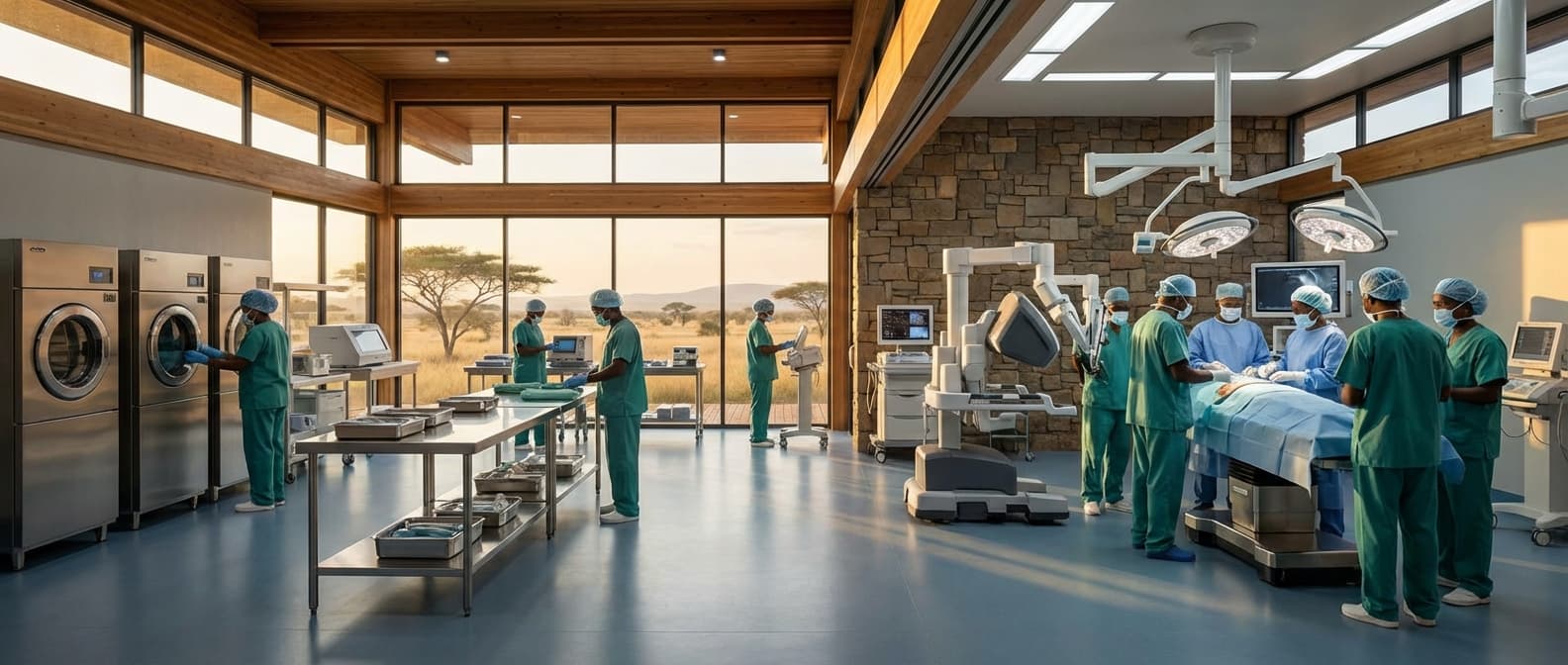
CSSD Design & Validation in Zimbabwe
Engineering Excellence & Technical Support
CSSD workflow design, validation and process development High-standard technical execution following OEM protocols and local regulatory frameworks.
Sterilization Process Optimization
Leveraging advanced CAD modeling and CFD simulations to optimize sterilization cycles for high-efficiency and reduced cycle times, ensuring compliance with international standards like ISO 13485.
Validation & Regulatory Compliance
Developing and executing comprehensive validation protocols for sterilization equipment and processes, providing robust documentation for regulatory submissions and ensuring adherence to Zimbabwean Ministry of Health guidelines.
Custom Equipment Integration
Designing and implementing bespoke CSSD workflows and integrating specialized sterilization equipment, tailored to the unique infrastructure and resource availability challenges within Zimbabwe.
What Is Cssd Design & Validation In Zimbabwe?
Central Sterile Supply Department (CSSD) design and validation in Zimbabwe refers to the systematic process of planning, developing, and verifying the functionality and efficacy of a CSSD facility. This encompasses architectural layout, equipment selection, workflow optimization, and the establishment of rigorous protocols to ensure the sterilization and safe reprocessing of medical devices. The objective is to prevent Healthcare-Associated Infections (HAIs) by guaranteeing that all reusable medical instruments are rendered safe for patient use. Validation ensures that the designed systems and processes consistently achieve the intended sterilization outcomes and meet national and international standards for infection control.
| Who Needs CSSD Design & Validation in Zimbabwe? | Typical Use Cases | Rationale | ||||||||||
|---|---|---|---|---|---|---|---|---|---|---|---|---|
| Hospitals (Public & Private): All healthcare facilities performing surgical procedures or utilizing reusable medical devices. | Surgical Centers & Clinics: Facilities with dedicated operating rooms or procedure areas. | Dental Practices: Larger dental clinics that reprocess instruments. | Veterinary Clinics: Facilities performing surgical procedures on animals. | Medical Device Reprocessing Companies: Entities specializing in cleaning and sterilization of medical devices. | New Facility Construction or Renovation: When establishing a new CSSD or upgrading an existing one. | Introduction of New Sterilization Technologies: When adopting new equipment or sterilization methods. | Responding to Regulatory Audits or Non-compliance: To ensure adherence to standards and address identified deficiencies. | Improving Infection Control Outcomes: To proactively minimize the risk of HAIs. | Ensuring Patient Safety: The primary objective is to prevent the transmission of infections. | Meeting Regulatory Requirements: Compliance with national health regulations and international standards (e.g., ISO, AAMI). | Optimizing Operational Efficiency: Streamlining workflows and reducing reprocessing errors. | Protecting Staff and the Environment: Implementing safe handling and disposal procedures. |
Key Components of CSSD Design & Validation
- Design Phase:
- Facility Layout: Strategic zoning of areas (decontamination, packaging, sterilization, storage) to prevent cross-contamination and optimize workflow.
- Environmental Controls: Specification of ventilation, temperature, humidity, and lighting to meet regulatory requirements and operational efficiency.
- Equipment Specification: Selection and placement of appropriate sterilization equipment (e.g., autoclaves, low-temperature sterilizers), washers, dryers, and material handling systems based on service volume and device types.
- Material Flow: Design of unidirectional pathways to prevent retrograde contamination.
- Utilities & Infrastructure: Planning for adequate power, water (including purified water systems), drainage, and gas supply.
- Validation Phase:
- Installation Qualification (IQ): Verification that equipment is installed according to manufacturer specifications and design requirements.
- Operational Qualification (OQ): Testing of equipment to ensure it operates within defined parameters (e.g., temperature, pressure, cycle times) across its intended range.
- Performance Qualification (PQ): Demonstrating that the entire sterilization process, including equipment, materials, and personnel, consistently produces sterile products under simulated or actual operating conditions.
- Process Validation: Documented evidence that a specific sterilization process, performed within established parameters, consistently yields sterile devices.
- Monitoring & Documentation: Establishing robust systems for daily monitoring, record-keeping, and routine performance testing.
Who Needs Cssd Design & Validation In Zimbabwe?
Central Sterile Services Departments (CSSDs) are critical for preventing healthcare-associated infections (HAIs) and ensuring patient safety within healthcare facilities. The meticulous design and rigorous validation of CSSD processes are paramount to achieving sterile instrument turnaround and maintaining the highest standards of infection control. In Zimbabwe, as in many developing nations, the focus on robust healthcare infrastructure is increasingly important. This document outlines who specifically needs CSSD design and validation services in Zimbabwe, identifying key target customers and departments within healthcare institutions.
| Target Customer Type | Specific Departments/Units Requiring CSSD Design & Validation | Rationale/Key Needs |
|---|---|---|
| Government Hospitals | Operating Theatres, Emergency Departments, Intensive Care Units (ICUs), Outpatient Surgical Units, Maternity Wards, Dental Clinics, Laboratories | High patient volume, diverse range of procedures, need for cost-effective and scalable solutions, compliance with national health standards, infection prevention and control training. |
| Private Hospitals & Specialist Clinics | Surgical Wards, Day Surgery Units, Endoscopy Units, Cardiology Departments, Ophthalmology Clinics, Fertility Clinics, Cosmetic Surgery Centers | Focus on advanced surgical techniques, high-throughput sterilization, patient experience, brand reputation, adherence to international standards, efficient workflow for complex instruments. |
| Non-Profit Healthcare Providers & Mission Hospitals | General Surgical Units, Maternity Units, Outpatient Clinics, Community Health Centers | Resource-constrained environments, emphasis on accessibility and affordability, need for robust and durable solutions, training for local staff, integration with existing infrastructure. |
| Dental Practices | Dental Clinics, Orthodontic Practices | Sterilization of dental instruments (handpieces, explorers, scalers), prevention of cross-contamination, compliance with dental board regulations, efficient turnaround for daily use. |
| Maternity Units & Birth Centers | Maternity Wards, Labour Rooms, Neonatal Intensive Care Units (NICUs) | Sterilization of instruments used in childbirth (episiotomy scissors, forceps, suction catheters), ensuring infant and maternal safety, preventing post-partum infections. |
| Research Laboratories | Biotechnology Labs, Medical Research Institutes | Sterilization of glassware, media preparation equipment, surgical tools for experimental procedures, maintaining sterile environments for sensitive research. |
| Emergency and Disaster Relief Organizations | Field Hospitals, Mobile Clinics | Rapid deployment of sterile equipment, robust and portable sterilization solutions, training for field personnel, maintaining hygiene in challenging environments. |
Who Needs CSSD Design & Validation in Zimbabwe?
- Hospitals (Government, Private, and Non-Profit)
- Specialist Clinics and Surgical Centers
- Dental Practices
- Maternity Units and Birth Centers
- Research Laboratories requiring sterile equipment
- Outbreak Response Units
- Any facility performing invasive procedures or requiring sterile instruments.
Cssd Design & Validation Process In Zimbabwe
The Central Sterile Services Department (CSSD) design and validation process in Zimbabwe involves a comprehensive workflow to ensure the facility meets international standards for sterilization and patient safety. This process typically begins with an initial inquiry from a healthcare facility seeking to establish or upgrade its CSSD. The subsequent stages involve detailed planning, design, construction, equipment selection and installation, and rigorous validation to confirm that all systems function as intended and meet all regulatory requirements.
| Stage | Description | Key Activities | Responsible Parties | Deliverables |
|---|---|---|---|---|
| Inquiry and Needs Assessment | Initial contact from a healthcare facility and understanding their requirements and existing infrastructure. | Site visit, interviews with stakeholders, review of existing services, determination of required capacity and services. | Healthcare Facility Management, CSSD Consultants, Infection Control Team. | Needs assessment report, preliminary scope of work. |
| Conceptual Design and Feasibility Study | Developing an initial layout and scope of the CSSD, assessing its viability. | Space allocation, workflow analysis, preliminary equipment list, budget estimation, risk assessment. | CSSD Consultants, Architects, Healthcare Facility Management. | Conceptual design drawings, feasibility report, preliminary budget. |
| Detailed Design and Engineering | Developing comprehensive architectural, mechanical, electrical, and plumbing (MEP) plans. | Finalizing layout, selecting materials, specifying HVAC systems, lighting, water supply, drainage, and waste management systems, creating detailed drawings and specifications. | Architects, MEP Engineers, CSSD Consultants, Structural Engineers. | Detailed architectural drawings, MEP drawings, specifications for materials and finishes. |
| Procurement and Construction | Building the CSSD facility according to the approved designs. | Tendering for construction services, site preparation, civil works, finishing, installation of utilities. | Construction Company, Project Manager, Healthcare Facility Management. | Completed CSSD facility shell, installed utilities. |
| Equipment Selection and Installation | Choosing and installing all necessary sterilization and ancillary equipment. | Developing equipment specifications, tendering for equipment, purchasing, delivery, installation, and initial testing by manufacturers. | CSSD Consultants, Procurement Department, Equipment Suppliers, Biomedical Engineers. | Installed and functional CSSD equipment. |
| Commissioning and Performance Qualification (PQ) | Testing and verifying that all installed equipment and systems operate according to their specifications. | Installation Qualification (IQ): verifying proper installation. Operational Qualification (OQ): testing functionality at different operating points. Performance Qualification (PQ): demonstrating consistent performance under simulated workload conditions. | Biomedical Engineers, Equipment Technicians, CSSD Consultants, Validation Specialists. | IQ, OQ, and PQ reports, calibration certificates. |
| Validation and Ongoing Monitoring | Ensuring the CSSD consistently produces sterile products and maintaining its performance. | Validation of sterilization cycles (e.g., steam, low-temperature), environmental monitoring (air quality, water quality), staff training on protocols, development of Standard Operating Procedures (SOPs). | Validation Specialists, Infection Control Team, CSSD Staff, Quality Assurance. | Sterilization validation reports, environmental monitoring logs, documented SOPs, trained staff. |
| Regulatory Approval and Handover | Obtaining necessary approvals and officially transferring the facility to the healthcare institution. | Submission of validation reports to regulatory bodies (if applicable), final inspections, handover of all documentation, training of facility staff. | Regulatory Bodies, Healthcare Facility Management, CSSD Consultants. | Approved CSSD facility, comprehensive documentation package. |
Workflow Stages of CSSD Design & Validation in Zimbabwe
- Inquiry and Needs Assessment
- Conceptual Design and Feasibility Study
- Detailed Design and Engineering
- Procurement and Construction
- Equipment Selection and Installation
- Commissioning and Performance Qualification (PQ)
- Validation and Ongoing Monitoring
- Regulatory Approval and Handover
Cssd Design & Validation Cost In Zimbabwe
Designing and validating a Central Sterile Services Department (CSSD) in Zimbabwe involves a multifaceted approach, with costs influenced by several critical factors. These factors determine the overall investment required, from initial planning and equipment procurement to the final operational validation. Understanding these elements is crucial for accurate budgeting and successful project implementation.
| Cost Component | Estimated Range (ZWL) | Notes |
|---|---|---|
| CSSD Design Consultancy & Planning | 5,000,000 - 25,000,000+ | Varies based on the firm's reputation, experience, and the complexity of the project. Includes initial assessments, layout design, and workflow planning. |
| Building Modifications & Infrastructure Upgrades (per m²) | 15,000,000 - 75,000,000+ | Highly dependent on the existing building, required services (ventilation, water treatment, steam), and finishes. Can be a substantial portion of the total cost. |
| Sterilization Equipment (per unit) | 50,000,000 - 500,000,000+ | Steam sterilizers (autoclaves) and washer-disinfectors are the most significant equipment costs. Prices vary greatly by size, capacity, and technological features (e.g., vacuum, automated loading). |
| Low-Temperature Sterilization Equipment (e.g., Plasma/EtO) | 100,000,000 - 1,000,000,000+ | For specialized sterilization needs, significantly more expensive than steam sterilization. |
| Ancillary Equipment (Ultrasonic Cleaners, Drying Cabinets, Sealing Machines) | 10,000,000 - 100,000,000 | Costs for smaller, but essential, pieces of equipment. |
| Validation Services (IQ/OQ/PQ) | 20,000,000 - 150,000,000+ | Includes all testing and documentation required for regulatory approval. Depends on the number and complexity of equipment. |
| Initial Consumables & Materials (Starter Pack) | 5,000,000 - 20,000,000 | Packaging materials, chemical indicators, biological indicators, detergents. |
| Furniture & Fixtures (Stainless Steel Workstations, Shelving) | 5,000,000 - 30,000,000 | Durable, easy-to-clean surfaces are essential for CSSDs. |
| Total Estimated Project Cost (Small to Medium Facility) | 200,000,000 - 1,000,000,000+ | This is a broad estimate and can fluctuate significantly based on the factors mentioned above. |
| Total Estimated Project Cost (Large/Specialized Facility) | 1,000,000,000 - 5,000,000,000+ | For facilities with high throughput, multiple sterilization modalities, and extensive infrastructure requirements. |
Key Pricing Factors for CSSD Design & Validation in Zimbabwe:
- Scope of Services: The complexity and range of sterilization processes the CSSD will handle (e.g., low-temperature sterilization, high-level disinfection, steam sterilization for various instruments) directly impact equipment needs and design complexity.
- Facility Size & Layout: The physical dimensions of the CSSD, including the number of processing areas (decontamination, packing, sterilization, storage), impact construction and renovation costs, as well as the quantity of materials and furniture required.
- Equipment Selection: The type, brand, and technological sophistication of sterilization equipment (autoclaves, washer-disinfectors, ultrasonic cleaners, drying cabinets, packaging machines) are major cost drivers. High-end, automated systems will be more expensive than basic models.
- Building Modifications & Infrastructure: Existing building conditions, the need for specialized ventilation, water supply (including water treatment), drainage, electrical capacity, and steam generation will significantly affect refurbishment and infrastructure upgrade costs.
- Regulatory Compliance & Validation Services: Meeting national and international standards (e.g., ISO 13485, local health ministry regulations) necessitates specialized consultancy, testing, and validation services. This includes IQ (Installation Qualification), OQ (Operational Qualification), and PQ (Performance Qualification) of equipment and processes.
- Consultancy & Design Fees: Engaging experienced CSSD designers and consultants for architectural planning, workflow optimization, and regulatory guidance will incur professional fees.
- Materials & Consumables: The cost of initial installation materials, fittings, furniture, and a starter stock of consumables (packaging materials, detergents, indicators) contribute to the overall budget.
- Project Management: The cost of managing the entire design and validation process, ensuring timely completion and adherence to budget, can be a separate fee or integrated into consultancy costs.
- Location: While less significant for design, the specific location within Zimbabwe might indirectly influence costs due to varying availability of specialized contractors or imported equipment shipping costs.
Affordable Cssd Design & Validation Options
Designing and validating a Central Sterile Services Department (CSSD) is crucial for infection control and patient safety, but it can also be a significant investment. Fortunately, there are affordable CSSD design and validation options available. By understanding value bundles and implementing cost-saving strategies, healthcare facilities can achieve optimal CSSD functionality without breaking the budget. This approach focuses on maximizing efficiency, minimizing waste, and leveraging standardized processes. It's about making smart choices that prioritize both clinical efficacy and financial prudence.
| Value Bundle Category | Description | Cost-Saving Benefit |
|---|---|---|
| Pre-design Consultation & Needs Assessment | Expert review of current workflows, anticipated patient volume, and service needs to inform optimal layout and equipment selection. Focuses on 'what you truly need'. | Avoids overspending on unnecessary space or oversized equipment. Ensures efficient workflow from the outset. |
| Basic Design Package | Standardized, evidence-based CSSD layouts with essential functional zones (decontamination, packing, sterilization, storage). Customizable to facility size and service mix. | Reduces architectural and design fees compared to fully bespoke designs. Faster design process. |
| Equipment Sourcing & Integration Support | Guidance on selecting appropriate, cost-effective equipment (new, used, or refurbished) based on validation requirements and budget. Assistance with procurement and initial setup. | Negotiated pricing for equipment. Avoids purchasing under-performing or over-specified machinery. |
| Standard Validation Protocol Development | Creation of a comprehensive set of validation protocols for all sterilization cycles and equipment based on regulatory standards. Includes documentation templates. | Reduces the need for expensive, ad-hoc protocol development. Ensures compliance and streamlines the validation process. |
| On-site Validation Execution (Limited Scope) | Core validation services for initial setup and qualification, focusing on critical parameters and essential equipment. May include training for in-house staff to conduct routine performance monitoring. | Lower cost than full-service validation for ongoing cycles. Empowers in-house staff for routine tasks. |
| Staff Training & Competency Assessment | Training modules covering CSSD best practices, SOPs, equipment operation, and basic troubleshooting. Includes competency checks to ensure staff proficiency. | Reduces errors and rework, leading to less waste. Improves efficiency and can decrease turnover. |
| Preventative Maintenance & Performance Monitoring Plan | Development of a schedule and procedures for routine equipment maintenance and performance checks. Guidance on data collection and trend analysis. | Extends equipment lifespan, minimizes downtime, and reduces the risk of costly emergency repairs. |
Key Considerations for Affordable CSSD Design & Validation
- Phased Implementation: Break down large projects into manageable phases to spread costs over time.
- Modular Design: Opt for modular CSSD layouts that allow for future expansion or adaptation without major renovations.
- Standardized Workflows: Implement and adhere to standardized operating procedures (SOPs) for efficiency and reduced error rates.
- Right-Sizing Equipment: Avoid over-investing in equipment that exceeds current needs; consider scalable solutions.
- Used or Refurbished Equipment: Explore the option of high-quality, certified used or refurbished equipment for significant cost savings.
- External Validation Services: Partner with reputable external validation companies for cost-effective and specialized expertise.
- In-House Training: Develop a robust in-house training program for staff to reduce reliance on external trainers for routine validation tasks.
- Preventative Maintenance: Implement a comprehensive preventative maintenance program to extend equipment lifespan and avoid costly repairs.
- Lean Principles: Apply Lean methodologies to identify and eliminate waste in processes, improving throughput and reducing resource consumption.
- Energy-Efficient Equipment & Design: Choose energy-efficient equipment and lighting to reduce ongoing operational costs.
Verified Providers In Zimbabwe
In Zimbabwe's evolving healthcare landscape, identifying trusted and verified healthcare providers is paramount for ensuring quality care and peace of mind. Franance Health stands out as a beacon of reliability, offering a network of credentialed professionals committed to excellence. This document outlines the rigorous vetting process and the compelling reasons why choosing Franance Health credentials signifies partnering with the best in Zimbabwean healthcare.
| Provider Type | Franance Health Verification Standards | Why it Matters to You |
|---|---|---|
| Doctors & Specialists | Verified medical degrees, board certifications, valid practicing licenses, peer reviews, and proven experience in their specialty. | Ensures you are treated by highly qualified and experienced medical professionals with proven expertise in their field, leading to accurate diagnoses and effective treatments. |
| Hospitals & Clinics | Accreditation by the Ministry of Health and Child Care, adherence to national healthcare standards, robust infection control protocols, and evidence of positive patient outcomes. | Guarantees access to safe, well-equipped facilities that meet stringent quality and safety standards, minimizing risks and maximizing recovery. |
| Pharmacies | Licensed by the Pharmacy Council of Zimbabwe, verification of dispensed medications against international standards, and qualified dispensing staff. | Provides confidence that you will receive genuine, high-quality medications from knowledgeable pharmacists, ensuring your treatment is safe and effective. |
| Ancillary Healthcare Services (e.g., Labs, Imaging) | Accreditation of equipment, qualified technicians, adherence to quality control measures, and timely and accurate reporting of results. | Ensures the reliability and accuracy of diagnostic tests and imaging, which are crucial for proper medical assessment and treatment planning. |
Franance Health Credentials: A Mark of Excellence
- Rigorous Verification Process: Franance Health employs a multi-faceted verification system that scrutinizes the qualifications, experience, and ethical standing of every healthcare professional in its network.
- Accreditation and Licensing Checks: We ensure all providers hold current and valid licenses from relevant Zimbabwean regulatory bodies and are accredited by recognized healthcare institutions.
- Professional Background Investigations: Thorough background checks are conducted to confirm professional history, identify any disciplinary actions, and assess peer reviews.
- Commitment to Continuing Professional Development: Franance Health prioritizes providers who demonstrate a dedication to staying abreast of the latest medical advancements and best practices through ongoing training and education.
- Patient-Centric Approach: Our credentialing process also evaluates providers' commitment to patient satisfaction, empathy, and ethical patient care.
- Specialty Expertise Validation: For specialized medical services, we specifically validate the expertise and proven track record of our network specialists.
Scope Of Work For Cssd Design & Validation
This document outlines the Scope of Work (SOW) for the design and validation of a Central Sterile Services Department (CSSD), including its technical deliverables and standard specifications.
| Phase | Key Activities | Technical Deliverables | Standard Specifications/References |
|---|---|---|---|
| Needs assessment, workflow analysis, space planning, equipment selection criteria, infection control principles, regulatory review. | Functional requirements document, conceptual layout drawings, preliminary equipment list, risk assessment matrix. | ISO 13485 (Medical devices - Quality management systems), HTM 01-01 (Decontamination of reusable medical devices), AAMI ST79 (Comprehensive guide to sterilization and sterile packaging for healthcare facilities), local health authority guidelines. |
| Architectural drawings, mechanical, electrical, plumbing (MEP) design, HVAC system design, water treatment system design, IT infrastructure, material selection, detailed workflow integration. | Detailed architectural drawings (floor plans, elevations, sections), MEP schematics, HVAC design reports, water purification system specifications, IT network design, equipment specifications, construction details. | Relevant building codes, ASHRAE standards (HVAC), NSF/ANSI standards (water treatment), electrical safety standards, ergonomic design principles. |
| Review of vendor proposals, site inspections, construction supervision, quality control during installation. | Equipment procurement specifications, bid evaluation reports, construction progress reports, site observation reports, punch lists. | Manufacturer's installation manuals, project management methodologies, quality assurance protocols. |
| Installation Qualification (IQ), Operational Qualification (OQ), Performance Qualification (PQ) of equipment and processes. | IQ protocols and reports, OQ protocols and reports, PQ protocols and reports, validation master plan (VMP), validation summary report. | Manufacturer's IQ/OQ/PQ guidelines, ISO 17665 (Sterilization of health care products - Moist heat), ISO 11135 (Sterilization of health care products - Ethylene oxide), FDA validation guidelines, local regulatory validation requirements. |
| Development of Standard Operating Procedures (SOPs), training materials, as-built drawings, handover documentation. | CSSD operational manual, comprehensive SOPs for all processes, training records, as-built drawings, maintenance schedules, warranty information. | Organizational quality management system (QMS), training competency frameworks. |
Key Objectives
- To design a functional, efficient, and safe CSSD that meets all relevant regulatory requirements and industry best practices.
- To ensure the validation of the designed CSSD to confirm its capability to consistently produce sterile medical devices.
- To define clear technical deliverables and adherence to established standard specifications throughout the project lifecycle.
Service Level Agreement For Cssd Design & Validation
This Service Level Agreement (SLA) outlines the expected response times and uptime guarantees for the CSSD (Central Sterile Services Department) Design & Validation services provided by [Your Company Name] to [Client Name]. This agreement is effective as of [Start Date] and remains in effect until [End Date] unless terminated earlier as per the terms of the master service agreement.
| Service Component | Response Time Objective | Uptime Guarantee | Notes |
|---|---|---|---|
| Initial Consultation/Requirement Gathering | Within 4 business hours of request submission | N/A (Service is initiated by client request) | Requests received after business hours will be addressed the next business day. |
| Design Document Review & Feedback | Within 2 business days of submission | N/A (Project-dependent) | Feedback will be provided in a structured format. Project timelines will be adjusted if significant revisions are required. |
| Validation Protocol Development & Review | Within 3 business days of submission | N/A (Project-dependent) | Focus on clarity, accuracy, and compliance with relevant standards. |
| On-site Validation Support (scheduled) | 99.5% uptime during scheduled validation periods | N/A (On-site presence) | Requires advance scheduling and clear definition of support scope. Travel and accommodation costs are separate. |
| Remote Technical Support (for design/validation software & tools) | Within 4 business hours for critical issues, 8 business hours for non-critical issues | 99.0% uptime for remote support systems | Critical issues are defined as those preventing essential design or validation tasks. Access to client systems may be required. |
| Issue Resolution (post-validation report submission) | Within 1 business day for clarification requests, 3 business days for minor corrections | N/A (Issue-dependent) | Resolution timelines for major corrective actions will be agreed upon on a case-by-case basis. |
| Access to Design & Validation Documentation Portal | N/A | 99.9% uptime | Scheduled maintenance will be communicated at least 48 hours in advance. |
Key Service Objectives
- To ensure timely and effective support for all CSSD design and validation activities.
- To guarantee a high level of availability for critical design and validation resources.
- To establish clear communication protocols and performance metrics.
Frequently Asked Questions

Ready when you are
Let's scope your CSSD Design & Validation in Zimbabwe project in Zimbabwe.

Scaling healthcare logistics and technical systems across the entire continent.