
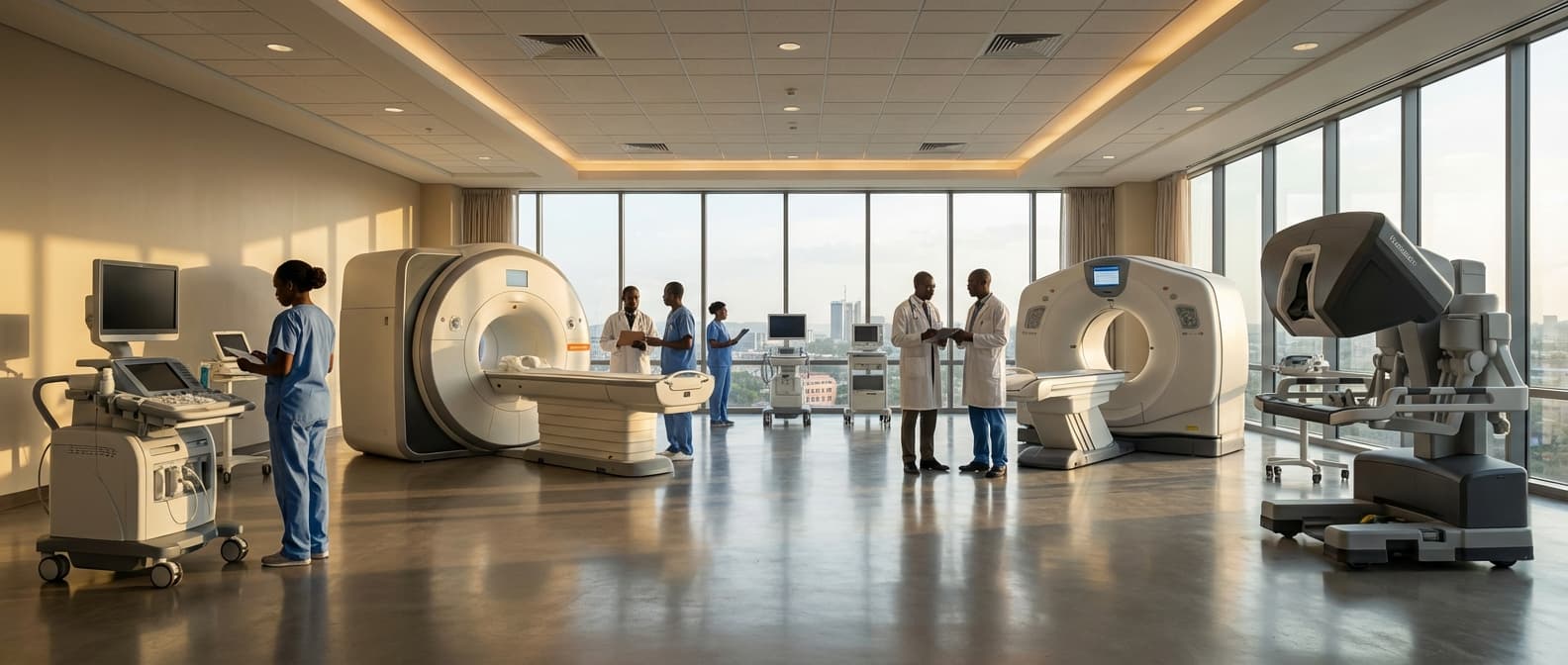
Life Support & Consumables in Zimbabwe
Engineering Excellence & Technical Support
Reliable supply of essential medical consumables and life support equipment ensuring uninterrupted, quality patient care delivery. High-standard technical execution following OEM protocols and local regulatory frameworks.
Enhanced Oxygen Delivery Systems
Implementation of advanced oxygen concentrators and portable oxygen cylinders in remote clinics, ensuring consistent and reliable oxygen supply for respiratory distress patients across Zimbabwe, particularly in areas with limited grid electricity. This includes training local health workers on maintenance and troubleshooting.
Distributed Pharmaceutical Logistics Network
Establishment of a robust cold chain logistics network for essential medicines and vaccines, utilizing solar-powered refrigerators and temperature-monitoring devices. This ensures the efficacy and accessibility of critical pharmaceuticals to underserved populations, reducing stock-outs and wastage.
Portable Water Purification Units
Deployment of solar-powered portable water purification units to communities affected by waterborne diseases and in areas with compromised water sources. These units provide safe, potable drinking water, significantly reducing the incidence of cholera and other diarrheal illnesses.
What Is Life Support & Consumables In Zimbabwe?
Life Support & Consumables in Zimbabwe refers to the provision of essential medical equipment, devices, and associated disposable or replenishable materials required to sustain or improve the physiological functions of patients experiencing critical illness or organ failure. This service is integral to modern healthcare, enabling the management of complex medical conditions and the post-operative recovery process. It encompasses a spectrum of technologies and supplies designed to compensate for or augment compromised bodily systems. The demand for such services is driven by the prevalence of chronic diseases, acute medical emergencies, and the increasing sophistication of medical interventions available in Zimbabwe.
| Who Needs Life Support & Consumables? | Typical Use Cases |
|---|---|
| Patients with severe respiratory compromise (e.g., pneumonia, ARDS, COPD exacerbations) | Mechanical ventilation in Intensive Care Units (ICUs) and High Dependency Units (HDUs) for respiratory failure. |
| Individuals experiencing cardiovascular instability (e.g., sepsis, cardiogenic shock, post-cardiac arrest) | Hemodynamic monitoring and vasopressor/inotropic support via infusion pumps in critical care. |
| Patients with acute kidney injury (AKI) or end-stage renal disease (ESRD) | Dialysis (hemodialysis or peritoneal dialysis) for fluid and electrolyte balance and waste removal. |
| Critically ill patients unable to maintain adequate oral intake | Enteral or parenteral nutrition delivery to prevent malnutrition and support recovery. |
| Neonates requiring intensive care (e.g., premature infants) | Incubator care, respiratory support, and feeding in Neonatal Intensive Care Units (NICUs). |
| Post-operative patients in critical condition | Close monitoring and support for vital organ function during the immediate recovery phase. |
| Patients with severe burns or extensive wounds | Specialized wound care and fluid resuscitation. |
| Individuals undergoing prolonged immobilization or at risk of complications | Preventative measures such as deep vein thrombosis (DVT) prophylaxis, often involving specific consumables. |
Key Components of Life Support & Consumables
- Ventilation and Respiratory Support Systems: Devices such as mechanical ventilators, CPAP/BiPAP machines, and nebulizers, along with associated consumables like endotracheal tubes, tracheostomy kits, filters, and breathing circuits. These are critical for patients with respiratory insufficiency or failure.
- Cardiovascular Support Systems: Equipment including infusion pumps, syringe drivers, and hemodynamic monitoring devices. Consumables comprise IV fluids, electrolytes, vasoactive medications, arterial and venous catheters, and pressure tubing.
- Renal Replacement Therapy Equipment: Dialysis machines (hemodialysis and peritoneal dialysis) and their associated consumables, including dialyzers, tubing sets, dialysate solutions, and access catheters. This addresses acute or chronic kidney failure.
- Nutritional Support Systems: Devices like enteral feeding pumps and parenteral nutrition (TPN) infusion systems. Consumables include specialized enteral formulas, TPN solutions, feeding tubes, and infusion sets.
- Temperature Management Devices: Equipment such as warming blankets, cooling blankets, and servo-controlled incubators, particularly relevant in neonatology and critical care. Consumables are minimal but may include disposable probe covers.
- Diagnostic Consumables: A broad category including blood collection tubes, IV cannulas, sterile dressings, wound care supplies, and reagents for point-of-care testing, essential for continuous patient assessment and management.
- Medication and Drug Delivery: While not strictly 'life support' devices, the delivery mechanisms (e.g., infusion pumps) and the critical medications themselves are often considered part of the overall provision, especially in intensive care settings.
Who Needs Life Support & Consumables In Zimbabwe?
This document outlines the primary beneficiaries and departments within Zimbabwe that require life support and consumables. The focus is on identifying key areas where these resources are critical for health, safety, and essential services.
| Customer/Department | Specific Needs | Examples of Consumables/Life Support |
|---|---|---|
| Hospitals (Public & Private) | Critical care, surgery, emergency response, long-term patient care | Oxygen cylinders/generators, ventilators, anesthesia machines, IV fluids, bandages, syringes, medication, sterile surgical supplies, personal protective equipment (PPE) |
| Clinics and Rural Health Centers | Primary healthcare, maternal and child health, basic emergency treatment | Basic wound care supplies, essential medications, diagnostic kits, vaccines, gloves, masks, sterile needles and syringes |
| Ambulance Services | Pre-hospital emergency care, patient transport | Portable oxygen, basic medical kits, splints, cervical collars, defribrillators, bandages, IV fluids |
| National Civil Protection Department | Disaster response (natural and man-made), humanitarian aid | Emergency food and water, temporary shelter supplies, basic medical kits, sanitation supplies, blankets, sleeping mats |
| Zimbabwe Defence Forces (Medical Corps) | Military field hospitals, medical support for operations | Trauma kits, blood products, antibiotics, pain management medication, surgical instruments, field sanitation supplies |
| Research Laboratories (e.g., ZIMDARC, University Labs) | Medical research, diagnostics, drug development | Culture media, reagents, sterile lab consumables, specialized gases, PPE for lab personnel |
| Mining Operations (Remote Sites) | On-site first aid, emergency medical response, worker safety | First aid kits, emergency oxygen, basic wound care, antivenom (if applicable), PPE |
| Water Treatment Plants | Ensuring safe drinking water supply | Chemicals for disinfection (e.g., chlorine), filtration media, testing kits |
| Educational Institutions (Medical & Science Faculties) | Training of medical professionals, scientific research | Anatomical models, lab consumables for experiments, basic first aid supplies for student health services |
Target Customers and Departments
- Healthcare Facilities
- Emergency Services
- Disaster Relief Organizations
- Research and Development Institutions
- Military and Defense Forces
- Mining and Industrial Sectors
- Educational Institutions (specific departments)
Life Support & Consumables Process In Zimbabwe
The life support and consumables process in Zimbabwe, particularly in critical sectors like healthcare and humanitarian aid, involves a structured workflow to ensure timely and efficient acquisition and distribution of essential supplies. This process typically begins with an identified need and culminates in the successful delivery and utilization of these vital resources.
| Stage | Description | Key Activities | Responsible Parties | Key Considerations |
|---|---|---|---|---|
| The initial stage where a demand for life support or consumables is identified. | Identifying the specific need (e.g., medical supplies, food, water purification). | Healthcare facilities, NGOs, government agencies, community leaders. | Urgency of need, quantity required, type of consumable/life support, target beneficiaries. |
| Developing a strategy to meet the identified needs, considering budget and timelines. | Defining specifications of the required items, estimating costs, setting procurement timelines. | Procurement departments, program managers, finance teams. | Budget availability, existing stock levels, lead times for procurement, potential supply chain disruptions. |
| Identifying and evaluating potential suppliers who can provide the required items. | Market research, issuing Requests for Proposals (RFPs) or Quotations (RFQs), supplier pre-qualification, evaluating bids based on price, quality, and reliability. | Procurement teams, logistics officers, technical experts. | Reputation and track record of suppliers, compliance with local regulations, ethical sourcing practices, availability of the required items. |
| Formalizing the agreement with the selected supplier and initiating the purchase. | Issuing Purchase Orders (POs), receiving and verifying supplier confirmations, agreeing on payment terms and delivery schedules. | Procurement department, finance department, supplier. | Clarity of order specifications, agreed-upon delivery dates, payment milestones, contractual obligations. |
| Arranging for the safe and efficient movement of goods from the supplier to the point of need. | Selecting appropriate transportation modes (road, air, sea), customs clearance, insurance, tracking shipments. | Logistics and transport departments, clearing agents, shipping companies. | Route optimization, security during transit, temperature control requirements (if applicable), transit insurance, timely customs clearance. |
| Verifying the received items against the order and ensuring they meet quality standards. | Unloading goods, inspecting for damage or discrepancies, conducting quality checks (e.g., expiry dates, integrity of packaging), documenting receipt. | Warehouse staff, quality assurance personnel, procurement officers. | Adherence to specifications, absence of damage or contamination, accurate quantity received, proper documentation. |
| Safely storing the consumables and life support items until they are needed. | Organizing inventory, maintaining appropriate storage conditions (temperature, humidity), implementing stock management systems (FIFO/FEFO), security measures. | Warehouse managers, inventory clerks. | Adequate space, proper environmental controls, security to prevent theft or pilferage, accurate inventory records. |
| Disseminating the supplies to the intended beneficiaries or end-users. | Developing distribution plans, coordinating with field teams, issuing stock to programs, tracking distribution to beneficiaries. | Logistics teams, field officers, program staff. | Fair and equitable distribution, reaching remote areas, ensuring accountability, managing stock levels at distribution points. |
| Tracking the utilization of supplies and reporting on their impact. | Collecting data on stock levels, consumption rates, and program outcomes; generating regular reports for stakeholders; identifying stock-outs or surpluses. | M&E officers, program managers, finance teams. | Data accuracy and timeliness, clear reporting formats, feedback mechanisms, informed decision-making for future procurement. |
| This is an ongoing or recurring process that feeds back into the initial stages. | Submitting formal requests for replenishment or new supplies based on consumption and projected needs; ensuring sufficient budget allocation for these requisitions. | Program managers, facility heads, finance department. | Accurate forecasting, proactive budgeting, alignment with program plans and operational needs. |
Life Support & Consumables Process Workflow in Zimbabwe
- Inquiry & Needs Assessment
- Procurement Planning
- Sourcing & Supplier Selection
- Order Placement & Confirmation
- Logistics & Transportation
- Receiving & Quality Control
- Warehousing & Storage
- Distribution & Allocation
- Monitoring & Reporting
- Requisition & Budgeting
Life Support & Consumables Cost In Zimbabwe
Life support and consumables represent a significant expenditure for individuals and institutions in Zimbabwe, particularly given the economic climate. Understanding the pricing factors and ranges in local currency (Zimbabwean Dollar - ZWL) is crucial for budgeting and planning. These costs are highly volatile and influenced by a complex interplay of global market prices, local supply and demand, import duties, currency fluctuations, transportation costs, and retailer markups. For medical life support systems, which often involve imported components and specialized equipment, the costs are substantially higher and are often denominated or heavily influenced by the US Dollar, even when paid in ZWL. Consumables, on the other hand, encompass a broader range from essential household items to medical supplies, with prices varying significantly based on brand, quality, and availability.
| Item Category | Estimated Price Range (ZWL) | Notes |
|---|---|---|
| Basic Medical Consumables (e.g., bandages, sterile gauze, disposable gloves) | 500 - 5,000+ | Varies by pack size, quantity, and brand. Higher for specialized sterile packs. |
| Syringes and Needles | 300 - 1,500+ (per box/pack) | Depends on size, type (e.g., insulin, general purpose), and brand. |
| Pain Relievers (e.g., Paracetamol, Ibuprofen - basic packs) | 800 - 3,000+ | Generic vs. branded. Large multi-packs will be higher. |
| Disinfectants and Antiseptics (e.g., Dettol, Savlon) | 1,000 - 4,000+ | Price per bottle. Concentrated versions may be cheaper per use. |
| Adult Diapers/Incontinence Products | 5,000 - 25,000+ (per pack) | Highly variable by size, absorbency, and brand. A significant recurring cost. |
| Basic Oxygen Mask/Cannula | 2,000 - 10,000+ | For non-hospital settings. Hospital-grade equipment is significantly more. |
| Food Staples (e.g., cooking oil, flour, sugar - per kg/litre) | 2,000 - 8,000+ | Highly volatile based on global prices and local availability. These are daily consumables. |
| Fuel (Petrol/Diesel - per litre) | 10,000 - 15,000+ | Subject to daily fluctuations based on international crude oil prices and exchange rates. |
| Water Purification Tablets/Filters | 2,000 - 15,000+ | Depends on method and capacity. Essential in areas with unreliable water supply. |
| Simple Life Support Equipment (e.g., Nebulizer machines - purchase price) | 150,000 - 1,000,000+ | These are capital expenditures, not consumables, but represent the entry-level for home-based 'life support'. |
Key Pricing Factors for Life Support & Consumables in Zimbabwe
- {"title":"Exchange Rate Volatility","description":"The ZWL's instability against major foreign currencies, especially the USD, directly impacts the cost of imported goods. Fluctuations create price unpredictability and often lead to rapid price increases."}
- {"title":"Import Duties and Taxes","description":"Goods brought into Zimbabwe are subject to import duties, VAT, and other taxes, which are added to the landed cost and passed on to the consumer."}
- {"title":"Global Commodity Prices","description":"For many consumables and raw materials used in local production, international market prices dictate the base cost. This is particularly relevant for fuel, certain food staples, and medical raw materials."}
- {"title":"Supply Chain and Logistics","description":"Transportation costs, warehousing, and the efficiency of the supply chain from port to final consumer significantly influence pricing, especially in a landlocked country like Zimbabwe."}
- {"title":"Local Manufacturing vs. Imports","description":"Locally manufactured goods may be more affordable if raw materials are readily available, but they can still be affected by imported inputs. Purely imported items are generally more expensive."}
- {"title":"Retailer Markups and Distribution Channels","description":"Different retailers, from large supermarkets to small vendors, apply varying markups. The number of intermediaries in the distribution chain also adds to the final price."}
- {"title":"Brand and Quality","description":"Premium brands and higher-quality products, especially in the medical consumables sector, command higher prices."}
- {"title":"Scarcity and Demand","description":"Periods of scarcity or high demand for specific items can lead to price gouging and significantly increased costs."}
Affordable Life Support & Consumables Options
Securing affordable life support and consumables is crucial for both individuals and organizations facing medical needs or requiring essential supplies for critical operations. This section explores strategies to reduce costs without compromising quality, focusing on understanding value bundles and implementing smart purchasing decisions.
| Bundle Type | Potential Savings | Considerations |
|---|---|---|
| Basic Patient Care Bundle | 10-20% | Includes essentials like oxygen masks, tubing, catheters, and basic bandages. Good for general hospital or home care. |
| Ventilator Support Package | 15-25% | Combines ventilators with compatible circuits, filters, and humidifiers. Crucial for respiratory support. |
| Emergency Response Kit | 12-22% | Pre-packaged with first-aid supplies, basic diagnostic tools, and emergency consumables for rapid deployment. |
| Home Healthcare Starter Pack | 8-18% | Often includes items for chronic condition management, wound care, and basic mobility aids. |
| Surgical Consumables Assortment | 10-20% | Bundles of sterile drapes, gowns, gloves, and gauze for surgical procedures. |
Cost-Saving Strategies for Life Support & Consumables
- Understand Value Bundles: Many suppliers offer pre-packaged bundles of related life support equipment and consumables. These are often priced at a discount compared to purchasing individual items. Bundles can simplify procurement and ensure compatibility between components.
- Bulk Purchasing: For organizations or individuals with consistent, high-volume needs, purchasing consumables in larger quantities can lead to significant per-unit savings. Negotiate with suppliers for bulk discounts.
- Subscription Models: Explore subscription or recurring order services. These can lock in prices, ensure timely delivery, and often come with member-exclusive discounts or added benefits.
- Compare Supplier Pricing: Regularly research and compare prices from multiple reputable suppliers. Don't rely on a single vendor, as pricing can vary considerably.
- Generic vs. Brand Name: While brand-name products are often trusted, generic or store-brand equivalents can offer substantial savings for certain consumables, provided they meet quality and regulatory standards.
- Negotiate Contracts: For significant purchases, don't hesitate to negotiate terms, pricing, and payment schedules with suppliers. Building long-term relationships can also yield better deals.
- Look for Refurbished Equipment: For non-consumable life support equipment (e.g., ventilators, monitors), consider purchasing certified refurbished units. These are typically much cheaper than new ones and come with warranties.
- Optimize Inventory Management: Avoid overstocking to prevent waste due to expiration or obsolescence. Implement robust inventory tracking systems to ensure you only purchase what you need, when you need it.
- Explore Government or Non-Profit Programs: Inquire about any available grants, subsidies, or specialized programs for purchasing medical supplies or life support equipment, especially for non-profit organizations or individuals with limited income.
- Rent vs. Buy: For temporary or infrequent needs, renting life support equipment can be more cost-effective than purchasing outright.
Verified Providers In Zimbabwe
In Zimbabwe's evolving healthcare landscape, identifying reliable and accredited healthcare providers is paramount. Franance Health stands out as a leading organization dedicated to connecting individuals with verified medical professionals. Their rigorous credentialing process ensures that all partnered providers meet the highest standards of quality, ethics, and patient care, making them a trusted name for health services.
| Key Features of Franance Health's Verification | Benefit to Patients |
|---|---|
| Up-to-date Licensing Checks | Ensures providers are legally authorized to practice. |
| Verification of Educational Qualifications | Confirms theoretical knowledge and training. |
| Review of Professional Experience and Specializations | Helps match patients with the most suitable expert. |
| Assessment of Disciplinary Records | Upholds ethical standards and patient safety. |
| Feedback and Patient Satisfaction Monitoring | Drives continuous improvement in service delivery. |
Why Franance Health Represents the Best Choice for Verified Providers:
- Rigorous Vetting Process: Franance Health employs a multi-stage credentialing system that scrutinizes the qualifications, licenses, and experience of every healthcare professional and facility they partner with. This thoroughness guarantees that only competent and ethical practitioners are listed.
- Commitment to Quality: Beyond basic qualifications, Franance Health assesses providers for their commitment to patient safety, evidence-based practices, and continuous professional development. This focus on quality ensures you receive the best possible medical attention.
- Patient-Centric Approach: Franance Health prioritizes the patient experience. By partnering with providers who demonstrate empathy, clear communication, and respect for patient rights, they foster trust and confidence in the healthcare journey.
- Comprehensive Network: Franance Health offers access to a diverse range of specialists and healthcare services across Zimbabwe. This broad network means you can find the right provider for your specific needs, whether it's general practice, specialized surgery, or diagnostic services.
- Transparency and Accessibility: Franance Health believes in empowering patients with information. Their platform provides clear details about each verified provider, including their specializations, experience, and patient reviews, making informed decision-making easier.
Scope Of Work For Life Support & Consumables
This Scope of Work (SOW) outlines the requirements for Life Support and Consumables for [Project Name/Phase]. It details the technical deliverables expected from the supplier and the standard specifications that must be adhered to. The objective is to ensure the provision of safe, reliable, and compliant life support systems and consumable items necessary for the successful execution of the project.
| Technical Deliverable | Description | Standard Specification / Reference Document | Acceptance Criteria | |
|---|---|---|---|---|
| Life Support System (e.g., Environmental Control System - ECS, Water Reclamation System - WRS) | Design, procurement, fabrication, testing, delivery, installation, and commissioning of the specified life support system. | Detailed System Design Document (SDD) as per [Reference Document A] | Successful completion of all factory acceptance tests (FAT) and site acceptance tests (SAT). System performance meets specified parameters within [X]% tolerance. | Documentation package includes all drawings, manuals, test reports, and training materials. |
| Breathing Air Supply | Provision of certified breathable air to maintain safe atmospheric conditions within the habitat/vehicle. | Compliant with [ISO 13485:2016 Medical devices – Quality management systems – Requirements for regulatory purposes] and [NASA-STD-3001-Vol 2, Rev B] | Continuous monitoring of air quality parameters (O2, CO2, N2, pressure, temperature, humidity) within specified limits. Regular independent air quality analysis reports. | |
| Water Management System (Potable and Wastewater) | Supply and installation of systems for water purification, storage, and wastewater management. | Design to meet [EPA Primary Drinking Water Regulations] and [relevant environmental discharge standards] | Potable water output consistently meets purity standards. Wastewater treated to meet discharge or recycling requirements. System reliability demonstrated through continuous operation for [Y] hours without failure. | |
| Waste Management and Disposal | Provision of solutions for solid, liquid, and gaseous waste collection, processing, and disposal. | Adherence to [local environmental regulations] and [project-specific waste management plan] | All waste streams are managed and disposed of in an environmentally sound manner. Documentation of waste disposal manifests. | |
| Food and Nutrition Supplies | Supply of all necessary food products, supplements, and nutritional support items. | Products meeting [FDA Food Code] and [project-specific dietary requirements and shelf-life specifications] | All food items are within their stated shelf life, properly packaged, and meet nutritional specifications. Quality assurance certificates provided for each batch. | |
| Medical Supplies and Equipment | Provision of essential medical consumables, first-aid kits, and basic medical equipment. | Compliant with [ISO 13485:2016] and [relevant national medical device regulations] | All medical supplies are sterile (where applicable), within their expiry dates, and meet specified quality standards. Inventory management system for tracking and replenishment. | |
| Hygiene and Sanitation Consumables | Supply of soaps, sanitizers, cleaning agents, personal hygiene products, and waste disposal bags. | Products with proven efficacy and safety, with MSDS (Material Safety Data Sheets) provided. | Adequate stock levels maintained to ensure continuous hygiene and sanitation. Products are non-toxic and environmentally responsible where possible. | |
| Consumable Spares and Replenishment Parts | Provision of a recommended list of spare parts and consumables for immediate replacement. | Manufacturer's recommended spare parts list and availability confirmed. | Prompt delivery of specified spare parts within [Z] hours/days of request. Minimizing downtime through readily available critical components. | |
| Training and Documentation | Comprehensive training for project personnel on the operation and maintenance of life support systems and the proper use of consumables. | Training manuals and user guides provided in [language(s)] and in accessible formats. | Successful completion of training by all designated personnel. Positive feedback from trainees on the clarity and effectiveness of training. |
Key Areas Covered by this Scope of Work:
- Life Support Systems Procurement and Installation
- Consumable Item Supply and Management
- Training and Maintenance Support
- Documentation and Reporting
Service Level Agreement For Life Support & Consumables
This Service Level Agreement (SLA) outlines the guaranteed response times and uptime for Life Support & Consumables services. It defines the standards of performance expected from the provider and the remedies available to the customer in the event of service degradation or failure. This SLA is an addendum to the Master Service Agreement (MSA) between [Provider Name] and [Customer Name].
| Service Component | Severity Level | Response Time Guarantee | Resolution Time Guarantee | Uptime Guarantee |
|---|---|---|---|---|
| Life Support Equipment Availability | Critical Issue | 15 Minutes | 2 Hours | 99.95% |
| Life Support Equipment Availability | Major Issue | 1 Hour | 8 Hours | 99.95% |
| Consumables Stock Levels (Critical) | Critical Issue | 30 Minutes | 4 Hours (delivery/restock) | N/A (managed service) |
| Consumables Stock Levels (Standard) | Major Issue | 2 Hours | 24 Hours (delivery/restock) | N/A (managed service) |
| Service Performance (e.g., monitoring, reporting) | Major Issue | 1 Hour | 8 Hours | 99.5% |
| Service Performance (e.g., monitoring, reporting) | Minor Issue | 4 Business Hours | 2 Business Days | 99.5% |
Key Definitions
- Service: Refers to the provision and management of Life Support equipment and necessary consumables as outlined in the attached Scope of Work.
- Downtime: Any period during which the Service is unavailable to the Customer due to an unscheduled outage, system failure, or degradation beyond the agreed-upon performance thresholds.
- Response Time: The maximum time allowed for the Provider to acknowledge and begin addressing a reported Service issue.
- Resolution Time: The maximum time allowed for the Provider to restore the Service to its agreed-upon performance level after a reported issue.
- Uptime: The percentage of time the Service is available and functioning as expected within a given calendar month.
- Critical Issue: A failure of Life Support equipment or a severe shortage of essential consumables that directly impacts patient care and requires immediate intervention.
- Major Issue: A significant degradation of Service performance that impacts multiple users or functions, but does not immediately jeopardize patient care.
- Minor Issue: A non-critical issue affecting individual users or non-essential functions.
- Scheduled Maintenance: Pre-announced periods where the Service may be unavailable for planned upgrades, patches, or maintenance activities. Notice will be provided at least [Number] days in advance.
Frequently Asked Questions

Ready when you are
Let's scope your Life Support & Consumables in Zimbabwe project in Zimbabwe.

Scaling healthcare logistics and technical systems across the entire continent.