
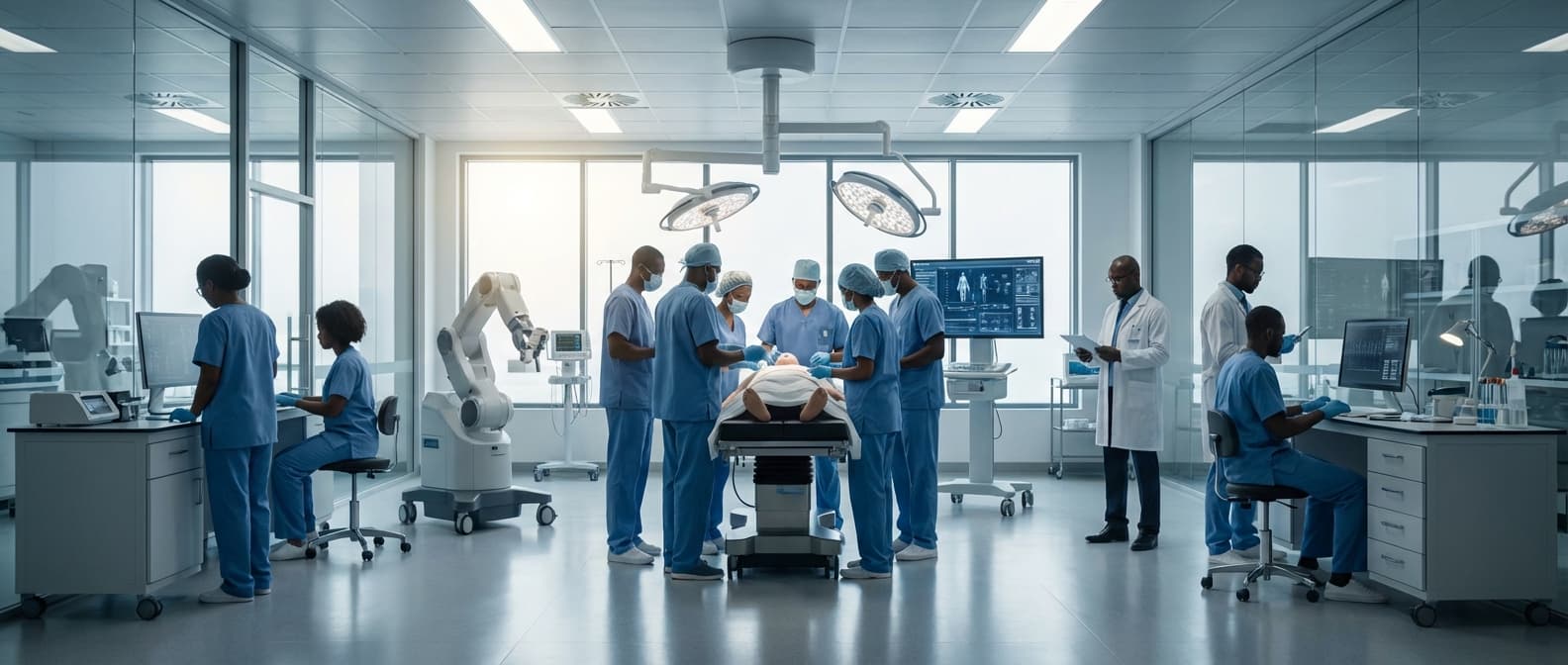
Managed Equipment Service (MES) in Zimbabwe
Engineering Excellence & Technical Support
Long‑term equipment provision with uptime SLAs and lifecycle management. High-standard technical execution following OEM protocols and local regulatory frameworks.
Optimized Medical Equipment Uptime
MES in Zimbabwe leverages advanced remote monitoring and predictive maintenance strategies to drastically reduce equipment downtime for critical healthcare facilities. Our proactive approach ensures vital medical devices are consistently operational, directly improving patient care outcomes.
Localized Technical Expertise & Rapid Response
We provide unparalleled on-the-ground technical support across Zimbabwe through a network of highly skilled, locally trained engineers. MES guarantees rapid on-site response for all maintenance and repair needs, minimizing disruptions and empowering healthcare providers with reliable equipment.
Cost-Effective Equipment Lifecycle Management
MES offers comprehensive lifecycle management solutions, encompassing procurement, installation, maintenance, and eventual decommissioning of medical equipment. This holistic approach optimizes capital expenditure, reduces operational costs, and ensures long-term value for Zimbabwean healthcare institutions.
What Is Managed Equipment Service (Mes) In Zimbabwe?
Managed Equipment Service (MES) in Zimbabwe refers to a comprehensive outsourced solution for the procurement, installation, maintenance, and management of specialized medical or industrial equipment. It shifts the burden of capital expenditure, operational risk, and technical expertise from the client to a third-party MES provider. This service model is designed to ensure optimal equipment performance, cost-efficiency, and regulatory compliance, thereby enabling organizations to focus on their core competencies.
| Who Needs MES in Zimbabwe? | Typical Use Cases |
|---|---|
| Healthcare Institutions: Hospitals, clinics, diagnostic centers requiring advanced medical imaging, laboratory, surgical, and life support equipment. This includes public and private sector entities seeking to upgrade or expand their technological capabilities without significant upfront capital outlay. | Medical Imaging: MRI, CT scanners, X-ray machines, ultrasound devices. Laboratory Equipment: Analyzers, microscopes, centrifuges. Surgical & Anesthesia Equipment: Operating room systems, ventilators. Sterilization & Infection Control: Autoclaves, washer-disinfectors. Diagnostic Testing: Point-of-care testing devices. |
| Industrial & Manufacturing Companies: Businesses in sectors like mining, food processing, and textiles that rely on specialized machinery and require consistent uptime and advanced technological integration. | Mining Equipment: Processing machinery, analytical instruments for ore analysis. Food & Beverage: Packaging lines, quality control systems, processing equipment. Manufacturing: Precision tooling, automated assembly lines, testing apparatus. |
| Research & Educational Institutions: Universities, colleges, and research facilities needing access to state-of-the-art scientific equipment for teaching and research purposes. | Scientific Instrumentation: Spectrophotometers, chromatography systems, advanced microscopy. Engineering & Technology Labs: Specialized testing equipment, simulation hardware. |
| Government Agencies & Parastatals: Organizations responsible for public services and infrastructure requiring reliable and cost-effective access to specialized equipment. | Public Health Laboratories: Diagnostic and surveillance equipment. Infrastructure Maintenance: Specialized testing and diagnostic tools. |
Key Components of MES in Zimbabwe:
- Equipment Procurement & Acquisition: Identifying, sourcing, and financing of specified equipment, often through leasing or pay-per-use models.
- Installation & Commissioning: Professional setup, calibration, and testing of equipment to ensure operational readiness.
- Preventive & Corrective Maintenance: Scheduled servicing and on-demand repairs to minimize downtime and extend equipment lifespan.
- Technical Support & Training: Providing expert assistance and comprehensive training for end-users and in-house technicians.
- Consumables Management: Sourcing and supply chain management of necessary consumables and spare parts.
- Performance Monitoring & Reporting: Real-time tracking of equipment utilization, performance metrics, and service history.
- Decommissioning & Disposal: Responsible removal and disposal of equipment at the end of its lifecycle.
- Risk Transfer: Shifting risks associated with obsolescence, repair costs, and technical obsolescence to the MES provider.
Who Needs Managed Equipment Service (Mes) In Zimbabwe?
Managed Equipment Service (MES) in Zimbabwe offers a comprehensive solution for organizations that rely heavily on specialized or capital-intensive equipment. Instead of outright purchasing, maintaining, and upgrading these assets themselves, businesses and institutions can outsource these responsibilities to MES providers. This allows them to focus on their core operations, benefit from the latest technology, and manage their costs more predictably. MES is particularly valuable for sectors with rapid technological advancements or where equipment downtime can have significant financial or operational repercussions.
| Target Customer Type | Key Departments Benefiting from MES |
|---|---|
| Healthcare Facilities | Radiology, Pathology, Operating Theatres, Intensive Care Units, Biomedical Engineering, IT Department |
| Educational Institutions | Science & Engineering Faculties, IT Departments, Research Centers, Libraries (for specialized equipment) |
| Manufacturing & Industrial Plants | Production Lines, Quality Control, Maintenance, Engineering, Research & Development |
| Mining Operations | Exploration, Extraction, Processing, Maintenance, Health & Safety, Environmental Monitoring |
| Telecommunications Companies | Network Operations Centers, Field Maintenance, R&D, IT Infrastructure |
| Government Agencies & Parastatals | Infrastructure Development, Public Health, Education, Defense (specific equipment needs), IT Services |
| Large Agricultural Estates | Farm Management, Mechanization, Irrigation, Processing Plants, Research & Development |
| Research & Development Laboratories | All laboratory departments requiring specialized analytical or testing equipment |
| Financial Institutions | Back-office operations, secure document processing, data centers (for specialized IT hardware) |
Target Customers for MES in Zimbabwe
- Healthcare Facilities (Hospitals, Clinics, Diagnostic Centers)
- Educational Institutions (Universities, Vocational Training Centers)
- Manufacturing & Industrial Plants
- Mining Operations
- Telecommunications Companies
- Government Agencies & Parastatals
- Large Agricultural Estates
- Research & Development Laboratories
- Financial Institutions (for specialized back-office equipment)
Managed Equipment Service (Mes) Process In Zimbabwe
The Managed Equipment Service (MES) process in Zimbabwe provides a structured framework for procuring, installing, maintaining, and upgrading medical equipment for healthcare facilities. This workflow ensures optimal utilization of resources, cost-effectiveness, and the availability of modern medical technology. The process typically begins with an initial inquiry from a healthcare facility and culminates in the full execution and ongoing management of the equipment service agreement.
| Phase | Key Activities | Responsible Parties |
|---|---|---|
| Inquiry & Needs Assessment | Identifying equipment needs, assessing current infrastructure, defining scope. | Healthcare Facility, MoHCC |
| Procurement Process | EOI/RFI, RFP issuance, proposal submission and evaluation, due diligence, negotiation, contract award. | MoHCC, MES Providers, Evaluation Committee |
| Implementation | Equipment procurement, delivery, installation, training, commissioning. | MES Provider, Healthcare Facility Staff |
| Operation & Maintenance | Preventive and corrective maintenance, repair, calibration, spare parts management, performance monitoring, reporting. | MES Provider, Healthcare Facility Staff |
| Lifecycle Management | Planning and execution of upgrades and replacements, end-of-contract arrangements. | MES Provider, MoHCC, Healthcare Facility |
Managed Equipment Service (MES) Workflow in Zimbabwe
- 1. Inquiry & Needs Assessment: The process initiates when a healthcare facility expresses interest in MES. This involves understanding their current equipment status, identifying gaps, and outlining specific medical technology requirements. This can be driven by aging equipment, expansion plans, or the need for advanced diagnostic and treatment capabilities.
- 2. Expression of Interest (EOI) / Request for Information (RFI): The Ministry of Health and Child Care (MoHCC) or a designated procurement entity issues an EOI or RFI to potential MES providers. This document details the general scope of services and equipment categories required, inviting interested companies to register their interest and submit preliminary information about their capabilities.
- 3. Request for Proposal (RFP) Issuance: Based on the EOIs/RFIs received, a detailed RFP is issued to shortlisted MES providers. This document outlines specific technical specifications, service level agreements (SLAs), contractual terms, financial requirements, and evaluation criteria.
- 4. Proposal Submission: MES providers develop and submit comprehensive proposals addressing all aspects of the RFP. These proposals typically include technical solutions, equipment lists, maintenance plans, training programs, financial models (including capital investment, operational costs, and service fees), and implementation timelines.
- 5. Proposal Evaluation: A multidisciplinary evaluation committee (often comprising representatives from the MoHCC, healthcare professionals, and technical experts) reviews and scores the submitted proposals against pre-defined criteria. This evaluation focuses on technical merit, financial viability, experience, capacity, and compliance with national health policies.
- 6. Due Diligence & Clarifications: The evaluation committee may conduct due diligence on the shortlisted bidders, which could include site visits to their facilities, verification of references, and financial health assessments. Clarifications may be sought from bidders to address any ambiguities or missing information in their proposals.
- 7. Selection of Preferred Bidder & Negotiation: The bidder that best meets the evaluation criteria is selected as the preferred provider. Negotiations then commence on the final contract terms, including pricing, SLAs, equipment specifics, payment schedules, and performance indicators.
- 8. Contract Award & Signing: Once negotiations are successfully concluded, a formal contract is awarded to the chosen MES provider. This legally binding agreement outlines the rights, responsibilities, and obligations of both parties for the duration of the service period.
- 9. Equipment Procurement & Installation: The MES provider procures the specified medical equipment according to the contract. This involves sourcing from reputable manufacturers, ensuring compliance with international standards, and managing logistics for delivery and installation at the designated healthcare facilities.
- 10. Training & Commissioning: Upon installation, the MES provider conducts comprehensive training for healthcare professionals and technical staff on the operation, maintenance, and troubleshooting of the new equipment. Commissioning and testing are performed to ensure all equipment functions optimally and meets performance specifications.
- 11. Ongoing Service & Maintenance: This is the core of the MES. The provider is responsible for the routine preventive maintenance, corrective maintenance, repair, and calibration of all supplied equipment. This includes providing spare parts and ensuring minimal downtime.
- 12. Performance Monitoring & Reporting: The MES provider regularly monitors equipment performance against agreed-upon SLAs. Detailed reports are submitted to the MoHCC or relevant authority, tracking equipment uptime, service response times, maintenance activities, and utilization rates.
- 13. Equipment Upgrades & Replacements: As technology evolves and equipment reaches the end of its lifecycle, the MES provider is responsible for planning and executing upgrades or replacements, ensuring that healthcare facilities continuously benefit from modern and efficient medical technology.
- 14. End-of-Contract Management: At the conclusion of the MES contract, provisions are made for the handover of equipment, transfer of knowledge, and any agreed-upon arrangements for continued service or disposal of outdated equipment.
Managed Equipment Service (Mes) Cost In Zimbabwe
Managed Equipment Service (MES) in Zimbabwe offers a comprehensive solution for organizations to outsource the management and maintenance of their essential equipment, from IT hardware to specialized industrial machinery. This service aims to reduce capital expenditure, improve operational efficiency, and ensure equipment reliability. The cost of MES in Zimbabwe is influenced by a variety of factors, leading to a broad pricing range in local currency (Zimbabwean Dollar - ZWL).
| Service Component/Equipment Type (Illustrative) | Estimated Monthly Cost Range (ZWL) | Notes |
|---|---|---|
| Basic IT Hardware Support (e.g., Laptops, Desktops, Printers) - Per Unit | ZWL 5,000 - ZWL 25,000+ | Covers basic maintenance, troubleshooting, and on-site support. Volume discounts apply. Does not typically include hardware replacement costs unless explicitly stated. |
| Server Infrastructure Management - Per Server | ZWL 20,000 - ZWL 100,000+ | Includes monitoring, patching, proactive maintenance, and basic hardware support. Higher costs for high-availability or mission-critical servers. |
| Network Infrastructure Management (Switches, Routers, Wi-Fi) - Per Device/Site | ZWL 15,000 - ZWL 75,000+ | Focuses on performance monitoring, configuration management, and troubleshooting. Costs vary by complexity and number of devices. |
| Specialized Industrial Machinery Maintenance - (Variable) | ZWL 50,000 - ZWL 500,000+ (per machine/line) | Highly dependent on the type of machinery, complexity of maintenance, availability of specialized technicians, and spare parts. Often bespoke pricing. |
| Medical Equipment Maintenance - (Variable) | ZWL 75,000 - ZWL 1,000,000+ (per device/category) | Requires specialized certifications and highly trained personnel. Costs are influenced by the criticality of the equipment and strict regulatory requirements. |
| Software Licensing & Management (as part of MES) | Included in overall cost or billed separately based on usage. | Some MES providers may bundle software licensing or management as part of their offering. |
| Managed Print Services (MPS) - Per Page/Device | ZWL 0.50 - ZWL 5.00+ per page; ZWL 10,000 - ZWL 50,000+ per device monthly. | Often priced on a cost-per-page model, including toner, maintenance, and device management. Costs vary by printer type and volume. |
Key Pricing Factors for MES in Zimbabwe
- Type and Volume of Equipment: The nature of the equipment (e.g., servers, laptops, printers, manufacturing machinery, medical devices) and the quantity being managed significantly impact costs. More complex or specialized equipment, and a larger volume, will generally incur higher fees.
- Service Level Agreement (SLA) Specifics: The level of support, response times, uptime guarantees, and proactive maintenance schedules defined in the SLA are critical. Higher-tier SLAs with faster response times and guaranteed availability will be more expensive.
- Duration of Contract: MES contracts are typically long-term (e.g., 3-5 years). Longer contract durations can sometimes lead to lower per-unit costs due to the provider's ability to amortize their investment over a longer period.
- Age and Condition of Equipment: Older or equipment in poor condition may require more frequent maintenance or upgrades, increasing the overall service cost. Providers may factor in a risk premium for managing aging assets.
- Included Services: The scope of services included is a major determinant. This can range from simple break-fix support to full lifecycle management, including procurement, installation, configuration, monitoring, maintenance, repair, upgrades, and disposal.
- Vendor's Overhead and Profit Margin: The provider's operational costs, including staffing, logistics, spare parts inventory, and their desired profit margin, are incorporated into the pricing.
- Location and Accessibility: For equipment located in remote areas or difficult-to-access sites, travel and logistical costs for technicians can increase the overall price.
- Technology Refresh Cycles: If the MES includes scheduled technology upgrades or refreshes, the cost will reflect the expenditure on new equipment over the contract term.
- Customization and Integration: Highly customized solutions or integration with existing systems may incur additional upfront or ongoing costs.
- Economic Factors: Inflation, currency fluctuations (especially relevant for imported components or services priced in foreign currency and converted to ZWL), and the general economic climate in Zimbabwe can influence pricing.
Affordable Managed Equipment Service (Mes) Options
Securing affordable Managed Equipment Service (MES) is crucial for healthcare providers to maintain operational efficiency and control costs without compromising patient care. MES involves outsourcing the management, maintenance, and often the procurement of medical equipment to a third-party specialist. This strategy can lead to significant savings through streamlined operations, reduced downtime, and access to expert maintenance. Affordable MES options are typically achieved through carefully designed value bundles and the implementation of smart cost-saving strategies.
| MES Value Bundle | Included Services | Cost-Saving Benefit |
|---|---|---|
| Basic Maintenance & Repair | Scheduled preventive maintenance, on-demand repairs, parts and labor coverage. | Reduces unexpected breakdowns, extends equipment lifespan, minimizes costly emergency service calls. |
| Comprehensive Lifecycle Management | Includes Basic Maintenance plus procurement consultation, equipment tracking, and end-of-life planning. | Optimizes capital expenditure, leverages bulk purchasing discounts, avoids obsolescence costs. |
| Full-Service Solution | Includes Comprehensive Lifecycle Management plus inventory management, user training, and performance reporting. | Maximizes equipment utilization, reduces training overhead, provides data-driven insights for further cost reduction. |
| Specialized Equipment Bundle | Tailored to specific high-cost or high-volume equipment categories (e.g., imaging, surgical). | Leverages specialized expertise and parts networks, potentially leading to better service rates and uptime for critical assets. |
Key Components of Affordable MES
- Proactive Maintenance & Repair: Reduces costly emergency repairs and equipment downtime.
- Equipment Lifecycle Management: Optimizes purchasing, utilization, and disposal of equipment.
- Inventory Optimization: Ensures the right equipment is available when and where needed, minimizing overstocking and underutilization.
- Technology & Innovation Access: Provides access to updated equipment and best practices.
- Regulatory Compliance: Ensures equipment meets all relevant safety and performance standards.
- Staff Training & Support: Enhances user proficiency and reduces errors.
- Data Analytics & Reporting: Offers insights into equipment performance, utilization, and costs.
Verified Providers In Zimbabwe
Navigating healthcare in Zimbabwe can be challenging, with many seeking reliable and trustworthy providers. When it comes to medical finance and access to quality healthcare services, understanding who the verified providers are is paramount. Franance Health stands out as a leader in this space, offering a comprehensive suite of services designed to make healthcare more accessible and affordable for Zimbabweans. Their commitment to transparency, ethical practices, and patient well-being has earned them a reputation as a trusted partner.
| Provider Type | Franance Health's Verification Process | Benefits to Patients |
|---|---|---|
| Hospitals & Clinics | Rigorous accreditation checks, facility audits, and evaluation of medical staff qualifications. | Access to well-equipped facilities with qualified medical professionals, ensuring safe and effective treatment. |
| Specialist Doctors | Verification of medical licenses, specialist certifications, and peer reviews. | Consultation and treatment from highly experienced and qualified specialists in various medical fields. |
| Laboratories & Diagnostic Centers | Assessment of equipment calibration, quality control measures, and staff expertise. | Accurate and reliable diagnostic results essential for effective treatment planning. |
| Pharmacies | Verification of dispensing licenses and adherence to medication safety protocols. | Access to genuine and safely dispensed medications. |
Why Franance Health is the Best Choice for Verified Healthcare in Zimbabwe:
- Extensive Network of Verified Healthcare Facilities: Franance Health partners with a meticulously vetted network of hospitals, clinics, and specialists across Zimbabwe, ensuring you receive care from accredited and reputable institutions.
- Transparent and Affordable Healthcare Packages: They offer clear, upfront pricing for their medical finance solutions and healthcare packages, eliminating hidden costs and making budgeting for medical expenses manageable.
- Focus on Patient-Centric Care: Franance Health prioritizes the needs and comfort of their clients, providing dedicated support throughout the healthcare journey, from initial consultation to post-treatment follow-up.
- Streamlined Access to Medical Services: Their efficient processes and digital platforms simplify appointment booking, claims processing, and overall access to a wide range of medical services.
- Commitment to Quality Assurance: Franance Health actively monitors the quality of services provided by their network partners, ensuring adherence to high medical standards and best practices.
- Empowering Health Choices: By providing reliable information and accessible financing options, they empower individuals and families to make informed decisions about their health and well-being.
Scope Of Work For Managed Equipment Service (Mes)
This Scope of Work (SOW) outlines the services to be provided by the Managed Equipment Service (MES) provider for the organization's medical equipment. The MES will encompass comprehensive management of specified medical equipment assets, ensuring their optimal performance, safety, regulatory compliance, and cost-effectiveness throughout their lifecycle. This includes planning, procurement, installation, maintenance (preventive, corrective, and predictive), calibration, software updates, decommissioning, and disposal of all designated equipment. The objective is to reduce operational risks, enhance clinical efficiency, and achieve predictable operating expenses.
| Category | Standard Specification | Measurement/Metric | Frequency/Target |
|---|---|---|---|
| Preventive Maintenance (PM) | Adherence to manufacturer's PM recommendations and industry best practices. | PM completion rate. | = 98% |
| Corrective Maintenance (CM) Response Time | Initial response to reported equipment failures. | Mean Time to Respond (MTTR). | < 4 hours for critical equipment, < 8 hours for non-critical equipment. |
| Corrective Maintenance (CM) Resolution Time | Time to restore equipment to operational status. | Mean Time to Repair (MTTR). | Dependent on equipment type and parts availability, to be defined per equipment class (e.g., < 24 hours for critical, < 48 hours for non-critical). |
| Calibration Accuracy | Equipment calibrated to manufacturer specifications and relevant standards. | Calibration pass rate. | 100% of scheduled calibrations completed and passed. |
| Regulatory Compliance | All equipment maintained in compliance with relevant national and international regulations (e.g., FDA, MDR, local health authorities). | Audit readiness. | 100% compliance documentation available and up-to-date. |
| Equipment Uptime | Availability of functional equipment for clinical use. | Uptime percentage. | = 95% for critical equipment, >= 90% for non-critical equipment. |
| Parts Inventory Management | Availability of critical spare parts to meet repair timelines. | Stock-out rate for critical parts. | < 5% |
| Training Effectiveness | Provision of adequate training for relevant staff on equipment operation and basic troubleshooting. | Post-training competency assessment scores. | = 90% average score. |
| Reporting Frequency | Regular reports on equipment performance, maintenance activities, and costs. | Timeliness of report submission. | Monthly, Quarterly, Annually as specified. |
Technical Deliverables
- Detailed Asset Inventory and Tracking System
- Preventive Maintenance (PM) Program and Schedule
- Corrective Maintenance (CM) Response Times and Resolution Rates
- Calibration and Performance Verification Reports
- Regulatory Compliance Documentation (e.g., FDA, CE, local regulations)
- Software and Firmware Update Management
- Equipment Performance Monitoring and Reporting
- Risk Management and Incident Reporting
- Training for Clinical and Technical Staff
- Decommissioning and Disposal Plans and Reports
- Asset Lifecycle Management Strategy
- Parts and Consumables Management
Service Level Agreement For Managed Equipment Service (Mes)
This Service Level Agreement (SLA) outlines the response times and uptime guarantees for the Managed Equipment Service (MES) provided by [Your Company Name] to [Client Company Name]. This SLA is an integral part of the Master Service Agreement (MSA) between the parties.
| Service Level | Response Time (Business Hours) | Response Time (24/7/365) | Resolution Time (Target) | Uptime Guarantee |
|---|---|---|---|---|
| Critical (System Down) | 1 Hour | 30 Minutes | 4 Business Hours | 99.9% |
| High (Significant Impact) | 2 Hours | 1 Hour | 8 Business Hours | 99.5% |
| Medium (Reduced Functionality) | 4 Business Hours | 2 Hours | 2 Business Days | 99.0% |
| Low (Minor Issue/Inquiry) | 8 Business Hours | 4 Business Hours | 5 Business Days | N/A (No direct impact on uptime) |
Key Definitions
- Managed Equipment Service (MES): The comprehensive service for managing, maintaining, and supporting the client's designated equipment.
- Equipment: All hardware and associated software designated for MES as detailed in Exhibit A of the MSA.
- Downtime: The period during which the Equipment is unavailable for its intended use, as measured from the time of the initial report of an issue until the Equipment is restored to operational status.
- Response Time: The maximum time allowed from the initiation of a support ticket until a qualified technician begins addressing the issue.
- Resolution Time: The maximum time allowed from the initiation of a support ticket until the issue is resolved and the Equipment is operational.
- Uptime Guarantee: The minimum percentage of time the Equipment is expected to be available and operational.
Frequently Asked Questions

Ready when you are
Let's scope your Managed Equipment Service (MES) in Zimbabwe project in Zimbabwe.

Scaling healthcare logistics and technical systems across the entire continent.