
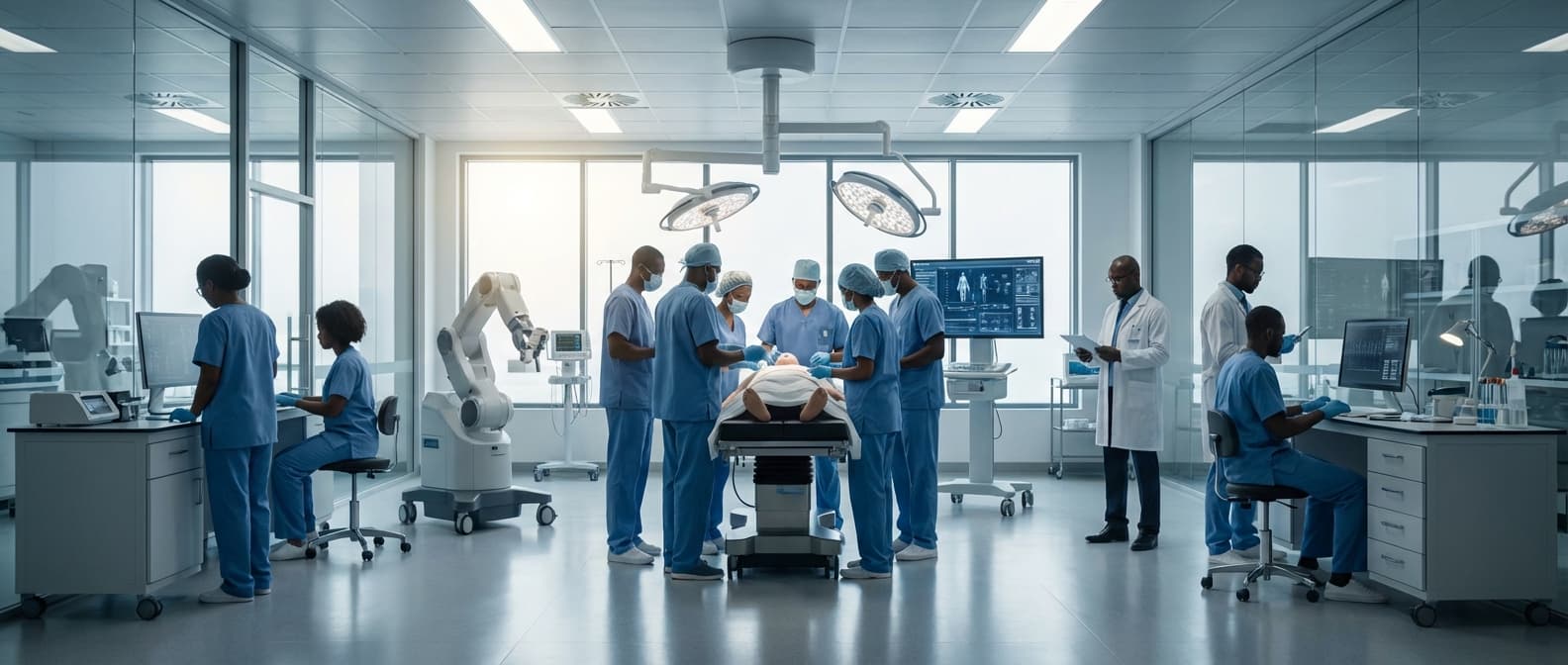
Biomedical Staffing Augmentation in Zimbabwe
Engineering Excellence & Technical Support
Onsite biomedical engineers and PACS administrators High-standard technical execution following OEM protocols and local regulatory frameworks.
Rapid Deployment of Specialized Medical Professionals
Our platform facilitates the swift identification and placement of highly skilled biomedical engineers, technicians, and healthcare specialists across Zimbabwe, addressing critical staffing gaps in hospitals, clinics, and research institutions. We leverage a curated database of pre-vetted candidates with verified expertise in diagnostics, equipment maintenance, and medical technology.
Enhancing Diagnostic and Treatment Capabilities
By augmenting your existing biomedical workforce, we empower healthcare facilities to expand diagnostic services, optimize equipment uptime, and implement advanced treatment modalities. Our augmented staff bring fresh perspectives and specialized skills, directly contributing to improved patient care outcomes and operational efficiency.
Bridging Skills Gaps and Fostering Local Expertise
We provide on-demand access to niche biomedical skills that may be scarce locally, ensuring continuity of essential services. Simultaneously, our augmentation model encourages knowledge transfer and mentorship, contributing to the long-term development of Zimbabwe's biomedical workforce and fostering self-sufficiency in healthcare technology management.
What Is Biomedical Staffing Augmentation In Zimbabwe?
Biomedical Staffing Augmentation in Zimbabwe refers to the strategic provision of specialized, skilled personnel to healthcare facilities and related organizations to supplement existing human resources. This service addresses temporary or permanent gaps in the availability of qualified professionals within the biomedical field, ensuring the continuity and enhancement of critical healthcare services. It encompasses a range of technical and clinical roles necessary for the operation, maintenance, and advancement of medical technologies and healthcare delivery systems.
| Who Needs Biomedical Staffing Augmentation? | Typical Use Cases | ||||||
|---|---|---|---|---|---|---|---|
| Public Hospitals and Clinics: Facing chronic staffing shortages, particularly in specialized departments, and requiring support for equipment maintenance and advanced diagnostic services. | Private Healthcare Providers: Seeking to expand service offerings, manage fluctuating patient loads, or implement new medical technologies without committing to permanent hires. | Non-Governmental Organizations (NGOs) and International Aid Agencies: Operating in underserved areas or during health crises, requiring rapid deployment of skilled biomedical personnel for specific programs or interventions. | Medical Research Institutions: Needing specialized technical staff for the operation and maintenance of sophisticated research equipment and experimental setups. | Medical Device Manufacturers and Distributors: Requiring field service engineers or technical support specialists for installation, maintenance, and troubleshooting of their equipment within healthcare facilities. | Tertiary and Specialist Referral Centers: Experiencing high demand for complex procedures and specialized diagnostics, necessitating augmentation of highly skilled professionals. | ||
| Equipment Installation and Commissioning: Providing engineers and technicians to oversee the setup and validation of new medical devices. | Routine Maintenance and Repair: Augmenting in-house biomedical engineering teams to ensure timely servicing and minimize equipment downtime. | Specialized Diagnostic Imaging Services: Deploying radiographers and radiologists to operate advanced imaging modalities like MRI, CT scans, and PET scans. | Laboratory Services Support: Supplementing medical laboratory technologists for high-volume testing, specialized assays, or during outbreaks. | Emergency Response and Public Health Campaigns: Providing surge capacity for critical roles during pandemics, epidemics, or large-scale health initiatives. | Implementation of Health Information Technology (HIT): Securing IT professionals with biomedical informatics expertise for the integration and management of electronic health records (EHR) and other digital health solutions. | Training and Capacity Building: Engaging external experts to train local staff on new equipment or procedures. | Outsourced Technical Support: Leveraging specialized external teams for ongoing technical assistance with complex medical equipment. |
Key Components of Biomedical Staffing Augmentation:
- Specialized Personnel Deployment: Sourcing and placing qualified professionals with expertise in areas such as biomedical engineering, medical laboratory sciences, radiology technology, pharmacy, and specialized nursing.
- Skills Gap Mitigation: Addressing shortages of specific skills or expertise that may arise due to attrition, increased demand, or the introduction of new technologies.
- Project-Based Support: Providing temporary staff for specific projects, such as the rollout of new medical equipment, implementation of health information systems, or response to public health emergencies.
- Operational Continuity Assurance: Ensuring that essential biomedical services remain uninterrupted during staff shortages, leave periods, or transitions.
- Knowledge Transfer and Training: Facilitating the transfer of technical knowledge and best practices from augmented staff to existing teams, enhancing overall institutional capacity.
- Compliance and Quality Assurance: Ensuring that augmented staff adhere to national regulatory standards, professional codes of conduct, and institutional quality management systems.
Who Needs Biomedical Staffing Augmentation In Zimbabwe?
Biomedical staffing augmentation in Zimbabwe is a strategic solution for healthcare institutions facing challenges in maintaining adequate and skilled biomedical personnel. This service aims to bridge gaps in expertise, address seasonal demands, and support specialized projects. The primary beneficiaries are those organizations that require flexible, on-demand, or highly specialized biomedical engineering talent to ensure the optimal functioning and maintenance of medical equipment, ultimately contributing to improved patient care and operational efficiency.
| Customer Type | Typical Departments Requiring Augmentation | Key Needs/Challenges |
|---|---|---|
| Public Hospitals | Biomedical Engineering Department, Clinical Engineering, Radiology, Anesthesiology, Intensive Care Unit (ICU), Operating Theatres | Shortage of skilled biomedical technicians/engineers, aging equipment, limited budget for permanent hires, need for specialized maintenance, emergency equipment deployment |
| Private Hospitals and Clinics | Technical Services, Equipment Management, various clinical departments | Maintaining high uptime for advanced equipment, specialized maintenance contracts, seasonal surges in patient volume, need for immediate technical support for critical machinery |
| Specialty Medical Centers | Department-specific technical support, equipment calibration and validation teams | Expertise in highly specialized equipment (e.g., linear accelerators, MRI scanners), advanced troubleshooting, compliance with international standards, training on new technologies |
| Diagnostic Laboratories | Laboratory Equipment Maintenance, Quality Assurance | Calibration and maintenance of sophisticated diagnostic instruments (e.g., PCR machines, automated analyzers), ensuring accuracy and reliability of test results, rapid response to equipment failures |
| Tertiary and Research Institutions | Research and Development Support, Core Facility Management | Technical assistance for research equipment, development and implementation of new medical technologies, specialized maintenance for cutting-edge scientific instruments |
| Medical Equipment Manufacturers/Distributors | Field Service Engineering, Technical Support, Training Departments | Supplemental workforce for installation and commissioning of new equipment, managing service backlogs, providing specialized training to client biomedical staff, seasonal support during product launches |
| Government Ministries/Agencies | Procurement & Logistics, Health Infrastructure Planning, Quality Assurance Units | Consultancy on equipment needs and maintenance strategies, oversight of national biomedical services, support for public health initiatives, regulatory compliance assessments |
Target Customers and Departments
- Public Hospitals (Central, Provincial, District)
- Private Hospitals and Clinics
- Specialty Medical Centers (e.g., Oncology, Cardiology, Dialysis)
- Diagnostic Laboratories
- Tertiary and Research Institutions
- Medical Equipment Manufacturers and Distributors (for installation, maintenance, and training support)
- Government Ministries and Agencies (e.g., Ministry of Health and Child Care, regulatory bodies)
Biomedical Staffing Augmentation Process In Zimbabwe
The Biomedical Staffing Augmentation Process in Zimbabwe is a structured approach to addressing temporary or specialized needs for biomedical personnel within healthcare facilities. This process ensures that qualified professionals are deployed efficiently to fill critical gaps, thereby enhancing the quality and accessibility of healthcare services. It typically involves a series of well-defined steps, from the initial identification of a need to the successful integration and completion of the augmented staffing period. This workflow is designed to be transparent, responsive, and aligned with national health priorities and regulatory requirements.
| Stage | Description | Key Activities | Responsible Parties |
|---|---|---|---|
| The process begins when a healthcare facility (client) identifies a need for augmented biomedical staffing. This could be due to staff shortages, specialized project requirements, or the need for specific technical expertise. | Client submits an inquiry detailing the required role(s), duration, qualifications, and specific responsibilities. Initial discussions to clarify the scope and context of the augmentation. | Client (Healthcare Facility), Potential Staffing Augmentation Provider |
| Interested and qualified staffing augmentation providers are engaged to understand the client's requirements and prepare a tailored proposal. | Provider reviews the client's inquiry. Provider develops a detailed proposal outlining their understanding of the need, proposed solutions, staffing model, timeline, and costings. Provider may request site visits or further consultations. | Potential Staffing Augmentation Provider, Client (Healthcare Facility) |
| Once a provider is potentially selected, they initiate the process of identifying and rigorously vetting suitable candidates from their pool or through targeted recruitment. | Provider accesses their database or recruits new candidates. Candidates undergo screening based on qualifications, experience, and any required certifications. Technical assessments and interviews are conducted. Background checks and reference verifications are performed. | Staffing Augmentation Provider |
| The client reviews the profiles of the shortlisted candidates presented by the provider and makes the final selection. | Provider submits candidate profiles (CVs, certificates, interview notes) to the client. Client conducts interviews with shortlisted candidates (may be virtual or in-person). Client provides feedback to the provider and makes a final selection. | Client (Healthcare Facility), Staffing Augmentation Provider |
| Formal agreements are established between the client and the provider, and between the provider and the selected candidate. The candidate is prepared for their role. | Provider and Client finalize and sign a service agreement. Provider and Candidate finalize and sign an employment/contract agreement. Candidate undergoes onboarding, including orientation to the facility's policies, procedures, and specific role expectations. Necessary administrative and logistical arrangements are made (e.g., permits, access). | Staffing Augmentation Provider, Client (Healthcare Facility), Selected Candidate |
| The augmented staff member(s) commence their roles at the client facility, with ongoing oversight from the provider. | Candidate reports for duty. Candidate begins performing assigned duties. Provider maintains regular communication with the candidate and the client to ensure smooth integration and address any immediate challenges. On-site or remote supervision is provided as per the agreement. | Selected Candidate, Staffing Augmentation Provider, Client (Healthcare Facility) |
| The performance of the augmented staff is continuously monitored and evaluated throughout the engagement period. | Client provides regular feedback on the candidate's performance to the provider. Provider conducts performance reviews and addresses any issues or concerns raised. Joint performance review meetings may be held. | Client (Healthcare Facility), Staffing Augmentation Provider |
| The agreed-upon augmentation period concludes, and the candidate is formally transitioned out of the role. | Candidate completes their assignment. Final performance evaluation is conducted. All outstanding administrative tasks are resolved (e.g., final payments, return of equipment). Candidate is formally thanked for their contribution. Provider and client conduct a post-engagement review to identify lessons learned. | Selected Candidate, Staffing Augmentation Provider, Client (Healthcare Facility) |
Biomedical Staffing Augmentation Process Workflow
- Inquiry and Needs Assessment
- Provider Engagement and Proposal
- Candidate Sourcing and Vetting
- Client Review and Selection
- Contracting and Onboarding
- Deployment and Supervision
- Performance Monitoring and Feedback
- Completion and Offboarding
Biomedical Staffing Augmentation Cost In Zimbabwe
Biomedical staffing augmentation in Zimbabwe involves bringing in specialized medical professionals, equipment technicians, or administrative support to enhance the capacity of healthcare facilities, particularly in areas facing shortages or requiring specific expertise. The cost of such augmentation is influenced by a multitude of factors, reflecting the unique economic and operational landscape of Zimbabwe.
| Staff Category | Estimated Monthly Range (ZWL) | Notes |
|---|---|---|
| General Medical Officer (MO) | 250,000 - 450,000 | Base rate for general practice, can increase with specialization. |
| Specialist Doctor (e.g., Surgeon, Physician) | 400,000 - 900,000+ | Highly dependent on specialty and demand. International specialists will be significantly higher. |
| Registered Nurse (RN) | 150,000 - 300,000 | Varies with experience and specific ward/unit needs. |
| Enrolled Nurse (EN) / Auxiliary Nurse | 80,000 - 150,000 | Entry-level nursing support roles. |
| Medical Laboratory Scientist | 180,000 - 350,000 | Depends on specialization (e.g., microbiology, haematology). |
| Radiographer / Sonographer | 200,000 - 400,000 | Can increase with experience on advanced imaging equipment. |
| Biomedical Engineering Technician | 120,000 - 250,000 | Rates depend on equipment expertise and repair complexity. |
| Pharmacy Technician | 100,000 - 180,000 | Basic dispensing and pharmacy support. |
| Healthcare Administrator / Manager | 250,000 - 600,000 | Depends on responsibility level and facility size. |
| IT Support (Healthcare Specific) | 150,000 - 300,000 | Experience with Electronic Health Records (EHR) and medical equipment IT is key. |
| Specialized Consultant (e.g., Public Health, Quality Assurance) | 500,000 - 1,500,000+ | Project-based or retainer fees, highly variable. |
Key Pricing Factors for Biomedical Staffing Augmentation in Zimbabwe:
- Skill Specialization and Demand: Highly specialized roles (e.g., neurosurgeons, advanced imaging technicians, specialized IT support for medical systems) command higher rates due to scarcity and extensive training. Conversely, general medical assistants or administrative staff will have lower pricing.
- Duration of Engagement: Short-term projects or emergency deployments will typically have higher hourly or daily rates compared to long-term contracts, which may offer volume discounts or more stable pricing structures.
- Professional Qualifications and Experience: The level of education, certifications, years of experience, and track record of the augmented staff directly impact their remuneration. Senior professionals with proven expertise will be more expensive.
- Geographic Location within Zimbabwe: Rates can vary between urban centers like Harare and Bulawayo, which may have higher living costs and a greater pool of professionals, versus more remote or rural areas where travel and relocation allowances might be factored in, potentially increasing overall costs.
- Provider Type and Overhead: Whether the augmentation is sourced through a local staffing agency, an international recruitment firm, or directly hired by the facility influences costs. Agencies include their operational overhead, profit margins, and administrative fees in their pricing.
- Scope of Services and Responsibilities: The complexity and breadth of the tasks the augmented staff will undertake are crucial. Roles requiring direct patient care, complex equipment management, or strategic planning will be priced higher than observational or administrative roles.
- Overtime and On-Call Requirements: If staff are required to work beyond standard hours, weekends, or be on-call, these additional responsibilities will incur premium rates, often calculated at a multiplier of the base rate.
- Travel, Accommodation, and Per Diem: For staff who are not local to the facility, costs associated with travel to and from the assignment, suitable accommodation, and daily living expenses (per diem) will be added to the total cost.
- Visa and Work Permit Requirements (for non-Zimbabwean staff): If international professionals are being brought in, the costs of obtaining necessary visas, work permits, and any associated legal or processing fees will be significant.
- Insurance and Benefits: The cost of providing adequate professional indemnity insurance, health insurance, and other employee benefits for the augmented staff will be factored into the overall pricing.
- Currency Fluctuations and Economic Stability: Zimbabwe's economic environment is characterized by currency volatility. Pricing is often influenced by the prevailing exchange rates and the perceived risk associated with long-term contracts.
- Facility's Existing Infrastructure and Support: The level of support and resources the hiring facility can provide to the augmented staff can also indirectly affect costs. For example, if the facility provides housing or transportation, this reduces the burden on the staffing provider.
Affordable Biomedical Staffing Augmentation Options
Biomedical departments often face fluctuating workloads and specialized skill gaps. Affordable biomedical staffing augmentation can be achieved through strategic utilization of value bundles and implementing cost-saving strategies. Value bundles package services and resources to offer a more comprehensive and cost-effective solution than acquiring individual components. Cost-saving strategies focus on optimizing resource allocation, reducing waste, and leveraging efficient operational models.
| Cost-Saving Strategy | Description | Example Application |
|---|---|---|
| Leveraging Freelance & Contract Talent | Engaging experienced biomedical professionals on a project or hourly basis instead of permanent employment, reducing benefits, training, and long-term commitment costs. | Hiring a contract biomedical engineer for a 6-month project to upgrade a hospital's imaging fleet. |
| Outsourcing Non-Core Functions | Delegating routine tasks such as basic equipment cleaning, inventory management, or data entry to specialized external providers or temporary staff. | Using a third-party service for routine cleaning and minor checks of non-critical patient monitoring equipment. |
| Shared Service Models | Collaborating with other departments or institutions to share specialized biomedical staff or equipment, distributing costs and maximizing utilization. | Two adjacent hospitals sharing a highly specialized biomedical technician for complex surgical equipment. |
| Cross-Training Existing Staff | Investing in training current biomedical technicians to handle a broader range of equipment, reducing reliance on external specialists for common issues. | Training existing technicians to perform basic maintenance on newly acquired ultrasound machines. |
| Strategic Vendor Partnerships | Negotiating comprehensive service agreements with medical equipment vendors that include maintenance, repair, and sometimes even staffing augmentation for their specific product lines. | Establishing a bundled service contract with an MRI manufacturer that includes dedicated on-site support for a portion of the week. |
| Optimized Inventory & Procurement | Streamlining the ordering and management of spare parts and consumables through bulk purchasing or preferred vendor agreements, often linked to service contracts. | Consolidating purchasing of common replacement parts for lab equipment through a single vendor for volume discounts. |
| Performance-Based Contracts | Structuring contracts where payment is tied to specific performance metrics, such as equipment uptime or repair turnaround time, incentivizing efficiency. | A contract with a staffing augmentation firm that includes bonuses for exceeding agreed-upon response times for critical equipment failures. |
Key Value Bundle Components for Biomedical Staffing Augmentation
- On-Demand Technician Support: Access to qualified biomedical technicians for equipment repair, maintenance, and installation as needed, avoiding the overhead of full-time staff for intermittent tasks.
- Specialized Skill Pools: Bundles offering access to a network of experts in niche areas like advanced imaging equipment, laboratory instrumentation, or specific software systems, providing expertise without permanent hiring.
- Preventive Maintenance Packages: Combined services for routine maintenance, calibration, and testing of medical devices, often priced at a discount when bundled with emergency repair services.
- Training & Development Modules: Integrated training programs for existing staff on new technologies or specialized equipment alongside temporary augmentation to cover workloads during training periods.
- Compliance & Documentation Services: Bundled support for regulatory compliance, asset management, and thorough documentation, often linked to staffing augmentation for complex projects.
- Remote Support & Monitoring Integration: Packages that combine on-site augmentation with remote monitoring capabilities to reduce the need for immediate physical presence for every issue, thus lowering travel and time costs.
Verified Providers In Zimbabwe
In Zimbabwe's growing healthcare landscape, the ability to identify and trust healthcare providers is paramount. Verified providers offer a level of assurance that is increasingly sought after by individuals and organizations alike. This section focuses on understanding what makes a provider 'verified' in Zimbabwe and highlights why Franance Health stands out as a leading example, demonstrating exceptional credentials that position them as the best choice for reliable and quality healthcare.
| Credential/Attribute | Franance Health's Commitment | Why it Matters for Patients |
|---|---|---|
| Regulatory Compliance & Accreditation | Franance Health is fully compliant with all Zimbabwean health regulations and holds accreditations from relevant authorities, ensuring adherence to national standards. | Guarantees that services meet legally mandated quality and safety benchmarks, offering peace of mind. |
| Experienced & Qualified Medical Professionals | Employs a team of highly skilled doctors, nurses, and specialists with extensive experience and continuous professional development. | Ensures access to competent and up-to-date medical expertise for accurate diagnoses and effective treatments. |
| Advanced Technology & Facilities | Invests in modern medical equipment and maintains well-equipped facilities that meet international standards for diagnostics and treatment. | Facilitates precise diagnostics and advanced treatment options, leading to better patient outcomes and a more comfortable experience. |
| Patient-Centric Approach | Prioritizes patient comfort, confidentiality, and clear communication, fostering a supportive and trusting environment. | Empowers patients with information, reduces anxiety, and ensures their individual needs are met with dignity and respect. |
| Commitment to Continuous Improvement | Regularly reviews and updates its practices, protocols, and training to incorporate the latest advancements in healthcare. | Ensures patients receive care that is at the forefront of medical innovation and best practices. |
| Ethical Practices & Transparency | Operates with the highest ethical standards, providing clear information on procedures, costs, and treatment options. | Builds trust through honesty and openness, allowing patients to make informed decisions about their health and finances. |
What Constitutes a Verified Provider in Zimbabwe?
- Accreditation by recognized regulatory bodies (e.g., Health Professions Authority of Zimbabwe).
- Adherence to strict ethical and professional standards.
- Demonstrated commitment to patient safety and quality of care.
- Positive patient feedback and a track record of successful outcomes.
- Continuous professional development and training for staff.
- Transparency in pricing and service delivery.
Scope Of Work For Biomedical Staffing Augmentation
This Scope of Work (SOW) outlines the requirements for augmenting our biomedical staffing needs. It details the technical deliverables and standard specifications expected from the contracted provider. The primary objective is to secure qualified biomedical professionals to support our existing teams, ensuring seamless operation and maintenance of medical equipment, and contributing to the overall efficiency of our healthcare services. This augmentation is intended to address temporary increases in workload, specific project requirements, or to cover unforeseen staff absences. The scope includes the provision of skilled personnel, adherence to established protocols, and the delivery of accurate and timely technical documentation. All work will be performed in accordance with industry best practices, regulatory compliance, and the specific operational procedures of our organization.
| Deliverable Category | Specific Deliverable | Standard Specifications / Requirements | Acceptance Criteria |
|---|---|---|---|
| Personnel Provision | Biomedical Technicians (Certified/Experienced) | Minimum of [X] years of experience with [specific equipment types/brands]. Relevant certifications (e.g., CBET, CRES) required. Background checks and drug screening as per organizational policy. | Successful completion of onboarding and verification of credentials. Demonstrated competency in assigned tasks during the initial probationary period. |
| Personnel Provision | Biomedical Engineers (Specialized) | Advanced degrees in Biomedical Engineering or equivalent. Expertise in [specific modalities like Imaging, Anesthesia, etc.]. Experience with project management and vendor liaison. | Verification of advanced qualifications and demonstrated expertise in specialized areas. Successful contribution to assigned projects. |
| Technical Support & Maintenance | Preventive Maintenance (PM) Completion Reports | Detailed reports for each PM, including performed tasks, parts used, calibration data, and technician's signature. Adherence to manufacturer's PM schedules and internal protocols. | Completion of all scheduled PMs within the agreed timeframe. Reports are accurate, complete, and signed off by authorized personnel. |
| Technical Support & Maintenance | Corrective Maintenance (CM) Service Records | Comprehensive records for all CM activities, including problem description, diagnosis, work performed, parts replaced, time spent, and technician's signature. Response time as per service level agreements (SLAs). | Accurate and timely completion of service records for all CM calls. Resolution of issues within defined response and repair times. |
| Technical Support & Maintenance | Equipment Calibration Certificates | Calibration reports following recognized standards (e.g., NIST traceable). Certificates must include equipment details, calibration results, date of calibration, and signature of the calibrating technician/engineer. | All calibration activities performed and documented according to established standards. Certificates are readily accessible and validated. |
| Documentation & Reporting | Project Completion Reports | For augmentation related to specific projects (e.g., equipment installation), reports should detail project scope, activities undertaken, timelines, challenges, and outcomes. Includes documentation handover. | Reports are comprehensive, accurate, and submitted on time. All project-related documentation is properly archived. |
| Documentation & Reporting | Skills Matrix & Training Records | Provider shall maintain an updated skills matrix for all augmented staff, detailing their competencies. Records of any training undertaken by augmented staff relevant to their duties. | Skills matrix and training records are provided upon request and are kept up-to-date. |
| Compliance & Quality Assurance | Adherence to Organizational Policies & Procedures | All augmented staff will strictly adhere to the organization's safety, infection control, IT security, and confidentiality policies. | No reported violations of organizational policies. Successful completion of any required compliance training. |
| Compliance & Quality Assurance | Regulatory Compliance Documentation | Ensuring all work performed is in compliance with relevant healthcare regulations (e.g., FDA, HIPAA, local health authorities). | No audit findings or non-compliance issues related to augmented staff's work. |
Key Objectives of Biomedical Staffing Augmentation
- To ensure uninterrupted operation and maintenance of critical medical equipment.
- To provide specialized expertise for complex equipment troubleshooting and repair.
- To support the implementation of new medical technologies and systems.
- To maintain high standards of patient safety through well-maintained equipment.
- To enhance the overall productivity and efficiency of the biomedical engineering department.
- To meet surge demands and cover temporary staff shortages.
Service Level Agreement For Biomedical Staffing Augmentation
This Service Level Agreement (SLA) outlines the commitment of [Your Company Name] ('Provider') to [Client Company Name] ('Client') regarding the provision of augmented biomedical staffing services. This SLA defines the response times and uptime guarantees for the services rendered.
| Service Level | Metric | Target | Measurement Period | Client Remedy |
|---|---|---|---|---|
| Staffing Request Response | Acknowledgement and initial action for standard staffing requests (e.g., planned leave coverage, non-emergency augmentation). | Within 4 business hours of receiving the Service Request. | Each Service Request. | For each instance where the Response Time target is missed, the Client will receive a credit equivalent to 5% of the hourly billing rate for the first 2 hours of the delayed placement. Subsequent delays may trigger further discussions. |
| Emergency Staffing Response | Acknowledgement and initiation of sourcing for critical/emergency staffing needs (e.g., sudden staff departure, critical equipment downtime requiring immediate technical expertise). | Within 2 business hours of receiving the Service Request. | Each Service Request. | For each instance where the Response Time target is missed, the Client will receive a credit equivalent to 10% of the hourly billing rate for the first hour of the delayed placement. Subsequent delays may trigger further discussions and escalation. |
| Augmented Staff Uptime | Percentage of scheduled working hours that assigned augmented biomedical staff are available and actively performing their duties. | 98.0% | Monthly. | If monthly uptime falls below 98.0% but is 95.0% or higher, the Client receives a credit equivalent to 5% of the total billing for the affected staff for that month. If monthly uptime falls below 95.0%, the Client receives a credit equivalent to 10% of the total billing for the affected staff for that month. This excludes periods of Scheduled Downtime and Unscheduled Downtime caused by Client-specific issues (e.g., inadequate training, unsafe working conditions). |
| Communication Response | Provider response to general inquiries or administrative requests from the Client. | Within 1 business day. | Each inquiry/request. | No direct financial remedy for this metric; repeated failures may lead to a formal review of the Provider's performance. |
Definitions
- {"title":"Augmented Biomedical Staffing","description":"The provision of qualified biomedical personnel on a temporary or contractual basis to supplement the Client's existing staff, ensuring operational continuity and coverage."}
- {"title":"Service Request","description":"Any communication from the Client to the Provider requesting staffing augmentation, including but not limited to, new placement requests, extension of existing placements, or emergency staffing needs."}
- {"title":"Response Time","description":"The maximum time allowed for the Provider to acknowledge and initiate action on a Service Request."}
- {"title":"Uptime Guarantee","description":"The minimum percentage of time that augmented biomedical staff are expected to be available and actively fulfilling their duties as per the agreed-upon schedule and scope of work. This is applicable to assigned personnel, not the overall Provider operation."}
- {"title":"Scheduled Downtime","description":"Planned periods where the Client has requested no staffing augmentation, or where staff are unavailable due to pre-approved leave or holidays, and which are communicated in advance."}
- {"title":"Unscheduled Downtime","description":"Any period of staff unavailability not covered by Scheduled Downtime, excluding Force Majeure events."}
- {"title":"Force Majeure","description":"Events beyond the reasonable control of either party, including but not limited to, natural disasters, acts of war, terrorism, pandemics, or government actions, which may impact service delivery."}
Frequently Asked Questions

Ready when you are
Let's scope your Biomedical Staffing Augmentation in Zimbabwe project in Zimbabwe.

Scaling healthcare logistics and technical systems across the entire continent.