
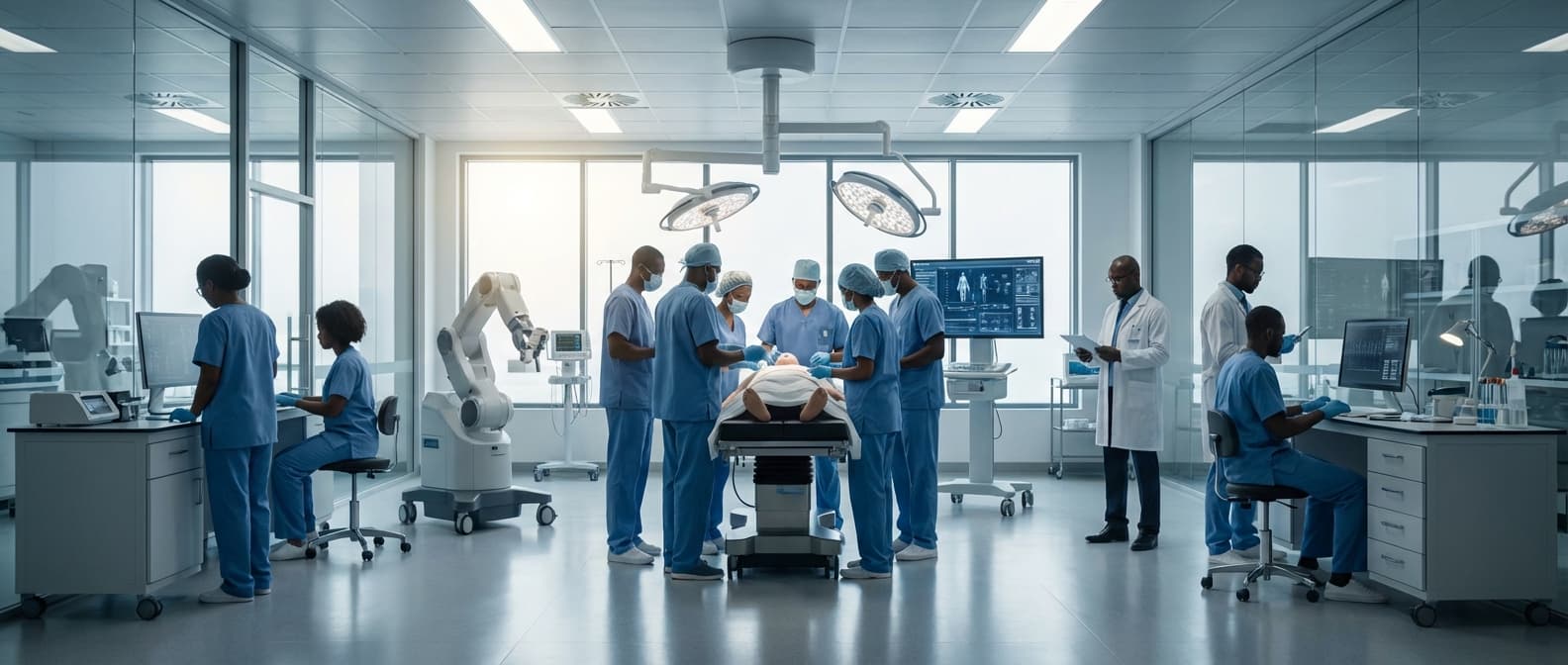
Biomedical Engineering Consulting in Zimbabwe
Engineering Excellence & Technical Support
Equipment selection, procurement and implementation consulting High-standard technical execution following OEM protocols and local regulatory frameworks.
Advanced Diagnostics & Imaging Optimization
Leveraging cutting-edge biomedical engineering principles, we enhance the performance and clinical utility of diagnostic and imaging equipment. Our expertise in signal processing, image reconstruction algorithms, and hardware integration ensures superior diagnostic accuracy, reduced radiation exposure, and improved patient outcomes across Zimbabwe's healthcare facilities.
Medical Device Innovation & Regulatory Compliance
We bridge the gap between innovative medical device concepts and market-ready solutions tailored for the Zimbabwean context. Our services encompass ideation, prototyping, biocompatibility testing, and navigating local and international regulatory pathways to ensure safe, effective, and accessible medical technologies for diverse healthcare needs.
Healthcare Infrastructure & Technology Integration
Specializing in the strategic planning and implementation of modern healthcare infrastructure, we ensure seamless integration of biomedical technology. Our consultancy focuses on optimizing workflow, enhancing patient safety, and maximizing the return on investment for hospitals and clinics, equipping them with robust and sustainable technological foundations.
What Is Biomedical Engineering Consulting In Zimbabwe?
Biomedical Engineering Consulting in Zimbabwe refers to the provision of specialized technical expertise and strategic guidance to organizations involved in the healthcare sector, focusing on the application of engineering principles to biological and medical problems. This service encompasses a broad spectrum of activities, including the design, development, procurement, implementation, maintenance, and regulatory compliance of medical devices, equipment, and healthcare facilities. Consultants leverage their interdisciplinary knowledge to bridge the gap between technological innovation and clinical application, aiming to enhance patient care, improve healthcare outcomes, optimize operational efficiency, and ensure the safe and effective use of medical technologies within the Zimbabwean context.
| Who Needs Biomedical Engineering Consulting? | Typical Use Cases in Zimbabwe |
|---|---|
| Public and Private Hospitals: Institutions requiring expertise in managing complex medical equipment, facility upgrades, and operational efficiency. | Procurement of advanced imaging systems (e.g., MRI, CT scanners) and surgical robots. Developing a hospital-wide preventive maintenance program for all medical devices. Renovating or building new hospital wings with specialized requirements (e.g., operating theatres, intensive care units). |
| Ministry of Health and Child Care (MoHCC) and other Government Agencies: Bodies responsible for national health infrastructure, policy development, and public healthcare service delivery. | Developing national guidelines for medical equipment procurement and maintenance. Conducting needs assessments for rural health clinics to equip them with essential medical devices. Evaluating the safety and efficacy of imported medical technologies. |
| Medical Device Manufacturers and Distributors: Companies seeking to introduce or expand their product offerings in the Zimbabwean market. | Navigating local regulatory requirements for device registration and import permits. Establishing post-sales technical support and service networks. Providing training to local healthcare professionals on their specific devices. |
| Research Institutions and Universities: Entities involved in medical research and the development of new healthcare technologies. | Advising on the selection and integration of research equipment. Ensuring compliance with safety standards for laboratory and research facilities. Facilitating the translation of research prototypes into clinical applications. |
| Non-Governmental Organizations (NGOs) and International Aid Agencies: Organizations involved in health development projects and humanitarian efforts. | Equipping mobile clinics or temporary medical facilities. Implementing sustainable equipment maintenance strategies in resource-limited settings. Assessing the impact and suitability of donated medical equipment. |
| Private Clinics and Specialized Medical Practices: Smaller healthcare providers requiring specialized equipment and operational support. | Selecting and installing specialized diagnostic equipment (e.g., dental chairs, endoscopes). Ensuring proper sterilization and infection control protocols for their equipment. |
Key Aspects of Biomedical Engineering Consulting in Zimbabwe:
- Needs Assessment and Feasibility Studies: Evaluating the requirements for medical equipment and infrastructure for new or existing healthcare facilities.
- Equipment Planning and Procurement: Developing specifications, sourcing, and managing the acquisition of medical devices, ensuring alignment with clinical needs and budget constraints.
- Installation and Commissioning: Overseeing the setup, calibration, and validation of new medical equipment to ensure optimal performance and safety.
- Maintenance and Repair Strategies: Establishing proactive and reactive maintenance programs, including in-house capabilities, third-party service agreements, and spare parts management.
- Clinical Engineering Services: Managing the lifecycle of medical devices, including inventory, risk assessment, user training, and safe decommissioning.
- Healthcare Facility Design and Infrastructure: Providing input on the design of hospital layouts, utility systems (e.g., medical gases, electrical power), and infection control measures from an engineering perspective.
- Regulatory Compliance and Quality Assurance: Advising on adherence to national and international standards and regulations governing medical devices and healthcare services.
- Technology Adoption and Integration: Facilitating the introduction and seamless integration of new medical technologies into existing healthcare workflows.
- Training and Capacity Building: Developing and delivering training programs for healthcare professionals on the operation, maintenance, and safe use of medical equipment.
- Risk Management and Patient Safety: Identifying and mitigating potential risks associated with medical devices and healthcare technologies.
Who Needs Biomedical Engineering Consulting In Zimbabwe?
Biomedical Engineering consulting in Zimbabwe is essential for a range of organizations seeking to optimize their healthcare infrastructure, improve patient care, and navigate the complexities of medical technology. These services are crucial for ensuring the safe, effective, and compliant use of medical devices, as well as for strategic planning and investment in healthcare technology. Our expertise bridges the gap between medical needs and technological solutions, offering invaluable support to various stakeholders within the Zimbabwean healthcare ecosystem.
| Customer Type | Key Departments/Interests |
|---|---|
| Hospitals (Public and Private) | Biomedical Engineering Department, Procurement Department, Administration, Clinical Departments (Surgery, Radiology, ICU, etc.), IT Department |
| Clinics and Health Centers | Management, Clinical Staff (Doctors, Nurses), Procurement Officers |
| Medical Device Manufacturers and Distributors | Sales and Marketing, Technical Support, Regulatory Affairs, Product Development |
| Government Ministries and Regulatory Bodies | Ministry of Health and Child Care (MOHCC), Standards Association of Zimbabwe (SAZ), Pharmaceuticals and Health Services Department, National Health Strategy Units |
| Research Institutions and Universities | Biomedical Engineering Departments, Medical Schools, Research Facilities, Procurement Offices |
| Non-Governmental Organizations (NGOs) in the Health Sector | Program Managers, Procurement Teams, Technical Advisors, Field Operations |
| Investment Firms and Development Partners | Project Evaluation Teams, Due Diligence Departments, Healthcare Investment Analysts |
Target Customers for Biomedical Engineering Consulting in Zimbabwe
- Hospitals (Public and Private)
- Clinics and Health Centers
- Medical Device Manufacturers and Distributors
- Government Ministries and Regulatory Bodies
- Research Institutions and Universities
- Non-Governmental Organizations (NGOs) in the Health Sector
- Investment Firms and Development Partners
Biomedical Engineering Consulting Process In Zimbabwe
The Biomedical Engineering consulting process in Zimbabwe, like in many other regions, follows a structured workflow designed to efficiently address client needs from initial contact to project completion. This process typically involves several key stages, ensuring clarity, feasibility, and successful implementation of biomedical engineering solutions within the Zimbabwean healthcare context. The specific steps might be adapted based on the complexity of the project, the client's requirements, and regulatory considerations unique to Zimbabwe.
| Stage | Description | Key Activities in Zimbabwe Context |
|---|---|---|
| Inquiry and Initial Consultation | The client (e.g., a hospital, clinic, government agency) expresses interest in biomedical engineering consulting services. | Initial discussion to understand the client's general needs, challenges, and expectations. This might involve understanding existing infrastructure, budget constraints, and immediate concerns regarding medical equipment or facilities within Zimbabwe. Contact is usually made via phone, email, or through professional networks. |
| Needs Assessment and Scope Definition | Detailed understanding of the client's specific requirements, challenges, and objectives. | On-site visits to healthcare facilities in Zimbabwe are crucial for assessing current equipment status, infrastructure limitations (e.g., power supply, water quality), and user needs. This stage involves gathering data on existing medical devices, identifying gaps, and defining the precise scope of work, deliverables, and success criteria, taking into account local operational realities and resource availability. |
| Proposal Development and Agreement | Formalizing the project plan, including services, timelines, and costs. | Developing a comprehensive proposal outlining the proposed solutions, methodologies, timelines, team expertise, and a detailed breakdown of costs, including any import duties or local taxes applicable in Zimbabwe. This is followed by negotiation and signing of a formal service agreement or contract, ensuring legal and financial clarity. |
| Planning and Design | Detailed technical planning and design of the solution. | Developing detailed technical specifications, architectural plans (if applicable for facility upgrades), and project management plans. This stage involves selecting appropriate technologies and solutions that are sustainable and maintainable within the Zimbabwean context, considering factors like spare parts availability and local technical expertise for future support. |
| Procurement and Sourcing | Acquiring necessary equipment, materials, and services. | Identifying and sourcing medical equipment, consumables, and specialized services. This may involve navigating import regulations, customs procedures, and working with local suppliers or international vendors. Ensuring the quality and compliance of procured items with Zimbabwean health standards is paramount. |
| Installation and Implementation | Deploying and setting up the designed solutions. | Supervising the installation of new equipment, modification of existing infrastructure, or implementation of new systems. This requires close coordination with local technical teams, adherence to safety protocols, and ensuring minimal disruption to healthcare services in Zimbabwe. |
| Testing, Validation, and Training | Ensuring the solution functions as intended and users are proficient. | Conducting rigorous testing and validation of all installed systems and equipment against specified performance criteria. Comprehensive training programs are delivered to healthcare professionals and technical staff in Zimbabwe on the operation, maintenance, and troubleshooting of the new technologies. This is critical for long-term sustainability. |
| Project Completion and Handover | Formalizing the conclusion of the project and transferring ownership. | Conducting a final review and acceptance of the project deliverables by the client. This includes providing all necessary documentation, manuals, and warranty information. Formal handover ceremonies may take place, signifying the successful completion of the consulting engagement. |
| Post-Implementation Support and Evaluation | Ongoing assistance and assessment of project impact. | Providing ongoing technical support, troubleshooting, and maintenance advice as per the agreement. This may also involve periodic evaluations to assess the long-term impact and effectiveness of the implemented solutions on healthcare delivery in Zimbabwe, identifying areas for further improvement or future projects. |
Biomedical Engineering Consulting Workflow in Zimbabwe
- Inquiry and Initial Consultation
- Needs Assessment and Scope Definition
- Proposal Development and Agreement
- Planning and Design
- Procurement and Sourcing
- Installation and Implementation
- Testing, Validation, and Training
- Project Completion and Handover
- Post-Implementation Support and Evaluation
Biomedical Engineering Consulting Cost In Zimbabwe
Biomedical Engineering consulting costs in Zimbabwe are influenced by a variety of factors, leading to a broad range of pricing. These factors can be broadly categorized into the nature of the service, the expertise and experience of the consultant, the project's complexity and duration, and the client's specific needs. Understanding these elements is crucial for organizations seeking specialized biomedical engineering advice, whether for equipment procurement, maintenance strategies, facility design, regulatory compliance, or strategic planning.
Key Pricing Factors:
- Scope and Complexity of the Project: Simple consultations, such as advising on a single piece of equipment or a minor process improvement, will naturally cost less than comprehensive projects like designing a new hospital wing's medical equipment infrastructure or conducting a full hospital-wide biomedical asset management audit. Projects requiring intricate technical analysis, advanced simulations, or in-depth research will command higher fees.
- Consultant's Expertise and Experience: Highly specialized consultants with a proven track record, extensive experience in specific medical technology areas (e.g., imaging, radiotherapy, laboratory diagnostics), or those holding advanced degrees and professional certifications will typically charge more. Junior consultants or those with more generalist experience will generally have lower rates.
- Duration of Engagement: Consulting engagements can range from a few hours of advisory services to multi-month or even year-long projects. The total cost will be directly proportional to the time invested by the consultant.
- Deliverables and Reporting: The type and depth of deliverables required also impact cost. A basic report will be less expensive than a comprehensive feasibility study, a detailed technical specification document, or a complete implementation plan with ongoing support.
- Travel and Accommodation: If the consultant needs to travel to the client's site within Zimbabwe, or internationally (though the focus here is local), travel expenses, accommodation, and per diem allowances will be added to the total cost.
- Urgency and Timeliness: Rush projects or those requiring immediate attention may incur premium fees due to the expedited nature of the work and the potential disruption to the consultant's existing schedule.
- Regulatory and Compliance Aspects: Consulting services related to navigating Zimbabwean health regulations, obtaining licenses, or ensuring compliance with specific medical device standards will often require specialized knowledge and can therefore be priced higher.
- Client's Budget and Negotiation: While standard rates exist, there can be room for negotiation, especially for long-term partnerships or when a client has a clearly defined budget. However, underpricing can sometimes signal a lack of experience or commitment.
Pricing Ranges in Local Currency (Zimbabwean Dollar - ZWL):
It's important to note that the Zimbabwean economy is subject to volatility, and exchange rates can fluctuate. Therefore, the following ranges are indicative and may vary significantly. Consultants may also offer pricing in USD, especially for larger projects or when dealing with international suppliers. When quoting in ZWL, the rate used often reflects current market conditions.
- Hourly Rates: For general advisory, troubleshooting, or short-term expert input, hourly rates can range from ZWL 300 to ZWL 1500+ per hour. This is highly dependent on the consultant's niche and experience. Top-tier specialists in critical areas could exceed this.
- Daily Rates: For more involved site visits, assessments, or project work, daily rates might range from ZWL 2,000 to ZWL 8,000+ per day. This often includes a defined scope of work for that day.
- Project-Based Fees: For defined projects, fees are typically agreed upon upfront. These can vary enormously:
* **Small-scale assessments or consultations (e.g., single equipment evaluation, basic compliance check):** ZWL 5,000 - ZWL 25,000.
* **Medium-scale projects (e.g., developing a maintenance plan for a department, advising on procurement of a few key pieces of equipment):** ZWL 30,000 - ZWL 150,000.
* **Large-scale projects (e.g., hospital equipment planning, complex regulatory submissions, facility design input):** ZWL 200,000 - ZWL 1,000,000+ or more. These often involve detailed proposals and phased payments.
- Retainer Agreements: For ongoing support and advisory services, retainer fees can be negotiated monthly, ranging from ZWL 10,000 to ZWL 50,000+ per month, depending on the expected level of service and hours.
Important Considerations:
When seeking biomedical engineering consulting services in Zimbabwe, it is advisable to:
- Clearly define your needs and objectives.
- Request detailed proposals from multiple consultants.
- Inquire about their experience and qualifications in your specific area.
- Understand the payment terms and currency of the contract.
- Be aware of potential hidden costs (e.g., travel, software licenses).
By carefully considering these factors and obtaining comprehensive quotes, organizations can secure the most appropriate and cost-effective biomedical engineering consulting services for their needs in Zimbabwe.
| Service Type/Engagement | Indicative Price Range (ZWL) |
|---|---|
| Hourly Rate (General Advisory) | 300 - 1,500+ |
| Daily Rate (Site Visits, Assessments) | 2,000 - 8,000+ |
| Small Project (e.g., single equipment eval) | 5,000 - 25,000 |
| Medium Project (e.g., maintenance plan) | 30,000 - 150,000 |
| Large Project (e.g., hospital equipment planning) | 200,000 - 1,000,000+ |
| Monthly Retainer (Ongoing Support) | 10,000 - 50,000+ |
Factors Influencing Biomedical Engineering Consulting Costs in Zimbabwe
- Scope and Complexity of the Project
- Consultant's Expertise and Experience
- Duration of Engagement
- Deliverables and Reporting Requirements
- Travel and Accommodation Expenses
- Project Urgency and Timeliness
- Involvement of Regulatory and Compliance Aspects
- Client's Budget and Negotiation Capacity
Affordable Biomedical Engineering Consulting Options
Navigating the complexities of biomedical engineering can be a significant challenge for startups and established companies alike. Securing expert advice is crucial for product development, regulatory compliance, and market entry. Fortunately, there are affordable biomedical engineering consulting options that leverage value bundles and smart cost-saving strategies to deliver high-impact solutions without breaking the bank. Understanding these approaches can empower you to access top-tier expertise and accelerate your project's success.
| Cost-Saving Strategy | Description | Benefits |
|---|---|---|
| Phased Engagement / Modular Services | Breaking down large projects into smaller, manageable phases or offering individual services that can be purchased as needed. This allows clients to control spending and only pay for what they require at each stage. | Flexibility in budgeting, reduced upfront investment, allows for iterative decision-making. |
| Offshore or Nearshore Resources | Utilizing consulting teams located in regions with lower labor costs. This requires careful project management and clear communication to ensure quality and timely delivery. | Significant cost reduction on labor, access to a wider talent pool. |
| Leveraging Existing Templates & Libraries | Consultants who have developed reusable documentation, design components, or testing frameworks can offer these as part of their services, reducing the need for custom development. | Faster project completion, reduced R&D costs, consistency in deliverables. |
| Partnerships with Specialized Labs/Manufacturers | Consulting firms that have established relationships with testing labs or contract manufacturers can often negotiate better rates for their clients. | Streamlined procurement, potential for discounted services, access to trusted partners. |
| Remote Collaboration Tools & Methodologies | Proactive use of video conferencing, collaborative platforms, and efficient project management software to minimize the need for in-person meetings and travel. | Reduced travel expenses, increased consultant availability, improved communication efficiency. |
| "Retainer" Models for Ongoing Support | Establishing a monthly retainer for a set number of hours or a specific scope of ongoing consultation. This provides predictable costs and ensures access to expertise when needed. | Budget predictability, continuous improvement, proactive problem-solving. |
| Focused Scope & Clear Deliverables | Clearly defining the project's objectives and deliverables from the outset prevents scope creep and unnecessary expenditure. Agile methodologies can also be employed for iterative development and cost control. | Avoidance of budget overruns, focused effort, timely project completion. |
Key Value Bundles in Biomedical Engineering Consulting
- Feasibility Studies & Concept Validation: Early-stage assessment of technical viability, market potential, and preliminary regulatory pathways. This bundle often includes literature reviews, competitive analysis, and initial risk assessments.
- Product Development Roadmapping: Comprehensive planning for your device's journey from concept to market. This bundle typically encompasses design requirements, prototyping strategies, testing plans, and a projected timeline.
- Regulatory Strategy & Documentation Support: Navigating the intricate landscape of FDA, CE, or other regulatory bodies. This bundle focuses on classification, submission pathways, and preparing necessary documentation like Design History Files (DHFs) or Technical Files.
- Design & Prototyping Services: Hands-on engineering support for translating concepts into tangible prototypes. This can range from CAD modeling and simulation to proof-of-concept builds and iterative design refinement.
- Testing & Verification Planning: Developing robust protocols for pre-clinical and clinical testing. This bundle ensures your device meets safety, efficacy, and performance standards.
- Quality System Implementation (ISO 13485): Establishing and refining your company's quality management system to meet industry standards. This is vital for sustainable manufacturing and regulatory compliance.
- Market Access & Commercialization Strategy: Planning for product launch, distribution, and post-market surveillance. This bundle often involves reimbursement strategies, marketing collateral development, and sales channel assessment.
Verified Providers In Zimbabwe
In Zimbabwe's evolving healthcare landscape, discerning reliable and high-quality medical services is paramount. Verified providers ensure that you receive care that meets stringent standards. Franance Health stands out as a beacon of excellence, offering a comprehensive network of credentialed healthcare professionals and facilities. Their rigorous vetting process guarantees that every provider within their network adheres to the highest ethical and clinical standards, offering peace of mind and superior patient outcomes.
| Criteria | Franance Health Verification | Benefits to Patients |
|---|---|---|
| Medical Licensure and Registration | Mandatory verification of current and valid licenses with the Medical and Dental Practitioners Council of Zimbabwe (MDPCZ) and other relevant regulatory bodies. | Ensures providers are legally authorized and qualified to practice medicine. |
| Professional Qualifications and Education | Thorough review of academic qualifications, specialist training, and continuous professional development records. | Guarantees that providers possess the necessary expertise and up-to-date knowledge. |
| Clinical Experience and Track Record | Assessment of practical experience, including years in practice, surgical history (where applicable), and any reported disciplinary actions. | Provides confidence in the provider's ability to manage a wide range of medical conditions effectively. |
| Ethical Conduct and Professionalism | Background checks and adherence to a strict code of conduct emphasizing patient rights, confidentiality, and ethical medical practice. | Ensures a safe, respectful, and trustworthy healthcare experience. |
| Facility Standards (for clinics/hospitals) | Where applicable, verification of facility infrastructure, equipment, hygiene standards, and compliance with health regulations. | Guarantees access to well-equipped and safe medical environments. |
Why Franance Health is the Best Choice for Verified Providers in Zimbabwe:
- Unwavering Commitment to Quality: Franance Health prioritizes patient safety and satisfaction above all else. Their verification process meticulously assesses credentials, experience, and adherence to best practices.
- Extensive Network of Specialists: Access a diverse range of medical disciplines and sub-specialties, ensuring you can find the right expert for your specific health needs.
- Transparent and Accessible Information: Franance Health provides clear and accessible information about their verified providers, empowering you to make informed healthcare decisions.
- Patient-Centric Approach: Beyond medical expertise, Franance Health partners with providers who demonstrate empathy, professionalism, and a genuine dedication to patient well-being.
- Streamlined Healthcare Access: Navigate the Zimbabwean healthcare system with confidence, knowing that Franance Health connects you with trusted and accredited medical professionals.
Scope Of Work For Biomedical Engineering Consulting
This Scope of Work (SOW) outlines the services to be provided by [Consulting Firm Name] (hereinafter referred to as the "Consultant") to [Client Name] (hereinafter referred to as the "Client") for biomedical engineering consulting services. The objective of this engagement is to [clearly state the overarching goal, e.g., provide technical guidance for the development of a novel medical device, optimize existing manufacturing processes, conduct a regulatory compliance assessment]. This SOW details the technical deliverables, the standard specifications that will be adhered to, and the project timeline.
| Deliverable Title | Description | Standard Specifications / Methodologies Adhered To | Deliverable Format | Estimated Completion Date |
|---|---|---|---|---|
| Project Kick-off Meeting Minutes | Summary of initial meeting, defining project scope, objectives, roles, and communication protocols. | Internal Company Best Practices for Meeting Documentation | PDF Document | Week 1 |
| Detailed Requirements Specification Document | Comprehensive documentation of functional, non-functional, and user requirements for the [medical device/product]. | ISO 13485:2016 (Quality Management Systems for Medical Devices) | Microsoft Word Document / PDF | Week 3 |
| Conceptual Design Report | Exploration of various design concepts, including trade-off analysis and preliminary feasibility assessment. | IEEE Standards for Biomedical Engineering | PDF Document with diagrams and schematics | Week 6 |
| Risk Management Plan and Report | Identification, analysis, evaluation, and control of potential risks associated with the medical device. | ISO 14971:2019 (Application of Risk Management to Medical Devices) | Microsoft Word Document / PDF | Week 8 |
| Prototype Design Documentation | Detailed CAD models, schematics, and bill of materials (BOM) for prototype development. | Relevant IEC Standards for Electrical Safety and Performance (e.g., IEC 60601 series) | CAD Files (e.g., .step, .sldprt), Schematics (e.g., .pdf), BOM (e.g., .xlsx) | Week 12 |
| Verification Test Protocols | Detailed procedures for verifying that the design outputs meet the specified design inputs. | Client's Internal Testing Procedures, Industry Best Practices for Engineering Testing | Microsoft Word Document / PDF | Week 15 |
| Verification Test Reports | Documentation of test results, analysis of findings, and conclusions regarding design verification. | ISO 13485:2016, Client's Internal SOPs | Microsoft Word Document / PDF | Week 18 |
| Validation Plan | Outline of activities to ensure the device meets user needs and intended uses under actual or simulated use conditions. | FDA Guidance Documents for Medical Device Validation | Microsoft Word Document / PDF | Week 20 |
| Validation Test Reports | Documentation of validation test results, demonstrating fitness for intended use. | ISO 13485:2016, Client's Internal SOPs | Microsoft Word Document / PDF | Week 24 |
| Regulatory Strategy Document | Analysis of regulatory pathways, classification, and requirements for market submission. | FDA Regulations (21 CFR Part 820), EU MDR/IVDR, relevant national regulations | Microsoft Word Document / PDF | Week 26 |
| Submission Dossier Draft (e.g., 510(k), CE Mark Technical File) | Preparation of key sections of the regulatory submission package. | Specific regulatory body requirements (e.g., FDA 510(k) submission guidelines, EU MDR Annexes) | Microsoft Word Document / PDF | Week 30 |
| Final Project Report and Recommendations | Comprehensive summary of project activities, findings, lessons learned, and recommendations for future steps. | Client Requirements, Industry Best Practices | Microsoft Word Document / PDF | Week 32 |
| Knowledge Transfer Session Summary | Documentation of training materials and key takeaways provided to the Client's team. | Client's Internal Training Procedures | Presentation Slides (e.g., PowerPoint), Summary Document (PDF) | Week 32 |
Project Phases and Key Activities
- Phase 1: Discovery and Requirements Gathering
- Phase 2: Design and Development Support
- Phase 3: Testing and Validation
- Phase 4: Regulatory Strategy and Submission Support
- Phase 5: Project Closure and Knowledge Transfer
Service Level Agreement For Biomedical Engineering Consulting
This Service Level Agreement (SLA) outlines the response times and uptime guarantees for Biomedical Engineering Consulting services provided by [Consulting Firm Name] (hereinafter referred to as "Consultant") to [Client Name] (hereinafter referred to as "Client"). This SLA is an integral part of the Master Service Agreement between the parties.
| Issue Priority | Response Time (Business Hours) | Target Resolution Time (Business Hours) | Uptime Guarantee |
|---|---|---|---|
| Critical Issue | 1 Hour | 4 Business Hours (initial assessment/workaround); 24 Business Hours (resolution, where feasible) | N/A (Uptime for critical devices is maintained through proactive maintenance and immediate support) |
| High Priority Issue | 2 Business Hours | 8 Business Hours | N/A (Uptime for critical devices is maintained through proactive maintenance and immediate support) |
| Medium Priority Issue | 4 Business Hours | 2 Business Days | N/A |
| Low Priority Issue | 8 Business Hours | 5 Business Days | N/A |
Key Definitions
- Business Hours: Monday through Friday, 9:00 AM to 5:00 PM, excluding national holidays.
- Critical Issue: A problem that renders a critical biomedical device or system completely inoperable, posing an immediate threat to patient safety or significantly disrupting essential healthcare operations.
- High Priority Issue: A problem that significantly degrades the performance or functionality of a biomedical device or system, impacting patient care or operational efficiency, but not to the extent of a Critical Issue.
- Medium Priority Issue: A problem that causes minor disruption to a biomedical device or system, affecting non-essential functionalities or causing minor inconveniences.
- Low Priority Issue: A request for information, general consultation, or a minor enhancement that does not impact the current functionality of any biomedical device or system.
- Response Time: The maximum time allowed for the Consultant to acknowledge receipt of a reported issue and initiate investigation.
- Resolution Time: The maximum time allowed for the Consultant to provide a permanent or acceptable workaround for a reported issue. (Note: This is dependent on issue complexity and availability of third-party resources where applicable).
- Uptime Guarantee: The percentage of time a specified service or system is expected to be operational and accessible.
Frequently Asked Questions

Ready when you are
Let's scope your Biomedical Engineering Consulting in Zimbabwe project in Zimbabwe.

Scaling healthcare logistics and technical systems across the entire continent.