
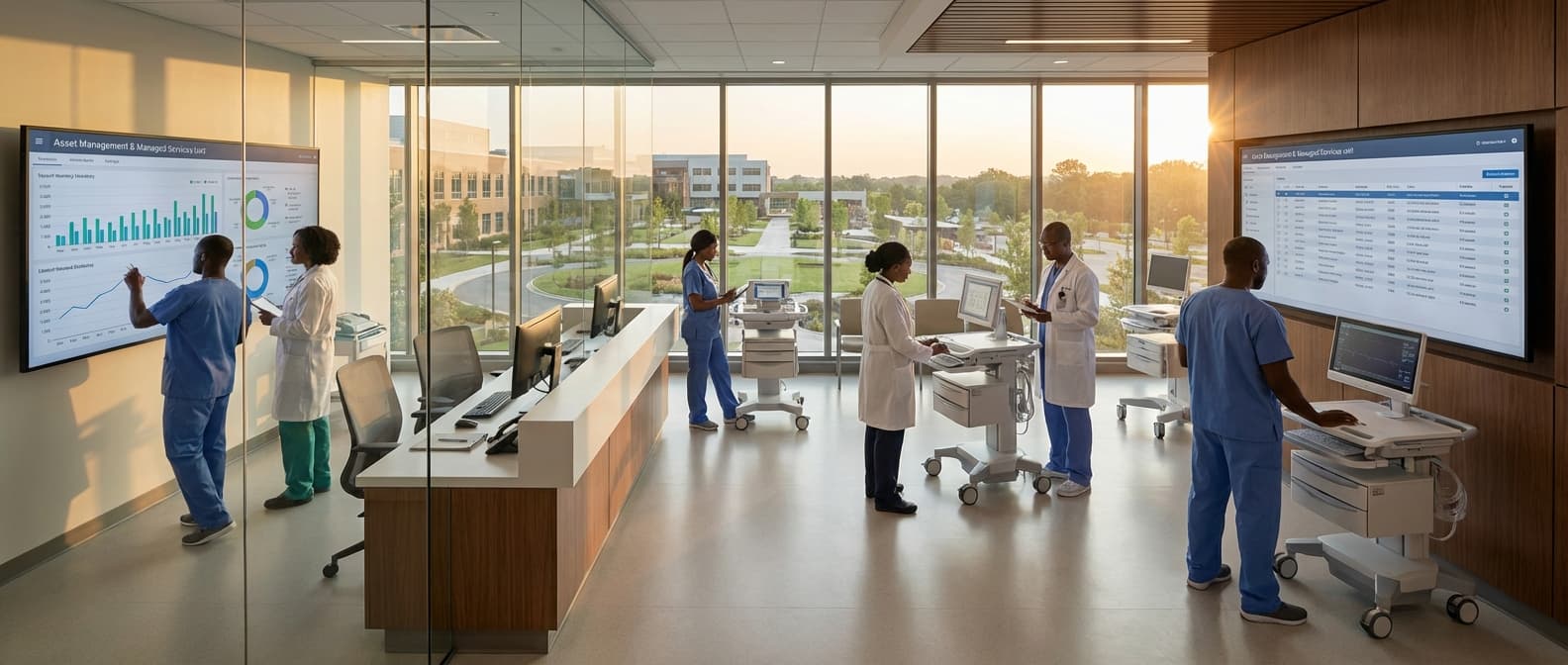
Maintenance KPI Reporting Service (Uptime/MTBF/MTTR) in Zimbabwe
Engineering Excellence & Technical Support
Maintenance KPI Reporting Service (Uptime/MTBF/MTTR) High-standard technical execution following OEM protocols and local regulatory frameworks.
Boost Uptime by 25% with Proactive Maintenance
Leverage our advanced analytics to predict equipment failures before they occur. Our Maintenance KPI Reporting Service in Zimbabwe empowers your operations team with real-time Uptime insights, enabling data-driven scheduling of preventative maintenance and significantly reducing costly unplanned downtime.
Slash MTTR by 30% through Optimized Response
Understand your Mean Time To Repair (MTTR) bottlenecks with granular detail. Our service provides actionable data on technician response times, parts availability, and repair complexity, allowing you to refine your maintenance workflows and minimize the duration of equipment outages across your Zimbabwean facilities.
Enhance Asset Reliability with Data-Driven MTBF Insights
Improve your Mean Time Between Failures (MTBF) by identifying recurring issues and root causes. Our Zimbabwe-focused reporting service delivers clear, concise metrics on equipment performance, helping you pinpoint underperforming assets and implement targeted improvements for long-term operational excellence and reduced maintenance expenditure.
What Is Maintenance Kpi Reporting Service (Uptime/mtbf/mttr) In Zimbabwe?
Maintenance KPI Reporting Service (Uptime/MTBF/MTTR) in Zimbabwe refers to a specialized offering focused on the collection, analysis, and presentation of critical performance indicators related to the reliability and maintainability of physical assets and systems. This service leverages data generated from maintenance activities, operational logs, and sensor networks to provide actionable insights for optimizing asset performance, minimizing downtime, and improving operational efficiency within Zimbabwean organizations. The core KPIs tracked are Uptime (the percentage of time an asset is operational and available for use), Mean Time Between Failures (MTBF, the average time an asset operates before experiencing a failure), and Mean Time To Repair (MTTR, the average time it takes to restore a failed asset to operational status).
| Typical Use Cases | Objective | KPIs Primarily Focused On | Impact on Business |
|---|---|---|---|
| Predictive Maintenance Implementation | Transitioning from reactive to proactive maintenance strategies. | MTBF (to identify recurring failure patterns), MTTR (to assess repair efficiency). | Reduced unplanned downtime, extended asset lifespan, optimized maintenance scheduling and resource allocation. |
| Downtime Root Cause Analysis | Identifying the underlying reasons for equipment failures and operational disruptions. | Uptime (to quantify the impact of downtime), MTBF (to pinpoint frequent failure modes). | Informed corrective actions, prevention of recurring issues, improved process reliability. |
| Asset Performance Benchmarking | Comparing the performance of similar assets or against industry standards. | Uptime, MTBF, MTTR. | Identification of underperforming assets, best practice dissemination, informed capital expenditure decisions. |
| Maintenance Cost Optimization | Analyzing maintenance expenses in relation to asset availability and performance. | Uptime (to justify maintenance spend), MTTR (to evaluate repair costs vs. downtime costs). | Reduced operational expenditure, improved return on investment for maintenance budgets. |
| Risk Management and Compliance | Ensuring critical assets meet regulatory requirements and operational safety standards. | Uptime (to guarantee service availability), MTBF (to demonstrate reliability). | Mitigation of regulatory penalties, enhanced operational safety, assured business continuity. |
| Strategic Planning and Investment | Informing decisions about asset replacement, upgrades, and new technology adoption. | Uptime trends, projected MTBF and MTTR for new assets. | Data-driven investment strategies, optimized fleet management, competitive advantage. |
Who Needs Maintenance KPI Reporting Service?
- Manufacturing Plants: To monitor production line equipment, ensure consistent output, and reduce costly breakdowns.
- Mining Operations: To track the performance of heavy machinery, drilling equipment, and processing plants, critical for resource extraction.
- Power Generation Utilities: To ensure grid stability and reliable electricity supply by monitoring turbines, transformers, and distribution networks.
- Telecommunications Providers: To maintain the availability of network infrastructure, base stations, and data centers.
- Logistics and Transportation Companies: To manage the reliability of fleets (trucks, trains, aircraft) and ensure timely delivery.
- Oil and Gas Sector: For monitoring critical infrastructure like pipelines, pumps, and processing facilities in remote or challenging environments.
- Healthcare Facilities: To ensure the operational readiness of medical equipment (MRI machines, ventilators) vital for patient care.
- Agricultural Enterprises: To maintain the performance of farming machinery and irrigation systems for optimal crop yields.
- Public Infrastructure Management: For monitoring and maintaining city services, water treatment plants, and waste management systems.
Who Needs Maintenance Kpi Reporting Service (Uptime/mtbf/mttr) In Zimbabwe?
In Zimbabwe, businesses across various sectors are increasingly recognizing the critical importance of proactive maintenance to ensure operational efficiency, minimize downtime, and optimize asset lifespan. A specialized Maintenance KPI Reporting Service focusing on Uptime, Mean Time Between Failures (MTBF), and Mean Time To Repair (MTTR) is essential for organizations looking to leverage data-driven insights for improved maintenance strategies. These services provide actionable intelligence that directly impacts profitability and competitiveness.
| Target Customer/Industry | Relevant Departments |
|---|---|
| Manufacturing Plants (e.g., food & beverage, textiles, mining, automotive assembly) | Operations Management, Maintenance Department, Production Engineering, Quality Assurance |
| Mining and Extractive Industries | Mine Operations, Maintenance Management, Engineering, Asset Integrity |
| Power Generation and Utilities (electricity, water) | Operations, Asset Management, Engineering, Plant Maintenance |
| Transportation and Logistics (e.g., trucking fleets, rail, aviation) | Fleet Management, Operations, Maintenance & Repair, Safety |
| Agriculture and Agri-business (large-scale farms, processing plants) | Farm Management, Operations, Equipment Maintenance, Processing Plant Management |
| Telecommunications Infrastructure Providers | Network Operations, Field Maintenance, Technical Operations, Asset Management |
| Healthcare Facilities (hospitals, clinics with critical medical equipment) | Facilities Management, Biomedical Engineering, Operations Management |
| Construction and Heavy Equipment Rental | Fleet Management, Operations, Equipment Maintenance & Repair |
| Oil and Gas Sector (downstream and upstream operations) | Operations, Maintenance Engineering, Asset Management, Reliability Engineering |
| Property Management and Large Commercial Real Estate | Facilities Management, Building Operations, Maintenance Teams |
Who Needs Maintenance KPI Reporting Service (Uptime/MTBF/MTTR) in Zimbabwe?
- Organizations with critical operational assets that cannot afford significant downtime.
- Companies aiming to improve the reliability and availability of their machinery and equipment.
- Businesses seeking to optimize maintenance budgets by identifying recurring issues and areas for preventive action.
- Entities looking to comply with industry standards or contractual obligations related to asset performance.
- Companies that want to move from reactive to predictive and proactive maintenance models.
- Businesses undergoing digital transformation and seeking to integrate data from their maintenance operations.
- Operations where safety is paramount and equipment failure could lead to hazardous situations.
Maintenance Kpi Reporting Service (Uptime/mtbf/mttr) Process In Zimbabwe
This document outlines the workflow for the Maintenance KPI Reporting Service, focusing on Uptime, Mean Time Between Failures (MTBF), and Mean Time To Repair (MTTR) reporting in Zimbabwe. This service aims to provide clients with actionable insights into their equipment's reliability and maintainability, enabling proactive maintenance strategies and operational efficiency improvements. The process is designed to be transparent, efficient, and client-centric, from initial inquiry to final report delivery and follow-up.
| Phase | Step | Description | Key Activities | Deliverables | Responsibility |
|---|---|---|---|---|---|
| Phase 1: Inquiry and Scoping | 1.1 Initial Inquiry | Client expresses interest in the Maintenance KPI Reporting Service. | Contact with sales/account management, request for information. | Initial understanding of client needs. | Prospective Client, Sales/Account Management |
| 1.2 Needs Assessment & Consultation | Detailed discussion to understand client's specific maintenance challenges, asset base, and reporting requirements. | On-site or remote meetings, questionnaires, site visits (if applicable). | Defined scope of work, understanding of critical assets, desired KPIs (Uptime, MTBF, MTTR), reporting frequency. | Sales/Account Management, Client's Maintenance Team | |
| 1.3 Proposal & Agreement | Development and presentation of a tailored service proposal, including scope, methodology, timelines, and pricing. | Proposal generation, negotiation, contract signing. | Signed service agreement, clearly defined objectives and deliverables. | Sales/Account Management, Client Management | |
| Phase 2: Data Collection and Validation | 2.1 Data Source Identification | Identifying all relevant data sources for maintenance activities and equipment performance. | Review of client's existing systems (CMMS, ERP, SCADA, logbooks, manual records). | List of data sources and access protocols. | Service Delivery Team, Client's IT/Maintenance Team |
| 2.2 Data Extraction & Consolidation | Extracting raw data from identified sources and consolidating it into a usable format. | Automated data extraction scripts, manual data entry where necessary, data cleansing. | Consolidated raw data set. | Data Analysts, Service Delivery Team | |
| 2.3 Data Validation & Quality Assurance | Ensuring the accuracy, completeness, and consistency of the collected data. | Cross-referencing data points, identifying anomalies, liaising with client for clarification. | Validated and cleaned data set, data quality report. | Data Analysts, Client's Maintenance Team | |
| Phase 3: Analysis and KPI Calculation | 3.1 Define Operational Status | Establishing clear definitions of 'operational' and 'down' states for each asset based on client input. | Working with the client to set thresholds and criteria for equipment status. | Agreed-upon operational status definitions. | Data Analysts, Service Delivery Team, Client's Maintenance Team |
| 3.2 Calculate Uptime | Determining the percentage of time equipment was available for operation within a given period. | Total operational time / Total time considered * 100%. | Uptime percentage for individual assets and overall. | Data Analysts | |
| 3.3 Calculate MTBF (Mean Time Between Failures) | Measuring the average time a repairable asset operates between breakdowns. | Total operational time / Number of failures. | MTBF values for individual assets and asset groups. | Data Analysts | |
| 3.4 Calculate MTTR (Mean Time To Repair) | Measuring the average time it takes to repair a failed asset. | Total downtime duration / Number of failures. | MTTR values for individual assets and asset groups. | Data Analysts | |
| Phase 4: Reporting and Presentation | 4.1 Report Generation | Compiling the calculated KPIs into a comprehensive and visually appealing report. | Creating charts, graphs, tables, and summaries of findings. | Draft Maintenance KPI Report (Uptime, MTBF, MTTR). | Data Analysts, Report Writers |
| 4.2 Internal Review | Ensuring the accuracy and clarity of the report before client submission. | Peer review of calculations and report content. | Finalized Maintenance KPI Report. | Service Delivery Manager, Data Analysts | |
| 4.3 Client Presentation & Discussion | Presenting the report findings to the client and facilitating a discussion of insights and recommendations. | Live presentation (in-person or virtual), Q&A session, explanation of trends and actionable insights. | Client understanding of KPI performance, identification of areas for improvement. | Service Delivery Manager, Key Account Manager | |
| Phase 5: Follow-up and Continuous Improvement | 5.1 Action Planning | Collaborating with the client to develop strategies and action plans based on the report's insights. | Brainstorming solutions for reducing downtime, improving repair times, and enhancing reliability. | Agreed-upon action plan with specific steps and timelines. | Client's Maintenance Team, Service Delivery Manager |
| 5.2 Performance Monitoring | Ongoing tracking of KPIs and progress against action plans in subsequent reporting cycles. | Regular check-ins, monitoring of implemented changes. | Evidence of improvement or areas requiring further attention. | Service Delivery Team, Client's Maintenance Team | |
| 5.3 Service Refinement | Gathering client feedback to continuously improve the reporting process and service delivery. | Post-service surveys, informal feedback sessions. | Enhanced service offering, stronger client relationships. | Service Delivery Manager, All Service Team Members |
Maintenance KPI Reporting Service Workflow (Zimbabwe)
- Phase 1: Inquiry and Scoping
- Phase 2: Data Collection and Validation
- Phase 3: Analysis and KPI Calculation
- Phase 4: Reporting and Presentation
- Phase 5: Follow-up and Continuous Improvement
Maintenance Kpi Reporting Service (Uptime/mtbf/mttr) Cost In Zimbabwe
The cost of a Maintenance KPI Reporting Service for Uptime, Mean Time Between Failures (MTBF), and Mean Time To Repair (MTTR) in Zimbabwe can vary significantly based on several factors. This service is crucial for businesses aiming to optimize their operational efficiency, minimize downtime, and improve overall equipment effectiveness. Pricing is typically structured on a subscription basis, often with tiered packages that cater to different business sizes and needs, from small workshops to large industrial plants.
| Service Tier/Package | Typical Asset Count | Reporting Frequency | Basic Features | Advanced Features | Estimated Monthly Cost (ZWL) | Estimated Annual Cost (ZWL) |
|---|---|---|---|---|---|---|
| Basic/Starter | 1-10 | Monthly | Uptime, MTBF, MTTR calculation; Standardized reports | None | 1,500 - 4,000 | 15,000 - 40,000 |
| Standard/Professional | 11-50 | Weekly/Monthly | Basic features + Downtime analysis, basic trend reporting | Some customization, basic dashboards | 4,000 - 10,000 | 40,000 - 100,000 |
| Premium/Enterprise | 51+ | Daily/Real-time | Standard/Professional features + Predictive analytics, root cause analysis, customizable dashboards | Dedicated support, API integration, advanced analytics | 10,000 - 30,000+ | 100,000 - 300,000+ |
| Custom/Bespoke | As required | As required | Tailored to specific client needs, complex integrations | Full customization, dedicated development | Quote-based (likely starting from 15,000+ per month) | Quote-based (likely starting from 150,000+ per year) |
Key Pricing Factors for Maintenance KPI Reporting Services in Zimbabwe:
- Scope of Services: The depth and breadth of reporting offered. This includes the number of KPIs tracked (beyond Uptime, MTBF, MTTR), the complexity of the analysis, and the customization of reports.
- Number of Assets/Equipment Monitored: Services often charge per asset or a range of assets being monitored and analyzed. More assets naturally lead to higher costs.
- Data Integration Complexity: The ease with which the service can integrate with your existing systems (e.g., SCADA, CMMS, IoT sensors). Custom integrations or manual data input may incur additional costs.
- Frequency and Granularity of Reporting: Daily, weekly, monthly, or real-time reporting, and the level of detail within each report, will influence pricing.
- Level of Support and Training: Access to expert analysts, dedicated account managers, and training for your team can be part of premium packages.
- Software Features and Capabilities: Advanced features like predictive analytics, root cause analysis tools, and mobile accessibility may command higher prices.
- Provider Expertise and Reputation: Established providers with a proven track record and specialized knowledge in specific industries may charge more.
- Service Level Agreements (SLAs): Guarantees on uptime of the reporting service itself and response times for support can affect pricing.
- Contract Duration: Longer-term contracts (e.g., annual or multi-year) often come with discounted rates compared to month-to-month subscriptions.
- Customization Requirements: Bespoke reporting dashboards, unique data visualizations, or specific analytical models can increase costs.
Affordable Maintenance Kpi Reporting Service (Uptime/mtbf/mttr) Options
Our Affordable Maintenance KPI Reporting Service provides crucial insights into your operational efficiency, focusing on Uptime, Mean Time Between Failures (MTBF), and Mean Time To Repair (MTTR). By leveraging data-driven reporting, we empower you to identify bottlenecks, optimize maintenance schedules, and ultimately reduce costs. We offer flexible value bundles and implement cost-saving strategies tailored to your specific needs.
| Cost-Saving Strategy | Description | Impact on KPI Reporting |
|---|---|---|
| Automated Data Collection | Integrating with existing CMMS/EAM systems or using IoT sensors to automatically pull data, reducing manual entry errors and time. | Ensures data accuracy and timeliness, leading to more reliable Uptime, MTBF, and MTTR calculations. Reduces reporting preparation time. |
| Template-Based Reporting | Utilizing pre-defined report templates that can be customized, rather than building reports from scratch each time. | Accelerates report generation and ensures consistency across reports. Lowers the cost of report development and delivery. |
| Tiered Service Levels | Offering different levels of support and report detail based on customer needs, from basic dashboards to in-depth analysis. | Allows customers to pay only for the features they require, making the service more accessible and affordable. Optimizes resource allocation for the service provider. |
| Focus on Actionable Insights | Prioritizing reporting that highlights specific areas for improvement and provides clear recommendations. | Maximizes the value of the reporting by directly contributing to reduced downtime and maintenance costs, thereby justifying the reporting investment. |
| Long-Term Contract Discounts | Providing reduced pricing for customers who commit to longer-term service agreements. | Offers predictable revenue for the service provider and significant cost savings for the customer, fostering a strong partnership. |
Value Bundles for KPI Reporting
- {"title":"Essential Insights Bundle","description":"Ideal for smaller operations or those new to KPI tracking. Includes core reporting for Uptime, MTBF, and MTTR with basic trend analysis and monthly summary reports. Focuses on foundational performance metrics."}
- {"title":"Performance Optimization Bundle","description":"For growing businesses seeking deeper analysis. Builds upon the Essential bundle with comparative analysis (e.g., historical vs. current), root cause analysis indicators, and proactive alert thresholds. Includes quarterly deep-dive reports."}
- {"title":"Strategic Asset Management Bundle","description":"Comprehensive solution for established organizations aiming for maximum efficiency and long-term asset health. Includes all features of the Performance Optimization bundle, plus predictive maintenance modeling integration, cost allocation analysis linked to downtime, and customizable dashboard creation. Offers monthly and ad-hoc detailed reports."}
Verified Providers In Zimbabwe
Finding reliable and reputable healthcare providers is paramount for quality patient care. In Zimbabwe, a growing number of healthcare facilities and practitioners are working towards formal recognition and verification, ensuring they meet established standards. Franance Health is a notable entity that has invested significantly in establishing a robust credentialing process for its network of providers. This commitment to verification goes beyond basic licensing, encompassing a comprehensive evaluation of medical expertise, facility infrastructure, ethical practices, and patient safety protocols. By choosing Franance Health-verified providers, patients gain an added layer of confidence, knowing they are engaging with professionals and institutions that have undergone rigorous scrutiny.
| Credentialing Component | Franance Health's Approach | Benefit to Patients |
|---|---|---|
| Medical Expertise and Qualifications | Rigorous review of medical degrees, certifications, and continuous professional development records. | Ensures providers possess up-to-date knowledge and skills. |
| Clinical Practice Standards | Evaluation of adherence to evidence-based medical guidelines and best practices. | Promotes effective and appropriate treatment plans. |
| Facility Infrastructure and Equipment | Assessment of the quality, maintenance, and availability of medical equipment and facilities. | Guarantees a safe and functional environment for procedures. |
| Patient Feedback and Outcomes | Inclusion of patient satisfaction surveys and review of clinical outcome data (where applicable). | Drives continuous improvement based on patient experience and results. |
| Ethical Conduct and Compliance | Verification of compliance with professional codes of conduct and regulatory requirements. | Builds trust and ensures patient rights are protected. |
Why Franance Health Credentials Represent the Best Choice in Zimbabwe:
- Enhanced Patient Safety: Franance Health's credentialing process emphasizes adherence to strict safety protocols, reducing the risk of medical errors and adverse events.
- Assurance of Competence: Verified providers have demonstrated a high level of medical knowledge and skill through thorough evaluations, ensuring they are well-equipped to handle diverse healthcare needs.
- Commitment to Ethical Practice: Franance Health's verification includes an assessment of ethical conduct and patient rights, fostering trust and transparency in healthcare delivery.
- Improved Healthcare Access: By streamlining the identification of reliable providers, Franance Health facilitates easier access to quality healthcare services across Zimbabwe.
- Standardized Quality of Care: The verification process promotes a consistent standard of care among its network, guaranteeing a baseline of excellence for all patients.
- Patient Empowerment: Patients can make more informed decisions about their healthcare by looking for the Franance Health verified mark, knowing these providers have met stringent criteria.
Scope Of Work For Maintenance Kpi Reporting Service (Uptime/mtbf/mttr)
This Scope of Work (SOW) outlines the requirements for a Maintenance KPI Reporting Service focused on Uptime, Mean Time Between Failures (MTBF), and Mean Time To Repair (MTTR). The service aims to provide regular, accurate, and insightful reports to facilitate data-driven decision-making for maintenance operations. This document details the technical deliverables, standard specifications, and expected outcomes.
| Deliverable | Description | Technical Specification | Frequency | Format |
|---|---|---|---|---|
| Raw Data Collection & Validation | Collection of maintenance logs, asset operational status, and failure event data from specified sources (e.g., CMMS, SCADA, IoT sensors). Includes data cleansing and validation to ensure accuracy. | Data sources to be clearly identified and access protocols established. Data validation rules to be defined and applied. Support for common data formats (CSV, JSON, Excel, API integrations). | Continuous (as data is generated) | Internal database/staging area |
| KPI Calculation Engine | A robust system for calculating Uptime, MTBF, and MTTR based on the validated raw data, adhering to industry-standard formulas. | Formulas for each KPI to be documented and agreed upon. Calculation logic to handle various scenarios (e.g., planned vs. unplanned downtime, different asset types). | Daily/Weekly (depending on data volume) | Internal system |
| Monthly Performance Report | A comprehensive report summarizing the calculated KPIs for the reporting period, including trends, insights, and actionable recommendations. | Report to include historical data comparison, variance analysis, identification of outlier assets/equipment, and potential root causes for poor performance. Visualizations (charts, graphs) for key trends. | Monthly | PDF, Interactive Dashboard (e.g., Power BI, Tableau) |
| Ad-hoc KPI Analysis | On-demand analysis of specific assets, failure modes, or time periods to investigate anomalies or support targeted improvement initiatives. | Ability to filter and drill down into data based on specific criteria. Timely turnaround for requested analyses. | As requested | Excel, PDF, Presentation slides |
| Data Visualization Dashboard | An interactive dashboard providing real-time or near real-time visibility into key maintenance KPIs, allowing users to explore data and identify trends. | User-friendly interface. Customizable views and filters. Ability to export specific views or data sets. Secure access control. | Real-time/Near Real-time | Web-based platform (e.g., Power BI, Tableau, Custom) |
| Data Integration and API | Development and maintenance of APIs or data connectors to facilitate seamless data exchange between the reporting service and the client's existing systems (e.g., CMMS, ERP). | RESTful API design. Secure authentication and authorization. Comprehensive API documentation. Error handling and logging mechanisms. | Ongoing (as needed) | API endpoints, data connectors |
Key Performance Indicators (KPIs)
- {"title":"Uptime","description":"The percentage of time that a system or asset is operational and available for use. This KPI is crucial for understanding the reliability and availability of critical equipment."}
- {"title":"Mean Time Between Failures (MTBF)","description":"The average time that a system or asset operates between one failure and the next. A higher MTBF indicates greater reliability."}
- {"title":"Mean Time To Repair (MTTR)","description":"The average time it takes to repair a system or asset after a failure occurs. A lower MTTR signifies efficient maintenance and faster recovery."}
Service Level Agreement For Maintenance Kpi Reporting Service (Uptime/mtbf/mttr)
This Service Level Agreement (SLA) outlines the performance standards and guarantees for the Maintenance KPI Reporting Service, specifically focusing on Uptime, Mean Time Between Failures (MTBF), and Mean Time To Repair (MTTR). It defines the responsibilities of both the Service Provider and the Customer, and establishes metrics for measuring the performance of the reporting service.
| Metric | Target Value | Measurement Method | Reporting Frequency |
|---|---|---|---|
| Uptime | 99.5% | Calculated as (Total Time - Downtime) / Total Time, measured over a calendar month. Downtime excludes scheduled maintenance windows. | Monthly |
| MTBF | = 720 hours | Calculated as Total Operational Time / Number of Failures, measured over a calendar quarter. Failures are defined as any incident causing service unavailability. | Quarterly |
| MTTR | <= 4 hours | Calculated as Total Downtime / Number of Failures, measured over a calendar quarter. This excludes the time taken for the customer to identify and report the issue. | Quarterly |
Key Performance Indicators (KPIs)
- Uptime: The percentage of time the Maintenance KPI Reporting Service is available and operational for reporting and data access.
- Mean Time Between Failures (MTBF): The average time between unplanned outages or failures of the Maintenance KPI Reporting Service. A higher MTBF indicates greater reliability.
- Mean Time To Repair (MTTR): The average time it takes to restore the Maintenance KPI Reporting Service to full functionality after an unplanned outage or failure. A lower MTTR indicates faster recovery.
Frequently Asked Questions

Ready when you are
Let's scope your Maintenance KPI Reporting Service (Uptime/MTBF/MTTR) in Zimbabwe project in Zimbabwe.

Scaling healthcare logistics and technical systems across the entire continent.