
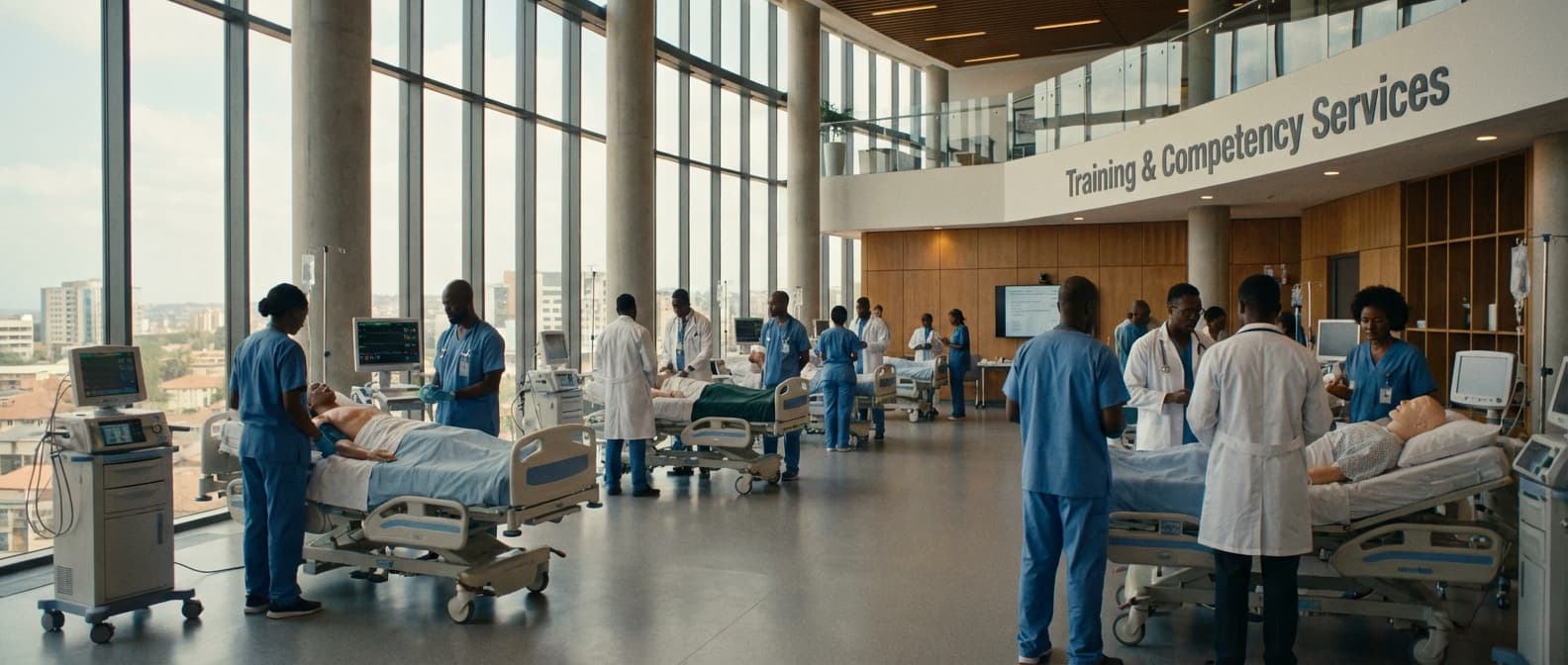
Ventilator User Training Service (Nurses) in Zambia
Engineering Excellence & Technical Support
Ventilator User Training Service (Nurses) High-standard technical execution following OEM protocols and local regulatory frameworks.
Mastering Ventilation Modes
Understand the core principles and practical application of common ventilator modes (e.g., SIMV, AC, PSV) relevant to Zambian healthcare settings. Learn how to select the appropriate mode based on patient condition and clinical assessment to optimize oxygenation and ventilation.
Interpreting Ventilator Waveforms & Alarms
Gain proficiency in analyzing key ventilator waveforms (pressure, flow, volume) to identify patient-ventilator dyssynchrony and underlying issues. Learn to effectively respond to and troubleshoot common ventilator alarms in a timely and decisive manner.
Safe Ventilator Circuit Management & Infection Control
Implement best practices for sterile ventilator circuit handling, changes, and troubleshooting to minimize the risk of Ventilator-Associated Pneumonia (VAP). Understand essential infection control protocols for ventilator users in resource-limited environments.
What Is Ventilator User Training Service (Nurses) In Zambia?
Ventilator User Training Service (Nurses) in Zambia refers to specialized educational programs designed to equip registered nurses with the knowledge and practical skills necessary for the safe and effective operation, monitoring, and management of mechanical ventilators in clinical settings within Zambia. This service is critical for ensuring optimal patient outcomes, minimizing ventilator-associated complications, and adhering to established healthcare protocols. The training focuses on the physiological principles of mechanical ventilation, understanding ventilator modes, setting appropriate parameters, interpreting waveforms and alarms, performing routine maintenance, and troubleshooting common issues.
| Who Needs Ventilator User Training (Nurses)? | Typical Use Cases/Clinical Scenarios |
|---|---|
| Registered Nurses working in critical care units (ICUs, HDUs) of hospitals in Zambia. | Management of patients with acute respiratory failure due to conditions such as severe pneumonia, Acute Respiratory Distress Syndrome (ARDS), sepsis, trauma, and post-surgical complications. |
| Nurses in emergency departments responsible for initial management of critically ill patients requiring ventilatory support. | Providing ventilatory support for patients undergoing surgical procedures requiring general anesthesia and mechanical ventilation. |
| Nurses in specialized units (e.g., neonatal ICUs, pediatric ICUs) requiring specific training on pediatric and neonatal ventilators. | Facilitating the weaning process for patients transitioning off mechanical ventilation. |
| Nurses involved in the transport of critically ill patients requiring mechanical ventilation. | Utilizing non-invasive ventilation (NIV) for patients with conditions like COPD exacerbations, heart failure, and obstructive sleep apnea. |
| Nurses in district hospitals or health centers that may have limited access to advanced respiratory support but still require basic ventilator management skills for severe cases. | Responding to public health emergencies or pandemics that result in a surge of patients requiring respiratory support. |
Key Components of Ventilator User Training for Nurses in Zambia:
- Theoretical Foundations: Principles of respiratory physiology, pathophysiology of respiratory failure, gas exchange, and the rationale behind mechanical ventilation.
- Ventilator Technology: Familiarization with various makes and models of ventilators commonly used in Zambian healthcare facilities, including their components, interfaces, and functionalities.
- Ventilator Modes and Settings: In-depth understanding of different ventilation modes (e.g., Volume Control, Pressure Control, SIMV, PSV), their indications, contraindications, and appropriate parameter selection based on patient condition.
- Patient Interface Management: Proper selection and management of endotracheal tubes, tracheostomy tubes, and non-invasive ventilation interfaces (e.g., nasal masks, full-face masks).
- Monitoring and Assessment: Skills in interpreting ventilator waveforms (pressure-volume loops, flow-time, pressure-time), physiological parameters (SpO2, ETCO2, ABGs), and patient's clinical response to ventilation.
- Alarm Management: Recognition, interpretation, and prompt response to various ventilator alarms, differentiating between patient-related and system-related issues.
- Ventilator-Associated Complications (VACs) Prevention: Education on strategies to prevent ventilator-associated pneumonia (VAP), barotrauma, volutrauma, and other complications.
- Weaning Protocols: Understanding the principles and practical application of ventilator weaning, including assessment of readiness and appropriate weaning techniques.
- Troubleshooting and Maintenance: Basic troubleshooting of common ventilator malfunctions and adherence to scheduled maintenance protocols.
- Infection Control: Strict adherence to infection control practices during the management of ventilated patients.
- Ethical and Legal Considerations: Awareness of ethical principles and legal responsibilities related to mechanical ventilation.
Who Needs Ventilator User Training Service (Nurses) In Zambia?
This document outlines the essential need for Ventilator User Training Services specifically tailored for nurses in Zambia. As the healthcare landscape in Zambia evolves and the use of advanced medical equipment like ventilators becomes more prevalent, ensuring nurses possess the requisite skills and knowledge is paramount for patient safety and optimal treatment outcomes. This training addresses the critical skills gap and empowers nurses to confidently and effectively operate and manage ventilators.
| Department/Area | Description of Need | Specific Training Focus |
|---|---|---|
| Intensive Care Units (ICUs) | High volume of critically ill patients requiring mechanical ventilation. | Advanced ventilation modes, weaning protocols, troubleshooting, monitoring, and management of complex respiratory conditions. |
| High Dependency Units (HDUs) | Patients requiring closer monitoring and potential transition to full ventilation. | Basic to intermediate ventilation settings, monitoring vital signs, identifying signs of deterioration, and escalation procedures. |
| Emergency Departments (EDs)/Accident & Emergency (A&E) | Rapid assessment and stabilization of patients with acute respiratory failure. | Initiation of ventilation, basic ventilator settings, oxygenation strategies, and safe handover to critical care teams. |
| Operating Theatres (OTs) | Patients requiring ventilation during surgical procedures. | Peri-operative ventilation management, understanding anesthetic interactions, and ensuring smooth transition post-surgery. |
| Pediatric Intensive Care Units (PICUs) | Ventilation for infants and children with diverse pediatric respiratory conditions. | Pediatric-specific ventilator settings, tidal volume calculations, lung protective strategies for children, and management of common pediatric respiratory emergencies. |
| Neonatal Intensive Care Units (NICUs) | Ventilation for premature infants and neonates with respiratory distress syndrome. | Neonatal-specific ventilators (e.g., HFOV), low tidal volume ventilation, surfactant administration interface, and management of delicate neonatal respiratory systems. |
| Rural/Remote Health Facilities | Limited access to specialized medical support; nurses may be the primary responders. | Essential ventilator operation, basic troubleshooting, maintenance, and understanding limitations and referral pathways. |
| Patient Transfer & Transport Teams | Maintaining ventilation support during inter-facility transfers. | Portable ventilator operation, managing ventilation during movement, power management, and emergency response during transport. |
| Nurse Educators/Trainers | Responsible for disseminating knowledge and skills to other nurses. | Advanced understanding of ventilator principles, curriculum development, effective teaching methodologies for practical skills, and competency assessment. |
Target Customers and Departments for Ventilator User Training Service (Nurses) in Zambia
- Nurses working in Intensive Care Units (ICUs).
- Nurses in High Dependency Units (HDUs).
- Nurses in Emergency Departments (EDs) or Accident & Emergency (A&E) units.
- Nurses in Operating Theatres (OTs) who may be involved in post-operative ventilation.
- Nurses in Pediatric Intensive Care Units (PICUs) requiring specialized pediatric ventilator training.
- Nurses in Neonatal Intensive Care Units (NICUs) for neonatal ventilator management.
- Nurses in rural or remote health facilities that may be equipped with ventilators.
- Nurses involved in patient transfer and transport where ventilators are used.
- Nurse educators and trainers responsible for in-house training programs.
- Newly qualified nurses entering critical care settings.
Ventilator User Training Service (Nurses) Process In Zambia
The Ventilator User Training Service for Nurses in Zambia is a structured process designed to equip nurses with the necessary skills and knowledge to safely and effectively operate and manage ventilators. This process ensures that healthcare professionals are well-prepared to utilize this critical medical equipment, particularly in challenging healthcare environments. The workflow begins with an initial inquiry from a healthcare institution or individual nurse seeking training and culminates in the successful completion of the training program and subsequent certification. The service emphasizes hands-on practice, theoretical understanding, and adherence to Zambian healthcare standards and protocols.
| Stage | Description | Key Activities | Responsible Parties |
|---|---|---|---|
| Initial contact from a healthcare facility or individual nurse expressing interest in ventilator training. | Contacting the training provider, discussing training needs (number of nurses, specific ventilator models, existing skill levels), clarifying objectives and desired outcomes. | Healthcare Facility/Nurse, Training Provider |
| The training provider develops a tailored proposal based on the assessed needs. | Submission of a detailed training proposal outlining curriculum, duration, cost, location, trainers, and learning materials. Negotiation and signing of a formal training agreement or contract. | Training Provider, Healthcare Facility/Nurse |
| Setting the stage for effective training delivery. | Scheduling training dates and venue confirmation. Distribution of pre-reading materials or online modules. Confirmation of participant list and any specific logistical requirements (e.g., access to ventilators). | Training Provider, Healthcare Facility/Nurse |
| The core training program is delivered. | Theoretical sessions covering ventilator principles, modes, settings, patient monitoring, and troubleshooting. Practical, hands-on sessions with actual ventilator equipment, including simulations and case studies. Emphasis on infection control and patient safety protocols relevant to Zambia. | Certified Trainers, Nurses (Trainees) |
| Measuring the effectiveness of the training and the participants' comprehension. | Written examinations to assess theoretical knowledge. Practical skills assessments (e.g., setting up a ventilator, managing patient scenarios). Post-training evaluation surveys to gather feedback on the training quality and trainers. | Certified Trainers, Nurses (Trainees), Training Provider |
| Formal recognition of successful completion and ongoing support. | Issuance of certificates of completion to nurses who meet the required standards. Providing post-training support, such as access to reference materials or follow-up consultation for specific case challenges. Opportunities for refresher courses or advanced training. | Training Provider, Nurses (Trainees), Healthcare Facility |
Ventilator User Training Service (Nurses) in Zambia: Workflow
- Inquiry & Needs Assessment
- Proposal Development & Agreement
- Pre-Training Preparation
- Training Execution
- Assessment & Evaluation
- Certification & Follow-up
Ventilator User Training Service (Nurses) Cost In Zambia
Providing ventilator user training services to nurses in Zambia is crucial for effective patient care and managing respiratory illnesses. The cost of such training is influenced by several key factors, leading to a range of pricing. These factors include the duration and intensity of the training, the qualifications and experience of the trainers, the location of the training (on-site at a hospital vs. a dedicated training facility), the number of participants, the inclusion of practical simulation sessions with actual or simulated ventilators, and the provision of training materials and certifications. Local currency (Zambian Kwacha - ZMW) pricing is typically quoted per participant or as a package for a group. The market for specialized medical training can vary, with costs often reflecting the complexity of the equipment and the expertise required to operate it safely and effectively.
| Training Type/Level | Estimated Cost Range (ZMW per participant) | Description |
|---|---|---|
| Basic Ventilator Awareness (1-2 Days) | 2,000 - 4,000 | Introduction to ventilator modes, basic settings, and patient connection. Primarily theoretical with limited practical exposure. |
| Standard Ventilator User Training (3-5 Days) | 4,500 - 8,000 | Covers core ventilator functions, common modes, patient monitoring, basic troubleshooting, and initial settings. Includes practical sessions with simulated scenarios. |
| Advanced Ventilator Management & Critical Care (5+ Days) | 8,500 - 15,000+ | In-depth training on complex modes, weaning protocols, advanced monitoring, troubleshooting critical situations, and decision-making. Usually includes extensive simulation and case studies. |
| Customized/On-Site Training (Variable) | Varies significantly based on scope and duration | Tailored programs for specific hospital needs or equipment. Costs are often quoted on a per-day or per-group basis, potentially including trainer travel and accommodation. |
Key Pricing Factors for Ventilator User Training for Nurses in Zambia:
- Training Duration and Depth: More comprehensive and longer training programs will naturally command higher prices.
- Trainer Expertise and Qualifications: Highly experienced medical professionals and certified trainers will charge more.
- Training Location: On-site training at a healthcare facility might have different cost structures compared to external venues.
- Participant Numbers: Group discounts are common, while individual training will be more expensive per person.
- Practical/Simulation Components: Training that involves hands-on practice with ventilators (real or simulated) adds to the cost.
- Training Materials and Resources: The provision of manuals, handbooks, and other learning aids can impact pricing.
- Certification: Offering recognized certifications often increases the overall cost.
- Provider Type: Training offered by established medical institutions, private training companies, or through manufacturer-led programs can have varying price points.
Affordable Ventilator User Training Service (Nurses) Options
This document outlines affordable ventilator user training service options specifically for nurses, emphasizing value bundles and cost-saving strategies. Effective ventilator management is crucial for patient outcomes, and comprehensive training empowers nurses to confidently and competently operate these life-saving devices. We aim to provide accessible, high-quality training that maximizes return on investment for healthcare facilities.
| Training Model | Description | Value Proposition | Cost-Saving Strategies |
|---|---|---|---|
| Basic Essentials Package | Focuses on core principles, common modes, and essential troubleshooting for general ICU settings. Delivered through a blend of online modules and a single in-person simulation session. | Cost-effective for facilities needing foundational knowledge across a broad nursing team. Reduces the need for extensive individual bookings. | Bulk purchase discounts, leveraging online asynchronous learning to reduce instructor time, shared simulation equipment across departments. |
| Comprehensive Competency Bundle | Includes all Basic Essentials plus advanced modes, weaning protocols, and in-depth case studies. Features multiple in-person simulation sessions and personalized feedback. | Ensures high-level proficiency for critical care nurses, leading to improved patient safety and reduced complications. Higher retention and faster problem-solving. | Tiered pricing based on the number of nurses, customizable modules to avoid unnecessary content, train-the-trainer options for internal expertise development. |
| On-Demand & Refresher Service | Accessible online library of modules for ongoing learning and annual refreshers. Includes short video tutorials and interactive quizzes. Available as a subscription. | Maintains up-to-date knowledge and skills, crucial for compliance and addressing new technologies. Provides immediate access for new hires or when specific scenarios arise. | Subscription model offers predictable budgeting, eliminates travel costs for refreshers, content updates are managed centrally. |
| Site-Specific Customization | Tailored training programs based on the specific ventilator models and patient populations within a healthcare facility. Can be integrated with existing hospital protocols. | Maximizes relevance and immediate applicability of training, improves nurse confidence with familiar equipment, reduces learning curve for new hires. | Partnerships with ventilator manufacturers for co-branding and content integration, group discounts for multiple customization requests from a single institution. |
Key Components of Affordable Ventilator User Training
- Core Ventilator Principles and Mechanics
- Modes of Ventilation (e.g., AC, SIMV, PSV)
- Patient Assessment and Monitoring
- Troubleshooting Common Alarms and Issues
- Weaning Parameters and Strategies
- Specialized Ventilation Techniques (if applicable)
- Hands-on Practice with Mannequins and Simulated Scenarios
- Certification and Competency Assessment
Verified Providers In Zambia
Finding reliable and trustworthy healthcare providers is paramount for individuals and families. In Zambia, a country experiencing significant growth in its healthcare sector, distinguishing between genuine and less reputable services can be a challenge. This is where the importance of verified providers and their credentials comes into play. Franance Health has emerged as a leading entity dedicated to ensuring that the healthcare services listed and recommended on their platform meet stringent standards of quality, safety, and professionalism. Their rigorous verification process offers peace of mind and empowers patients to make informed decisions about their health.
| Provider Type | Verification Criteria | Franance Health Assurance |
|---|---|---|
| Doctors (Specialists & General Practitioners) | Valid Medical License, Specialty Certifications, Good Standing with Medical Council, Professional References | Confirms practitioner's legal right to practice, verified expertise, and adherence to professional standards. |
| Hospitals & Clinics | Accreditation by Ministry of Health or recognized bodies, Compliance with Safety and Hygiene Standards, Adequate Staffing Levels, Functional Equipment | Ensures facilities are legally operating, safe for patients, and equipped to provide the advertised services. |
| Laboratories & Diagnostic Centers | Accreditation from relevant health authorities, Qualified Technicians, Quality Control Measures, Up-to-date Equipment | Guarantees accuracy and reliability of diagnostic tests and procedures. |
| Pharmacies | Valid Pharmacy License, Compliance with Drug Storage and Dispensing Regulations, Presence of Licensed Pharmacists | Ensures safe and legal dispensing of medications, with professional oversight. |
| Specialized Health Services (e.g., Physiotherapy, Dental) | Relevant Professional Licenses, Specialized Training and Certifications, Professional Memberships | Confirms practitioners have the specific qualifications and expertise for niche healthcare needs. |
Why Franance Health Credentials Matter:
- Patient Safety and Quality Assurance: Franance Health's primary focus is on safeguarding patient well-being. By verifying providers, they ensure that practitioners adhere to established medical protocols, possess up-to-date licenses, and operate in facilities that meet health and safety regulations.
- Professionalism and Expertise: Credentials like medical licenses, specialized training certifications, and affiliations with reputable medical associations are meticulously checked. This guarantees that patients are seeking care from qualified and experienced professionals.
- Trust and Transparency: In a market where information can be scattered, Franance Health provides a centralized and trustworthy source. Their transparent verification process builds confidence, allowing patients to trust the information presented.
- Access to Reliable Healthcare: By identifying and promoting verified providers, Franance Health simplifies the search for quality healthcare, reducing the risk of encountering substandard services.
- Ethical Practices: The verification process often includes checks for adherence to ethical medical practices and patient rights, ensuring a respectful and professional healthcare experience.
Scope Of Work For Ventilator User Training Service (Nurses)
This Scope of Work (SOW) outlines the requirements for providing comprehensive ventilator user training services specifically tailored for registered nurses. The objective is to equip nurses with the necessary knowledge and practical skills to safely and effectively operate, monitor, and manage patients requiring mechanical ventilation. This training will adhere to industry best practices and the technical specifications of the provided ventilator equipment.
| Training Module | Content Focus | Learning Activities | Assessment Methods | Estimated Duration |
|---|---|---|---|---|
| Introduction to Mechanical Ventilation | Physiology, indications, contraindications, terminology. | Lectures, case studies, group discussions. | Quizzes, Q&A sessions. | 2 hours |
| Ventilator System Overview (Specific Model) | Components, user interface, basic controls, alarm system. | Demonstrations, hands-on exploration of simulator/actual unit. | Practical demonstration, observation. | 3 hours |
| Ventilator Setup and Pre-use Checks | Connecting circuits, power, gas sources; performing safety checks. | Step-by-step guided practice. | Checklist-based practical evaluation. | 1.5 hours |
| Ventilator Modes and Parameter Selection | Assist-Control, SIMV, CPAP, PSV; tidal volume, rate, PEEP, FiO2, flow trigger. | Scenario-based learning, algorithm application. | Scenario completion, parameter justification. | 4 hours |
| Patient Connection and Initial Ventilation | Connecting patient circuits, initiating ventilation, initial adjustments. | Simulated patient scenarios. | Successful initiation and initial stabilization. | 2 hours |
| Monitoring and Waveform Interpretation | Pressure, flow, volume waveforms; vital signs integration. | Analyzing real-time data, interpreting graphical displays. | Case study analysis, waveform identification. | 3 hours |
| Alarm Management and Troubleshooting | Common alarms, causes, corrective actions; system malfunctions. | Troubleshooting simulation exercises. | Problem-solving scenarios, effective alarm response. | 3 hours |
| Ventilator Weaning and Discontinuation | Weaning criteria, protocols, SBT, extubation process. | Discussion of weaning strategies, role-playing. | Scenario-based decision making. | 2 hours |
| Special Considerations and Complications | ARDS, lung protective ventilation, VAP prevention, transport. | Expert presentations, case reviews. | Knowledge assessment, discussion participation. | 2 hours |
| Practical Skills Assessment and Competency Validation | Integrated application of all learned skills on simulator/manikin. | Comprehensive simulated patient management. | Pass/Fail on standardized competency checklist. | 4 hours |
Training Objectives
- Understand the physiological principles of mechanical ventilation.
- Identify indications and contraindications for mechanical ventilation.
- Familiarize with the design, components, and user interface of the designated ventilator model(s).
- Perform pre-use checks and setup of the ventilator.
- Select and set appropriate ventilator modes and parameters based on patient condition.
- Initiate and manage mechanical ventilation for various patient populations (adult, pediatric, neonatal as applicable).
- Monitor patient response to ventilation, including interpreting ventilator waveforms and alarms.
- Troubleshoot common ventilator-related issues and alarms.
- Understand and implement weaning strategies.
- Recognize and manage ventilator-associated complications (e.g., VAP, barotrauma).
- Adhere to infection control protocols related to ventilator use.
- Document ventilator settings, patient response, and interventions accurately.
- Demonstrate proficiency in emergency procedures related to mechanical ventilation.
Service Level Agreement For Ventilator User Training Service (Nurses)
This Service Level Agreement (SLA) outlines the guaranteed response times and uptime for the Ventilator User Training Service provided to nurses. This ensures timely support and availability of the training resources.
| Service Component | Response Time Guarantee | Uptime Guarantee |
|---|---|---|
| Access to Online Training Modules | 99.5% availability during business hours | Resolved within 2 business hours during business hours |
| Technical Support (Login Issues, Platform Errors) | 99.0% availability during business hours | Initial response within 1 business hour during business hours |
| Inquiry about Training Content (non-technical) | 98.0% availability during business hours | Initial response within 4 business hours during business hours |
| Access to Downloadable Resources (Manuals, Guides) | 99.5% availability during business hours | Resolved within 2 business hours during business hours |
Key Service Commitments
- The Ventilator User Training Service is designed to provide nurses with the essential knowledge and skills to safely and effectively operate ventilators.
- This SLA specifically addresses the performance metrics related to accessing training materials and receiving support.
- All times are expressed in business hours (Monday to Friday, 9:00 AM to 5:00 PM, excluding public holidays).
Frequently Asked Questions

Ready when you are
Let's scope your Ventilator User Training Service (Nurses) in Zambia project in Zambia.

Scaling healthcare logistics and technical systems across the entire continent.