
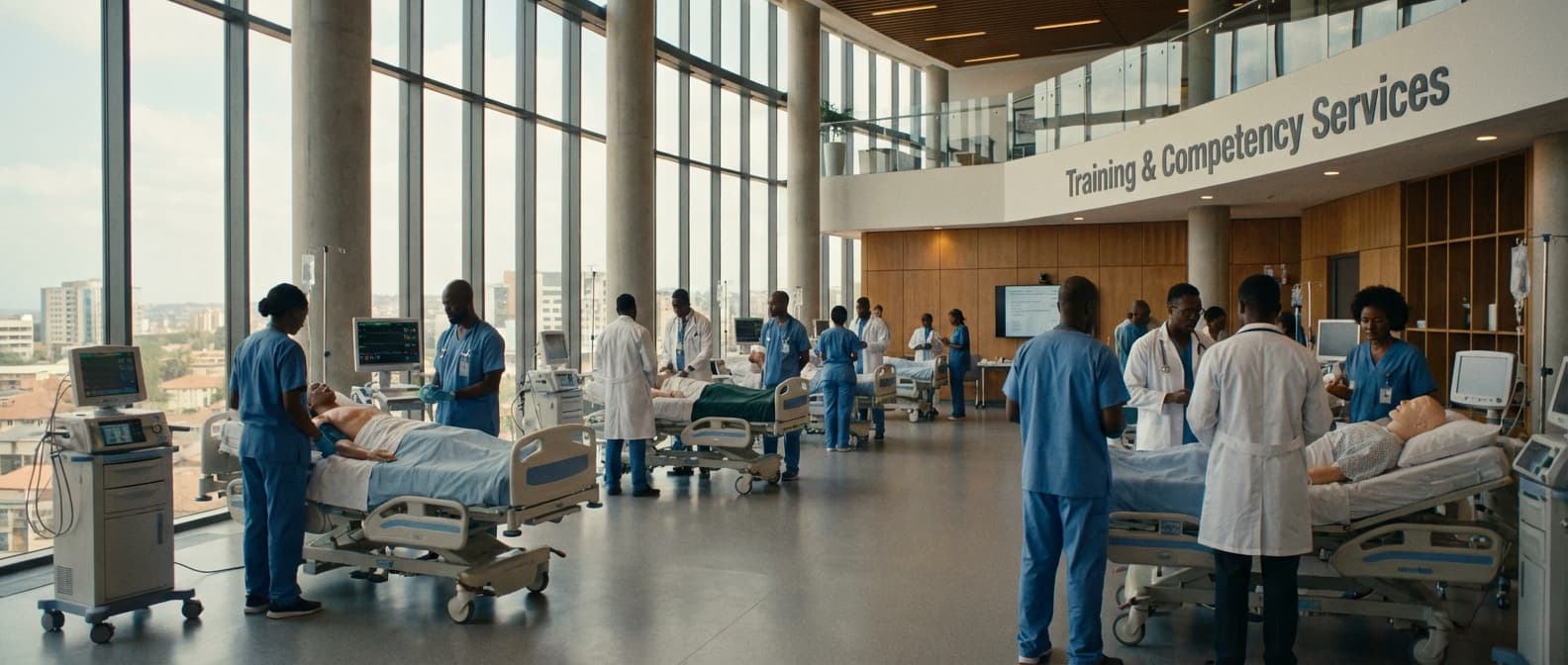
Ultrasound Application Training Service (Protocol-Based) in Zambia
Engineering Excellence & Technical Support
Ultrasound Application Training Service (Protocol-Based) High-standard technical execution following OEM protocols and local regulatory frameworks.
Standardized Protocols for Consistent Quality
Our training in Zambia is built upon globally recognized, evidence-based ultrasound protocols. This ensures trainees master standardized scanning techniques, leading to consistent, high-quality diagnostic images and reliable patient care across all healthcare facilities.
Zambian-Relevant Case Studies
We integrate real-world, Zambian-specific case studies into our protocol-based training. This allows trainees to apply learned scanning techniques to common pathologies and clinical scenarios encountered in Zambia, enhancing practical diagnostic skills and preparedness.
Objective Competency Assessment
Our protocol-driven approach facilitates objective competency assessment. Trainees are evaluated against established protocol benchmarks, ensuring they meet defined proficiency levels before independently performing ultrasound examinations, thereby building confidence and reducing errors.
What Is Ultrasound Application Training Service (Protocol-based) In Zambia?
Ultrasound Application Training Service (Protocol-Based) in Zambia refers to specialized educational programs designed to equip healthcare professionals with the knowledge and practical skills to perform and interpret ultrasound examinations according to established clinical protocols. This service is crucial for standardizing diagnostic accuracy, ensuring patient safety, and optimizing the utilization of ultrasound technology within the Zambian healthcare system. It emphasizes a systematic, protocol-driven approach, moving beyond basic instrumentation to detailed anatomical correlation, pathology recognition, and report generation within the context of Zambian healthcare challenges and resource availability.
Typical Use Cases in Zambia
- {"rows":["Dating pregnancies and assessing fetal growth","Detecting multiple gestations","Identifying fetal anomalies","Assessing placental location and function","Evaluating gynecological pathologies such as fibroids, ovarian cysts, and ectopic pregnancies","Guiding gynecological procedures"],"header":"Obstetric and Gynecological Ultrasound"}
- {"rows":["Assessing liver, gallbladder, spleen, pancreas, and kidney morphology and function","Detecting ascites, gallstones, and renal calculi","Evaluating the aorta for aneurysms","Diagnosing appendicitis and other inflammatory conditions","Guiding biopsies of abdominal organs"],"header":"Abdominal Ultrasound"}
- {"rows":["Assessing deep vein thrombosis (DVT) and superficial venous thrombosis","Evaluating carotid artery stenosis and other arterial diseases","Assessing portal venous system abnormalities"],"header":"Vascular Ultrasound"}
- {"rows":["Diagnosing tendonitis, tears, and bursitis","Evaluating joint effusions and synovitis","Assessing soft tissue masses","Guiding injections"],"header":"Musculoskeletal (MSK) Ultrasound"}
- {"rows":["Rapid assessment in emergency departments and intensive care units for conditions like pneumothorax, pericardial effusion, and fluid status","Assessing trauma patients (FAST exam)","Guiding procedures like central venous catheter insertion and paracentesis"],"header":"Point-of-Care Ultrasound (POCUS)"}
- {"rows":["Evaluating neonatal hypoxic-ischemic encephalopathy (HIE)","Assessing pyloric stenosis in infants","Evaluating pediatric abdominal pathologies","Screening for developmental dysplasia of the hip (DDH)"],"header":"Pediatric and Neonatal Ultrasound"}
Who Needs Ultrasound Application Training Service (Protocol-based) In Zambia?
This service is designed to provide essential, protocol-based ultrasound application training to healthcare professionals and institutions across Zambia. The focus is on empowering users with standardized, evidence-based protocols to ensure accurate and consistent diagnostic imaging. This training is crucial for enhancing diagnostic capabilities, improving patient care, and optimizing the utilization of ultrasound equipment.
| Target Customer/Institution | Key Departments Requiring Training | Specific Needs Addressed |
|---|---|---|
| Government Hospitals | Radiology, Obstetrics & Gynecology, Pediatrics, General Medicine, Emergency Medicine, Surgery | Standardized protocol training for diverse patient populations, improving diagnostic accuracy in resource-limited settings, upskilling existing staff, introduction of new ultrasound applications. |
| Private Hospitals & Clinics | Radiology, Obstetrics & Gynecology, Cardiology, General Practice, Fertility Clinics | Ensuring adherence to international best practices and protocols, advanced training for specialized applications, enhancing service quality and patient confidence, staff development for competitive advantage. |
| District Health Offices | Referral Centers, Public Health Units | Capacity building for district-level diagnostics, training community health workers (where applicable) on basic ultrasound screening, improving referral pathways and efficiency. |
| Rural Health Centers | General Practice, Midwifery | Basic diagnostic ultrasound skills for primary care, early detection of common conditions (e.g., pregnancy complications, abdominal issues), enabling point-of-care diagnostics where specialist services are limited. |
| Medical Training Institutions | Radiology Departments, Medical Schools (Undergraduate & Postgraduate) | Integrating standardized ultrasound protocols into the curriculum, providing hands-on training for future sonographers and radiologists, developing faculty expertise in ultrasound teaching. |
| Specialty Clinics (e.g., OBGYN, Cardiology) | Ultrasound Units within the clinic | Advanced protocol-specific training for specialized areas (e.g., fetal anomaly scans, echocardiography), continuous professional development, staying abreast of new imaging techniques and guidelines. |
Target Customers and Departments in Zambia
- Hospitals (Government and Private)
- District Health Offices
- Rural Health Centers
- Specialty Clinics (e.g., Obstetrics & Gynecology, Cardiology, Radiology)
- Medical Training Institutions (Universities, Colleges, Training Schools)
Ultrasound Application Training Service (Protocol-based) Process In Zambia
This document outlines the workflow for the Ultrasound Application Training Service (Protocol-Based) offered in Zambia, covering the process from initial inquiry to the successful execution of the training. This service aims to equip healthcare professionals with the necessary skills to perform ultrasound examinations according to established protocols, enhancing diagnostic accuracy and patient care. The process is designed to be systematic and efficient, ensuring clarity for both the service provider and the trainees.
| Phase | Stage | Description | Key Activities | Deliverables | Responsible Party |
|---|---|---|---|---|---|
| Initial Contact | Potential clients (hospitals, clinics, individuals) express interest in the training service. | Receive inquiry via phone, email, or website form. Discuss general training needs and objectives. | Acknowledgement of inquiry, preliminary understanding of training scope. | Client & Service Provider |
| Detailed Assessment | Thorough understanding of the specific ultrasound applications, target audience, and desired learning outcomes. | Conduct detailed needs assessment (e.g., current skill levels, specific protocols required, number of trainees). Develop a customized training proposal outlining curriculum, duration, methodology, and resources. | Detailed Training Needs Assessment Report, Customized Training Proposal. | Service Provider & Client |
| Financial & Contractual | Formalizing the training services with pricing and terms. | Provide a detailed quotation based on the approved proposal. Negotiate terms and finalize a service agreement/contract. | Formal Quotation, Signed Service Agreement/Contract. | Service Provider & Client |
| Logistics & Curriculum Finalization | Ensuring all aspects are in place for effective training delivery. | Confirm training dates and venue. Finalize the detailed training curriculum and schedule. Prepare training materials (manuals, presentations, case studies). Arrange for trainers and necessary equipment (ultrasound machines, phantom models). Communicate pre-requisites (if any) to trainees. | Confirmed Training Schedule, Prepared Training Materials, Logistical Arrangements. | Service Provider & Client |
| Delivery of Training | The core phase where trainees acquire knowledge and practical skills. | Conduct theoretical sessions (lectures, discussions) on ultrasound principles and specific protocols. Provide hands-on practical sessions with ultrasound equipment and simulation models. Facilitate supervised scanning sessions. Conduct interactive Q&A and problem-solving sessions. | Trainee engagement and participation, practical skill demonstration. | Service Provider (Trainers) |
| Assessment & Feedback | Assessing learning outcomes and gathering feedback for improvement. | Conduct theoretical and practical assessments to evaluate trainee competency. Administer post-training feedback forms from trainees and potentially their supervisors. Provide immediate feedback on performance. | Assessment Results, Trainee Feedback Reports, Performance Evaluation Summary. | Service Provider & Client |
| Formal Recognition & Ongoing Support | Issuing certificates and offering continued assistance. | Issue certificates of completion to successful trainees. Provide recommendations for further practice and skill development. Offer post-training support for a defined period (e.g., technical queries, case discussions). Schedule follow-up evaluations or refresher courses if agreed upon. | Certificates of Completion, Follow-up Support Plan. | Service Provider & Client |
Ultrasound Application Training Service (Protocol-Based) Workflow in Zambia
- Inquiry & Initial Consultation
- Needs Assessment & Proposal Development
- Quotation & Agreement
- Pre-Training Preparation
- Training Execution
- Post-Training Support & Evaluation
- Certification & Follow-up
Ultrasound Application Training Service (Protocol-based) Cost In Zambia
The cost of Ultrasound Application Training Services (Protocol-Based) in Zambia can vary significantly due to several influencing factors. These factors determine the pricing structure and overall investment required for individuals or institutions seeking to acquire or enhance their skills in specific ultrasound protocols. Understanding these elements is crucial for budgeting and making informed decisions.
| Training Type/Scope | Estimated Cost Range (ZMW) | Typical Duration |
|---|---|---|
| Introductory/Basic Ultrasound Protocols (e.g., Abdominal, Pelvic Fundamentals) | 1,500 - 4,000 | 1-3 Days |
| Intermediate Ultrasound Protocols (e.g., Obstetrics - dating scan, anomaly scan; Small Parts) | 3,000 - 7,000 | 3-5 Days |
| Advanced Ultrasound Protocols (e.g., Advanced Obstetrics, Vascular, Echocardiography Fundamentals, Interventional Ultrasound) | 5,000 - 12,000+ | 5+ Days or Modular |
| Specialized Protocol Training (e.g., specific machine applications, advanced fetal echo) | Negotiable (often per module or custom) | Varies |
| Refresher/Advanced Skills Workshops (focused on specific protocol updates or challenges) | 1,000 - 3,000 | 1-2 Days |
Key Pricing Factors for Ultrasound Application Training in Zambia
- Level of Expertise & Specialization: Training focused on highly specialized ultrasound applications (e.g., advanced obstetric, interventional radiology, cardiovascular) generally commands higher fees than general or introductory courses. The expertise and reputation of the trainers also play a significant role.
- Duration and Intensity of Training: Longer, more intensive training programs covering multiple protocols or in-depth theoretical and practical aspects will naturally be more expensive than shorter, focused workshops.
- Provider Type (Institution vs. Individual): Established training institutions, particularly those affiliated with hospitals or universities, may have higher overheads and thus charge more. Individual practitioners offering private training might have more flexible pricing.
- Location of Training: Training conducted in major urban centers like Lusaka or Kitwe might be priced differently than in more remote areas, considering logistical costs and demand.
- Inclusion of Practical Sessions & Equipment Access: Training that includes extensive hands-on practice with modern ultrasound equipment and simulators will generally be more costly than purely theoretical sessions. The availability and quality of the equipment used during training are key.
- Accreditation & Certification: Courses that lead to recognized certifications or accreditations from professional bodies often have higher fees to cover the costs associated with the accreditation process.
- Training Materials & Resources: The provision of comprehensive training manuals, online resources, case studies, and post-training support can influence the overall cost.
- Group vs. Individual Training: Group training sessions are often more cost-effective on a per-person basis compared to one-on-one or individualized training packages.
- Travel and Accommodation (if applicable): For participants traveling from outside the training location, the cost of accommodation and travel needs to be factored in, and some training packages might include these.
Affordable Ultrasound Application Training Service (Protocol-based) Options
Our Affordable Ultrasound Application Training Service offers a comprehensive and cost-effective approach to acquiring essential ultrasound skills, focusing on a protocol-based methodology. We understand that professional development needs to be accessible, and our tiered value bundles are designed to maximize your investment. We also employ several cost-saving strategies to ensure you receive high-quality training without breaking the bank.
| Cost-Saving Strategy | Description | Benefit |
|---|---|---|
| Digital First Approach | Extensive use of online learning modules, video demonstrations, and interactive simulations. | Reduces overhead associated with physical classrooms, travel, and printed materials, leading to lower overall course fees. |
| Protocol-Based Learning | Focus on standardized, evidence-based scanning protocols ensures efficient learning and application. | Avoids wasted time on non-essential techniques, allowing for quicker competency acquisition and faster return on investment. |
| Group & Team Discounts | Special pricing for multiple participants from the same institution or organization. | Significant per-person cost reduction for team-based training, promoting standardized practices across departments. |
| Early Bird Registration | Discounted pricing for enrollments made well in advance of the training start date. | Encourages planning and commitment, rewarding proactive learners with reduced tuition. |
| Modular Structure | Ability to purchase training modules individually or in customizable bundles. | Empowers learners to focus on specific areas of need, preventing overspending on irrelevant content. |
| Simulated Case Libraries | Access to a vast and growing library of realistic ultrasound cases for practice and assessment. | Provides extensive hands-on experience in a safe, virtual environment, reducing the need for expensive equipment rental or supervision for early practice. |
Value Bundles Explained
- {"title":"Bronze Bundle: Foundational Focus","description":"Ideal for beginners or those needing to master core ultrasound principles and a specific foundational protocol. Includes online access to core curriculum, simulated case reviews, and one live virtual Q&A session per module.","cost_saving_feature":"Access to foundational knowledge at a lower entry price point, allowing for targeted skill development without unnecessary modules."}
- {"title":"Silver Bundle: Comprehensive Skill Development","description":"Builds upon the Bronze Bundle with expanded protocol coverage, more in-depth simulated case libraries, and personalized feedback on practice scans. Includes two live virtual Q&A sessions per module and one individual mentor check-in.","cost_saving_feature":"Offers a balanced approach with a wider range of skills and moderate support, providing more value than purchasing individual modules. Includes group mentorship opportunities."}
- {"title":"Gold Bundle: Advanced Proficiency & Specialization","description":"Designed for experienced sonographers or those seeking to specialize. Covers advanced protocols, complex case studies, performance analysis, and direct mentorship. Includes unlimited live virtual Q&A, dedicated mentor support, and access to advanced simulation tools.","cost_saving_feature":"The most cost-effective option for rapid and thorough skill mastery, minimizing the need for future specialized training. Bulk discounts on advanced simulation access."}
- {"title":"Custom Bundle: Tailored to Your Needs","description":"For organizations or individuals with very specific training requirements. We can mix and match modules and support levels to create a personalized training plan.","cost_saving_feature":"Ensures you only pay for the training you need, eliminating redundant content and maximizing budget efficiency."}
Verified Providers In Zambia
In Zambia's rapidly evolving healthcare landscape, identifying trusted and competent healthcare providers is paramount for individuals seeking quality medical services. Franance Health has emerged as a leading entity, distinguishing itself through a rigorous credentialing process that ensures its network of providers meets the highest standards of professionalism, expertise, and ethical practice. This commitment to verification not only safeguards patient well-being but also builds essential trust within the healthcare ecosystem. Understanding Franance Health's credentialing process reveals why their verified providers represent the best choice for healthcare in Zambia.
| Why Franance Health Verified Providers are the Best Choice | Benefit to Patients | Impact on Healthcare Quality |
|---|---|---|
| Guaranteed Competence and Expertise: Rigorous checks ensure providers possess the necessary skills and knowledge. | Patients receive care from qualified professionals, leading to better health outcomes and reduced risk of medical errors. | Elevates the overall standard of healthcare delivery, fostering confidence in the system. |
| Enhanced Patient Safety: Background checks and ethical standards minimize risks. | Patients can feel secure knowing they are being treated by trustworthy and responsible individuals. | Creates a safer healthcare environment, crucial for vulnerable populations. |
| Trust and Reliability: Transparent verification builds confidence. | Patients can rely on the services provided, reducing anxiety and uncertainty when seeking medical attention. | Fosters long-term patient-provider relationships and encourages proactive health management. |
| Access to Up-to-Date Care: Emphasis on CPD ensures providers are current with medical advancements. | Patients benefit from the latest diagnostic and treatment approaches, leading to more effective care. | Drives innovation and adoption of modern healthcare practices within Zambia. |
| Ethical and Patient-Centered Approach: Commitment to professional conduct guarantees respectful treatment. | Patients experience compassionate, dignified, and personalized care, respecting their rights and autonomy. | Promotes a positive patient experience and improves patient satisfaction. |
Key Aspects of Franance Health's Verification Process:
- Professional Licensure and Registration: All healthcare professionals within the Franance Health network are thoroughly vetted to ensure they hold current and valid licenses and registrations with the relevant Zambian professional bodies (e.g., General Nursing Council, Medical Council of Zambia, Health Professions Council of Zambia). This confirms their legal authorization to practice.
- Educational Qualifications and Training: Franance Health verifies the authenticity and validity of educational degrees, diplomas, and specialized training certificates obtained by their providers. This includes ensuring that their qualifications are from accredited institutions and meet national and international benchmarks.
- Experience and Competency Assessment: Beyond formal qualifications, Franance Health often assesses the practical experience and demonstrated competency of its providers through various means, which may include peer reviews, reference checks, and in some cases, direct observation or skills validation.
- Criminal Background Checks: To ensure patient safety and trust, Franance Health conducts thorough background checks to identify any potential red flags that could compromise a provider's suitability for healthcare delivery.
- Adherence to Ethical Standards and Professional Conduct: Franance Health mandates strict adherence to a code of ethics and professional conduct. Providers are expected to uphold principles of patient-centered care, confidentiality, integrity, and respect.
- Continuous Professional Development (CPD): Franance Health encourages and often requires its affiliated providers to engage in ongoing learning and professional development to stay abreast of the latest medical advancements, techniques, and best practices.
- Reputation and Patient Feedback: While formal verification is key, Franance Health also considers the professional reputation of providers and may incorporate mechanisms for gathering and reviewing patient feedback to ensure consistent quality of care.
Scope Of Work For Ultrasound Application Training Service (Protocol-based)
This Scope of Work (SOW) outlines the requirements for a protocol-based Ultrasound Application Training Service. The service will focus on enhancing the proficiency of medical professionals in utilizing ultrasound equipment for specific diagnostic protocols. This document details the technical deliverables and standard specifications for the training, ensuring consistent quality and effectiveness.
| Deliverable | Description | Standard Specifications | Acceptance Criteria |
|---|---|---|---|
| Training Curriculum Document | Detailed outline of each training module, including learning objectives, key concepts, and practical exercises. | Clear, concise, and comprehensive documentation. Aligned with relevant professional guidelines (e.g., AIUM, EFSUMB). | Curriculum reviewed and approved by the client. Learning objectives are measurable and achievable. |
| Training Materials (Digital & Printed) | Presentation slides, handouts, case studies, and image libraries relevant to each protocol. | High-resolution images and videos. Content is up-to-date and evidence-based. Materials are accessible in agreed-upon formats (PDF, PPT, etc.). | Materials are accurate, visually appealing, and directly support the curriculum. Availability of both digital and printed copies as requested. |
| Hands-on Practical Sessions | Supervised practice sessions on ultrasound phantoms and/or consenting patients (if applicable). Focus on probe manipulation, image optimization, and protocol adherence. | Sufficient scanning time per participant. Experienced and certified sonographers/physicians as trainers. Appropriate anatomical models or patient cohort. | Participants demonstrate proficiency in basic scanning techniques and protocol execution. Trainer feedback provided for each participant. |
| Competency Assessment Tools | Quizzes, practical scanning evaluations, and image critique sessions to assess participant learning. | Objective scoring mechanisms. Assessment tools are validated and directly linked to learning objectives. | Clear pass/fail criteria established. Assessment results accurately reflect participant competency. |
| Post-Training Support | Follow-up Q&A sessions, access to online resources, and performance feedback. | Defined availability for support. Online portal with training materials and FAQs. Structured feedback mechanism. | Participants can access support within agreed-upon timeframes. Feedback mechanisms are functional and utilized. |
| Training Report | Summary of training activities, participant performance, and recommendations for further development. | Includes attendance records, assessment scores, and overall feedback. Report is objective and actionable. | Report submitted within a specified timeframe post-training. Recommendations are practical and relevant. |
Key Training Modules and Protocols
- Abdominal Ultrasound (e.g., Gallbladder, Liver, Kidneys)
- Pelvic Ultrasound (e.g., Uterus, Ovaries, Bladder)
- Obstetric Ultrasound (e.g., Early Pregnancy, Fetal Biometry, Anatomy Survey)
- Vascular Ultrasound (e.g., Carotid Arteries, Deep Vein Thrombosis)
- Echocardiography (Basic Principles and Common Views)
Service Level Agreement For Ultrasound Application Training Service (Protocol-based)
This Service Level Agreement (SLA) outlines the response times and uptime guarantees for the Ultrasound Application Training Service (Protocol-Based). It is designed to ensure the reliable and efficient delivery of training services to our users.
| Service Component | Uptime Guarantee | Response Time (Acknowledgement) | Resolution Target (Best Effort) |
|---|---|---|---|
| Core Training Platform Accessibility | 99.5% (Monthly) | Within 2 business hours for Critical Issues, Within 4 business hours for High/Medium Issues | Critical Issues: Within 8 business hours. High/Medium Issues: Within 24 business hours. |
| Access to Training Modules & Simulations | 99.5% (Monthly) | Within 2 business hours for Critical Issues, Within 4 business hours for High/Medium Issues | Critical Issues: Within 8 business hours. High/Medium Issues: Within 24 business hours. |
| Technical Support Inquiry (non-critical) | N/A (Support is provided during business hours) | Within 4 business hours | Within 48 business hours |
| Content Update Availability | 99.0% (Monthly) | Within 1 business day for reported access issues | Within 3 business days for reported access issues |
Key Definitions
- Training Service: Refers to the provision of protocol-based training materials, simulations, and support for specific ultrasound applications.
- Uptime: Refers to the percentage of time the core training platform and its associated functionalities are operational and accessible to users.
- Response Time: Refers to the maximum time taken by the support team to acknowledge and begin addressing a reported issue or request.
- Scheduled Downtime: Planned maintenance periods for system updates, upgrades, or critical patches, which will be communicated in advance.
- Unscheduled Downtime: Any unexpected interruption to the service not covered by scheduled downtime.
- Critical Issue: An issue that significantly impacts the ability of users to access or utilize the core functionalities of the training service, preventing them from completing essential training modules or tasks.
Frequently Asked Questions

Ready when you are
Let's scope your Ultrasound Application Training Service (Protocol-Based) in Zambia project in Zambia.

Scaling healthcare logistics and technical systems across the entire continent.