
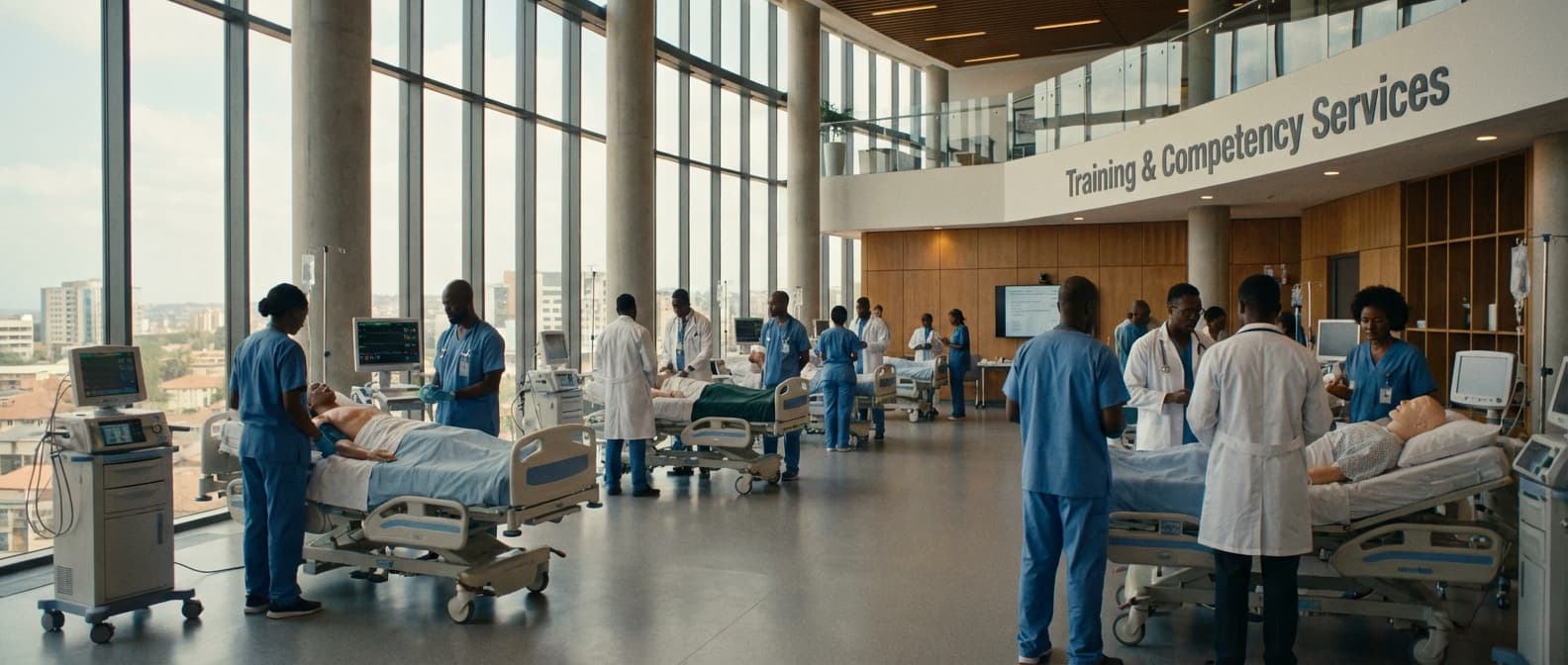
MRI Operator Training Service (Radiographers) in Zambia
Engineering Excellence & Technical Support
MRI Operator Training Service (Radiographers) High-standard technical execution following OEM protocols and local regulatory frameworks.
Optimized MRI Scan Protocols & Automation
Master the latest MRI pulse sequences and techniques to optimize scan times and image quality. Our training emphasizes automated protocol selection, advanced artifact reduction, and efficient patient positioning for enhanced diagnostic accuracy and throughput in Zambian healthcare settings.
Advanced Patient Safety & MRI Suite Management
Gain expertise in comprehensive patient safety protocols, including MRI contraindications, screening procedures, and emergency management. Learn best practices for MRI suite operations, equipment maintenance, and infection control, ensuring a safe and effective environment for both patients and staff in Zambia.
Zambian Regulatory Compliance & Imaging Interpretation Basics
Understand the specific regulatory requirements for MRI operation in Zambia. This module covers essential principles of image interpretation relevant to common Zambian health conditions, empowering radiographers to identify critical findings and contribute effectively to patient diagnosis and care.
What Is Mri Operator Training Service (Radiographers) In Zambia?
MRI Operator Training Service (Radiographers) in Zambia refers to specialized educational programs designed to equip radiographers with the theoretical knowledge and practical skills necessary to safely and effectively operate Magnetic Resonance Imaging (MRI) scanners. This service focuses on developing competency in patient preparation, scan acquisition, image quality optimization, protocol selection, artifact recognition and reduction, and adherence to safety protocols, including those related to strong magnetic fields and radiofrequency radiation. The training aims to ensure that radiographers can independently perform MRI examinations, generate diagnostic-quality images, and contribute to accurate patient diagnoses in accordance with international standards and local healthcare regulations.
| Who Needs MRI Operator Training? | Typical Use Cases | ||||||||
|---|---|---|---|---|---|---|---|---|---|
| Registered Radiographers in Zambia seeking to specialize in MRI. | Acquisition of new MRI equipment by healthcare facilities. | Radiographers working in hospitals, diagnostic imaging centers, and specialized clinics. | Enhancement of diagnostic capabilities in neurology, orthopedics, oncology, cardiology, and abdominal imaging. | Radiographers requiring refresher courses or advanced training to stay current with evolving MRI technology and techniques. | Addressing workforce shortages for skilled MRI operators. | Radiographers aiming to improve diagnostic image quality and reduce repeat scans. | Implementation of new MRI protocols or advanced imaging techniques (e.g., fMRI, diffusion tensor imaging). | Radiographers transitioning from other imaging modalities (e.g., CT, X-ray) to MRI. | Research and academic institutions requiring trained personnel for MRI-based studies. |
Key Components of MRI Operator Training for Radiographers in Zambia:
- Physics of MRI: Understanding fundamental principles of nuclear magnetic resonance, signal generation, and image reconstruction.
- MRI Safety Protocols: Comprehensive training on the magnetic field, radiofrequency, gradient coils, and their associated hazards (e.g., projectile effect, tissue heating, nerve stimulation) and mitigation strategies.
- Patient Preparation and Screening: Education on contraindications, patient comfort, and the importance of thorough screening for metallic implants and foreign bodies.
- Coil Selection and Placement: Mastery of different MRI coil types and their optimal utilization for various anatomical regions.
- Pulse Sequence Fundamentals: Understanding basic pulse sequences (e.g., spin echo, gradient echo) and their applications.
- Image Acquisition Techniques: Practical training on selecting appropriate parameters (TR, TE, flip angle, bandwidth, slice thickness) to optimize image quality and minimize artifacts.
- Contrast Agent Administration (if applicable): Training on the safe and effective use of MRI contrast agents, including indications, contraindications, and potential adverse reactions.
- Image Post-processing and Archiving: Familiarization with techniques for image manipulation, windowing, and proper data management.
- Quality Assurance and Control: Understanding the importance of regular system checks and image quality assessment.
- Ethical and Legal Considerations: Awareness of patient confidentiality, informed consent, and professional responsibilities.
- Hands-on Scanner Operation: Extensive practical sessions on actual MRI equipment under supervision.
Who Needs Mri Operator Training Service (Radiographers) In Zambia?
MRI Operator Training Service (Radiographers) in Zambia is crucial for enhancing the quality, efficiency, and accessibility of advanced diagnostic imaging across the country. This specialized training equips radiographers with the in-depth knowledge and practical skills required to operate MRI scanners safely and effectively, interpret images accurately, and manage patient care during MRI procedures. The service aims to address the growing demand for skilled MRI professionals, ensuring that healthcare facilities in Zambia can leverage the full potential of MRI technology to improve patient outcomes.
| Target Customer Group | Specific Departments/Roles | Key Needs/Benefits |
|---|---|---|
| Public Hospitals | Radiology Department, Diagnostic Imaging Units, Neurosurgery, Orthopedics, Cardiology | Upskilling existing radiographers to operate new MRI machines, improving diagnostic accuracy for complex cases, reducing referral times for advanced imaging, ensuring compliance with international standards. |
| Private Hospitals | Radiology Departments, Imaging Centers, Neurology, Orthopedics, Oncology | Enhancing competitive advantage through advanced imaging capabilities, attracting specialized medical talent, meeting the demands of a growing private healthcare sector, improving patient satisfaction. |
| Diagnostic Imaging Centers | Radiography Units, MRI Technologists | Expanding service offerings with MRI capabilities, ensuring staff competency in operating various MRI models, maintaining high-quality imaging standards, meeting service level agreements. |
| Specialized Clinics (e.g., Neurology, Orthopedics) | Radiology Technologists supporting specialist physicians, referring physicians who need to understand MRI limitations and potential | Improving the interpretation of MRI scans specific to their specialty, better patient selection for MRI, understanding advanced MRI techniques and protocols. |
| Tertiary Healthcare Institutions | Academic Radiology Departments, Research Units, Advanced Imaging Centers | Training radiographers for complex research protocols, operating cutting-edge MRI technology, contributing to medical education and training programs, developing specialized MRI expertise. |
| Medical Training Institutions | Radiography Training Programs, Allied Health Science Departments | Integrating comprehensive MRI training into curricula, producing graduates with sought-after MRI skills, enhancing the reputation and offerings of training programs. |
Target Customers and Departments for MRI Operator Training Service in Zambia
- Hospitals (Public and Private)
- Diagnostic Imaging Centers
- Specialized Clinics (e.g., Neurology, Orthopedics)
- Tertiary Healthcare Institutions
- Medical Training Institutions
Mri Operator Training Service (Radiographers) Process In Zambia
This document outlines the typical workflow for MRI Operator Training Services specifically for Radiographers in Zambia, from the initial inquiry to the successful execution of the training program. The process is designed to be comprehensive, ensuring that all necessary steps are followed for effective and compliant training delivery.
| Phase | Key Activities | Responsible Party | Outcome |
|---|---|---|---|
| Inquiry & Initial Consultation | Initial contact, needs discussion, objective clarification | Prospective Client, Training Provider | Understanding of client needs, initial scope definition |
| Needs Assessment & Customization | Detailed assessment of skill gaps, curriculum tailoring | Training Provider, Prospective Client (input) | Customized training plan and objectives |
| Proposal & Quotation | Development of training proposal, cost breakdown | Training Provider | Formal offer for training services |
| Agreement & Scheduling | Contract negotiation, signing, date finalization | Prospective Client, Training Provider | Legally binding training contract, confirmed schedule |
| Pre-Training Preparations | Logistical arrangements, material preparation, venue confirmation | Training Provider, Client (support) | Ready training environment and materials |
| Training Delivery (Execution) | Lectures, practical sessions, case reviews | Training Provider (Trainers) | Knowledge and skill acquisition by participants |
| Assessment & Evaluation | Quizzes, practical tests, case analysis, trainer feedback | Training Provider (Trainers) | Measurement of learning and competency |
| Certification & Feedback | Issuance of certificates, participant feedback collection | Training Provider | Formal recognition of completion, program improvement insights |
| Post-Training Support & Follow-up | Answering queries, resource provision, follow-up consultations | Training Provider | Reinforced learning, ongoing professional development |
MRI Operator Training Service (Radiographers) Process in Zambia
- Inquiry & Initial Consultation: The process begins when a radiographer or their institution expresses interest in MRI operator training. This typically involves an initial contact (email, phone call, website inquiry) detailing their needs, desired training duration, specific areas of focus (e.g., neuro, musculoskeletal, cardiac MRI), and any existing knowledge base. A consultation follows to clarify objectives, assess current skill levels, and understand logistical requirements.
- Needs Assessment & Customization: Based on the initial consultation, a detailed needs assessment is conducted. This may involve questionnaires, interviews, or reviewing existing certifications. The training program is then customized to address the specific skill gaps and learning objectives of the radiographer(s) or institution. This includes defining the curriculum, practical components, and assessment methods.
- Proposal & Quotation: A formal proposal is developed, outlining the customized training plan, learning objectives, curriculum modules, training methodology (didactic lectures, hands-on practical sessions, simulation), duration, trainers' qualifications, venue requirements (if applicable), and assessment strategies. A detailed quotation is provided, including all associated costs.
- Agreement & Scheduling: Upon acceptance of the proposal and quotation, a formal training agreement or contract is drafted and signed by both parties. This agreement will specify the terms and conditions, payment schedule, cancellation policy, and liability. Once signed, the training dates and schedule are finalized in coordination with the client and trainers.
- Pre-Training Preparations: This phase involves logistical arrangements. If the training is to be conducted at the client's site, arrangements for venue access, equipment availability, and any necessary permits are made. If at a training center, travel and accommodation for participants and trainers are organized. Training materials, including manuals, presentations, and case studies, are prepared and distributed to participants in advance where possible.
- Training Delivery (Execution): The core of the service. The training is delivered as per the agreed-upon schedule and curriculum. This typically includes: * Theoretical Sessions: Lectures, discussions, and presentations covering MRI physics, safety protocols, image acquisition techniques, contrast media administration, and various pulse sequences. * Practical Sessions: Hands-on experience with MRI scanners (either on-site with the client's equipment or at a designated training facility), performing scans on phantoms and/or consenting patients under direct supervision. This also includes image post-processing and manipulation. * Case Study Reviews: Analyzing real-world MRI cases to develop diagnostic interpretation skills and understanding of clinical applications.
- Assessment & Evaluation: Throughout and at the end of the training, participants are assessed to gauge their understanding and practical competency. Assessments may include: * Quizzes and Written Exams: To evaluate theoretical knowledge. * Practical Skill Demonstrations: Assessing the ability to operate the MRI scanner, select appropriate protocols, and perform scans. * Case Interpretation Exercises: Evaluating diagnostic reasoning. * Trainer Feedback: Ongoing assessment and feedback provided by the trainers.
- Certification & Feedback: Upon successful completion of the training and assessment, participants receive a certificate of completion. A formal evaluation of the training program by the participants is conducted to gather feedback for continuous improvement. The training provider also provides a comprehensive report to the institution (if applicable) summarizing the training outcomes and participant performance.
- Post-Training Support & Follow-up: In some cases, post-training support may be offered, which could include answering queries, providing access to online resources, or follow-up consultations to reinforce learning and address any emerging challenges the radiographer might face in their practice.
Mri Operator Training Service (Radiographers) Cost In Zambia
The cost of MRI operator training services for radiographers in Zambia can vary significantly based on several factors. These include the reputation and accreditation of the training provider, the duration and intensity of the course, the specific curriculum covered (e.g., basic operation vs. advanced techniques, specific MRI sequences), the inclusion of hands-on practical sessions with actual MRI equipment, and the location of the training. Furthermore, whether the training is conducted on-site at a healthcare facility or at a dedicated training center can influence pricing. The current economic climate and demand for such specialized training also play a role in determining the price range.
| Training Type/Duration | Estimated Cost Range (ZMW) | Notes |
|---|---|---|
| Basic MRI Operation & Safety (e.g., 1-2 weeks) | 5,000 - 15,000 | Focuses on fundamental principles, safety protocols, and basic image acquisition. May be delivered through lectures and limited practical exposure. |
| Comprehensive MRI Training (e.g., 3-4 weeks) | 12,000 - 30,000 | Includes a broader range of MRI sequences, image optimization techniques, and more extensive hands-on practice. Often includes theoretical modules and simulated or supervised real-time operation. |
| Advanced MRI Techniques & Specializations (e.g., 1 week, specialized module) | 8,000 - 20,000+ | Concentrates on specific areas like neuroimaging, musculoskeletal MRI, cardiac MRI, or advanced pulse sequences. These are typically for experienced operators seeking to upskill. |
| On-site Training (Customized per request) | Varies widely | Costs are highly dependent on the number of participants, duration, and specific needs of the facility. May involve travel and accommodation for trainers. |
| Online/Blended Learning (with limited practical component) | 4,000 - 10,000 | Primarily theoretical, with potential for virtual simulations. Practical components might require separate arrangement or be less extensive. |
Key Pricing Factors for MRI Operator Training in Zambia:
- Accreditation and Reputation of Training Provider
- Course Duration and Intensity
- Curriculum Specificity (Basic, Advanced, Specific Modalities)
- Inclusion of Practical/Hands-on Sessions with MRI Equipment
- Training Location (On-site vs. Off-site Training Center)
- Level of Instructor Expertise and Experience
- Inclusion of Training Materials and Certification
- Market Demand and Economic Conditions
Affordable Mri Operator Training Service (Radiographers) Options
This service provides specialized MRI operator training designed for radiographers seeking to enhance their skills and qualifications. We offer flexible and cost-effective training solutions, emphasizing value bundles and practical cost-saving strategies to make advanced MRI education accessible.
| Training Option | Description | Value Bundle Components | Cost-Saving Strategies | Estimated Price Range (USD) |
|---|---|---|---|---|
| Basic MRI Operator Certification | Foundational training for radiographers new to MRI operations. Covers essential principles and safety protocols. | Online theory modules, 1 week supervised clinical rotation, certification exam. | Early bird discounts, group registration savings, affordable payment plans. | $1,500 - $2,500 |
| Advanced MRI Protocol Specialist | In-depth training on optimizing MRI protocols for specific anatomical regions and pathologies. Suitable for experienced operators. | Online advanced modules, 2 weeks supervised clinical specialization, case study workshops, personalized mentorship. | Bundle with Basic Certification for a discounted 'Full Spectrum' package, alumni discounts for future advanced courses. | $2,800 - $4,500 |
| On-Site Custom Training (Facility Specific) | Tailored training programs delivered at your facility, using your own equipment and protocols. Ideal for teams. | Needs assessment, custom curriculum development, on-site instructor, equipment-specific training, post-training support. | Significant cost savings per trainee with larger group bookings, reduced travel expenses for staff, bulk purchase discounts on training materials. | Priced per day/program, inquire for quote (typically starts at $5,000 for a 3-day program for a small group) |
| Blended Learning Package | Combines self-paced online learning with intensive on-site practical sessions. Offers flexibility and efficiency. | Comprehensive online library, 3-5 days intensive on-site practical lab, simulation exercises, ongoing online support. | Utilizes affordable online resources to reduce instructor time, flexible scheduling to minimize operational disruption, payment in installments. | $2,000 - $3,500 |
Key Benefits of Our MRI Operator Training for Radiographers
- Comprehensive curriculum covering MRI physics, safety, patient positioning, protocol optimization, and image interpretation.
- Hands-on practical experience with state-of-the-art MRI scanners.
- Expert instruction from experienced MRI technologists and radiologists.
- Flexible learning formats to accommodate busy schedules (e.g., blended learning, online modules, on-site training).
- Certification upon successful completion, enhancing career prospects.
- Dedicated career support and networking opportunities.
Verified Providers In Zambia
In Zambia, navigating the healthcare landscape to find reliable and credentialed providers is crucial for quality patient care. Franance Health stands out as a leading organization dedicated to verifying and showcasing healthcare professionals and facilities that meet rigorous standards. This commitment to excellence ensures that individuals seeking medical services can do so with confidence, knowing they are engaging with verified and competent practitioners.
| Provider Type | Franance Health Verification Key Indicators | Benefits for Patients |
|---|---|---|
| Doctors (Specialists & General Practitioners) | Valid Medical Council Registration, Verified Degree/Specialty Certifications, Clean Disciplinary Record, Hospital Affiliations | Accurate diagnosis, effective treatment plans, safe surgical procedures, personalized care |
| Nurses (Registered & Enrolled) | Nursing Council Registration, Verified Education & Training, Practical Experience Assessment, Good Standing Certificate | Competent patient care, administration of medications, wound management, patient education |
| Pharmacies | Pharmacy and Poisons Board License, Verified Stock of Genuine Medications, Qualified Pharmacist Supervision, Good Storage Practices | Access to safe and effective medications, professional pharmaceutical advice, medication adherence support |
| Hospitals & Clinics | Ministry of Health Accreditation, Qualified Medical Staff Credentials, Quality Management Systems, Infection Control Protocols, Adequate Facilities & Equipment | Comprehensive medical services, access to advanced technology, coordinated care, safe environment |
| Diagnostic Laboratories | Medical Laboratory and Scientific Officers Council Accreditation, Qualified Technicians, Calibrated Equipment, Quality Control Procedures | Accurate and reliable diagnostic test results, timely reporting, support for accurate diagnosis |
Why Franance Health Credentials Matter in Zambia
- Unwavering Commitment to Quality: Franance Health's verification process goes beyond superficial checks. It involves thorough scrutiny of educational qualifications, professional licenses, clinical experience, and adherence to ethical guidelines. This ensures that all credentialed providers possess the necessary expertise and are committed to patient well-being.
- Enhanced Patient Safety: By partnering exclusively with verified providers, Franance Health significantly reduces the risk of encountering unqualified or fraudulent medical practitioners. This focus on safety is paramount in healthcare, where the stakes are incredibly high.
- Streamlined Healthcare Access: Franance Health simplifies the process of finding trusted healthcare providers. Their platform and network offer a curated list of professionals and facilities, saving individuals valuable time and effort in their search for quality medical care.
- Promoting Best Practices: The rigorous standards set by Franance Health encourage healthcare providers to continuously improve their services and maintain the highest professional benchmarks. This, in turn, elevates the overall quality of healthcare delivery in Zambia.
- Building Trust and Transparency: In an often opaque healthcare system, Franance Health introduces a vital layer of trust and transparency. Their verified credentials act as a seal of approval, assuring patients that they are in capable hands.
Scope Of Work For Mri Operator Training Service (Radiographers)
This Scope of Work (SOW) outlines the requirements for providing comprehensive MRI Operator Training services specifically designed for radiographers. The objective is to equip radiographers with the necessary theoretical knowledge and practical skills to safely and effectively operate MRI scanners, acquire high-quality images, and perform various MRI examinations. This SOW details the technical deliverables and standard specifications for the training program.
| Deliverable | Description | Standard Specification |
|---|---|---|
| Training Curriculum | A detailed curriculum encompassing all aspects of MRI operation and imaging. | Modular structure, clearly defined learning objectives for each module, industry-standard content aligned with ACR/RANZCR guidelines, and a balanced blend of theory and practice. |
| Training Materials | Comprehensive learning resources provided to trainees. | High-quality, up-to-date manuals, presentations, case studies, online modules, and practical guides. Accessible in digital and/or print format. |
| Hands-on Training Sessions | Practical sessions conducted on actual MRI scanners. | Minimum of X hours per trainee (e.g., 40 hours), conducted on functional MRI scanners of specified vendor/model (e.g., Siemens 3T, GE 1.5T). Sessions must include supervised operation and protocol execution. |
| Competency Assessment | Evaluation of trainees' understanding and practical skills. | Includes written examinations, practical skills assessments, case study analysis, and post-training evaluation surveys. Minimum passing score of 80% for written and practical assessments. |
| Certification | Formal recognition of successful completion of the training program. | Certificate of completion issued upon successful fulfillment of all training and assessment requirements. Includes trainee name, training dates, and scope of training. |
| Trainer Qualifications | The expertise and credentials of the instructors. | Certified MRI technologists/radiographers with a minimum of 5 years of operational experience, proven training experience, and current professional certifications. |
| Training Schedule | The planned duration and frequency of training sessions. | Flexible scheduling options to accommodate operational needs, including full-time, part-time, and modular training. Clear communication of the schedule at least 4 weeks in advance. |
| Reporting | Documentation of training progress and outcomes. | Regular progress reports for trainees and management (if applicable), detailed assessment results, and a final training summary report. |
Key Components of MRI Operator Training
- Theoretical Instruction: Covering MRI physics, pulse sequences, image contrast, safety protocols, and artifact reduction.
- Practical Application: Hands-on training with MRI scanners, including patient positioning, protocol selection, image acquisition, and post-processing.
- Clinical Scenarios: Simulation of common and complex MRI examinations, emphasizing diagnostic interpretation and problem-solving.
- Quality Assurance: Training on image quality assessment, optimization techniques, and adherence to established standards.
- Safety and Compliance: Comprehensive coverage of MRI safety standards, including RF, gradient, and magnetic field safety, as well as regulatory compliance.
- Documentation and Reporting: Training on proper patient record-keeping, protocol documentation, and image archiving.
- Continuing Education: Guidance on staying updated with advancements in MRI technology and techniques.
Service Level Agreement For Mri Operator Training Service (Radiographers)
This Service Level Agreement (SLA) outlines the response times and uptime guarantees for the MRI Operator Training Service (Radiographers) provided by [Your Company Name] to [Client Company Name]. This SLA is an addendum to the Master Service Agreement dated [Date of MSA].
| Service Element | Description | Target | Measurement Method | Remedy for Non-Compliance |
|---|---|---|---|---|
| Support Ticket Response Time (Technical Issues) | Time taken to acknowledge and begin investigating a reported technical issue impacting training platform access or functionality. | 99.5% of tickets responded to within 4 business hours. | Tracking of support ticket timestamps in [Your Ticketing System Name]. | For every instance exceeding the 4-hour response time, a credit of 1% of the monthly training fee will be applied to the next invoice. Cumulative credits capped at 10% of the monthly fee. |
| Support Ticket Response Time (Content/Curriculum Queries) | Time taken to acknowledge and begin addressing questions related to training content, curriculum, or learning objectives. | 95% of tickets responded to within 1 business day. | Tracking of support ticket timestamps in [Your Ticketing System Name]. | For every instance exceeding the 1-business-day response time, a credit of 0.5% of the monthly training fee will be applied to the next invoice. Cumulative credits capped at 5% of the monthly fee. |
| Training Platform Uptime Guarantee | Percentage of time the MRI Operator Training Platform is available for authorized users to access and engage with training modules. | 99.9% Uptime over a calendar month. | Monitoring of platform availability via [Your Monitoring Tool Name] and internal logs. Downtime is defined as the period the platform is inaccessible to users. | For every 0.1% downtime below the 99.9% guarantee in a calendar month, a credit of 2% of the monthly training fee will be applied to the next invoice. Cumulative credits capped at 20% of the monthly fee. Extended downtime (exceeding 24 consecutive hours) may trigger additional remedies as defined in the Master Service Agreement. |
| Timeliness of Training Module Updates | Delivery of scheduled updates, enhancements, or corrections to existing training modules. | 98% of scheduled updates delivered by the agreed-upon release date. | Tracking of update release dates against planned schedules. | For every scheduled update delivered more than 3 business days late, a credit of 1% of the monthly training fee will be applied to the next invoice. Cumulative credits capped at 5% of the monthly fee. |
Key Performance Indicators (KPIs)
- Response Time to Support Requests
- Uptime Guarantee for Training Platform Access
- Timeliness of Training Module Updates
Frequently Asked Questions

Ready when you are
Let's scope your MRI Operator Training Service (Radiographers) in Zambia project in Zambia.

Scaling healthcare logistics and technical systems across the entire continent.