
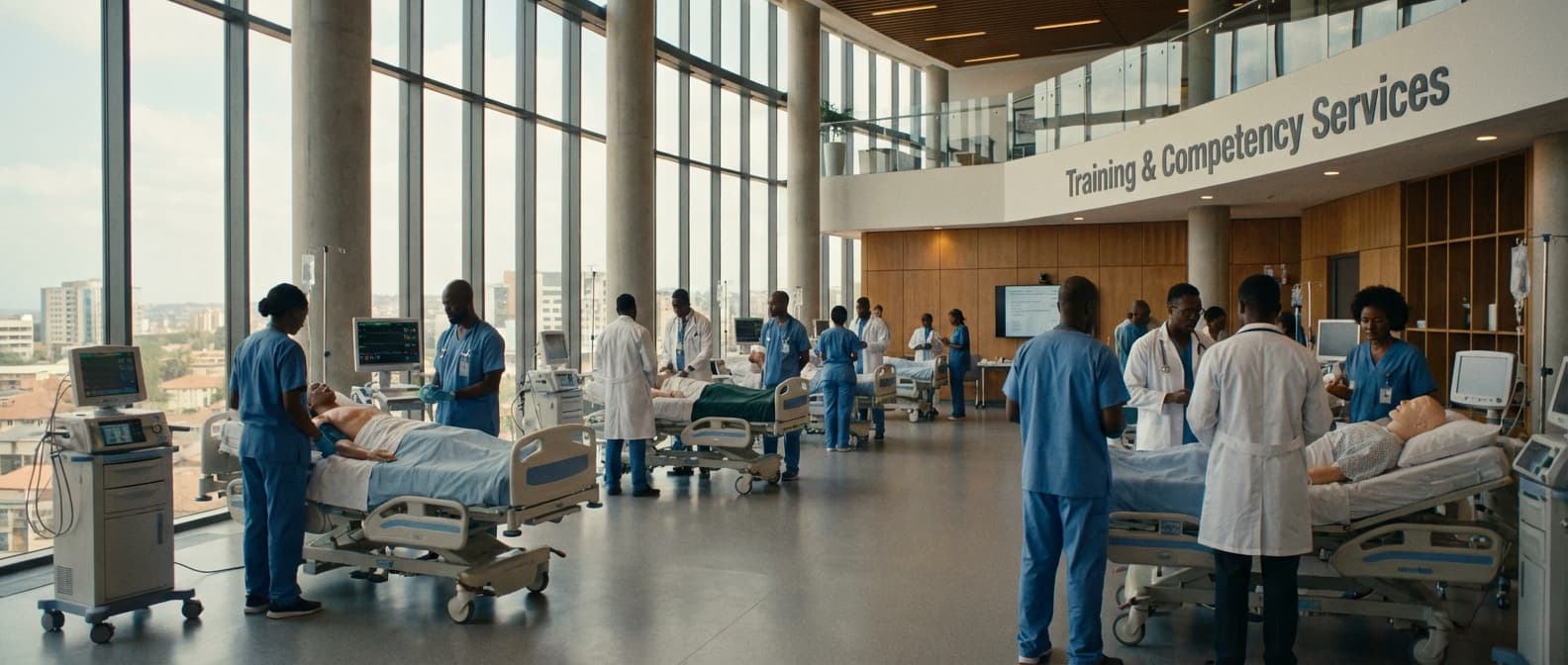
Biomedical Engineering First-Line Support Training Service in Zambia
Engineering Excellence & Technical Support
Biomedical Engineering First-Line Support Training Service High-standard technical execution following OEM protocols and local regulatory frameworks.
Essential Biomedical Equipment Maintenance & Repair
This module equips frontline support staff with the fundamental skills to perform routine maintenance, identify common malfunctions, and execute basic repairs on a range of vital biomedical equipment, ensuring operational readiness and patient safety in Zambian healthcare facilities.
Diagnostic & Troubleshooting Protocols for Medical Devices
Develop proficiency in systematic troubleshooting methodologies tailored for biomedical equipment. Learn to effectively diagnose problems, utilize diagnostic tools, and interpret error codes to quickly restore functionality, minimizing downtime and impact on patient care.
Safety Standards & Regulatory Compliance in Biomedical Settings
Gain a comprehensive understanding of critical safety procedures, infection control protocols, and relevant Zambian regulatory standards for biomedical equipment. Ensure all support activities adhere to best practices, safeguarding both patients and personnel.
What Is Biomedical Engineering First-line Support Training Service In Zambia?
Biomedical Engineering First-Line Support Training Service in Zambia refers to the provision of foundational technical education and practical skills development focused on the initial identification, troubleshooting, and basic maintenance of medical equipment within the Zambian healthcare ecosystem. This service aims to empower healthcare facility personnel, often those not formally trained as biomedical engineers, to address common equipment malfunctions and ensure operational continuity, thereby reducing downtime and improving patient care delivery. The training is designed to be accessible and relevant to the specific context of Zambian healthcare facilities, considering resource limitations and the prevalent types of medical devices in use. It focuses on a 'train-the-trainer' model or direct training of designated equipment custodians within a facility, enhancing their ability to perform routine checks, minor repairs, and proper usage of medical devices, while also knowing when and how to escalate complex issues to specialized biomedical engineering departments or external service providers.
| Who Needs Biomedical Engineering First-Line Support Training? | Typical Use Cases |
|---|---|
| Clinical Staff (Nurses, Clinical Officers): Directly interact with and operate medical equipment daily. Need to perform immediate troubleshooting to resume patient care. | Responding to an alarm on a vital signs monitor during a critical patient admission. Replacing a faulty sensor on an infusion pump to continue medication delivery. |
| Healthcare Facility Technicians/Assistants: Often tasked with general maintenance and support roles within a facility. Can be trained to handle basic equipment upkeep. | Performing routine cleaning and disinfection of diagnostic equipment. Conducting basic battery checks and replacements for portable devices. |
| Ward Managers/Supervisors: Responsible for the overall functioning of a ward or unit, including equipment availability. | Ensuring all medical equipment in their unit undergoes scheduled basic preventive maintenance. Coordinating with trained personnel for minor repairs. |
| Designated Equipment Custodians: Individuals within a facility specifically assigned to oversee and manage medical equipment. | Acting as the first point of contact for equipment issues, performing initial assessments, and documenting reported problems. |
| NGO/Community Health Workers: Operating in remote or resource-limited settings with limited access to specialized biomedical support. | Troubleshooting and performing basic maintenance on essential medical devices in rural clinics where dedicated biomedical engineers are unavailable. |
Key Components of Biomedical Engineering First-Line Support Training in Zambia:
- Introduction to Medical Equipment Fundamentals: Basic principles of operation, anatomy of common medical devices (e.g., vital signs monitors, infusion pumps, basic diagnostic equipment).
- Safety Protocols and Risk Management: Electrical safety, infection control related to equipment, proper handling and storage of medical devices.
- Preventive Maintenance (PM) Basics: Scheduled checks, cleaning procedures, calibration verification (where applicable at a first-line level).
- Troubleshooting Common Malfunctions: Identification of error codes, basic diagnostic steps, recognizing symptoms of failure, understanding user manuals.
- Basic Repair and Parts Replacement: Simple mechanical adjustments, cleaning of sensors, replacement of readily accessible consumables (e.g., filters, tubing).
- Documentation and Reporting: Recording maintenance activities, incident reporting, and escalation procedures.
- User Training and Best Practices: Educating end-users on proper equipment operation, usage guidelines, and initial fault reporting.
- Resource Management: Inventory management of consumables and spare parts, judicious use of available tools.
Who Needs Biomedical Engineering First-line Support Training Service In Zambia?
Biomedical Engineering First-Line Support Training Service in Zambia is crucial for ensuring the efficient, safe, and reliable operation of medical equipment across healthcare facilities. This training equips personnel with the foundational knowledge and practical skills to handle basic maintenance, troubleshooting, and preventive checks, thereby extending equipment lifespan, reducing downtime, and improving patient care. The primary objective is to empower local technical staff, bridging the gap in specialized biomedical engineering expertise and providing immediate on-site support.
| Target Customer Type | Specific Departments/Roles | Training Benefits |
|---|---|---|
| Hospitals (Government & Private) | Biomedical Engineering Department (Technicians, Assistants), Clinical Engineering Teams, IT Department (for connected devices), Nursing Staff (basic operational checks), Workshop Staff | Reduced equipment downtime, improved diagnostic accuracy, enhanced patient safety, extended equipment lifespan, cost savings on repairs, localized problem-solving. |
| Health Clinics & Health Posts | Clinic In-Charge, Designated Technical Personnel, Nurse Managers, Community Health Workers (basic equipment handling) | Immediate troubleshooting capabilities, proactive identification of potential issues, reduced reliance on distant repair services, improved service delivery. |
| Medical Equipment Suppliers & Distributors | Field Service Technicians, Customer Support Staff, Technical Sales Representatives | Enhanced after-sales service, increased customer satisfaction, faster response times, reduced return rates, ability to offer bundled training packages. |
| NGOs & International Aid Organizations | Project Managers, Logistics Officers, Healthcare Program Coordinators, Local Technicians employed by the organization | Sustainable equipment operation, improved project outcomes, efficient resource utilization, local capacity building for long-term impact. |
| Ministry of Health & Provincial Health Offices | Directorates of Infrastructure & Engineering, Health Facility Management Teams, Procurement Departments | Standardized equipment maintenance practices, improved accountability for equipment, better asset management, enhanced public health system efficiency. |
| Tertiary Education Institutions | Lecturers/Instructors in Biomedical Engineering, Technical College Students, Graduates seeking employment | Practical skill enhancement for students, curriculum enrichment, improved employability of graduates, potential for research and development collaborations. |
| Local SMEs (Equipment Maintenance & Repair) | Repair Technicians, Service Engineers, Field Support Staff | Expanded service offerings, competitive advantage, increased service efficiency, ability to handle a wider range of equipment, business growth opportunities. |
Target Customers and Departments:
- Hospitals (Government & Private): All levels of hospitals, from rural clinics to tertiary care centers, rely heavily on functioning medical equipment. Departments within these hospitals are key beneficiaries.
- Health Clinics & Health Posts: Especially in remote areas, these facilities often have limited access to on-site technical expertise and benefit greatly from trained local personnel.
- Medical Equipment Suppliers & Distributors: Companies that sell and distribute medical equipment can leverage this training to enhance their after-sales service offerings and build stronger customer relationships.
- Non-Governmental Organizations (NGOs) & International Aid Organizations: Organizations involved in healthcare provision or equipment donation in Zambia require reliable support for the medical devices they deploy.
- Ministry of Health & Provincial Health Offices: Government bodies responsible for healthcare infrastructure and management can utilize this training to improve the overall technical capacity of the health sector.
- Tertiary Education Institutions (for their medical/engineering programs): Universities and colleges with biomedical engineering or related technology programs can integrate this training to provide practical, job-oriented skills to their students.
- Medical Equipment Maintenance & Repair Companies (local SMEs): Small and medium-sized enterprises specializing in medical equipment repair can upskill their existing workforce to offer more comprehensive services.
Biomedical Engineering First-line Support Training Service Process In Zambia
This document outlines the workflow for the Biomedical Engineering First-Line Support Training Service Process in Zambia, from initial inquiry to the successful execution of the training. The process is designed to be clear, efficient, and responsive to the needs of healthcare facilities seeking to enhance their in-house biomedical engineering capabilities.
| Stage | Description | Key Activities | Responsible Party | Output/Deliverable |
|---|---|---|---|---|
| Initial contact from a client seeking training. | Contacting the service provider (phone, email, website). | Client | Training Request |
| Understanding client's specific needs and context. | Needs assessment questionnaire, discussion with stakeholders, site visit (if required). | Service Provider (Service Team) | Needs Assessment Report |
| Creating a tailored training plan. | Designing curriculum, identifying trainers, estimating costs, defining schedule. | Service Provider (Training Department) | Training Proposal |
| Client reviews, provides feedback, and formalizes the engagement. | Presentation of proposal, negotiation, contract signing. | Client & Service Provider | Signed Service Agreement |
| Logistics and preparation for the training delivery. | Confirming dates, venue, trainer availability, preparing training materials. | Service Provider (Logistics & Training Team) | Confirmed Training Schedule & Materials |
| Delivery of the first-line support training program. | Lectures, practical demonstrations, hands-on exercises, case studies. | Service Provider (Trainers) | Trained Personnel |
| Measuring learning and program effectiveness. | Quizzes, practical assessments, participant feedback forms, trainer reports. | Service Provider (Trainers & Quality Assurance) | Assessment Records & Evaluation Report |
| Recognizing successful completion and providing ongoing assistance. | Issuing certificates, offering follow-up consultations, providing access to resources. | Service Provider (Administration & Technical Support) | Certificates of Completion & Post-Training Support Plan |
| Formal conclusion of the service engagement. | Client satisfaction confirmation, final reporting, invoice processing. | Service Provider (Account Management) | Closed Service Record |
Biomedical Engineering First-Line Support Training Service Process
- The process begins with an initial inquiry from a healthcare facility or organization interested in first-line biomedical engineering support training.
- Upon receiving an inquiry, a dedicated service team is assigned to manage the request.
- The service team conducts an initial needs assessment to understand the specific training requirements of the facility, including existing equipment, skill levels of personnel, and desired outcomes.
- Based on the needs assessment, a customized training proposal is developed. This proposal details the training modules, duration, location, trainers, expected learning outcomes, and associated costs.
- The proposal is presented to the client for review and discussion. Feedback is incorporated, and the proposal is finalized.
- Once the proposal is accepted and a service agreement is signed, the training schedule is confirmed.
- The training program is executed by qualified biomedical engineering trainers, utilizing approved training materials and methodologies.
- Throughout the training, regular progress checks and assessments are conducted to monitor participant learning.
- Upon completion of the training, a post-training evaluation is performed by both the participants and the trainers to gather feedback and assess the effectiveness of the program.
- A certificate of completion is awarded to participants who successfully meet the training requirements.
- Post-training support, which may include follow-up consultations or access to resources, is provided to ensure the sustained application of learned skills.
- The service is formally closed once the client confirms satisfaction with the training outcomes and all administrative tasks are completed.
Biomedical Engineering First-line Support Training Service Cost In Zambia
The cost of first-line support training for Biomedical Engineering in Zambia is influenced by several factors, leading to a range of pricing. These factors include the training provider's reputation and experience, the depth and breadth of the curriculum covered, the duration of the training program, the mode of delivery (in-person, online, or blended), and the inclusion of practical hands-on sessions or certifications. Small, independent trainers might offer more budget-friendly options, while established institutions or specialized training companies often command higher fees due to their resources, qualified instructors, and accreditation. The curriculum's focus – whether it's general biomedical equipment maintenance or specialized training on specific medical devices – also plays a significant role. Certification upon completion can also add to the overall cost. The economic climate and demand for skilled biomedical engineers in Zambia further influence pricing. Current market rates can vary, but it's essential for organizations to seek quotes from multiple reputable providers to find the best fit for their budget and training needs. Generally, expect a range from roughly K3,000 to K15,000 per participant for a comprehensive first-line support training program, with more specialized or extended courses potentially exceeding this.
| Training Type/Scope | Estimated Cost Range (ZMW) | Notes |
|---|---|---|
| Basic First-Line Support (e.g., 2-3 days) | 3,000 - 6,000 | Covers fundamental maintenance, troubleshooting, and safety protocols for common biomedical equipment. May be offered by smaller training entities. |
| Comprehensive First-Line Support (e.g., 5 days) | 5,000 - 10,000 | Includes broader coverage of equipment types, more in-depth troubleshooting, and potentially introduction to documentation. Often includes a certificate of attendance. |
| Specialized First-Line Support (e.g., 7+ days, device-specific) | 8,000 - 15,000+ | Focuses on specific critical medical equipment (e.g., anesthesia machines, ventilators). May involve hands-on training with actual devices and advanced troubleshooting. Often delivered by specialized training providers or manufacturers. |
| Online/Blended Learning Modules | 2,500 - 8,000 | Cost varies based on interactivity, instructor access, and the comprehensiveness of online materials. Can offer flexibility and cost savings on travel and accommodation. |
Key Pricing Factors for Biomedical Engineering First-Line Support Training in Zambia
- Training Provider Reputation and Experience
- Curriculum Depth and Breadth
- Training Duration
- Mode of Delivery (In-person, Online, Blended)
- Inclusion of Practical/Hands-on Sessions
- Certification Availability
- Specialization of Training (e.g., general vs. specific devices)
- Market Demand and Economic Conditions
Affordable Biomedical Engineering First-line Support Training Service Options
Acquiring effective first-line support training for biomedical engineering departments is crucial for maintaining equipment uptime, ensuring patient safety, and optimizing operational efficiency. This service focuses on equipping entry-level technicians and clinical support staff with foundational knowledge and practical skills to handle common issues, troubleshoot effectively, and escalate complex problems appropriately. The value of these training programs lies in reducing reliance on more expensive specialized support, minimizing downtime, and fostering a more competent internal support team. We offer flexible options designed to cater to varying budgets and organizational needs, emphasizing cost-effectiveness without compromising on quality.
| Value Bundle Name | Included Training Modules | Ideal For | Key Cost-Saving Features | Pricing Structure |
|---|---|---|---|---|
| Essentials Package | Fundamentals, Basic Troubleshooting, Safety Protocols, Escalation | Small to medium-sized departments, new technicians | Focus on core competencies, reduces need for external support on minor issues, group discounts | Per-participant fee, with tiered discounts for larger groups |
| Comprehensive Package | Essentials Package + Common Malfunctions, Documentation, Diagnostic Tools Intro | Larger departments, cross-training existing staff | Broader skill development, improved first-call resolution rates, reduced repeat issues | Annual subscription with unlimited participant access, customizable module additions |
| Customized Solutions | Tailored modules based on specific equipment and organizational needs | Organizations with unique equipment fleets or specialized support requirements | Maximizes ROI by focusing on relevant training, reduces training time on non-essential topics | Project-based pricing, hourly consultation rates for curriculum development |
| Online On-Demand Modules | Self-paced learning for individual modules (e.g., Safety Protocols, Basic Troubleshooting) | Individuals seeking to upskill, ongoing professional development | Flexible learning schedule, significantly lower cost per module, accessible anywhere | Per-module purchase, subscription access to a library of on-demand content |
Key Components of First-Line Support Training
- Introduction to Biomedical Equipment Fundamentals
- Basic Troubleshooting Methodologies
- Common Equipment Malfunction Identification
- Safety Protocols and Procedures
- Documentation and Reporting Best Practices
- Escalation Procedures for Advanced Issues
- Introduction to Diagnostic Tools and Software
- Hands-on Practical Exercises
Verified Providers In Zambia
In Zambia's evolving healthcare landscape, identifying reliable and qualified medical professionals is paramount. Franance Health has emerged as a leading platform dedicated to connecting patients with verified providers, ensuring a higher standard of care and peace of mind. This dedication to quality is underpinned by a rigorous credentialing process that sets Franance Health apart and makes their listed providers the best choice for your health needs.
| Credential | Verification Process | Benefit for Patients |
|---|---|---|
| Medical Licenses & Certifications | Mandatory submission and validation of official medical board licenses and specialized certifications. | Confirms that providers meet the minimum legal and professional standards for practice in Zambia. |
| Educational Background | Verification of degrees, diplomas, and accredited institutions attended. | Ensures that providers have received formal and recognized medical training. |
| Professional Experience | Review of work history, references, and documented practice duration. | Provides insight into a provider's practical experience and areas of expertise. |
| Ethical Conduct & Background Checks | Screening for any disciplinary actions, malpractice suits, or criminal records relevant to professional practice. | Safeguards patients by associating them with providers of good moral character and professional integrity. |
| Specialty Endorsements | Confirmation of specific training and qualifications in specialized medical fields. | Allows patients to confidently find providers with the precise expertise for their specific medical conditions. |
Why Franance Health Providers are the Best Choice
- Rigorous Vetting and Verification: Franance Health goes beyond simple registration. They implement a multi-stage verification process that scrutinizes educational qualifications, professional licenses, and specialized certifications of all listed healthcare providers. This ensures that only legitimate and competent professionals are accessible.
- Commitment to Ethical Practice: Beyond technical skills, Franance Health prioritizes providers who adhere to strict ethical codes. Background checks and peer reviews help identify individuals with a proven track record of patient-centered care and professional integrity.
- Continuous Professional Development: The healthcare field is constantly advancing. Franance Health encourages and often requires its affiliated providers to engage in ongoing training and continuing medical education, ensuring they remain at the forefront of medical knowledge and techniques.
- Patient-Centric Approach: Verified Franance Health providers are committed to open communication, respect for patient autonomy, and delivering care that is tailored to individual needs. This patient-centric ethos is a cornerstone of their practice.
- Streamlined Access to Quality Care: By offering a curated list of trusted professionals, Franance Health simplifies the process of finding the right doctor, dentist, therapist, or specialist. This saves patients valuable time and reduces the anxiety associated with healthcare choices.
- Transparency and Accountability: Franance Health fosters an environment of transparency. Patients can often access detailed profiles of providers, including their specialties, experience, and patient reviews, enabling informed decision-making. The platform also provides a mechanism for feedback and accountability.
Scope Of Work For Biomedical Engineering First-line Support Training Service
This Scope of Work (SOW) outlines the requirements for a Biomedical Engineering First-Line Support Training Service. The objective is to equip designated personnel with the foundational knowledge and practical skills necessary to effectively troubleshoot and resolve common issues encountered with biomedical equipment, thereby improving equipment uptime and reducing reliance on higher-level support for routine problems. The service includes the development and delivery of a comprehensive training program, encompassing both theoretical understanding and hands-on practical exercises, along with the provision of all necessary training materials and documentation.
| Deliverable Name | Description | Technical Specification | Acceptance Criteria | Format |
|---|---|---|---|---|
| Training Curriculum Development | Creation of a detailed curriculum covering theoretical concepts, troubleshooting methodologies, and practical application for selected biomedical equipment categories. | Curriculum must align with industry best practices and include modules on safety, basic diagnostics, common failure modes, preventative maintenance checks, and escalation procedures. Specify equipment models and types to be covered (e.g., patient monitors, ECG machines, infusion pumps). | Curriculum approved by client's Biomedical Engineering Department. Includes detailed learning objectives, assessment methods, and session breakdowns. | Digital Document (PDF) |
| Training Materials Package | Development and provision of all necessary materials for participants, including presentations, handouts, quick reference guides, and exercise sheets. | Materials must be clear, concise, and visually engaging. Content must be accurate and reflect the developed curriculum. Include schematics, service manuals excerpts, and diagnostic flowcharts where applicable. | All materials reviewed and approved by the client. Sufficient copies (digital or print) provided for the agreed number of participants. | Digital Documents (PDF, PPT) and/or Printed Copies |
| Hands-on Training Sessions | Delivery of interactive training sessions incorporating practical exercises and simulations using actual or representative biomedical equipment. | Sessions must be conducted by qualified and experienced trainers. Include live demonstrations, supervised troubleshooting scenarios, and simulated fault conditions. Provide access to a range of functional and faulted equipment (or simulators) representative of the target equipment categories. | Successful completion of practical assessments by participants. Trainer evaluation of participant performance during hands-on exercises. Minimum participant satisfaction score as defined by the client. | In-person Sessions with Equipment Access |
| Trainer Qualification Report | Documentation of the qualifications and experience of the trainers assigned to deliver the training service. | Trainers must possess verifiable certifications and/or extensive experience in biomedical equipment repair and training. CVs and relevant certifications to be submitted. | Trainer qualifications reviewed and approved by the client. Demonstrated expertise in the specific equipment categories being trained. | Digital Document (PDF) |
| Participant Assessment and Feedback Reports | Development and administration of assessments to gauge participant comprehension and skill acquisition, followed by a summary report and feedback analysis. | Assessments may include written tests, practical demonstrations, and troubleshooting challenges. Feedback forms to capture participant experience and suggestions for improvement. Report to include aggregate assessment scores and key feedback themes. | Assessments administered and graded. Feedback collected and analyzed. Reports submitted within 5 business days of training completion. | Digital Document (PDF) |
| Post-Training Support Documentation (Optional) | Provision of a structured guide or knowledge base for ongoing reference by trained personnel. | Includes escalation matrices, contact information for higher-level support, and FAQs. May include access to an online portal for a defined period. | Documentation is comprehensive and easy to access. Provides clear guidance for post-training support needs. | Digital Document (PDF) or Online Access |
Key Objectives of the Training Service
- Enhance the troubleshooting capabilities of first-line support staff for a defined range of biomedical equipment.
- Reduce Mean Time To Repair (MTTR) for common equipment malfunctions.
- Improve first-call resolution rates for reported equipment issues.
- Standardize the approach to first-line support for biomedical equipment across the organization.
- Ensure compliance with relevant safety regulations and organizational protocols.
- Empower support staff with the confidence and competence to perform basic maintenance and diagnostics.
Service Level Agreement For Biomedical Engineering First-line Support Training Service
This Service Level Agreement (SLA) outlines the guaranteed response times and uptime for the Biomedical Engineering First-Line Support Training Service. This SLA is designed to ensure timely and effective support for users undergoing training, enabling them to acquire the necessary skills for operating and maintaining biomedical equipment. The service aims to minimize disruption to training schedules and maximize user learning outcomes.
| Service Component | Uptime Guarantee | Response Time (Initial Contact) | Resolution Time (Target) |
|---|---|---|---|
| Live Training Sessions (In-Person/Virtual) | 99.5% | Immediate (During scheduled session) | N/A (Focus on in-session support) |
| Online Learning Platform Access | 99.8% | Within 4 business hours | Within 8 business hours (for platform-related issues) |
| Training Material Availability | 99.9% | Immediate (Downloadable/Accessible) | Within 2 business hours (for access issues) |
| Trainer Availability for Queries (Post-Session) | 98.0% | Within 8 business hours | Within 24 business hours |
| Technical Support for Training Equipment/Simulators | 99.0% | Within 4 business hours | Within 12 business hours |
Scope of Service
- Provision of qualified trainers for first-line support modules.
- Delivery of theoretical and practical training sessions.
- Development and maintenance of training materials.
- Availability of training infrastructure (e.g., simulation equipment, virtual labs).
- Post-training support for knowledge reinforcement and query resolution.
Frequently Asked Questions

Ready when you are
Let's scope your Biomedical Engineering First-Line Support Training Service in Zambia project in Zambia.

Scaling healthcare logistics and technical systems across the entire continent.