
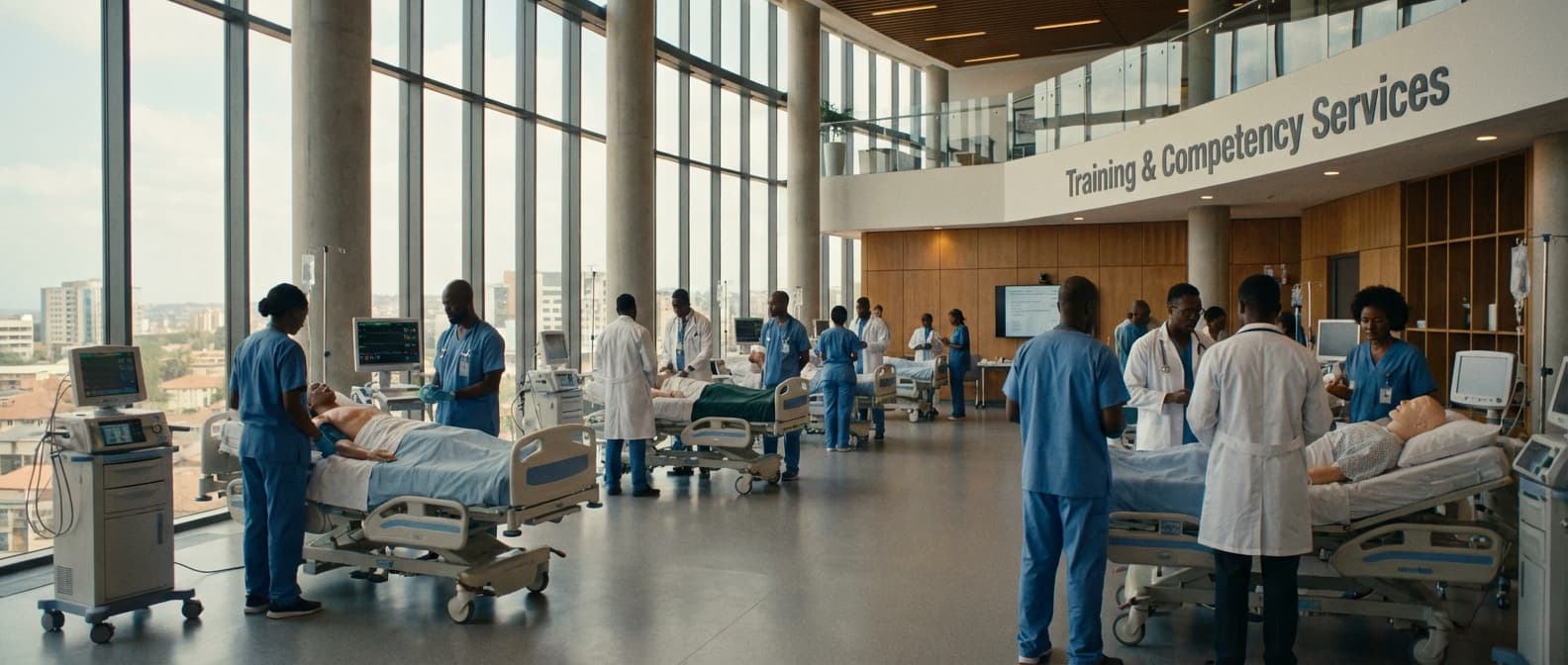
Anesthesia Workstation User Training Service in Zambia
Engineering Excellence & Technical Support
Anesthesia Workstation User Training Service High-standard technical execution following OEM protocols and local regulatory frameworks.
Mastering Anesthesia Delivery
Gain expert proficiency in operating the latest anesthesia workstations. Our training covers precise anesthetic gas delivery, mechanical ventilation modes, and advanced monitoring techniques to ensure patient safety and optimal outcomes.
Ventilation Strategies & Troubleshooting
Deepen your understanding of various ventilation modes and their application. Learn to interpret real-time waveforms and settings, enabling effective troubleshooting and adaptive patient management in diverse clinical scenarios.
Integrated Monitoring & Alarm Management
Become adept at utilizing the workstation's integrated monitoring capabilities, including vital signs, capnography, and advanced hemodynamic parameters. Master effective alarm management to respond swiftly and appropriately to critical events.
What Is Anesthesia Workstation User Training Service In Zambia?
Anesthesia Workstation User Training Service in Zambia refers to a specialized educational program designed to equip healthcare professionals with the necessary knowledge and practical skills to operate anesthesia workstations safely and effectively within the Zambian healthcare context. This service is crucial for ensuring optimal patient outcomes during surgical and procedural interventions requiring anesthesia. The training encompasses theoretical understanding of workstation principles, functional components, operational procedures, troubleshooting, and adherence to local safety regulations and best practices.
| Target Audience | Rationale for Need | Typical Use Cases | ||
|---|---|---|---|---|
| Anesthesiologists/Anesthetists: Physician specialists and certified registered nurse anesthetists (CRNAs) responsible for administering anesthesia. | To ensure safe and efficient administration of anesthetic agents, precise control of ventilation, and effective monitoring of patient physiological parameters, thereby minimizing perioperative risks. | General Surgery: Operating rooms across various surgical specialties (e.g., general, orthopedic, gynecological). | Emergency Procedures: Urgent surgical interventions, trauma management, and critical care scenarios. | Diagnostic and Interventional Procedures: Procedures requiring sedation or general anesthesia outside the operating room, such as endoscopy, bronchoscopy, or interventional radiology. |
| Anesthesia Residents and Trainees: Healthcare professionals undergoing specialized training in anesthesiology. | To build foundational knowledge and practical skills in a supervised environment, ensuring they develop competent and safe practices from the outset of their careers. | Simulation Labs: Practice environments for developing and refining skills before direct patient care. | Mentored Clinical Rotations: On-the-job training under the supervision of experienced anesthesiologists. | |
| Biomedical Engineers/Technicians: Personnel responsible for the installation, maintenance, and repair of medical equipment. | To understand the technical specifications, operational principles, and maintenance requirements of anesthesia workstations for effective troubleshooting, repair, and preventative maintenance. | Equipment Installation and Commissioning: Setting up new anesthesia workstations in healthcare facilities. | Routine Maintenance and Servicing: Performing scheduled checks, calibrations, and minor repairs. | Troubleshooting and Repair: Diagnosing and rectifying malfunctions to ensure equipment uptime and patient safety. |
| Nursing Staff (Operating Room/ICU): Nurses working in perioperative settings and intensive care units who may assist in anesthesia or manage patients requiring mechanical ventilation. | To provide basic understanding of workstation functions for safe handover, patient monitoring, and basic troubleshooting in critical situations where immediate anesthesiologist intervention may not be readily available. | Patient Monitoring and Support: Assisting anesthesiologists in monitoring vital signs and ventilator parameters. | Post-operative Care: Managing patients on mechanical ventilation in the ICU. | Emergency Response: Basic familiarity with emergency functions and signaling alarms. |
Key Components of Anesthesia Workstation User Training:
- Workstation Familiarization: In-depth understanding of the anesthesia machine's architecture, including vaporizers, flow meters, gas delivery systems (oxygen, nitrous oxide, medical air), ventilator modes, and patient monitoring integration.
- Pre-use System Checks and Calibration: Comprehensive instruction on conducting mandatory pre-anesthetic checks, leak tests, oxygen sensor calibration, and ventilator performance verification according to manufacturer guidelines and hospital protocols.
- Anesthetic Gas Delivery and Control: Training on accurate setting and control of fresh gas flow, agent concentration (e.g., volatile anesthetics, sevoflurane, isoflurane), and maintenance of the breathing circuit.
- Mechanical Ventilation Management: Proficiency in selecting and managing various ventilation modes (e.g., volume control, pressure control, spontaneous breathing), adjusting parameters (tidal volume, respiratory rate, PEEP), and monitoring ventilatory mechanics.
- Patient Monitoring Integration: Understanding how to connect and interpret data from integrated patient monitors (ECG, SpO2, EtCO2, NIBP, temperature) and their role in real-time assessment of patient status.
- Emergency Procedures and Troubleshooting: Training on recognizing and responding to common workstation malfunctions, circuit disconnections, gas supply failures, and other critical events. This includes the proper use of emergency oxygen and manual ventilation techniques.
- Infection Control and Maintenance: Education on cleaning, disinfection, and sterilization protocols for the workstation and its components to prevent cross-contamination and maintain hygiene standards.
- Documentation and Record-Keeping: Emphasis on accurate recording of anesthetic administration, ventilation settings, and any deviations or adverse events as per medical record requirements.
- Regulatory Compliance: Familiarization with relevant Zambian healthcare regulations, standards, and guidelines pertaining to the use of medical devices, including anesthesia workstations.
Who Needs Anesthesia Workstation User Training Service In Zambia?
Anesthesia workstation user training is critical for ensuring the safe and effective operation of this vital medical equipment. In Zambia, the need for such training is driven by several factors, including the increasing adoption of advanced anesthesia technologies, the continuous need to upskill healthcare professionals, and the importance of adhering to international patient safety standards. Proper training empowers anesthesiologists, anesthetists, nurses, and biomedical engineers to maximize the functionality of workstations, minimize errors, and ultimately improve patient outcomes in surgical and critical care settings.
| Customer Type | Department/Role | Specific Needs/Benefits |
|---|---|---|
| Public Hospitals | Anesthesiology Department | Training for new and existing staff on various anesthesia machine models, understanding advanced ventilation modes, troubleshooting common issues, ensuring compliance with national healthcare standards. |
| Public Hospitals | Nursing Staff (Perioperative/ICU) | Familiarization with workstation setup, monitoring parameters, alarms, basic troubleshooting, and safe patient transfer during anesthesia procedures. |
| Public Hospitals | Biomedical Engineering Department | In-depth training on maintenance, calibration, repair, and safety checks of anesthesia workstations to ensure operational readiness and longevity of equipment. |
| Private Hospitals & Clinics | Anesthesiology Department | Training on specific high-end anesthesia workstations, advanced features for complex procedures, optimization of anesthesia delivery, and strategies for cost-effective utilization. |
| Private Hospitals & Clinics | Nursing Staff (Perioperative/ICU) | Enhanced skills in managing advanced ventilation settings, understanding complex monitoring displays, and rapid response to critical events involving the anesthesia workstation. |
| Surgical Centers | Anesthesiologists & Anesthetists | Training tailored to the types of surgeries performed, focusing on specific anesthesia techniques and the efficient use of workstations within a high-volume setting. |
| Intensive Care Units (ICUs) | Critical Care Physicians & Nurses | Training on using anesthesia workstations as ventilators for prolonged mechanical ventilation, managing complex respiratory conditions, and utilizing advanced monitoring capabilities. |
| Emergency Departments | Emergency Physicians & Nurses | Training on rapid setup and use of anesthesia workstations for emergent airway management, induction of anesthesia in critical situations, and initial stabilization. |
| Medical Training Institutions (Universities, Colleges) | Medical Students, Residents, Nurse Anesthetist Students | Foundational and advanced training on the principles of anesthesia delivery, operation of various workstations, and hands-on practice with simulators to prepare future healthcare professionals. |
| Medical Equipment Suppliers & Distributors | Technical Support Staff, Sales Representatives | Product-specific training to enable effective installation, demonstration, and post-sales support for anesthesia workstations sold in Zambia. |
Target Customers and Departments for Anesthesia Workstation User Training in Zambia
- Hospitals (Public and Private)
- Surgical Centers
- Intensive Care Units (ICUs)
- Emergency Departments
- Training and Educational Institutions for Healthcare Professionals
Anesthesia Workstation User Training Service Process In Zambia
This document outlines the user training service process for Anesthesia Workstations in Zambia, from initial inquiry to successful execution. The process is designed to ensure comprehensive and effective training for healthcare professionals, enabling them to operate anesthesia workstations safely and efficiently.
| Stage | Description | Key Activities | Responsible Party | Deliverables/Outcomes |
|---|---|---|---|---|
| Initial contact from a client (hospital, clinic, or training institution) requesting anesthesia workstation user training. | Receive inquiry, gather basic information about the institution and their needs, understand the number of trainees, their experience level, and specific workstation models to be covered. | Client, Training Provider Sales/Inquiry Team | Understanding of client's training requirements, preliminary information gathered. |
| Development and submission of a tailored training proposal and cost estimate. | Based on the needs assessment, create a detailed training proposal outlining objectives, curriculum, duration, methodology, trainer profiles, and recommended equipment. Provide a formal quotation. | Training Provider | Detailed training proposal, formal quotation, curriculum outline. |
| Formalization of the training agreement and scheduling of training dates and logistics. | Client reviews and accepts the proposal/quotation. Negotiation of terms and conditions. Finalize training dates, venue (on-site or off-site), and any necessary travel arrangements. | Client, Training Provider Management | Signed training agreement, confirmed training dates and venue, logistical plan. |
| Preparation by both the training provider and the client to ensure a smooth training experience. | Training Provider: Finalize training materials (manuals, presentations, practical exercises), confirm trainer availability, prepare demonstration equipment. Client: Identify trainees, ensure trainees are available on scheduled dates, prepare the training environment (classroom, practical lab), ensure workstation availability (if applicable). | Training Provider, Client (Hospital Administration/Department Heads) | Ready training materials, confirmed trainer, prepared training venue and equipment. |
| The actual delivery of the anesthesia workstation user training. | Theoretical sessions covering workstation principles, functionalities, safety features, and troubleshooting. Practical sessions involving hands-on operation, simulation exercises, and case studies. Q&A sessions and competency checks. | Training Provider (Certified Trainers) | Trainees gain theoretical knowledge and practical skills in operating the anesthesia workstation. |
| Ongoing support and assessment of the training effectiveness. | Provide immediate post-training support (e.g., answering questions, remote assistance). Conduct a post-training evaluation to gather feedback from trainees and trainers. Assess knowledge retention and skill application. | Training Provider, Trainees | Trainee feedback report, trainer feedback report, identification of areas for improvement. |
| Formal recognition of training completion and ongoing engagement. | Issue certificates of completion to successful trainees. Offer ongoing technical support and refresher training options as per agreement. Track training impact on user proficiency. | Training Provider | Certificates of completion, documented support interactions, records of trainee competency. |
Anesthesia Workstation User Training Service Process Workflow in Zambia
- Inquiry & Needs Assessment
- Proposal & Quotation
- Agreement & Scheduling
- Pre-Training Preparation
- Training Execution
- Post-Training Support & Evaluation
- Certification & Follow-up
Anesthesia Workstation User Training Service Cost In Zambia
The cost of anesthesia workstation user training services in Zambia can vary significantly based on several factors. These factors influence the overall price, making it essential for healthcare facilities to consider them when budgeting for such training. The primary goal of these training sessions is to equip anesthesia providers and technicians with the knowledge and practical skills to safely and effectively operate anesthesia workstations, ensuring patient safety and optimal care delivery. Pricing is typically determined by a combination of the trainer's expertise, the duration and depth of the training, the location of the training, and the specific features or models of the anesthesia workstations being covered. The training often includes both theoretical components and hands-on practical sessions, which are crucial for competency development.
| Training Type/Scope | Estimated Cost Range (ZMW) | Notes |
|---|---|---|
| Basic User Training (1-2 days, introductory features) | 3,000 - 7,000 | Focuses on fundamental operations, safety checks, and basic settings. May be suitable for new users or refreshers. |
| Intermediate User Training (2-3 days, standard features & troubleshooting) | 6,000 - 12,000 | Covers a wider range of functionalities, common troubleshooting scenarios, and basic maintenance. Suitable for most operational staff. |
| Advanced User Training (3-5 days, comprehensive, including advanced features & maintenance) | 10,000 - 25,000+ | In-depth training on all workstation features, complex settings, alarms management, and potentially basic preventative maintenance. Often includes simulation or hands-on practice with various scenarios. |
| Manufacturer-Specific Training (Model-dependent) | Varies Widely (often higher end of ranges) | Direct training from the manufacturer's certified trainers. Pricing can depend on the specific model and the scope of the agreement. |
| On-site Training (per day, including trainer's travel/accommodation) | Additional 2,000 - 5,000+ | This is an additional cost on top of the base training fee, depending on the trainer's location and the facility's remoteness. |
| Group Training (per session, for up to 10 participants) | 8,000 - 15,000 | This is an example of a block pricing for a group, offering a more cost-effective per-participant rate for larger teams. |
Key Pricing Factors for Anesthesia Workstation User Training in Zambia:
- Trainer's Expertise and Qualifications: Highly experienced and certified trainers, often with extensive clinical backgrounds or manufacturer-specific accreditations, command higher fees. Their ability to impart complex information clearly and address diverse user queries adds significant value.
- Training Duration and Depth: The number of training days or hours directly impacts the cost. Comprehensive training covering advanced features, troubleshooting, and maintenance will be more expensive than a basic introductory session.
- Number of Participants: While some training providers offer per-participant rates, others may have a fixed fee for a group. Larger groups might dilute the cost per individual but could also require more trainer attention, potentially increasing the overall session cost if the provider charges by trainer time.
- Training Location (On-site vs. Off-site): On-site training at the healthcare facility is often preferred for convenience, but it can incur travel and accommodation costs for the trainer. Off-site training at a dedicated training center might have facility usage fees.
- Anesthesia Workstation Model and Complexity: Training on highly sophisticated, multi-feature anesthesia workstations will generally be more expensive than training on simpler models. The complexity of the user interface and the number of functionalities to be covered play a role.
- Inclusion of Hands-on Practice and Simulation: Training that incorporates extensive hands-on practice with actual workstations or advanced simulation equipment will naturally cost more due to the resources and time required.
- Training Materials and Certification: The provision of detailed user manuals, training aids, and official certifications upon completion will also contribute to the overall training cost.
- Manufacturer vs. Third-Party Training: Training directly from the workstation manufacturer may be more expensive but often offers the most up-to-date and specialized knowledge. Third-party training providers might offer more competitive pricing but their expertise can vary.
- Customization of Training Program: Tailoring the training content to the specific needs and existing skill levels of the facility's staff will likely incur additional development costs.
- Geographic Location within Zambia: While not as significant as other factors, logistical considerations for trainers traveling to more remote areas of Zambia might slightly influence pricing due to increased travel expenses.
Affordable Anesthesia Workstation User Training Service Options
Providing comprehensive and affordable user training for anesthesia workstations is crucial for patient safety and efficient clinical practice. This service aims to equip anesthesia providers with the necessary skills to operate complex equipment confidently and effectively. We offer flexible training solutions designed to meet diverse institutional needs and budgets, emphasizing value through structured learning and cost-saving strategies.
| Value Bundle | Description | Included Services | Cost-Saving Strategy | Ideal For |
|---|---|---|---|---|
| Foundation Bundle | Essential knowledge for new users and basic equipment familiarity. | Basic Operation & Safety modules (online), 1 hour remote Q&A session. | Leverages e-learning for broad reach, reduces travel costs for trainers. | New anesthesia staff, smaller departments, budget-conscious institutions. |
| Proficiency Bundle | Comprehensive understanding including advanced functionalities and practical application. | Foundation Bundle + Advanced Features & Troubleshooting modules (online), 4-hour simulation session (remote or on-site option). | Bundling online and simulation training offers a discounted rate compared to individual purchases. Simulation can be optimized by grouping participants. | Mid-sized departments, experienced staff seeking to refresh skills or learn new features. |
| Excellence Bundle | In-depth, hands-on training with a focus on institutional integration and advanced skills. | Proficiency Bundle + 2-day On-Site Customized Training, Train-the-Trainer program. | On-site training reduces external travel expenses for staff. Train-the-trainer fosters sustainable in-house expertise, minimizing future external training needs. | Large teaching hospitals, institutions with multiple workstations, departments prioritizing internal skill development and standardization. |
| Custom Package | Bespoke training solutions tailored to unique institutional requirements. | Flexible combination of any listed services, developed in consultation with your team. | Pay only for what you need, optimizing resource allocation and avoiding unnecessary training components. | Institutions with highly specialized needs, specific equipment models not covered in standard bundles, or unique workflow requirements. |
Key Training Service Options
- Basic Operation & Safety: Covers fundamental controls, alarm management, ventilation modes, and essential safety checks.
- Advanced Features & Troubleshooting: Delves into specialized modes, waveform analysis, gas monitoring, and common troubleshooting scenarios.
- Simulation-Based Training: Utilizes high-fidelity simulators for hands-on practice in realistic clinical environments.
- On-Site Customized Training: Tailored programs delivered at your institution, addressing specific equipment models and institutional protocols.
- Remote & E-Learning Modules: Flexible, self-paced online courses and live webinars for accessible knowledge transfer.
- Train-the-Trainer Programs: Empowers your internal staff to become proficient trainers, fostering long-term in-house expertise.
Verified Providers In Zambia
In Zambia, ensuring access to reliable and trustworthy healthcare providers is paramount. Franance Health has established itself as a leading authority, meticulously vetting and credentialing medical professionals and facilities. This rigorous process guarantees that their network comprises only the most qualified and ethical practitioners, offering patients peace of mind and access to superior medical care. Choosing a Franance Health-verified provider means opting for quality, integrity, and a commitment to patient well-being.
| Credentialing Aspect | Franance Health's Rigor | Benefit to Patients |
|---|---|---|
| Medical Licensing & Registration | Verification of current and valid licenses from all relevant Zambian medical boards. | Ensures providers are legally authorized to practice and meet basic competency standards. |
| Professional Qualifications & Experience | Thorough review of educational background, postgraduate training, and years of practical experience in their respective fields. | Guarantees providers possess the necessary knowledge and skills for effective treatment. |
| Clinical Competence & Performance | May involve peer reviews, outcome analysis (where applicable and ethical), and a track record of patient satisfaction. | Indicates a provider's ability to deliver high-quality medical care and positive patient experiences. |
| Adherence to Ethical Codes | Confirmation of understanding and commitment to professional ethical standards and patient rights. | Protects patients by ensuring confidentiality, informed consent, and respectful treatment. |
| Facility Standards (for clinics/hospitals) | Inspection and verification of hygiene, equipment, safety protocols, and operational efficiency. | Provides a safe, clean, and well-equipped environment for medical procedures and consultations. |
| Continuing Professional Development (CPD) | Verification of ongoing training and education to stay updated with medical advancements. | Ensures patients receive care based on the latest medical knowledge and techniques. |
Why Franance Health Credentials Represent the Best Choice in Zambia:
- Uncompromising Quality Assurance: Franance Health implements a stringent vetting process that examines qualifications, experience, regulatory compliance, and patient feedback.
- Ethical Practice Standards: Verified providers adhere to the highest ethical guidelines, ensuring patient rights and confidentiality are always prioritized.
- Access to Specialized Expertise: The network includes a diverse range of specialists, guaranteeing that patients can find the right care for any medical need.
- Improved Patient Outcomes: By connecting patients with credentialed professionals, Franance Health contributes to more accurate diagnoses, effective treatments, and better overall health results.
- Enhanced Trust and Transparency: Franance Health's verification process fosters trust between patients and providers, creating a transparent healthcare ecosystem.
- Streamlined Healthcare Navigation: Patients can confidently select providers knowing they meet established standards, simplifying the often-complex process of finding healthcare.
- Commitment to Continuous Improvement: Franance Health regularly reviews and updates its credentialing criteria to reflect the evolving landscape of healthcare.
Scope Of Work For Anesthesia Workstation User Training Service
This document outlines the Scope of Work (SOW) for providing Anesthesia Workstation User Training Services. The objective is to ensure that qualified healthcare professionals are proficient in the safe and effective operation of the anesthesia workstation, including its features, functionalities, and troubleshooting procedures. This SOW details the technical deliverables and standard specifications for the training program.
| Deliverable Category | Specific Deliverable | Description | Standard Specifications / Requirements |
|---|---|---|---|
| Training Program Design | Training Curriculum | A structured outline of the training modules, learning objectives, and content. | Must cover all aspects of the workstation operation, including basic, advanced, and emergency functions. Tailored to specific user roles (e.g., anesthesiologists, nurse anesthetists, technicians). Must be aligned with manufacturer's recommended training protocols. |
| Training Program Design | Training Materials | Documentation provided to trainees for learning and reference. | Includes user manuals, presentation slides, quick reference guides, case studies, and competency assessment tools. Materials should be in a clear, concise, and easily understandable format, available in the primary language of the users. |
| Training Delivery | Instructor-Led Sessions | On-site or remote sessions conducted by certified trainers. | Minimum of X hours of theoretical and practical instruction per user group. Instructor-to-trainee ratio not to exceed 1:Y. Sessions must be interactive and allow for Q&A. |
| Training Delivery | Hands-on Practice Sessions | Practical application of learned skills using actual or simulated anesthesia workstations. | Sufficient workstation units available for individual or small group practice. Scenarios should simulate realistic clinical situations. Supervision by instructors during practice. |
| Training Delivery | Simulation-Based Training (if applicable) | Utilizing advanced simulators to replicate complex clinical scenarios. | High-fidelity simulators capable of mimicking patient physiological responses and equipment malfunctions. Debriefing sessions post-simulation. |
| Assessment and Evaluation | Competency Assessment | Methods to evaluate the trainee's understanding and practical skills. | Includes written examinations, practical skills demonstrations, and scenario-based assessments. Passing score of Z% required for certification. |
| Assessment and Evaluation | Training Feedback Forms | Mechanism for trainees to provide feedback on the training program and instructors. | Standardized forms to capture feedback on content relevance, instructor effectiveness, material quality, and overall satisfaction. Analysis of feedback for continuous improvement. |
| Post-Training Support | Post-Training Support Mechanism | Ongoing support and resources for users after the formal training. | Access to a technical helpline, online knowledge base, or periodic refresher courses. Response time for support inquiries not to exceed T hours. |
| Documentation | Training Completion Certificates | Formal documentation issued to trainees upon successful completion of the training. | Certificates should include trainee name, training date, workstation model, and issuing organization. Unique identifiers for traceability. |
| Documentation | Training Report | A comprehensive report summarizing the training activities and outcomes. | Includes number of trainees, attendance records, assessment results, feedback summary, and any recommendations for future training. Delivered within W days of training completion. |
| Technical Specifications (Workstation) | Workstation Model(s) for Training | The specific anesthesia workstation models that will be used for training. | Must be the exact model(s) currently deployed or intended for deployment in the clinical setting. Workstations must be fully functional and calibrated. |
| Technical Specifications (Workstation) | Software Version | The specific software version installed on the training workstations. | Must match the production software version deployed in the clinical environment. Any deviations must be clearly communicated and justified. |
| Technical Specifications (Environment) | Training Environment Requirements | The physical and technical requirements for the training location. | Adequate space, lighting, power outlets, and internet connectivity (if remote training). Access to a clinical setting or a dedicated training room. |
Key Objectives of the Training Service
- To equip users with comprehensive knowledge of the anesthesia workstation's hardware and software components.
- To train users on the correct setup, calibration, and pre-use checks of the anesthesia workstation.
- To provide hands-on experience with all ventilation modes, gas delivery systems, and monitoring functionalities.
- To educate users on patient safety features, alarms, and emergency procedures.
- To ensure users can perform routine maintenance and troubleshooting of the anesthesia workstation.
- To familiarize users with the device's user interface and navigation.
- To comply with manufacturer guidelines and relevant regulatory standards for anesthesia equipment operation.
Service Level Agreement For Anesthesia Workstation User Training Service
This Service Level Agreement (SLA) outlines the performance standards for the Anesthesia Workstation User Training Service provided by [Your Company Name] to [Client Company Name]. It specifies the response times for support requests and the guaranteed uptime of the training platform and associated resources.
| Service Component | Severity Level | Response Time Target | Target Resolution Time (Business Hours) | Uptime Guarantee |
|---|---|---|---|---|
| Anesthesia Workstation Training Platform Access | Critical (System Unavailable, Major Functionality Impacted) | 1 Hour | 4 Business Hours | 99.5% |
| Anesthesia Workstation Training Platform Access | High (Significant Functionality Impaired, Workaround Available) | 2 Business Hours | 8 Business Hours | 99.5% |
| Anesthesia Workstation Training Platform Access | Medium (Minor Functionality Impaired, No Significant Impact) | 4 Business Hours | 24 Business Hours | 99.5% |
| Anesthesia Workstation Training Platform Access | Low (Question, Feature Request, General Inquiry) | 8 Business Hours | N/A | 99.5% |
| Access to Pre-recorded Training Modules | N/A | N/A | N/A | 99.9% |
| Access to Simulation Environment (if applicable) | Critical (Simulation Unavailable) | 1 Hour | 4 Business Hours | 99.0% |
| Access to Simulation Environment (if applicable) | High (Simulation Functionality Impaired) | 2 Business Hours | 8 Business Hours | 99.0% |
| Access to User Manuals and Documentation | N/A | N/A | N/A | 99.9% |
Key Performance Indicators (KPIs)
- Response Time: The maximum time allowed for [Your Company Name] to acknowledge and begin working on a reported issue or request.
- Resolution Time: The maximum time allowed to resolve a reported issue, categorized by severity.
- Uptime Guarantee: The minimum percentage of time the training platform and its core functionalities will be available to users.
- Availability of Training Materials: The guaranteed accessibility of pre-recorded lectures, simulations, and documentation.
Frequently Asked Questions

Ready when you are
Let's scope your Anesthesia Workstation User Training Service in Zambia project in Zambia.

Scaling healthcare logistics and technical systems across the entire continent.