
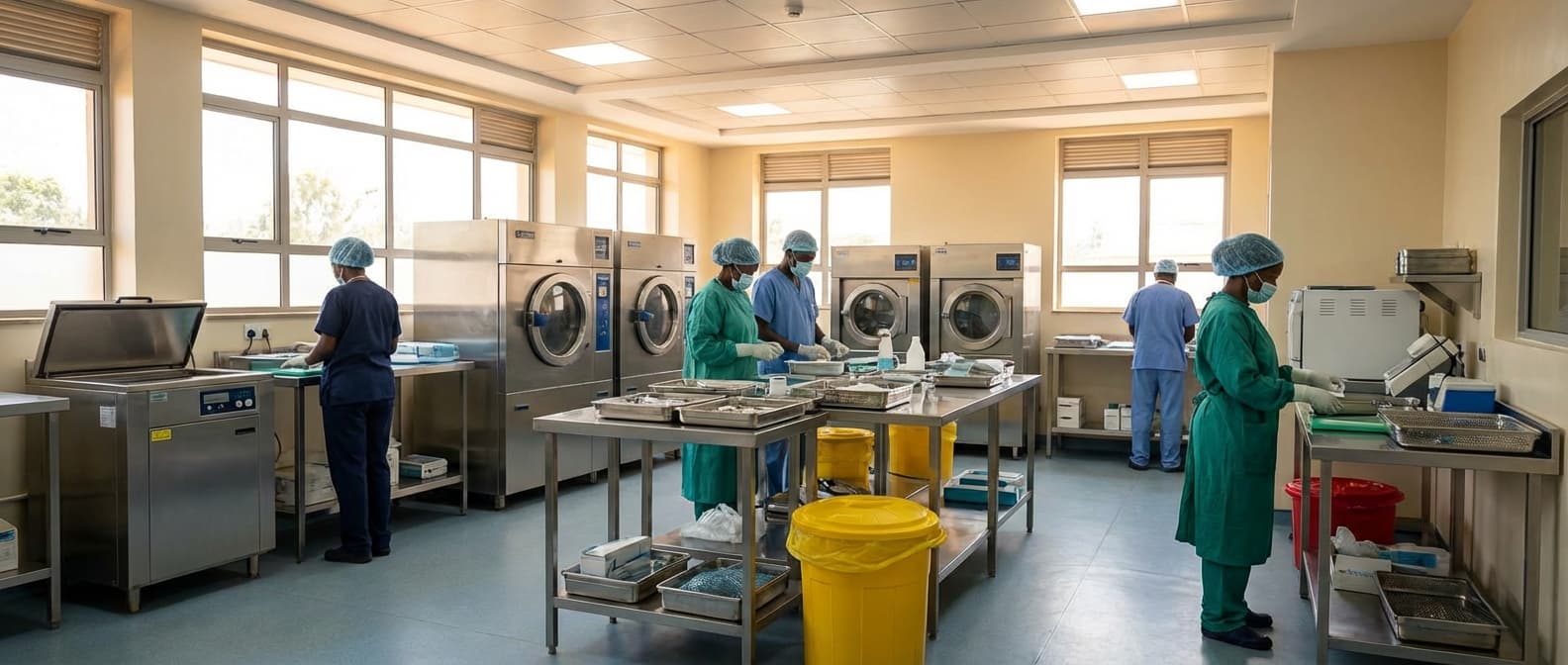
Medical Equipment Decontamination Service (Pre-Repair/Pre-Relocation) in Zambia
Engineering Excellence & Technical Support
Medical Equipment Decontamination Service (Pre-Repair/Pre-Relocation) High-standard technical execution following OEM protocols and local regulatory frameworks.
Comprehensive Bioburden Assessment
Utilizing advanced ATP testing and microbial swabbing, we provide a detailed assessment of bioburden on medical equipment, ensuring critical contamination levels are identified before repair or relocation.
Validated Decontamination Protocols
Our multi-stage decontamination process employs EPA-approved disinfectants and proven procedures, guaranteeing the elimination of pathogens according to international healthcare standards, safeguarding technicians and future users.
Secure Transport Preparation
Post-decontamination, equipment is meticulously packaged and sealed in sterile containment to prevent re-contamination during transit, ensuring integrity and compliance with health regulations for safe relocation within Zambia.
What Is Medical Equipment Decontamination Service (Pre-repair/pre-relocation) In Zambia?
Medical Equipment Decontamination Service (Pre-Repair/Pre-Relocation) in Zambia refers to the specialized process of cleaning, disinfecting, and/or sterilizing medical devices and equipment prior to their repair, refurbishment, or relocation. This service is critical for ensuring the safety of biomedical technicians, maintenance personnel, and the environment by mitigating risks associated with biohazardous materials, chemical residues, and infectious agents that may be present on or within the equipment. It aims to render the equipment safe to handle and transport, thereby preventing cross-contamination and occupational exposure.
| Who Needs the Service? | Typical Use Cases | |||||||
|---|---|---|---|---|---|---|---|---|
| Hospitals and Healthcare Facilities (Public & Private): Requiring equipment repair or relocation within or between facilities. | Routine maintenance of diagnostic imaging equipment (e.g., X-ray, CT scanners) before vendor servicing. | Surgical centers and operating theaters needing to move sterilized surgical instruments for repair or upgrade. | Laboratories and diagnostic centers sending sensitive analytical instruments for calibration or repair. | Medical device manufacturers and distributors involved in equipment servicing or relocation programs. | Ambulance services and emergency medical providers relocating or servicing critical care equipment. | Government health ministries and procurement agencies overseeing large-scale equipment management and maintenance contracts. | Manufacturers of reusable medical devices that require decontamination after use and before shipping for repair or refurbishment. | Educational and training institutions with medical equipment undergoing maintenance or transfer. |
| Relocation of ultrasound machines from one department to another within a hospital complex. | Pre-shipment decontamination of anesthesia machines for international repair. | Decontamination of patient monitoring systems before being sent to a central repair depot. | Servicing of dental chairs and associated equipment in private practices. | Handling of endoscopes and associated accessories that have been used on patients and require cleaning before sending for repair. | Decontamination of centrifuges or incubators in research facilities prior to transport. | Management of refurbished medical equipment being returned to service. |
Key Components of Medical Equipment Decontamination Service:
- Initial Assessment and Risk Stratification: Evaluating the type of equipment, its intended use, and potential contaminants.
- Cleaning: Mechanical removal of visible soil, debris, and organic matter using appropriate detergents and cleaning agents.
- Disinfection: Application of chemical agents or physical processes (e.g., heat, UV irradiation) to kill or inactivate most microorganisms on surfaces.
- Sterilization (where applicable): Complete elimination or inactivation of all viable microorganisms, including bacterial spores.
- Drying: Thorough drying to prevent microbial growth and facilitate further handling or packaging.
- Decontamination Verification: Confirmation that the decontamination process has been effective.
- Documentation: Recording the decontamination process, including agents used, duration, and personnel involved.
- Packaging and Labeling: Secure packaging to prevent recontamination during transit, with clear labeling indicating decontamination status.
Who Needs Medical Equipment Decontamination Service (Pre-repair/pre-relocation) In Zambia?
In Zambia, the need for medical equipment decontamination services before repair or relocation is crucial for ensuring the safety of both technicians and patients, preventing cross-contamination, and maintaining the integrity of the equipment. This service is particularly vital in a healthcare landscape where hygiene and infection control are paramount.
| Department | Types of Equipment Requiring Decontamination | Reasons for Decontamination (Pre-Repair/Relocation) |
|---|---|---|
| Operating Theatres / Surgical Suites | Surgical instruments (complex, powered), anesthetic machines, surgical lights, patient monitors, electrocautery units, electrosurgical generators. | Risk of bloodborne pathogens, infectious agents; ensuring technician safety during repair; preventing cross-contamination during relocation to other surgical areas or storage. |
| Intensive Care Units (ICUs) / High Dependency Units (HDUs) | Ventilators, infusion pumps, dialysis machines, specialized patient monitors, ECG machines, defibrillators. | Exposure to bodily fluids, respiratory secretions; preventing spread of hospital-acquired infections (HAIs) during maintenance; ensuring sterile environment upon reinstallation. |
| Emergency Departments (ER) | Cardiac monitors, defibrillators, ventilators, portable X-ray machines, trauma equipment, resuscitation carts. | High volume of critical patients with diverse infectious conditions; immediate need for functional equipment post-repair; technician safety in a high-stress environment. |
| Radiology and Imaging Departments | X-ray machines, CT scanners, MRI machines, ultrasound machines, mammography units, C-arms. | Potential contamination from bodily fluids during examinations; ensuring precise calibration and function post-repair; protecting imaging technicians and engineers. |
| Laboratories (Pathology, Microbiology, Biochemistry) | Centrifuges, microscopes, analyzers (hematology, chemistry, immunoassay), incubators, autoclaves, PCR machines. | Handling of biological samples and infectious agents; preventing biohazard exposure to maintenance personnel; maintaining accuracy of diagnostic results after servicing. |
| Sterilization and CSSD (Central Sterile Services Department) | Autoclaves, sterilizers, washer-disinfectors (if undergoing complex internal repairs). | Ensuring these critical infection control devices are free from residual bio-burden before external maintenance; preventing contamination of other sterile items. |
| Outpatient Clinics and General Wards | Diagnostic equipment (blood pressure monitors, thermometers), minor surgical instruments, physiotherapy equipment, dermatoscopes. | Preventing the spread of common infections; ensuring routine maintenance does not compromise patient safety upon return to service; technician safety. |
| Dental Clinics | Dental chairs, X-ray units, autoclaves, dental handpieces, scaling units. | Exposure to oral pathogens; ensuring hygiene standards are maintained during repair and reinstallation. |
| Rehabilitation and Physiotherapy Centers | Exercise equipment, electrotherapy units, ultrasound therapy machines, traction devices. | Potential contamination from sweat, skin cells, and other bodily substances; maintaining a hygienic environment for vulnerable patients. |
Target Customers and Departments for Medical Equipment Decontamination Services in Zambia
- {"heading":"Hospitals (Public and Private)","description":"Hospitals are primary users, with various departments requiring decontamination for diverse equipment. This includes general hospitals, specialized medical centers, and clinics."}
- {"heading":"Diagnostic Laboratories","description":"Laboratories that handle biological samples utilize equipment that can harbor pathogens, necessitating thorough decontamination before maintenance or relocation to prevent biohazard risks."}
- {"heading":"Medical Equipment Manufacturers and Suppliers","description":"Companies that sell, install, or service medical equipment in Zambia need this service to ensure their technicians can work safely on returned, refurbished, or newly installed units."}
- {"heading":"Government Health Ministries and Agencies","description":"Entities responsible for public health infrastructure and medical equipment management may contract these services for their facilities or during large-scale equipment deployment or upgrades."}
- {"heading":"Non-Governmental Organizations (NGOs) and Charities","description":"Organizations operating healthcare facilities or providing medical aid in Zambia will require these services for their donated or procured medical equipment."}
- {"heading":"Research Institutions and Universities","description":"Facilities involved in medical research or training that use specialized equipment can benefit from decontamination services to ensure a sterile research environment and safe handling of equipment."}
Medical Equipment Decontamination Service (Pre-repair/pre-relocation) Process In Zambia
This document outlines the Medical Equipment Decontamination Service (Pre-Repair/Pre-Relocation) Process in Zambia. This standardized workflow ensures that medical equipment is safely and effectively decontaminated before being sent for repair or relocation, minimizing the risk of cross-contamination and protecting personnel. The process begins with an initial inquiry and culminates in the successful decontamination and release of the equipment.
| Stage | Description | Key Activities | Responsible Party | Deliverables/Outcomes |
|---|---|---|---|---|
| The initial contact from a healthcare facility or individual requesting decontamination services for medical equipment slated for repair or relocation. | Healthcare facility identifies need, contacts service provider, provides details of equipment (type, model, intended use, perceived contamination level). | Healthcare Facility (Client), Decontamination Service Provider (DSP) | Acknowledged service request, initial understanding of equipment to be decontaminated. |
| Evaluating the equipment to determine the level of contamination risk and the appropriate decontamination method. | DSP receives initial information, may request photos or further details. Assesses potential biohazards based on equipment's past usage. Categorizes equipment into risk levels (e.g., low, medium, high). | Decontamination Service Provider (DSP) | Risk assessment report, classification of decontamination protocol to be used. |
| Getting the equipment ready and setting up the decontamination environment. | Client transports equipment to DSP facility or DSP arranges collection. DSP prepares designated decontamination area. Gathers necessary PPE, cleaning agents, disinfectants, and sterilants. Pre-cleaning of gross contaminants if necessary. | Healthcare Facility (Client), Decontamination Service Provider (DSP) | Equipment safely received at DSP, decontamination area prepared, materials ready. |
| The core process of applying approved decontamination methods to eliminate or inactivate infectious agents. | DSP personnel, following established protocols based on risk categorization, apply chemical disinfectants, sterilants, or engage in physical methods (e.g., heat sterilization) as appropriate. Specific attention to lumens, surfaces, and detachable parts. Adherence to contact times and concentrations. | Decontamination Service Provider (DSP) | Decontaminated medical equipment. |
| Ensuring the decontamination process has been effective. | Visual inspection for residual contamination. In some cases, may involve ATP testing or microbial swabbing to confirm absence of viable microorganisms (depending on risk level and client requirements). | Decontamination Service Provider (DSP) | Verification report, confirmation of effective decontamination. |
| Recording all activities and providing proof of decontamination. | DSP generates a decontamination certificate detailing equipment, date of service, methods used, and personnel involved. Records maintained for traceability. Certificate provided to the client. | Decontamination Service Provider (DSP) | Decontamination Certificate, service report, retained records. |
| Handing over the decontaminated equipment for its intended next step. | Client collects the decontaminated equipment from the DSP facility, or DSP arranges transportation. Client signs off on receipt of decontaminated equipment and certificate. Equipment is now safe for repair or relocation. | Decontamination Service Provider (DSP), Healthcare Facility (Client) | Client receives certified decontaminated equipment, ready for transport to repair facility or new location. |
Key Stages of the Medical Equipment Decontamination Service (Pre-Repair/Pre-Relocation) Process in Zambia
- Inquiry & Service Request
- Equipment Assessment & Risk Categorization
- Preparation for Decontamination
- Decontamination Procedure Execution
- Post-Decontamination Verification
- Documentation & Certification
- Equipment Release (for Repair/Relocation)
Medical Equipment Decontamination Service (Pre-repair/pre-relocation) Cost In Zambia
The cost of medical equipment decontamination services in Zambia, particularly for pre-repair or pre-relocation purposes, is influenced by several key factors. These services are crucial to prevent the spread of biohazards and ensure the safety of technicians and the environment. Pricing is typically determined on a case-by-case basis, but generally, clients can expect a range of costs depending on the complexity of the equipment, the type of decontamination required, and the logistical aspects involved. It's important to note that these prices are estimations and can vary significantly between different service providers and geographical locations within Zambia.
| Equipment Category | Estimated Cost Range (ZMW) - Per Unit | Notes |
|---|---|---|
| Small Diagnostic Devices (e.g., stethoscopes, blood pressure monitors) | 500 - 1,500 | Standard surface disinfection. Minimal contamination assumed. |
| Medium-Sized Lab Equipment (e.g., centrifuges, microscopes) | 1,000 - 3,000 | May involve more detailed cleaning of internal components. |
| Large Imaging Equipment (e.g., X-ray machines, Ultrasound probes) | 2,500 - 7,000 | Requires specialized cleaning agents and trained technicians. Decontamination of external surfaces and accessible internal components. |
| Complex Surgical or Anaesthesia Machines | 3,000 - 10,000+ | Involves intricate parts and potential for diverse biohazards. May require disassembly for thorough cleaning. |
| Major Diagnostic Systems (e.g., CT Scanners, MRI Machines) | 5,000 - 20,000+ | Extensive decontamination required. Specialized protocols and equipment are essential. Costs can escalate significantly based on the extent of the decontamination needed. |
Key Pricing Factors for Medical Equipment Decontamination in Zambia:
- Type and Size of Medical Equipment: Larger and more complex equipment, such as MRI machines, CT scanners, or extensive laboratory setups, will naturally incur higher decontamination costs due to the increased surface area, intricate components, and potentially higher biohazard risks. Small diagnostic devices will be on the lower end.
- Level of Contamination: The degree to which the equipment is contaminated is a primary driver of cost. Heavily contaminated items requiring more intensive or specialized decontamination procedures (e.g., involving potent disinfectants or bio-degrading agents) will be more expensive than those with minor surface-level contamination.
- Decontamination Method Employed: Different methods exist, ranging from basic surface disinfection to more advanced sterilization techniques like autoclaving or chemical sterilization. The choice of method depends on the equipment's material compatibility and the identified biohazards. Specialized methods often come with higher costs.
- Turnaround Time/Urgency: Expedited decontamination services for urgent repairs or relocation deadlines may command a premium. Standard service timelines will generally be more cost-effective.
- Location and Accessibility: The geographical location of the equipment within Zambia can impact costs due to transportation, travel time for technicians, and potential logistical challenges in remote areas.
- Specialized Personnel and Equipment: Decontamination often requires trained personnel with specific certifications and specialized equipment (e.g., hazmat suits, specialized cleaning agents, air filtration systems). The cost of these resources is factored into the service price.
- Disposal of Contaminated Materials: If the decontamination process generates hazardous waste, the safe and compliant disposal of these materials will add to the overall cost.
- Service Provider's Reputation and Expertise: Established decontamination companies with a proven track record and specialized expertise may charge more for their services due to their reliability and adherence to strict protocols.
- Volume of Equipment: For larger projects involving the decontamination of multiple pieces of equipment, some service providers may offer discounted rates for bulk services.
Affordable Medical Equipment Decontamination Service (Pre-repair/pre-relocation) Options
This service provides essential decontamination of medical equipment before it undergoes repairs or relocation. This process is crucial for preventing the spread of infections, protecting technicians, and ensuring compliance with health and safety regulations. We offer flexible options designed to be affordable for various needs and budgets, incorporating value bundles and strategic cost-saving measures.
| Service Package | Description | Ideal For | Cost-Saving Strategy | Estimated Price Range |
|---|---|---|---|---|
| Basic Decon | Standard cleaning and disinfection of external surfaces and accessible components. | Routine maintenance, minor repairs, and short-distance relocation. | Bundled with repair/relocation services, volume discounts. | $50 - $150 per unit |
| Advanced Decon | Includes Basic Decon plus targeted cleaning of more complex internal/external components (e.g., sensor ports, accessible tubing). | Moderate repairs, equipment undergoing significant cleaning needs, pre-sale/donation preparation. | Tiered pricing based on equipment complexity, pre-booking discounts. | $100 - $300 per unit |
| Comprehensive Decon | Full decontamination, including detailed cleaning of critical access points, potential disassembly for access to internal areas (where feasible and safe), and verification of disinfection effectiveness (optional). | Major repairs, equipment with potential biohazard exposure, pre-auction preparation, or when strict compliance is paramount. | Value bundles for multiple units, contract pricing for regular clients, loyalty programs. | $200 - $500+ per unit (depending on complexity) |
| On-Site Decon (Limited Scope) | Basic or Advanced Decon performed at your facility, minimizing transport costs and downtime. | When immediate decontamination is needed or transport is challenging. | Reduced shipping fees, efficient scheduling for multiple units on-site. | Slightly higher per-unit cost than off-site due to technician travel, but overall savings in logistics. |
Key Benefits of Pre-Repair/Pre-Relocation Decontamination
- Infection Control: Minimizes the risk of cross-contamination and protects healthcare staff, patients, and the public.
- Technician Safety: Creates a safer working environment for repair personnel.
- Regulatory Compliance: Helps meet stringent healthcare facility and regulatory body standards.
- Equipment Longevity: Proper cleaning can prevent further damage or complications during repair.
- Peace of Mind: Ensures that equipment is handled responsibly throughout its lifecycle.
Verified Providers In Zambia
In Zambia, navigating the healthcare landscape can be challenging. Ensuring you're receiving care from verified providers is paramount for your health and well-being. Franance Health stands out as a premier organization committed to connecting individuals with top-tier, credentialed healthcare professionals across the nation. Their rigorous vetting process and dedication to quality make them the undisputed best choice for those seeking reliable and expert medical services in Zambia.
| Criteria | Franance Health Approach | Benefit to Patients |
|---|---|---|
| Licensing & Certification | Mandatory verification of all medical licenses and certifications with relevant authorities. | Ensures providers meet minimum professional standards and are legally authorized to practice. |
| Professional Experience | Review of past performance, specialties, and any disciplinary actions. | Provides assurance of competence and a track record of successful patient outcomes. |
| Specialty Expertise | Categorization and verification of specific medical specializations. | Facilitates easy identification of specialists best suited for particular health concerns. |
| Patient Feedback | Collection and display of anonymized patient reviews and testimonials. | Offers real-world insights into provider communication, bedside manner, and overall patient satisfaction. |
| Ethical Standards | Assessment of adherence to medical ethics and patient privacy regulations. | Guarantees a respectful, trustworthy, and confidential healthcare experience. |
Why Franance Health is the Best Choice for Verified Providers in Zambia:
- Uncompromising Credential Verification: Franance Health goes above and beyond to ensure every provider on their platform is fully licensed, certified, and has a proven track record of excellence. This means you can trust that the doctors, specialists, and clinics you find are qualified and reputable.
- Commitment to Quality Care: Beyond basic credentials, Franance Health assesses providers on their commitment to patient-centered care, ethical practices, and adherence to the highest medical standards. This ensures a superior healthcare experience.
- Extensive Network of Specialists: Whether you need a general practitioner, a pediatric specialist, a surgeon, or any other medical expert, Franance Health boasts a diverse and comprehensive network, making it easy to find the right care for your specific needs.
- Patient-Centric Approach: Franance Health prioritizes the patient's journey. Their platform is designed for ease of use, allowing for simple appointment booking, access to patient reviews, and clear communication channels with healthcare providers.
- Promoting Health Equity: By making verified, high-quality healthcare more accessible, Franance Health plays a crucial role in promoting health equity across Zambia, ensuring that more people can receive the care they deserve.
- Peace of Mind: Knowing you are connected with a verified provider through a trusted organization like Franance Health offers invaluable peace of mind, allowing you to focus on your recovery and well-being.
Scope Of Work For Medical Equipment Decontamination Service (Pre-repair/pre-relocation)
This Scope of Work (SOW) outlines the requirements for medical equipment decontamination services to be performed prior to repair or relocation. The objective is to ensure that medical equipment is rendered safe for handling, repair, and transportation by eliminating biological and chemical contaminants, thereby protecting personnel, the environment, and preventing cross-contamination of the repair facility or new location. This SOW details the technical deliverables and standard specifications expected from the service provider.
| Parameter | Specification | Verification Method | Notes |
|---|---|---|---|
| Cleaning Agents | Approved EPA-registered, hospital-grade disinfectants and cleaning agents suitable for medical device materials. Must be effective against a broad spectrum of pathogens (e.g., bacteria, viruses, fungi). | Review of MSDS and product literature. Visual inspection of cleaning agent labels. | Specific agents may be dictated by equipment manufacturer's recommendations or institutional policy. |
| Decontamination Procedure | Must include thorough manual cleaning, disinfection, and, where applicable, sterilization methods appropriate for the equipment type and risk assessment. Procedures must minimize damage to sensitive electronic components and materials. | Observation of process, review of service provider's standard operating procedures (SOPs). | Procedures should follow established guidelines (e.g., CDC, FDA, manufacturer's instructions for use). |
| Pathogen Inactivation | Demonstrated inactivation of specified biological agents. For high-risk equipment, high-level disinfection or sterilization may be required. | Validation data for cleaning agents and procedures. Absence of bioburden testing may be required. | Risk assessment of equipment to determine required level of decontamination. |
| Chemical Residue | All residual cleaning or disinfecting agents must be thoroughly rinsed or removed to prevent damage to equipment or harm to personnel. No visible residue should remain. | Visual inspection, potential wipe testing for specific chemical residues. | Emphasis on manufacturer's recommendations for cleaning agent compatibility. |
| Environmental Controls | Decontamination performed in a controlled environment to prevent cross-contamination of the surrounding area. Appropriate personal protective equipment (PPE) must be used by personnel. | Observation of work area and personnel practices. | Compliance with relevant occupational safety and health regulations. |
| Hazardous Waste Disposal | All contaminated materials, waste fluids, and used cleaning agents must be collected, containerized, labeled, and disposed of according to local, state, and federal regulations for medical and hazardous waste. | Review of waste manifests and disposal provider credentials. | Service provider must be licensed for hazardous waste transport and disposal. |
| Equipment Handling | Equipment must be handled with care to prevent further damage during the decontamination process and preparation for transport. All removable parts should be accounted for. | Visual inspection post-decontamination and prior to release. | Detailed inventory of equipment and accessories before and after service. |
| Documentation Accuracy | All certificates and reports must be accurate, complete, and clearly identify the equipment, the decontamination performed, the personnel involved, and the date. | Review of submitted documentation for completeness and correctness. | Compliance with record-keeping requirements. |
| Turnaround Time | Completion of decontamination services within an agreed-upon timeframe, allowing for timely repair or relocation. Specific turnaround times will be detailed in individual work orders. | Adherence to agreed-upon project timelines. | Clear communication regarding any potential delays. |
Technical Deliverables
- Decontamination Certificate for each piece of equipment.
- Detailed Decontamination Report, including methods used, chemicals employed (with Material Safety Data Sheets - MSDS), and verification results.
- Waste disposal manifests for all hazardous materials generated.
- Record of equipment identification (serial numbers, asset tags) prior to decontamination.
- Photographic or video evidence of the decontamination process (upon request).
Service Level Agreement For Medical Equipment Decontamination Service (Pre-repair/pre-relocation)
This Service Level Agreement (SLA) outlines the response times and uptime guarantees for the decontamination of medical equipment by [Decontamination Service Provider Name] prior to repair or relocation by [Client Name]. This agreement ensures the efficient and safe handling of critical medical assets, minimizing downtime and risk.
| Service Level | Response Time Target | Uptime Guarantee (Indirect) | Notes/Conditions |
|---|---|---|---|
| Standard Decontamination (Pre-Repair/Pre-Relocation) | Within 8 business hours of service request | Decontamination completed within 24 business hours of commencement. This aims to minimize equipment unavailability due to decontamination. | Applicable for non-critical equipment or during standard business hours. Assumes equipment is ready for pickup/delivery at the agreed time. |
| Expedited Decontamination (Pre-Repair/Pre-Relocation) | Within 4 business hours of service request | Decontamination completed within 12 business hours of commencement. Crucial for minimizing the impact on critical equipment repair/relocation schedules. | May incur additional charges. Applicable for critical equipment or when urgent repair/relocation is required. Assumes equipment is accessible and ready for immediate processing. |
| Emergency Decontamination (Pre-Repair/Pre-Relocation) | Within 2 business hours of service request (24/7 availability) | Decontamination initiated and completed as per agreed urgency, with a target of < 8 business hours for completion to facilitate immediate next steps. | Applicable for life-critical equipment or during major operational disruptions. 24/7 availability may incur premium charges. Requires clear communication of emergency status. |
Key Performance Indicators (KPIs) & Guarantees
- Response Time: The time elapsed from the initiation of a decontamination service request (e.g., via phone call, email, or portal submission) to the commencement of decontamination activities at the designated location or the equipment's receipt at the decontamination facility.
- Uptime Guarantee: While this SLA focuses on pre-service decontamination, the objective is to minimize the period the equipment is unavailable due to decontamination needs. The decontamination process itself is not an uptime guarantee for the functional equipment but a guarantee for the timely and effective preparation of the equipment for subsequent repair or relocation, thereby indirectly supporting overall equipment availability.
- Service Availability: The decontamination service will be available during standard business hours and, where agreed upon, on a 24/7 basis for critical equipment.
Frequently Asked Questions

Ready when you are
Let's scope your Medical Equipment Decontamination Service (Pre-Repair/Pre-Relocation) in Zambia project in Zambia.

Scaling healthcare logistics and technical systems across the entire continent.