
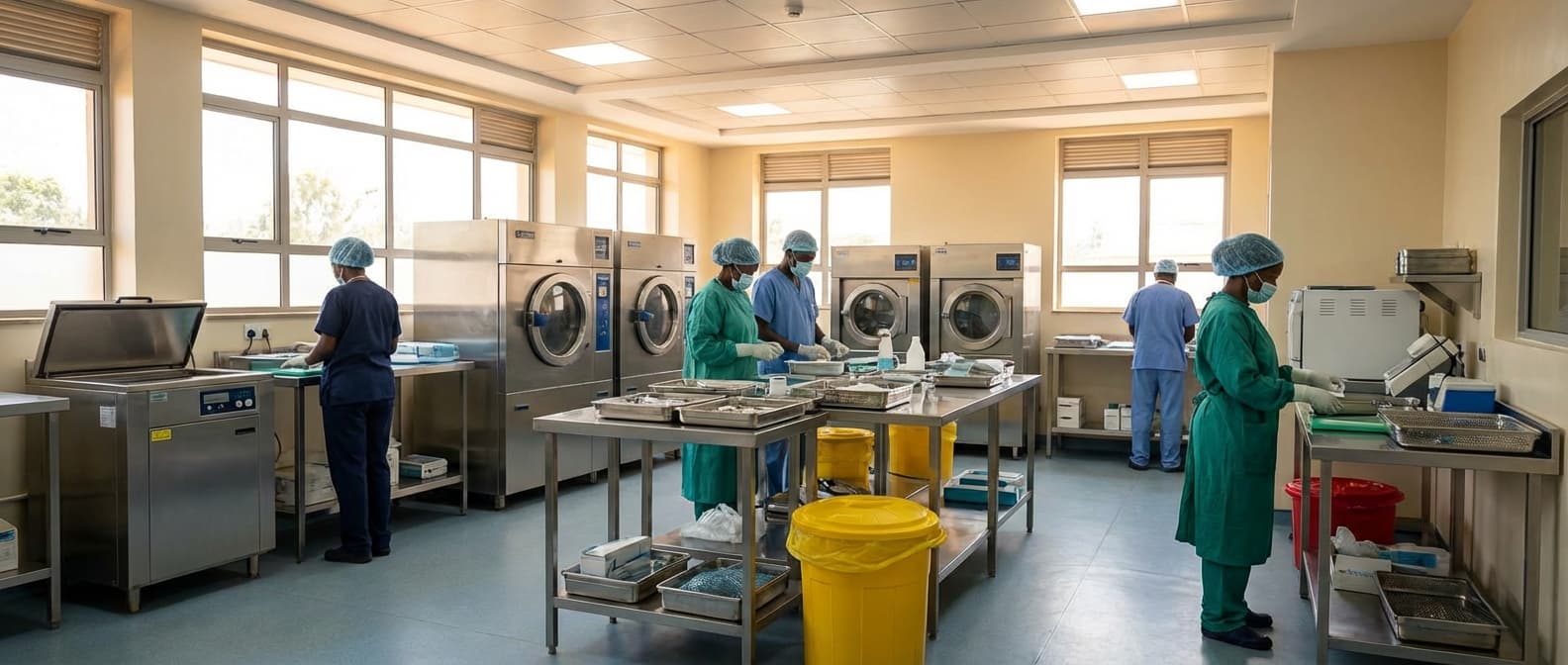
Infection-Control Readiness Support Service for Reusable Equipment in Zambia
Engineering Excellence & Technical Support
Infection-Control Readiness Support Service for Reusable Equipment High-standard technical execution following OEM protocols and local regulatory frameworks.
Standardized Sterilization Protocols
Ensuring consistent and effective sterilization of reusable medical equipment through the implementation and rigorous adherence to internationally recognized protocols, tailored to Zambian healthcare settings. This includes validated cleaning, disinfection, and sterilization processes for a wide range of instruments, minimizing the risk of healthcare-associated infections (HAIs).
Equipment Maintenance & Calibration Hub
Establishing a centralized hub for the repair, maintenance, and calibration of essential reusable medical equipment. This service guarantees that all equipment functions optimally and safely, preventing breakdowns that could compromise infection control practices and patient care delivery across Zambian facilities.
Capacity Building & Training Programs
Delivering comprehensive training programs to healthcare professionals on best practices for the decontamination, handling, and storage of reusable medical equipment. Our expert-led sessions empower staff with the knowledge and skills necessary to maintain a safe environment and effectively prevent the transmission of infectious agents.
What Is Infection-control Readiness Support Service For Reusable Equipment In Zambia?
Infection-Control Readiness Support Service for Reusable Equipment in Zambia refers to a specialized consultancy and operational assistance program designed to ensure that healthcare facilities and other entities utilizing reusable medical devices maintain robust infection prevention and control (IPC) practices. This service aims to mitigate the risk of healthcare-associated infections (HAAs) stemming from inadequately reprocessed or sterilized reusable equipment. It encompasses a comprehensive assessment, implementation, and ongoing support framework for the entire lifecycle of reusable equipment processing, from decontamination to storage and distribution.
| Who Needs This Service? | Typical Use Cases | |||||||
|---|---|---|---|---|---|---|---|---|
| Public and Private Healthcare Facilities: Hospitals (tertiary, secondary, primary), clinics, health posts, dental practices, and specialized medical centers. | Surgical Departments: Ensuring surgical instruments are effectively decontaminated, sterilized, and stored to prevent surgical site infections. | Maternity and Neonatal Units: Reprocessing of instruments and equipment used in deliveries and neonatal care. | Outpatient Clinics: Maintaining hygiene standards for reusable diagnostic equipment (e.g., stethoscopes, blood pressure cuffs) and minor procedure instruments. | Laboratories: Sterilization of reusable glassware, instruments, and culture media preparation equipment. | Non-Governmental Organizations (NGOs) and Faith-Based Organizations (FBOs) Operating Health Facilities: Implementing and strengthening IPC practices in resource-limited settings. | Medical Training Institutions: Ensuring students and trainees adhere to correct IPC principles from the outset of their careers. | Central Sterile Supply Departments (CSSDs) / Sterilization Units: Optimizing workflows, technology, and staff practices within dedicated reprocessing units. | Medical Device Manufacturers/Distributors (Indirectly): Ensuring their supplied reusable equipment is handled and reprocessed correctly by end-users. |
Key Components of the Service:
- Assessment and Gap Analysis: Evaluating existing IPC protocols, infrastructure, equipment, and staff competency related to reusable medical device reprocessing.
- Policy and Procedure Development/Refinement: Creating or updating Standard Operating Procedures (SOPs) aligned with national and international IPC guidelines (e.g., WHO, CDC, Zambian Ministry of Health directives).
- Training and Capacity Building: Delivering targeted training modules for healthcare personnel involved in cleaning, disinfection, sterilization, and handling of reusable equipment.
- Infrastructure and Equipment Evaluation: Assessing the suitability and functionality of decontamination, cleaning, and sterilization equipment, as well as the design of reprocessing areas.
- Quality Assurance and Monitoring: Implementing systems for routine monitoring, validation of sterilization processes (e.g., chemical and biological indicators), and documentation of reprocessing cycles.
- Supply Chain Management for Consumables: Advising on the procurement and management of appropriate cleaning agents, disinfectants, sterilants, and sterile barrier materials.
- Waste Management Integration: Ensuring proper segregation, collection, and disposal of biohazardous waste generated during reprocessing.
- Regulatory Compliance Support: Assisting facilities in meeting national regulatory requirements for IPC and medical device reprocessing.
Who Needs Infection-control Readiness Support Service For Reusable Equipment In Zambia?
This document outlines the critical need for Infection-Control Readiness Support Services for reusable medical equipment in Zambia. It details the target customer segments and the specific departments within these organizations that would benefit most from such services. The goal is to enhance patient safety, reduce healthcare-associated infections (HAIs), and ensure the consistent availability of safe, functional reusable equipment across the Zambian healthcare landscape.
| Customer Segment | Specific Departments Benefiting | Key Needs and Challenges Addressed |
|---|---|---|
| Public Hospitals (e.g., University Teaching Hospital, District Hospitals) | Sterilization and Central Supply Department (CSSD/SPD), Operating Theatres, Intensive Care Units (ICUs), Emergency Departments, Maternity Wards, Outpatient Clinics, Biomedical Engineering Department | Limited access to specialized training for sterilization and disinfection, inconsistent adherence to protocols, insufficient maintenance and calibration of reprocessing equipment, high burden of reusable items, risk of cross-contamination due to limited resources and personnel. |
| Private Hospitals and Clinics | Sterilization and Central Supply Department (CSSD/SPD), Operating Theatres, Diagnostic Imaging Departments (e.g., Endoscopy Units), Dental Clinics, Specialist Clinics | Maintaining high standards of infection control to meet regulatory requirements and patient expectations, ensuring staff competency with advanced reprocessing technologies, managing a diverse range of reusable equipment, optimizing workflow for efficient reprocessing. |
| Rural Health Centers and Community Hospitals | Clinical areas utilizing reusable instruments (e.g., minor surgery kits, delivery sets), general nursing areas | Severe limitations in infrastructure and access to electricity/reliable water for reprocessing, lack of trained personnel, reliance on basic disinfection methods, significant risk of infections due to inadequate sterilization practices, need for simplified and robust reprocessing solutions. |
| NGO-run Healthcare Facilities and Mobile Clinics | All clinical departments, particularly those providing primary healthcare and specialized outreach services | Variable infrastructure and resource availability, need for adaptable and portable reprocessing solutions, training of diverse healthcare workers with varying educational backgrounds, ensuring continuity of care and infection prevention in resource-constrained settings. |
| Medical Training Institutions (Schools of Nursing, Medical Schools, Biomedical Engineering Programs) | Clinical simulation labs, teaching hospitals affiliated with institutions | Incorporating evidence-based infection control practices for reusable equipment into curriculum, hands-on training for future healthcare professionals, ensuring compliance with evolving national and international standards. |
| Government Ministries (e.g., Ministry of Health) | Department of Clinical Care, Standards and Regulatory Affairs, Biomedical Engineering Unit, Public Health Department | Developing and enforcing national guidelines and standards for reusable equipment reprocessing, capacity building for healthcare facilities, monitoring and evaluation of infection control practices, informing procurement strategies for sterilization and disinfection equipment. |
Target Customers and Departments for Infection-Control Readiness Support Service for Reusable Equipment in Zambia
- Healthcare Facilities (Public and Private)
- Non-Governmental Organizations (NGOs) involved in healthcare delivery
- Medical Equipment Suppliers and Distributors (for training and support offerings)
- Government Ministries and Agencies (for policy development and oversight)
Infection-control Readiness Support Service For Reusable Equipment Process In Zambia
This document outlines the workflow for the Infection-Control Readiness Support Service for Reusable Equipment Processes in Zambia. The service aims to enhance the safe and effective reprocessing of reusable medical equipment within healthcare facilities across the country. The workflow details the stages from an initial inquiry to the full execution and follow-up of the support service.
| Stage | Description | Key Activities | Responsible Parties | Timeline (Indicative) | |||||
|---|---|---|---|---|---|---|---|---|---|
| The process begins when a healthcare facility or relevant Ministry of Health department expresses interest in the service. This stage involves understanding the facility's current state regarding reusable equipment reprocessing and identifying potential areas for improvement. | Receive inquiry, Schedule initial consultation, Conduct preliminary site visit (if feasible), Discuss service scope and objectives, Gather basic information on current practices and challenges. | Healthcare Facility Representative, Ministry of Health Representative, Service Provider (Project Management Team) | 1-2 Weeks | |||||
| A more in-depth assessment of the facility's reusable equipment reprocessing processes is conducted to pinpoint specific gaps and needs. This information forms the basis for developing a tailored support plan. | Conduct detailed site assessment (observation, interviews, document review), Identify specific infection prevention and control (IPC) deficiencies in reusable equipment reprocessing, Analyze existing protocols, equipment, and staff competency, Develop a detailed needs assessment report, Create a customized support plan with clear objectives, activities, and deliverables. | Service Provider (IPC Specialists, Technical Advisors), Healthcare Facility Management & Staff | 2-4 Weeks | |||||
| Based on the finalized support plan, the necessary resources, including personnel, training materials, and any specialized equipment or consumables (if part of the service), are mobilized and adapted to the facility's specific context. | Assign specialized IPC and technical staff, Develop/adapt training modules, Prepare necessary documentation and checklists, Procure or arrange for any required resources (e.g., visual aids, demonstration kits), Finalize the training schedule and logistics. | Service Provider (Project Management Team, Training Department), Healthcare Facility (for logistical support) | 2-3 Weeks | |||||
| The core of the service involves direct engagement with the facility staff. This includes providing theoretical knowledge and practical demonstration of best practices in reusable equipment reprocessing. | Conduct on-site training sessions (classroom and practical), Demonstrate correct procedures for cleaning, disinfection, sterilization, and storage, Provide hands-on practice for staff, Offer direct mentorship and coaching, Introduce/reinforce Standard Operating Procedures (SOPs) and guidelines. | Service Provider (IPC Specialists, Trainers, Technical Advisors), Healthcare Facility Staff (Participants) | 1-4 Weeks (depending on scope and number of facilities) |
| During and after the direct support, the effectiveness of the interventions is monitored. This stage assesses the immediate impact of the training and support provided. | Observe adherence to new/improved practices, Conduct pre- and post-training knowledge assessments, Collect feedback from participants, Assess availability and functionality of reprocessing equipment and supplies. | Service Provider (Project Management Team, M&E Officer), Healthcare Facility Management | Ongoing throughout Stages 4 & 5, and immediately post-training |
| A comprehensive report is compiled summarizing the assessment findings, the support provided, and the observed outcomes. Recommendations are formulated for further improvement and sustainability. | Analyze monitoring and evaluation data, Document findings and progress, Develop a detailed project report, Formulate actionable recommendations for the facility and potentially for national policy/guidelines. | Service Provider (Project Management Team, Report Writer) | 2-3 Weeks | |||||
| To ensure long-term sustainability and address any emerging challenges, a follow-up mechanism is established. This stage promotes a culture of continuous improvement within the facility's reprocessing processes. | Schedule periodic follow-up visits or remote check-ins, Provide ongoing technical assistance as needed, Support the facility in establishing internal monitoring mechanisms, Share lessons learned and best practices with other facilities. | Service Provider (Project Management Team, IPC Specialists), Healthcare Facility Management & Staff | Ongoing (e.g., 3, 6, 12 months post-intervention) |
Workflow Stages
- Inquiry & Initial Assessment
- Needs Identification & Planning
- Resource Mobilization & Customization
- On-site Support & Training Delivery
- Monitoring & Evaluation
- Reporting & Recommendations
- Follow-up & Continuous Improvement
Infection-control Readiness Support Service For Reusable Equipment Cost In Zambia
Assessing the cost of Infection-Control Readiness Support Services for reusable equipment in Zambia requires a comprehensive understanding of various pricing factors. These services are crucial for ensuring that medical devices that are reused can be safely reprocessed, minimizing the risk of healthcare-associated infections. The specific costs will vary significantly based on the scope of services, the type and quantity of equipment, the geographic location within Zambia, and the provider's expertise and operational overhead. Key pricing considerations include the assessment and auditing of existing reprocessing workflows, the provision of standardized protocols and training materials, the supply and maintenance of necessary reprocessing equipment and consumables, and ongoing monitoring and consultation. The current economic climate in Zambia, including inflation rates and currency fluctuations, will also directly impact the local currency (Zambian Kwacha - ZMW) pricing.
| Service Component | Typical Pricing Range (ZMW per service/item/month) | Notes |
|---|---|---|
| Initial Workflow Assessment & Audit | 5,000 - 25,000 ZMW | One-time fee, depends on facility size and complexity. |
| Development of Standard Operating Procedures (SOPs) | 3,000 - 15,000 ZMW | Per protocol, depends on detail and customization. |
| Staff Training Sessions (per participant/day) | 500 - 2,000 ZMW | Includes materials and facilitator costs. |
| Supply of Disinfectants & Detergents (monthly) | 2,000 - 10,000 ZMW | Dependent on facility volume and type of equipment. |
| Supply of Sterilization Indicators (per box/pack) | 100 - 500 ZMW | Variable based on type (e.g., chemical, biological). |
| Maintenance of Autoclaves/Sterilizers (annual contract) | 10,000 - 50,000 ZMW | Includes preventive maintenance and emergency repairs. |
| Routine On-site Monitoring & Consultation (monthly) | 4,000 - 18,000 ZMW | Includes travel and report generation. |
| Development of Training Manuals | 2,000 - 8,000 ZMW | Per manual, depends on length and illustrations. |
| Remote Technical Support (monthly retainer) | 1,000 - 5,000 ZMW | For ongoing advice and troubleshooting. |
| Supply of Reusable Medical Equipment (e.g., surgical instruments) | Varies Widely | This is a separate procurement cost, not directly for support services. |
| Comprehensive Readiness Program (e.g., 1 year) | 50,000 - 300,000+ ZMW | Bundled services, highly customizable based on needs. |
Key Pricing Factors for Infection-Control Readiness Support Services in Zambia:
- Scope of Services: Comprehensive assessments vs. targeted interventions.
- Equipment Complexity and Volume: Number and types of reusable medical devices requiring support.
- Provider's Expertise and Reputation: Experience and credentials of the service provider.
- Geographic Location: Accessibility and logistical costs within different regions of Zambia.
- Training Needs: Level of training required for healthcare staff (basic, advanced, train-the-trainer).
- Supply of Consumables and Reagents: Cost of disinfectants, detergents, sterilization indicators, etc.
- Equipment Maintenance and Calibration: Ongoing costs for reprocessing machinery.
- Monitoring and Auditing Frequency: Regularity of on-site visits and remote support.
- Regulatory Compliance Support: Assistance with adherence to national and international guidelines.
- Technology Integration: Use of digital tools for tracking and data management.
- Infrastructure Assessment: Evaluation of existing water, electricity, and waste disposal systems.
- Market Competition: The number of available service providers influencing pricing.
Affordable Infection-control Readiness Support Service For Reusable Equipment Options
Our Affordable Infection-Control Readiness Support Service for Reusable Equipment Options is designed to empower healthcare facilities with comprehensive infection prevention strategies without breaking the budget. We understand the critical need for robust infection control, especially with the ongoing reliance on reusable medical equipment. This service focuses on providing expert guidance, training, and process optimization to ensure the safe and effective reprocessing of all reusable items. By partnering with us, facilities can minimize the risk of healthcare-associated infections (HAIs), improve patient safety, and achieve significant cost savings through optimized workflows and reduced waste.
| Cost-Saving Strategy | Description | Potential Impact |
|---|---|---|
| Optimized Reusable Equipment Utilization | Implementing standardized reprocessing workflows reduces turnaround times, ensuring equipment is available when needed and minimizing the need for costly single-use alternatives. | Reduced capital expenditure on disposable items, improved staff efficiency. |
| Reduced Waste and Material Costs | Proper selection and usage of cleaning and disinfection agents, coupled with efficient reprocessing, minimizes spoilage and overuse of chemicals and supplies. | Lower consumable costs, improved environmental sustainability. |
| Minimized Re-processing Errors and Equipment Damage | Expert training and adherence to SOPs lead to fewer reprocessing errors, preventing damage to expensive reusable equipment and extending its lifespan. | Reduced equipment replacement costs, minimized downtime. |
| Prevention of Healthcare-Associated Infections (HAIs) | Effective infection control significantly reduces the incidence of HAIs, which are associated with substantial financial burdens, including extended patient stays, additional treatments, and potential legal liabilities. | Reduced patient care costs, improved hospital reputation, avoidance of penalties. |
| Enhanced Staff Efficiency and Productivity | Clear protocols and targeted training equip staff with the knowledge and skills to perform reprocessing tasks efficiently and accurately, freeing up their time for other critical duties. | Improved operational workflow, potential for reallocation of staff resources. |
Key Value Bundles:
- Basic Readiness Bundle: Includes initial assessment of current reprocessing protocols, development of Standard Operating Procedures (SOPs), and foundational staff training on best practices for cleaning, disinfection, and sterilization.
- Enhanced Readiness Bundle: Builds upon the Basic bundle by incorporating advanced training modules, risk assessments for high-level disinfection (HLD) and sterilization validation, and guidance on appropriate selection of cleaning and disinfection agents.
- Comprehensive Readiness Bundle: Offers a complete solution including all aspects of the Enhanced bundle, plus ongoing monitoring and auditing, development of a robust infection control surveillance program for reusable equipment, and personalized consulting for complex challenges or new equipment integration.
- Customizable Modules: We offer a la carte options for specific needs, such as specific equipment reprocessing training, sterile processing department workflow analysis, or regulatory compliance audits.
Verified Providers In Zambia
In Zambia, navigating the healthcare landscape can be challenging. Ensuring you're engaging with legitimate and high-quality healthcare providers is paramount for your well-being. Franance Health stands out as a beacon of trust, meticulously vetting and verifying healthcare professionals and facilities across the nation. Their stringent credentialing process ensures that all listed providers meet rigorous standards of expertise, ethical practice, and patient care, offering peace of mind to individuals seeking reliable medical services.
| Provider Type | Franance Health Verification Criteria (Examples) | Benefits of Choosing Verified Providers |
|---|---|---|
| Medical Doctors (General & Specialists) | Valid medical license, postgraduate qualifications, active practice registration, peer reviews, malpractice insurance. | Accurate diagnosis, effective treatment plans, access to specialized expertise. |
| Hospitals & Clinics | Accreditation status, availability of essential equipment, adherence to hygiene standards, qualified medical staff ratios, patient feedback. | Comprehensive care, advanced medical technology, safe and clean environment. |
| Diagnostic Laboratories | Certification by relevant regulatory bodies, use of calibrated equipment, qualified laboratory technicians, quality control measures. | Reliable and accurate test results, informed medical decisions. |
| Pharmacies | Valid operating license, qualified pharmacists, proper drug storage and dispensing procedures, authentic medication sourcing. | Access to safe and effective medications, professional pharmaceutical advice. |
Why Franance Health Credentials Matter:
- Unwavering Commitment to Quality: Franance Health's verification process goes beyond basic licensing. They assess qualifications, experience, and adherence to best practices.
- Enhanced Patient Safety: By partnering with verified providers, you minimize the risk of encountering unqualified practitioners or substandard facilities.
- Access to Reputable Professionals: Franance Health curates a network of trusted doctors, specialists, and healthcare institutions.
- Streamlined Healthcare Navigation: Their platform simplifies the search for appropriate medical care, saving you time and stress.
- Promotion of Ethical Healthcare: Franance Health champions ethical conduct and patient-centric care, ensuring a positive healthcare experience.
Scope Of Work For Infection-control Readiness Support Service For Reusable Equipment
This Scope of Work outlines the services provided for infection-control readiness support concerning reusable medical equipment. The objective is to ensure that all reusable equipment within the client's facility meets established infection control standards, minimizing the risk of healthcare-associated infections. The service includes a comprehensive assessment, development of protocols, training, and ongoing monitoring.
| Deliverable Title | Description | Standard Specification/Guideline Reference | Timeline (Weeks Post-Award) |
|---|---|---|---|
| Infection Control Readiness Assessment Report | Comprehensive review of current practices, policies, and infrastructure related to reusable equipment reprocessing. Includes identification of gaps and areas for improvement. | CDC Guidelines for Disinfection and Sterilization in Healthcare Facilities, AORN Guidelines for Perioperative Practice, ISO 13485:2016 | 2 |
| Revised/Developed Reusable Equipment Processing Protocols | Documented, step-by-step protocols for cleaning, disinfection, sterilization, storage, and handling of all types of reusable medical equipment. | Manufacturer's Instructions for Use (IFU), National and International Sterilization Standards (e.g., ISO 17665, AAMI ST79) | 4 |
| Training Materials and Session Records | Development of educational modules and hands-on training sessions for relevant staff. Includes attendance records and competency assessments. | Adult learning principles, specific training on protocols and equipment. | 6 |
| Equipment Inventory and Compliance Matrix | Detailed inventory of all reusable equipment, cross-referenced with manufacturer IFUs and current processing protocols. Highlights compliance status. | Manufacturer IFUs, regulatory requirements. | 3 |
| Monitoring and Auditing Plan | Framework for ongoing internal audits, performance monitoring, and continuous improvement of reusable equipment reprocessing. | Quality management system principles, established internal auditing procedures. | 5 |
| Recommendations Report for Facility Improvements | Actionable recommendations for infrastructure, equipment, or personnel changes to enhance infection control for reusable equipment. | Best practices in sterile processing departments, facility design guidelines. | 7 |
Technical Deliverables
- Infection Control Readiness Assessment Report
- Revised/Developed Reusable Equipment Processing Protocols
- Training Materials and Session Records
- Equipment Inventory and Compliance Matrix
- Monitoring and Auditing Plan
- Recommendations Report for Facility Improvements
Service Level Agreement For Infection-control Readiness Support Service For Reusable Equipment
This Service Level Agreement (SLA) outlines the guaranteed response times and uptime for the Infection-Control Readiness Support Service for Reusable Equipment. This service ensures prompt assistance in managing and responding to potential breaches or critical situations related to the infection control status of reusable medical equipment.
| Service Component | Response Time Guarantee | Uptime Guarantee |
|---|---|---|
| Critical Incident Alert Response (e.g., confirmed contamination, equipment failure impacting patient safety) | Within 15 minutes of alert notification. | N/A (Focus is on rapid response, not continuous uptime of the alert system itself, though the system will be highly available). |
| High-Priority Support Request (e.g., urgent need for guidance on decontamination protocols, non-critical equipment malfunction impacting workflow) | Within 1 hour of ticket submission/request. | 99.9% availability of the support portal and communication channels. |
| Standard Support Request (e.g., general inquiries about equipment readiness, routine maintenance advice) | Within 4 business hours of ticket submission/request. | 99.5% availability of the support portal and communication channels. |
| Proactive Monitoring System | N/A (System is designed for continuous operation). | 99.9% uptime for monitoring and alerting systems. |
| Support Portal / Ticketing System | N/A (System is designed for continuous operation). | 99.9% availability. |
Key Service Components
- 24/7 availability of the support team.
- Dedicated technical and infection control specialists.
- Proactive monitoring and alerts for equipment status.
- Incident management and resolution protocols.
- Documentation and reporting of all support activities.
Frequently Asked Questions

Ready when you are
Let's scope your Infection-Control Readiness Support Service for Reusable Equipment in Zambia project in Zambia.

Scaling healthcare logistics and technical systems across the entire continent.