
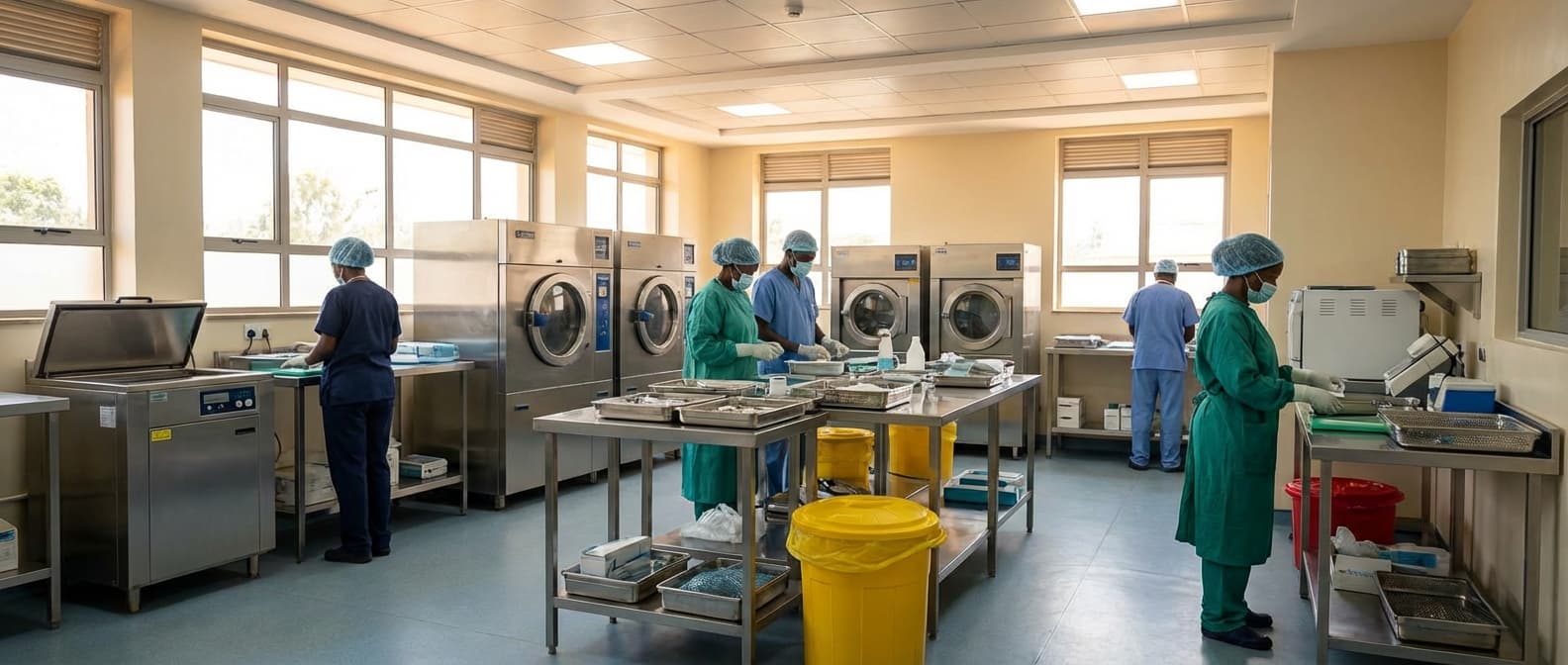
Autoclave Validation Support Service in Zambia
Engineering Excellence & Technical Support
Autoclave Validation Support Service High-standard technical execution following OEM protocols and local regulatory frameworks.
Comprehensive Sterilization Cycle Design & Qualification
We offer expert guidance in designing and validating sterilization cycles tailored to your specific medical devices and materials, ensuring compliance with international standards (e.g., ISO 17665) and guaranteeing effective microbial inactivation. Our services cover PQ (Performance Qualification), IQ (Installation Qualification), and OQ (Operational Qualification) for autoclaves operating in Zambia.
Advanced Steam Penetration & Biological Indicator Testing
Leveraging state-of-the-art temperature and pressure mapping equipment, we conduct thorough steam penetration studies and validate efficacy through biological indicator (BI) challenges. This ensures consistent and reliable sterilization across the entire autoclave chamber, providing documented proof of lethality for regulatory bodies in Zambia.
Routine Validation Maintenance & Re-qualification Programs
Beyond initial validation, we establish and manage robust preventative maintenance and re-qualification schedules for your autoclaves. This proactive approach minimizes downtime, ensures ongoing compliance, and maintains the highest levels of sterilization assurance for healthcare facilities and laboratories across Zambia.
What Is Autoclave Validation Support Service In Zambia?
Autoclave Validation Support Service in Zambia refers to a specialized set of procedures and technical expertise provided to ensure that steam sterilization equipment (autoclaves) consistently and effectively eliminate viable microorganisms from medical devices, laboratory consumables, and other materials requiring sterilization. This service is critical for maintaining sterility assurance and compliance with regulatory standards within healthcare, research, and manufacturing sectors in Zambia. It encompasses the performance of rigorous testing, calibration, and documentation to confirm that the autoclave operates within specified parameters for temperature, pressure, time, and steam penetration. The overarching goal is to provide documented evidence that the sterilization process is reproducible and achieves the desired Sterility Assurance Level (SAL).
| Service | Description | Who Needs It | Typical Use Cases |
|---|---|---|---|
| Installation Qualification (IQ) | Verifies correct installation and setup. | Hospitals, clinics, research laboratories, pharmaceutical manufacturers, food processing plants, veterinary clinics. | Commissioning of new autoclaves, relocation of existing units. |
| Operational Qualification (OQ) | Confirms operation within specified parameters. | Healthcare facilities, research institutions, biotechnology companies, sterilization service providers. | Routine operational checks, troubleshooting equipment malfunctions. |
| Performance Qualification (PQ) | Demonstrates consistent sterilization efficacy. | All facilities requiring sterile products/equipment: surgical centers, dental practices, pathology labs, cosmetic and tattoo studios, academic research facilities. | Ensuring sterility of surgical instruments, laboratory glassware, culture media, sterile packaging. |
| Calibration and Maintenance | Ensures accuracy and reliability of critical components. | Any organization using autoclaves for critical sterilization processes. | Maintaining equipment integrity for compliance and preventing sterilization failures. |
| Cycle Development and Optimization | Tailoring cycles for specific sterilization needs. | Companies with diverse sterilization requirements or new product development. | Validating cycles for heat-sensitive materials, complex instrumentation, or bulk sterilization. |
| Documentation and Reporting | Providing auditable evidence of validation. | Organizations subject to regulatory oversight (e.g., Ministry of Health, Good Manufacturing Practices - GMP). | Preparing for regulatory inspections, internal quality audits, and demonstrating due diligence. |
| Revalidation | Periodic confirmation of ongoing performance. | All facilities that have previously validated their autoclaves. | Annual validation, post-major repairs, or significant process changes. |
Key Components of Autoclave Validation Support Service:
- Installation Qualification (IQ): Verifying that the autoclave is installed correctly according to the manufacturer's specifications and relevant industry standards. This includes checks on utilities (power, water, steam), environmental conditions, and physical installation.
- Operational Qualification (OQ): Confirming that the autoclave operates within defined operational limits throughout its intended range. This involves running tests under various conditions (e.g., different cycle types, load sizes) to assess system performance and identify potential failure points.
- Performance Qualification (PQ): Demonstrating that the autoclave consistently performs its sterilization function under normal operating conditions and with representative loads. This is the most critical phase, involving the use of biological and chemical indicators to prove the efficacy of the sterilization cycle.
- Calibration and Maintenance: Regular calibration of critical parameters (temperature sensors, pressure gauges) and scheduled preventive maintenance to ensure ongoing accuracy and reliability of the equipment.
- Cycle Development and Optimization: Assisting in the development of validated sterilization cycles tailored to specific materials and load configurations, ensuring effective penetration of steam and lethality.
- Documentation and Reporting: Providing comprehensive reports detailing the validation process, test results, calibration certificates, and recommendations for continued monitoring and revalidation. This documentation is essential for regulatory audits and internal quality assurance.
- Revalidation: Performing periodic revalidation (typically annually or after significant maintenance or repairs) to ensure continued compliance and efficacy.
- Troubleshooting and Problem Solving: Offering expert assistance to identify and resolve any issues that may arise during autoclave operation or validation.
Who Needs Autoclave Validation Support Service In Zambia?
In Zambia, a critical need exists for Autoclave Validation Support Services to ensure the reliability and efficacy of sterilization processes across various healthcare and industrial settings. Autoclave validation is not merely a regulatory compliance measure; it's a fundamental requirement for patient safety, product integrity, and operational efficiency. Without proper validation, the risk of instrument contamination, infection transmission, and compromised product sterility is significantly elevated.
| Target Customer/Sector | Key Departments Involved | Primary Need/Application |
|---|---|---|
| Hospitals | Sterile Processing Department (SPD), Operating Rooms, Intensive Care Units (ICUs), Central Sterilization Supply Department (CSSD), Infection Control Department | Sterilization of surgical instruments, anesthesia equipment, respiratory therapy devices, endoscopes, etc. |
| Dental Clinics | Dental Sterilization Area, Clinic Management | Sterilization of handpieces, burs, explorers, scalpels, and other dental instruments. |
| Veterinary Clinics | Surgical Suite, Clinic Administration | Sterilization of surgical instruments, wound care supplies, and diagnostic equipment. |
| Research & Clinical Laboratories | Laboratory Management, Quality Assurance, Research Personnel | Sterilization of glassware, media, reagents, Petri dishes, and laboratory equipment. |
| Pharmaceutical/Biotech | Manufacturing, Quality Control (QC), Quality Assurance (QA), Research & Development (R&D) | Sterilization of manufacturing equipment, vials, stoppers, and process components. |
| Food & Beverage | Production, Quality Assurance | Sterilization of specific processing equipment or packaging materials. |
| Cosmetic/Tattoo/Piercing Studios | Studio Management, Technicians | Sterilization of needles, jewelry, and instruments used in procedures. |
| Diagnostic Centers | Laboratory Operations, Quality Control | Sterilization of sampling tools, vials, and laboratory consumables. |
| Educational Institutions | Science Department Laboratories, Facilities Management | Sterilization of laboratory equipment and glassware for teaching and research. |
Target Customers and Departments Requiring Autoclave Validation Support Service in Zambia
- Hospitals and Healthcare Facilities: The primary users of autoclaves for sterilizing surgical instruments, medical devices, laboratory equipment, and hospital linens. Ensuring sterility is paramount to preventing healthcare-associated infections (HAIs).
- Dental Clinics and Practices: Autoclaves are essential for sterilizing dental instruments used in patient care. Maintaining a sterile environment is crucial for oral health procedures.
- Veterinary Clinics and Animal Hospitals: Sterilization of surgical instruments and equipment is vital for animal health and preventing the spread of zoonotic diseases.
- Laboratories (Research, Clinical, Industrial): Laboratories use autoclaves for sterilizing glassware, media, consumables, and equipment to ensure accurate and reproducible experimental results and to prevent cross-contamination.
- Pharmaceutical and Biotechnology Companies: These industries require stringent sterilization of manufacturing equipment, containers, and components to ensure product purity and compliance with regulatory standards.
- Food and Beverage Manufacturers: While less common than in healthcare, some food processing applications may utilize autoclaves for sterilizing certain equipment or packaging materials to ensure product safety and shelf-life.
- Cosmetic and Tattoo/Piercing Studios: Sterilization of equipment used in these services is critical for preventing the transmission of infections and ensuring client safety.
- Diagnostic Centers and Pathology Labs: Similar to research labs, these facilities rely on autoclaves for sterilizing laboratory tools and equipment.
- Educational Institutions with Science Departments: Universities and colleges with laboratories for teaching and research will need validated autoclaves.
Autoclave Validation Support Service Process In Zambia
This document outlines the typical workflow for an Autoclave Validation Support Service Process in Zambia, from initial inquiry to successful execution of the validation. The process is designed to ensure that autoclaves meet regulatory and operational requirements for sterilization effectiveness.
| Stage | Description | Key Activities | Deliverables/Outcomes | Responsible Party |
|---|---|---|---|---|
| Initial contact from a client seeking autoclave validation services. | Client expresses needs, provides details about the autoclave (type, model, usage). Service provider assesses feasibility and scope. | Understanding of client requirements, preliminary identification of validation needs. | Client, Service Provider |
| Formalizing the service offering and commitment. | Service provider prepares a detailed quotation outlining scope, methodology, timelines, and costs. Client reviews and accepts; a formal service agreement is signed. | Agreed scope of work, pricing, terms and conditions; commitment to proceed. | Service Provider, Client |
| Preparing for the on-site validation activities. | Review of existing autoclave documentation (manuals, maintenance logs, previous validation reports). Development of a detailed validation protocol. Scheduling of on-site visit. | Approved validation protocol; understanding of autoclave history and operational parameters. | Service Provider, Client |
| Conducting the actual validation tests. | Installation of calibrated data loggers and biological indicators. Running defined sterilization cycles. Monitoring and recording critical parameters (temperature, pressure, time). Retrieval of data loggers and indicators. | Raw data from cycles, evidence of sterilization effectiveness (biological indicator results). | Service Provider |
| Interpreting the collected data and generating a comprehensive report. | Analysis of temperature, pressure, and time data. Assessment of biological indicator performance against established criteria. Comparison with protocol and relevant standards. Drafting of the validation report. | Comprehensive validation report detailing findings, conclusions, and recommendations. | Service Provider |
| Providing guidance and addressing any issues identified. | Discussion of the validation report with the client. Providing recommendations for optimization, maintenance, or corrective actions if required. Clarification of any questions the client may have. | Client understanding of validation results; actionable recommendations. | Service Provider, Client |
| Ensuring ongoing compliance and future validation needs. | Tracking any corrective actions implemented by the client. Proactive reminders for scheduled re-validation. Offering ongoing support for maintenance and future validation requirements. | Client compliance; planned future validation activities. | Service Provider, Client |
Autoclave Validation Support Service Process in Zambia - Workflow
- Client Inquiry and Needs Assessment
- Quotation and Service Agreement
- Pre-Validation Planning and Documentation Review
- On-site Execution: Performance Qualification (PQ)
- Data Analysis and Reporting
- Post-Validation Support and Recommendations
- Follow-up and Re-validation Scheduling
Autoclave Validation Support Service Cost In Zambia
The cost of autoclave validation support services in Zambia can vary significantly based on several factors. These services are crucial for ensuring that autoclaves (sterilizers) are functioning effectively and meeting required standards, particularly in healthcare and laboratory settings. Pricing typically involves an initial assessment, calibration, performance testing, and the issuance of a validation certificate. Factors influencing the final cost include the type and size of the autoclave, the complexity of the validation process required (e.g., routine re-validation vs. initial qualification), the location of the facility within Zambia, the service provider's expertise and reputation, and the urgency of the service. Specialized testing equipment and consumables also contribute to the overall expense. Costs are usually quoted in Zambian Kwacha (ZMW).
| Service Component | Estimated Price Range (ZMW) |
|---|---|
| Routine Performance Qualification (PQ) Re-validation (Small to Medium Autoclave) | 3,000 - 7,000 |
| Routine Performance Qualification (PQ) Re-validation (Large Autoclave) | 5,000 - 12,000 |
| Initial Qualification (IQ/OQ/PQ) (Small to Medium Autoclave) | 7,000 - 15,000 |
| Initial Qualification (IQ/OQ/PQ) (Large Autoclave) | 10,000 - 25,000 |
| Calibration of Sensors/Gauges (per sensor) | 500 - 1,500 |
| Travel and Logistics Surcharge (per trip, depending on distance) | 500 - 3,000+ |
| Issuance of Validation Certificate (often included, but can be separate) | Included or 500 - 1,000 |
Key Pricing Factors for Autoclave Validation Support Services in Zambia
- Autoclave Type and Size: Larger or more complex autoclaves may require more time and resources for validation.
- Validation Scope: Initial qualification (IQ/OQ/PQ) is generally more expensive than routine performance qualification (PQ) re-validation.
- Number of Cycles/Parameters Tested: The more parameters or cycles that need to be validated, the higher the cost.
- Service Provider Expertise and Reputation: Established and accredited service providers may command higher fees.
- Geographic Location: Travel and logistical costs can vary depending on the service provider's proximity to the client's facility.
- Urgency of Service: Rush or emergency services often incur additional charges.
- Additional Services: Some providers may offer bundled services like preventative maintenance alongside validation, affecting the overall price.
- Calibration Requirements: If the autoclave's sensors or gauges require calibration as part of the validation, this adds to the cost.
Affordable Autoclave Validation Support Service Options
Ensuring your autoclave operates correctly is vital for maintaining sterile environments and meeting regulatory compliance. Autoclave validation is a critical process, but it can be a significant expense. This guide outlines affordable Autoclave Validation Support Service options, focusing on value bundles and cost-saving strategies to make this essential service more accessible.
| Service Offering | Typical Cost Range (USD) | Cost-Saving Potential | Considerations |
|---|---|---|---|
| Basic Annual Validation (Single Autoclave) | $500 - $1500 | Low (unless bundled) | Covers essential parameters for compliance. |
| Validation + Preventative Maintenance Package | $800 - $2500 (for both) | High | Reduces long-term repair costs and downtime. Often discounted. |
| Multi-Unit Validation Discount | Variable (percentage off total) | Moderate to High | Requires multiple units to be serviced concurrently. |
| Consolidated Service Agreement (3-5 years) | Negotiable (discounted rates) | High | Requires commitment; ensure provider reliability and service quality. |
| Remote Support/Tele-validation | $100 - $300 (per session) | Moderate | Only applicable for specific types of support; not a substitute for full validation. |
Value Bundles and Cost-Saving Strategies
- {"title":"Bundle Validation with Preventative Maintenance","description":"The most effective cost-saving strategy is to combine your annual or bi-annual validation with a comprehensive preventative maintenance plan. This allows technicians to address potential issues during the validation process, preventing future breakdowns and ensuring optimal performance."}
- {"title":"Multi-Unit Discounts","description":"If your facility has multiple autoclaves, negotiate a bulk discount for validating all units simultaneously. This reduces travel time and logistical costs for the service provider, which they can pass on to you."}
- {"title":"Early Renewal Incentives","description":"Ask your service provider if they offer discounts for renewing your service contract well in advance of its expiry. This helps them plan their schedule and rewards your loyalty."}
- {"title":"Choose a Provider with Local Technicians","description":"Service providers with local technicians can significantly reduce travel costs, which are often a hidden component of validation fees. Get quotes from multiple local providers."}
- {"title":"Understand What's Included","description":"Before signing a contract, thoroughly review what is included in the validation package. Ensure it covers all necessary parameters and regulatory requirements for your specific industry and equipment. Unnecessary services can inflate costs."}
- {"title":"Phased Validation Approach","description":"For very large facilities or those with budget constraints, explore if a phased validation approach is feasible. This might involve validating a subset of autoclaves at one time, spreading the cost over a fiscal year. Discuss this possibility with your provider."}
- {"title":"Leverage Manufacturer Recommendations","description":"Your autoclave manufacturer often has recommended validation schedules and authorized service partners. These partners may offer competitive pricing or integrated service packages."}
Verified Providers In Zambia
In Zambia's evolving healthcare landscape, identifying trustworthy and highly qualified medical providers is paramount. Franance Health stands out as a beacon of reliability, offering a curated network of verified professionals. This verification process goes beyond basic registration, involving a rigorous assessment of credentials, experience, and adherence to ethical standards. Choosing a Franance Health verified provider ensures access to exceptional care, backed by a commitment to patient well-being and continuous professional development.
| Provider Type | Key Verification Criteria | Benefits of Choosing Franance Health Verified |
|---|---|---|
| General Practitioners | Medical degree, valid practicing license, background check | Access to competent primary care, early detection of health issues, trusted health advice. |
| Specialists (e.g., Cardiologists, Dermatologists) | Specialty board certification, extensive experience in their field, peer reviews | Expert diagnosis and treatment for specific conditions, advanced medical interventions. |
| Surgeons | Surgical residency completion, board certification in surgical specialty, track record of successful procedures | Safe and effective surgical interventions, post-operative care expertise. |
| Dentists | Dental degree, dental license, specialization in relevant areas (e.g., orthodontics) | Comprehensive oral health care, preventive dentistry, treatment of dental diseases. |
| Nurses (RNs, ENs) | Nursing degree/diploma, valid nursing license, specialized certifications (e.g., critical care) | Skilled patient care, administration of medications, patient education, post-procedure support. |
Why Franance Health Credentials Matter
- Rigorous Verification Process: Franance Health employs a multi-faceted verification system that scrutinizes educational qualifications, professional licenses, and prior experience.
- Commitment to Quality: Verified providers adhere to strict quality control measures and best practices in patient care.
- Ethical Standards: All Franance Health providers are vetted for their adherence to the highest ethical and professional conduct.
- Continuous Professional Development: Providers are encouraged and often required to engage in ongoing training and skill enhancement.
- Patient-Centric Approach: The verification process prioritizes providers who demonstrate a strong commitment to patient satisfaction and positive health outcomes.
Scope Of Work For Autoclave Validation Support Service
This Scope of Work (SOW) outlines the services to be provided by [Service Provider Name] (hereinafter referred to as "the Service Provider") to [Client Name] (hereinafter referred to as "the Client") for Autoclave Validation Support Services. The objective of this service is to ensure that the Client's autoclaves are operating effectively, consistently, and in compliance with relevant regulatory requirements and industry standards. This SOW details the technical deliverables, standard specifications, and responsibilities of both parties.
| Deliverable | Description | Standard Specifications / Acceptance Criteria | Timeline (estimated) |
|---|---|---|---|
| Validation Master Plan (VMP) / Site Master File (SMF) Contribution | Input and contribution to the Client's VMP or SMF regarding autoclave validation strategy and lifecycle management. | Alignment with Client's overall validation strategy and regulatory compliance framework. | Week 1-2 |
| Validation Protocol (IQ/OQ/PQ) | Development of detailed Installation Qualification (IQ), Operational Qualification (OQ), and Performance Qualification (PQ) protocols specific to each autoclave unit. Includes defining test methods, parameters, and acceptance criteria. | Protocols must adhere to industry best practices (e.g., GAMP 5, PDA TRs) and regulatory guidelines (e.g., FDA 21 CFR Part 11, EU GMP). Acceptance criteria to be clearly defined and quantifiable. | Week 2-4 |
| IQ Documentation Review | Review of manufacturer's Installation Qualification documentation, including equipment manuals, calibration certificates, and as-built drawings. | Documentation must be complete, legible, and demonstrate that the autoclave has been installed correctly according to manufacturer specifications and industry standards. | Week 4-5 |
| OQ Testing and Report | Execution of Operational Qualification tests to verify the autoclave's functionality and performance across its operating range. This includes temperature uniformity, pressure control, cycle timing, and alarm verification. | All OQ test results must meet or exceed the pre-defined acceptance criteria in the OQ protocol. Deviations must be documented and justified. | Week 5-7 |
| PQ Testing and Report | Execution of Performance Qualification tests to demonstrate that the autoclave consistently performs as intended under normal operating conditions with representative loads. This includes multiple sterilization cycles under varying load conditions. | All PQ test results must meet or exceed the pre-defined acceptance criteria in the PQ protocol for a defined number of consecutive cycles (e.g., 3-5 cycles). Biological indicator (BI) and chemical indicator (CI) performance must meet defined efficacy requirements. | Week 7-10 |
| Validation Report | Comprehensive report summarizing all validation activities, including IQ, OQ, and PQ results, deviations (if any), and conclusions regarding the autoclave's validated status. | Report must be clear, concise, and provide sufficient evidence to support the validated state. Includes executive summary, protocol adherence, data presentation, and recommendations. | Week 10-11 |
| Requalification Plan Contribution | Provide input and recommendations for the Client's ongoing requalification plan based on validation findings and regulatory requirements. | Plan should define the frequency and scope of future requalification activities. | Week 11 |
| Training (Optional, if specified) | Provide training to Client personnel on the validated autoclave operation, maintenance, and record-keeping procedures. | Training content and duration to be mutually agreed upon. | As per agreement |
Services to be Performed
- Pre-validation assessment and planning
- Protocol development and review
- Execution of validation testing (IQ, OQ, PQ)
- Data analysis and reporting
- Post-validation support and recommendations
Service Level Agreement For Autoclave Validation Support Service
This Service Level Agreement (SLA) outlines the guaranteed response times and uptime for the Autoclave Validation Support Service provided by [Your Company Name]. This SLA is designed to ensure the reliability and efficient operation of your autoclaves through timely technical assistance and consistent service availability.
| Service Level | Description | Response Time Guarantee | Uptime Guarantee | Remedy for Breach |
|---|---|---|---|---|
| Critical Support (System Outage/Failure) | Autoclave is completely non-operational, impacting critical sterilization processes. | 1 hour (Initial Response) | 99.9% (Monthly) | Service credits equivalent to 5% of monthly service fee for each 30-minute interval of downtime exceeding the guaranteed uptime. |
| High Priority Support (Performance Degradation/Significant Issue) | Autoclave performance is significantly degraded, or a major functional issue is impacting a portion of operations. | 4 business hours (Initial Response) | 99.5% (Monthly) | Service credits equivalent to 2.5% of monthly service fee for each hour of downtime exceeding the guaranteed uptime. |
| Medium Priority Support (Minor Issue/Inquiry) | Minor functional issues, questions regarding operation, or requests for non-critical updates. | 8 business hours (Initial Response) | 99.0% (Monthly) | No direct financial remedy, but escalation to management for review and improvement. |
| Low Priority Support (General Inquiry/Information Request) | Routine inquiries, requests for documentation, or information not directly related to immediate operational issues. | 24 business hours (Initial Response) | N/A (Focus on accessibility) | No direct financial remedy, but commitment to timely and informative responses. |
Key Service Metrics and Guarantees
- This SLA is an integral part of the overall Service Agreement between [Your Company Name] and [Client Company Name].
- Downtime is defined as the period during which the Autoclave Validation Support Service is unavailable and cannot be accessed or utilized by the Client.
- Response Time is measured from the moment a support ticket is logged by the Client through the designated support portal or by phone, to the time when [Your Company Name] initiates contact with the Client.
- Initial Response is the first acknowledgement and engagement from our support team.
- Resolution Time is the time taken to restore service to a functional state or provide a workaround.
- Scheduled Maintenance will be communicated with at least 48 hours advance notice. During scheduled maintenance, the service may be temporarily unavailable.
- Exclusions to these guarantees include events beyond [Your Company Name]'s reasonable control, such as force majeure events, client-induced errors, or third-party service provider failures.
Frequently Asked Questions

Ready when you are
Let's scope your Autoclave Validation Support Service in Zambia project in Zambia.

Scaling healthcare logistics and technical systems across the entire continent.