
Uptime, Downtime & Root-Cause Analysis Reporting Service in Zambia
Engineering Excellence & Technical Support
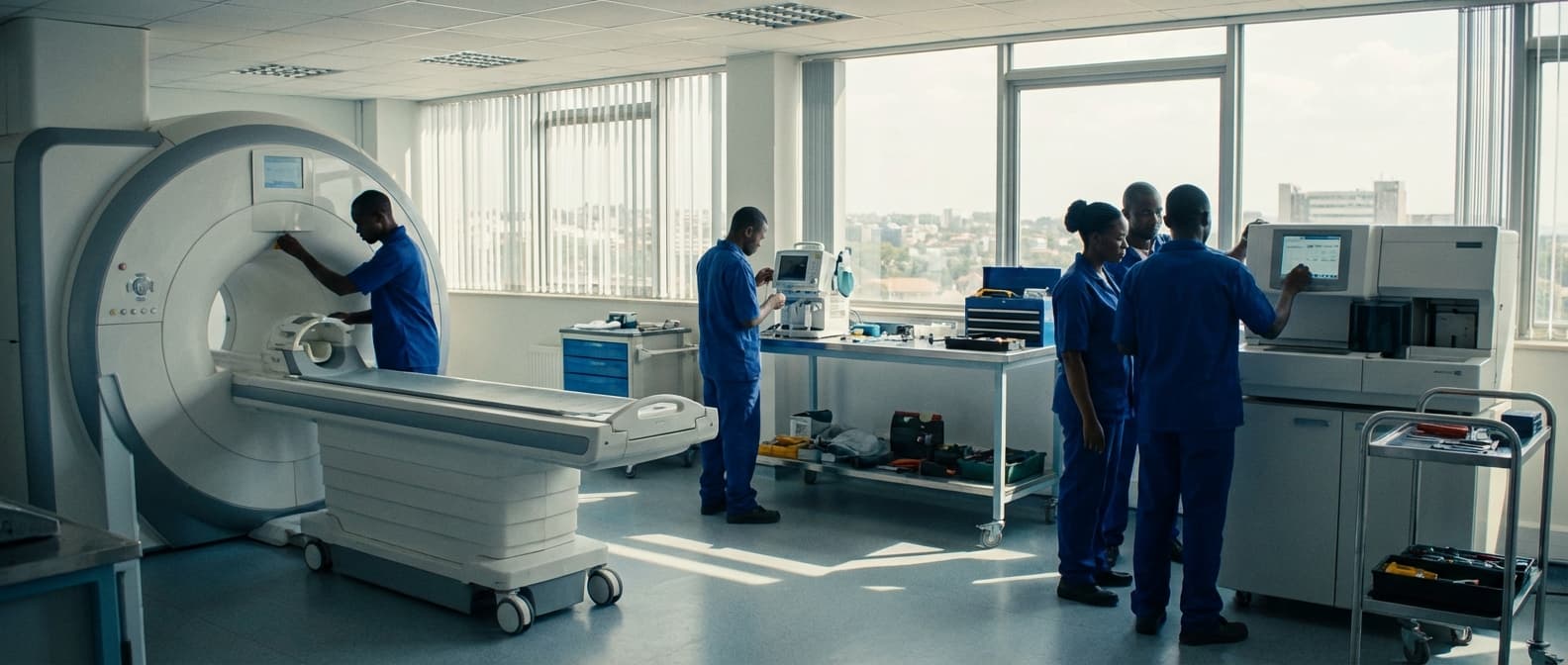
Uptime, Downtime & Root-Cause Analysis Reporting Service High-standard technical execution following OEM protocols and local regulatory frameworks.
Real-time Uptime Monitoring
Gain instant visibility into your system's availability with our 24/7 Uptime Monitoring service across Zambia. Proactively identify and address performance issues before they impact your operations.
Automated Downtime Alerts
Receive immediate, automated alerts the moment a service becomes unavailable. Our system pinpoints the exact time of downtime, enabling rapid response and minimizing business disruption in Zambia.
Comprehensive Root-Cause Analysis
Don't just fix problems, prevent them. Our service provides detailed root-cause analysis reports for every incident, empowering your IT teams in Zambia to implement lasting solutions and enhance system resilience.
What Is Uptime, Downtime & Root-cause Analysis Reporting Service In Zambia?
In Zambia, Uptime, Downtime, and Root-Cause Analysis (RCA) Reporting Services are critical for ensuring the reliability, availability, and performance of IT infrastructure and business operations. These services provide a structured methodology for monitoring system availability, identifying periods of unavailability (downtime), and systematically investigating the underlying causes of such failures to implement preventive measures.
Uptime refers to the period during which a system, service, or application is operational and accessible to users. High uptime is a key performance indicator (KPI) for business continuity and customer satisfaction.
Downtime is the converse of uptime, representing the duration when a system, service, or application is unavailable or non-operational. Downtime can result in financial losses, reputational damage, and decreased productivity.
Root-Cause Analysis (RCA) is a problem-solving methodology focused on identifying the fundamental cause of an issue, rather than just addressing its immediate symptoms. In the context of IT and business operations, RCA aims to prevent recurrence by understanding 'why' a problem occurred.
Reporting Service in this context involves the collection, aggregation, analysis, and presentation of data related to uptime, downtime incidents, and the findings of RCA investigations. This reporting is crucial for stakeholders to understand system health, identify trends, and make informed decisions regarding infrastructure improvements, operational procedures, and strategic investments.
| Typical Use Cases | Description | Benefits |
|---|---|---|
| System Monitoring & Alerting | Continuous monitoring of servers, networks, applications, and services to detect deviations from normal operating parameters and alert IT personnel to potential issues before they cause downtime. | Proactive issue identification, reduced Mean Time To Detect (MTTD), improved system stability. |
| Downtime Incident Management | Detailed logging and tracking of all downtime events, including start time, end time, duration, affected systems, and initial impact assessment. | Accurate measurement of availability, compliance with SLAs, basis for incident review. |
| Root-Cause Analysis (RCA) Investigations | Structured process to identify the underlying causes of downtime incidents, often involving log analysis, configuration review, and process evaluation. | Prevention of recurring incidents, continuous improvement of systems and processes, identification of systemic weaknesses. |
| Performance Benchmarking & Optimization | Analysis of historical uptime and downtime data to establish performance baselines and identify areas for optimization, such as capacity planning or architectural improvements. | Enhanced system performance, reduced operational costs, improved resource utilization. |
| Service Level Agreement (SLA) Reporting | Generation of reports demonstrating adherence to contractual uptime guarantees, providing evidence to clients or stakeholders. | Customer trust, contract fulfillment, competitive advantage. |
| Capacity Planning & Forecasting | Using historical data on system usage and potential failure points to inform future IT infrastructure investments and resource allocation. | Avoiding performance bottlenecks, ensuring scalability, mitigating future risks. |
| Security Incident Correlation | Investigating if security breaches or malicious activities are a root cause of system downtime. | Improved security posture, understanding the impact of security threats on availability. |
Who Needs Uptime, Downtime & Root-Cause Analysis Reporting Services in Zambia?
- Businesses with critical IT infrastructure: Organizations in sectors like banking, telecommunications, e-commerce, healthcare, and government, where continuous service availability is paramount.
- Managed Service Providers (MSPs): MSPs offering IT support and infrastructure management to clients require these services to demonstrate service level agreement (SLA) compliance and proactively manage client systems.
- Cloud Service Providers: Companies hosting applications and data on cloud platforms need robust monitoring and reporting to assure their clients of service availability.
- Telecommunications Companies: Essential for maintaining network availability and ensuring uninterrupted voice and data services.
- Financial Institutions: Banks, microfinance institutions, and stock exchanges depend on high uptime for transaction processing and customer access to financial services.
- Government Agencies: Critical public services, from administrative portals to emergency response systems, require high reliability.
- E-commerce Platforms and Online Retailers: Downtime directly translates to lost sales and customer dissatisfaction.
- Manufacturing and Industrial Operations: Systems controlling production lines and supply chains require consistent uptime to avoid costly disruptions.
Who Needs Uptime, Downtime & Root-cause Analysis Reporting Service In Zambia?
In Zambia's evolving economic landscape, reliable operations are paramount for businesses to thrive and maintain customer trust. Organizations across various sectors are grappling with the complexities of IT infrastructure, and the impact of system failures can be significant. A comprehensive Uptime, Downtime & Root-Cause Analysis Reporting Service offers critical insights into operational performance, enabling proactive problem-solving and strategic decision-making. This service is not a luxury but a necessity for organizations that depend on their digital systems for daily operations, customer service, and revenue generation.
| Target Customer Type | Key Departments/Roles |
|---|---|
| Financial Institutions (Banks, Microfinance, Insurance) | IT Operations, Risk Management, Compliance, Customer Service, Executive Management |
| Telecommunication Companies | Network Operations Center (NOC), Service Assurance, Customer Support, IT Infrastructure |
| Government Agencies & Public Sector | IT Departments, Digital Transformation Units, Service Delivery Units, Cybersecurity Teams |
| E-commerce & Retail Businesses | IT Operations, Online Store Management, Logistics, Customer Support |
| Manufacturing & Industrial Sector | Operations Management, Production IT, Maintenance Departments, Supply Chain Management |
| Healthcare Providers (Hospitals, Clinics, Labs) | IT Management, Clinical Operations, Patient Records Management, Compliance Officers |
| Logistics & Transportation Companies | Operations Control, Fleet Management, IT Support, Customer Service |
| Small and Medium Enterprises (SMEs) with Digital Presence | Business Owners, IT Support (internal or external), Operations Managers |
| Mining & Extractive Industries | Operations Technology (OT) Management, IT Infrastructure, Safety & Compliance |
| Hospitality & Tourism Sector | IT Management, Front Desk Operations, Reservations, Customer Experience |
Who Needs Uptime, Downtime & Root-Cause Analysis Reporting Service in Zambia?
- Businesses of all sizes that rely on IT infrastructure for core operations.
- Organizations aiming to improve service reliability and customer satisfaction.
- Companies seeking to reduce operational costs associated with unplanned downtime.
- Sectors heavily dependent on continuous digital service delivery.
- IT departments tasked with maintaining system stability and performance.
- Management teams needing clear visibility into operational health and risks.
Uptime, Downtime & Root-cause Analysis Reporting Service Process In Zambia
This document outlines the standard workflow for an Uptime, Downtime & Root-Cause Analysis (RCA) Reporting Service offered in Zambia. The process is designed to be comprehensive, ensuring timely identification, analysis, and reporting of service disruptions to clients.
| Phase | Activity | Description | Key Deliverables | Responsible Party | Timeframe (Typical) |
|---|---|---|---|---|---|
| Inquiry Received | Client contacts the service provider to report an uptime/downtime issue or request an RCA. | Inquiry logged, initial client contact details. | Client, Service Provider (Sales/Support) | Immediate |
| SLA Review & Scope Definition | Existing SLA is reviewed. If no SLA, terms of service and scope of RCA are defined. | Agreed-upon scope of service, reporting format, escalation points. | Service Provider (Account Manager/Technical Lead) | 1-2 Business Days |
| Incident Detection & Notification | Service provider's monitoring systems detect an anomaly, or client reports an outage. | Incident ticket created, initial alert notification. | Service Provider (Monitoring Team/Support) | Real-time / Within Minutes of Detection |
| Initial Assessment & Triage | Technical team assesses the severity and impact of the incident. Resources are allocated. | Incident severity classification, assigned technical team, preliminary impact assessment. | Service Provider (Technical Support/Incident Manager) | 15-60 Minutes |
| Data Collection & Analysis | Gathering logs, metrics, configuration details, and other relevant data from affected systems. | Raw data collected, initial analysis findings. | Service Provider (Technical Analysts/Engineers) | Varies (Hours to Days) |
| Root-Cause Identification | Applying RCA methodologies to pinpoint the underlying cause of the incident. | Identified root cause(s) documented. | Service Provider (RCA Specialist/Technical Lead) | Varies (Concurrent with Analysis) |
| Impact Assessment | Determining the business impact of the downtime, including financial, operational, and reputational damage. | Quantified impact assessment (if possible), affected services/users identified. | Service Provider (RCA Specialist/Business Analyst) | Concurrent with RCA |
| Mitigation & Remediation Planning | Developing and implementing immediate fixes and long-term preventative measures. | Actionable recommendations for mitigation and prevention. | Service Provider (Technical Teams/Operations) | Ongoing during incident resolution |
| Reporting & Documentation | Compiling a comprehensive report detailing the incident, analysis, root cause, impact, and recommendations. | Formal RCA report (draft and final versions). | Service Provider (RCA Specialist/Technical Writer) | 2-5 Business Days Post-Incident Resolution |
| Client Review & Feedback | Presenting the RCA report to the client for review, clarification, and feedback. | Client acknowledgment, feedback incorporated into the final report. | Client, Service Provider (Account Manager/Technical Lead) | 1-3 Business Days |
| Closure & Post-Incident Review | Finalizing the report, documenting lessons learned, and closing the incident ticket. Client confirms satisfaction. | Final RCA report, lessons learned documented, incident closed. | Service Provider (Incident Manager/Account Manager) | 1 Business Day Post-Client Approval |
Uptime, Downtime & Root-Cause Analysis Reporting Service Workflow
- Initiation and Inquiry
- Service Level Agreement (SLA) Review & Scope Definition
- Incident Detection & Notification
- Initial Assessment & Triage
- Data Collection & Analysis
- Root-Cause Identification
- Impact Assessment
- Mitigation & Remediation Planning
- Reporting & Documentation
- Client Review & Feedback
- Closure & Post-Incident Review
Uptime, Downtime & Root-cause Analysis Reporting Service Cost In Zambia
In Zambia, the cost of Uptime, Downtime, and Root-Cause Analysis (RCA) reporting services can vary significantly based on several key factors. These services are crucial for businesses to understand their operational performance, identify system failures, and implement corrective measures to prevent recurrence. The pricing is often influenced by the complexity of the systems being monitored, the volume of data, the required level of detail in the reports, the frequency of reporting, and the expertise of the service provider.
| Service Tier/Complexity | Typical Price Range (ZMW) | Description |
|---|---|---|
| Basic Uptime/Downtime Monitoring (Monthly Reports) | 1,500 - 5,000 | Focuses on recording system availability and unavailability. Includes basic reports on uptime percentages and downtime incidents. |
| Standard Uptime/Downtime with Basic RCA (Weekly/Monthly) | 4,000 - 12,000 | Includes detailed uptime/downtime tracking and initial root cause identification for recurring or significant issues. Reports will detail potential causes and basic recommendations. |
| Advanced RCA & Performance Monitoring (On-Demand/Bi-Weekly) | 10,000 - 30,000+ | Comprehensive monitoring of multiple systems, in-depth root cause analysis with detailed technical investigations, trend analysis, and actionable recommendations. Often includes performance metrics alongside availability. |
| Enterprise-Level & Proactive RCA (Monthly Retainer) | 25,000 - 100,000+ | Tailored solutions for large organizations with complex infrastructures. Continuous monitoring, sophisticated RCA, predictive analysis, and regular strategic performance reviews. May include dedicated support teams. |
| Project-Based / Consultancy RCA | Hourly rates: 500 - 2,500+ ZMW per hour | For specific incident investigations or special projects where a dedicated team is engaged for a defined period. Hourly rates vary significantly based on the expertise of the RCA specialist. |
Key Pricing Factors for Uptime, Downtime & RCA Reporting Services in Zambia:
- Scope of Services: Whether the service covers just basic uptime/downtime monitoring or includes in-depth RCA with proactive recommendations. More comprehensive RCA often involves more specialized tools and skilled personnel, thus increasing costs.
- System Complexity & Diversity: The number and types of systems being monitored (e.g., servers, applications, network devices, databases, cloud infrastructure). Monitoring a heterogeneous IT environment is generally more expensive than a homogenous one.
- Data Volume & Granularity: The amount of data generated by the monitored systems and the level of detail required in the reports. High-frequency, granular data collection and analysis demand more processing power and storage.
- Reporting Frequency & Customization: Daily, weekly, monthly, or on-demand reporting. Customized report templates and specific data points requested by the client will also impact pricing.
- Service Level Agreements (SLAs): The defined response and resolution times for issues identified through monitoring. Higher SLAs often come with a premium due to the need for dedicated resources and rapid intervention.
- Provider Expertise & Reputation: Established providers with a proven track record and highly skilled engineers typically command higher prices. Boutique firms or freelance consultants might offer more competitive rates.
- Tools & Technology Used: The cost of licensing and maintaining sophisticated monitoring and RCA software. Some providers may use proprietary tools which can be factored into their pricing.
- Geographic Location & Support Needs: While the service is in Zambia, the location of the provider's operations and the need for on-site support (if any) can influence costs, though for remote reporting, this is less of a factor.
- Contract Duration: Longer-term contracts often have discounted rates compared to short-term engagements.
Affordable Uptime, Downtime & Root-cause Analysis Reporting Service Options
Our comprehensive reporting service provides valuable insights into your system's uptime and downtime, along with detailed root-cause analysis. We understand that budget is a key consideration, and we've designed our service with affordability and flexibility in mind. This document outlines our value bundles, cost-saving strategies, and pricing options to help you make an informed decision.
| Value Bundle Name | Description | Included Features | Price (Monthly) | Best For |
|---|---|---|---|---|
| Essential Uptime Monitor | Basic monitoring and reporting for core systems. | Real-time uptime checks, basic downtime alerts, monthly uptime summary. | $49 | Small businesses with a few critical applications. |
| Standard Uptime & RCA | Comprehensive monitoring with detailed downtime analysis. | Real-time uptime checks, advanced downtime alerts, monthly RCA reports, performance trends. | $99 | Growing businesses needing to understand and resolve recurring issues. |
| Pro Uptime, RCA & Optimization | Full-featured service with proactive recommendations. | All Standard features plus, weekly RCA deep-dives, proactive alerting, customizable dashboards, actionable optimization advice. | $199 | Enterprise-level organizations requiring in-depth analysis and continuous improvement. |
| Custom Enterprise Solution | Tailored to your specific infrastructure and reporting needs. | Bespoke feature set, dedicated account manager, integration services. | Contact Us | Large organizations with complex IT environments. |
Key Features & Benefits
- Real-time Uptime Monitoring: Track the availability of your critical systems 24/7.
- Detailed Downtime Reports: Pinpoint the duration and impact of any service interruptions.
- Root-Cause Analysis (RCA): Identify the underlying reasons for downtime to prevent future occurrences.
- Proactive Alerting: Receive notifications before minor issues escalate into major outages.
- Performance Trend Analysis: Understand historical performance to optimize resource allocation.
- Customizable Dashboards: Visualize the data most relevant to your business needs.
- Actionable Recommendations: Receive concrete steps to improve system reliability.
Verified Providers In Zambia
Finding reliable and trustworthy healthcare providers is paramount for individuals and families. In Zambia, the landscape of healthcare services is growing, but discerning which providers meet the highest standards can be challenging. Franance Health has emerged as a leading name, distinguished by its commitment to rigorous credentialing and its dedication to patient well-being. This document outlines the verified credentials of Franance Health and explains why they represent the best choice for your healthcare needs in Zambia.
| Credential Type | Description | Significance for Patients |
|---|---|---|
| Ministry of Health Accreditation | Official recognition from the Zambian government's health regulatory body, signifying compliance with national healthcare standards. | Guarantees that Franance Health facilities and services meet the minimum quality and safety benchmarks set by the country. |
| International Partnerships | Collaborations with esteemed global healthcare institutions, often involving knowledge exchange, training, and adherence to international best practices. | Ensures access to cutting-edge medical knowledge, advanced treatment protocols, and a commitment to global standards of care. |
| Qualified Medical Professionals | Employment of doctors, nurses, and specialists who hold valid medical licenses and have a proven track record of expertise and experience. | Provides confidence in the competence and skill of the healthcare team, leading to accurate diagnoses and effective treatments. |
| Patient Safety Protocols | Implementation of comprehensive procedures designed to minimize risks and ensure the safety of patients during all stages of care. | Reduces the likelihood of medical errors, infections, and other adverse events, prioritizing your well-being. |
| Continuous Professional Development | Ongoing training and education initiatives for all medical staff to keep them updated on the latest medical advancements and techniques. | Ensures that you receive care based on the most current medical knowledge and practices. |
Franance Health Verified Credentials
- Accreditation by the Zambian Ministry of Health.
- Partnerships with internationally recognized medical organizations.
- Adherence to stringent patient safety protocols.
- Compliance with all relevant medical licensing and regulatory requirements.
- A network of highly qualified and experienced medical professionals.
- Continuous professional development programs for all staff.
- Robust patient feedback mechanisms and quality assurance.
- Investment in advanced medical technology and equipment.
- Commitment to ethical medical practices and patient privacy.
Scope Of Work For Uptime, Downtime & Root-cause Analysis Reporting Service
This document outlines the Scope of Work for the Uptime, Downtime, and Root-Cause Analysis Reporting Service. It details the services to be provided, the expected technical deliverables, and the standard specifications for reporting.
| Deliverable | Description | Frequency/Trigger | Standard Specifications |
|---|---|---|---|
| Uptime/Downtime Report | Comprehensive report detailing system availability, including duration of uptime and downtime periods, affected services, and impact assessment. | Daily, Weekly, Monthly (configurable) | Clear chronological listing of events. Total uptime percentage calculation. Total downtime percentage calculation. Identification of specific services impacted. Estimated business impact (if quantifiable). Standardized format (e.g., PDF, CSV). |
| Downtime Incident Notification | Immediate alert upon detection of a critical downtime event, providing initial assessment and estimated time to resolution (ETR). | Real-time (upon detection) | Notification channel: Email, SMS, or dedicated alert system. Subject line: 'Critical Downtime Alert: [Service Name]'. Brief description of the issue. Timestamp of detection. Initial ETR (if available). Contact person for updates. |
| Root-Cause Analysis (RCA) Report | Detailed investigation into the underlying causes of downtime events, including contributing factors, timeline of events, and resolution steps. | Per critical downtime incident (within 24-48 hours of resolution) | Executive Summary (brief overview of the incident and RCA). Incident Details (timestamp, duration, affected services). Timeline of events (from detection to resolution). Root Cause Identification (clear and concise statement of the primary cause). Contributing Factors (any secondary issues or circumstances). Resolution Steps Taken (actions performed to restore service). Lessons Learned (key takeaways from the incident). Preventative Actions (recommended steps to avoid future occurrences). Evidence (logs, screenshots, configuration changes, etc., as applicable). Standardized template. |
| Trend Analysis & Recommendations Report | Analysis of recurring downtime patterns, identification of systemic issues, and strategic recommendations for improving overall system reliability. | Quarterly, Annually | Summary of downtime over the period. Identification of top recurring causes. Analysis of impact trends. Quantifiable benefits of recommended actions. Prioritized list of recommended improvements. Focus on proactive measures and continuous improvement. |
| RCA Repository Access | Secure access to a historical database of all completed RCA reports for review and reference. | Ongoing | Searchable database by date, service, root cause, etc. Access control based on user roles. Ability to export or download reports. |
Service Objectives
- To provide accurate and timely reporting on system uptime and downtime.
- To conduct thorough root-cause analysis for all identified downtime events.
- To deliver actionable insights and recommendations to prevent recurrence of downtime.
- To maintain a historical record of uptime, downtime, and RCA findings.
Service Level Agreement For Uptime, Downtime & Root-cause Analysis Reporting Service
This Service Level Agreement (SLA) defines the commitments regarding service uptime, downtime, and the process for root-cause analysis reporting for the Uptime, Downtime & Root-Cause Analysis Reporting Service (hereinafter referred to as the 'Service'). This SLA aims to ensure the availability and reliability of the Service, and to provide a clear framework for understanding and addressing any service disruptions.
| Service Level Metric | Guarantee/Target | Response Time (for incident reporting) | SLA Violation Trigger | Remediation/Compensation |
|---|---|---|---|---|
| Monthly Uptime Guarantee | 99.9% | N/A | Monthly Uptime falls below 99.9% | Service Credits as per Schedule A |
| Severity 1 Incident Response | Within 15 minutes of notification | 15 minutes | Failure to acknowledge and begin investigation within 15 minutes | Priority escalation, dedicated support resources |
| Severity 2 Incident Response | Within 1 hour of notification | 1 hour | Failure to acknowledge and begin investigation within 1 hour | Expedited resolution efforts |
| Root-Cause Analysis Report Delivery | Within 72 hours of incident resolution (for Severity 1 & 2) | N/A | Failure to deliver RCA report within 72 hours | Additional Service Credits (as per Schedule A) |
Key Definitions
- Uptime: The total period during which the Service is available and operational, excluding Scheduled Downtime and Unscheduled Downtime.
- Downtime: The total period during which the Service is unavailable or significantly degraded, preventing users from accessing or utilizing its core functionalities.
- Scheduled Downtime: Pre-announced periods during which the Service will be temporarily unavailable for maintenance, upgrades, or other planned activities. Customers will be notified at least [Number] business days in advance.
- Unscheduled Downtime: Any period of Downtime that is not Scheduled Downtime.
- Service Credit: A financial credit applied to a customer's account as compensation for a failure to meet the Uptime guarantees outlined in this SLA.
- Root-Cause Analysis (RCA): A systematic process of identifying the fundamental reason(s) for a service incident, ensuring that corrective actions are implemented to prevent recurrence.
Frequently Asked Questions

Ready when you are
Let's scope your Uptime, Downtime & Root-Cause Analysis Reporting Service in Zambia project in Zambia.

Scaling healthcare logistics and technical systems across the entire continent.