
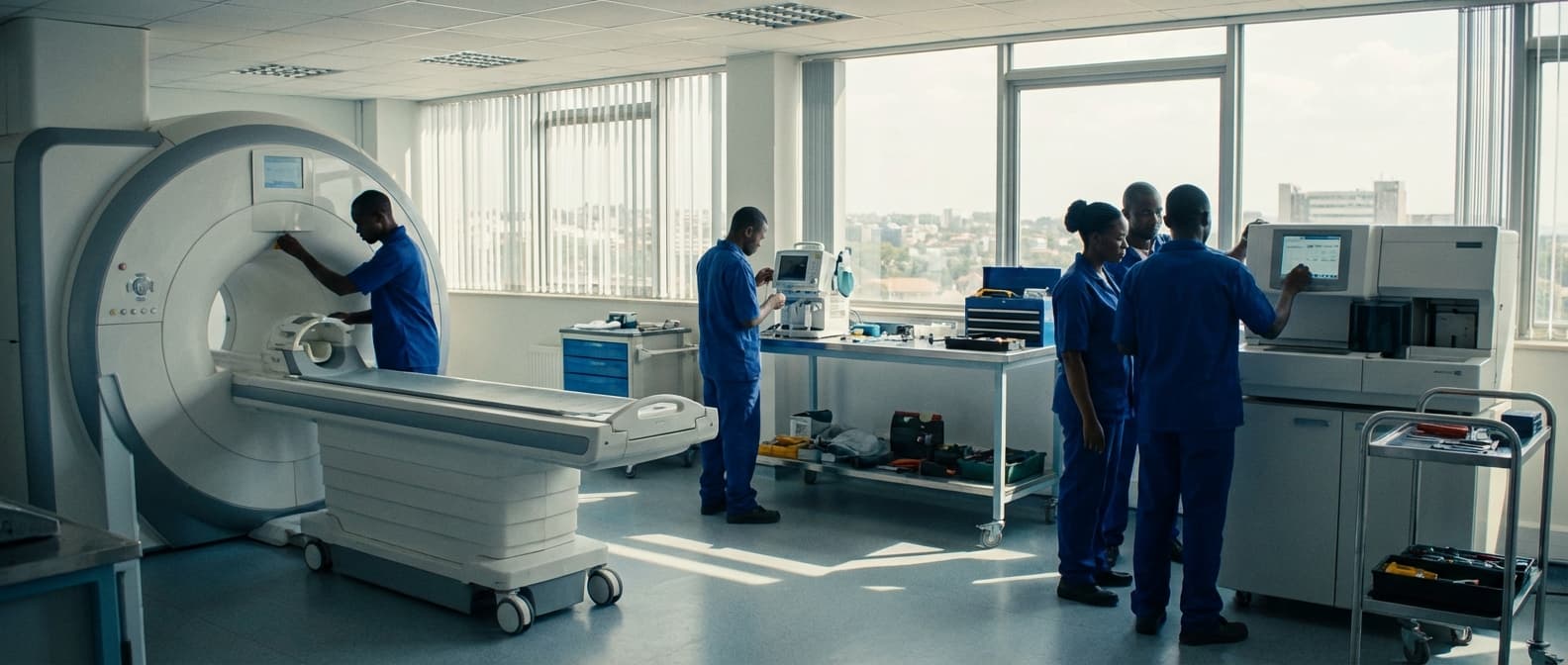
Planned Shutdown Coordination Service for Critical Equipment in Zambia
Engineering Excellence & Technical Support
Planned Shutdown Coordination Service for Critical Equipment High-standard technical execution following OEM protocols and local regulatory frameworks.
Predictive & Proactive Maintenance Scheduling
Leveraging advanced diagnostics and real-time monitoring, we meticulously plan shutdown windows to coincide with optimal equipment health, minimizing unexpected failures and extending asset lifespan. This reduces costly emergency repairs and ensures operational continuity for Zambia's vital industries.
Optimized Resource & Logistics Management
Our service orchestrates the seamless coordination of specialized technicians, critical spare parts, and necessary equipment across Zambia. We ensure all resources are mobilized efficiently for planned shutdowns, mitigating delays and maximizing the effectiveness of each maintenance window.
Enhanced Safety & Risk Mitigation Protocols
We embed rigorous safety protocols and risk assessment methodologies into every planned shutdown. Our comprehensive approach ensures that maintenance activities in Zambia are conducted with the highest safety standards, protecting personnel and preventing potential operational hazards.
What Is Planned Shutdown Coordination Service For Critical Equipment In Zambia?
Planned Shutdown Coordination Service for Critical Equipment in Zambia refers to a structured and systematic approach to managing the temporary deactivation of essential operational assets for scheduled maintenance, upgrade, or replacement activities. This service is designed to minimize the impact of such shutdowns on overall productivity, safety, and economic viability within Zambian industrial and infrastructure sectors. It encompasses a comprehensive suite of activities, from initial planning and scheduling to execution oversight and post-shutdown review, ensuring that downtime is optimized and risks are mitigated. The service leverages advanced project management methodologies and technical expertise to orchestrate complex interdependent tasks involving multiple stakeholders, specialized personnel, and intricate logistical challenges.
| Who Needs It? | Typical Use Cases | ||
|---|---|---|---|
| Mining and Mineral Processing Operations: Facilities with heavy machinery, crushers, mills, conveyor systems, and processing plants requiring periodic extensive maintenance. | Major overhauls of large-scale mining equipment (e.g., draglines, shovels). | Refurbishment of critical processing units (e.g., flotation cells, leaching tanks). | Scheduled replacement of worn-out components in high-throughput systems. |
| Power Generation and Transmission Utilities: Power plants (thermal, hydro, solar), substations, and transmission lines that require inspections, repairs, and component upgrades. | Turbine and generator maintenance or upgrades. | Transformer replacement or extensive testing. | Inspection and repair of high-voltage transmission lines and switching stations. |
| Industrial Manufacturing Plants: Factories with complex production lines, specialized machinery, and integrated control systems. | Downtime for the complete overhaul of assembly lines. | Upgrade of automated control systems (e.g., PLCs, SCADA). | Preventive maintenance on heavy-duty stamping presses or robotic arms. |
| Water and Wastewater Treatment Facilities: Plants responsible for public water supply and sewage treatment, relying on pumps, filters, and treatment units. | Replacement of large pumps or filter banks. | Rehabilitation of clarifiers or digesters. | Upgrade of disinfection systems. |
| Large-Scale Infrastructure Projects: Projects involving the maintenance or upgrade of critical infrastructure components. | Maintenance of bridge structural elements. | Repair or upgrade of dam spillway gates. | Overhaul of tunnel ventilation systems. |
Key Components of Planned Shutdown Coordination Service
- Scope Definition and Planning: Establishing clear objectives, identifying all affected equipment, and defining the required maintenance or upgrade tasks.
- Resource Management: Allocating and coordinating human resources (technicians, engineers, external contractors), materials, and specialized equipment.
- Risk Assessment and Mitigation: Identifying potential hazards, developing safety protocols, and implementing contingency plans for unforeseen issues.
- Scheduling and Sequencing: Developing a detailed timeline, optimizing task dependencies, and ensuring efficient workflow to minimize downtime.
- Stakeholder Communication and Coordination: Facilitating clear and consistent communication among all relevant parties, including operations, maintenance, safety, and external vendors.
- Execution Oversight: Monitoring the shutdown progress, ensuring adherence to the plan and safety procedures, and making real-time adjustments as needed.
- Quality Assurance and Testing: Verifying that all work is completed to the required standards and performing functional testing before recommissioning.
- Post-Shutdown Analysis and Reporting: Documenting lessons learned, evaluating performance against objectives, and recommending improvements for future shutdowns.
Who Needs Planned Shutdown Coordination Service For Critical Equipment In Zambia?
Planned shutdown coordination services are crucial for any organization in Zambia that relies on critical equipment for its operations. These services ensure that scheduled maintenance, repairs, or upgrades to essential machinery are executed efficiently, minimizing downtime, safety risks, and associated costs. The target customers are diverse, spanning industries where uninterrupted operation is paramount.
| Industry/Sector | Critical Equipment Examples | Key Departments Involved |
|---|---|---|
| Mining | Crushers, Conveyors, Haul Trucks, Processing Plants | Operations, Maintenance, Production, Safety |
| Energy | Turbines, Generators, Transformers, Transmission Lines | Operations, Asset Management, Grid Control |
| Manufacturing | Production Lines, Packaging Machinery, Industrial Ovens | Production, Plant Engineering, Maintenance |
| Telecommunications | Base Stations, Data Centers, Routers | Network Operations, IT Operations, Infrastructure |
| Water & Sanitation | Pumps, Treatment Plant Equipment, Distribution Networks | Operations, Maintenance, Environmental Health |
| Transportation & Logistics | Signaling Systems, Ground Support Equipment, Cranes | Operations, Infrastructure, Safety |
| Large-Scale Agriculture | Processing Machinery, Irrigation Pumps, Cold Storage | Operations, Processing, Maintenance |
Target Customers and Departments in Zambia:
- {"title":"Mining Sector","departments":["Mine Operations","Maintenance & Engineering","Production Management","Safety & Health"],"description":"A cornerstone of Zambia's economy, mining operations depend on continuous running of heavy machinery like crushers, conveyors, haul trucks, and processing plants. Unexpected breakdowns can lead to significant production losses and safety hazards. Planned shutdowns are essential for maintaining the integrity and efficiency of these vital assets."}
- {"title":"Energy Sector (Power Generation & Distribution)","departments":["Operations & Generation","Transmission & Distribution","Asset Management","Grid Control"],"description":"Reliable power supply is non-negotiable. Power plants (hydro, thermal) and distribution networks require regular maintenance of turbines, generators, transformers, and transmission lines. Coordinated shutdowns prevent widespread power outages and ensure the long-term stability of the grid."}
- {"title":"Manufacturing & Industrial Production","departments":["Production Management","Plant Engineering","Maintenance Department","Quality Control"],"description":"Factories and industrial plants utilize complex machinery for production. Downtime in manufacturing leads to missed deadlines, lost revenue, and potential damage to client relationships. Planned shutdowns allow for preventative maintenance and upgrades to production lines, packaging machinery, and other critical systems."}
- {"title":"Telecommunications","departments":["Network Operations","Infrastructure Management","Field Services","IT Operations"],"description":"With the increasing reliance on digital infrastructure, telecommunication companies need to maintain their network equipment, including base stations, data centers, and transmission hubs. Coordinated maintenance ensures uninterrupted communication services for businesses and individuals."}
- {"title":"Water & Sanitation Utilities","departments":["Operations & Maintenance","Water Treatment","Distribution & Logistics","Environmental Health"],"description":"Pumps, treatment plants, and distribution systems are critical for public health. Planned shutdowns are necessary for maintaining these facilities to ensure a consistent and safe water supply and effective wastewater management."}
- {"title":"Transportation & Logistics","departments":["Operations Management","Infrastructure Maintenance","Safety & Security","Logistics Coordination"],"description":"Railways, airports, and ports rely on a variety of critical equipment for their operations. Scheduled maintenance of signaling systems, ground support equipment, and cargo handling machinery is vital for maintaining efficient and safe transportation networks."}
- {"title":"Large-Scale Agriculture (Processing & Irrigation)","departments":["Farm Operations","Processing Plant Management","Maintenance & Engineering","Agronomy"],"description":"Companies involved in large-scale agricultural processing, sophisticated irrigation systems, and significant farm machinery require planned maintenance to optimize yields and minimize spoilage. This includes processing plants, cold storage, and large-scale irrigation pumps."}
Planned Shutdown Coordination Service For Critical Equipment Process In Zambia
This document outlines the workflow for the Planned Shutdown Coordination Service for Critical Equipment in Zambia. This service ensures that scheduled downtime for essential machinery is managed efficiently, minimizing disruption and maximizing safety and resource utilization.
| Stage | Activities | Key Stakeholders | Deliverables/Outcomes | Timeline/Duration |
|---|---|---|---|---|
| Client identifies the need for a planned shutdown. Initial contact is made. Discussion of equipment to be shut down, reasons, desired timeframe, and any specific constraints or objectives. | Client (Operations, Maintenance, Management), Service Provider (Business Development, Technical Lead) | Initial understanding of shutdown scope and client needs. Agreement to proceed with formal proposal. | 1-3 Days |
| Detailed assessment of equipment. Hazard identification and risk assessment. Development of a comprehensive shutdown plan including safety procedures, work permits, required tasks, dependencies, and estimated durations. Cost estimation. | Client (Maintenance Engineers, Safety Officers, Operations Supervisors), Service Provider (Project Manager, Technical Specialists, Safety Engineers) | Formal Shutdown Plan (including P&IDs, checklists, risk assessments). Detailed Bill of Materials (BOM) for consumables and spares. Detailed Cost Proposal. | 3-7 Days |
| Confirmation of shutdown dates. Allocation of internal and external resources (personnel, specialized tools, testing equipment, scaffolding, etc.). Finalization of detailed shutdown schedule, including critical path analysis. | Client (Operations Planning, Procurement), Service Provider (Project Manager, HR, Procurement, Logistics) | Confirmed resource availability. Approved and communicated detailed shutdown schedule. Procurement of necessary materials and services. | 5-10 Days (depending on complexity and external resource needs) |
| Toolbox talks and safety briefings. Staging of all necessary equipment and materials at the shutdown site. Isolation of equipment and confirmation of 'permit to work' systems. Pre-shutdown inspections and testing. | Client (Supervisors, Technicians, Safety Officers), Service Provider (All on-site personnel) | Site readiness confirmed. All personnel briefed and equipped. Equipment verified and ready for work. Safety protocols in place. | 1-2 Days prior to shutdown start |
| Controlled de-energization and isolation of equipment. Performance of scheduled maintenance, repair, or modification tasks. Continuous monitoring of safety and progress against the plan. Daily progress meetings. | Client (Operations, Maintenance, Supervisors), Service Provider (Project Manager, Technicians, Engineers, Safety Officers) | Completion of all planned maintenance/repair tasks. Safe and controlled shutdown environment maintained. Progress updates provided to client. | Duration as per shutdown plan (days to weeks) |
| Thorough inspection of completed work. Functional testing and performance validation of equipment. Gradual re-energization and commissioning of equipment. Final safety checks. | Client (Maintenance, Operations, Quality Control), Service Provider (Technical Specialists, Engineers) | Certified successful equipment re-commissioning. Verification of performance against original specifications. Handover of re-commissioned equipment. | 1-3 Days (depending on complexity) |
| Compilation of all shutdown-related documentation (work logs, test reports, incident reports, photographic evidence). Post-shutdown review meeting with client to discuss performance, lessons learned, and recommendations for future shutdowns. Final invoice and project closure. | Client (Management, Maintenance, Operations), Service Provider (Project Manager, Technical Team, Finance) | Comprehensive shutdown report. Lessons learned document. Finalized project costs. Satisfied client and closed project. | 3-5 Days post-execution |
Workflow Stages: Planned Shutdown Coordination Service
- Inquiry & Requirements Gathering
- Scope Definition & Planning
- Resource Mobilization & Scheduling
- Pre-Shutdown Preparations
- Shutdown Execution
- Post-Shutdown Verification & Re-commissioning
- Documentation & Review
Planned Shutdown Coordination Service For Critical Equipment Cost In Zambia
This document outlines the pricing considerations for a Planned Shutdown Coordination Service for Critical Equipment in Zambia. A planned shutdown, often referred to as a turnaround or outage, is a scheduled period of inactivity for critical industrial equipment to undergo essential maintenance, inspections, and upgrades. Effective coordination is paramount to minimizing downtime, ensuring safety, and optimizing costs. The pricing for such a service in Zambia is influenced by a variety of factors, leading to a range of potential costs in the local currency (Zambian Kwacha - ZMW).
| Pricing Factor | Description | Potential Impact on Cost (ZMW - Estimate) |
|---|---|---|
| Scope and Complexity | Includes the extent of maintenance, repairs, upgrades, and the number of interdependencies between equipment. | Low: 50,000 - 150,000 Medium: 150,000 - 400,000 High: 400,000 - 1,000,000+ |
| Duration of Shutdown | Longer shutdowns naturally incur higher coordination costs due to extended personnel engagement and planning. | Each additional week can add 20,000 - 80,000 ZMW depending on scope. |
| Type and Number of Critical Equipment | Complex machinery (e.g., turbines, large processing units) requires more specialized coordination than simpler equipment. | For every 5 complex units: add 100,000 - 250,000 ZMW |
| Geographic Location | Remote locations might incur higher travel, accommodation, and logistics costs for the coordination team. | Remote sites can add 10-20% to the base coordination fee. |
| Level of Coordination Required | Basic oversight vs. detailed, end-to-end management, including contractor scheduling, resource allocation, and progress tracking. | Basic: 50,000 - 100,000 ZMW Comprehensive: 200,000 - 600,000 ZMW |
| Resource Requirements | The need for specialized project managers, safety officers, planners, and potentially external technical consultants. | For a dedicated team of 5-10: 100,000 - 300,000 ZMW (monthly retainer) |
| Risk Assessment & Safety Management | The depth of risk analysis and the development/implementation of stringent safety protocols. | Integrated safety planning can add 30,000 - 100,000 ZMW. |
| Client's Internal Capabilities | If the client has a strong internal team, the service might be more advisory. If not, it will be more hands-on execution. | Advisory role: 20-30% reduction in comprehensive coordination costs. |
| Specialized Services | Integration of advanced planning software, digital twin technology, or specialized inspection coordination. | Can add 50,000 - 200,000 ZMW depending on complexity. |
| Market Demand & Competition | The availability of experienced service providers and the overall demand for these services in Zambia. | Competitive markets may drive down prices, while specialized niche services might command a premium. |
Key Pricing Factors for Planned Shutdown Coordination Services in Zambia:
- Scope and Complexity of the Shutdown:
- Duration of the Shutdown:
- Type and Number of Critical Equipment:
- Geographic Location of the Facility:
- Level of Coordination Required:
- Resource Requirements (Personnel & Equipment):
- Risk Assessment and Safety Management:
- Client's Internal Capabilities:
- Specialized Services and Technologies:
- Market Demand and Competition:
Affordable Planned Shutdown Coordination Service For Critical Equipment Options
Our Affordable Planned Shutdown Coordination Service is designed to minimize downtime and maximize efficiency for your critical equipment maintenance. We offer flexible value bundles and implement strategic cost-saving measures to ensure your planned shutdowns are executed smoothly and economically. Our expertise lies in meticulous planning, resource optimization, and proactive risk management, all tailored to your specific operational needs.
| Value Bundle | Description | Key Cost-Saving Strategies Included | Typical Use Case |
|---|---|---|---|
| Basic Shutdown Coordination | Core planning and scheduling of planned maintenance activities. | Optimized resource scheduling, bulk material purchasing recommendations. | Routine, well-defined maintenance shutdowns with standard procedures. |
| Standard Shutdown Management | Includes Basic Coordination plus vendor pre-qualification and on-site presence for critical phases. | Negotiated vendor rates, early procurement of long-lead items, waste reduction planning. | Planned shutdowns with multiple vendors or complex equipment requiring oversight. |
| Premium Shutdown Optimization | Comprehensive service from initial planning through post-shutdown analysis, including proactive risk mitigation and advanced scheduling techniques. | Predictive maintenance integration, energy efficiency optimization during shutdown, optimized workforce deployment, spare parts inventory analysis. | Large-scale, complex, or highly critical equipment shutdowns with a focus on maximizing ROI and minimizing long-term costs. |
Key Service Features and Benefits
- Comprehensive Planning: Detailed schedule development, resource allocation, and risk assessment.
- Vendor Management: Streamlined coordination with third-party service providers.
- On-site Supervision: Expert oversight during the shutdown to ensure adherence to plan and safety protocols.
- Post-Shutdown Analysis: Review and reporting for continuous improvement.
- Minimized Downtime: Strategic scheduling and efficient execution to reduce operational interruptions.
- Cost Control: Identification and implementation of cost-saving opportunities throughout the shutdown process.
- Enhanced Safety: Prioritizing and managing safety procedures for all personnel involved.
- Improved Equipment Reliability: Ensuring thorough and effective maintenance leads to longer equipment life.
Verified Providers In Zambia
In Zambia's evolving healthcare landscape, identifying verified and trustworthy providers is paramount for individuals seeking quality medical care. Franance Health stands out as a leading organization committed to delivering exceptional healthcare services, backed by rigorous credentialing and a patient-centric approach. This guide explores why Franance Health credentials signify the best choice for your health needs.
| Credential Aspect | Franance Health Verification | Benefit to Patient |
|---|---|---|
| Medical Licensing | Confirmed valid and up-to-date licenses from relevant Zambian medical boards. | Ensures providers are legally authorized to practice and meet basic competency requirements. |
| Professional Qualifications | Verification of degrees, certifications, and specialized training from accredited institutions. | Guarantees that practitioners possess the necessary knowledge and skills for their respective fields. |
| Experience and Track Record | Assessment of clinical experience and a review of professional history. | Indicates a proven ability to diagnose and treat a wide range of medical conditions effectively. |
| Continuing Medical Education (CME) | Confirmation of ongoing professional development and adherence to CME requirements. | Ensures providers stay current with the latest medical advancements and best practices. |
| Ethical Standards and Compliance | Adherence to a strict code of conduct and compliance with healthcare regulations. | Protects patients from unethical practices and ensures a high level of professional integrity. |
Why Franance Health Credentials Matter
- Rigorous Vetting Process: Franance Health implements a stringent verification process for all its affiliated healthcare providers.
- Ensured Quality of Care: Credentials confirm that providers meet established standards for expertise, training, and ethical practice.
- Patient Safety First: Verification minimizes risks by ensuring practitioners are licensed, qualified, and have no disciplinary actions against them.
- Access to Specialized Expertise: Franance Health connects you with a network of specialists whose qualifications have been thoroughly reviewed.
- Peace of Mind: Knowing your provider is verified by a reputable organization like Franance Health offers significant reassurance.
Scope Of Work For Planned Shutdown Coordination Service For Critical Equipment
This Scope of Work (SOW) outlines the requirements for a Planned Shutdown Coordination Service for critical equipment. The service aims to ensure efficient, safe, and timely execution of planned maintenance and upgrade activities for designated critical assets. This includes comprehensive planning, scheduling, resource management, on-site supervision, and post-shutdown reporting. The objective is to minimize downtime, optimize resource utilization, and maintain asset integrity and operational readiness.
| Category | Technical Deliverables | Standard Specifications / Considerations |
|---|---|---|
| Planning & Scheduling | Detailed Shutdown Plan Document | Includes scope, objectives, timeline, resource requirements, safety protocols, communication plan, contingency plans. Aligned with OEM recommendations and industry best practices (e.g., ISO 55000). |
| Planning & Scheduling | Critical Path Analysis (CPA) | Identification of critical tasks and their dependencies to ensure timely completion. Tools like Primavera P6 or MS Project are expected. |
| Planning & Scheduling | Resource Loaded Schedule | Detailed schedule incorporating personnel, equipment, and material availability. Compliance with labor laws and site-specific working hours. |
| Planning & Scheduling | Risk Assessment and Mitigation Plan | Identification of potential hazards (e.g., mechanical, electrical, chemical) and development of control measures. Adherence to HSE standards (e.g., OSHA, HSE GB). |
| Pre-Shutdown Activities | Equipment Isolation and LOTO Plan | Detailed procedures for safely isolating equipment and applying Lockout/Tagout. Verification of isolation before work commencement. |
| Pre-Shutdown Activities | Permit to Work (PTW) System Integration | Ensuring all activities are covered by appropriate PTW, with clear understanding of requirements and authorization levels. Compliance with site-specific PTW procedures. |
| Pre-Shutdown Activities | Material and Spare Parts Procurement Coordination | Verification of required parts and materials against Bill of Materials (BOM). Just-in-time delivery coordination to minimize storage. |
| Pre-Shutdown Activities | Tool and Equipment Readiness | Ensuring all necessary tools, lifting equipment, and specialized machinery are available, inspected, and certified. |
| On-Site Coordination | Daily Stand-up Meetings & Progress Tracking | Facilitating daily meetings to review progress, address issues, and plan for the next 24 hours. Real-time progress monitoring against the schedule. |
| On-Site Coordination | On-Site Supervision and Guidance | Providing experienced supervisors to oversee the execution of work, ensuring adherence to procedures and safety standards. |
| On-Site Coordination | Issue Resolution and Decision Making | Prompt identification and resolution of site-level issues and facilitating timely decision-making to maintain schedule momentum. |
| On-Site Coordination | Communication Management | Establishing clear communication channels between maintenance teams, operations, and management. Regular status updates. |
| Post-Shutdown Activities | As-Built Documentation Updates | Ensuring all modifications or repairs are reflected in the as-built drawings and documentation. Compliance with drawing standards (e.g., ISO 128). |
| Post-Shutdown Activities | Post-Maintenance Testing and Commissioning Support | Coordination and verification of post-maintenance tests and recommissioning activities. Witnessing of key performance tests. |
| Post-Shutdown Activities | Root Cause Analysis (RCA) for any Incidents | If any unforeseen issues or failures occur during or immediately after the shutdown, providing support for RCA. Methodologies like 5 Whys or Fishbone diagrams. |
| Post-Shutdown Activities | Post-Shutdown Report | Comprehensive report detailing scope completion, actual duration vs. planned, resource utilization, any deviations, lessons learned, and recommendations. Reporting format to be agreed upon. |
| Safety & Quality Assurance | Adherence to Safety Procedures | Strict implementation and monitoring of all safety procedures, including PPE requirements, site access controls, and emergency response plans. Zero harm target. |
| Safety & Quality Assurance | Quality Control Checks | Ensuring work performed meets required quality standards and specifications. Visual inspections and documented checks. |
| Safety & Quality Assurance | Compliance with Environmental Regulations | Ensuring all activities comply with relevant environmental protection regulations. Proper waste management and disposal. |
Key Objectives
- Minimize unplanned downtime during critical equipment maintenance.
- Ensure safe execution of all planned shutdown activities.
- Optimize resource allocation (personnel, materials, tools).
- Adhere to strict timelines and project schedules.
- Maintain comprehensive documentation and reporting.
- Facilitate seamless integration of maintenance and operational activities.
- Identify and mitigate potential risks associated with the shutdown.
Service Level Agreement For Planned Shutdown Coordination Service For Critical Equipment
This Service Level Agreement (SLA) outlines the terms and conditions for the Planned Shutdown Coordination Service for Critical Equipment. It defines the response times for critical incidents and the uptime guarantees for the coordination platform, ensuring efficient and effective management of planned equipment downtime.
| Service Element | Response Time Guarantee | Uptime Guarantee | Notes |
|---|---|---|---|
| Planned Shutdown Initiation Request Acknowledgement | Within 4 Business Hours | N/A | Acknowledgement that the request has been received and is being processed. |
| Critical Incident Response (Coordination Platform Outage) | Within 1 Business Hour | 99.9% (measured monthly) | Active investigation to diagnose and resolve the issue. |
| Critical Incident Response (Coordination Process Impeded) | Within 2 Business Hours | N/A | Active investigation and proposed resolution plan. |
| Routine Inquiry/Support Request | Within 8 Business Hours | N/A | Acknowledgement and commencement of addressing the request. |
Definitions
- Critical Equipment: Equipment designated as essential for the continuous operation of the service, where unplanned downtime would have a significant negative impact.
- Planned Shutdown: A scheduled period where critical equipment is taken offline for maintenance, upgrades, or other planned activities.
- Coordination Service: The service provided to manage, schedule, and communicate planned shutdowns for critical equipment, including but not limited to, facilitating scheduling, impact assessment, resource allocation, and communication.
- Coordination Platform: The software-based system used to manage and track planned shutdowns, including scheduling tools, communication channels, and documentation repositories.
- Incident: Any event that disrupts or has the potential to disrupt the planned shutdown coordination process, or affects the availability of the Coordination Platform.
- Critical Incident: An incident that significantly impedes or prevents the coordination or execution of a planned shutdown for critical equipment.
- Response Time: The maximum time allowed from the reporting of an incident to the commencement of active investigation and remediation by the Service Provider.
- Downtime: The period when the Coordination Platform is unavailable to users.
- Uptime Guarantee: The guaranteed percentage of time that the Coordination Platform will be available to users.
Frequently Asked Questions

Ready when you are
Let's scope your Planned Shutdown Coordination Service for Critical Equipment in Zambia project in Zambia.

Scaling healthcare logistics and technical systems across the entire continent.