
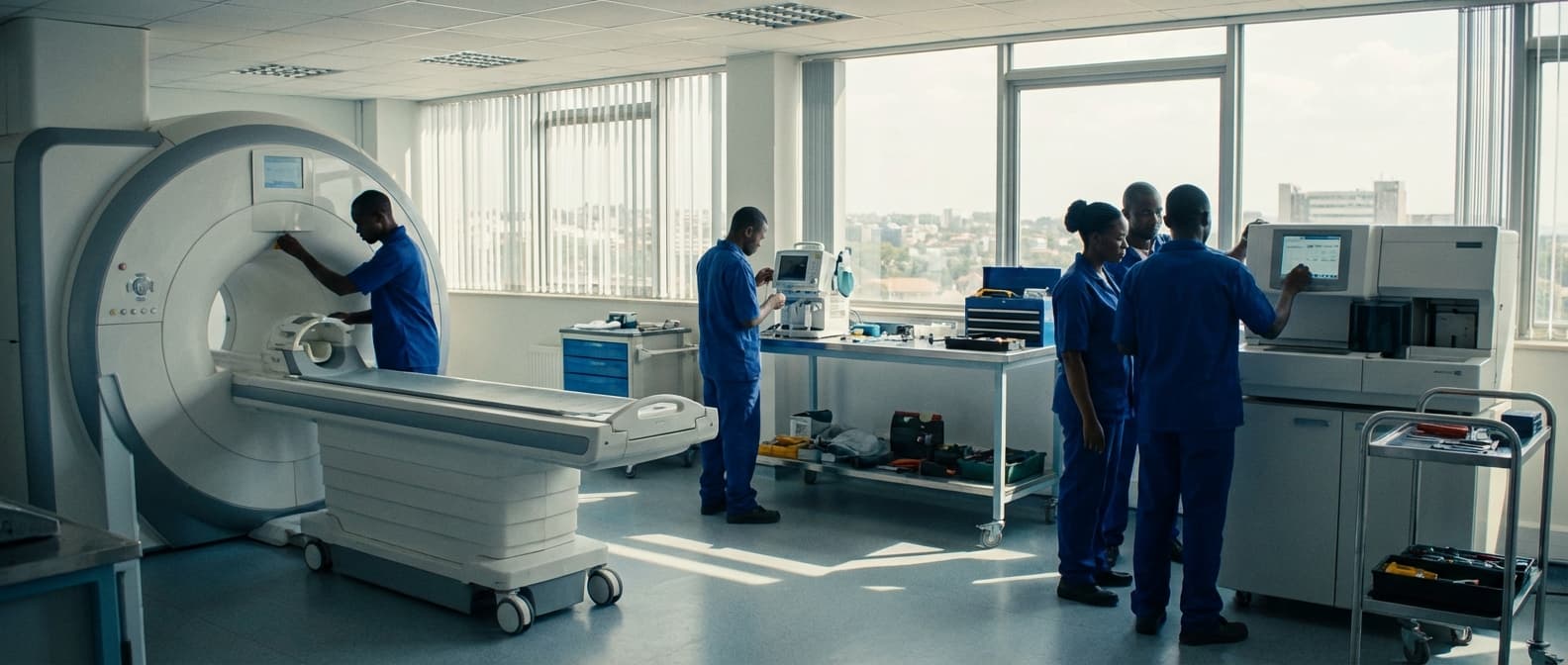
Comprehensive Maintenance Contract (CMC) Management Service (Parts & Labor) in Zambia
Engineering Excellence & Technical Support
Comprehensive Maintenance Contract (CMC) Management Service (Parts & Labor) High-standard technical execution following OEM protocols and local regulatory frameworks.
Proactive Predictive Maintenance
Leverage advanced IoT sensors and data analytics to predict potential equipment failures in Zambia. Our CMC ensures preemptive repairs, minimizing costly downtime and extending asset lifespan.
Certified Local Expertise
Access a network of highly trained and certified Zambian technicians for all parts and labor needs. We guarantee timely, on-site support adhering to global quality standards.
Transparent Cost & Performance Reporting
Gain complete visibility into maintenance activities, parts usage, and labor costs. Our comprehensive reporting ensures accountability and facilitates informed decision-making for your Zambian operations.
What Is Comprehensive Maintenance Contract (Cmc) Management Service (Parts & Labor) In Zambia?
Comprehensive Maintenance Contract (CMC) Management Service (Parts & Labor) in Zambia refers to a specialized service that oversees and administers all aspects of maintenance agreements for critical assets, encompassing both the procurement and application of necessary spare parts and the execution of skilled labor for repairs and preventative upkeep. This service aims to ensure the optimal operational availability, longevity, and performance of machinery, equipment, and infrastructure by proactively managing maintenance schedules, vendor performance, warranty claims, and budget adherence. It transitions the responsibility of reactive and proactive maintenance management from the asset owner to a dedicated service provider, thereby mitigating risks associated with equipment failure, downtime, and escalating repair costs.
| Who Needs CMC Management Service (Parts & Labor)? | Typical Use Cases | |||||||
|---|---|---|---|---|---|---|---|---|
| Industrial Manufacturing Plants: Sectors like mining, agriculture, food processing, and general manufacturing with extensive machinery and equipment requiring continuous operation and minimal downtime. | Energy and Utilities: Power generation facilities (thermal, hydro, solar, wind), water treatment plants, and distribution networks reliant on the consistent performance of complex infrastructure and specialized equipment. | Mining Operations: Managing the maintenance of heavy-duty mining equipment, processing plants, and transportation systems, where reliability is paramount for productivity and safety in remote locations. | Healthcare Facilities: Ensuring the operational readiness of critical medical equipment such as MRI machines, CT scanners, ventilators, and laboratory instruments. | Transportation and Logistics: Overseeing the maintenance of fleets of vehicles (trucks, buses, trains), aircraft, or specialized cargo handling equipment. | Large-Scale Agricultural Enterprises: Maintaining agricultural machinery, irrigation systems, and processing units critical for crop yield and efficiency. | Commercial Real Estate and Facilities Management: Managing the maintenance of building systems including HVAC, elevators, generators, and electrical distribution for large commercial complexes and high-rise buildings. | Government and Public Sector Infrastructure: Maintaining public utilities, defense equipment, and essential infrastructure where operational continuity is a matter of public service and national security. | |
| Downtime Reduction: Minimizing unplanned equipment failures and associated production or service interruptions. | Cost Optimization: Achieving predictable maintenance expenditures, reducing emergency repair costs, and leveraging warranty benefits. | Extended Asset Lifespan: Proactive maintenance to prevent premature wear and tear, thereby increasing the operational life of assets. | Improved Operational Efficiency: Ensuring equipment operates at peak performance, leading to enhanced productivity and quality. | Risk Mitigation: Transferring the burden of maintenance complexity and associated risks to a specialized service provider. | Focus on Core Business: Allowing asset owners to concentrate on their primary business operations rather than managing maintenance logistics. | Compliance and Safety: Ensuring adherence to regulatory requirements and maintaining safe operating conditions for equipment and personnel. | Remote Asset Management: Providing expert maintenance oversight for assets located in remote or challenging environments where skilled local resources may be scarce. | Technology Refresh and Upgrades: Facilitating informed decisions about asset replacement or upgrades based on performance data and lifecycle analysis. |
Key Components of CMC Management Service (Parts & Labor):
- Asset Inventory and Classification: Establishing a comprehensive database of all assets covered under the CMC, categorizing them by criticality, maintenance requirements, and warranty status.
- Contractual Obligation Monitoring: Diligently tracking all terms and conditions stipulated in the original CMC agreements, ensuring compliance by both the service provider and the maintenance vendors.
- Preventative Maintenance Planning and Execution: Developing, scheduling, and overseeing the execution of routine inspections, servicing, and calibration activities to preempt equipment failures.
- Corrective Maintenance Management: Coordinating and managing all breakdown repairs, including rapid response, diagnosis, parts sourcing, and skilled labor deployment.
- Spare Parts Management: Overseeing the procurement, inventory, stocking levels, and logistics of essential spare parts, ensuring availability while optimizing costs and minimizing obsolescence.
- Labor Resource Management: Sourcing, vetting, and managing qualified technicians and engineers, whether in-house or third-party, for all maintenance tasks.
- Vendor Performance Management: Evaluating and managing the performance of sub-contractors and original equipment manufacturers (OEMs) involved in repairs and parts supply, ensuring adherence to service level agreements (SLAs).
- Warranty Claim Administration: Identifying and processing eligible warranty claims to reduce out-of-pocket expenses for the asset owner.
- Budgeting and Cost Control: Developing and managing maintenance budgets, tracking expenditures, and identifying cost-saving opportunities.
- Reporting and Performance Analysis: Providing detailed reports on maintenance activities, asset performance, downtime, costs, and adherence to SLAs.
- Risk Management: Identifying potential risks related to equipment failure, obsolescence, and supply chain disruptions, and developing mitigation strategies.
- Technical Support and Troubleshooting: Offering expert technical advice and support for complex maintenance issues.
- Asset Lifecycle Management Integration: Aligning maintenance strategies with the overall lifecycle of the asset, including recommendations for upgrades or replacements.
Who Needs Comprehensive Maintenance Contract (Cmc) Management Service (Parts & Labor) In Zambia?
Comprehensive Maintenance Contract (CMC) Management Services, covering both parts and labor, are crucial for organizations in Zambia that rely heavily on the continuous and efficient operation of their critical equipment and assets. These services ensure that machinery, infrastructure, and technology remain in optimal working condition, minimizing downtime, extending lifespan, and controlling operational costs. Without effective CMC management, businesses risk expensive breakdowns, reduced productivity, safety hazards, and an inability to meet operational demands.
| Customer Type | Key Equipment/Assets | Department Responsible for CMC Management | Why CMC Management is Crucial |
|---|---|---|---|
| Large-Scale Mining Operations | Heavy mining machinery (excavators, haul trucks, crushers), processing plants, generators, conveyor systems, ventilation systems. | Maintenance & Engineering, Operations, Procurement | Maximizing ore extraction, minimizing costly breakdowns in remote locations, ensuring worker safety, optimizing energy consumption. |
| Agro-Processing Plants | Harvesters, processing machinery (milling, packaging), refrigeration units, irrigation systems, tractors. | Operations, Maintenance, Farm Management | Ensuring consistent food production, preventing spoilage, maintaining quality standards, maximizing yield efficiency. |
| Manufacturing Facilities (e.g., food & beverage, textiles, cement) | Production lines, automated machinery, industrial ovens, packaging equipment, HVAC systems, forklifts. | Production, Engineering, Facilities Management | Maintaining production throughput, reducing product defects, ensuring compliance with quality and safety standards, optimizing energy usage. |
| Power Generation Companies | Turbines, generators, transformers, control systems, fuel handling equipment, switchgear. | Operations, Maintenance, Engineering | Ensuring reliable electricity supply, preventing grid instability, extending the lifespan of expensive power generation assets. |
| Hospitals and Healthcare Facilities | Medical imaging equipment (X-ray, MRI, CT scanners), laboratory analyzers, surgical equipment, patient monitoring systems, generators, HVAC. | Biomedical Engineering, Facilities Management, IT | Ensuring patient safety, preventing diagnostic delays, maintaining sterile environments, compliance with medical regulations. |
| Telecommunications Providers | Base stations, network equipment, data centers, power backup systems, fiber optic cables, antennas. | Network Operations, IT Infrastructure, Maintenance | Ensuring uninterrupted network service, high availability of services, preventing data loss, optimizing network performance. |
| Transportation and Logistics Companies | Fleet vehicles (trucks, buses), material handling equipment (forklifts), warehouse automation systems, IT systems for tracking and management. | Fleet Management, Operations, Logistics | Minimizing vehicle downtime, ensuring timely deliveries, reducing operational costs, improving safety and efficiency of operations. |
| Construction and Infrastructure Companies | Heavy construction equipment (cranes, excavators, bulldozers), surveying equipment, IT infrastructure for project management. | Plant & Fleet Management, Project Management, IT | Ensuring project timelines are met, minimizing equipment downtime on-site, maintaining safety standards, controlling project costs. |
| Water and Sanitation Utilities | Pumps, treatment plant machinery, filtration systems, distribution networks, control systems, generators. | Operations, Maintenance, Engineering | Ensuring consistent water supply and effective wastewater treatment, preventing contamination, maintaining public health standards. |
| Banks and Financial Institutions | Servers, ATMs, network infrastructure, security systems, branch IT equipment, backup power systems. | IT Department, Facilities Management, Security | Ensuring secure and uninterrupted financial transactions, protecting sensitive data, maintaining customer service levels. |
Target Customers and Departments in Zambia Requiring CMC Management Services
- {"items":["Mining and Metallurgy","Agriculture and Agribusiness","Manufacturing and Industrial Production","Energy (Power Generation, Oil & Gas)","Healthcare and Pharmaceuticals","Telecommunications and IT","Transportation and Logistics","Construction and Infrastructure Development","Water and Sanitation","Financial Services (for IT infrastructure)"],"title":"Target Customer Industries"}
- {"items":["Operations/Production","Maintenance and Engineering","Facilities Management","Information Technology (IT)","Procurement and Supply Chain","Finance and Accounting","Health, Safety, and Environment (HSE)","Quality Assurance/Quality Control"],"title":"Target Departments within Organizations"}
Comprehensive Maintenance Contract (Cmc) Management Service (Parts & Labor) Process In Zambia
This document outlines the Comprehensive Maintenance Contract (CMC) Management Service (Parts & Labor) Process in Zambia, detailing the workflow from initial inquiry to the successful execution of maintenance services. A CMC is a contract where a service provider agrees to maintain and repair equipment for a client over a specified period, including the provision of necessary spare parts and labor. This process aims to ensure efficient, cost-effective, and timely maintenance, maximizing equipment uptime and longevity.
| Stage | Description | Key Activities | Responsible Parties | Documents/Outputs |
|---|---|---|---|---|
| Initial contact from a potential client seeking maintenance services for their equipment. | Client contacts service provider, discusses equipment type, quantity, age, usage, and desired maintenance scope (e.g., preventive, corrective, response time). Service provider gathers preliminary information. | Potential Client, Service Provider Sales/BD Team | Inquiry Form, Initial Requirements Document |
| Service provider develops a tailored proposal and quotation based on the client's needs. | Site visit (if necessary), detailed assessment of equipment, identification of required parts, labor hours estimation, risk assessment, development of service scope, pricing, and contract terms. | Service Provider Technical Team, Service Provider Sales/BD Team | Detailed Proposal, Formal Quotation, Preliminary Service Plan |
| Discussion and agreement on the terms and conditions of the CMC. | Review of proposal by client, negotiation of pricing, response times, exclusions, liabilities, payment terms, and other contractual clauses. Formal signing of the CMC agreement. | Client Management, Service Provider Legal/Management Team | Draft CMC Agreement, Signed CMC Agreement |
| Detailed definition of service standards and performance metrics. | Specifics on response times for breakdowns, preventive maintenance frequency, uptime guarantees, reporting frequency and content, escalation procedures. | Client Operations, Service Provider Operations/Technical Management | Signed SLA Document |
| Documenting the current state of all covered equipment. | Physical inspection of all equipment, creation of an asset register, recording of serial numbers, model numbers, installation dates, current condition (including any pre-existing faults), and initial spare parts inventory. | Service Provider Technical Team | Equipment Asset Register, Baseline Survey Report |
| Proactive maintenance to prevent failures and optimize performance. | Development of a preventive maintenance schedule based on manufacturer recommendations and equipment usage. Planned site visits for inspections, cleaning, lubrication, calibration, and replacement of worn parts. Adherence to safety protocols. | Service Provider Technical Team (Field Technicians) | Preventive Maintenance Schedule, Maintenance Checklists, Service Reports |
| Addressing unexpected equipment failures. | Client reports a breakdown. Service provider acknowledges the report and dispatches a technician within the agreed SLA response time. Diagnosis of the fault, repair or replacement of faulty parts, testing to ensure functionality. | Client Operations, Service Provider Technical Support/Field Technicians | Breakdown Report, Repair Log, Service Completion Report |
| Ensuring availability of required spare parts for both preventive and corrective maintenance. | Forecasting of common spare parts based on equipment types and historical data. Maintaining an inventory of critical spare parts. Procuring non-stock items from approved suppliers. Managing lead times and quality of parts. | Service Provider Procurement Team, Service Provider Inventory Management | Parts Inventory Records, Purchase Orders, Goods Received Notes |
| Efficient allocation and management of skilled technicians. | Scheduling of technicians for preventive and corrective maintenance. Ensuring technicians have the necessary skills and certifications for the equipment. Managing technician travel, accommodation, and daily work assignments. Performance evaluation of technicians. | Service Provider Operations/Field Service Manager | Technician Schedules, Timesheets, Skill Matrix |
| Providing regular updates and performance metrics to the client. | Generation of monthly/quarterly reports detailing maintenance activities, equipment uptime, breakdown history, parts used, technician performance, and adherence to SLAs. Regular performance review meetings with the client. | Service Provider Operations/Account Manager | Monthly/Quarterly Service Reports, Performance Dashboards, Meeting Minutes |
| Billing for services rendered as per the contract. | Issuing invoices based on contract terms (e.g., monthly retainer, per service event, parts cost mark-up). Client processes payments according to agreed terms. Reconciliation of payments. | Service Provider Finance Department, Client Finance Department | Invoices, Payment Receipts |
| Reviewing and deciding on the continuation or conclusion of the CMC. | Prior to contract expiry, conducting a performance review. Discussing contract renewal terms, potential scope changes, or price adjustments. If not renewed, formally terminating the contract as per agreed clauses. Handover of any residual responsibilities or information. | Client Management, Service Provider Account Manager/Management | Contract Renewal Proposal, Termination Notice, Final Handover Document |
Key Stages of CMC Management Service Process in Zambia
- Inquiry & Needs Assessment
- Proposal Development & Quotation
- Contract Negotiation & Signing
- Service Level Agreement (SLA) Finalization
- Equipment Registration & Baseline Survey
- Preventive Maintenance Scheduling & Execution
- Breakdown Maintenance (Corrective Maintenance)
- Parts Management & Procurement
- Labor Management & Deployment
- Reporting & Performance Monitoring
- Invoicing & Payment
- Contract Renewal/Termination
Comprehensive Maintenance Contract (Cmc) Management Service (Parts & Labor) Cost In Zambia
Managing Comprehensive Maintenance Contracts (CMCs) for parts and labor in Zambia involves a range of costs influenced by several key factors. These contracts are crucial for ensuring the optimal performance and longevity of various assets, from industrial machinery and IT equipment to vehicles and medical devices. The pricing is not static and can vary significantly based on the complexity of the equipment, the level of service required, the duration of the contract, and the service provider's expertise and reputation.
| Equipment Category | Typical Annual CMC Cost Range (ZMW) | Notes |
|---|---|---|
| Small Office IT (PCs, Printers, Routers) | 2,000 - 8,000 | Covers basic hardware failures and on-site support. Parts may have limitations. |
| Medium Business IT (Servers, Network Infrastructure) | 10,000 - 50,000+ | Includes more comprehensive hardware support, potentially faster response times, and critical component coverage. |
| Light Industrial Machinery (e.g., small manufacturing equipment) | 15,000 - 75,000+ | Focuses on mechanical and electrical components. May include scheduled inspections and basic part replacement. |
| Heavy Industrial Machinery (e.g., mining equipment, large manufacturing lines) | 50,000 - 500,000+ | Highly specialized, complex, and expensive. Includes extensive parts, labor, specialized technicians, and stringent SLAs. |
| Vehicles (Fleet Management) | 3,000 - 15,000 per vehicle/year | Covers scheduled maintenance, minor repairs, and potentially roadside assistance. Excludes major accident damage. |
| Medical Equipment (Basic Diagnostic) | 5,000 - 25,000+ | Focuses on calibration, minor part replacement, and technical checks. |
| Medical Equipment (Advanced Imaging/Surgical) | 50,000 - 300,000+ | Requires highly specialized technicians and genuine OEM parts. Uptime is critical. |
Key Pricing Factors for CMC Management Services in Zambia:
- Type and Complexity of Equipment: More sophisticated and specialized equipment (e.g., advanced medical scanners, heavy industrial machinery, high-end IT servers) will inherently have higher maintenance costs due to the specialized knowledge, tools, and genuine spare parts required. Simpler equipment will be less expensive to maintain.
- Age and Condition of Equipment: Older or equipment in poor condition may require more frequent repairs and potentially replacement parts, driving up the overall cost of the CMC. Service providers often assess the current state of the asset before quoting.
- Scope of Coverage (Parts & Labor): This is the most significant factor. A CMC that covers 100% of parts (including wear-and-tear items) and all labor (preventive, corrective, and sometimes even upgrades) will be considerably more expensive than one with limitations on covered parts or requiring co-pays for certain services.
- Downtime Sensitivity & Response Time Guarantees: Industries where equipment downtime is extremely costly (e.g., manufacturing, telecommunications) will demand faster response times and guaranteed uptime, which comes at a premium. Service Level Agreements (SLAs) with strict uptime and rapid response clauses increase the price.
- Preventive Maintenance Frequency & Scope: The number of scheduled preventive maintenance visits and the depth of these inspections influence cost. More frequent and thorough preventive maintenance can prevent costly breakdowns but adds to the contract price.
- Geographic Location & Accessibility: While Zambia is a single market, the cost of travel and logistics for technicians to reach remote locations can impact pricing. Service providers may factor in travel expenses and per diems.
- Service Provider's Reputation & Expertise: Established service providers with a proven track record, certified technicians, and access to genuine OEM parts often command higher prices due to their reliability and quality of service.
- Contract Duration: Longer-term CMCs can sometimes offer a slight discount per year compared to shorter-term contracts, as they provide the service provider with more predictable revenue and allow for better resource planning.
- Exclusions and Limitations: Any items or services explicitly excluded from the contract (e.g., consumables, damage due to misuse, software issues not related to hardware) will affect the base price. Conversely, broader inclusions increase the cost.
- Value-Added Services: Some CMCs may include additional services like remote monitoring, predictive maintenance analytics, or training for the client's in-house staff, which will add to the overall cost.
- Market Dynamics & Competition: The presence and pricing strategies of competing service providers in Zambia will also influence the final cost of a CMC.
Affordable Comprehensive Maintenance Contract (Cmc) Management Service (Parts & Labor) Options
Our Affordable Comprehensive Maintenance Contract (CMC) Management Service offers flexible plans to ensure your critical equipment is always in optimal working condition without breaking the bank. We provide transparent pricing, proactive maintenance, and efficient repairs, all aimed at maximizing your asset's lifespan and minimizing downtime. Our service covers both essential parts and skilled labor, providing you with complete peace of mind. Explore our value bundles and cost-saving strategies designed to offer the best return on your investment.
| Value Bundle Name | Included Services | Ideal For | Cost-Saving Strategies Incorporated | Starting Price (Annual) |
|---|---|---|---|---|
| Essential Care | Scheduled preventative maintenance (quarterly), priority response for repairs (within 24 hours), basic parts replacement (wear & tear items). | Small businesses, low-usage equipment, budget-conscious clients. | Bundled service pricing, scheduled maintenance reduces emergency calls, focus on common wear-and-tear parts. | $1,500 |
| Proactive Protection | Scheduled preventative maintenance (bi-monthly), standard repair response (within 12 hours), all common parts replacement, remote diagnostics. | Medium-sized businesses, moderate equipment usage, businesses prioritizing reliability. | Extended service hours, proactive monitoring, bundled parts inventory access, reduced travel time through remote diagnostics. | $3,000 |
| Total Uptime Assurance | Scheduled preventative maintenance (monthly), emergency repair response (within 4 hours), all parts replacement (including specialized components), on-site diagnostics, priority access to expert technicians, performance optimization. | Large enterprises, high-usage equipment, mission-critical operations, zero-tolerance for downtime. | Comprehensive coverage, minimized downtime translating to significant cost savings, proactive issue resolution, bulk purchasing of parts for better rates. | $6,000+ |
| Custom Solution | Tailored to specific equipment needs, usage patterns, and risk tolerance. Can include any combination of services from above. | Unique operational requirements, specialized industries, or clients with specific asset management goals. | Flexible service scope, pay only for what you need, optimized maintenance schedules based on actual usage data, strategic parts sourcing. | Quote-Based |
Key Features & Benefits
- Proactive & Preventative Maintenance Schedules
- On-demand Repair Services (Parts & Labor Included)
- 24/7 Technical Support & Troubleshooting
- Access to Certified Technicians
- Original Equipment Manufacturer (OEM) Parts or High-Quality Equivalents
- Regular Equipment Performance Audits
- Reduced Downtime & Increased Productivity
- Extended Equipment Lifespan
- Predictable Maintenance Costs
- Customizable Service Level Agreements (SLAs)
Verified Providers In Zambia
In Zambia's evolving healthcare landscape, the emergence of verified providers is crucial for ensuring quality and trustworthy medical services. Franance Health stands out as a premier example of such a provider, distinguished by its rigorous credentialing process and commitment to patient well-being. Their dedication to upholding the highest standards makes them an excellent choice for individuals seeking reliable healthcare solutions. This document outlines why Franance Health's verified status and core values position them as a leader in the Zambian healthcare sector.
| Criterion | Franance Health's Approach | Benefit to Patients |
|---|---|---|
| Provider Credentialing | Comprehensive background checks, license verification, and peer review. | Ensures access to qualified and experienced medical professionals. |
| Facility Standards | Adherence to national and international healthcare facility regulations, including equipment and hygiene. | Guarantees safe and well-equipped medical environments. |
| Ethical Practice | Strict code of conduct and patient rights advocacy. | Promotes respectful and ethical treatment for all patients. |
| Continuous Professional Development | Encourages ongoing training and skill enhancement for all affiliated healthcare staff. | Ensures patients receive care informed by the latest medical advancements. |
| Patient Feedback Mechanisms | Active collection and utilization of patient testimonials and feedback. | Drives service improvement based on real patient experiences. |
Why Franance Health is the Best Choice:
- Rigorous Verification Process: Franance Health undergoes stringent vetting of all its healthcare professionals and facilities. This ensures that all providers meet established benchmarks for competence, ethics, and operational standards.
- Commitment to Quality Care: Beyond basic verification, Franance Health actively promotes a culture of continuous improvement, encouraging evidence-based practices and patient-centered approaches.
- Patient Safety First: A core tenet of Franance Health's operations is prioritizing patient safety through adherence to international best practices in hygiene, infection control, and medical procedures.
- Transparency and Trust: Their verified status provides an invaluable layer of transparency, allowing patients to make informed decisions with confidence, knowing they are engaging with reputable healthcare providers.
- Accessibility and Reach: Franance Health is dedicated to expanding access to quality healthcare across Zambia, working to connect patients with the best available services in their communities.
Scope Of Work For Comprehensive Maintenance Contract (Cmc) Management Service (Parts & Labor)
This Scope of Work (SOW) outlines the requirements for a Comprehensive Maintenance Contract (CMC) Management Service, encompassing both parts and labor, for a defined set of assets. The service provider will be responsible for the proactive and reactive maintenance, ensuring optimal performance, reliability, and longevity of the assets throughout their lifecycle. This SOW details the technical deliverables and standard specifications expected from the service provider.
| Technical Deliverable | Standard Specifications | Measurement/Verification Method | Frequency/Timeline |
|---|---|---|---|
| Preventive Maintenance (PM) Plan | Detailed schedules for each asset, including specific tasks, intervals, and required tools/materials. Aligned with OEM recommendations and operational criticality. | Review and approval of the proposed PM plan by the client. Adherence to the approved plan. | Initial plan submission within 15 days of contract commencement. Revised annually or as needed. |
| Corrective Maintenance (CM) Response Time | For critical assets: < 4 hours for initial response. < 24 hours for resolution of minor faults. < 48 hours for resolution of major faults requiring parts. For non-critical assets: < 8 hours for initial response. < 72 hours for resolution. | Call logging system timestamps. Client verification of response and resolution times. | Immediate upon notification of a fault. |
| Spare Parts Inventory Management | Maintain a minimum stock level for critical and high-usage parts. Turnaround time for procuring non-stocked parts < 7 days. Minimum 95% availability of critical spares. | Periodic inventory audits. Part availability reports. Procurement lead time tracking. | Continuous. Monthly inventory reports. |
| Maintenance Log and Records | Accurate and complete records of all PM and CM activities, including date, time, technician, tasks performed, parts used, labor hours, and findings. Digital format preferred. | Regular review of maintenance logs by the client. Audit of records. | Daily updates. Monthly consolidated reports. |
| Asset Performance Reports | Reports detailing key performance indicators (KPIs) such as Mean Time Between Failures (MTBF), Mean Time To Repair (MTTR), availability, and operational efficiency. Analysis of trends and recommendations. | Review and acceptance of performance reports by the client. | Monthly. |
| Technical Support and Troubleshooting | Availability of qualified technicians for remote and on-site support. Resolution of reported issues within agreed timelines. | Client satisfaction surveys. Timeliness of issue resolution. | As required, 24/7 for critical issues. |
| Quality of Workmanship | All maintenance activities performed by certified and experienced technicians. Adherence to manufacturer specifications and industry best practices. No damage to assets during maintenance. | On-site inspections by client representatives. Post-maintenance performance testing. Client feedback. | Continuous. |
| Safety Compliance | Strict adherence to all local, national, and international safety regulations (e.g., OSHA, HSE). Provision of safety data sheets (SDS) for all chemicals used. | Regular safety audits by client. Incident reports (if any). | Continuous. |
| Warranty Management | Timely processing of warranty claims. Effective communication with OEMs. Minimizing downtime during warranty repair. | Documentation of warranty claims submitted and their resolution. Cost savings realized through warranty claims. | As and when applicable. |
| Reporting and Communication | Clear, concise, and timely reporting of all maintenance activities, asset status, and recommendations. Regular review meetings. | Delivery of reports on time. Client satisfaction with communication. | Weekly status updates. Monthly review meetings. |
Key Responsibilities of the CMC Management Service Provider
- Develop and implement a comprehensive preventive maintenance (PM) schedule tailored to each asset's requirements and manufacturer recommendations.
- Execute all scheduled PM tasks, including inspections, cleaning, lubrication, calibration, and component replacements as per established schedules.
- Provide prompt and effective corrective maintenance (CM) services in response to equipment failures or malfunctions.
- Manage the procurement and stocking of all necessary spare parts and consumables, ensuring adequate inventory levels to minimize downtime.
- Maintain detailed records of all maintenance activities, including PM and CM performed, parts used, labor hours, and diagnostic findings.
- Conduct regular performance monitoring and analysis of assets to identify potential issues and recommend proactive interventions.
- Develop and maintain a comprehensive asset registry, including specifications, maintenance history, and warranty information.
- Provide regular reporting on maintenance activities, asset performance, and key performance indicators (KPIs).
- Ensure compliance with all relevant safety regulations, environmental standards, and manufacturer guidelines.
- Offer technical support and troubleshooting expertise to resolve operational issues.
- Manage warranty claims and liaisons with original equipment manufacturers (OEMs).
- Propose and implement continuous improvement initiatives for maintenance processes and asset reliability.
- Provide training to internal personnel on basic equipment operation and troubleshooting, as required.
- Conduct post-maintenance inspections and performance verification to ensure work quality and asset functionality.
- Develop and maintain a robust spare parts management system, including tracking, valuation, and obsolescence management.
Service Level Agreement For Comprehensive Maintenance Contract (Cmc) Management Service (Parts & Labor)
This Service Level Agreement (SLA) outlines the response times and uptime guarantees for the Comprehensive Maintenance Contract (CMC) Management Service, encompassing both parts and labor. It is designed to ensure prompt resolution of issues and minimize operational disruptions for the client.
| Issue Severity | Response Time Guarantee (Parts & Labor) | Uptime Guarantee (Covered Systems/Equipment) |
|---|---|---|
| Critical Issue | 1 hour (Acknowledgement & Initial Diagnosis) 4 hours (On-site Presence for Repair, if applicable) | 99.9% Monthly Uptime |
| Major Issue | 2 hours (Acknowledgement & Initial Diagnosis) 8 hours (On-site Presence for Repair, if applicable) | 99.5% Monthly Uptime |
| Minor Issue | 4 business hours (Acknowledgement & Remote Support) 24 business hours (On-site Visit, if deemed necessary) | 98.0% Monthly Uptime |
Key Definitions
- Downtime: Any period during which the Client's critical systems or equipment are unavailable or not functioning as intended, as determined by the Client and communicated to the Service Provider.
- Response Time: The maximum allowable time from the successful initiation of a support request (e.g., via phone call, email, or ticketing system) to the point where the Service Provider's technical team begins active work on resolving the issue.
- Resolution Time: The maximum allowable time from the initiation of a support request to the full restoration of the affected system or equipment to its operational state.
- Uptime Guarantee: The minimum percentage of time that the Client's covered systems and equipment are expected to be operational and available.
- Critical Issue: An issue that renders a primary system or essential equipment completely inoperable, significantly impacting core business operations.
- Major Issue: An issue that affects a significant portion of a system or non-essential equipment, causing substantial but not complete operational disruption.
- Minor Issue: An issue that causes limited functionality degradation or affects non-critical components, with minimal impact on overall operations.
Frequently Asked Questions

Ready when you are
Let's scope your Comprehensive Maintenance Contract (CMC) Management Service (Parts & Labor) in Zambia project in Zambia.

Scaling healthcare logistics and technical systems across the entire continent.