
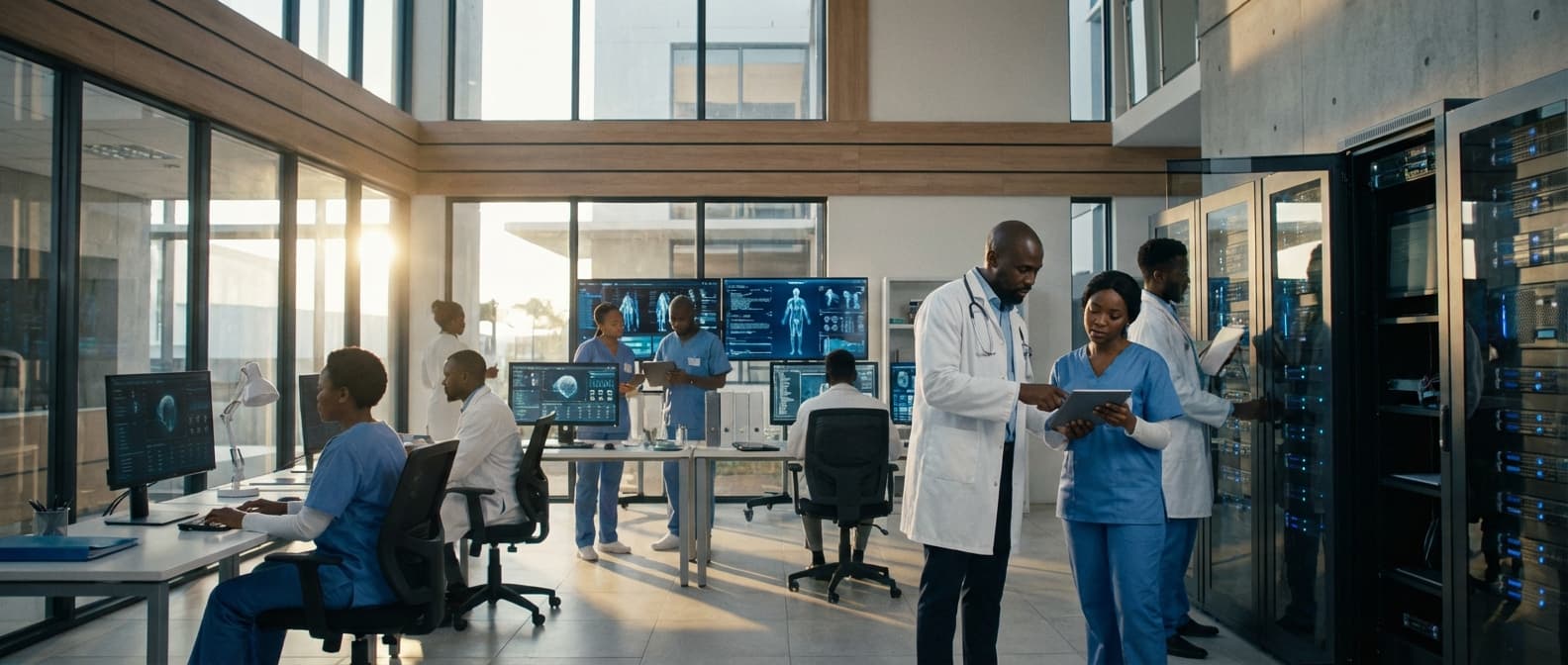
Tele-Radiology in Zambia
Engineering Excellence & Technical Support
24/7 access to certified radiologists providing rapid, accurate remote interpretation of diagnostic imaging studies. High-standard technical execution following OEM protocols and local regulatory frameworks.
Bridging the Distance: Advanced Diagnostic Imaging for Remote Communities
Tele-radiology platforms are empowering Zambian healthcare facilities in underserved rural areas by providing instant access to expert radiologists. This enables timely and accurate diagnoses of complex imaging studies, improving patient outcomes where specialist expertise is scarce.
Secure Cloud-Based Image Archiving and Transfer
Zambia is leveraging secure, cloud-based infrastructure for the seamless and safe transmission of high-resolution radiological images. This ensures data integrity, facilitates rapid sharing between referring physicians and radiologists, and reduces the burden of physical media transport.
AI-Powered Diagnostic Support for Enhanced Efficiency
Integration of Artificial Intelligence (AI) tools within the tele-radiology workflow is enhancing diagnostic accuracy and efficiency in Zambia. AI algorithms assist in identifying subtle abnormalities, prioritizing critical cases, and reducing reading times, thereby optimizing the utilization of limited radiologist resources.
What Is Tele-radiology In Zambia?
Tele-radiology in Zambia refers to the transmission of radiological images from one location to another for the purpose of diagnostic interpretation. This service leverages telecommunications technology to overcome geographical barriers and enhance access to specialized radiological expertise, particularly in remote or underserved areas of the country. It involves the digital capture of medical images (such as X-rays, CT scans, MRIs, and ultrasounds) and their secure transfer over networks to radiologists who may be located elsewhere, even internationally, for interpretation and reporting. The final report is then transmitted back to the originating healthcare facility.
| Need/Benefit | Target Population/Scenario | Typical Use Cases |
|---|---|---|
| Improved Access to Expertise: Overcoming the shortage of radiologists, especially in rural or remote areas. | Patients and healthcare providers in geographically isolated regions of Zambia; facilities with limited or no on-site radiologist coverage. | Emergency room consultations for suspected fractures or trauma; routine diagnostic imaging interpretation in district hospitals; specialized interpretations for complex cases (e.g., neuroimaging, oncology). |
| Enhanced Diagnostic Speed and Efficiency: Expediting turnaround times for critical diagnoses, leading to timely treatment initiation. | Emergency departments, intensive care units, and situations requiring rapid diagnostic decisions. | Acute stroke imaging for prompt thrombolysis decisions; identification of critical findings in trauma cases; urgent assessment of suspected infections or acute abdominal conditions. |
| Cost-Effectiveness and Resource Optimization: Reducing the need for expensive travel for patients and specialists; maximizing the utilization of existing imaging equipment. | Public and private healthcare providers aiming to optimize operational costs while maintaining diagnostic quality; facilities with underutilized imaging equipment. | Outsourcing of routine or overflow radiology workload; providing subspecialty interpretation services without the need for in-house hiring; supporting mobile outreach clinics with remote diagnostic capabilities. |
| Quality Assurance and Second Opinions: Facilitating peer review and access to subspecialist opinions for complex or ambiguous cases. | Challenging cases requiring specialized knowledge; healthcare providers seeking confirmation or alternative interpretations. | Review of complex oncological imaging; expert interpretation of pediatric radiology studies; second opinions on intricate musculoskeletal or neurological scans. |
Key Components and Stakeholders of Tele-radiology in Zambia
- Image Acquisition: Healthcare facilities equipped with digital imaging modalities (DR, CR, CT, MRI, Ultrasound).
- Image Transmission: Secure and reliable IT infrastructure, including high-speed internet and Picture Archiving and Communication Systems (PACS) or Vendor Neutral Archives (VNAs) for storage and transfer.
- Radiological Interpretation: Qualified radiologists, often specialized, who review images and generate reports.
- Reporting and Communication: A system for delivering interpreted reports back to the referring physician and the patient's electronic health record (EHR).
- Referring Clinicians: Physicians and healthcare providers who order radiological examinations.
- Patients: Individuals requiring diagnostic imaging services.
- Healthcare Facilities: Hospitals, clinics, and health posts, particularly those lacking in-house radiology departments or sufficient radiologist coverage.
Who Needs Tele-radiology In Zambia?
Tele-radiology offers a transformative solution to address the critical shortage of radiology expertise and infrastructure in Zambia. By connecting local healthcare facilities with remote radiologists, it can significantly improve diagnostic accuracy, reduce turnaround times, and expand access to specialized imaging services, especially in underserved rural areas. This technology is not a luxury but a necessity for enhancing the quality and reach of healthcare across the nation.
| Customer Segment | Primary Need Addressed | Key Departments Benefiting | Example Scenario |
|---|---|---|---|
| Rural Health Centers | Access to basic diagnostic interpretation | General Practice, Emergency Medicine | A rural clinic captures an X-ray of a suspected fracture and sends it for remote interpretation, allowing for immediate patient management. |
| District Hospitals | Supplementing limited radiologist availability, handling complex cases | General Radiology, Internal Medicine, Surgery | A district hospital uses tele-radiology to get expert opinions on CT scans for stroke patients, reducing delays in treatment. |
| Tertiary/Referral Hospitals | Managing high workloads, accessing subspecialty expertise | Neurology, Cardiology, Oncology, Pediatrics | A major hospital outsources overnight chest X-ray interpretations to a tele-radiology service to ensure round-the-clock coverage. |
| Private Healthcare Providers | Expanding service offerings, improving efficiency | All departments requiring imaging | A private clinic invests in ultrasound but uses tele-radiology for expert interpretation of complex obstetric scans. |
| Mobile Clinics/Outreach | Bringing diagnostics to remote populations | Primary Healthcare, Public Health Programs | A mobile health unit in a remote area uses tele-radiology to interpret chest X-rays for tuberculosis screening. |
Target Customers & Departments for Tele-Radiology in Zambia
- Rural Health Centers and Clinics: These facilities often lack even basic X-ray equipment and have no access to on-site radiologists. Tele-radiology can provide them with the ability to send images for expert interpretation, enabling timely diagnosis and treatment for common conditions.
- District Hospitals: While some district hospitals may have basic imaging capabilities, they frequently struggle with a lack of qualified radiologists to interpret complex cases. Tele-radiology can supplement their existing services, ensuring critical diagnoses are made promptly.
- Tertiary and Referral Hospitals: Even well-equipped hospitals in urban centers can benefit from tele-radiology to manage high patient volumes, reduce radiologist burnout, and gain access to subspecialty expertise for rare or complex cases that may not be available locally.
- Private Healthcare Providers: Private clinics and hospitals seeking to offer a wider range of diagnostic services or improve their efficiency can leverage tele-radiology to outsource their imaging interpretation needs.
- Mobile Clinics and Outreach Programs: For healthcare initiatives reaching remote populations, tele-radiology can facilitate the interpretation of images acquired in the field, bringing advanced diagnostics directly to communities.
Tele-radiology Process In Zambia
Tele-radiology in Zambia is a burgeoning field aimed at bridging the gap in radiology services, particularly in rural and underserved areas. The process generally involves a referring physician or healthcare facility initiating an inquiry for radiological interpretation. This inquiry is then received by a tele-radiology provider, which could be a local hub, a regional network, or even an international service. The radiologist, upon receiving the images and relevant clinical information, performs the interpretation and generates a report. This report is then securely transmitted back to the referring physician for patient management. The workflow is designed to be efficient and accessible, leveraging technology to overcome geographical barriers and improve diagnostic turnaround times.
| Stage | Description | Key Stakeholders | Technology/Tools Involved | Challenges in Zambia |
|---|---|---|---|---|
| Inquiry Initiation | A healthcare provider identifies a need for radiological imaging and interpretation for a patient. | Referring Physician/Healthcare Facility | Electronic Medical Record (EMR) system (if available), Phone, Email, Fax | Limited access to diagnostic equipment in remote areas, varying levels of digital literacy among referring physicians. |
| Image Acquisition and Transmission | Radiological images (X-ray, CT, MRI, Ultrasound) are acquired and then transmitted to the tele-radiology service. This can be done directly from the imaging modality or via a PACS (Picture Archiving and Communication System) at the referring site. | Radiographer/Technologist, Referring Facility's IT | Digital Imaging and Communications in Medicine (DICOM) standard, PACS, Teleradiology Software, Secure VPN, Internet connectivity | Poor or unstable internet connectivity, lack of PACS infrastructure in many facilities, cost of imaging equipment and transmission. |
| Worklist Management and Assignment | Received images and associated clinical data are organized into a worklist. Cases are then assigned to available and appropriate radiologists based on their specialization and workload. | Tele-radiology Administrator/Manager, Teleradiology Platform | Teleradiology Platform (web-based or client-server), Worklist management software | Ensuring efficient and equitable distribution of workload, managing radiologist availability. |
| Radiologist Interpretation | A qualified radiologist reviews the images, analyzes the clinical information, and makes a diagnosis. | Radiologist | Teleradiology Viewing Software, High-resolution monitors, DICOM viewers | Shortage of qualified radiologists in Zambia, need for continuous professional development and access to advanced training. |
| Report Generation and Quality Assurance | The radiologist dictates or types a comprehensive diagnostic report. This report undergoes a quality assurance process, often involving a second reader or editor, to ensure accuracy and clarity. | Radiologist, Teleradiology Quality Assurance Officer | Speech recognition software, Report generation templates, Electronic signature, Quality assurance protocols | Maintaining consistent reporting standards, ensuring timely feedback for QA. |
| Report Delivery and Integration | The finalized report is securely transmitted back to the referring physician, often integrated into their EMR system or provided via a secure portal. | Referring Physician, Teleradiology Platform | Secure web portal, EMR integration, Email notifications (with secure links) | Ensuring secure and timely delivery, facilitating integration with existing healthcare systems. |
| Follow-up and Billing | The referring physician uses the report for patient management. Billing for the tele-radiology service is processed. | Referring Physician, Teleradiology Provider, Patient/Insurance | Billing software, Financial systems | Establishing clear billing structures, navigating insurance complexities (if applicable). |
Key Stages of the Tele-Radiology Workflow in Zambia
- Inquiry Initiation
- Image Acquisition and Transmission
- Worklist Management and Assignment
- Radiologist Interpretation
- Report Generation and Quality Assurance
- Report Delivery and Integration
- Follow-up and Billing
Tele-radiology Cost In Zambia
Tele-radiology services in Zambia are emerging as a crucial tool to bridge the gap in specialized diagnostic imaging, particularly in remote and underserved areas. The cost of these services is influenced by a combination of factors, and while precise, universally standardized pricing is still developing, a general understanding of the pricing landscape can be established. This discussion will explore the key pricing factors and provide estimated cost ranges in Zambian Kwacha (ZMW).
| Imaging Modality | Estimated Price Range (ZMW) |
|---|---|
| X-ray (per study/view) | 200 - 600 |
| Ultrasound (per study) | 400 - 1,200 |
| CT Scan (per study/region) | 1,500 - 5,000 |
| MRI (per study/region) | 3,000 - 10,000+ |
| Expedited/STAT Reads (additional) | 20% - 50% premium on base cost |
| Bulk/Contracted Rates | Negotiable, potentially 10-30% discount |
Key Pricing Factors for Tele-Radiology in Zambia
- Type of Imaging Modality: The complexity and equipment required for different imaging modalities significantly impact cost. X-rays are generally the most affordable, followed by ultrasounds, CT scans, and MRIs, which are considerably more expensive due to advanced technology and expertise needed for interpretation.
- Number and Complexity of Images: A single X-ray interpretation will be priced differently than a comprehensive CT scan of multiple body regions. The sheer volume of images within a study also affects pricing.
- Radiologist Expertise and Specialization: Highly specialized radiologists (e.g., neuroradiologists, pediatric radiologists) or those with extensive experience may command higher fees. The turnaround time expectation also plays a role; urgent or STAT reads often incur a premium.
- Turnaround Time (TAT): Standard TAT for basic interpretations is usually included in the base price. However, expedited services for faster reporting (e.g., within a few hours) will almost always come with an additional charge.
- Provider Type and Business Model: Costs can vary between large, established tele-radiology providers with extensive infrastructure and smaller, independent radiologist groups or individual practitioners. Some may offer tiered pricing based on volume or long-term contracts.
- Location of Patient/Facility: While tele-radiology aims to reduce geographical barriers, the operational costs for the referring facility (e.g., internet connectivity, basic equipment maintenance) and the provider's ability to serve that specific region might indirectly influence pricing, especially if logistical challenges are involved.
- Technology and Platform Fees: Some providers might bundle in fees for the use of their proprietary tele-radiology platform, which facilitates image transfer, secure communication, and report generation.
- Ancillary Services: Additional services such as preliminary reads, second opinions, or detailed consultations with the radiologist can add to the overall cost.
- Contractual Agreements: For healthcare institutions or clinics establishing long-term partnerships, bulk discounts or negotiated rates are common.
- Regulatory and Compliance Costs: Adherence to data privacy regulations and other compliance measures can be factored into the overall service cost.
Affordable Tele-radiology Options
Tele-radiology offers significant cost savings and improved accessibility compared to traditional in-house radiology departments. This is particularly true for smaller practices, rural hospitals, and organizations facing staffing shortages. By leveraging remote radiologists, institutions can access specialized expertise and achieve faster turnaround times without the overhead associated with full-time staff, equipment maintenance, and physical infrastructure. This allows for a more agile and cost-effective approach to diagnostic imaging.
| Strategy/Bundle | Description | Primary Cost-Saving Benefit |
|---|---|---|
| Subspecialty 'As-Needed' Access | Engaging remote subspecialist radiologists for specific case types or when local expertise is unavailable. | Eliminates fixed costs of hiring and retaining highly specialized, often scarce, in-house radiologists. |
| Volume-Based Reading Fees | Paying per study or per block of studies interpreted, allowing for direct correlation between cost and utilization. | Avoids fixed salary and benefit costs for radiologists, aligning expenses with actual service delivery. |
| Tiered Turnaround Time (TAT) Options | Offering different pricing for STAT, expedited, and routine reads. | Organizations only pay a premium for urgent cases, optimizing spending for less critical studies. |
| Overhead Reduction (Infrastructure) | Outsourcing radiology reading to external providers negates the need for physical office space, equipment, and IT maintenance for reading rooms. | Significant savings on real estate, hardware, software licenses, and IT support staff. |
| Scalability and Flexibility | Ability to adjust radiology service levels quickly based on changing patient loads or seasonal demands. | Prevents overstaffing during slow periods and ensures adequate coverage during peak times without incurring long-term staffing commitments. |
| AI-Powered Workflow Enhancement | Integrating AI tools that pre-screen images or highlight potential abnormalities, speeding up radiologist review. | Increases radiologist throughput, potentially reducing the number of radiologists needed or allowing existing ones to handle more volume. |
Key Value Bundles and Cost-Saving Strategies in Tele-Radiology
- On-Demand Subspecialty Coverage: Access to subspecialists (e.g., neuroradiology, pediatric radiology, interventional radiology) without hiring them full-time. This reduces recruitment costs and ensures appropriate expertise for complex cases.
- Tiered Service Models: Offering different service levels based on turnaround time requirements and complexity. This allows organizations to pay only for the services they need, avoiding overspending on immediate reads for less urgent cases.
- Overnight/Off-Hours Coverage: Ensuring 24/7 coverage without the expense of maintaining an in-house night shift. This is crucial for emergency departments and critical care units.
- Increased Radiologist Productivity: Tele-radiology platforms often incorporate workflow efficiencies, AI-powered tools for preliminary readings, and streamlined reporting systems, which can boost the number of studies a radiologist can interpret.
- Reduced Infrastructure Costs: Eliminating the need for dedicated radiology reading rooms, IT infrastructure for local servers, and the associated maintenance and upgrades.
- Flexible Staffing Solutions: Ability to scale radiology services up or down based on fluctuating patient volumes, avoiding the costs of underutilized in-house staff during slow periods.
- Centralized Reporting and QA: Consistent quality control and standardized reporting across multiple sites, leading to fewer errors and improved patient care, which can reduce downstream costs associated with misdiagnosis.
- Integration with Existing PACS/RIS: Many tele-radiology providers offer seamless integration with existing Picture Archiving and Communication Systems (PACS) and Radiology Information Systems (RIS), minimizing disruption and IT investment.
- AI-Assisted Diagnostics: Utilizing AI tools for initial anomaly detection or quantitative analysis can improve radiologist efficiency and accuracy, potentially reducing the need for more expensive, time-consuming diagnostic steps.
Verified Providers In Zambia
In the Zambian healthcare landscape, discerning trustworthy and reliable providers is paramount. Franance Health stands out as a beacon of excellence, offering a comprehensive suite of services backed by rigorous credentialing and a commitment to patient well-being. This document outlines why Franance Health's verified credentials make them the premier choice for your healthcare needs in Zambia.
| Credential Type | Description | Significance for Patients |
|---|---|---|
| HPCZ Accreditation | Official recognition from the Zambian regulatory body. | Guarantees compliance with national healthcare standards, ensuring safe and ethical medical practices. |
| Professional Licenses | Individual licenses for all medical practitioners. | Confirms that healthcare providers have met the required educational and competency standards. |
| International Best Practices | Implementation of globally recognized protocols. | Provides assurance of high-quality, safe, and modern healthcare delivery. |
| CPD Programs | Mandatory ongoing training for staff. | Ensures healthcare professionals are up-to-date with the latest medical knowledge and treatments. |
| Patient Feedback Mechanisms | Regular collection and analysis of patient input. | Demonstrates a commitment to patient satisfaction and continuous service improvement. |
Key Franance Health Credentials & Why They Matter
- {"title":"Accreditation by the Health Professions Council of Zambia (HPCZ)","description":"This is the cornerstone of our credibility. HPCZ accreditation signifies that Franance Health facilities and its practitioners meet stringent national standards for quality of care, safety, and ethical practice. It's a legal requirement for healthcare providers and a vital assurance for patients."}
- {"title":"Qualified and Licensed Medical Professionals","description":"All doctors, nurses, specialists, and allied health professionals at Franance Health are fully licensed and registered with their respective professional bodies in Zambia. This ensures they possess the necessary education, training, and ongoing professional development to provide competent care."}
- {"title":"Adherence to International Quality Standards","description":"While adhering to national regulations, Franance Health actively incorporates international best practices in its operations. This includes robust infection control protocols, patient safety measures, and data privacy compliance, aligning with global benchmarks for healthcare excellence."}
- {"title":"Continuous Professional Development (CPD) Programs","description":"Our commitment to staying at the forefront of medical advancements is demonstrated through mandatory CPD programs for all staff. This ensures our healthcare team is equipped with the latest knowledge, techniques, and technologies to deliver optimal patient outcomes."}
- {"title":"Patient Feedback and Satisfaction Metrics","description":"Franance Health actively solicits and analyzes patient feedback. This transparent approach to evaluating patient experience drives continuous improvement and reinforces our dedication to patient-centered care."}
- {"title":"Partnerships with Reputable Medical Institutions","description":"Our collaborations with recognized local and international medical institutions facilitate knowledge exchange, specialized training, and access to advanced medical expertise, further enhancing the quality of care we provide."}
Scope Of Work For Tele-radiology
This Scope of Work (SOW) outlines the requirements for a Tele-Radiology service, focusing on technical deliverables and standard specifications. The service aims to provide remote interpretation of medical imaging studies, enhancing diagnostic capabilities and accessibility to radiological expertise. The tele-radiology service will encompass image acquisition, transmission, storage, interpretation, and reporting, adhering to industry best practices and regulatory requirements.
| Category | Technical Deliverable | Standard Specifications |
|---|---|---|
| Image Acquisition | DICOM Compliant Image Files | Images must be in DICOM (Digital Imaging and Communications in Medicine) format, adhering to the latest relevant DICOM standards for modalities (e.g., CT, MRI, X-ray, Ultrasound). |
| Image Transmission | Secure Transmission Protocol | Utilize secure, encrypted protocols for image and data transmission (e.g., SFTP, HTTPS, VPN). Data encryption in transit must be at least AES-256. |
| Image Transmission | Bandwidth Requirements | Sufficient bandwidth to support real-time or near real-time transmission of large imaging files, with minimum upload/download speeds defined based on typical study sizes and expected turnaround times. |
| Image Transmission | Transmission Reliability | High availability and reliability of transmission channels, with error checking and retransmission mechanisms to ensure data integrity. |
| Image Storage & Archiving | PACS Integration | Seamless integration with the client's existing PACS for seamless image retrieval and upload. Must support standard DICOM query/retrieve operations. |
| Image Storage & Archiving | Long-Term Archiving | Secure, long-term storage of all interpreted studies in compliance with regulatory retention periods. Storage solutions must be redundant and protected against data loss. |
| Image Storage & Archiving | Data Redundancy & Backup | Regular backups and redundant storage solutions to ensure data availability and disaster recovery. |
| Interpretation & Reporting | Radiology Information System (RIS) Integration | Integration with the client's RIS for seamless workflow management, including study ordering, status tracking, and report distribution. |
| Interpretation & Reporting | Reporting Software | A robust reporting platform with features for structured reporting, voice recognition integration (optional), and template management. Reports must be legally binding and signed by a qualified radiologist. |
| Interpretation & Reporting | Turnaround Time (TAT) | Defined TAT for different study types (e.g., STAT, routine). Specify target TATs for primary reads and addendums. |
| Interpretation & Reporting | Report Format | Reports to be delivered in a standardized, clear, and concise format, accessible via web portal or direct EHR integration. Support for PDF and potentially structured data formats (e.g., HL7). |
| Platform & Security | User Authentication & Access Control | Multi-factor authentication and role-based access control to ensure only authorized personnel can access patient data and system functionalities. |
| Platform & Security | Data Encryption (At Rest) | All patient data stored on the tele-radiology platform must be encrypted at rest using industry-standard algorithms (e.g., AES-256). |
| Platform & Security | Audit Trails | Comprehensive audit trails to log all system activities, user access, and data modifications for security and compliance purposes. |
| Platform & Security | HIPAA/GDPR Compliance | The entire platform and service delivery must be fully compliant with relevant data privacy and security regulations (e.g., HIPAA, GDPR). |
| Platform & Security | Service Level Agreements (SLAs) | Clearly defined SLAs for system uptime, data availability, reporting TAT, and technical support response times. |
| Platform & Security | Software Updates & Maintenance | Regular software updates, patches, and maintenance to ensure optimal performance, security, and functionality of the tele-radiology platform. |
Key Objectives and Deliverables
- Provide efficient and accurate interpretation of medical imaging studies by qualified radiologists.
- Ensure secure and reliable transmission of medical images and associated data.
- Maintain a comprehensive and accessible archive of all interpreted studies.
- Deliver timely and comprehensive radiology reports.
- Adhere to all relevant data privacy and security regulations (e.g., HIPAA, GDPR).
- Provide seamless integration with existing Picture Archiving and Communication Systems (PACS) and Electronic Health Records (EHR) systems.
- Offer a user-friendly interface for referring physicians to request studies and receive reports.
- Provide ongoing technical support and maintenance for the tele-radiology platform.
Service Level Agreement For Tele-radiology
This Service Level Agreement (SLA) outlines the guaranteed response times and uptime for the tele-radiology services provided by [Your Company Name] to [Client Name]. This agreement is effective as of [Start Date] and will continue until [End Date], unless otherwise terminated by either party in accordance with the terms of the Master Service Agreement.
| Service Component | Guaranteed Response Time / Uptime | Measurement Period | Service Credits |
|---|---|---|---|
| Routine Chest X-ray Reporting | Within 8 business hours | Monthly | 5% of monthly fee for each instance of exceeding guaranteed RTT, capped at 20% |
| Urgent CT/MRI Reporting (e.g., Stroke, Trauma) | Within 1 business hour | Monthly | 10% of monthly fee for each instance of exceeding guaranteed RTT, capped at 30% |
| Critical Findings Notification | Within 15 minutes of dictation | Monthly | 15% of monthly fee for each instance of delay, capped at 40% |
| Image Availability (Platform Access) | 99.9% uptime | Monthly | 5% of monthly fee for each 0.1% downtime below 99.9%, capped at 25% |
| Image Availability (PACS Integration) | 99.5% uptime | Monthly | 7.5% of monthly fee for each 0.1% downtime below 99.5%, capped at 30% |
| Report Portal Availability | 99.9% uptime | Monthly | 5% of monthly fee for each 0.1% downtime below 99.9%, capped at 25% |
Key Performance Indicators (KPIs)
- Reporting Turnaround Time (RTT): The time from when a radiology study is made available for interpretation to when the final report is delivered to the client.
- Image Availability: The percentage of time that imaging studies are accessible for remote interpretation.
- System Uptime: The percentage of time that the tele-radiology platform and associated services are operational and available for use.
Frequently Asked Questions

Ready when you are
Let's scope your Tele-Radiology in Zambia project in Zambia.

Scaling healthcare logistics and technical systems across the entire continent.