
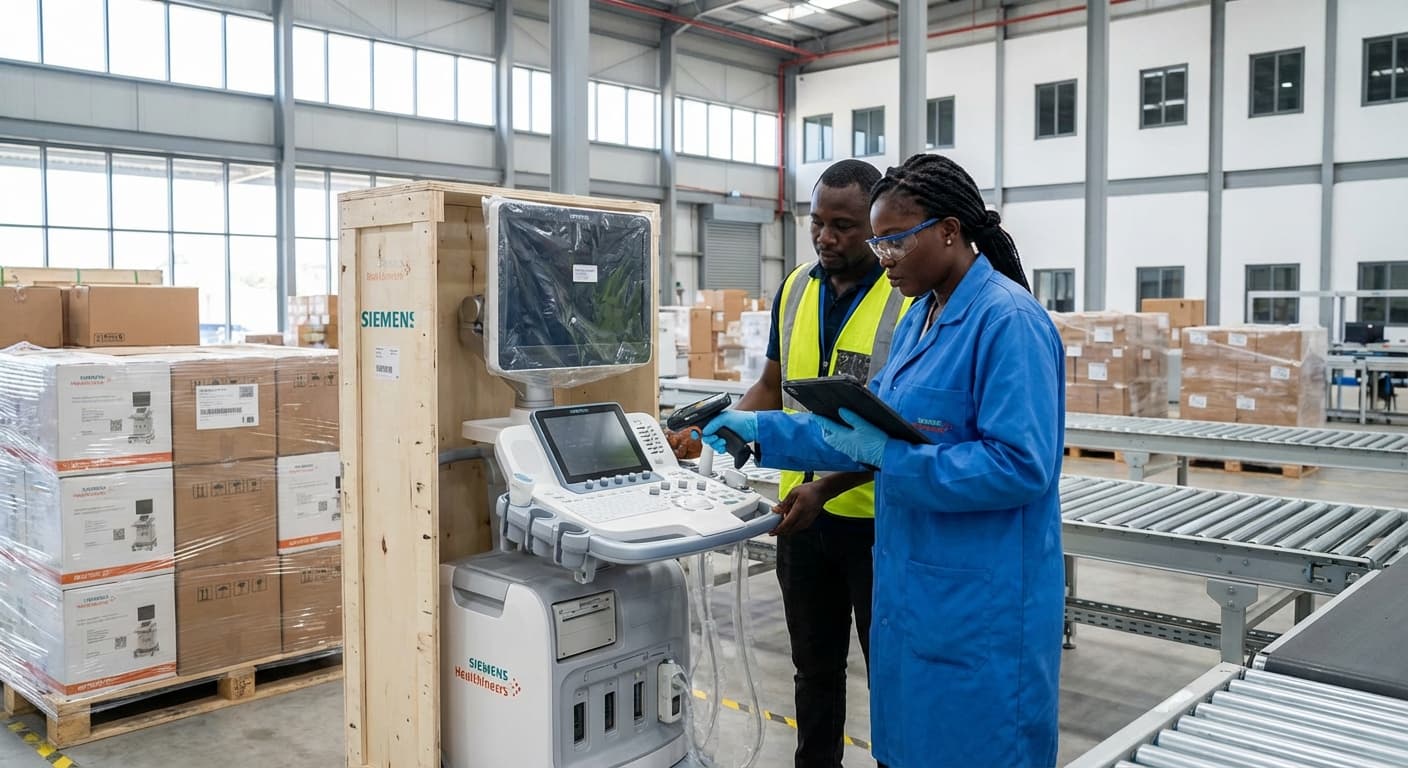
Warehouse Receiving Inspection Service (Medical Equipment) in Zambia
Engineering Excellence & Technical Support
Warehouse Receiving Inspection Service (Medical Equipment) High-standard technical execution following OEM protocols and local regulatory frameworks.
Rigorous Compliance Verification
Ensuring all incoming medical equipment in Zambia strictly adheres to national (Zambian Ministry of Health) and international regulatory standards (e.g., FDA, CE markings) through multi-point documentation and physical checks.
Advanced Quality Assurance & Defect Detection
Employing specialized inspection tools and trained personnel to identify even subtle manufacturing defects, damages, or inconsistencies in medical equipment, guaranteeing operational readiness and patient safety.
Precise Inventory & Traceability Management
Implementing robust barcode scanning and serial number verification for every piece of medical equipment, providing real-time inventory accuracy and comprehensive traceability throughout the receiving process in Zambia.
What Is Warehouse Receiving Inspection Service (Medical Equipment) In Zambia?
Warehouse Receiving Inspection Service (Medical Equipment) in Zambia refers to a specialized quality assurance process conducted upon the arrival of medical equipment into a storage facility within Zambia. This service meticulously verifies that the received medical equipment conforms to established specifications, quality standards, and regulatory requirements before it is accepted into inventory. It is a critical step in the supply chain for medical devices, ensuring that only safe, effective, and compliant products enter the healthcare system.
| Who Needs This Service? | Typical Use Cases | ||||
|---|---|---|---|---|---|
| Medical Equipment Importers and Distributors: Companies that import medical devices into Zambia for sale or distribution to healthcare facilities. | Hospitals and Healthcare Facilities: Public and private hospitals, clinics, and specialized medical centers that procure medical equipment directly or through distributors. | Government Health Agencies: Ministries of Health and associated procurement agencies responsible for acquiring medical supplies for public health programs. | Non-Governmental Organizations (NGOs) and Humanitarian Organizations: Entities involved in providing medical aid and equipment to underserved populations in Zambia. | Third-Party Logistics (3PL) Providers: Warehousing and logistics companies managing the storage and distribution of medical equipment on behalf of other entities. | |
| Initial Receipt of New Medical Equipment: Verifying the condition and compliance of newly acquired devices before they are integrated into the supply chain. | Incoming Shipments from International Suppliers: Ensuring that imported equipment meets quality and regulatory standards upon arrival in Zambia. | Stock Management and Inventory Control: Maintaining an accurate and compliant inventory by identifying and segregating non-conforming products. | Dispute Resolution with Suppliers: Providing objective evidence of product condition and discrepancies for claims or returns. | Compliance with Regulatory Mandates: Meeting the requirements of Zambian health and medicine regulatory authorities regarding the quality and safety of medical equipment. | Preventing the Entry of Counterfeit or Substandard Products: Acting as a crucial gatekeeper to protect patient safety and public health. |
Key Components of Warehouse Receiving Inspection Service (Medical Equipment) in Zambia:
- Documentation Verification: Cross-referencing received items against purchase orders (POs), packing lists, invoices, and certificates of origin. This includes checking for accuracy in product names, quantities, lot numbers, serial numbers, and expiry dates.
- Physical Inspection: Conducting a thorough visual and tactile examination of the medical equipment. This encompasses checking for any signs of damage, defects, tampering, or contamination sustained during transit. Specific attention is paid to packaging integrity.
- Labeling and Identification: Ensuring that all equipment is correctly labeled with the manufacturer's name, model number, serial number, lot number, and any required regulatory markings (e.g., CE mark, FDA approval, Zambian regulatory body approval).
- Functional/Performance Testing (where applicable): For certain types of medical equipment, basic functional checks may be performed to verify immediate operational capabilities, as defined by product specifications or client requirements. This is typically a preliminary assessment and not a comprehensive validation.
- Compliance Checks: Verifying that the equipment meets relevant Zambian regulatory standards, including those set by the Ministry of Health, Zambia Medicines Regulatory Authority (ZAMRA), and any other applicable statutory bodies. This may involve checking for necessary import permits and registration status.
- Storage Condition Assessment: Briefly assessing the environmental conditions under which the equipment was received to ensure they are within acceptable parameters for maintaining product integrity.
- Non-Conformance Reporting: Documenting any deviations from expected standards or specifications. This includes detailed descriptions of defects, damages, or discrepancies, often accompanied by photographic evidence.
Who Needs Warehouse Receiving Inspection Service (Medical Equipment) In Zambia?
A comprehensive warehouse receiving inspection service for medical equipment in Zambia is crucial for ensuring the quality, safety, and compliance of vital healthcare supplies. This service minimizes risks associated with damaged, counterfeit, or substandard equipment, ultimately protecting patient well-being and optimizing healthcare operations. By verifying that received medical equipment meets all specifications, regulatory requirements, and contractual obligations, this service provides an essential layer of quality assurance within the supply chain.
| Target Customer/Entity | Relevant Departments Involved | Specific Needs/Benefits of Inspection Service |
|---|---|---|
| Ministry of Health (Government) | Procurement Department, Quality Assurance Unit, Medical Stores Limited (MSL) | Ensuring national health security, compliance with public health regulations, preventing waste of public funds, verifying bulk purchases meet standards. |
| Public Hospitals | Procurement Department, Biomedical Engineering Department, Stores/Warehouse Management | Preventing the use of faulty or unsafe equipment, reducing maintenance costs, ensuring continuity of patient care, verifying equipment functionality. |
| Private Hospitals and Healthcare Groups | Procurement and Logistics, Clinical Operations, Quality Management | Maintaining high standards of patient care, protecting brand reputation, minimizing liability, ensuring efficient resource allocation. |
| Clinics and Health Centers (Urban & Rural) | Administrative Staff, Clinical Officers, Procurement Officers (if applicable) | Ensuring access to reliable and functional equipment for basic healthcare services, maximizing the impact of limited resources, preventing equipment failure in remote areas. |
| NGOs and Faith-Based Health Organizations | Program Management, Procurement, Logistics Officers | Ensuring donor funds are used effectively for quality equipment, meeting project objectives, providing essential services to vulnerable populations, verifying compliance with grant requirements. |
| Medical Equipment Suppliers & Distributors | Quality Control Department, Warehouse Management, Sales and After-Sales Service | Verifying incoming stock from manufacturers, ensuring compliance with import regulations, facilitating efficient inventory management, meeting contractual obligations with clients, reducing returns and disputes. |
| International Aid and Development Agencies | Procurement and Logistics, Program Monitoring, Compliance Teams | Ensuring accountability for aid distribution, verifying the quality and suitability of equipment for specific projects, meeting donor reporting requirements, mitigating risks in challenging environments. |
| Research Institutions and Laboratories | Research Heads, Lab Technicians, Procurement and Stores | Ensuring accuracy and reliability of research findings, preventing contamination or sample loss due to faulty equipment, maintaining laboratory efficiency and safety standards. |
Who Needs Warehouse Receiving Inspection Service (Medical Equipment) in Zambia? Target Customers and Departments
- Government Ministries and Agencies
- Hospitals (Public and Private)
- Clinics and Health Centers
- Non-Governmental Organizations (NGOs) in the Health Sector
- Medical Equipment Suppliers and Distributors
- International Aid Organizations
- Research Institutions and Laboratories
- Any entity involved in the procurement, storage, or distribution of medical equipment.
Warehouse Receiving Inspection Service (Medical Equipment) Process In Zambia
This document outlines the standard workflow for the Warehouse Receiving Inspection Service for Medical Equipment in Zambia, from the initial client inquiry to the final execution of the inspection. This process ensures that medical equipment entering warehouses in Zambia meets established quality, safety, and regulatory standards before being accepted into inventory.
| Phase | Step | Description | Key Activities | Responsible Party |
|---|---|---|---|---|
| 1.1 Client Inquiry | The process begins when a client (e.g., importer, warehouse operator, regulatory body) expresses interest in the warehouse receiving inspection service for medical equipment. | Contacting the service provider, stating the need for inspection, and providing initial details about the equipment and volume. | Client |
| 1.2 Information Gathering & Scope Definition | The service provider collects detailed information from the client to understand the specific requirements of the inspection. | Requesting equipment type, quantity, origin, intended use, relevant standards (e.g., Zambia Medicines Regulatory Authority - ZAMRA), previous documentation, and expected delivery timelines. Defining the exact scope of the inspection (visual, functional, documentation review, etc.). | Service Provider & Client |
| 1.3 Quotation and Agreement | Based on the gathered information and defined scope, the service provider prepares and submits a formal quotation for the inspection services. | Calculating inspection fees, travel costs, and other associated expenses. Negotiating terms and conditions. Once agreed, a formal service agreement or contract is signed. | Service Provider & Client |
| 2.1 Pre-Inspection Planning | Thorough planning is conducted to ensure the inspection is efficient and effective. | Scheduling the inspection date and time in coordination with the client and warehouse. Assigning qualified inspectors. Reviewing relevant standards, regulations, and client-specific requirements. Preparing inspection checklists and forms. | Service Provider |
| 2.2 On-Site Inspection Execution | The actual inspection of the medical equipment takes place at the designated warehouse in Zambia. | Visual inspection (packaging integrity, labeling, damage). Verification of equipment against shipping documents (make, model, serial number, quantity). Functional testing (if within scope and feasible). Documentation review (certificates of conformity, manufacturing data, import permits). Sampling for laboratory testing (if required). | Service Provider (Inspectors) |
| 3.1 Reporting and Documentation | Comprehensive reports are generated to document the findings of the inspection. | Compiling inspection results, observations, and any non-conformities. Preparing a detailed inspection report, including photographic evidence where applicable. Providing recommendations for corrective actions if issues are identified. | Service Provider (Inspectors) |
| 3.2 Communication of Findings | The inspection report is formally presented to the client. | Submitting the inspection report to the client. Discussing the findings and recommendations. Providing guidance on next steps for non-conforming equipment. | Service Provider |
| 3.3 Follow-up and Closure | Ensuring that any identified issues are addressed and the service engagement is concluded. | Verifying the implementation of corrective actions (if applicable). Issuing a final clearance certificate or acceptance letter upon successful inspection. Invoicing and payment processing. Archiving inspection records. | Service Provider & Client |
Warehouse Receiving Inspection Service (Medical Equipment) Process in Zambia - Workflow
- Client Inquiry and Service Request
- Information Gathering and Scope Definition
- Quotation and Agreement
- Pre-Inspection Planning and Coordination
- On-Site Inspection Execution
- Reporting and Documentation
- Follow-up and Closure
Warehouse Receiving Inspection Service (Medical Equipment) Cost In Zambia
The cost of Warehouse Receiving Inspection Services for medical equipment in Zambia can vary significantly due to several factors. These services are crucial for ensuring that newly acquired medical equipment meets quality standards, is free from damage, and complies with relevant regulations before being accepted into a warehouse or healthcare facility. Understanding these pricing determinants is essential for accurate budgeting and procurement.
| Inspection Type/Scope | Estimated Cost Range (ZMW) | Notes |
|---|---|---|
| Basic Visual Inspection (Per Unit) | ZMW 300 - 800 | Includes checking for visible damage, verifying model/serial numbers against documentation. Suitable for less critical or very basic equipment. |
| Standard Functional Check (Per Unit) | ZMW 800 - 2,500 | Includes visual inspection plus basic operational tests to ensure key functions are working. May involve simple calibration checks. |
| Comprehensive Inspection (Per Unit) | ZMW 2,500 - 10,000+ | Involves detailed functional testing, calibration verification, safety checks, and potentially initial software configuration. Cost increases significantly with equipment complexity. |
| Per Item/Batch Fee (for large volumes) | Negotiable (discounted per-unit rate) | For large orders of identical equipment, providers may offer a flat fee or a tiered per-unit rate based on volume. Requires detailed quotation. |
| Specialized Equipment Inspection (e.g., imaging, lab analyzers) | ZMW 10,000 - 50,000+ (per equipment) | This is highly variable and dependent on the specific technology. Often involves on-site commissioning and extensive testing by specialized technicians. |
| Re-inspection / Follow-up | ZMW 500 - 3,000+ | Cost for re-inspecting equipment after corrective actions have been taken, or for follow-up checks. |
| Report Generation Fee | Included in above, or separate ZMW 200 - 1,000+ | Some providers might charge separately for detailed reports with extensive documentation. |
Key Pricing Factors for Warehouse Receiving Inspection Services (Medical Equipment) in Zambia
- Type and Complexity of Medical Equipment: Highly specialized, complex, or sensitive medical equipment (e.g., MRI machines, advanced surgical robots) will command higher inspection fees compared to simpler items like stethoscopes or basic diagnostic tools. The need for specialized calibration tools, expert knowledge, and more time-intensive testing directly impacts cost.
- Volume and Quantity of Equipment: Inspections for a large batch of identical items may have a per-unit cost that decreases with volume. Conversely, inspecting a diverse range of equipment, even in smaller quantities, can increase complexity and thus cost.
- Scope of Inspection: The depth and breadth of the inspection are critical. This can range from a basic visual check for damage and verification of documentation to comprehensive functional testing, calibration verification, and adherence to specific manufacturer or regulatory protocols. A more thorough inspection naturally incurs higher costs.
- Service Provider's Expertise and Reputation: Established inspection firms with a proven track record, highly qualified technicians, and specialized accreditation often charge premium rates. Smaller or newer providers might offer more competitive pricing.
- Location of Inspection: If the inspection needs to be conducted at a remote warehouse or a location requiring significant travel and accommodation for the inspectors, these logistical costs will be factored into the overall price.
- Urgency of Service: Expedited inspection services, especially those requiring immediate attention or outside of standard working hours, will typically come with a surcharge.
- Regulatory Compliance Requirements: Inspections mandated by specific Zambian health authorities (e.g., Health Professions Council of Zambia - HPCZ) or international standards (e.g., ISO, WHO) might require more rigorous procedures and documentation, influencing the price.
- Reporting and Documentation Requirements: The level of detail and format of the inspection report can affect cost. Comprehensive reports with photographic evidence, detailed findings, and recommendations will be more expensive than basic summaries.
Affordable Warehouse Receiving Inspection Service (Medical Equipment) Options
Securing reliable and cost-effective warehouse receiving inspection services for medical equipment is crucial for compliance, safety, and operational efficiency. This service ensures that incoming medical devices meet quality standards, are accurately documented, and are free from damage before being stored or distributed. Finding affordable options often involves understanding different service models, leveraging value bundles, and implementing smart cost-saving strategies. This guide outlines how to achieve this, focusing on medical equipment receiving inspections.
| Value Bundle Option | Description | Cost-Saving Strategy/Benefit | Ideal For |
|---|---|---|---|
| Basic Inspection Package | Includes visual inspection for damage, quantity verification, and basic documentation check. | Lower per-item cost, suitable for high-volume, low-risk items. Streamlined process reduces labor time. | Companies with established internal quality control for most items, or for lower-value medical supplies. |
| Standard Compliance Bundle | Encompasses basic inspection plus detailed documentation review, serial/lot number verification, and basic functional checks (if applicable). | Proactive identification of compliance issues minimizes costly recalls or regulatory penalties. Bundled pricing often offers a discount over à la carte services. | Most medical equipment suppliers and distributors requiring robust traceability and compliance. |
| High-Risk Equipment Assurance | Comprehensive inspection including visual, functional testing, advanced documentation verification, and pre-storage quality checks tailored to specific high-risk devices (e.g., imaging equipment, surgical robots). | Significantly reduces the risk of deploying faulty or non-compliant critical equipment, preventing patient harm and expensive post-deployment fixes. Potentially reduces insurance premiums by demonstrating due diligence. | Manufacturers, large hospital systems, and distributors of complex, high-value, or safety-critical medical devices. |
| On-Demand Inspection Services | Pay-as-you-go model for individual inspections or small batches as needed. Can be combined with any service level. | Excellent for fluctuating volumes or when specific shipments require ad-hoc inspection without committing to a full contract. Avoids paying for idle capacity. | Businesses with unpredictable receiving volumes or those outsourcing warehousing and seeking flexible inspection solutions. |
| Integrated Warehouse Management System (WMS) Inspection | Inspection services performed directly within the client's WMS, allowing real-time data entry and automated flagging of issues. | Reduces data entry errors and delays, speeds up put-away processes, and provides immediate visibility of incoming inventory status. Often bundled with other WMS services for added efficiency. | Companies seeking seamless integration with their existing logistics operations and maximum operational visibility. |
Key Components of Warehouse Receiving Inspection Services for Medical Equipment
- {"title":"Verification of Shipment Accuracy","description":"Confirming that the received items match the purchase order and packing list in terms of quantity, model numbers, serial numbers, and configurations."}
- {"title":"Visual Inspection for Damage","description":"Thoroughly checking for any signs of physical damage to packaging, equipment, and accessories incurred during transit."}
- {"title":"Documentation Review","description":"Ensuring all required documentation, such as certificates of analysis, calibration certificates, user manuals, and compliance documents, are present and accurate."}
- {"title":"Lot and Serial Number Tracking","description":"Accurate recording of lot and serial numbers for traceability and regulatory compliance, especially critical for medical devices."}
- {"title":"Basic Functional Checks (Optional)","description":"Performing simple operational tests to verify immediate functionality, depending on the equipment's complexity and risk profile."}
- {"title":"Labeling and Identification","description":"Verifying correct labeling according to internal standards and regulatory requirements, including GS1 or other relevant industry standards."}
- {"title":"Reporting and Discrepancy Management","description":"Generating detailed inspection reports, documenting any discrepancies or issues, and initiating the corrective action process."}
Verified Providers In Zambia
In Zambia, ensuring you are accessing healthcare services from verified providers is paramount for your well-being. Franance Health stands out as a beacon of trust and quality, offering a comprehensive network of credentialed healthcare professionals and facilities. This verification process guarantees that providers meet stringent standards for qualifications, ethical practice, and patient safety, providing you with peace of mind. Franance Health's commitment to verification means you can be confident in the expertise and reliability of the care you receive. Their rigorous vetting ensures that all listed providers are not only licensed and accredited but also committed to delivering exceptional patient outcomes.
| Franance Health Advantage | Description | Benefit to Patient |
|---|---|---|
| Comprehensive Verification | Franance Health meticulously vets all registered providers, confirming licenses, certifications, and adherence to professional standards. | Ensures you are treated by qualified and legitimate healthcare professionals. |
| Quality Assurance | Our verification process includes checks on clinical competence, patient feedback mechanisms, and ethical conduct. | Guarantees a high standard of care and positive patient experience. |
| Network Accessibility | Access a wide array of specialists, general practitioners, and healthcare facilities across Zambia, all verified by Franance Health. | Provides convenient and reliable access to the healthcare services you need, wherever you are in Zambia. |
| Peace of Mind | By choosing Franance Health, you are assured of engaging with providers who meet the highest benchmarks of medical excellence. | Reduces anxiety and uncertainty about the quality and safety of your medical treatment. |
Why Franance Health is the Best Choice for Verified Providers in Zambia:
- Rigorous credentialing and verification process.
- Access to a broad network of qualified and licensed healthcare professionals.
- Commitment to patient safety and ethical medical practices.
- Enhanced trust and confidence in the healthcare services you receive.
- Streamlined access to reliable medical care across Zambia.
Scope Of Work For Warehouse Receiving Inspection Service (Medical Equipment)
This Scope of Work (SOW) outlines the requirements for providing Warehouse Receiving Inspection Services for medical equipment. The objective is to ensure that all received medical equipment meets established technical specifications and quality standards before being accepted into inventory. This service is crucial for maintaining the integrity of the supply chain, ensuring patient safety, and complying with regulatory requirements.
| Task | Description | Technical Deliverables | Standard Specifications |
|---|---|---|---|
| Pre-Shipment Notification Review | Review pre-shipment notifications (PSNs) or advance shipping notices (ASNs) received from suppliers to anticipate incoming shipments and prepare for inspection. | Summary of anticipated shipments, including expected items, quantities, and suppliers. | Timely receipt of PSNs/ASNs at least 24 hours prior to expected arrival. |
| Arrival and Unloading Verification | Witness or verify the unloading of shipments and confirm the number of cartons/pallets against the shipping manifest. | Arrival verification report, including date/time of arrival, carrier information, and quantity of units received. | Accuracy of manifest against physical count. Documentation of any discrepancies. |
| Damage Assessment | Visually inspect all received items and packaging for any signs of damage (e.g., dents, tears, punctures, water damage, crushing). | Damaged item report, including photographs and detailed description of damage, for each affected item. | ISO 9001 quality standards for packaging integrity. Manufacturer's packaging specifications. |
| Documentation Verification | Verify that all required documentation accompanies the shipment, including certificates of conformance (CoC), certificates of analysis (CoA), user manuals, warranty information, and calibration certificates (if applicable). | Documentation checklist, confirming the presence and accuracy of all required documents for each item. | Manufacturer's standard documentation requirements. Specific project documentation needs. |
| Labeling and Identification Verification | Inspect labels for clarity, accuracy, and completeness. Verify serial numbers, lot numbers, expiration dates (if applicable), and manufacturer identification match purchase orders and item details. | Label verification report, highlighting any discrepancies in labeling information. | FDA UDI (Unique Device Identification) requirements. Manufacturer's labeling standards. |
| Visual and Physical Inspection | Conduct a thorough visual and physical inspection of each medical equipment item to check for manufacturing defects, correct model numbers, color, configuration, and overall appearance. | Visual inspection report, documenting any observed defects or deviations from expected appearance. | Manufacturer's quality control standards. Visual conformity to product schematics. |
| Functional Testing (Basic) | Perform basic functional tests as defined by manufacturer's instructions or project requirements to confirm the equipment is operational and performs its primary functions. This may include power-on tests, simple parameter checks, and indicator light verification. | Basic functional test report, detailing test performed, results, and pass/fail status for each item. | Manufacturer's recommended initial setup and basic operational checks. Defined project-specific testing protocols. |
| Dimensional and Material Verification | Verify key dimensions and material specifications against technical drawings or specifications where critical for installation or integration. | Dimensional verification report, if required, noting any deviations. | Approved technical drawings, engineering specifications, and material certifications. |
| Non-Conformance Reporting | Document and report any identified non-conformances, including detailed descriptions, photographic evidence, and recommendations for disposition (e.g., return to vendor, quarantine, rework). | Non-conformance report (NCR) for each identified issue, clearly outlining the nature of the defect and proposed action. | Company's standard quality management system (QMS) for non-conformance handling. FDA 21 CFR Part 820.50 (Acceptance of components and components from suppliers). |
| Inventory Data Entry | Input inspection results and relevant item data into the designated inventory management system (IMS) or tracking log. | Confirmation of successful data entry into the IMS, reflecting accurate inspection status. | Integration with existing IMS. Data field requirements as per the IMS. |
| Final Acceptance/Rejection | Based on inspection findings, make a final recommendation for acceptance or rejection of the received equipment. | Final acceptance/rejection recommendation for each lot or item. | Defined acceptance criteria outlined in purchase orders and technical specifications. |
Key Objectives
- Verify incoming medical equipment against purchase orders and packing lists.
- Conduct visual inspections for damage, defects, and completeness.
- Perform technical inspections to confirm adherence to manufacturer specifications and project requirements.
- Document all inspection findings accurately and in a timely manner.
- Identify and report non-conforming products for appropriate disposition.
- Ensure compliance with relevant industry standards and regulatory guidelines.
Service Level Agreement For Warehouse Receiving Inspection Service (Medical Equipment)
This Service Level Agreement (SLA) outlines the performance standards and guarantees for the Warehouse Receiving Inspection Service of Medical Equipment provided by [Your Company Name] (the "Provider") to [Client Company Name] (the "Client"). This SLA is an integral part of the master service agreement between the parties.
| Service Component | Response Time Guarantee | Uptime Guarantee | Definition/Measurement |
|---|---|---|---|
| Acknowledgement of Incoming Shipment Notification | Within 1 hour of notification | 99.5% | Time from Provider receiving notification of shipment arrival to acknowledgement of receipt. |
| Initiation of Inspection for Standard Shipments (up to 20 units) | Within 4 business hours of acknowledgement | 99.5% | Time from acknowledgement of shipment to the commencement of the physical inspection process. 'Standard Shipments' are defined as those containing up to 20 individual pieces of medical equipment requiring standard visual and quantity checks. |
| Initiation of Inspection for Large/Complex Shipments (over 20 units or specialized equipment) | Within 8 business hours of acknowledgement (may require pre-scheduling) | 99.0% | Time from acknowledgement of shipment to commencement of inspection for shipments exceeding 20 units or requiring specialized inspection procedures. Client will be notified of any required scheduling adjustments at least 24 hours in advance. |
| Completion of Inspection and Initial Report (Standard Shipments) | Within 2 business days of initiation | 99.5% | Time from initiation of inspection to the submission of the initial inspection report (including any immediate findings) to the Client. This assumes no significant logistical delays or complex issues requiring extended investigation. |
| Completion of Inspection and Initial Report (Large/Complex Shipments) | Within 5 business days of initiation (may be adjusted per shipment) | 99.0% | Time from initiation of inspection to the submission of the initial inspection report for large or complex shipments. Specific timelines for complex shipments will be mutually agreed upon and documented on a per-shipment basis. |
| Resolution of Urgent Discrepancy Reporting | Within 2 business hours of identified urgent discrepancy | N/A | Time from identification of a critical issue (e.g., significant damage posing safety risk) during inspection to direct notification of the designated Client contact. 'Urgent Discrepancy' will be defined in the Operational Procedures document. |
| Availability of Inspection Personnel and Systems | N/A | 99.9% | Percentage of scheduled business hours during which the Provider's inspection personnel and relevant documentation systems are available and operational to perform their duties. Excludes scheduled maintenance or Force Majeure events. |
Scope of Service
- Inspection of incoming medical equipment shipments.
- Verification of quantity against purchase orders and packing slips.
- Visual inspection for damage, defects, and compliance with specifications.
- Documentation of inspection results, including photographic evidence if necessary.
- Reporting of discrepancies and issues to designated Client personnel.
- Categorization of inspected items (e.g., accepted, rejected, needs further review).
Frequently Asked Questions

Ready when you are
Let's scope your Warehouse Receiving Inspection Service (Medical Equipment) in Zambia project in Zambia.

Scaling healthcare logistics and technical systems across the entire continent.