
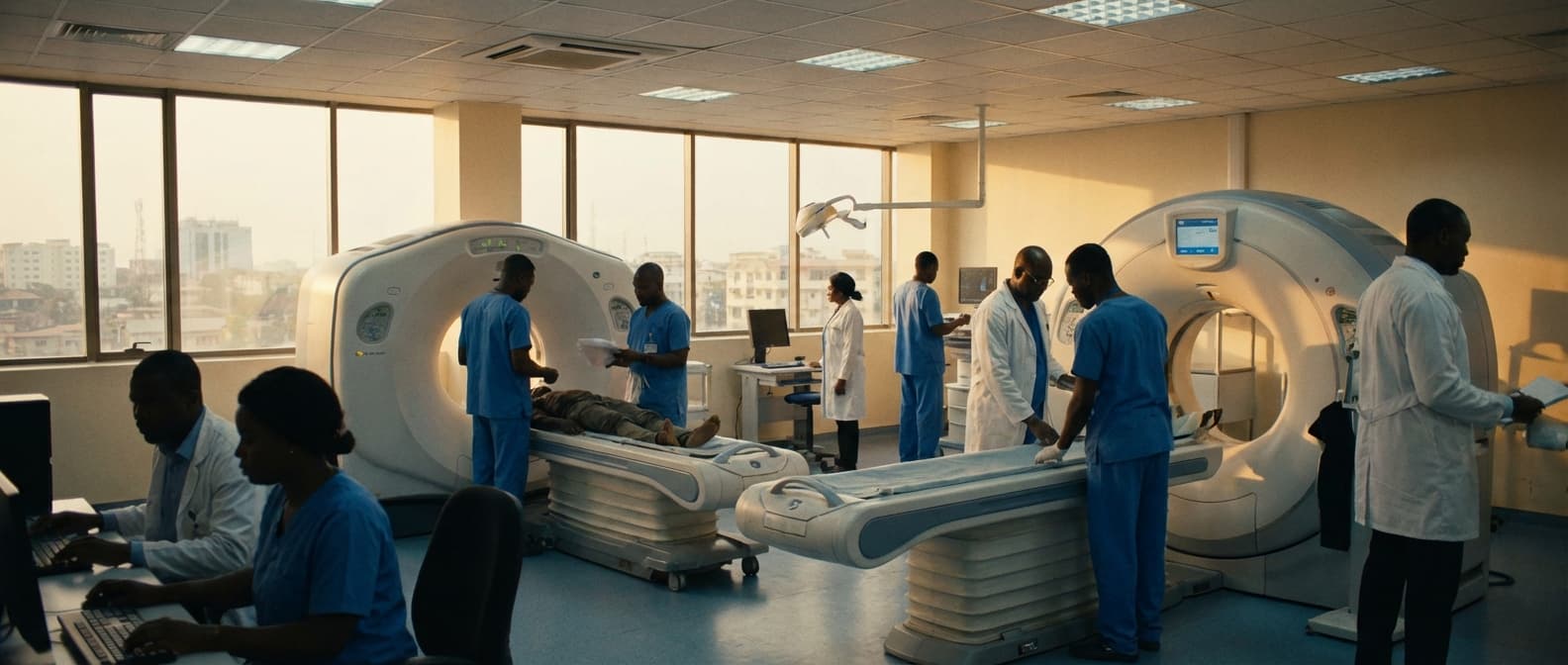
Imaging Acceptance Testing & QA in Zambia
Engineering Excellence & Technical Support
Commissioning and periodic QA for CT/MRI/X‑ray/US/Mammo. High-standard technical execution following OEM protocols and local regulatory frameworks.
Advanced Imaging QA Training
Delivering specialized training programs on modern medical imaging acceptance testing and quality assurance protocols, ensuring Zambian healthcare professionals are equipped with the latest diagnostic imaging verification techniques.
Standardized QA Protocols
Developing and implementing robust, context-specific imaging acceptance testing and QA protocols aligned with international standards, tailored for the diverse healthcare infrastructure in Zambia.
Remote Imaging Calibration & Validation
Establishing a framework for remote calibration, validation, and ongoing QA monitoring of imaging equipment across Zambia, overcoming geographical challenges and ensuring consistent diagnostic image quality.
What Is Imaging Acceptance Testing & Qa In Zambia?
Imaging Acceptance Testing (IAT) & Quality Assurance (QA) in Zambia refers to a systematic process of verifying and validating that medical imaging systems and related software adhere to predefined specifications, functional requirements, and regulatory standards before they are deployed or updated within healthcare facilities. This service ensures that imaging equipment produces accurate, reliable, and diagnostic-quality images, and that the associated IT infrastructure (PACS, RIS, modalities, workstations) operates as intended. The objective is to mitigate risks associated with equipment malfunction, data integrity issues, workflow inefficiencies, and non-compliance, thereby safeguarding patient care and operational efficacy. IAT is typically performed upon initial installation, after significant upgrades or repairs, and periodically as part of a comprehensive QA program.
| Who Needs Imaging Acceptance Testing & QA in Zambia? | Typical Use Cases | ||||||
|---|---|---|---|---|---|---|---|
| Hospitals and Clinics: Public and private healthcare providers operating radiology departments, diagnostic imaging centers, or any facility utilizing medical imaging equipment (X-ray, CT, MRI, Ultrasound, Mammography, PET-CT, etc.). | Initial Installation of New Imaging Modalities: Ensuring newly acquired equipment meets performance and diagnostic imaging standards before patient use. | PACS/RIS Implementation or Upgrade: Validating the successful integration and functionality of Picture Archiving and Communication Systems (PACS) and Radiology Information Systems (RIS). | Significant Equipment Repairs or Overhauls: Confirming that repairs have restored the system to its original or improved functional and imaging performance. | Introduction of New Software or Firmware: Testing updates or new software versions for modalities, PACS viewers, or other imaging-related applications to prevent adverse impacts. | Periodic Quality Assurance Programs: Regular testing to maintain optimal performance, identify subtle degradation, and ensure ongoing compliance with imaging standards. | Mergers and Acquisitions: Assessing the imaging infrastructure of acquired facilities to ensure interoperability and compliance. | Regulatory Audits and Compliance Verification: Demonstrating to regulatory bodies that imaging systems are functioning correctly and meeting established standards. |
Key Components of Imaging Acceptance Testing & QA
- System Functionality Verification: Ensuring all hardware and software components operate according to manufacturer specifications and user requirements.
- Image Quality Assessment: Evaluating image resolution, contrast, signal-to-noise ratio, artifacts, and other parameters critical for accurate diagnosis. This often involves phantom studies and comparison with established benchmarks.
- Data Integrity and Workflow Testing: Validating data acquisition, storage, retrieval, transmission (DICOM compliance), and integration with other healthcare information systems (e.g., EHR, RIS). This includes testing PACS, RIS, and modality connectivity.
- Performance and Load Testing: Assessing system responsiveness, throughput, and stability under anticipated operational loads to identify potential bottlenecks.
- Security and Access Control Validation: Verifying that appropriate access controls, data encryption, and audit trails are in place to protect patient information (HIPAA/GDPR compliance equivalent considerations).
- User Interface and Usability Evaluation: Ensuring the system is intuitive and efficient for clinical users, minimizing training requirements and potential for user error.
- Regulatory Compliance Checks: Confirming adherence to relevant national and international standards and regulations governing medical devices and healthcare IT.
- Documentation Review: Verifying the completeness and accuracy of system documentation, including installation guides, user manuals, and service records.
Who Needs Imaging Acceptance Testing & Qa In Zambia?
Imaging Acceptance Testing & Quality Assurance (QA) are crucial for ensuring that medical imaging equipment functions correctly, produces accurate diagnostic information, and meets patient safety standards. In Zambia, as the healthcare sector expands and adopts more advanced imaging technologies, the need for robust testing and QA processes becomes increasingly vital. This ensures reliable diagnostic capabilities, reduces the risk of misdiagnosis, and optimizes the performance of costly equipment.
| Customer/Department | Specific Needs & Benefits | Types of Imaging Equipment |
|---|---|---|
| Radiology Departments (Public & Private Hospitals) | Ensuring image quality for diagnosis (X-ray, CT, MRI, Ultrasound), patient dose optimization, compliance with international standards, vendor performance verification. | X-ray machines, Computed Tomography (CT) scanners, Magnetic Resonance Imaging (MRI) scanners, Ultrasound machines, Mammography units, Fluoroscopy systems. |
| Cardiology Departments | Verifying accuracy of cardiac imaging (echocardiography, CT angiography), functional assessments, ensuring real-time image clarity and frame rates. | Echocardiography machines, Cardiac CT scanners, Cardiac MRI scanners. |
| Oncology Centers | Precise imaging for treatment planning (radiotherapy simulation), monitoring treatment response (CT, MRI), ensuring accuracy of image registration. | CT scanners, MRI scanners, PET-CT scanners, Ultrasound machines for interventional procedures. |
| Emergency Departments | Rapid and reliable imaging for acute conditions, ensuring immediate availability and diagnostic accuracy of essential imaging modalities. | Mobile X-ray units, CT scanners, Ultrasound machines. |
| Surgical Departments | Intraoperative imaging for guidance and verification, ensuring image quality and real-time feedback during procedures. | C-arm X-ray systems, Intraoperative ultrasound, Mobile CT (surgical suites). |
| Medical Imaging Equipment Vendors & Service Providers | Acceptance testing ensures newly installed equipment meets specifications before handover, ongoing QA supports service contracts, calibration, and preventative maintenance. | All types of medical imaging equipment. |
| Ministry of Health (Zambia) & Regulatory Bodies | Ensuring adherence to national health standards, patient safety regulations, and efficient utilization of public healthcare investments in imaging technology. | All types of medical imaging equipment within public health infrastructure. |
| Academic & Training Institutions | Validating imaging equipment used for teaching and research, ensuring consistent and accurate data for educational purposes. | All types of medical imaging equipment used in training programs. |
Target Customers & Departments for Imaging Acceptance Testing & QA in Zambia
- Public Hospitals & Healthcare Facilities
- Private Hospitals & Clinics
- Diagnostic Imaging Centers
- Tertiary and Referral Hospitals
- Rural Health Centers (as infrastructure and technology permit)
Imaging Acceptance Testing & Qa Process In Zambia
This document outlines the typical workflow for Imaging Acceptance Testing and Quality Assurance (QA) processes in Zambia, from the initial inquiry to the final execution and sign-off. This process is crucial for ensuring that imaging equipment and systems meet specified standards, are safe for patient use, and produce diagnostic-quality images. The workflow is designed to be systematic and comprehensive, involving various stakeholders and stages.
| Stage | Description | Key Activities | Responsible Parties | Deliverables/Outcomes | |||||
|---|---|---|---|---|---|---|---|---|---|
| Inquiry & Specification Review | The initial stage where a healthcare facility or procurement body expresses interest in acquiring imaging equipment or services and defines its requirements. | Defining technical specifications, functional requirements, performance benchmarks, safety standards, and budget constraints. Communicating needs to potential vendors. | Healthcare Facility (Radiology Department, Biomedical Engineering, Procurement), Ministry of Health (if applicable). | Detailed Request for Information (RFI) or Request for Proposal (RFP) document. | |||||
| Vendor Quotation & Proposal Submission | Vendors respond to the inquiry by submitting detailed proposals outlining their equipment, services, pricing, and compliance with specifications. | Preparing and submitting comprehensive technical proposals, including equipment datasheets, compliance statements, warranty information, training plans, and pricing schedules. | Imaging Equipment Vendors/Suppliers. | Vendor proposals and quotations. | |||||
| Contract Negotiation & Award | The facility evaluates proposals, negotiates terms, and awards the contract to the selected vendor. | Technical and financial evaluation of proposals, clarification meetings with vendors, negotiation of contract terms (price, delivery, warranty, service agreements), and contract finalization. | Healthcare Facility (Procurement, Legal, Biomedical Engineering), Selected Vendor. | Signed contract, purchase order. | |||||
| Pre-Installation Site Preparation | Ensuring the physical site is ready to receive and operate the new imaging equipment. | Assessing and preparing the installation space (power, ventilation, shielding, structural integrity), ensuring accessibility, and coordinating with the vendor. | Healthcare Facility (Biomedical Engineering, Facilities Management), Vendor. | Ready installation site report. | |||||
| Equipment Delivery & Installation | The equipment is delivered to the site and professionally installed by the vendor. | Logistics and transportation of equipment, physical installation according to vendor guidelines and site requirements, initial system setup. | Vendor, Healthcare Facility (Biomedical Engineering for oversight). | Physically installed equipment. | |||||
| Acceptance Testing (IQ, PQ, OQ) | A critical phase involving rigorous testing to verify equipment performance and functionality against predefined standards. | Installation Qualification (IQ): Verifies that the equipment is installed correctly. Operational Qualification (OQ): Tests the equipment's operation within specified parameters. Performance Qualification (PQ): Evaluates the equipment's performance under simulated or actual clinical conditions using phantoms and test objects. (This is often the most comprehensive phase). | Vendor (for initial testing), Healthcare Facility (Biomedical Engineering, Radiologists, Technologists). | Detailed test reports, pass/fail results for IQ, OQ, and PQ. (Often involves using standardized phantoms like ACR phantoms for CT/MRI, Leeds Test Objects for X-ray). | Quality Assurance Checks | Ongoing and parallel checks to ensure the equipment and its output consistently meet quality standards. | Verification of image quality parameters (resolution, contrast, noise), calibration checks, dose monitoring (for X-ray based modalities), adherence to safety protocols. | Healthcare Facility (Biomedical Engineering, Radiographers/Radiologists). | QA reports, calibration certificates, ongoing performance logs. |
| User Training | Ensuring that clinical staff are adequately trained to operate the equipment safely and effectively. | Comprehensive training sessions for radiographers, radiologists, and other relevant staff on equipment operation, software usage, image acquisition protocols, and basic troubleshooting. | Vendor, Healthcare Facility (Clinical Staff, Training Department). | Training records, competency assessments. | |||||
| Documentation & Handover | Formal handover of the equipment, including all necessary documentation, after successful acceptance. | Provision of user manuals, service manuals, warranty documents, installation and testing reports, calibration certificates, and maintenance schedules. Formal sign-off by the facility. | Vendor, Healthcare Facility (Biomedical Engineering, Radiology Department Head). | Complete documentation package, signed acceptance certificate. | |||||
| Post-Installation Monitoring & Ongoing QA | Continuous monitoring of equipment performance and implementation of regular QA programs. | Scheduled routine QA checks, periodic calibration, preventative maintenance, ongoing performance trending, and prompt troubleshooting of any issues. | Healthcare Facility (Biomedical Engineering, Radiology Department). | Regular QA reports, maintenance logs, performance trend analysis. |
Key Stages of Imaging Acceptance Testing & QA Process
- Inquiry & Specification Review
- Vendor Quotation & Proposal Submission
- Contract Negotiation & Award
- Pre-Installation Site Preparation
- Equipment Delivery & Installation
- Acceptance Testing (IQ, PQ, OQ)
- Quality Assurance Checks
- User Training
- Documentation & Handover
- Post-Installation Monitoring & Ongoing QA
Imaging Acceptance Testing & Qa Cost In Zambia
Imaging Acceptance Testing & QA refers to the process of verifying that medical imaging equipment (like X-ray machines, CT scanners, MRI machines, ultrasound devices) functions correctly and produces images of diagnostic quality. In Zambia, the cost of these services is influenced by several key factors, leading to a range of pricing. These factors include the type and complexity of the imaging modality, the vendor performing the testing, the urgency of the service, and any necessary calibration or minor repairs identified during the process. Specialized equipment or testing requiring advanced diagnostic tools will naturally command higher fees. Furthermore, the reputation and experience of the QA provider, as well as their operational overheads within Zambia, contribute to the overall cost. It's also important to consider if the testing is for a new installation, a routine annual check, or troubleshooting an existing issue.
| Service Type / Modality | Estimated Cost Range (ZMW) | Notes |
|---|---|---|
| Basic X-ray Acceptance Testing | 3,000 - 7,000 | Includes visual inspection, basic functional tests, and image quality checks. |
| Advanced X-ray/Fluoroscopy QA | 5,000 - 10,000 | May include dosimetry, beam alignment checks, and more detailed image analysis. |
| CT Scanner Acceptance Testing | 8,000 - 20,000 | More complex, involving phantom scans, spatial resolution, contrast-to-noise ratio (CNR) testing, and artifact evaluation. |
| MRI Scanner Acceptance Testing | 10,000 - 25,000+ | Highly specialized, including magnetic field uniformity, gradient linearity, signal-to-noise ratio (SNR), and artifact analysis. |
| Ultrasound Acceptance Testing | 4,000 - 8,000 | Focuses on transducer integrity, image uniformity, depth penetration, and artifact checks. |
| Mammography Acceptance Testing | 6,000 - 12,000 | Includes tests for compression force, image quality, dose monitoring, and artifact reduction. |
| Annual Routine QA (per modality) | 3,500 - 9,000 | Cost can vary significantly based on modality and the extent of testing performed. |
| Emergency/Expedited Service Call | Additional 2,000 - 5,000+ | On top of standard testing fees, due to the urgency and potential for after-hours work. |
| Calibration & Minor Adjustments | 1,000 - 3,000+ | If identified during testing, these are often billed separately. |
Key Pricing Factors for Imaging Acceptance Testing & QA in Zambia:
- Type of Imaging Modality (X-ray, CT, MRI, Ultrasound, Mammography, etc.)
- Complexity and Specifications of the Equipment
- Vendor/Service Provider's Reputation and Expertise
- Scope of Testing (Initial Acceptance, Routine QA, Troubleshooting)
- Need for Calibration and Minor Adjustments
- Geographic Location within Zambia (transportation costs)
- Urgency of the Service Request
- Inclusion of Specific QA Protocols or Standards (e.g., IAEA standards)
- Cost of Consumables or Specific Testing Tools
Affordable Imaging Acceptance Testing & Qa Options
Affordable Imaging Acceptance Testing & QA is crucial for ensuring medical imaging equipment functions correctly, delivers accurate diagnoses, and maintains patient safety. Rather than facing the high costs of traditional vendor-specific testing or in-house QA programs, healthcare facilities can explore value bundles and implement cost-saving strategies. These approaches focus on maximizing efficiency, leveraging existing resources, and seeking specialized, cost-effective solutions.
| Value Bundle Component | Description | Cost-Saving Benefit |
|---|---|---|
| Comprehensive Modality Testing | Includes acceptance testing, routine QA, and calibration for a specific imaging modality (e.g., CT scanner). | Bulk pricing, streamlined scheduling, ensures compliance. |
| Multi-Vendor Equipment Support | QA services for imaging equipment from various manufacturers, managed by a single third-party provider. | Reduced administrative overhead, consolidated billing, potential volume discounts. |
| Preventive Maintenance & QA Package | Combines scheduled preventive maintenance with essential QA checks for a set period. | Reduced service call frequency, proactive issue identification, lower overall maintenance costs. |
| Remote QA Monitoring & Basic Troubleshooting | Initial remote checks and diagnostic capabilities, with on-site visits for advanced issues. | Minimizes expensive on-site technician time, faster resolution for minor issues. |
| Data Management & Reporting Services | Includes collection, storage, and analysis of QA data, with automated compliance reporting. | Improved regulatory compliance, data-driven decision-making for equipment management, reduced manual reporting effort. |
Key Cost-Saving Strategies & Value Bundle Components
- Strategic Outsourcing: Partnering with independent third-party QA providers often offers more competitive pricing than manufacturer services. They can specialize in specific modalities and provide efficient, compliant testing.
- Multi-Modality Bundles: Negotiate bundled testing services for multiple imaging modalities (e.g., X-ray, CT, MRI, Ultrasound) to achieve volume discounts. This simplifies scheduling and can lower per-unit costs.
- Risk-Based QA: Focus QA efforts on equipment with higher usage, greater complexity, or a history of issues. This prioritizes critical areas and reduces unnecessary testing on less impactful equipment.
- Technology Adoption: Invest in automated QA tools where feasible. While there's an upfront cost, automation can significantly reduce labor time and improve consistency over the long term.
- Remote Monitoring & Testing: Explore solutions that allow for remote performance checks and initial troubleshooting, reducing the need for on-site visits for every routine test.
- Staff Training & Cross-Training: Empowering internal biomedical engineering staff with broader QA training can reduce reliance on external services for basic or routine checks. Cross-training can improve team efficiency.
- Standardized Testing Protocols: Implementing consistent, standardized testing protocols across all modalities ensures efficiency and simplifies vendor interactions. This also aids in comparing performance over time.
- Flexible Service Agreements: Opt for service agreements that offer tiered services, allowing you to pay for the level of support you truly need, rather than expensive, all-inclusive packages.
- Preventive Maintenance Integration: Combine acceptance testing and QA with scheduled preventive maintenance. This integrated approach can be more cost-effective than separate service calls.
- Data Analytics for Optimization: Utilize collected QA data to identify trends, predict potential failures, and optimize testing schedules and resource allocation, leading to long-term savings.
Verified Providers In Zambia
In Zambia's healthcare landscape, identifying reliable and trustworthy medical providers is paramount for individuals seeking quality care. Franance Health has emerged as a leading name, distinguishing itself through a rigorous credentialing process that ensures its network comprises only the most qualified and ethical practitioners. This commitment to verification not only instills confidence in patients but also sets a benchmark for healthcare excellence within the nation.
| Credential | Verification Step | Importance for Patient Trust |
|---|---|---|
| Medical Licenses & Registrations | Verification of current and valid professional licenses with the Health Professions Council of Zambia (HPCZ) or equivalent bodies. | Confirms the provider is legally authorized to practice medicine in Zambia and meets basic regulatory standards. |
| Educational Degrees & Certifications | Thorough review of degrees, diplomas, and specialized certifications from accredited institutions. | Ensures the provider has received appropriate foundational and advanced medical training in their field. |
| Professional Experience & Practice History | Review of past employment, practice affiliations, and any disciplinary actions or complaints. | Gauges the provider's practical experience and identifies any potential red flags regarding their professional conduct. |
| Specialty Board Certifications (if applicable) | Confirmation of certifications from recognized specialty boards. | Validates expertise and advanced competency in a specific medical area. |
| References & Peer Reviews | Collection of professional references and, where possible, peer assessments. | Provides insights into the provider's reputation, working relationships, and clinical judgment. |
| Ethical Conduct & Professionalism Assessment | Evaluation of the provider's commitment to patient privacy, informed consent, and respectful communication. | Builds confidence in the provider's integrity and their dedication to patient welfare. |
Why Franance Health Providers Are the Best Choice:
- Comprehensive Vetting Process: Franance Health employs a multi-faceted approach to verify each provider, scrutinizing their educational background, professional licenses, certifications, and practical experience.
- Commitment to Ethical Practice: Beyond technical qualifications, Franance Health assesses providers for their adherence to ethical medical standards and patient-centered care principles.
- Continuous Professional Development: Providers within the Franance Health network are often encouraged and supported in their ongoing education and training, ensuring they remain at the forefront of medical advancements.
- Patient-Centric Approach: Franance Health prioritizes providers who demonstrate a strong commitment to patient well-being, clear communication, and personalized treatment plans.
- Access to Specialized Care: The network is designed to offer access to a wide range of medical specialties, ensuring patients can find the right expertise for their specific health needs.
- Streamlined Experience: By choosing a Franance Health verified provider, patients can expect a more streamlined and reassuring healthcare journey, knowing they are in capable hands.
Scope Of Work For Imaging Acceptance Testing & Qa
This document outlines the Scope of Work (SOW) for Imaging Acceptance Testing and Quality Assurance (QA), detailing the technical deliverables and standard specifications required to ensure the successful implementation and operation of the imaging system. The objective is to verify that the imaging solution meets all functional, performance, and quality requirements as defined in the project specifications and industry best practices.
| Phase | Activities | Technical Deliverables | Standard Specifications / Metrics |
|---|---|---|---|
| Define testing scope, objectives, and strategy. Develop test plans and test cases. Set up test environment and acquire test data. Define success criteria. | Test Plan Document Test Case Specifications Test Data Sets Entry/Exit Criteria Document | ISO 13485 (Quality Management Systems for Medical Devices) DICOM (Digital Imaging and Communications in Medicine) standards HIPAA (Health Insurance Portability and Accountability Act) for data privacy Specific project requirements for image quality, resolution, and file formats. |
| Verify all core imaging functionalities (e.g., capture, display, manipulation, storage, retrieval). Test image acquisition parameters and output. Validate user interface and workflow integration. Perform data integrity checks. | Functional Test Results Report Defect Log Traceability Matrix (linking requirements to test cases) | Image clarity and detail preservation. Accurate color reproduction (if applicable). Error handling and recovery mechanisms. Performance metrics: image loading time, processing time. |
| Assess system performance under various load conditions. Measure response times for key operations. Determine system throughput and scalability. Identify potential bottlenecks. | Performance Test Report Load Test Results Scalability Assessment | Image acquisition rate (images per minute). Image retrieval latency (seconds). Concurrent user capacity. System stability under peak load. |
| Validate integration with other systems (e.g., PACS, RIS, EMR). Test data exchange and interoperability. Verify workflow continuity across integrated systems. | Integration Test Report Interoperability Test Results | Successful data transfer between systems. Accurate mapping of data fields. Compliance with HL7 (Health Level Seven) standards for data exchange. |
| Assess system vulnerabilities and compliance with security policies. Verify access controls and user authentication. Test data encryption and protection mechanisms. | Security Test Report Vulnerability Assessment | HIPAA Security Rule compliance. Data encryption standards (e.g., AES). Role-based access control validation. |
| End-users validate system functionality and usability against their operational needs. Gather feedback and identify any discrepancies. | UAT Sign-off Document User Feedback Report | End-user satisfaction metrics. Adherence to defined workflows. Ease of use and intuitiveness of the interface. |
| Document all test activities, findings, and resolutions. Prepare final acceptance report. Handover testing artifacts. | Final Acceptance Test Report Test Summary Report Lessons Learned Document | Completeness and accuracy of documentation. Clarity and conciseness of reports. Traceability of test results to requirements. |
Key Objectives
- To validate the accuracy, reliability, and performance of the imaging system.
- To confirm adherence to all specified technical requirements and standards.
- To identify and document any defects or deviations from expected behavior.
- To ensure the system is ready for production deployment and meets user needs.
- To establish a baseline for ongoing quality monitoring and improvement.
Service Level Agreement For Imaging Acceptance Testing & Qa
This Service Level Agreement (SLA) defines the terms and conditions for Imaging Acceptance Testing and Quality Assurance (QA) services provided by [Your Company Name] (hereinafter referred to as 'Provider') to [Client Company Name] (hereinafter referred to as 'Client'). This SLA outlines the guaranteed response times and uptime for the services critical to ensuring the successful acceptance and quality of imaging data and systems.
| Service Component | Response Time Guarantee | Uptime Guarantee | Notes |
|---|---|---|---|
| Critical Defect Reporting & Initial Response | Within 2 Business Hours | N/A | Critical defects are defined as those preventing core imaging functionality, data acquisition, or patient safety. |
| High Priority Defect Reporting & Initial Response | Within 4 Business Hours | N/A | High priority defects significantly impact user workflow or data integrity. |
| Medium Priority Defect Reporting & Initial Response | Within 1 Business Day | N/A | Medium priority defects are cosmetic issues or minor functional deviations. |
| Test Environment Availability (during scheduled testing) | 99.5% | N/A | Applies to environments designated for active acceptance testing or QA cycles. |
| QA Monitoring & Reporting (scheduled) | N/A | 99.0% | Applies to the availability of the QA monitoring systems and the timely generation of scheduled reports. |
| Communication Channel Availability (e.g., ticketing system, designated contact) | 99.8% | N/A | Ensures Client can report issues and receive updates promptly. |
Scope of Services
- Imaging Acceptance Testing: Comprehensive testing of imaging systems, software, and workflows to verify functionality, performance, and adherence to specified requirements.
- Quality Assurance (QA): Ongoing monitoring, validation, and defect management processes to maintain the high quality of imaging data and the integrity of imaging systems.
- Defect Triage and Prioritization: Categorization and prioritization of identified defects based on their impact and severity.
- Test Environment Management: Provision and maintenance of appropriate test environments for acceptance testing and QA activities.
Frequently Asked Questions

Ready when you are
Let's scope your Imaging Acceptance Testing & QA in Zambia project in Zambia.

Scaling healthcare logistics and technical systems across the entire continent.