
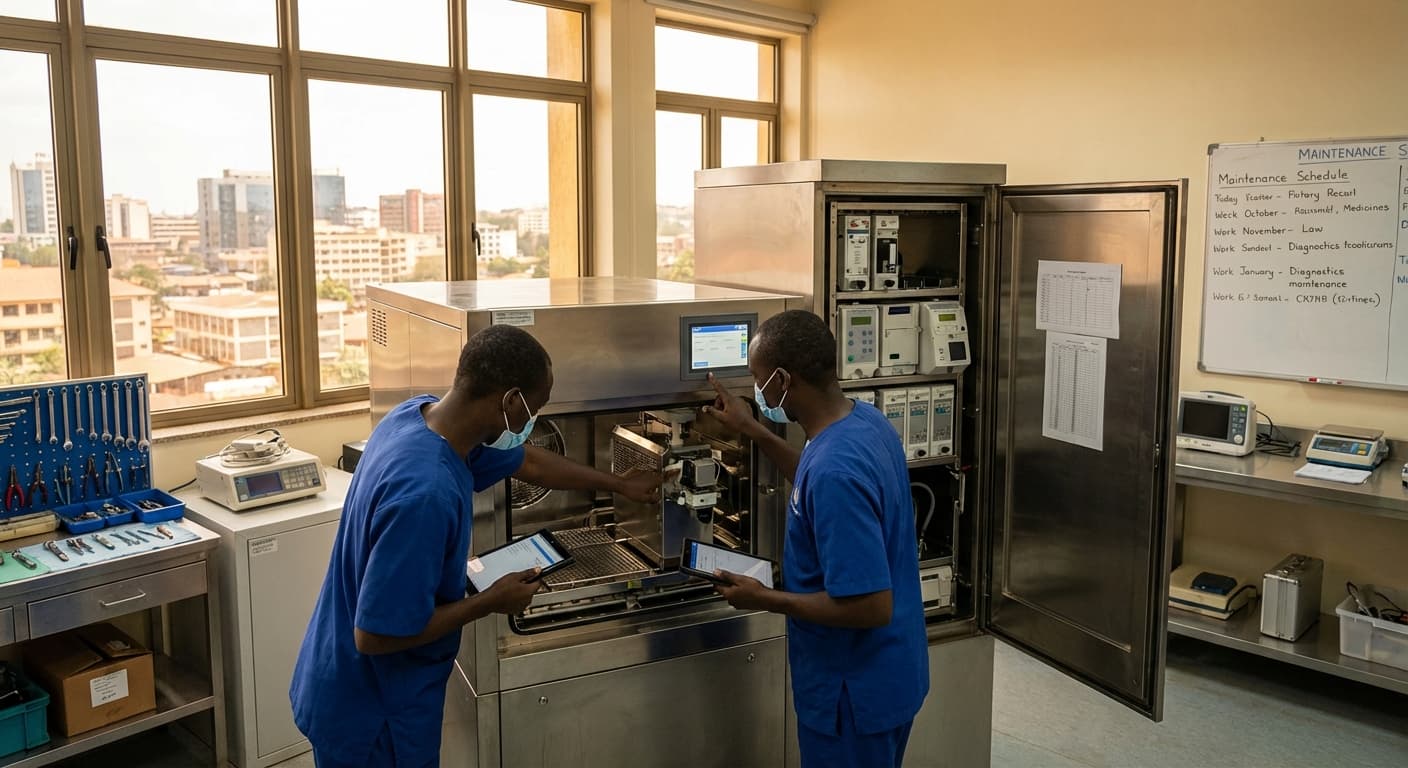
Total Cost of Ownership (TCO) & Lifecycle Budgeting Service in Zambia
Engineering Excellence & Technical Support
Total Cost of Ownership (TCO) & Lifecycle Budgeting Service High-standard technical execution following OEM protocols and local regulatory frameworks.
Predictive Cost Modeling for Infrastructure Projects
Leverage our advanced analytics to accurately forecast the Total Cost of Ownership (TCO) for infrastructure projects in Zambia. We go beyond initial capital expenditure, integrating operational, maintenance, and end-of-life costs to provide a comprehensive lifecycle budget, minimizing unforeseen expenses and maximizing return on investment.
Lifecycle Value Optimization for Industrial Assets
Our TCO and Lifecycle Budgeting services empower Zambian industries to optimize the value of their assets. By meticulously analyzing performance data, wear-and-tear, and replacement cycles, we develop proactive maintenance strategies and informed procurement decisions, extending asset lifespan and significantly reducing long-term operational costs.
Risk Mitigation through Comprehensive Lifecycle Budgeting
Mitigate financial risks associated with Zambian economic volatilities and supply chain disruptions. Our expert lifecycle budgeting identifies critical cost drivers, assesses potential price fluctuations, and develops contingency plans, ensuring your projects and operations remain financially resilient throughout their entire lifecycle.
What Is Total Cost Of Ownership (Tco) & Lifecycle Budgeting Service In Zambia?
Total Cost of Ownership (TCO) and Lifecycle Budgeting (LCB) services in Zambia represent a comprehensive financial management discipline focused on quantifying the complete economic impact of an asset, system, or project over its entire lifespan. This methodology extends beyond initial acquisition costs to encompass all direct and indirect expenses incurred from acquisition, operation, maintenance, support, and eventual disposal or decommissioning.
TCO analysis involves identifying, quantifying, and forecasting all relevant costs, including capital expenditures (CAPEX), operational expenditures (OPEX), and sometimes even strategic or opportunity costs. LCB, often used interchangeably or in conjunction with TCO, specifically emphasizes the financial planning and budgeting aspect, ensuring that all anticipated costs throughout the asset's lifecycle are accounted for and allocated appropriately within the organization's financial framework.
This service is crucial for informed decision-making, risk mitigation, and optimized resource allocation. It provides a more accurate and holistic understanding of the true financial implications of investment choices, moving beyond short-term cost considerations to long-term value realization and financial sustainability. In the Zambian context, where economic volatility and infrastructure development are significant factors, a robust TCO/LCB approach is vital for public and private sector entities to ensure fiscal prudence and maximize returns on investment.
| Who Needs TCO & LCB Services? | Typical Use Cases in Zambia |
|---|---|
| Government Agencies & Public Sector Entities: For infrastructure projects (roads, power, water), public transportation, national IT systems, and public service delivery assets. Crucial for long-term fiscal planning and ensuring value for taxpayer money. | Large-Scale Infrastructure Development: Estimating the TCO of national road networks, power generation facilities, water treatment plants, and telecommunication backbone infrastructure over 30-50 years. |
| Mining and Extractive Industries: For major equipment procurement (e.g., haul trucks, processing plants), mine development, and long-term operational planning. Given the cyclical nature of commodity prices, accurate LCB is essential for profitability. | Fleet Management Optimization: Determining the most cost-effective vehicle acquisition, maintenance, and replacement strategies for large commercial fleets, including trucks, buses, and specialized mining vehicles. |
| Telecommunications Companies: For network infrastructure investments, including base stations, fiber optics, and data centers, considering upgrade cycles and maintenance costs. | Energy Sector Utilities: Assessing the TCO of power generation assets (hydro, solar, thermal), transmission, and distribution networks, factoring in regulatory changes and fuel costs. |
| Manufacturing and Industrial Enterprises: For capital equipment acquisitions, factory upgrades, and production line investments. To optimize production costs and ensure competitive pricing. | IT System Procurement & Management: Evaluating the full cost of enterprise resource planning (ERP) systems, cloud infrastructure, and cybersecurity solutions over their expected lifespan, including software licensing, support, and upgrades. |
| Financial Institutions: For large IT systems, branch network investments, and strategic asset acquisitions. To understand the long-term financial implications of strategic decisions. | Public-Private Partnerships (PPPs): Establishing clear and comprehensive costings for long-term projects, ensuring equitable risk sharing and financial viability for both public and private partners. |
| Real Estate Developers & Property Management Firms: For the acquisition and management of commercial and residential properties, including construction, maintenance, and eventual refurbishment or sale. | Logistics and Supply Chain Operations: Analyzing the TCO of warehousing facilities, material handling equipment, and transportation assets to optimize operational efficiency and cost. |
Key Components of TCO & Lifecycle Budgeting Service
- Cost Identification & Categorization (CAPEX, OPEX, etc.)
- Data Collection & Validation
- Cost Modeling & Forecasting
- Risk Assessment & Sensitivity Analysis
- Lifecycle Phase Cost Breakdown
- Scenario Planning & Optimization
- Budgetary Integration & Tracking
- Disposal & Decommissioning Cost Planning
- Reporting & Recommendation Generation
Who Needs Total Cost Of Ownership (Tco) & Lifecycle Budgeting Service In Zambia?
In Zambia, a comprehensive approach to understanding the full financial implications of acquiring, operating, and disposing of assets or services is becoming increasingly vital. This is where Total Cost of Ownership (TCO) and Lifecycle Budgeting services play a crucial role. These services go beyond initial purchase price to encompass all direct and indirect costs over the entire lifespan of an asset or service. For businesses and organizations in Zambia, adopting TCO and lifecycle budgeting is essential for making informed investment decisions, optimizing operational efficiency, minimizing unforeseen expenses, and ensuring long-term financial sustainability.
| Target Customer/Organization Type | Key Departments/Roles Involved |
|---|---|
| Large Corporations (Mining, Manufacturing, Agriculture, Telecommunications) | Procurement, Finance, Operations, Engineering, IT, Facilities Management |
| SMEs with significant asset investment | Finance, Operations, Management |
| Government Ministries & Parastatals (e.g., Ministry of Works and Supply, ZESCO, local authorities) | Planning Department, Finance, Procurement, Engineering, Project Management Offices |
| Financial Institutions (Banks, Insurance Companies) with substantial IT/branch networks | IT Department, Finance, Branch Operations, Risk Management |
| Construction & Infrastructure Development Companies | Project Management, Finance, Procurement, Engineering, Fleet Management |
| Healthcare Providers (Hospitals, Clinics) with medical equipment | Procurement, Biomedical Engineering, Finance, Facilities Management |
| Educational Institutions (Universities, Colleges) with infrastructure and IT | Procurement, IT Department, Facilities Management, Finance |
Who Needs Total Cost of Ownership (TCO) & Lifecycle Budgeting Services in Zambia?
- Organizations that make significant capital investments in physical assets (machinery, vehicles, infrastructure).
- Businesses reliant on technology and IT infrastructure.
- Government agencies and parastatals managing public assets and large-scale projects.
- Companies with long-term operational contracts and service agreements.
- Sectors with high energy consumption and maintenance requirements.
- Organizations aiming for improved financial planning and risk management.
- Entities focused on sustainability and environmental impact assessments.
Total Cost Of Ownership (Tco) & Lifecycle Budgeting Service Process In Zambia
This document outlines the typical workflow for a Total Cost of Ownership (TCO) & Lifecycle Budgeting service offered in Zambia, from the initial client inquiry to the final execution and delivery of reports. The process is designed to be comprehensive and collaborative, ensuring all relevant costs and lifecycle stages are considered.
| Stage | Description | Key Activities | Deliverables | Typical Timeframe (Zambian Context) |
|---|---|---|---|---|
| Inquiry & Initial Consultation | The client expresses interest in TCO & Lifecycle Budgeting services. | Client contacts service provider. Initial discussion to understand needs, objectives, and potential scope. High-level overview of service offerings. | Understanding of client's general needs, preliminary assessment of project feasibility. | 1-3 business days |
| Scope Definition & Proposal Development | Detailed understanding of client requirements and project scope. | In-depth needs assessment. Identification of assets/projects to be analyzed. Definition of lifecycle stages, cost categories, and key performance indicators (KPIs). Development of a detailed proposal outlining services, methodology, timelines, and pricing. | Detailed proposal document, including Statement of Work (SOW). | 3-7 business days |
| Agreement & Kick-off Meeting | Formalization of the engagement and initiation of the project. | Review and signing of contract/agreement. Kick-off meeting with client stakeholders to introduce the project team, reiterate objectives, confirm communication protocols, and establish a clear project plan. | Signed agreement, confirmed project plan, established communication channels. | 2-5 business days |
| Data Collection & Analysis | Gathering all relevant financial, operational, and technical data. | Identifying and accessing historical cost data (acquisition, operation, maintenance, disposal). Gathering performance data, usage patterns, and technical specifications. Conducting interviews with relevant personnel. Performing initial data validation and cleaning. Considering local economic factors (inflation, exchange rates, local taxes in Zambia). | Cleaned and validated dataset, preliminary data analysis report. | 2-4 weeks (depending on data availability and complexity) |
| TCO Modeling & Scenario Planning | Developing comprehensive TCO models and exploring various scenarios. | Building TCO models using established methodologies. Identifying direct and indirect costs across the entire lifecycle. Incorporating elements specific to the Zambian business environment (e.g., import duties, local logistics, energy costs). Developing 'what-if' scenarios based on potential changes in operational assumptions, market conditions, or technology adoption. Sensitivity analysis. | Developed TCO models, scenario analysis reports, identification of key cost drivers. | 1-3 weeks |
| Lifecycle Budgeting & Forecasting | Projecting future costs and developing budgets. | Extending TCO models to forecast costs over the asset/project's lifecycle. Developing detailed lifecycle budgets, including capital expenditures (CAPEX) and operational expenditures (OPEX). Identifying funding requirements and timing. Incorporating Zambian inflation rates and potential future regulatory changes. | Detailed lifecycle budget projections, cash flow forecasts, funding requirement schedules. | 1-2 weeks |
| Report Generation & Presentation | Consolidating findings and presenting actionable insights to the client. | Preparing a comprehensive TCO and Lifecycle Budgeting report. Summarizing methodology, key findings, cost breakdowns, scenario outcomes, and budgetary recommendations. Presenting findings and recommendations to client stakeholders, facilitating discussion and clarification. | Final TCO & Lifecycle Budgeting report, presentation slides, executive summary. | 1-2 weeks |
| Implementation Support & Review (Optional) | Assisting the client in implementing recommendations and monitoring progress. | Providing guidance on budget implementation. Assisting in the development of procurement strategies based on TCO. Conducting periodic reviews to track actual costs against budget and TCO model. Advising on necessary adjustments. | Implementation guidance documents, review reports, updated TCO models (if required). | Ongoing or periodic, as per agreement |
Service Workflow Stages
- Inquiry & Initial Consultation
- Scope Definition & Proposal Development
- Agreement & Kick-off Meeting
- Data Collection & Analysis
- TCO Modeling & Scenario Planning
- Lifecycle Budgeting & Forecasting
- Report Generation & Presentation
- Implementation Support & Review (Optional)
Total Cost Of Ownership (Tco) & Lifecycle Budgeting Service Cost In Zambia
Understanding the Total Cost of Ownership (TCO) and Lifecycle Budgeting for services in Zambia involves a comprehensive assessment of all direct and indirect costs incurred from the initial acquisition or implementation of a service to its eventual decommissioning or disposal. This approach moves beyond the upfront purchase price to encompass ongoing operational expenses, maintenance, upgrades, training, and potential end-of-life costs. For businesses in Zambia, accurately budgeting for TCO and lifecycle costs is crucial for financial planning, risk management, and making informed procurement decisions, especially when dealing with services that have a long operational lifespan or significant recurring costs. Factors influencing these costs are diverse and often specific to the Zambian economic and operational landscape.
| Service Category | Typical Pricing Range (ZMW - Zambian Kwacha) | Key TCO Components within this Range |
|---|---|---|
| Basic IT Support & Maintenance (Per User/Month) | 50 - 250 ZMW | Helpdesk support, remote troubleshooting, basic software updates, anti-virus. |
| Cloud Infrastructure Services (e.g., IaaS, PaaS - Monthly Usage) | Variable (starting from 200 ZMW upwards, highly dependent on resources) | Compute, storage, networking costs, data transfer fees, managed services add-ons. |
| Software Licensing & Subscription (Annual/Per User) | 200 - 1,500+ ZMW (per user/year, depends on software complexity) | Initial license fees, annual subscription/maintenance, user management, support. |
| Fleet Management Services (Per Vehicle/Month) | 300 - 1,000+ ZMW | Vehicle tracking, maintenance scheduling, fuel management, insurance oversight, driver behavior monitoring. |
| Consulting & Project Implementation (Project-Based) | Highly Variable (Thousands to Millions of ZMW) | Consultant fees, software/hardware procurement, customization, training, change management, ongoing support. |
| Data Center & Hosting Services (Monthly) | Variable (starting from 500 ZMW upwards, based on space, power, cooling) | Rack space, power, cooling, network connectivity, physical security, managed services. |
| Telecommunication Services (Bundles - Monthly) | 150 - 800+ ZMW | Voice calls, data bundles, internet connectivity, hardware rental (routers, phones). |
Key Pricing Factors for TCO & Lifecycle Budgeting Services in Zambia
- Scope and Complexity of the Service: The broader and more intricate the service (e.g., IT infrastructure management, fleet maintenance, cloud migration), the higher the TCO and associated budgeting effort.
- Service Lifespan: Longer lifespans naturally incur more operational and maintenance costs over time.
- Technology/Infrastructure Requirements: The specific hardware, software, or physical infrastructure needed for the service directly impacts acquisition, maintenance, and upgrade costs.
- Vendor Service Level Agreements (SLAs): The level of support, uptime guarantees, and response times stipulated in SLAs will influence recurring service fees.
- Customization and Integration Needs: Tailoring services to specific organizational needs or integrating them with existing systems often adds to upfront and ongoing costs.
- Training and Skill Development: The need to train staff on new systems or services represents a significant indirect cost.
- Maintenance and Support Contracts: Annual maintenance, software updates, and technical support fees are core components of lifecycle costs.
- Operational Expenses: This includes energy consumption, consumables, and general usage fees associated with the service.
- Security and Compliance Requirements: Implementing and maintaining necessary security measures and adhering to local and international compliance standards can add significant costs.
- Decommissioning and Disposal Costs: Planning for the end-of-life of a service, including data sanitization, hardware disposal, and contract termination fees, is often overlooked but essential for accurate TCO.
- Inflation and Exchange Rate Fluctuations: Given Zambia's economic context, these factors can significantly impact the Kwacha value of imported goods or services paid for in foreign currency.
- Local vs. Imported Components/Services: Services heavily reliant on imported technology or expertise will generally have higher TCO due to import duties, taxes, and currency exchange rates.
- Scalability and Future Growth Provisions: Building in scalability for future growth might incur higher initial costs but can be more cost-effective in the long run than reactive upgrades.
- Regulatory Environment and Taxes: Local tax laws, import duties, and specific industry regulations in Zambia will influence overall costs.
Affordable Total Cost Of Ownership (Tco) & Lifecycle Budgeting Service Options
Our Affordable Total Cost of Ownership (TCO) & Lifecycle Budgeting services are designed to provide comprehensive financial planning and optimization for your assets throughout their entire lifespan. We go beyond initial purchase price to consider all direct and indirect costs, ensuring long-term financial predictability and significant cost savings. Our value bundles are tailored to address various organizational needs, offering a flexible and cost-effective approach to lifecycle budgeting. We employ strategic cost-saving methodologies to identify and implement efficiencies, maximizing your return on investment.
| Value Bundle Name | Description | Key Features | Target Audience | Starting Price (Illustrative) |
|---|---|---|---|---|
| Essential TCO Fundamentals | A foundational service for understanding core TCO elements and establishing initial lifecycle cost estimates. | Basic TCO model development, operating cost projection, and identification of key cost drivers. | Small to medium-sized businesses, startups, or departments seeking initial cost visibility. | $X,XXX - $X,XXX per project |
| Optimized Lifecycle Budgeting Suite | A comprehensive package for detailed lifecycle planning, including operational efficiency and risk management. | Advanced TCO modeling, maintenance scheduling optimization, energy efficiency analysis, and basic risk assessment. | Growing businesses, organizations with significant asset portfolios, or those aiming for operational excellence. | $XX,XXX - $XX,XXX per project/annually |
| Strategic Asset Lifecycle Management | Our premium offering, providing end-to-end strategic insights for maximizing asset value and minimizing long-term expenditure. | Full TCO and lifecycle cost analysis, predictive maintenance strategies, vendor negotiation support, sustainability impact assessment, and comprehensive risk mitigation. | Large enterprises, government agencies, or organizations with critical infrastructure and long-term strategic goals. | Customized pricing based on scope and asset complexity |
Key Components of Our TCO & Lifecycle Budgeting Services
- Initial Acquisition Cost Analysis
- Operating and Maintenance Expense Forecasting
- Energy Consumption and Efficiency Audits
- Downtime and Productivity Impact Assessment
- End-of-Life Disposal and Replacement Planning
- Risk Mitigation and Contingency Budgeting
- Customized Reporting and Data Visualization
- Strategic Procurement and Vendor Management Advisory
Verified Providers In Zambia
In Zambia's evolving healthcare landscape, identifying trusted and credentialed providers is paramount for individuals seeking quality medical services. Franance Health stands out as a beacon of reliability, offering a comprehensive network of verified healthcare professionals and institutions. Their rigorous credentialing process ensures that all affiliated providers meet the highest standards of expertise, ethics, and patient care, making them the unequivocally best choice for your health needs.
| Key Aspects of Franance Health's Verification | What it Means for You |
|---|---|
| Medical Licensure and Certifications Verification: | Ensures all practitioners hold valid and current professional licenses and have completed recognized training and specializations. |
| Professional Experience Assessment: | Evaluates the depth and breadth of a provider's practical experience in their respective fields, guaranteeing seasoned expertise. |
| Background Checks and Ethical Compliance: | Confirms a clean professional record and adherence to the highest ethical standards in patient care and practice management. |
| Facility Accreditation (for institutions): | Confirms that hospitals, clinics, and labs meet national and international standards for safety, hygiene, and operational efficiency. |
| Patient Feedback and Performance Monitoring: | Continuously gathers and analyzes patient feedback to ensure ongoing satisfaction and identify areas for improvement within the network. |
Why Franance Health is Your Best Choice for Verified Providers in Zambia
- Uncompromising Credentialing Standards: Franance Health employs a multi-faceted vetting process that scrutinizes the qualifications, experience, and regulatory compliance of every provider. This ensures you receive care from genuinely competent and licensed professionals.
- Comprehensive Network: Access a wide array of specialists, general practitioners, hospitals, and diagnostic centers, all pre-vetted and aligned with Franance Health's commitment to excellence.
- Patient-Centric Approach: Franance Health prioritizes patient well-being, focusing on accessibility, affordability, and the delivery of compassionate, evidence-based medical care.
- Transparency and Trust: Their commitment to transparency means you can be confident in the credentials and quality of care offered by their network. This fosters a sense of trust and security for all patients.
- Continuous Quality Assurance: Franance Health actively monitors and evaluates its network to maintain high standards and adapt to the latest advancements in healthcare.
Scope Of Work For Total Cost Of Ownership (Tco) & Lifecycle Budgeting Service
This Scope of Work (SOW) outlines the services to be provided for a comprehensive Total Cost of Ownership (TCO) and Lifecycle Budgeting analysis. The objective is to establish a robust framework for understanding, predicting, and managing all costs associated with an asset, project, or service throughout its entire lifespan, from acquisition to disposal. This includes identifying all relevant cost categories, developing accurate cost estimations, and creating a flexible budget that accounts for various lifecycle phases and potential contingencies. The service will deliver a detailed TCO model, lifecycle budget forecasts, and actionable recommendations for cost optimization and strategic financial planning.
| Technical Deliverable | Description | Standard Specification / Format |
|---|---|---|
| Total Cost of Ownership (TCO) Model | A comprehensive spreadsheet or database model that captures all cost elements across the asset's lifecycle. | Microsoft Excel (macro-enabled workbook) or Google Sheets. Includes clearly defined cost categories, assumptions, and formulas. Data structured for easy updating and scenario analysis. |
| Lifecycle Cost Breakdown Report | A detailed report summarizing costs by lifecycle phase (e.g., acquisition, operation, maintenance, disposal) and by cost category (e.g., capital, operational, maintenance, labor, consumables). | PDF document. Includes executive summary, detailed tables, charts, and graphical representations of cost distributions. |
| Lifecycle Budget Forecasts | Projected budgets for each year or defined period of the asset's lifecycle, incorporating anticipated costs, inflation, and potential expenditure fluctuations. | Microsoft Excel or Google Sheets. Presented as annual forecasts with summary totals. Includes clear assumptions on inflation rates and discount rates for Net Present Value (NPV) calculations if applicable. |
| Risk Register and Contingency Allocation Matrix | Identifies potential risks that could impact costs throughout the lifecycle, along with recommended contingency reserves and triggers for their release. | Microsoft Excel or Word document. Includes risk description, likelihood, impact, mitigation strategies, and allocated contingency percentage/amount. |
| Cost Optimization Recommendations Report | Actionable recommendations for reducing costs at various stages of the lifecycle, including suggestions for process improvements, technology adoption, or negotiation strategies. | PDF document. Prioritized recommendations with estimated cost savings and implementation effort. |
| Data Dictionary / Assumptions Log | A document detailing all data sources, assumptions made during the analysis, and definitions of key terms and cost categories. | Microsoft Word or PDF document. Comprehensive and transparent documentation of all inputs and methodologies. |
| Presentation of Findings and Recommendations | A formal presentation summarizing the TCO analysis, key findings, budget forecasts, and strategic recommendations. | Microsoft PowerPoint or Google Slides presentation. Visually engaging and concise, suitable for executive review. |
Key Service Components
- TCO Model Development
- Lifecycle Phase Cost Identification
- Cost Data Collection and Analysis
- Risk Assessment and Contingency Planning
- Lifecycle Budget Creation
- Financial Reporting and Visualization
- Recommendation Generation for Cost Optimization
- Knowledge Transfer and Training
Service Level Agreement For Total Cost Of Ownership (Tco) & Lifecycle Budgeting Service
This Service Level Agreement (SLA) outlines the performance and availability commitments for the Total Cost of Ownership (TCO) & Lifecycle Budgeting Service (the "Service"). This SLA applies to all active users accessing the Service from authorized client systems.
| Service Component | Uptime Guarantee | Response Time (Max) |
|---|---|---|
| Core TCO Calculation Engine | 99.9% | 5 seconds (for standard queries) |
| Lifecycle Budgeting Module | 99.9% | 7 seconds (for standard budget generation) |
| Data Ingestion & Synchronization | 99.5% | 15 seconds (for batch updates) |
| Reporting & Analytics Dashboard | 99.9% | 3 seconds (for dashboard loading) |
Service Definitions
- Service Availability: The percentage of time the Service is operational and accessible to authorized users.
- Response Time: The time taken for the Service to acknowledge and begin processing a user request.
- Downtime: Any period during which the Service is unavailable or not accessible to authorized users.
- Scheduled Maintenance: Pre-announced periods during which the Service may be temporarily unavailable for updates, upgrades, or other necessary maintenance activities.
- Emergency Maintenance: Unscheduled downtime required to address critical issues affecting the Service's stability or security.
Frequently Asked Questions

Ready when you are
Let's scope your Total Cost of Ownership (TCO) & Lifecycle Budgeting Service in Zambia project in Zambia.

Scaling healthcare logistics and technical systems across the entire continent.