
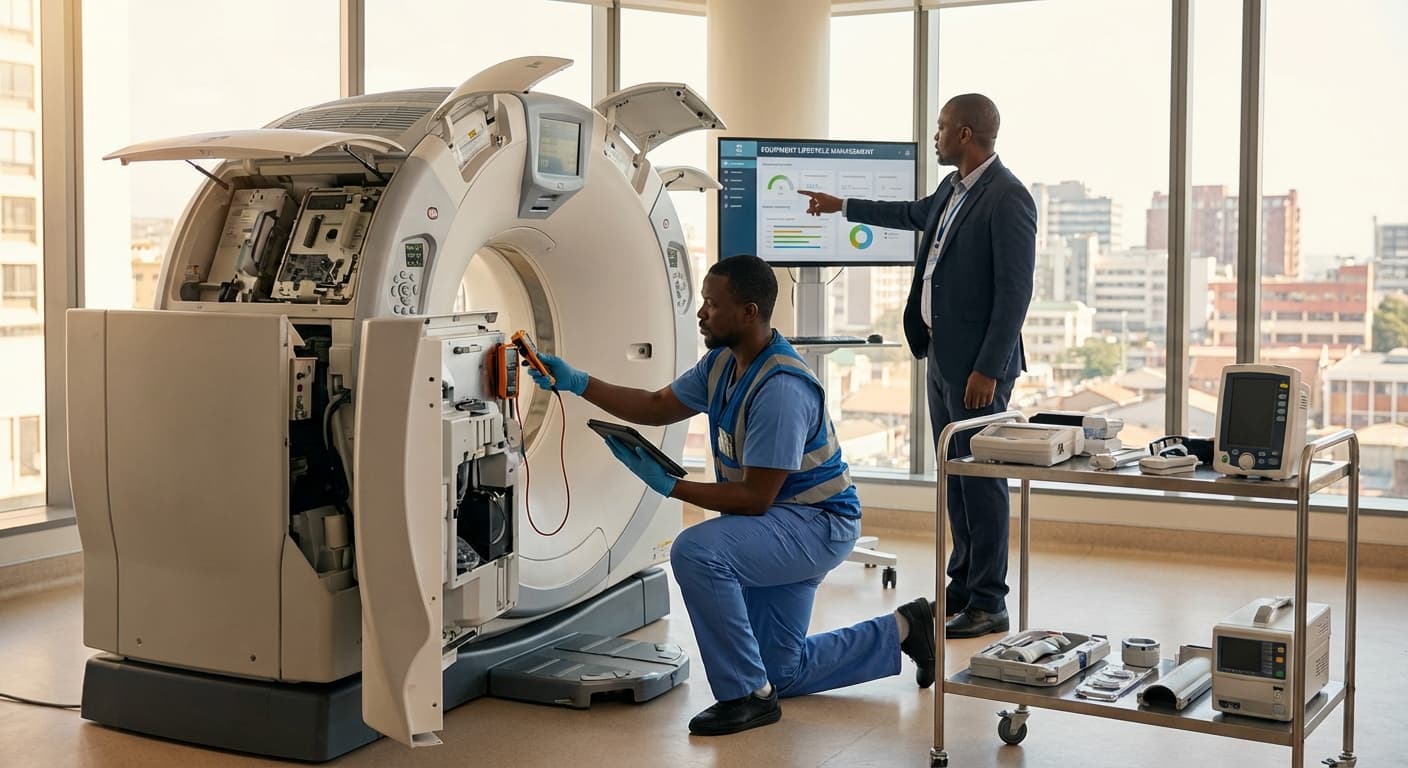
Equipment Replacement Planning & Obsolescence Strategy Service in Zambia
Engineering Excellence & Technical Support
Equipment Replacement Planning & Obsolescence Strategy Service High-standard technical execution following OEM protocols and local regulatory frameworks.
Proactive Obsolescence Identification & Mitigation
Leveraging advanced analytics and global market intelligence, we pinpoint critical equipment nearing end-of-life or facing component obsolescence within Zambian operations. Our service provides actionable insights and strategic roadmaps for timely replacements or upgrades, minimizing production downtime and unexpected capital expenditure.
Optimized Lifecycle Cost Management (LCCM)
We conduct comprehensive lifecycle cost analyses for your existing and potential new equipment. This includes factoring in acquisition, operational, maintenance, and disposal costs. Our strategies ensure you select the most cost-effective solutions that align with your long-term operational goals and Zambia's unique economic landscape.
Supply Chain Resilience & Local Sourcing
Navigating Zambia's specific supply chain dynamics, we develop robust equipment replacement plans that prioritize supply chain resilience. Our service explores opportunities for local sourcing of parts and services where feasible, reducing lead times, foreign exchange dependency, and contributing to local economic development while ensuring operational continuity.
What Is Equipment Replacement Planning & Obsolescence Strategy Service In Zambia?
Equipment Replacement Planning & Obsolescence Strategy Service in Zambia is a specialized consulting offering designed to assist organizations in optimizing their capital asset lifecycle management. It encompasses the systematic evaluation of existing equipment to determine optimal replacement cycles, mitigate the risks associated with technological obsolescence, and ensure the continued operational efficiency and economic viability of an organization's asset base. This service employs data-driven methodologies, including total cost of ownership (TCO) analysis, reliability-centered maintenance (RCM) principles, and forecasting of technological advancements, to inform strategic decisions regarding asset disposition, upgrade, or replacement. The ultimate objective is to minimize downtime, reduce maintenance expenditures, and align asset capabilities with evolving business requirements and industry best practices within the Zambian economic and regulatory context.
| Who Needs This Service? | Typical Use Cases | ||||||||||
|---|---|---|---|---|---|---|---|---|---|---|---|
| Manufacturing industries (e.g., mining, agriculture, food processing, textiles) with significant operational machinery. | Developing and implementing a proactive replacement schedule for aging production lines to avoid costly breakdowns and maintain output quality. | Utility companies (e.g., power generation, water treatment) responsible for maintaining critical infrastructure with long service lives. | Upgrading or replacing outdated power transmission equipment or water pumps to improve efficiency and reliability of service delivery. | Transportation and logistics companies (e.g., trucking, rail) managing fleets of vehicles and specialized transport equipment. | Planning for the phased replacement of a commercial vehicle fleet based on mileage, age, and fuel efficiency metrics to optimize operational costs. | Heavy industries (e.g., mining and quarrying) with high-value, specialized earth-moving and processing equipment. | Identifying the optimal time to replace excavators and crushers to balance maintenance costs against new capital expenditure, considering technological advancements in fuel efficiency and automation. | Public sector entities (e.g., government agencies, municipalities) overseeing public works and essential services. | Developing a strategy for the replacement of municipal service vehicles, public infrastructure components (e.g., streetlights, water mains), or IT infrastructure within budget constraints. | Companies undergoing digital transformation or automation initiatives. | Assessing which legacy machinery needs to be replaced or integrated with new automation systems to achieve desired productivity gains and interoperability. |
Key Components of the Service:
- Asset Inventory and Condition Assessment: Comprehensive cataloging and physical/technical evaluation of all critical equipment.
- Performance Monitoring and Data Analytics: Collection and analysis of operational data (e.g., uptime, failure rates, energy consumption) to benchmark performance.
- Obsolescence Risk Assessment: Identification of technological, functional, and economic obsolescence factors impacting equipment.
- Replacement Cost-Benefit Analysis: Evaluation of the financial implications of replacement versus continued operation, including TCO calculations.
- Life Cycle Costing (LCC) Modeling: Projection of all costs associated with an asset from acquisition to disposal.
- Strategic Planning and Roadmapping: Development of multi-year replacement and upgrade plans aligned with business objectives.
- Vendor and Technology Landscape Analysis: Understanding of available technologies and supplier capabilities in the Zambian market.
- Risk Mitigation Strategies: Development of plans to address potential disruptions during replacement cycles.
- Decommissioning and Disposal Planning: Guidance on environmentally responsible and compliant disposal of retired assets.
Who Needs Equipment Replacement Planning & Obsolescence Strategy Service In Zambia?
In Zambia, businesses and organizations across various sectors recognize the critical importance of proactive equipment replacement planning and obsolescence strategy. This service is essential for ensuring operational continuity, mitigating risks, optimizing capital expenditure, and maintaining a competitive edge. Ignoring these aspects can lead to costly breakdowns, production downtime, increased maintenance expenses, and the inability to leverage new technologies.
| Customer Type | Key Departments Involved | Why They Need the Service |
|---|---|---|
| Manufacturing and Industrial Companies | Operations, Maintenance, Engineering, Finance, Procurement, IT | Preventing production line stoppages due to aging machinery; ensuring compliance with new manufacturing standards; optimizing replacement cycles for cost-effectiveness. |
| Mining and Extractive Industries | Mine Operations, Maintenance & Reliability, Engineering, Procurement, Finance, Safety | Managing the longevity and performance of heavy-duty equipment in harsh environments; mitigating risks of catastrophic failures; planning for the eventual phasing out of outdated extraction technologies. |
| Energy and Utilities Providers | Operations, Asset Management, Engineering, Maintenance, Planning, Finance | Ensuring reliable power/water supply through timely replacement of aging infrastructure (e.g., turbines, transformers, pipelines); managing long asset lifecycles; complying with regulatory requirements. |
| Telecommunications Operators | Network Operations, Engineering, IT Infrastructure, Procurement, Finance | Upgrading network infrastructure to support new technologies (e.g., 5G); managing the lifecycle of network equipment (e.g., base stations, routers); avoiding service disruptions due to obsolete technology. |
| Healthcare Institutions | Clinical Engineering, Biomedical Services, IT Department, Procurement, Administration | Ensuring the accuracy and reliability of medical equipment; meeting patient safety standards; planning for the replacement of critical diagnostic and treatment devices. |
| Transportation and Logistics Companies | Fleet Management, Operations, Maintenance, Procurement, Finance | Maintaining the efficiency and safety of vehicles and transportation infrastructure; planning for fleet modernization; optimizing fuel efficiency and reducing maintenance costs. |
| Government Agencies and Public Sector | Public Works, IT, Procurement, Operations & Maintenance, Finance | Ensuring the continued delivery of public services (e.g., infrastructure maintenance, public transport); managing public assets effectively; avoiding obsolescence in critical IT systems and public infrastructure. |
Target Customers in Zambia:
- Manufacturing and Industrial Companies
- Mining and Extractive Industries
- Energy and Utilities Providers
- Telecommunications Operators
- Healthcare Institutions (Hospitals, Clinics)
- Transportation and Logistics Companies
- Agricultural Businesses and Cooperatives
- Government Agencies and Public Sector Organizations
- Financial Institutions (for IT infrastructure)
- Large-scale Construction and Engineering Firms
Equipment Replacement Planning & Obsolescence Strategy Service Process In Zambia
This document outlines the Equipment Replacement Planning & Obsolescence Strategy Service process as implemented in Zambia. It details the workflow from the initial client inquiry to the final execution of recommendations and ongoing support. The service aims to help organizations in Zambia proactively manage their asset lifecycle, mitigate risks associated with outdated or failing equipment, and optimize capital expenditure for replacements.
| Stage | Description | Key Activities | Deliverables/Outcomes | Zambian Context Considerations |
|---|---|---|---|---|
| Inquiry & Initial Consultation | The process begins when a potential client in Zambia expresses interest in the service. This stage focuses on understanding their needs and the scope of the engagement. | Initial contact (phone, email, meeting), needs assessment, scope definition, proposal development. | Understanding of client's challenges, preliminary service proposal, fee structure agreement. | Potential for local economic factors influencing budget discussions; awareness of common industry sectors in Zambia (e.g., mining, agriculture, manufacturing). |
| Data Gathering & Asset Inventory | Collecting comprehensive information about the client's existing equipment portfolio is crucial for accurate analysis. | Site visits, interviews with operational staff, review of maintenance records, acquisition data, and operational history. | Detailed asset register (make, model, serial number, age, condition, purchase date, maintenance history), operational performance data. | Accessibility to remote operational sites across Zambia; language barriers (if applicable); documentation standards within Zambian businesses. |
| Obsolescence Risk Assessment | Evaluating the likelihood and impact of equipment becoming obsolete, unreliable, or unsupported. | Analyzing equipment age vs. expected lifespan, supplier support timelines, availability of spare parts, technological advancements, regulatory compliance. | Obsolescence risk matrix, identification of high-risk assets, projected failure rates. | Availability of local technical support and spare parts for imported equipment; impact of import duties and regulations on part sourcing. |
| Replacement Planning & Prioritization | Developing a strategic roadmap for replacing obsolete or underperforming equipment. | Life Cycle Costing (LCC) analysis, Total Cost of Ownership (TCO) modeling, benchmarking against industry best practices, defining replacement triggers. | Prioritized replacement schedule, recommended replacement options (new purchase, upgrade, refurbishment), business case for each recommendation. | Understanding of local procurement lead times; impact of currency fluctuations on international equipment costs. |
| Budgeting & Financial Modeling | Translating the replacement plan into a financial strategy, considering capital and operational expenditures. | Developing capital expenditure (CAPEX) and operational expenditure (OPEX) forecasts, exploring financing options (e.g., leasing, loans), return on investment (ROI) calculations. | Detailed budget proposals, funding recommendations, financial justifications for replacement projects. | Access to local financial institutions and financing schemes; understanding of Zambian tax implications for capital investments. |
| Vendor Engagement & Sourcing | Identifying and selecting suitable vendors for new equipment or replacement services. | Developing tender documents, vendor pre-qualification, request for proposals (RFPs), bid evaluation, contract negotiation. | Shortlisted vendors, negotiated pricing and terms, recommended supplier contracts. | Experience with local Zambian suppliers and international vendors operating in Zambia; due diligence on vendor reliability and after-sales support. |
| Implementation & Deployment | Overseeing the procurement, installation, and commissioning of new equipment. | Project management of procurement and delivery, site preparation, installation supervision, commissioning and testing, staff training. | Successfully installed and commissioned equipment, trained personnel, operational handover. | Logistics and transportation challenges within Zambia; availability of skilled local labor for installation and maintenance. |
| Post-Implementation Review & Ongoing Support | Ensuring the implemented solutions meet objectives and providing continuous improvement. | Performance monitoring of new equipment, post-implementation audit, refinement of maintenance strategies, proactive obsolescence monitoring, ongoing strategic advice. | Performance reports, updated asset management plans, continuous improvement recommendations, long-term asset lifecycle strategy. | Establishing a framework for ongoing collaboration with the client; adapting strategies to evolving Zambian economic and technological landscapes. |
Key Stages of the Equipment Replacement Planning & Obsolescence Strategy Service Process
- Inquiry & Initial Consultation
- Data Gathering & Asset Inventory
- Obsolescence Risk Assessment
- Replacement Planning & Prioritization
- Budgeting & Financial Modeling
- Vendor Engagement & Sourcing
- Implementation & Deployment
- Post-Implementation Review & Ongoing Support
Equipment Replacement Planning & Obsolescence Strategy Service Cost In Zambia
The cost of Equipment Replacement Planning & Obsolescence Strategy services in Zambia can vary significantly based on several key pricing factors. These factors influence the overall complexity, duration, and expertise required for the service. Understanding these elements is crucial for businesses seeking to budget effectively for such strategic planning.
Key Pricing Factors:
- Scope of Service: This is the most dominant factor. A comprehensive assessment of an entire fleet of industrial machinery will naturally cost more than a focused review of a few critical IT assets. The breadth of equipment types, the number of units, and the depth of analysis (e.g., from basic replacement schedules to full lifecycle cost modeling) directly impact pricing.
- Complexity of Equipment: Highly specialized, technologically advanced, or large-scale industrial equipment requires more specialized knowledge and intricate analysis compared to standard office equipment. The intricacy of maintenance records, performance data, and failure modes also adds to complexity.
- Data Availability and Quality: The ease with which a consultant can access and analyze your existing equipment data (maintenance logs, purchase history, performance metrics, warranty information) significantly affects the time and effort required. Poor or incomplete data will necessitate more time for data gathering, cleansing, and validation, thus increasing costs.
- Number of Sites/Locations: If equipment is spread across multiple geographical locations within Zambia, it increases travel time, logistical challenges, and the coordination required, leading to higher service costs.
- Level of Expertise Required: Engaging a highly experienced consultant with a proven track record in asset management and obsolescence strategies will command a higher fee than a junior analyst. Specialized industry knowledge (e.g., mining, manufacturing, telecommunications) can also influence rates.
- Consultancy Firm Size and Reputation: Larger, established consulting firms often have higher overheads and brand premiums, which are reflected in their pricing. Smaller, boutique firms or independent consultants may offer more competitive rates but with potentially varying levels of resources and support.
- Customization vs. Standardized Approach: While some aspects can be standardized, a tailored approach that integrates deeply with a company's specific operational context and strategic goals will generally be more expensive.
- Deliverables Required: The specific outputs expected, such as detailed reports, risk assessments, optimized replacement schedules, TCO (Total Cost of Ownership) models, or implementation roadmaps, will influence the overall project scope and cost.
- Urgency of the Request: If a rapid assessment and strategy development are required, rush fees or expedited service charges may apply.
Estimated Cost Ranges in Zambian Kwacha (ZMW):
It's important to note that these are estimates and can fluctuate. For precise quotations, it is recommended to obtain proposals from multiple service providers.
- Basic Assessment & Simple Replacement Planning (Small to Medium Businesses, limited equipment types): ZMW 15,000 - ZMW 50,000
* *Description:* This might cover a review of a few key asset classes, establishing basic replacement cycles based on age or typical lifespan, and a foundational obsolescence awareness. Data collection is assumed to be relatively straightforward.
- Intermediate Planning & Obsolescence Strategy (Medium to Large Businesses, diverse equipment, moderate complexity): ZMW 50,000 - ZMW 150,000
* *Description:* This level involves a more in-depth analysis of a significant portion of an organization's assets. It includes more sophisticated data analysis, risk assessment for obsolescence, initial TCO considerations, and the development of a strategic replacement roadmap. May involve on-site visits to multiple locations.
- Comprehensive Strategic Planning & Advanced Obsolescence Management (Large Enterprises, extensive and complex assets, critical infrastructure): ZMW 150,000 - ZMW 500,000+ (potentially significantly higher for very large-scale projects)
* *Description:* This is a full-spectrum service including detailed lifecycle cost analysis, advanced predictive modeling for failures and obsolescence, risk mitigation strategies, and the development of integrated asset management frameworks. It often involves extensive data integration, cross-departmental collaboration, and specialized software tools. May also include training and change management support. The cost will be heavily influenced by the sheer volume and criticality of assets, and the depth of analysis required.
| Service Level/Scope | Estimated Cost Range (ZMW) | Typical Scope Description |
|---|---|---|
| Basic Assessment & Simple Replacement Planning | ZMW 15,000 - ZMW 50,000 | Review of limited asset classes, establishing basic replacement cycles, foundational obsolescence awareness for SMEs. |
| Intermediate Planning & Obsolescence Strategy | ZMW 50,000 - ZMW 150,000 | In-depth analysis of significant assets, risk assessment, initial TCO, strategic replacement roadmap for medium to large businesses. |
| Comprehensive Strategic Planning & Advanced Obsolescence Management | ZMW 150,000 - ZMW 500,000+ | Full-spectrum service: lifecycle cost analysis, predictive modeling, risk mitigation, integrated asset management frameworks for large enterprises. |
Factors Influencing Equipment Replacement Planning & Obsolescence Strategy Service Costs in Zambia
- Scope of Service (Breadth, Depth, Number of Assets)
- Complexity of Equipment (Technology, Specialization, Scale)
- Data Availability and Quality (Ease of Access, Completeness, Accuracy)
- Number of Sites/Locations to be Assessed
- Level of Expertise and Specialization of Consultants
- Consultancy Firm Size, Reputation, and Overhead
- Degree of Customization Required for the Strategy
- Specific Deliverables and Reporting Requirements
- Urgency and Timeline of the Project
Affordable Equipment Replacement Planning & Obsolescence Strategy Service Options
Our Affordable Equipment Replacement Planning & Obsolescence Strategy service helps businesses proactively manage their asset lifecycle, minimizing disruption and maximizing ROI. By understanding your current equipment, predicting future needs, and mitigating the risks of obsolescence, we enable strategic, cost-effective replacements that align with your operational goals. Our value bundles are designed to offer comprehensive solutions at attractive price points, ensuring you receive maximum benefit without breaking your budget. We employ various cost-saving strategies, including bulk purchasing discounts, phased implementation, and leveraging of residual asset value, to further enhance your financial efficiency.
| Cost-Saving Strategy | Description | How It Benefits You |
|---|---|---|
| Bulk Purchasing & Volume Discounts | Negotiating better prices by consolidating equipment purchases across multiple departments or over a defined period. | Lower per-unit acquisition costs, leading to significant capital expenditure savings. |
| Phased Replacement Implementation | Spreading equipment replacements over time based on criticality and budget constraints, rather than a single large expenditure. | Improved cash flow management and reduced immediate financial strain. |
| Leveraging Residual Asset Value | Developing strategies to sell, trade-in, or repurpose old equipment to offset the cost of new acquisitions. | Reduced net cost of new equipment and potential revenue generation from retired assets. |
| Standardization of Equipment | Adopting common equipment models and vendors across the organization where feasible. | Simplified maintenance, reduced training costs, and increased leverage for bulk purchasing. |
| Predictive Obsolescence Forecasting | Using data and analytics to accurately predict when equipment will become obsolete, allowing for proactive, planned replacements. | Avoids costly emergency replacements and allows for budgeting and securing better prices. |
| Leasing vs. Buying Analysis | Evaluating the financial implications of leasing equipment versus outright purchase to determine the most cost-effective option. | Flexibility in asset management and potential for lower total cost of ownership depending on usage patterns. |
Value-Based Service Bundles
- {"title":"Essentials Bundle","features":["Initial Equipment Audit & Inventory","Basic Obsolescence Risk Assessment","Standard Replacement Schedule Template","Recommendations for Vendor Negotiation"],"description":"Ideal for smaller organizations or those with simpler equipment portfolios. Focuses on core replacement planning and basic obsolescence identification."}
- {"title":"Growth Bundle","features":["Comprehensive Equipment Lifecycle Analysis","Advanced Obsolescence Forecasting & Impact Analysis","Tiered Replacement Planning (Short, Medium, Long Term)","Cost-Benefit Analysis for Replacement Options","Supplier Relationship Management Guidance"],"description":"Designed for growing businesses needing a more robust approach. Includes advanced obsolescence forecasting and strategic procurement advice."}
- {"title":"Enterprise Bundle","features":["Full Asset Lifecycle Management Strategy","Predictive Maintenance Integration","Customized Obsolescence Mitigation Programs","Detailed Financial Modeling & Budgeting","Residual Asset Value Maximization Strategy","Risk Management & Business Continuity Planning"],"description":"Our most comprehensive offering for large organizations with complex, diverse equipment needs. Features end-to-end lifecycle management and deep integration with financial planning."}
Verified Providers In Zambia
In Zambia's evolving healthcare landscape, identifying reliable and accredited medical service providers is paramount for individuals seeking quality care. This document focuses on 'Verified Providers in Zambia,' exploring the significance of accreditations and highlighting Franance Health as a prime example of a provider that embodies these crucial credentials, making them a leading choice for patients.
| Credential/Aspect | Significance for Patients | Franance Health's Commitment |
|---|---|---|
| Accreditation Bodies (e.g., ZAMRA, International Standards) | Demonstrates adherence to national and/or international quality and safety benchmarks. | Franance Health actively pursues and maintains accreditations from relevant regulatory bodies, signifying their commitment to global best practices and patient safety. |
| Qualified and Licensed Medical Professionals | Ensures that healthcare is delivered by experienced, trained, and legally permitted practitioners. | All medical staff at Franance Health are fully licensed, board-certified, and undergo continuous professional development to stay at the forefront of medical expertise. |
| Robust Clinical Governance and Quality Management Systems | Indicates a structured approach to monitoring and improving the quality of care provided. | Franance Health operates under comprehensive clinical governance frameworks and employs rigorous quality management systems to ensure consistent and excellent patient care. |
| State-of-the-Art Facilities and Equipment | Suggests access to modern diagnostic and treatment tools, leading to more accurate diagnoses and effective therapies. | Investment in modern medical technology and well-maintained facilities is a hallmark of Franance Health, enabling advanced diagnostic capabilities and treatment options. |
| Patient Feedback Mechanisms and Continuous Improvement | Shows a dedication to understanding and responding to patient needs and experiences. | Franance Health actively solicits patient feedback and utilizes this information to continuously enhance their services, prioritizing patient satisfaction and experience. |
Why Verified Providers Matter in Zambia
- Patient Safety and Quality Assurance: Verified providers adhere to stringent standards, minimizing risks and ensuring a higher quality of medical care.
- Trust and Credibility: Accreditation acts as a seal of approval, building confidence among patients regarding the competence and ethical practices of a healthcare institution.
- Access to Best Practices: Verified providers are typically up-to-date with the latest medical advancements and follow internationally recognized treatment protocols.
- Improved Patient Outcomes: Adherence to established standards and continuous quality improvement initiatives contribute to better health results for patients.
- Regulatory Compliance: Verification ensures that providers meet all legal and regulatory requirements set by Zambian health authorities.
Scope Of Work For Equipment Replacement Planning & Obsolescence Strategy Service
This Scope of Work (SOW) outlines the services to be provided for Equipment Replacement Planning and Obsolescence Strategy. The objective is to develop a comprehensive, data-driven strategy that minimizes operational risks associated with aging and obsolete equipment, optimizes capital expenditure for replacements, and ensures continuous operational efficiency. This service will encompass assessment of current equipment inventory, identification of obsolescence risks, development of replacement scenarios, and formulation of a long-term strategic plan.
| Technical Deliverable | Description | Standard Specification / Format | Purpose / Outcome |
|---|---|---|---|
| Equipment Inventory & Condition Report | Detailed catalog of all relevant equipment, including make, model, serial number, installation date, current condition, maintenance history, and performance data. | Excel spreadsheet or CSV file, compatible with EAM systems. Data fields to include: Equipment ID, Name, Manufacturer, Model, Serial Number, Installation Date, Purchase Date, Expected Lifespan, Last Maintenance Date, Maintenance Cost (YTD), Failure Rate (historical), Current Condition Score (1-5), Criticality Rating (1-5), Location. | Provides a foundational understanding of the current asset base and its status. |
| Obsolescence Risk Assessment Matrix | Identifies equipment at risk of obsolescence based on factors like manufacturer support, availability of spare parts, technology advancements, and compliance requirements. | Excel spreadsheet or dedicated risk assessment tool. Columns to include: Equipment ID, Obsolescence Factor (e.g., Manufacturer Support End-of-Life, Parts Availability, Technology Gap, Regulatory Non-compliance), Risk Level (Low, Medium, High), Impact Score, Likelihood Score, Overall Risk Score, Justification for Risk Level. | Highlights critical equipment requiring proactive attention. |
| Equipment Replacement Strategy Report | Presents various replacement scenarios (e.g., immediate replacement, phased replacement, refurbishment) with associated costs, benefits, risks, and implementation timelines. | PDF document and accompanying presentation slides. Report structure: Executive Summary, Introduction, Current State Analysis, Obsolescence Risk Summary, Replacement Scenario Development (including detailed cost breakdown, ROI analysis, and risk mitigation plans for each scenario), Recommended Strategy, Implementation Roadmap, KPIs for Monitoring. | Provides actionable plans for replacing aging equipment. |
| Long-Term Obsolescence Management Plan | A strategic roadmap for ongoing management of equipment obsolescence, including proactive planning, lifecycle management, and contingency measures. | PDF document. Content to include: Strategic Objectives, Governance Structure, Processes for Lifecycle Management (from acquisition to disposal), Technology Forecasting, Supplier Relationship Management, Budgeting and Funding Strategies, Training Requirements, Continuous Improvement Framework. | Ensures sustainable operational continuity and minimizes future risks. |
| Spare Parts Optimization Recommendations | Guidance on optimizing spare parts inventory for critical and obsolete equipment, including strategic sourcing and potential for life extension. | PDF document or integrated into the Replacement Strategy Report. Recommendations to cover: Critical Spares Identification, Min/Max Inventory Levels, Strategic Sourcing Options (e.g., last-time buy, third-party suppliers), Obsolescence Mitigation for Spares (e.g., repair, remanufacturing, 3D printing feasibility). | Reduces downtime and associated costs by ensuring availability of critical spares. |
| KPI Dashboard Template | Template for tracking key performance indicators related to equipment obsolescence and replacement planning. | Excel spreadsheet or Power BI/Tableau dashboard. Key KPIs to include: Percentage of Equipment at High Obsolescence Risk, Average Age of Critical Equipment, Equipment Replacement Cycle Time, Maintenance Cost as a Percentage of Asset Value, unplanned downtime due to obsolescence, ROI of Replacement Projects. | Enables performance monitoring and continuous improvement of the obsolescence strategy. |
Key Service Components
- Assessment of Existing Equipment Inventory & Condition
- Identification and Prioritization of Obsolescence Risks
- Development of Equipment Replacement Scenarios & Cost-Benefit Analysis
- Formulation of a Long-Term Obsolescence Management Strategy
- Recommendations for Spare Parts Management & Life Extension
- Integration with Enterprise Asset Management (EAM) Systems (if applicable)
- Development of Key Performance Indicators (KPIs) for Obsolescence Management
Service Level Agreement For Equipment Replacement Planning & Obsolescence Strategy Service
This Service Level Agreement (SLA) outlines the response times and uptime guarantees for the Equipment Replacement Planning & Obsolescence Strategy Service (ERP&OS Service). This ERP&OS Service aims to provide clients with proactive insights and strategic recommendations to manage their equipment lifecycle, mitigate risks associated with obsolescence, and optimize replacement schedules. The service encompasses data analysis, risk assessment, forecasting, and the development of tailored replacement strategies.
| Service Component | Response Time Guarantee | Uptime Guarantee |
|---|---|---|
| Initial Data Integration & Validation | Within 2 business days of receiving complete data set. | N/A (One-time setup activity) |
| Regular Obsolescence Risk Reports (Monthly) | Within 5 business days of report generation date. | N/A (Scheduled report delivery) |
| Ad-hoc Risk Assessment Request (e.g., for new acquisition) | Within 1 business day for initial acknowledgment; full assessment within 3 business days. | N/A (Project-based) |
| Strategic Replacement Plan Review Meeting (Scheduled) | 100% of scheduled meetings will commence on time. | N/A (Meeting service) |
| Access to ERP&OS Platform (if applicable) | N/A | 99.5% uptime during business hours (9 AM - 5 PM, Client's local time, Monday-Friday, excluding public holidays). |
| Urgent Inquiry (e.g., critical obsolescence alert) | Within 4 business hours for initial acknowledgment; resolution target within 1 business day. | N/A (Support inquiry) |
Key Service Components
- Data Collection & Integration: Gathering and integrating relevant equipment data (e.g., purchase date, warranty status, maintenance history, utilization, vendor support lifecycle).
- Obsolescence Risk Assessment: Analyzing data to identify equipment at risk of becoming obsolete or end-of-life supported.
- Lifecycle Forecasting: Predicting future equipment performance, maintenance costs, and potential obsolescence dates.
- Replacement Strategy Development: Formulating strategic plans for equipment replacement, considering factors like budget, operational impact, and technological advancements.
- Reporting & Recommendations: Providing regular reports and actionable recommendations to stakeholders.
Frequently Asked Questions

Ready when you are
Let's scope your Equipment Replacement Planning & Obsolescence Strategy Service in Zambia project in Zambia.

Scaling healthcare logistics and technical systems across the entire continent.