
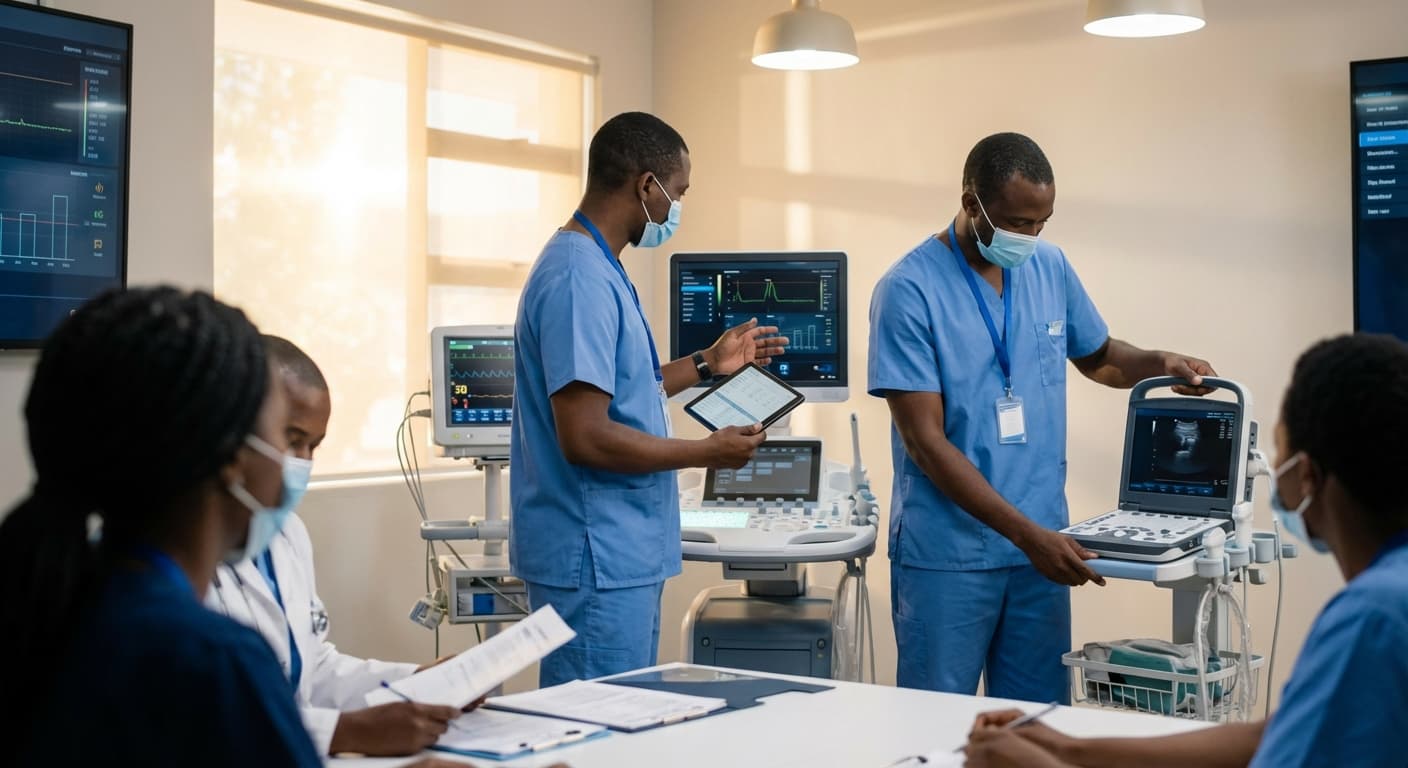
Clinical Needs Assessment for Medical Equipment in Zambia
Engineering Excellence & Technical Support
Clinical Needs Assessment for Medical Equipment High-standard technical execution following OEM protocols and local regulatory frameworks.
Prioritized Equipment Gaps & Needs
Detailed identification of essential medical equipment shortages across Zambian healthcare facilities, prioritized by impact on patient outcomes and service delivery based on robust data analysis and stakeholder consultations.
Data-Driven Equipment Lifecycle Planning
Implementation of a data-driven framework for forecasting equipment acquisition, maintenance, and replacement cycles, ensuring sustainable availability of functional medical technology and optimizing resource allocation within the Zambian healthcare system.
Needs Alignment with National Health Strategies
Ensuring all medical equipment needs assessments are directly aligned with Zambia's national health policies and strategic objectives, promoting equitable access to appropriate and essential technologies that address the country's most pressing health challenges.
What Is Clinical Needs Assessment For Medical Equipment In Zambia?
A Clinical Needs Assessment for Medical Equipment in Zambia is a systematic and evidence-based process designed to identify, prioritize, and quantify the medical equipment requirements of healthcare facilities and the broader healthcare system. It involves a comprehensive evaluation of existing infrastructure, clinical service delivery models, patient demographics, disease prevalence, available human resources, and projected healthcare demands. The primary objective is to ensure that healthcare providers have access to appropriate, functional, and adequately maintained medical equipment to deliver safe, effective, and quality patient care.
| Who Needs This Service? | Typical Use Cases | ||
|---|---|---|---|
| Ministry of Health (MoH) of Zambia: For national health infrastructure planning, resource allocation, and policy development concerning medical equipment procurement and management. | Developing national medical equipment procurement strategies and frameworks. | Planning for upgrades and expansions of public healthcare facilities. | Responding to public health emergencies and disease outbreaks by identifying critical equipment shortages. |
| Provincial and District Health Offices: To align equipment provision with regional health priorities and to manage the equipment portfolio at the sub-national level. | Planning equipment procurement for district hospitals and health centers. | Assessing the needs of specific geographic areas with unique health challenges. | Developing regional maintenance and repair networks. |
| Individual Healthcare Facilities (Hospitals, Clinics, Specialized Centers): To understand their specific equipment gaps and to justify procurement requests. | Developing business cases for new equipment acquisition or replacement. | Planning for the establishment of new service lines or departments (e.g., Intensive Care Units, diagnostic imaging centers). | Conducting a gap analysis before embarking on a major renovation or expansion. |
| Non-Governmental Organizations (NGOs) and Development Partners: To guide their investment in healthcare infrastructure and equipment in Zambia. | Designing and implementing equipment donation and support programs. | Identifying priority areas for funding and technical assistance in the health sector. | Ensuring that donated or funded equipment aligns with the needs of the recipient facilities and the national health strategy. |
| Medical Equipment Suppliers and Manufacturers: To understand the market demands and to tailor their product offerings. | Identifying specific equipment types and quantities required by the Zambian healthcare market. | Developing targeted sales and distribution strategies. | Providing technical specifications that meet the assessed needs. |
Key Components of a Clinical Needs Assessment for Medical Equipment in Zambia
- Facility Inventory and Condition Assessment: Cataloging all existing medical equipment, assessing its functional status, age, maintenance history, and suitability for current clinical protocols.
- Service Delivery Gap Analysis: Identifying disparities between the current equipment inventory and the equipment required to deliver essential and specialized clinical services according to national guidelines and international best practices.
- Clinical Workload and Demand Forecasting: Analyzing patient volume, treatment protocols, and projected epidemiological trends to determine the volume and type of equipment needed.
- Human Resource Capacity Evaluation: Assessing the availability of trained personnel to operate and maintain the identified equipment.
- Infrastructure and Utilities Assessment: Verifying that existing power supply, environmental controls (e.g., ventilation, temperature), and space are adequate for the proposed equipment.
- Procurement and Logistics Planning: Informing decisions on equipment acquisition, including specifications, quantity, procurement channels, and installation requirements.
- Training and Maintenance Strategy Development: Outlining needs for user training, technical maintenance, and spare parts management.
- Cost-Benefit Analysis and Prioritization: Evaluating the economic feasibility of proposed equipment acquisitions and prioritizing needs based on impact on patient outcomes, cost-effectiveness, and resource availability.
Who Needs Clinical Needs Assessment For Medical Equipment In Zambia?
Ensuring that healthcare facilities in Zambia are equipped with the right medical technology is crucial for delivering effective patient care. A comprehensive clinical needs assessment for medical equipment is not a one-size-fits-all process; it's a strategic investment targeted at specific entities that directly influence the quality, accessibility, and efficiency of healthcare services. Identifying the right beneficiaries ensures that resources are allocated optimally, leading to improved health outcomes for the Zambian population.
| Target Customer/Entity | Key Departments Involved | Primary Needs for Assessment | Impact of Assessment |
|---|---|---|---|
| Public Hospitals (Central, Provincial, District) | Clinical Departments (Surgery, Medicine, Pediatrics, etc.), Biomedical Engineering, Procurement, Administration, IT | Upgrading outdated equipment, identifying gaps for new services, ensuring interoperability, maintenance planning, technology obsolescence | Improved diagnostic accuracy, enhanced treatment capabilities, reduced patient waiting times, efficient resource utilization |
| Mission/Church-run Hospitals | Clinical Departments, Administration, Finance, Biomedical Services (if available) | Resource optimization, identifying critical equipment needs within budget constraints, ensuring sustainability of equipment, training for local staff | Expanded service delivery in underserved areas, continuity of care, cost-effective solutions for community health |
| Private Hospitals and Clinics | Specialty Departments, Clinical Leads, Administration, Operations, Finance | Acquiring cutting-edge technology for competitive advantage, enhancing patient experience, expanding service offerings, compliance with regulatory standards | Higher patient satisfaction, increased revenue generation, attracting specialized medical professionals, offering advanced treatment options |
| Specialty Clinics (e.g., Cardiac, Oncology, Dialysis) | Specialist Clinicians, Technicians, Nursing Staff, Biomedical Engineering, Administration | Identifying highly specialized equipment for specific treatments, ensuring advanced diagnostic capabilities, software and network integration, staff training on complex machinery | Improved patient outcomes for specific complex diseases, access to specialized care locally, reduced need for overseas referrals |
| Diagnostic Centers (e.g., Imaging, Pathology) | Radiologists, Pathologists, Technologists, Biomedical Technicians, IT Department | Acquiring advanced imaging modalities (MRI, CT), upgrading laboratory equipment (analyzers, microscopes), ensuring data management and PACS systems, calibration and quality control | Faster and more accurate diagnoses, reduced turnaround times for test results, enhanced screening programs, improved public health surveillance |
| Rural Health Centers and Clinics | General Practitioners, Clinical Officers, Nurses, Community Health Workers, District Health Management Teams | Basic essential equipment for primary care, point-of-care testing devices, ruggedized and low-maintenance equipment, power-efficient solutions, training on operation and basic maintenance | Increased access to essential healthcare services in remote areas, early detection of common ailments, reduced burden on distant hospitals, improved maternal and child health outcomes |
| Tertiary and Referral Centers | Highly specialized clinical teams, advanced research departments, teaching staff, biomedical engineers, IT specialists | State-of-the-art equipment for complex procedures, research-grade instruments, advanced imaging and surgical technology, integrated IT infrastructure, continuous technology upgrades | Becoming centers of excellence, facilitating medical research and innovation, training future medical professionals, handling the most complex medical cases |
| Medical Training Institutions | Medical Faculty, Clinical Skills Labs, Biomedical Engineering Departments, Simulation Centers | Equipment for hands-on training of medical students and professionals, simulators for surgical and diagnostic procedures, functional basic and advanced medical equipment mirroring hospital settings | Producing well-trained healthcare professionals, ensuring practical skills development, familiarizing future practitioners with modern medical technology |
| Non-Governmental Organizations (NGOs) operating healthcare facilities | Program Managers, Clinical Staff, Operations, Logistics | Needs aligned with specific program goals (e.g., maternal health, HIV/AIDS, NCDs), cost-effective and durable equipment, training for local staff, integration with existing health systems | Targeted health interventions, reaching vulnerable populations, complementing government healthcare efforts, sustainable service delivery |
Who Needs Clinical Needs Assessment for Medical Equipment in Zambia?
- Public Hospitals (Central, Provincial, and District)
- Mission/Church-run Hospitals
- Private Hospitals and Clinics
- Specialty Clinics (e.g., Cardiac, Oncology, Dialysis)
- Diagnostic Centers (e.g., Imaging, Pathology)
- Rural Health Centers and Clinics
- Tertiary and Referral Centers
- Medical Training Institutions (for practical training facilities)
- Non-Governmental Organizations (NGOs) operating healthcare facilities
Clinical Needs Assessment For Medical Equipment Process In Zambia
This document outlines the workflow for a Clinical Needs Assessment for Medical Equipment in Zambia, from the initial inquiry to the final execution. The process is designed to ensure that medical facilities acquire appropriate and essential equipment to meet patient care demands and improve healthcare service delivery. It involves multiple stakeholders, including healthcare professionals, hospital administrators, procurement officers, and potentially government health ministries.
| Stage Number | Stage Name | Key Activities | Responsible Parties |
|---|---|---|---|
| 1 | Inquiry/Initiation | Identification of need, formal request submission | Healthcare Facility, Regional Health Offices |
| 2 | Needs Identification & Justification | Defining equipment requirements, clinical rationale, impact assessment | Clinical Staff, Department Heads, Facility Management |
| 3 | Preliminary Review & Prioritization | Assessing urgency, feasibility, alignment with national priorities, initial ranking | Ministry of Health (Central Committee/Designated Authority) |
| 4 | Detailed Needs Assessment & Specification Development | Expert evaluation of technical specs, performance, maintenance, costs; document finalization | Clinical Experts, Technical Specialists, Procurement Unit |
| 5 | Budget Allocation & Approval | Securing funding, budget appropriation, formal approval for procurement | Ministry of Finance, Ministry of Health, National Assembly (if applicable) |
| 6 | Procurement Process | Tendering, supplier evaluation, contract negotiation and award | Procurement Unit, Tender Committee, Ministry of Health |
| 7 | Equipment Delivery & Installation | Logistics, transportation, on-site installation, initial testing | Suppliers, Logistics Teams, Biomedical Engineers |
| 8 | Training & Commissioning | User training, final checks, formal operational sign-off | Suppliers, Biomedical Engineers, Clinical Users, Facility Management |
| 9 | Post-Installation Monitoring & Evaluation | Usage tracking, performance assessment, impact on patient care, feedback collection | Facility Management, Biomedical Engineers, Clinical Users, Ministry of Health (Monitoring & Evaluation) |
| 10 | Maintenance & Support | Preventive maintenance, repairs, consumables management, service agreements | Biomedical Engineering Department, Service Providers, Suppliers |
Workflow Stages and Descriptions
- {"stage":"1. Inquiry/Initiation","description":"This is the starting point where a need for new or upgraded medical equipment is identified by a healthcare facility or a regional health office. An official request or inquiry is formally submitted, usually to the relevant Ministry of Health department or a designated procurement body."}
- {"stage":"2. Needs Identification & Justification","description":"The requesting facility provides detailed information about the specific equipment required, the clinical rationale behind the request (e.g., patient demographics, disease prevalence, existing equipment gaps, technological advancements), and the expected impact on patient care. This stage involves consultation with clinical staff and department heads."}
- {"stage":"3. Preliminary Review & Prioritization","description":"The submitted inquiry is reviewed by a central committee or designated authority. This involves assessing the urgency, feasibility, and alignment of the request with national health priorities and available budgets. A preliminary prioritization of needs across different facilities may occur here."}
- {"stage":"4. Detailed Needs Assessment & Specification Development","description":"For prioritized needs, a more in-depth assessment is conducted. This involves clinical experts evaluating the technical specifications, performance requirements, maintenance needs, training implications, and cost-effectiveness of the proposed equipment. Standardized specification documents are developed or updated."}
- {"stage":"5. Budget Allocation & Approval","description":"Based on the detailed specifications and estimated costs, funding is sought and allocated. This may involve national budget approvals, donor funding, or other financial mechanisms. The procurement is formally approved by the relevant financial and administrative authorities."}
- {"stage":"6. Procurement Process","description":"This stage follows standard government procurement regulations. It typically involves tendering processes (open bidding, restricted bidding), evaluation of proposals from potential suppliers based on technical and financial criteria, and awarding of contracts."}
- {"stage":"7. Equipment Delivery & Installation","description":"Once procured, the medical equipment is delivered to the designated healthcare facility. Trained technicians ensure proper installation, calibration, and initial testing to verify functionality."}
- {"stage":"8. Training & Commissioning","description":"Healthcare professionals who will operate the equipment receive comprehensive training. After successful training and operational checks, the equipment is formally commissioned and made ready for clinical use."}
- {"stage":"9. Post-Installation Monitoring & Evaluation","description":"The performance and impact of the newly acquired equipment are monitored. This includes tracking usage, maintenance records, and patient outcomes. Feedback is gathered to inform future procurement decisions and identify any challenges or areas for improvement."}
- {"stage":"10. Maintenance & Support","description":"A plan for ongoing maintenance, repair, and supply of consumables is established and implemented to ensure the longevity and effective functioning of the equipment."}
Clinical Needs Assessment For Medical Equipment Cost In Zambia
This clinical needs assessment for medical equipment in Zambia focuses on understanding the pricing factors and ranges of essential medical devices within the local currency (Zambian Kwacha - ZMW). Accurately assessing equipment costs is crucial for effective healthcare planning, budget allocation, and ensuring the availability of necessary medical tools for patient care. The pricing of medical equipment is influenced by a complex interplay of global and local economic factors, as well as specific equipment characteristics.
Key Pricing Factors for Medical Equipment in Zambia:
- Import Duties and Taxes: Zambia levies import duties, VAT (Value Added Tax), and other taxes on imported medical equipment. These significantly increase the landed cost of goods.
- Supplier Markups and Distribution Costs: Local distributors and suppliers add their profit margins. This also includes costs associated with warehousing, transportation within Zambia, and sales force expenses.
- Currency Exchange Rates: The ZMW's volatility against major international currencies (USD, EUR) directly impacts the cost of imported equipment. Fluctuations can lead to significant price variations.
- Brand and Manufacturer Reputation: Reputable international brands often command higher prices due to perceived quality, reliability, and after-sales support. Generic or lesser-known brands may be more affordable.
- Technology and Features: Advanced features, sophisticated technology, and higher precision generally lead to increased equipment costs.
- Warranty and After-Sales Service: Comprehensive warranty periods and accessible local technical support and spare parts availability can add to the initial purchase price but are vital for long-term operational efficiency.
- Volume and Bulk Purchases: Larger orders can sometimes negotiate discounts from suppliers.
- Condition of Equipment: New equipment will naturally be more expensive than refurbished or used equipment. The latter can be a viable option for cost-conscious institutions, provided thorough inspection and certification.
- Local Availability and Lead Times: Equipment readily available locally might have slightly different pricing compared to items that require significant lead times for import, factoring in potential expediting fees and risk.
- Regulatory Compliance and Certification: Equipment meeting specific international and local regulatory standards might have higher manufacturing costs, which are passed on to the consumer.
Pricing Ranges (Illustrative - in Zambian Kwacha - ZMW):
It is important to note that these are illustrative ranges and actual prices can vary considerably based on the specific model, supplier, and prevailing market conditions at the time of purchase. These figures are an estimation for newly manufactured equipment, and refurbished options would typically be lower. It is highly recommended to obtain specific quotes from multiple suppliers for accurate budgeting.
This assessment highlights the need for a nuanced approach to medical equipment procurement in Zambia, considering both the immediate purchase price and the long-term total cost of ownership.
| Equipment Category | Typical Unit (Examples) | Illustrative Price Range (ZMW) | Notes/Considerations |
|---|---|---|---|
| Diagnostic Imaging Equipment | X-ray Machine (Basic) | 80,000 - 400,000 | Price varies significantly with portability, power, and digital capabilities. |
| Diagnostic Imaging Equipment | Ultrasound Machine ( portátil, basic) | 70,000 - 300,000 | Color Doppler and advanced probes increase cost. |
| Diagnostic Imaging Equipment | ECG Machine (12-lead) | 15,000 - 60,000 | Features like built-in printers and interpretation software impact price. |
| Laboratory Equipment | Microscope (Binocular) | 8,000 - 40,000 | Magnification power, illumination, and stage quality are key. |
| Laboratory Equipment | Centrifuge (Benchtop, basic) | 5,000 - 25,000 | Speed, capacity, and temperature control affect pricing. |
| Laboratory Equipment | Hematology Analyzer (Semi-auto) | 40,000 - 150,000 | Reagent costs and complexity of analysis. |
| Surgical and Operating Room Equipment | Operating Table (Manual) | 50,000 - 250,000 | Motorized and specialized tables are significantly more expensive. |
| Surgical and Operating Room Equipment | Surgical Suction Unit (Portable) | 7,000 - 30,000 | Power source (battery/mains) and canister type. |
| Surgical and Operating Room Equipment | Anesthesia Machine (Basic) | 150,000 - 700,000 | Ventilator integration and advanced monitoring increase cost. |
| Patient Monitoring Equipment | Patient Monitor (Basic Vital Signs) | 10,000 - 50,000 | Number of parameters (ECG, SpO2, NIBP, Temp). |
| Patient Monitoring Equipment | Infusion Pump | 10,000 - 40,000 | Flow rate accuracy, programming features, and safety alarms. |
| Patient Monitoring Equipment | Pulse Oximeter (Portable) | 3,000 - 15,000 | Finger probe type and display clarity. |
| General Healthcare Furniture and Fixtures | Hospital Bed (Manual) | 5,000 - 20,000 | Adjustable features and material quality. |
| General Healthcare Furniture and Fixtures | Medical Trolley/Cart | 3,000 - 15,000 | Size, material, and number of shelves/drawers. |
| Sterilization and Infection Control Equipment | Autoclave (Tabletop, small) | 15,000 - 70,000 | Chamber size, cycle types, and safety features. |
| Sterilization and Infection Control Equipment | Disinfectant Sprayer (Electric) | 2,000 - 10,000 | Capacity and spray pattern. |
Common Medical Equipment Categories and Illustrative Price Ranges in Zambia (ZMW)
- Diagnostic Imaging Equipment
- Laboratory Equipment
- Surgical and Operating Room Equipment
- Patient Monitoring Equipment
- General Healthcare Furniture and Fixtures
- Sterilization and Infection Control Equipment
Affordable Clinical Needs Assessment For Medical Equipment Options
This assessment focuses on providing cost-effective solutions for your clinical needs. We aim to optimize your medical equipment acquisition by identifying essential functionalities and leveraging value bundles and strategic purchasing. Our goal is to ensure you receive high-quality, appropriate equipment without unnecessary expenditure, maximizing your return on investment and ensuring patient care remains paramount.
| Equipment Category | Core Clinical Need | Potential Value Bundle Components | Cost-Saving Opportunities |
|---|---|---|---|
| Diagnostic Imaging (e.g., Ultrasound) | High-resolution imaging for patient diagnosis and monitoring. | Ultrasound unit, specialized probes, PACS integration software, initial training, extended service contract. | Bundle discount on unit and probes, bundled software integration, negotiated service contract rates. |
| Patient Monitoring Systems | Continuous tracking of vital signs (ECG, SpO2, NIBP) for critical care. | Central monitoring station, bedside monitors, wireless connectivity, installation, staff training, software updates. | Volume discount for multiple bedside monitors, integrated wireless solution, bundled installation and training. |
| Surgical Instruments | Essential tools for various surgical procedures. | Set of specialized instruments, sterilization trays, instrument repair and maintenance plan. | Bulk purchase of instrument sets, bundled repair and maintenance package, long-term supply agreements. |
| Laboratory Analyzers | Automated testing of blood, urine, and other samples. | Analyzer unit, reagents, quality control materials, calibration services, remote diagnostics. | Bundled reagent and QC material supply, service contract with remote diagnostics, potential for certified pre-owned analyzers. |
| Therapeutic Devices (e.g., Ventilators) | Support for patients with respiratory distress. | Ventilator unit, humidification system, filters, maintenance kit, operator training. | Bundle discount on ventilator and accessories, negotiated maintenance kit pricing, upfront training to reduce future service calls. |
Key Cost-Saving Strategies:
- Value Bundling: Acquiring a suite of related equipment or services from a single vendor at a discounted price compared to purchasing items individually. This can include hardware, software, training, and maintenance packages.
- Needs-Based Procurement: Prioritizing equipment based on direct clinical requirements, avoiding over-speccing or purchasing features that will not be utilized. Thoroughly defining functional needs is crucial.
- Refurbished and Certified Pre-Owned Equipment: Exploring options for high-quality, professionally refurbished medical equipment that meets rigorous standards. This can offer significant savings over new equipment.
- Leasing vs. Purchasing Analysis: Evaluating the long-term financial implications of leasing versus outright purchasing equipment, considering usage patterns, technological obsolescence, and capital availability.
- Bulk Purchasing Discounts: If multiple departments or facilities have similar needs, consolidating orders can lead to substantial volume discounts.
- Negotiation and Competitive Bidding: Actively engaging in price negotiations and soliciting bids from multiple reputable suppliers to ensure the most competitive pricing.
- Extended Warranties and Service Contracts: Strategically selecting warranty periods and service contracts based on equipment criticality and expected lifespan to manage long-term maintenance costs.
- Phased Implementation: For larger equipment projects, consider a phased approach to purchasing and implementation, spreading costs over time and allowing for adjustments based on early performance.
Verified Providers In Zambia
In Zambia's evolving healthcare landscape, access to verified and trustworthy providers is paramount. Franance Health stands out as a leader, offering a robust network of credentialed healthcare professionals and institutions. Their rigorous vetting process ensures that every provider within their network meets stringent standards for quality, ethics, and patient care. This commitment to verification not only builds trust but also guarantees that patients receive the highest caliber of medical attention. Choosing Franance Health means choosing peace of mind, knowing you are in the hands of qualified and accountable healthcare experts.
| Provider Type | Franance Health Verification Focus | Patient Benefit |
|---|---|---|
| General Practitioners | Valid Medical License, Continued Professional Development (CPD) records, practice audits | Access to competent primary care physicians with up-to-date knowledge. |
| Specialist Doctors (e.g., Cardiologists, Pediatricians) | Specialty board certifications, fellowship training verification, peer reviews | Confidence in receiving expert care from highly qualified specialists. |
| Hospitals and Clinics | Accreditation status (e.g., Ministry of Health approvals), adherence to safety protocols, infrastructure assessment | Safe and well-equipped healthcare facilities with standardized operational procedures. |
| Diagnostic Laboratories | Laboratory accreditation, quality control measures, staff qualifications | Accurate and reliable diagnostic results from trusted labs. |
| Pharmacies | Valid operating licenses, pharmacist registration, dispensing protocols | Access to genuine medications dispensed by qualified pharmacists. |
Why Franance Health is the Top Choice for Verified Providers:
- Rigorous Credentialing: Franance Health employs a multi-faceted verification process that scrutinizes medical licenses, professional certifications, and educational backgrounds of all affiliated providers.
- Commitment to Quality: Beyond basic credentials, Franance Health assesses providers on their track record, patient feedback, and adherence to best medical practices.
- Ethical Standards: A strong emphasis is placed on ethical conduct and patient-centered care, ensuring providers operate with integrity and compassion.
- Comprehensive Network: Franance Health offers a wide range of specialists and facilities, catering to diverse healthcare needs across Zambia.
- Transparency and Trust: By making provider credentials readily accessible, Franance Health fosters transparency and empowers patients to make informed decisions.
- Continuous Monitoring: The vetting process is not a one-time event; Franance Health continuously monitors its network to maintain the highest standards.
Scope Of Work For Clinical Needs Assessment For Medical Equipment
This Scope of Work (SOW) outlines the requirements for a comprehensive Clinical Needs Assessment for medical equipment for [Healthcare Facility Name/Department]. The objective is to identify, prioritize, and define the technical specifications of medical equipment required to meet current and future clinical demands, enhance patient care, and optimize operational efficiency. The assessment will involve a thorough review of existing equipment, clinical workflows, patient demographics, and strategic growth plans.
| Phase | Activity | Deliverables | Timeline (Weeks) |
|---|---|---|---|
| Phase 1: Planning & Preparation | Define project scope, team, and methodology. Review existing equipment inventory and maintenance records. Conduct initial stakeholder interviews. | Project Plan. Existing Equipment Inventory Report. Stakeholder Interview Summaries. | 2 |
| Phase 2: Clinical Workflow Analysis | Map current clinical workflows for key departments/specialties. Identify pain points and inefficiencies related to equipment. Gather user requirements from clinicians and technical staff. | Clinical Workflow Diagrams. User Requirement Documents (per department/specialty). | 4 |
| Phase 3: Equipment Identification & Prioritization | Identify potential equipment solutions based on workflow analysis and identified gaps. Prioritize equipment needs using a defined scoring matrix (e.g., clinical impact, cost, safety). Conduct preliminary market research for viable equipment options. | Prioritized List of Equipment Needs. Preliminary Equipment Options Report. | 3 |
| Phase 4: Technical Specification Development | For each prioritized equipment item, develop detailed technical specifications. Include functional requirements, performance criteria, safety standards, integration needs, and usability features. Define maintenance and serviceability requirements. | Detailed Technical Specifications for each identified equipment item. Integration Requirements Document. | 5 |
| Phase 5: Reporting & Recommendations | Consolidate all findings into a comprehensive report. Provide recommendations for procurement, implementation, training, and budget allocation. Present findings to stakeholders. | Final Clinical Needs Assessment Report. Executive Summary. Implementation Roadmap. Budgetary Estimate (preliminary). | 2 |
Key Objectives of the Needs Assessment
- Identify gaps in current medical equipment inventory.
- Prioritize equipment needs based on clinical impact, patient safety, and return on investment.
- Define functional and technical specifications for new and replacement equipment.
- Assess integration requirements with existing IT infrastructure (e.g., EMR, PACS).
- Evaluate training and support needs for clinical and technical staff.
- Contribute to the development of a long-term medical equipment procurement and replacement strategy.
Service Level Agreement For Clinical Needs Assessment For Medical Equipment
This Service Level Agreement (SLA) outlines the terms and conditions regarding the clinical needs assessment for medical equipment, focusing on response times for initial consultations and uptime guarantees for provided assessment platforms. It aims to ensure timely and efficient identification of clinical requirements for medical equipment procurement, installation, and ongoing use.
| Service Component | Service Level Objective (SLO) | Measurement Method | Remedy for Non-Compliance |
|---|---|---|---|
| Initial Consultation Scheduling | Within 3 business days of request | Date/time of client request receipt and date/time of confirmation of scheduled consultation. | Discount of 5% on the next service engagement. If recurring, a credit of 10% of the value of the delayed consultation. |
| Response to Clarification Queries (during CNA process) | Within 1 business day | Timestamp of client query and timestamp of provider's initial response. | Escalation to a senior assessment specialist. If repeated, a waiver of 2% of the current service fee. |
| Assessment Platform Uptime (if applicable) | 99.5% during business hours (9 AM - 5 PM local client time, Monday-Friday, excluding public holidays) | Automated monitoring tools tracking platform availability. Calculated monthly. | Service credit equivalent to 2% of the monthly platform subscription fee for every 0.5% or portion thereof of uptime below the guaranteed level. |
| Scheduled Maintenance Notifications | Minimum 48 hours advance notice | Date/time of notification to the client and the scheduled maintenance window. | If notification is less than 48 hours, the client is entitled to a 5% discount on the next scheduled assessment phase. |
| Resolution of Critical Platform Issues (impacting CNA progress) | Within 4 business hours | Timestamp of issue report and timestamp of issue resolution. | Service credit equivalent to 1% of the monthly platform subscription fee for every 4-hour increment of unresolved critical issue beyond the stated resolution time. |
Key Definitions
- Clinical Needs Assessment (CNA): The process of identifying and documenting the specific clinical requirements, functionalities, and performance standards of medical equipment to meet patient care objectives.
- Initial Consultation: The first scheduled meeting between the client (healthcare facility) and the service provider's clinical assessment specialist to discuss the project scope and initial requirements.
- Response Time: The maximum allowable time from a request for service (e.g., scheduling an initial consultation, reporting an issue with the assessment platform) to the initiation of a response by the service provider.
- Uptime: The percentage of time that the assessment platform (if applicable and provided by the service provider) is available and fully operational.
- Scheduled Maintenance: Planned downtime for updates, upgrades, or system checks, communicated to the client in advance.
- Downtime: Any period when the assessment platform is unavailable to the client, excluding Scheduled Maintenance and Unforeseen Circumstances.
Frequently Asked Questions

Ready when you are
Let's scope your Clinical Needs Assessment for Medical Equipment in Zambia project in Zambia.

Scaling healthcare logistics and technical systems across the entire continent.