
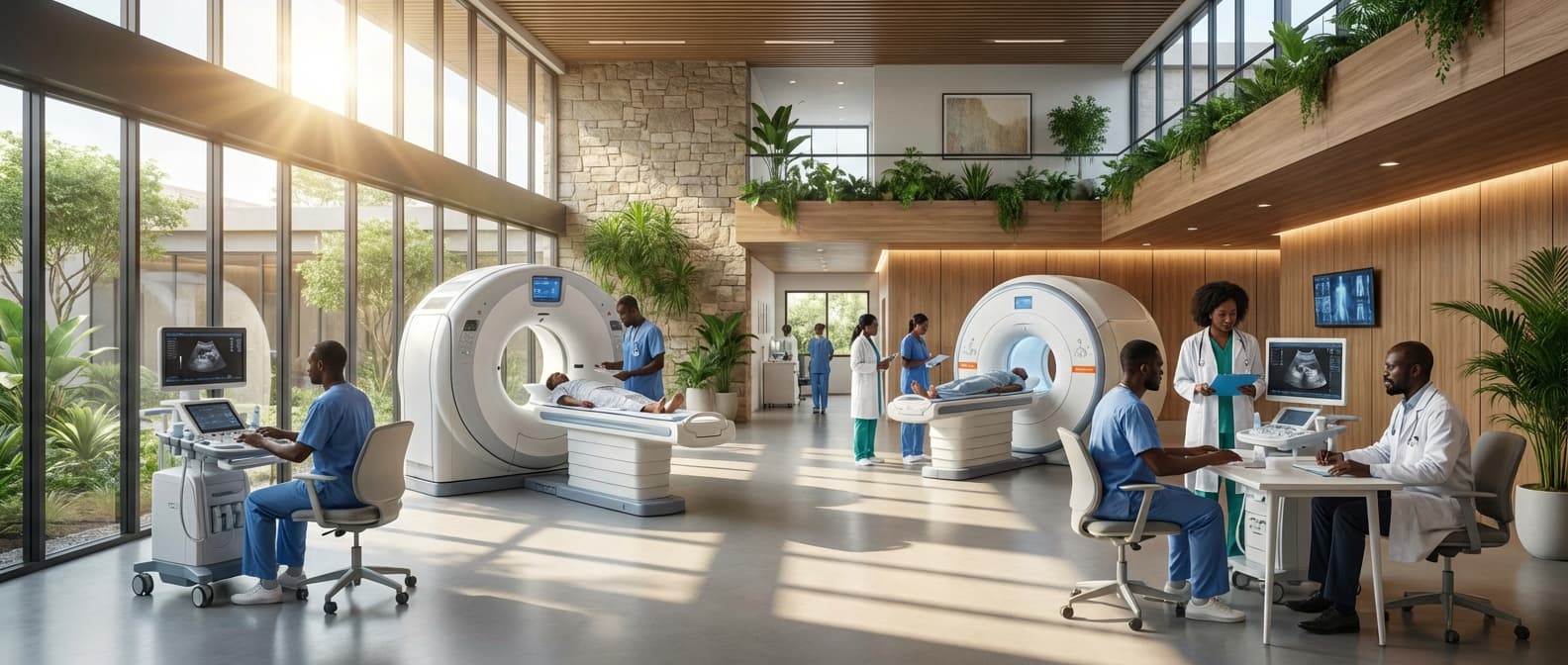
Endoscopy Solutions in Zambia
Engineering Excellence & Technical Support
Advanced endoscopic equipment delivering superior visualization and diagnostic precision for minimally invasive procedures. High-standard technical execution following OEM protocols and local regulatory frameworks.
Advanced Diagnostic Endoscopes
Introducing state-of-the-art high-definition endoscopes with advanced imaging capabilities, offering unparalleled visualization for accurate diagnosis of gastrointestinal and respiratory conditions across Zambia.
Minimally Invasive Therapeutic Tools
Empowering Zambian healthcare professionals with a comprehensive suite of minimally invasive therapeutic devices, enabling precise interventions for polyp removal, stricture dilation, and foreign body retrieval, reducing patient recovery times.
Zambian Clinical Education Initiatives
Our commitment extends to robust training programs and ongoing support for Zambian medical teams, fostering expertise in the latest endoscopic techniques and ensuring optimal patient outcomes through knowledge transfer.
What Is Endoscopy Solutions In Zambia?
Endoscopy solutions in Zambia refer to the provision and application of endoscopic procedures and related technologies for diagnostic and therapeutic purposes within the Zambian healthcare system. Endoscopy is a minimally invasive medical specialty that utilizes an endoscope, a flexible or rigid tube equipped with a light and camera, to visualize internal organs and structures.
| Who Needs Endoscopy Solutions in Zambia? | Typical Use Cases |
|---|---|
| Patients presenting with persistent gastrointestinal symptoms such as abdominal pain, heartburn, dysphagia, nausea, vomiting, chronic diarrhea, constipation, or rectal bleeding. | Diagnosis and management of peptic ulcers, gastritis, esophagitis, inflammatory bowel disease (Crohn's disease, ulcerative colitis), gastrointestinal cancers (esophageal, gastric, colorectal), and celiac disease. |
| Individuals with suspected or diagnosed upper or lower gastrointestinal bleeding. | Hemostasis of actively bleeding lesions (e.g., ulcers, varices) using various endoscopic techniques like clipping, banding, injection therapy, or cautery. |
| Patients requiring screening or surveillance for colorectal cancer. | Colonoscopic screening for adenomatous polyps and early-stage colorectal cancer, followed by polypectomy of detected polyps. |
| Individuals with suspected lung pathology, chronic cough, hemoptysis, or occupational lung diseases. | Bronchoscopic examination to visualize the airways, obtain biopsies, diagnose infections (e.g., tuberculosis), or remove aspirated foreign bodies. |
| Patients with urinary tract abnormalities, recurrent urinary tract infections, hematuria, or suspected bladder or ureteral stones. | Cystoscopic examination for the evaluation of bladder tumors, interstitial cystitis, or assessment of ureteral obstructions, and potentially therapeutic interventions like stone removal or stent placement. |
| Patients with suspected biliary or pancreatic duct abnormalities. | ERCP for diagnosis and management of gallstones in the common bile duct, strictures, tumors of the bile ducts or pancreas, and for drainage of pancreatic pseudocysts. |
| Individuals with unexplained weight loss or suspected malignancy in the gastrointestinal tract. | Endoscopic ultrasound (EUS) for detailed imaging of the gastrointestinal wall and adjacent organs, staging of cancers, and fine-needle aspiration (FNA) of suspicious lesions. |
| Patients with known or suspected gastrointestinal polyps requiring removal. | Polypectomy during diagnostic or surveillance colonoscopies to prevent malignant transformation. |
| Individuals with dysphagia or esophageal strictures. | Esophageal dilation using balloon or bougie dilators during endoscopy to relieve obstruction. |
| Patients with suspected foreign bodies in the gastrointestinal or respiratory tract. | Endoscopic retrieval of ingested or inhaled foreign objects. |
Key Components of Endoscopy Solutions in Zambia:
- Diagnostic Endoscopy: Utilizing endoscopes to visualize the gastrointestinal tract (esophagus, stomach, duodenum, colon, rectum), respiratory tract (larynx, trachea, bronchi), urinary tract (bladder, ureters), and other internal cavities for the identification of abnormalities, inflammation, lesions, or foreign bodies.
- Therapeutic Endoscopy: Employing endoscopic techniques to perform interventions such as polyp removal (polypectomy), bleeding control (hemostasis), stricture dilation, foreign body retrieval, stent placement, and minimally invasive surgical procedures (e.g., endoscopic retrograde cholangiopancreatography - ERCP).
- Advanced Endoscopic Technologies: Integration of high-definition imaging, narrow-band imaging (NBI), confocal laser endomicroscopy (CLE), and endoscopic ultrasound (EUS) to enhance diagnostic accuracy and therapeutic capabilities.
- Equipment and Instrumentation: Provision and maintenance of a range of endoscopic equipment, including gastroscopes, colonoscopes, bronchoscopes, cystoscopes, and associated accessories (biopsy forceps, snares, injection needles, retrieval devices).
- Trained Personnel: Availability of qualified and experienced gastroenterologists, pulmonologists, urologists, surgeons, and endoscopy nurses who are proficient in performing endoscopic procedures and interpreting findings.
- Ancillary Services: Supporting services such as sedation and anesthesia administration, pathology services for specimen analysis, and post-procedure care and monitoring.
- Infrastructure: Dedicated endoscopy suites or rooms within healthcare facilities equipped with the necessary infrastructure for patient preparation, procedure execution, and recovery.
Who Needs Endoscopy Solutions In Zambia?
Endoscopy solutions are critical for diagnosing and treating a wide range of gastrointestinal and pulmonary conditions. In Zambia, these advanced medical technologies are essential for improving patient outcomes, reducing the need for invasive surgery, and enhancing the capabilities of healthcare providers across various settings.
| Department | Primary Endoscopy Needs | Key Procedures |
|---|---|---|
| Gastroenterology | Gastroscopes, Colonoscopes, Duodenoscopes, Endoscopic Ultrasound (EUS) | Upper GI endoscopy (EGD), Colonoscopy, Sigmoidoscopy, Polypectomy, Biopsy, Stricture dilation, Foreign body removal, EUS for staging and tissue sampling |
| Pulmonology | Bronchoscopes | Diagnostic bronchoscopy, Bronchoalveolar lavage (BAL), Biopsy, Foreign body removal, Airway stenting |
| Ear, Nose, and Throat (ENT) | Flexible and Rigid Nasopharyngoscopes, Laryngoscopes | Nasal endoscopy, Sinus endoscopy, Laryngoscopy for voice disorders, swallowing assessments, and lesion evaluation |
| Surgery (General & Colorectal) | Colonoscopes (for pre-operative assessment and post-operative surveillance), Laparoscopes (for diagnostic and operative procedures) | Colonoscopy for cancer screening and surveillance, Laparoscopic surgery |
| Anesthesiology | Equipment for Sedation and Airway Management | Ensuring safe and comfortable patient experience during endoscopic procedures |
| Pathology | Tools for Tissue Sample Handling and Preservation | Proper collection and transport of biopsy specimens for histological analysis |
| Radiology | Collaboration for image interpretation (e.g., CT scans, MRIs) | Correlating endoscopic findings with imaging studies |
Target Customers & Departments for Endoscopy Solutions in Zambia
- {"title":"Public Hospitals (Tertiary & Secondary)","description":"These institutions serve the majority of the Zambian population and require robust endoscopy equipment for general diagnostics and specialized procedures. They are crucial for managing common conditions like peptic ulcers, gastritis, colorectal cancer screening, and upper airway issues."}
- {"title":"Private Hospitals & Clinics","description":"Catering to a segment of the population seeking more advanced or immediate care, these facilities often invest in state-of-the-art endoscopy equipment to offer a wider range of diagnostic and therapeutic services, including complex polyp removal, stenting, and minimally invasive interventions."}
- {"title":"Teaching Hospitals & Medical Schools","description":"Essential for training the next generation of Zambian healthcare professionals. These institutions need comprehensive endoscopy suites to provide hands-on training in diagnostic and therapeutic endoscopy, research, and the development of local expertise."}
- {"title":"Specialized Medical Centers","description":"As specialized medical fields grow in Zambia, centers focusing on gastroenterology, pulmonology, or ear, nose, and throat (ENT) will have a high demand for advanced and specialized endoscopy equipment."}
- {"title":"Government Health Ministries & Agencies","description":"Responsible for public health initiatives, disease control, and capacity building. They play a role in procurement decisions for national health programs and establishing standards for endoscopy services."}
Endoscopy Solutions Process In Zambia
This document outlines the typical workflow for Endoscopy Solutions in Zambia, from initial inquiry to the successful execution of a procedure or service. The process is designed to be comprehensive, ensuring patient safety, procedural efficiency, and clear communication throughout.
| Stage | Description | Key Activities | Responsible Parties | Expected Outcome |
|---|---|---|---|---|
| Inquiry & Initial Consultation | The process begins when a patient or referring physician contacts the endoscopy unit or clinic with a request for an endoscopy-related service. | Patient inquiry, understanding the need, initial assessment of symptoms, discussion of potential procedures, information on costs and preparation, scheduling an initial consultation. | Patient, Referring Physician, Endoscopy Clinic/Unit Reception, Administrative Staff. | Patient understands the need for endoscopy, potential procedure options, and next steps. Appointment for consultation or direct scheduling booked. |
| Referral & Appointment Scheduling | Following the initial consultation or direct referral, a formal appointment is scheduled for the endoscopy procedure. | Physician referral (if applicable), confirmation of procedure type, physician, and date/time. Patient booking, pre-registration, and provision of preliminary information (e.g., fasting instructions). | Referring Physician, Endoscopy Unit/Clinic, Patient. | Confirmed appointment for the endoscopy procedure. Patient informed of required preparations. |
| Pre-Procedure Preparation | This stage involves all necessary preparations by the patient and the healthcare provider to ensure the procedure is safe and effective. | Patient education on dietary restrictions, medication adjustments, bowel preparation (if required for colonoscopy), medical history review, informed consent signing, necessary diagnostic tests (e.g., blood work, ECG). | Patient, Physician, Nursing Staff, Administrative Staff. | Patient is adequately prepared for the procedure. All necessary documentation and consent obtained. |
| Procedure Execution | The actual endoscopy procedure is performed by a qualified medical professional. | Patient reception and vital signs check, anesthesia/sedation administration (if applicable), the endoscopy procedure itself (e.g., gastroscopy, colonoscopy, ERCP), biopsy collection (if needed), therapeutic interventions (if performed). | Endoscopist (Gastroenterologist, Surgeon), Anesthetist (if applicable), Endoscopy Nurses, Technicians. | Successful completion of the endoscopy procedure. Any necessary biopsies or interventions performed. |
| Post-Procedure Care & Follow-up | Immediate recovery and subsequent monitoring of the patient after the endoscopy. | Recovery from anesthesia/sedation, vital signs monitoring, observation for complications, discharge instructions, scheduling of follow-up appointments, discussion of preliminary findings (if available). | Nursing Staff, Physician, Patient. | Patient is stable and safely discharged. Clear post-procedure instructions provided. Follow-up plan established. |
| Billing & Payment | The financial aspects of the endoscopy service are managed. | Generation of invoices for procedure, physician fees, and any consumables. Processing of payments from patients or insurance providers. Reconciliation of accounts. | Billing Department, Finance Department, Patient, Insurance Provider (if applicable). | Accurate billing and timely payment for services rendered. |
Endoscopy Solutions Process in Zambia: Workflow
- Inquiry & Initial Consultation
- Referral & Appointment Scheduling
- Pre-Procedure Preparation
- Procedure Execution
- Post-Procedure Care & Follow-up
- Billing & Payment
Endoscopy Solutions Cost In Zambia
Navigating the cost of endoscopy procedures in Zambia requires an understanding of several key pricing factors. These factors influence the overall expense, from the type of endoscopy performed to the specific healthcare facility chosen. Generally, the cost is quoted in Zambian Kwacha (ZMW). It's important to note that these are approximate ranges, and actual costs can vary significantly. For the most accurate pricing, direct inquiry with healthcare providers is recommended.
| Endoscopy Type | Approximate Cost Range (ZMW) |
|---|---|
| Gastroscopy (Upper Endoscopy) | 3,000 - 7,000 ZMW |
| Colonoscopy (Lower Endoscopy) | 4,000 - 9,000 ZMW |
| Sigmoidoscopy | 2,500 - 5,500 ZMW |
| Bronchoscopy | 4,500 - 10,000 ZMW |
| ERCP (Endoscopic Retrograde Cholangiopancreatography) | 8,000 - 15,000+ ZMW |
Key Pricing Factors for Endoscopy in Zambia:
- Type of Endoscopy: Different procedures involve varying levels of complexity and equipment. For example, a gastroscopy (upper endoscopy) is typically less expensive than a colonoscopy (lower endoscopy) or a more specialized procedure like an ERCP (Endoscopic Retrograde Cholangiopancreatography).
- Facility Type and Reputation: Private hospitals and specialized diagnostic centers tend to charge more than public hospitals due to differences in infrastructure, equipment, and service levels. Well-established and reputable institutions may also command higher fees.
- Inclusion of Sedation/Anesthesia: The cost of sedation or general anesthesia, if required, will be added to the base procedure fee. This is a significant factor in the overall cost.
- Diagnostic vs. Therapeutic Procedures: If the endoscopy is purely diagnostic (to identify a condition), it might be priced differently than a therapeutic endoscopy, which involves interventions like polyp removal, stenting, or bleeding control.
- Physician's Fees: The fees charged by the gastroenterologist or surgeon performing the procedure contribute to the total cost. Specialist fees can vary widely.
- Pre-procedure Tests and Consultations: Blood tests, stool samples, or initial consultations with the doctor before the endoscopy are often additional costs.
- Post-procedure Care and Follow-up: Hospital stay (if required), medications, and follow-up appointments will also add to the final bill.
- Location within Zambia: While major urban centers like Lusaka and the Copperbelt might have slightly higher costs due to demand and operating expenses, costs can also be influenced by the specific region.
Affordable Endoscopy Solutions Options
Affordable endoscopy solutions are becoming increasingly important as healthcare costs rise. Patients and providers are seeking ways to access high-quality diagnostic and therapeutic procedures without incurring exorbitant expenses. This often involves exploring different service models and adopting cost-saving strategies. Value bundles, in particular, offer a structured approach to managing costs by packaging multiple services together at a predetermined price, promoting transparency and predictability.
| Strategy/Concept | Description | Benefits | Considerations |
|---|---|---|---|
| Value Bundles | A pre-defined package of services (e.g., the procedure, pre-op testing, anesthesia, post-op follow-up) offered at a single, often discounted, price. | Increased price transparency, simplified billing, potential cost savings compared to à la carte pricing, predictable expenses. | Ensure the bundle includes all necessary components; compare bundle prices with individual service costs; verify provider network status. |
| Outpatient Surgery Centers | Facilities specializing in outpatient procedures, often with lower overhead costs than hospitals, leading to reduced procedure fees. | Potentially lower costs for the procedure itself, faster recovery times, convenient scheduling. | Verify accreditation and licensing of the center; ensure the surgeon and anesthesiologist are in your insurance network. |
| Generic Medications/Supplies | Utilizing less expensive but equally effective generic versions of medications or supplies used during or after the procedure. | Direct reduction in the cost of pharmaceuticals and consumables. | Discuss with your physician to ensure the generic alternative is appropriate and equivalent. |
| Telehealth for Follow-ups | Conducting post-procedure follow-up appointments remotely via video conferencing. | Eliminates travel costs and time off work for patients; can reduce administrative burden for providers. | Not suitable for all follow-up scenarios; ensure privacy and security of communication. |
| Negotiated Pricing/Self-Pay Discounts | Direct negotiation of fees with providers, especially for patients paying out-of-pocket, or by inquiring about self-pay discounts. | Significant savings can be achieved, particularly for individuals without insurance or with high deductibles. | Requires proactive communication and research; understand the standard pricing beforehand. |
Key Considerations for Affordable Endoscopy
- Understanding the different types of endoscopy and their associated costs.
- Exploring in-network vs. out-of-network provider pricing.
- Investigating the potential for same-day surgery centers or specialized endoscopy clinics.
- Leveraging insurance benefits and understanding co-pays, deductibles, and out-of-pocket maximums.
- Inquiring about payment plans or financial assistance programs offered by providers.
- Seeking second opinions for complex or elective procedures.
- Considering the geographical location of the facility, as costs can vary significantly by region.
Verified Providers In Zambia
In Zambia's evolving healthcare landscape, identifying reliable and trustworthy healthcare providers is paramount. Franance Health has emerged as a beacon of excellence, consistently demonstrating a commitment to quality care, ethical practices, and patient well-being. Their stringent credentialing processes and dedication to upholding the highest standards set them apart, making them the optimal choice for individuals seeking comprehensive and dependable healthcare services.
| Franance Health Credential Aspect | Description | Benefit to Patients |
|---|---|---|
| Medical Professional Licensing | Ensures all doctors and nurses hold valid, current licenses issued by the Health Professions Council of Zambia (HPCZ) and relevant regulatory bodies. | Guarantees that practitioners meet the minimum educational and competency requirements for safe medical practice. |
| Specialist Certifications | Verification of advanced training and board certifications for specialists in various medical fields. | Ensures patients receive expert care from highly qualified professionals in their specific area of need. |
| Experience and Track Record | Thorough review of a provider's professional history, including previous employment, disciplinary actions, and patient feedback. | Provides confidence in the provider's competence and established reputation for delivering effective care. |
| Continuing Professional Development (CPD) | Confirmation that providers actively participate in ongoing education and training to stay abreast of the latest medical advancements and techniques. | Ensures patients benefit from the most up-to-date diagnostic and treatment methodologies. |
| Ethical Practice Standards | Adherence to a strict code of conduct, including patient confidentiality, informed consent, and non-discrimination. | Fosters a trusting and respectful patient-provider relationship built on integrity and ethical responsibility. |
| Facility Accreditation | If applicable, verification that healthcare facilities meet established safety, hygiene, and operational standards. | Provides assurance of a safe and well-equipped environment for medical procedures and consultations. |
Why Franance Health Stands Out:
- Unwavering commitment to patient safety and quality of care.
- Rigorous vetting and credentialing of all healthcare professionals.
- Adherence to international best practices and ethical guidelines.
- Focus on continuous professional development for their medical staff.
- Transparent and patient-centric approach to healthcare delivery.
Scope Of Work For Endoscopy Solutions
This Scope of Work (SOW) outlines the technical deliverables and standard specifications for the procurement and implementation of Endoscopy Solutions. The objective is to acquire advanced endoscopic equipment and related services that meet high standards of diagnostic and therapeutic efficacy, patient safety, and operational efficiency.
| Category | Technical Deliverables | Standard Specifications | |||||
|---|---|---|---|---|---|---|---|
| Endoscope Imaging Systems | High-definition (HD) or 4K endoscopic processors and towers | Resolution: Minimum 1920x1080 (HD) or 3840x2160 (4K). | Frame Rate: Minimum 30 fps. | Light Source: LED or Xenon, with adjustable intensity and color temperature. | Image Enhancement Features: Digital zoom, freeze frame, image capture (still and video). | Compatibility: Support for various endoscope types (flexible, rigid, video). | |
| Endoscopes | Flexible and rigid endoscopes suitable for specific anatomical regions | Field of View (FOV): Minimum 120 degrees. | Working Channel Diameter: Appropriate for instrument passage (e.g., 2.8mm - 3.2mm for gastrointestinal procedures). | Insertion Tube Diameter: Appropriate for access (e.g., 9.8mm - 11.0mm for upper GI). | Angulation: Minimum Up/Down 210/100 degrees, Left/Right 100 degrees (for flexible scopes). | Durability: Resistance to cleaning and disinfection agents. | Image Transmission: Digital signal for optimal image quality. |
| Ancillary Equipment | Insufflation systems, irrigation/suction units, light sources, video monitors, and recording devices | Insufflation: CO2 or Air, with adjustable flow rate and pressure. | Irrigation/Suction: Variable flow control, independent operation. | Video Monitor: Minimum 24-inch, medical-grade, HD resolution. | Recording Device: Capable of high-resolution video and still image capture, with ample storage and easy export capabilities (e.g., USB, network). | Electrosurgical Units (ESU): Compatibility with endoscopic procedures, multiple output modes. | |
| Software and Integration | System software, patient data management, image archiving, and PACS/EMR integration | User Interface: Intuitive and easy to navigate. | Patient Data Management: Secure storage of patient demographics, procedure details, and images. | Archiving: DICOM compliant for image storage and retrieval. | Integration: Seamless integration with hospital PACS and EMR systems via DICOM and HL7 standards. | Reporting: Customizable procedural reporting templates. | Cybersecurity: Robust security protocols to protect patient data. |
| Training and Support | Comprehensive training programs and ongoing technical support | Training: On-site or remote training for clinicians (operation, troubleshooting) and biomed engineers (maintenance, repair). | Documentation: Detailed user manuals, service manuals, and training materials. | Technical Support: 24/7 availability for critical issues, defined response times. | Maintenance: Preventive maintenance schedules, on-site service options. | Warranty: Minimum 2-year comprehensive warranty on all components. |
Key Objectives
- To procure state-of-the-art endoscopy systems for various medical specialties (e.g., gastroenterology, pulmonology, urology, ENT).
- To ensure the selected solutions offer superior image quality and diagnostic accuracy.
- To facilitate minimally invasive procedures with enhanced maneuverability and control.
- To integrate the new systems with existing hospital IT infrastructure, including PACS and EMR systems.
- To provide comprehensive training for clinical and technical staff on system operation and maintenance.
- To establish robust service and support agreements for ongoing system uptime and performance.
Service Level Agreement For Endoscopy Solutions
This Service Level Agreement (SLA) outlines the response times and uptime guarantees for Endoscopy Solutions, provided by [Your Company Name] (hereinafter referred to as "Provider") to [Client Name] (hereinafter referred to as "Client"). This SLA is an appendix to the Master Service Agreement (MSA) between the Provider and Client.
| Severity Level | Description | Uptime Guarantee | Response Time (Business Hours) | Response Time (Outside Business Hours) |
|---|---|---|---|---|
| Severity 1 (Critical) | Complete service outage or critical functionality failure impacting all users and operations. | 99.9% Monthly Uptime | 1 Hour | 2 Hours |
| Severity 2 (High) | Significant degradation of service or failure of a key feature impacting a substantial number of users or operations. | 99.5% Monthly Uptime | 2 Hours | 4 Hours |
| Severity 3 (Medium) | Minor feature degradation or partial service impact affecting a limited number of users or non-critical operations. | N/A (Focus on Response) | 4 Business Hours | 8 Business Hours |
| Severity 4 (Low) | General queries, non-critical issues, or requests for information that do not impact service availability. | N/A (Focus on Response) | 1 Business Day | 2 Business Days |
Key Definitions
- Service Downtime: Any period during which the Endoscopy Solutions are unavailable to the Client due to a failure on the Provider's part, excluding Scheduled Maintenance.
- Endoscopy Solutions: Refers to the specific endoscopy hardware, software, and associated services as defined in the MSA.
- Scheduled Maintenance: Pre-announced periods of planned downtime for system updates, upgrades, or maintenance, communicated to the Client at least [Number] business days in advance.
- Business Hours: [Specify Business Hours, e.g., Monday to Friday, 8:00 AM to 6:00 PM Local Time, excluding public holidays].
- Emergency Incident: A critical system failure that significantly impacts the core functionality of the Endoscopy Solutions, preventing normal operation.
- Severity Levels: Categorization of incidents based on their impact on the Client's operations.
- Response Time: The maximum time within which the Provider will acknowledge an incident and begin working towards a resolution.
- Resolution Time: The maximum time within which the Provider aims to resolve an incident and restore full service functionality.
Frequently Asked Questions

Ready when you are
Let's scope your Endoscopy Solutions in Zambia project in Zambia.

Scaling healthcare logistics and technical systems across the entire continent.