
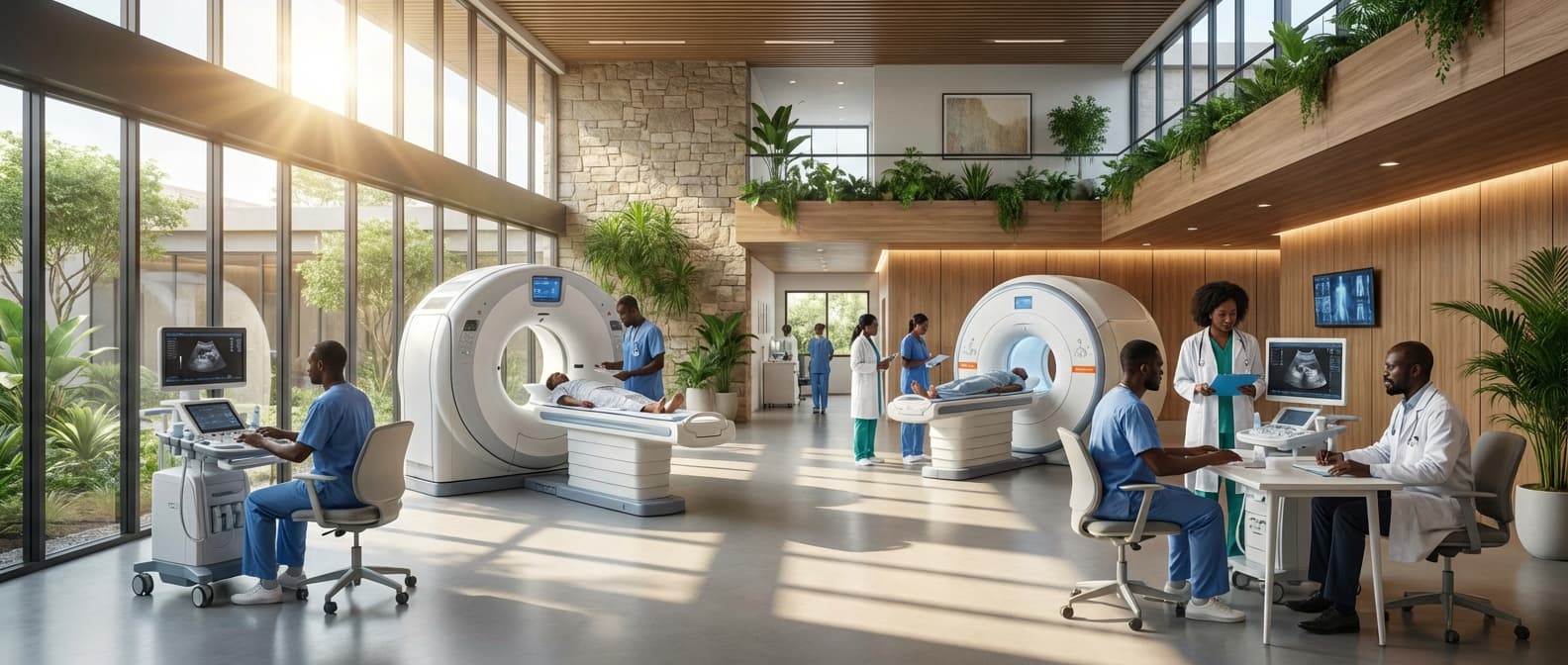
Diagnostic Imaging in Zambia
Engineering Excellence & Technical Support
High-resolution imaging systems including CT scanners, MRI, X-ray, and ultrasound technology for accurate clinical diagnosis. High-standard technical execution following OEM protocols and local regulatory frameworks.
Mobile Diagnostic Units Deployment
Strategic deployment of fully-equipped mobile X-ray and ultrasound units to underserved rural and peri-urban areas, significantly expanding access to essential diagnostic imaging services for remote populations and reducing geographical barriers to healthcare.
Tele-Radiology Network Establishment
Implementation of a robust tele-radiology network connecting district hospitals and clinics to specialized radiologists in urban centers. This enables remote interpretation of imaging studies, improving diagnostic accuracy and turnaround times, especially in areas with limited local expertise.
AI-Powered Image Analysis Pilots
Piloting artificial intelligence algorithms for automated detection and preliminary analysis of common pathologies in X-ray and CT scans. This initiative aims to enhance radiologist efficiency, reduce diagnostic errors, and prioritize critical cases for timely intervention.
What Is Diagnostic Imaging In Zambia?
Diagnostic imaging in Zambia refers to the use of medical imaging technologies to visualize the internal structures of the human body for the purpose of diagnosing and monitoring disease. This encompasses a range of non-invasive and minimally invasive procedures that produce anatomical or physiological images.
Service Involves: The core of diagnostic imaging lies in employing various physical principles, such as X-rays, magnetic fields, sound waves, and radiopharmaceuticals, to generate images. These technologies capture signals from within the body, which are then processed by specialized software to create detailed visual representations. Common modalities include:
- Radiography (X-ray): Utilizes electromagnetic radiation to produce images of bones, lungs, and other dense structures.
- Computed Tomography (CT) Scan: Employs X-rays from multiple angles to create cross-sectional images of the body.
- Magnetic Resonance Imaging (MRI): Uses strong magnetic fields and radio waves to generate detailed images of soft tissues, organs, and bone marrow.
- Ultrasound (Sonography): Employs high-frequency sound waves to create real-time images of organs, blood vessels, and fetuses.
- Nuclear Medicine Imaging (e.g., SPECT, PET): Involves the administration of radioactive tracers to assess organ function and detect diseases at a molecular level.
Who Needs It: Diagnostic imaging is crucial for a broad spectrum of the Zambian population. Its necessity is determined by the presence of symptoms, suspected pathologies, or the need for monitoring disease progression or treatment efficacy. Individuals requiring diagnostic imaging include:
- Patients with acute injuries or trauma: To assess fractures, internal bleeding, or organ damage.
- Individuals experiencing chronic pain or unexplained symptoms: To identify the underlying cause, such as tumors, inflammation, or structural abnormalities.
- Patients undergoing surgical procedures: For pre-operative planning, intra-operative guidance, and post-operative evaluation.
- Pregnant women: For monitoring fetal development and identifying potential complications.
- Individuals with suspected or diagnosed cancers: For staging, treatment planning, and assessing response to therapy.
- Patients with cardiovascular or neurological conditions: To visualize heart function, blood flow, and brain structures.
- Individuals requiring regular monitoring of chronic diseases: To track disease progression and adjust treatment plans.
Typical Use Cases: In the Zambian context, diagnostic imaging is indispensable across various medical specialties and clinical scenarios:
- Orthopedics: Diagnosis of fractures, dislocations, arthritis, and other musculoskeletal disorders.
- Pulmonology: Evaluation of pneumonia, tuberculosis, lung nodules, and other respiratory ailments.
- Cardiology: Assessment of heart structure, function, and blood flow, particularly in cases of suspected congenital heart disease or valvular issues.
- Neurology: Investigation of strokes, brain tumors, epilepsy, and spinal cord injuries.
- Gastroenterology: Examination of abdominal organs for conditions like appendicitis, gallstones, and gastrointestinal obstructions.
- Oncology: Detection, staging, and follow-up of various cancers.
- Obstetrics and Gynecology: Antenatal care, assessment of fetal well-being, and diagnosis of gynecological pathologies.
- Emergency Medicine: Rapid assessment of trauma patients to identify life-threatening injuries.
| Medical Specialty | Common Diagnostic Imaging Applications |
|---|---|
| Orthopedics | Fracture assessment, joint evaluation, bone tumor detection |
| Pulmonology | Pneumonia, Tuberculosis (TB) screening, lung nodule characterization |
| Cardiology | Echocardiography for cardiac function, angiography for vessel patency |
| Neurology | Brain imaging for stroke, tumors, and trauma; spinal imaging |
| Gastroenterology | Abdominal imaging for organ assessment and pathology detection |
| Oncology | Tumor staging, treatment response monitoring, recurrence detection |
| Obstetrics & Gynecology | Fetal anomaly screening, pelvic organ assessment |
| Emergency Medicine | Rapid trauma evaluation, identification of internal bleeding |
Diagnostic Imaging Modalities in Zambia
- Radiography (X-ray)
- Computed Tomography (CT) Scan
- Magnetic Resonance Imaging (MRI)
- Ultrasound (Sonography)
- Nuclear Medicine Imaging (SPECT, PET)
Who Needs Diagnostic Imaging In Zambia?
Diagnostic imaging plays a critical role in modern healthcare, enabling accurate diagnosis, effective treatment planning, and patient monitoring. In Zambia, a growing demand for these services is driven by an increasing burden of non-communicable diseases, advancements in medical technology, and a commitment to improving healthcare outcomes. Identifying who needs diagnostic imaging and understanding the departments that utilize these services is crucial for resource allocation, service development, and ensuring equitable access to quality healthcare across the nation.
| Department/Specialty | Common Diagnostic Imaging Modalities Used | Key Applications in Zambia |
|---|---|---|
| Radiology/Medical Imaging Department | X-ray, CT Scan, MRI, Ultrasound, Fluoroscopy | General diagnostics, trauma, cancer detection and staging, neurological conditions, musculoskeletal issues, abdominal and pelvic imaging. |
| Oncology Department | CT Scan, MRI, PET-CT (where available), Ultrasound | Tumor detection, staging, treatment planning (radiotherapy), monitoring treatment response, detecting metastases. |
| Cardiology Department | Echocardiography (Ultrasound), CT Angiography, MRI | Assessing heart structure and function, detecting blockages in coronary arteries, diagnosing congenital heart defects. |
| Neurology Department | MRI, CT Scan, X-ray (for spinal imaging) | Diagnosing stroke, brain tumors, epilepsy, multiple sclerosis, spinal cord injuries, degenerative neurological diseases. |
| Orthopedics Department | X-ray, CT Scan, MRI | Diagnosing fractures, dislocations, arthritis, sports injuries, bone tumors, assessing joint health before and after surgery. |
| General Surgery Department | Ultrasound, CT Scan, X-ray | Diagnosing appendicitis, gallstones, bowel obstructions, abscesses, pre-operative assessment for various surgical procedures. |
| Obstetrics and Gynecology Department | Ultrasound, MRI | Monitoring pregnancies, detecting fetal abnormalities, diagnosing uterine fibroids, ovarian cysts, pelvic inflammatory disease, assessing gynecological cancers. |
| Emergency Department/Accident & Emergency | X-ray, CT Scan, Ultrasound | Rapid assessment of trauma (head injuries, fractures, internal bleeding), diagnosing acute conditions like appendicitis, kidney stones. |
| Pediatrics Department | X-ray, Ultrasound, CT Scan (with appropriate protocols) | Diagnosing childhood illnesses, congenital anomalies, trauma, infections in children. |
| Pulmonology/Respiratory Department | X-ray, CT Scan | Diagnosing pneumonia, tuberculosis, lung cancer, COPD, interstitial lung diseases, pleural effusions. |
Target Customers for Diagnostic Imaging in Zambia
- Patients with suspected or confirmed diseases: This is the broadest category, encompassing individuals presenting with a wide range of symptoms that require visualization of internal body structures to identify abnormalities.
- Individuals undergoing routine health screenings: Certain screening programs, such as those for cancer or cardiovascular disease, may incorporate diagnostic imaging to detect early signs of illness.
- Patients requiring monitoring of treatment response: Imaging is essential for assessing the effectiveness of treatments, whether it be chemotherapy, surgery, or other interventions, by observing changes in the size of tumors, healing of fractures, or progression of disease.
- Individuals involved in trauma or emergency situations: Diagnostic imaging is vital for rapid assessment of injuries, including fractures, internal bleeding, and organ damage, enabling prompt medical intervention.
- Patients requiring pre-operative assessment: Imaging helps surgeons plan procedures by visualizing anatomical structures, identifying potential complications, and determining the best surgical approach.
- Pediatric patients: Children often require specialized approaches to diagnostic imaging due to their unique physiology and the need to minimize radiation exposure, but the diagnostic needs are just as significant as in adults.
Diagnostic Imaging Process In Zambia
Diagnostic imaging in Zambia, while striving to meet international standards, often navigates a workflow influenced by resource availability, healthcare infrastructure, and varying levels of accessibility. The process typically begins with a patient's referral from a primary or secondary healthcare provider. This referral, often accompanied by a clinical summary and the specific imaging modality requested, initiates the journey. The patient then proceeds to a facility equipped for diagnostic imaging. Challenges can arise at this stage due to limited availability of specialized equipment and radiographers in certain regions. Upon arrival, the patient's details are registered, and their appointment or walk-in status is managed. The imaging procedure itself, whether X-ray, ultrasound, CT scan, or MRI, is performed by a qualified radiographer. Following the scan, a radiologist interprets the images, generating a diagnostic report. This report is then forwarded back to the referring physician, who uses it to inform the patient's diagnosis and treatment plan. The entire process can be subject to delays, particularly in public health facilities, due to high patient loads and occasional equipment malfunctions. Private facilities generally offer a more streamlined experience but at a higher cost.
| Stage | Description | Typical Actors Involved | Potential Challenges in Zambia |
|---|---|---|---|
| Referral | A healthcare provider identifies the need for imaging and refers the patient with a clinical summary and imaging request. | Referring Physician (Doctor, Clinical Officer) | Lack of awareness of imaging needs, limited access to primary/secondary care for initial assessment. |
| Patient Registration & Scheduling | Patient's details are recorded, and an appointment is booked or they are processed as a walk-in. | Receptionist, Medical Records Staff | Long waiting times, administrative inefficiencies, limited appointment slots due to staff/equipment constraints. |
| Imaging Procedure | The requested imaging examination (X-ray, Ultrasound, CT, MRI) is performed by a radiographer. | Radiographer | Shortage of trained radiographers, equipment malfunction/outdated equipment, limited availability of advanced modalities (CT, MRI) in public sector, power supply issues. |
| Image Interpretation | A radiologist analyzes the images to identify abnormalities and provide a diagnostic opinion. | Radiologist | Severe shortage of radiologists, especially outside major urban centers; reliance on outsourced interpretation in some cases; high workload leading to delays. |
| Report Generation & Dispatch | A formal diagnostic report is compiled and sent back to the referring clinician. | Radiologist, Administrative Staff | Slow report turnaround times, postal/courier delays in reaching remote clinics, potential for miscommunication. |
| Clinical Decision Making | The referring clinician uses the imaging report to confirm diagnosis, plan treatment, or request further investigations. | Referring Physician | Lack of integrated healthcare systems for seamless information flow, clinician access to interpretation expertise for clarification. |
Key Stages in Zambia's Diagnostic Imaging Workflow
- Referral from Clinician
- Patient Registration and Scheduling
- Imaging Procedure Execution
- Image Interpretation by Radiologist
- Report Generation and Dispatch
- Clinical Decision Making and Treatment
Diagnostic Imaging Cost In Zambia
Diagnostic imaging is a crucial component of modern healthcare, providing essential information for diagnosis, treatment planning, and monitoring of various medical conditions. In Zambia, the cost of diagnostic imaging services can vary significantly, influenced by a multitude of factors. These factors include the type of imaging modality used, the complexity of the examination, the specific facility where the service is provided (public vs. private, urban vs. rural), the expertise of the radiologist, and the need for contrast agents. Furthermore, the overall economic conditions, inflation rates, and the availability of imported equipment and supplies also play a role in determining the pricing structure. Understanding these pricing dynamics is vital for patients, healthcare providers, and policymakers to ensure equitable access to essential diagnostic services.
| Imaging Modality | Estimated Cost Range (ZMW - Zambian Kwacha) | Notes |
|---|---|---|
| X-ray (Single View) | 150 - 400 | Basic examination, widely available. |
| X-ray (Multiple Views/Series) | 300 - 800 | More comprehensive imaging, e.g., chest X-ray series. |
| Ultrasound (Abdominal/Pelvic) | 300 - 700 | Common diagnostic tool, varies with organ system. |
| Ultrasound (Doppler) | 400 - 900 | Assesses blood flow, used for specific vascular assessments. |
| CT Scan (Head/Chest/Abdomen - without contrast) | 1,500 - 4,000 | More advanced imaging, higher cost. |
| CT Scan (with contrast) | 2,000 - 5,500 | Contrast agent adds to the cost. |
| MRI (Brain/Spine - without contrast) | 3,000 - 8,000 | Highest cost imaging modality, uses magnetic fields. |
| MRI (with contrast) | 4,000 - 10,000 | Contrast enhances visualization of certain tissues. |
| Mammography (Screening) | 400 - 800 | Specific imaging for breast health. |
| Interventional Radiology Procedures | Varies widely (e.g., 2,000 - 15,000+) | Complex procedures requiring specialized equipment and expertise. |
Key Factors Influencing Diagnostic Imaging Costs in Zambia
- Imaging Modality (e.g., X-ray, Ultrasound, CT scan, MRI)
- Complexity of the Examination (e.g., number of views, specific protocols)
- Facility Type (Public Hospital, Private Clinic, Specialized Imaging Center)
- Geographic Location (Urban centers generally have higher costs than rural areas)
- Radiologist Expertise and Consultation Fees
- Use of Contrast Agents
- Equipment Maintenance and Operational Costs
- Importation Costs for Equipment and Consumables
- Overhead Expenses of the Healthcare Facility
- Demand and Supply Dynamics for Imaging Services
Affordable Diagnostic Imaging Options
Accessing necessary diagnostic imaging can be a significant expense for many individuals. Fortunately, there are ways to make these services more affordable. Understanding concepts like value bundles and implementing cost-saving strategies can lead to substantial savings without compromising the quality of care. This guide explores these options to empower you in managing your healthcare costs.
| Strategy | Description | Potential Savings |
|---|---|---|
| Value Bundles | Pre-packaged sets of related imaging tests at a discounted rate. | Significant, as individual tests can be costly. |
| Negotiate Cash Prices | Requesting discounted rates for upfront, self-pay at imaging centers or hospitals. | Can range from 10% to 50% or more. |
| Shop Around / Compare Prices | Obtaining quotes from multiple imaging providers for the same service. | Varies widely, potentially hundreds of dollars. |
| Outpatient Services | Opting for imaging as an outpatient procedure rather than during a hospital stay. | Substantially lower costs. |
| HSAs/FSAs | Using pre-tax funds for eligible medical expenses, including imaging. | Reduces your taxable income, effectively saving money. |
Understanding Value Bundles and Cost-Saving Strategies
- Value Bundles: These are often packages of related diagnostic tests or procedures offered at a pre-negotiated, reduced price. They are designed to be more cost-effective than purchasing each service individually. Value bundles are commonly found for specific conditions (e.g., a cardiac bundle that includes an EKG, echocardiogram, and stress test) or for groups of imaging modalities.
- Negotiate Prices: Don't hesitate to ask imaging centers or hospitals about their cash prices or discounts for self-pay patients. Many facilities offer lower rates when payment is made upfront or when insurance is not involved.
- Shop Around: Prices for the same diagnostic imaging procedure can vary significantly between different providers. Obtain quotes from multiple facilities, including independent imaging centers, which are often less expensive than hospital-based departments.
- Ask About Cash Discounts: Many providers offer discounts if you pay for the service out-of-pocket rather than using insurance. This can sometimes be a substantial saving.
- Consider Outpatient vs. Inpatient: If a procedure can be performed on an outpatient basis, it is almost always less expensive than if it's done as part of an inpatient hospital stay.
- Explore Imaging Networks/Co-ops: Some organizations offer discounted rates on medical services, including imaging, to their members.
- Understand Your Insurance Benefits: Before scheduling any imaging, thoroughly understand your insurance plan's coverage, deductibles, co-pays, and co-insurance for diagnostic imaging. Know whether your plan requires pre-authorization for certain procedures.
- Check for Prior Authorizations: Many insurance plans require pre-authorization for specific imaging procedures. Failure to obtain this can result in denied claims and out-of-pocket expenses.
- Seek Referrals Wisely: While your doctor's referral is important, they may have relationships with specific imaging centers. Inquire if there are other in-network options that might be more cost-effective.
- Utilize Health Savings Accounts (HSAs) or Flexible Spending Accounts (FSAs): If you have an HSA or FSA, these pre-tax dollars can be used to pay for eligible diagnostic imaging services, reducing your overall taxable income.
Verified Providers In Zambia
In Zambia, ensuring access to quality healthcare is paramount. When seeking medical services, identifying 'Verified Providers' becomes crucial for peace of mind and effective treatment. Franance Health stands out as a leading platform connecting individuals with a network of credentialed and trustworthy healthcare professionals. This document outlines what 'Verified Providers' signifies in the Zambian context and elaborates on the specific credentials and benefits that make Franance Health the superior choice for your health needs.
| Franance Health Credential | Description | Benefit for Patients |
|---|---|---|
| Licensed Professionals | All listed doctors, nurses, pharmacists, and specialists are actively licensed by the Health Professions Council of Zambia (HPCZ) and relevant regulatory bodies. | Guarantees that you are receiving care from legally qualified and regulated practitioners. |
| Verified Educational Backgrounds | Franance Health independently verifies the academic qualifications and degrees of its providers from recognized universities and medical schools. | Ensures that your healthcare provider has received a robust and accredited education. |
| Specialty Certifications | For specialists, Franance Health confirms their recognized certifications in their respective fields (e.g., cardiology, pediatrics, obstetrics). | Connects you with experts precisely suited to your specific health concerns. |
| Continuous Professional Development (CPD) Compliance | We encourage and, where possible, verify that our listed providers are actively engaged in ongoing learning and professional development. | Indicates a commitment to staying updated with the latest medical advancements and best practices. |
| Positive Patient Feedback Integration | While not a formal credential, Franance Health incorporates mechanisms for patient feedback and reviews, highlighting providers with consistently positive experiences. | Offers insights into the patient experience and provider bedside manner. |
Understanding "Verified Providers" in Zambia
- Professional Licensing: All verified providers must possess current and valid licenses issued by the relevant Zambian professional bodies (e.g., Health Professions Council of Zambia).
- Educational Qualifications: Verification includes scrutinizing the educational background and degrees of healthcare professionals from accredited institutions.
- Experience and Specialization: Franance Health confirms the experience levels and specialized training of its providers, ensuring they are equipped for your specific medical requirements.
- Reputation and Background Checks: Where applicable, background checks and a review of professional reputation contribute to the verification process.
- Commitment to Ethical Practice: Verified providers adhere to the ethical codes and standards set by their respective professional councils.
Scope Of Work For Diagnostic Imaging
This Scope of Work (SOW) outlines the requirements for the provision of Diagnostic Imaging services, including the necessary technical deliverables and standard specifications. The objective is to ensure high-quality, efficient, and safe diagnostic imaging procedures and reporting to support patient care and clinical decision-making.
| Imaging Modality | Standard Specifications | Key Performance Indicators (KPIs) |
|---|---|---|
| X-ray | Digital radiography (DR) or Computed radiography (CR), minimum resolution of X lp/mm, dose reduction technologies, automatic exposure control (AEC). | Image acquisition time < Y seconds, spatial resolution of Z lp/mm, signal-to-noise ratio (SNR) > W. |
| CT Scanner | Multi-detector CT (MDCT) with at least N slices, sub-millimeter spatial resolution, wide bore options, iterative reconstruction algorithms, dose monitoring capabilities. | Scan time per routine exam < P minutes, spatial resolution of Q lp/mm, noise level < R HU. |
| MRI Scanner | High-field strength (e.g., 1.5T or 3T), advanced coil technology, fast imaging sequences, diffusion-weighted imaging (DWI), functional MRI (fMRI) capabilities (if applicable). | Scan time for specific protocols (e.g., brain, knee) within S minutes, SNR > T, spectral fat suppression efficiency > U%. |
| Ultrasound System | High-frequency transducers, color Doppler, power Doppler, Doppler spectral analysis, elastography, advanced image optimization features. | Frame rate > V fps (color Doppler), penetration depth > W cm, spatial resolution of X lp/mm. |
| Mammography Unit | Digital breast tomosynthesis (DBT) capabilities, contrast-enhanced mammography (CEM) option (if required), high-resolution detectors, automated compression. | Image acquisition time < Y seconds, spatial resolution of Z lp/mm, glandular dose < A mGy. |
| Nuclear Medicine (SPECT/PET) | High sensitivity and resolution detectors, attenuation correction, motion correction, integrated CT for PET/CT, radiopharmaceutical handling safety protocols. | Count rate > B cps/MBq, spatial resolution of C mm (FWHM), sensitivity > D%. |
| PACS System | DICOM compliance, integration with RIS and EMR, robust image compression (lossless and/or lossy), audit trails, remote access capabilities, advanced viewing tools. | Image retrieval time < E seconds, system uptime > F%, storage capacity meeting projected needs. |
| RIS System | Seamless integration with PACS and EMR, HL7 compliance, configurable workflow rules, intelligent scheduling, electronic reporting and signature, billing integration. | Report turnaround time < G hours (for routine reports), system uptime > H%, error rate < I%. |
Key Technical Deliverables
- High-resolution digital imaging equipment (e.g., X-ray, CT, MRI, Ultrasound, Mammography, Nuclear Medicine).
- Picture Archiving and Communication System (PACS) for image storage, retrieval, and distribution.
- Radiology Information System (RIS) for workflow management, scheduling, and reporting.
- Image analysis and post-processing workstations.
- Secure data transmission and networking infrastructure.
- Regular equipment calibration and maintenance records.
- Detailed technical documentation for all systems and equipment.
- Training materials and programs for technical and clinical staff.
- Compliance documentation for relevant regulatory standards (e.g., HIPAA, ACR, FDA).
- Disaster recovery and business continuity plans for imaging data.
Service Level Agreement For Diagnostic Imaging
This Service Level Agreement (SLA) outlines the performance standards for Diagnostic Imaging services provided by [Provider Name] to [Client Name]. It specifically addresses response times for critical requests and uptime guarantees for essential imaging systems.
| Service Component | Response Time Guarantee (Emergency) | Response Time Guarantee (Routine) | Uptime Guarantee |
|---|---|---|---|
| Radiologist Report Availability (Critical Findings) | Within 2 hours of study completion | Within 24 hours of study completion | 99.5% |
| Technologist Availability for Image Acquisition | Within 30 minutes of request | Within 2 hours of request | 99.0% |
| PACS System Access | N/A (System should be continuously available) | N/A (System should be continuously available) | 99.8% |
| Scheduling System Availability | N/A (System should be continuously available) | N/A (System should be continuously available) | 99.7% |
Key Definitions
- Downtime: The period during which the Diagnostic Imaging system is unavailable to the Client due to a failure, maintenance, or any other reason not attributable to the Client.
- Emergency Request: A request for diagnostic imaging that, in the professional judgment of the referring physician, requires immediate attention to prevent imminent loss of life or limb, or to avoid significant deterioration of a patient's condition.
- Routine Request: A request for diagnostic imaging that does not meet the criteria for an Emergency Request.
- Scheduled Maintenance: Planned periods of downtime for system upgrades, repairs, or other essential maintenance activities, communicated in advance to the Client.
- Uptime: The percentage of time that the Diagnostic Imaging system is available and operational, excluding Scheduled Maintenance periods.
Frequently Asked Questions

Ready when you are
Let's scope your Diagnostic Imaging in Zambia project in Zambia.

Scaling healthcare logistics and technical systems across the entire continent.