
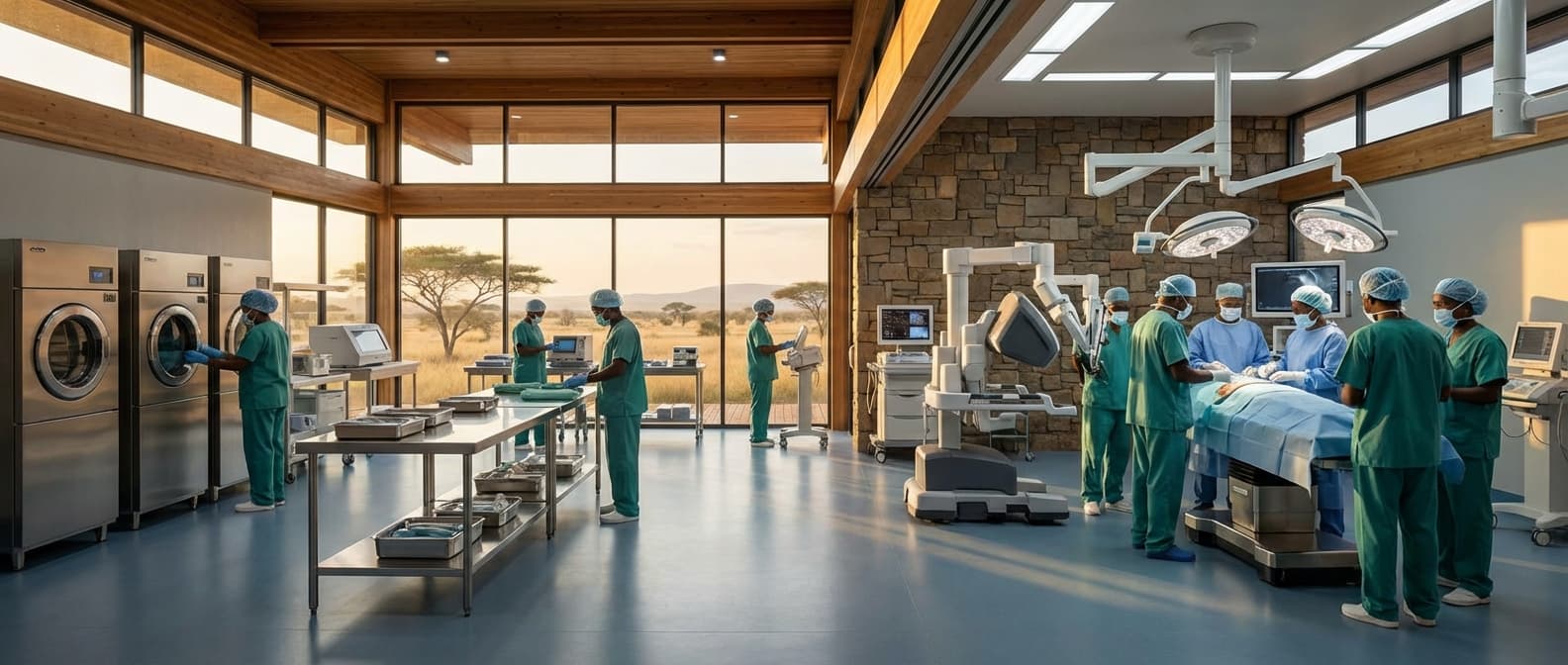
Endoscopy Reprocessing Validation in Zambia
Engineering Excellence & Technical Support
AER validation, SOP development and compliance High-standard technical execution following OEM protocols and local regulatory frameworks.
Microbial Challenge Testing
Implementing rigorous microbial challenge testing for flexible endoscopes to validate the effectiveness of reprocessing protocols against a spectrum of clinically relevant microorganisms, ensuring patient safety and infection prevention standards are met in Zambian healthcare facilities.
Automated Washer-Disinfector Performance
Conducting performance validation studies on automated washer-disinfectors using biological and chemical indicators to verify consistent and effective cleaning and disinfection cycles, a crucial step for large-scale reprocessing in Zambian hospitals and clinics.
Process Monitoring & Documentation
Establishing robust process monitoring systems with documented quality control checks at critical stages of the endoscopy reprocessing workflow, from initial cleaning to high-level disinfection and storage, ensuring adherence to international best practices in Zambia.
What Is Endoscopy Reprocessing Validation In Zambia?
Endoscopy reprocessing validation in Zambia refers to the systematic process of verifying and documenting that flexible endoscopes and their accessories have been cleaned and disinfected/sterilized according to established guidelines and manufacturer instructions to prevent microbial contamination and subsequent patient-to-patient transmission of infections. This validation is crucial for ensuring patient safety and maintaining the integrity of endoscopy services within the Zambian healthcare system. It involves a multi-faceted approach that includes process validation, equipment performance verification, and personnel competency assessment.
| Who Needs It? | Typical Use Cases | Rationale/Importance |
|---|---|---|
| Healthcare facilities in Zambia performing endoscopic procedures (e.g., hospitals, specialized clinics). | Any healthcare setting where flexible endoscopes (gastroscopes, colonoscopes, bronchoscopes, duodenoscopes, etc.) are reused on multiple patients. | To prevent Healthcare-Associated Infections (HAIs) transmitted via contaminated endoscopes, ensuring patient safety and compliance with national and international infection prevention standards. |
| Endoscopy departments, sterile processing departments (if applicable), and infection prevention and control teams. | Routine reprocessing of reusable medical devices in gastrointestinal, pulmonary, urological, and other specialty procedures. | To maintain the clinical effectiveness and safety of endoscopic equipment, preventing device failure or malfunction due to improper cleaning or damage. |
| Regulatory bodies or accreditation agencies overseeing healthcare quality and safety. | Post-incident investigations or when introducing new reprocessing equipment or protocols. | To provide assurance to patients, clinicians, and regulatory bodies that reprocessing practices meet established benchmarks for safety and efficacy. |
Key Components of Endoscopy Reprocessing Validation
- Process Validation: This involves evaluating the entire reprocessing workflow, from initial cleaning and leak testing to high-level disinfection (HLD) or sterilization, and drying and storage. It assesses whether the chosen reprocessing agents and methods are effective against a broad spectrum of microorganisms, including bacteria, viruses, fungi, and mycobacteria, under the specific conditions of use.
- Equipment Performance Verification: This component focuses on ensuring that automated endoscope reprocessors (AERs) and other equipment (e.g., washing stations, drying cabinets) are functioning correctly and delivering the required parameters (e.g., temperature, concentration of disinfectant, cycle times, water quality). Regular calibration and performance testing are integral.
- Microbiological Testing: This includes surrogate testing using biological indicators or environmental monitoring to confirm the efficacy of the HLD or sterilization process. It may also involve surface swab testing of reprocessed endoscopes to detect residual contamination.
- Personnel Competency Assessment: Validating that healthcare professionals involved in reprocessing are adequately trained, understand the established protocols, and consistently adhere to them. This often involves regular training, competency checks, and audits of their practice.
- Documentation and Record-Keeping: Maintaining comprehensive records of all reprocessing steps, including cleaning, disinfection/sterilization, equipment maintenance, and personnel training. This documentation serves as evidence of compliance and facilitates traceability.
Who Needs Endoscopy Reprocessing Validation In Zambia?
Endoscopy reprocessing validation is a critical process to ensure that reusable endoscopic instruments are cleaned and sterilized effectively, preventing the transmission of infections. In Zambia, this process is essential for a range of healthcare facilities and professional groups that utilize endoscopic procedures. The target customers are diverse, encompassing public and private healthcare providers, medical training institutions, and regulatory bodies. Effective validation safeguards patient safety, maintains the integrity of medical devices, and upholds the quality of healthcare services. The departments most directly involved in or benefiting from this validation are those where endoscopic procedures are performed, as well as those responsible for infection control and quality assurance.
| Target Customer Group | Key Departments Involved/Benefiting |
|---|---|
| Public Healthcare Sector | Infection Prevention and Control (IPC) Departments, Gastroenterology, Pulmonology, Urology, Gynecology, Endoscopy Units, Central Sterile Supply Departments (CSSDs), Quality Assurance Units, Ministry of Health (MoH) – Directorate of Clinical Care |
| Private Healthcare Sector | Endoscopy Units, Surgical Departments, CSSDs, Infection Control Committees, Quality Management Teams, Private Hospital Management |
| Medical Training Institutions | Medical Schools, Nursing Schools, Allied Health Science Programs, Simulation Centers, Departments of Surgery, Internal Medicine, and Microbiology |
| Specialty Healthcare Providers | Gastroenterology Units, Pulmonology Clinics, Urology Departments, Gynecological Clinics, Ear, Nose, and Throat (ENT) Departments |
| Regulatory and Oversight Bodies | Ministry of Health (Medical Devices Unit, Public Health Inspectorate), Health Professions Councils |
Target Customers & Departments for Endoscopy Reprocessing Validation in Zambia
- {"item":"Hospitals (Public and Private)"}
- {"item":"Tertiary and Referral Centers"}
- {"item":"University Teaching Hospitals"}
- {"item":"Specialty Clinics (e.g., Gastroenterology, Pulmonology, Urology, Gynecology)"}
- {"item":"Medical Training Institutions (for healthcare professionals)"}
- {"item":"Ministry of Health (for regulatory and quality oversight)"}
- {"item":"Hospitals with Intensive Care Units (ICUs)"}
- {"item":"Hospitals performing Surgical Procedures"}
Endoscopy Reprocessing Validation Process In Zambia
The Endoscopy Reprocessing Validation Process in Zambia ensures that reusable endoscopic instruments are cleaned and disinfected according to established standards to prevent healthcare-associated infections. This process is crucial for patient safety and maintaining the integrity of medical devices. The workflow begins with an inquiry from a healthcare facility or individual seeking to validate their reprocessing procedures, progresses through assessment and execution of validation tests, and concludes with the issuance of a validation certificate or recommendations for improvement.
| Stage | Description | Key Activities | Responsible Parties | Deliverables/Outcomes |
|---|---|---|---|---|
| Inquiry and Initial Contact | The process begins when a healthcare facility expresses interest in validating their endoscopy reprocessing procedures. | Contacting the relevant regulatory body or accredited validation service provider. Submitting an initial request or inquiry. | Healthcare Facility, Ministry of Health (MoH) or designated regulatory body, Accredited Validation Service Provider (AVSP). | Acknowledgement of inquiry, initial contact established. |
| Needs Assessment and Scope Definition | Understanding the facility's current reprocessing practices, the types of endoscopes used, and the specific scope of the validation. | Discussions with facility management and reprocessing staff. Identifying the endoscopes and reprocessing workflows to be validated. | AVSP, Healthcare Facility representatives. | Defined scope of validation, understanding of facility's needs. |
| Information Gathering and Documentation Review | Collecting and reviewing all relevant documentation pertaining to the facility's reprocessing protocols. | Requesting and reviewing Standard Operating Procedures (SOPs) for cleaning, disinfection, and sterilization. Reviewing manufacturer's instructions for use (IFU) for endoscopes and reprocessing equipment. Examining staff training records. | AVSP, Healthcare Facility. | Comprehensive understanding of documented procedures, identification of potential gaps. |
| On-site Assessment and Observation | Direct observation of the reprocessing environment and workflow to assess adherence to SOPs and best practices. | Observing the pre-cleaning, manual cleaning, automated washing/disinfection, drying, storage, and handling of endoscopes. Assessing the condition of the reprocessing area and equipment. | AVSP. | Real-time understanding of practices, identification of deviations from SOPs. |
| Validation Testing and Verification | Conducting specific tests to confirm the efficacy of the cleaning and disinfection processes. | Performing bioburden testing (e.g., microbial load assessment). Conducting residual protein and other organic material testing. Verifying efficacy of high-level disinfection (HLD) or sterilization processes using appropriate indicators and monitoring devices. Testing equipment functionality and calibration. | AVSP, Healthcare Facility (providing access and support). | Empirical data on the effectiveness of reprocessing, identification of areas of concern. |
| Data Analysis and Reporting | Analyzing the collected data from observations and validation tests to determine compliance with standards. | Interpreting test results against established benchmarks and regulatory requirements. Compiling a comprehensive report detailing findings, including any non-conformities. | AVSP. | Validated data, detailed validation report. |
| Recommendations and Remediation | Providing actionable recommendations to address any identified deficiencies and improve reprocessing outcomes. | Suggesting modifications to SOPs, staff retraining, equipment maintenance or upgrades. Providing guidance on implementing corrective actions. | AVSP, Healthcare Facility. | Clear path for improvement, corrective action plan (if required). |
| Final Validation and Certification | Formally concluding the validation process based on satisfactory results and implementation of recommendations. | Issuing a validation certificate if all criteria are met. Providing a report confirming compliance and ongoing adherence to standards. Issuing recommendations for future validation cycles. | AVSP, Ministry of Health (MoH). | Formal validation certificate, documented compliance status. |
| Post-Validation Monitoring | Ensuring continued adherence to validated reprocessing procedures through periodic checks. | Scheduling follow-up audits or re-validation as per regulatory requirements or facility policy. Monitoring for any changes in procedures or equipment that may necessitate re-validation. | AVSP, Healthcare Facility. | Sustained compliance, patient safety assurance. |
Endoscopy Reprocessing Validation Workflow in Zambia
- Inquiry and Initial Contact
- Needs Assessment and Scope Definition
- Information Gathering and Documentation Review
- On-site Assessment and Observation
- Validation Testing and Verification
- Data Analysis and Reporting
- Recommendations and Remediation (if needed)
- Final Validation and Certification
- Post-Validation Monitoring (periodic)
Endoscopy Reprocessing Validation Cost In Zambia
Validating the reprocessing of endoscopic equipment in Zambia involves several cost components. These costs are crucial for ensuring patient safety and preventing the transmission of infections. The pricing can vary significantly based on the facility's size, the type and volume of endoscopes being processed, the specific validation methods employed, and the service provider's expertise and location within Zambia.
Key pricing factors include:
- Laboratory Testing Fees: This is often the most substantial component. It involves microbiological testing of rinse water and/or surface swabs from reprocessed endoscopes to detect residual contamination. The cost per test can vary depending on the specific analytes being tested (e.g., bacteria, fungi, mycobacteria) and the laboratory's overhead.
- Consumables: This includes items like sterile swabs, transport media, culture plates, reagents, and disinfectants used during the validation process.
- Personnel Costs: The time of trained laboratory technicians or healthcare professionals involved in sample collection, processing, and analysis contributes to the overall cost.
- Equipment Calibration and Maintenance: If the healthcare facility or an external provider uses specific validation equipment (e.g., ATP meters for surface cleanliness verification), regular calibration and maintenance are necessary, incurring costs.
- Consultancy/Service Provider Fees: For facilities outsourcing validation, professional fees for expertise, report generation, and recommendations are charged.
- Transportation Costs: If samples need to be transported to external laboratories, associated fuel and logistical costs will apply.
- Regulatory Compliance: Adherence to national and international guidelines for reprocessing and validation can sometimes necessitate specific documentation and auditing, which may have associated costs.
| Cost Component | Estimated Range (ZMW) | Notes |
|---|---|---|
| Microbiological Water Testing (per batch of tests) | 1,500 - 5,000 | Covers culture, identification, and sensitivity for common pathogens. May vary by number of tests per batch. |
| Microbiological Surface Swab Testing (per swab) | 100 - 300 | Assessing residual contamination on endoscope surfaces. |
| ATP Testing (per endoscope, if used) | 50 - 150 | Measures organic residue. Often a preliminary check before microbial testing. |
| Consumables per Validation Cycle | 500 - 2,000 | Includes swabs, media, disinfectants, and other lab supplies for a set of validations. |
| External Lab/Consultancy Fee (per validation cycle) | 2,000 - 10,000 | Covers sample analysis, report generation, and expert recommendations. Depends on the scope of work. |
| Internal Staff Time Allocation (estimated per cycle) | 1,000 - 3,000 | Cost of dedicated staff time for sample collection, processing, and data entry. |
| Total Estimated Cost per Comprehensive Validation Cycle (e.g., quarterly) | 5,000 - 25,000+ | This is a broad estimate for a facility reprocessing multiple endoscopes. Actual costs will depend on the specific services and testing performed. |
Endoscopy Reprocessing Validation Cost Factors in Zambia
- Laboratory Testing Fees (microbiological assays)
- Consumable Costs (swabs, media, reagents)
- Personnel Time and Expertise
- Equipment Calibration and Maintenance
- External Consultancy/Service Provider Charges
- Sample Transportation Logistics
- Documentation and Auditing for Compliance
Affordable Endoscopy Reprocessing Validation Options
Ensuring the effectiveness of flexible endoscopic reprocessing is paramount for patient safety and infection control. However, the cost of validation can be a significant barrier for many healthcare facilities. This document outlines affordable options for endoscopy reprocessing validation, focusing on value bundles and cost-saving strategies.
| Strategy | Description | Cost-Saving Potential | Value Proposition |
|---|---|---|---|
| Value Bundling | Partnering with reprocessing validation service providers to negotiate package deals that include multiple validation services (e.g., high-level disinfection testing, biological indicator testing, and equipment performance verification) at a reduced per-unit cost. | Significant savings through bulk purchasing and reduced administrative overhead for the facility. | Streamlined validation process, predictable budgeting, and access to a comprehensive suite of services. |
| Consolidated Testing Schedules | Aligning validation testing with routine maintenance schedules or consolidating tests for multiple endoscopes into fewer, more efficient visits by a validation technician. | Reduced travel costs for external providers and minimized disruption to clinical workflow. | Improved efficiency and reduced downtime, leading to potential cost savings in staff time. |
| In-House Validation Support & Training | Investing in training for in-house sterile processing staff to perform certain validation tasks (e.g., basic monitoring, record-keeping) under the guidance and oversight of an external validation expert. | Reduced reliance on external validation services for routine tasks, lowering ongoing operational costs. | Enhanced staff expertise, improved internal quality control, and greater control over the validation process. |
| Risk-Based Validation Approaches | Collaborating with validation experts to develop a risk-based approach that prioritizes validation efforts on critical components or higher-risk reprocessing steps, rather than uniform testing for all aspects. | Optimized resource allocation, focusing validation efforts where they are most impactful and potentially reducing the overall scope of testing. | Targeted validation ensures critical safety aspects are covered while managing costs effectively. |
| Leveraging Technology for Monitoring | Utilizing automated monitoring systems or data loggers for certain validation parameters (e.g., disinfectant concentration, wash cycle parameters) to reduce manual data collection and analysis. | Reduced labor costs associated with manual data collection and potential for early detection of issues, preventing costly failures. | Improved data accuracy, real-time insights, and enhanced compliance tracking. |
| Shared Service Models | Exploring partnerships with other healthcare facilities in the region to share the costs of a dedicated validation technician or to negotiate group discounts with validation service providers. | Spreads the cost of validation services across multiple organizations, making it more affordable for individual facilities. | Economies of scale and access to specialized expertise that might be prohibitive for a single facility. |
| Vendor-Provided Validation Programs | Inquiring about validation programs offered by endoscope manufacturers or reprocessing equipment vendors, which may be integrated into service contracts or offered at a discounted rate to their customers. | Potentially lower costs if bundled with existing equipment maintenance or service agreements. | Convenience and a single point of contact for both equipment and reprocessing validation. |
Affordable Endoscopy Reprocessing Validation Options
- Understanding the importance of validation for patient safety and regulatory compliance.
- Challenges associated with the cost of traditional validation methods.
- Exploring cost-effective alternatives without compromising quality.
Verified Providers In Zambia
Finding verified healthcare providers in Zambia can be a significant challenge. Patients often struggle to distinguish between reputable and unreliable medical services. This is where Franance Health emerges as a crucial partner, offering a curated network of thoroughly vetted and credentialed healthcare professionals. Franance Health's commitment to rigorous verification ensures that their listed providers meet the highest standards of medical expertise, ethical practice, and patient care. This meticulous process significantly reduces the risk for patients, offering peace of mind and access to quality healthcare services across Zambia.
| Verification Aspect | Franance Health's Approach | Benefit to Patients |
|---|---|---|
| Academic Qualifications | Thoroughly checks degrees, diplomas, and certifications from recognized institutions. | Ensures providers possess foundational medical knowledge and training. |
| Professional Licensing | Verifies current and valid medical licenses issued by Zambian regulatory bodies. | Confirms legal authorization to practice medicine and adherence to professional standards. |
| Clinical Experience | Assesses practical experience through references, previous employment verification, and peer reviews where applicable. | Guarantees providers have hands-on experience in patient care and specific medical areas. |
| Specialization Validation | Confirms the accuracy of reported specializations and areas of expertise. | Helps patients find the most appropriate specialist for their specific medical condition. |
| Background Checks | May include checks for disciplinary actions or professional misconduct. | Provides an additional layer of assurance regarding a provider's integrity and ethical standing. |
Why Franance Health is the Best Choice for Verified Providers in Zambia:
- Rigorous Vetting Process: Franance Health employs a multi-faceted verification protocol for all their listed providers, encompassing academic qualifications, professional licenses, and practical experience.
- Commitment to Patient Safety: By ensuring all providers are credentialed and follow best practices, Franance Health prioritizes patient safety and well-being.
- Access to Quality Care: Their network connects patients with trusted medical professionals, ensuring access to high-quality diagnostic, treatment, and preventative healthcare services.
- Transparency and Trust: Franance Health fosters transparency by clearly presenting the credentials and specializations of their network providers, building trust with patients.
- Comprehensive Network: The platform aims to cover a wide range of medical disciplines, ensuring patients can find specialized care for various health needs within Zambia.
- Ethical Practice Standards: Providers listed by Franance Health are expected to adhere to strict ethical guidelines and professional conduct.
Scope Of Work For Endoscopy Reprocessing Validation
This Scope of Work (SOW) outlines the requirements for validating the end-to-end reprocessing of flexible endoscopes to ensure patient safety and regulatory compliance. The validation process will verify that all steps in the endoscope reprocessing workflow effectively remove and inactivate microorganisms to pre-defined acceptable levels.
| Phase | Description | Technical Deliverables | Standard Specifications/Acceptance Criteria |
|---|---|---|---|
| Phase 1: Pre-validation Assessment | Review existing reprocessing procedures, equipment logs, and training records. Identify critical control points and potential risks. | Current State Assessment Report, Risk Assessment Matrix, Draft Validation Protocol. | Documented compliance with manufacturer's instructions for use (IFU) for endoscopes and reprocessing equipment. Identified critical steps and parameters. |
| Phase 2: Cleaning Validation | Evaluate the effectiveness of manual cleaning using simulated or actual patient soil and relevant microbiological testing. | Cleaning Efficacy Report (including quantitative results for protein, carbohydrate, and hemoglobin), Visual Inspection Records. | Reduction of protein to ≤ 200 µg per lumen (or specified by IFU). Reduction of carbohydrate and hemoglobin to acceptable levels. No visible residual soil. |
| Phase 3: Disinfection/Sterilization Validation | Assess the efficacy of the disinfection or sterilization process against specific challenge microorganisms under worst-case conditions. | Microbiological Challenge Study Report (including log reduction data), AER Cycle Validation Report. | Achieve a minimum of 6-log reduction for vegetative bacteria and a minimum 4-log reduction for spores (for high-level disinfection). Sterility assurance level (SAL) of 10-6 for sterilization. Consistent and validated cycle parameters. |
| Phase 4: Rinse Cycle Validation | Verify that rinse cycles effectively remove residual cleaning and disinfection agents. | Chemical Residue Analysis Report (if applicable). | Residual disinfectant/cleaning agent levels below established safety thresholds or limits specified in IFUs. |
| Phase 5: Drying Process Validation | Confirm that the drying process prevents microbial proliferation within the endoscope lumens. | Moisture Assessment Report (e.g., using desiccant indicators or visual inspection). | Endoscopes are demonstrably dry internally, with no visible moisture or condensation. |
| Phase 6: Post-Validation | Compilation of all validation data, finalization of reprocessing protocols, training of personnel, and development of a routine monitoring plan. | Final Validation Report, Updated Reprocessing Standard Operating Procedures (SOPs), Training Records, Routine Monitoring Plan. | Documented evidence of successful validation across all phases. Approved SOPs and trained personnel. Defined schedule for ongoing quality control and revalidation. |
Key Objectives of Endoscopy Reprocessing Validation
- Confirm the efficacy of the manual cleaning process in removing visible soil and organic matter.
- Validate the disinfection/sterilization process to achieve a defined log reduction of target microorganisms.
- Verify the effectiveness of rinse cycles in removing residual cleaning agents and disinfectants.
- Ensure the integrity and functionality of automated endoscope reprocessors (AERs).
- Confirm the effectiveness of drying processes to prevent microbial growth.
- Establish a robust and repeatable reprocessing protocol.
- Meet regulatory requirements (e.g., FDA, CDC, local health authorities).
Service Level Agreement For Endoscopy Reprocessing Validation
This Service Level Agreement (SLA) outlines the guaranteed response times and uptime for the Endoscopy Reprocessing Validation services provided by [Your Company Name] to [Client Name]. This SLA is effective as of [Start Date] and will remain in effect until [End Date], unless otherwise terminated as per the master agreement.
| Service Component | Response Time (Business Hours) | Uptime Guarantee (Monthly) | Escalation Procedure |
|---|---|---|---|
| Core Validation Platform Availability | Critical Incident: 1 hour<br>Major Incident: 4 hours<br>Minor Incident: 8 hours | 99.5% |
|
| Data Reporting & Archiving | Critical Incident: 2 hours<br>Major Incident: 6 hours<br>Minor Incident: 12 hours | 99.0% |
|
| Integration with Client Systems (if applicable) | Critical Incident: 3 hours<br>Major Incident: 8 hours<br>Minor Incident: 24 hours | 98.0% |
|
Definitions
- Endoscopy Reprocessing Validation (ERV) Services: Refers to the comprehensive validation and verification services ensuring the effective and safe reprocessing of endoscopic instruments.
- Downtime: The period during which the ERV services are unavailable or significantly degraded, preventing the client from accessing or utilizing them as intended.
- Response Time: The maximum time allowed for [Your Company Name] to acknowledge and begin addressing a reported incident or request.
- Uptime Guarantee: The minimum percentage of time the ERV services are expected to be available and fully functional.
- Scheduled Maintenance: Pre-announced periods of planned downtime for system updates, upgrades, or essential maintenance.
- Unscheduled Downtime: Any Downtime that is not classified as Scheduled Maintenance.
- Critical Incident: An issue that renders the ERV services completely unusable or causes significant data integrity concerns.
- Major Incident: An issue that severely impacts the functionality of the ERV services, but does not render them completely unusable.
- Minor Incident: An issue that causes minor inconvenience or affects non-critical functionalities of the ERV services.
Frequently Asked Questions

Ready when you are
Let's scope your Endoscopy Reprocessing Validation in Zambia project in Zambia.

Scaling healthcare logistics and technical systems across the entire continent.