
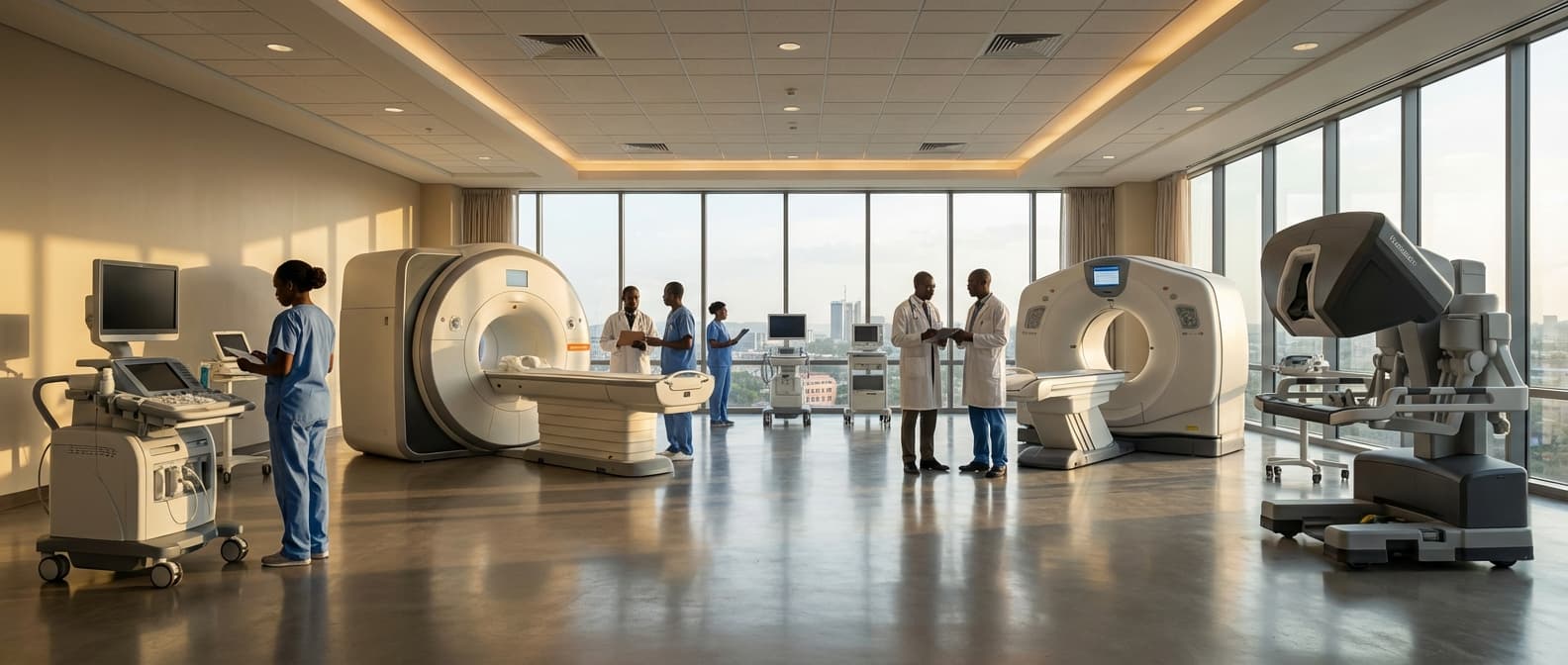
Renal Solutions in Zambia
Engineering Excellence & Technical Support
Complete dialysis systems and renal care equipment designed to deliver safe, effective, and patient-centered kidney treatment. High-standard technical execution following OEM protocols and local regulatory frameworks.
Advanced Dialysis Units
Renal Solutions equips Zambian healthcare facilities with state-of-the-art hemodialysis machines, featuring precise filtration capabilities and patient comfort controls, ensuring optimal treatment outcomes for renal failure patients across the nation.
Sterile Water Treatment
We implement and maintain advanced water purification systems specifically designed for dialysis, guaranteeing the highest purity of water crucial for patient safety and the efficacy of dialysis treatments in Zambia.
Comprehensive Clinical Training
Renal Solutions provides extensive training programs for Zambian nephrologists, nurses, and technicians on the operation of advanced renal equipment and best practices in chronic kidney disease management, fostering local expertise and sustainable care.
What Is Renal Solutions In Zambia?
Renal Solutions in Zambia refers to a comprehensive range of services and interventions aimed at the diagnosis, management, and treatment of kidney diseases (renal conditions) within the Zambian healthcare landscape. These solutions encompass both medical and supportive care, addressing the spectrum of renal pathology from early detection to advanced renal replacement therapy. The focus is on providing accessible and effective renal care to the Zambian population, recognizing the growing burden of chronic kidney disease (CKD) and end-stage renal disease (ESRD) due to factors such as hypertension, diabetes mellitus, and infectious diseases.
| Who Needs Renal Solutions? | Typical Use Cases |
|---|---|
| Individuals with Risk Factors for Kidney Disease: Patients with uncontrolled hypertension, diabetes mellitus, a family history of kidney disease, or recurrent urinary tract infections. | Early screening and diagnosis of kidney damage in asymptomatic individuals with risk factors. Management of early-stage chronic kidney disease (CKD) to slow progression and prevent complications. |
| Patients diagnosed with Chronic Kidney Disease (CKD): Individuals with varying degrees of impaired kidney function, requiring ongoing medical management. | Treatment of CKD complications such as anemia, hyperkalemia, acidosis, and mineral and bone disorders. Regular monitoring of renal function to assess disease progression and adjust treatment. |
| Patients with End-Stage Renal Disease (ESRD): Individuals whose kidneys have failed and require renal replacement therapy to survive. | Initiation and maintenance of hemodialysis or peritoneal dialysis. Management of fluid overload, uremia, and electrolyte imbalances in dialysis patients. Vascular access (fistula, graft, catheter) creation and care. |
| Individuals with Acute Kidney Injury (AKI): Patients experiencing a sudden and rapid decline in kidney function due to various causes (e.g., dehydration, infections, nephrotoxic agents). | Reversal of acute kidney injury through supportive care and treatment of the underlying cause. Temporary dialysis for severe AKI with fluid overload or uremia. |
| Patients with specific kidney diseases: Such as glomerulonephritis, polycystic kidney disease, or kidney stones. | Targeted treatment for specific renal pathologies. Management of symptoms and complications related to these conditions. |
| Healthcare Professionals and Institutions: Doctors, nurses, laboratory technicians, and dialysis centers. | Diagnostic workups and interpretation of results. Provision of dialysis treatments and related care. Training and capacity building in nephrology and renal care. |
Key Components of Renal Solutions in Zambia
- Diagnostic Services: This includes laboratory tests (serum creatinine, eGFR, urinalysis, urine protein-to-creatinine ratio, renal biopsy), and imaging modalities (renal ultrasound, CT scan, MRI) for accurate assessment of renal function and structure.
- Medical Management of Kidney Disease: This involves the pharmacological and non-pharmacological treatment of underlying causes (hypertension, diabetes), management of complications (anemia, bone disease, electrolyte imbalances), and slowing disease progression.
- Renal Replacement Therapy (RRT): This is the cornerstone of managing ESRD and includes: * Hemodialysis (HD): The most common form of RRT in Zambia, involving the use of an artificial kidney to filter blood. Services include vascular access creation and maintenance, dialysis prescription, and monitoring. * Peritoneal Dialysis (PD): Less prevalent but an available option, utilizing the body's own peritoneal membrane for filtration. * Kidney Transplantation: A definitive treatment for ESRD, though its availability and accessibility in Zambia are limited, often requiring international referral or collaboration.
- Patient Education and Support: Crucial for adherence to treatment, lifestyle modifications, and managing the psychosocial impact of chronic kidney disease.
- Public Health Initiatives and Awareness Campaigns: Aimed at early detection, prevention of risk factors, and increasing public understanding of kidney health.
- Infrastructure and Equipment Maintenance: Ensuring the availability and proper functioning of dialysis machines, laboratory equipment, and other essential medical devices.
Who Needs Renal Solutions In Zambia?
Renal Solutions addresses a critical need in Zambia by providing essential services and products for individuals and healthcare facilities managing kidney-related conditions. The demand stems from the growing prevalence of chronic kidney disease (CKD) and acute kidney injury (AKI), often exacerbated by co-existing conditions like diabetes and hypertension. These conditions require specialized care, regular monitoring, and access to life-sustaining treatments such as dialysis. Without adequate renal solutions, patients face severe health consequences, including reduced quality of life, increased mortality, and a significant burden on families and the healthcare system. Therefore, the services offered by Renal Solutions are vital for improving patient outcomes, supporting healthcare professionals, and contributing to a more robust and equitable healthcare landscape in Zambia.
| Target Customer Group | Specific Needs | Relevant Departments/Entities |
|---|---|---|
| Individuals with CKD/AKI | Dialysis access (hemo/peritoneal), medication, monitoring, lifestyle advice, transplantation support | Nephrology Departments, Dialysis Centers, General Hospitals, Private Clinics |
| Hospitals (Public & Private) | Dialysis machines, consumables, water treatment systems, trained personnel, maintenance services, pharmaceuticals | Nephrology Units, Intensive Care Units (ICUs), Emergency Departments, Procurement Departments, Biomedical Engineering Departments |
| Government Ministry of Health | Policy development, funding for renal care infrastructure, public health awareness campaigns, access to affordable treatments, training programs | Ministry of Health (National Level), Provincial Health Offices, District Health Management Teams |
| Non-Governmental Organizations (NGOs) & Charitable Foundations | Funding for patient support programs, equipment donations, awareness drives, advocacy | Patient Support Groups, Health Advocacy Organizations, International Aid Agencies |
| Healthcare Professionals (Doctors, Nurses, Technicians) | Training, continuing medical education, access to up-to-date knowledge, specialized equipment, support networks | Medical Training Institutions, Professional Associations, Nephrology Departments |
| Pharmaceutical Companies & Medical Suppliers | Distribution of essential renal medications, dialysis consumables, medical devices | Pharmacies, Medical Supply Stores, Hospital Warehouses, Procurement Departments |
Target Customers and Departments for Renal Solutions in Zambia
- Individuals with Chronic Kidney Disease (CKD)
- Individuals with Acute Kidney Injury (AKI)
- Patients requiring Hemodialysis
- Patients requiring Peritoneal Dialysis
- Patients undergoing Kidney Transplantation (pre and post-operative care)
- Elderly individuals with age-related kidney decline
- Individuals with Diabetes Mellitus and Hypertension (high-risk groups for CKD)
Renal Solutions Process In Zambia
The Renal Solutions process in Zambia outlines a structured workflow for managing patient inquiries and facilitating their access to renal care services. This process aims to ensure efficient patient onboarding, accurate assessment, and timely execution of treatment plans.
| Stage | Key Activities | Responsible Party | Outcome |
|---|---|---|---|
| Inquiry & Initial Contact | Patient/referrer contacts Renal Solutions (phone, email, walk-in). Basic information gathered. | Patient/Referrer, Renal Solutions Administrative Staff | Initial contact established, basic needs understood. |
| Information Gathering & Pre-Screening | Detailed medical history, symptoms, and previous treatments collected. Preliminary assessment of urgency and suitability. | Renal Solutions Nurse/Coordinator, Patient | Sufficient information for preliminary evaluation, indication for consultation. |
| Appointment Scheduling & Consultation | Appointment scheduled with nephrologist/specialist. Medical records reviewed, physical exam, initial diagnostics ordered. | Renal Solutions Scheduling Staff, Nephrologist/Specialist, Patient | Comprehensive medical assessment completed, diagnostic tests initiated. |
| Diagnosis & Treatment Plan Development | Diagnostic results analyzed. Formal diagnosis established. Personalized treatment plan created. | Nephrologist/Specialist, Medical Team | Confirmed diagnosis, clear treatment strategy defined. |
| Patient Education & Consent | Explanation of diagnosis, treatment options, risks, and benefits. Informed consent obtained. | Nephrologist/Specialist, Nurse Educator, Patient | Patient understands treatment, provides informed consent. |
| Service Initiation & Execution | Commencement of treatment (e.g., dialysis sessions, surgery preparation, medication). | Renal Solutions Medical Team, Nursing Staff | Patient receiving prescribed renal therapy. |
| Ongoing Monitoring & Follow-up | Regular health status checks, treatment effectiveness assessment, adjustment of plan as needed. Follow-up appointments. | Nephrologist/Specialist, Nursing Staff, Patient | Health status optimized, treatment effectiveness maintained, complications managed. |
| Discharge/Continued Care | Transition to home care with ongoing management or continued long-term treatment at Renal Solutions. | Medical Team, Patient, Family | Patient's long-term renal health managed. |
Renal Solutions Process Workflow in Zambia
- {"title":"1. Inquiry & Initial Contact","description":"The process begins when a potential patient, their family member, or a referring healthcare professional makes an inquiry. This can be through phone calls, emails, website forms, or direct visits to Renal Solutions centers. The initial contact aims to gather basic information and understand the patient's primary concerns."}
- {"title":"2. Information Gathering & Pre-Screening","description":"Following the initial inquiry, a Renal Solutions representative will gather more detailed information. This may include the patient's medical history, current symptoms, existing diagnoses, and any previous renal treatments. A preliminary assessment or pre-screening might be conducted to determine the urgency and suitability for their services."}
- {"title":"3. Appointment Scheduling & Consultation","description":"Based on the pre-screening, an appointment is scheduled with a Renal Solutions specialist or nephrologist. This consultation involves a thorough medical evaluation, including reviewing medical records, conducting physical examinations, and potentially ordering initial diagnostic tests (e.g., blood work, urine tests)."}
- {"title":"4. Diagnosis & Treatment Plan Development","description":"After the consultation and review of diagnostic results, the medical team at Renal Solutions will establish a formal diagnosis. Based on this diagnosis, a personalized treatment plan is developed. This plan outlines the recommended renal therapies, such as dialysis (hemodialysis or peritoneal dialysis), transplantation evaluation, or other medical interventions."}
- {"title":"5. Patient Education & Consent","description":"A crucial step is educating the patient and their family about the diagnosed condition, the proposed treatment plan, its benefits, risks, and alternatives. This phase ensures the patient understands their options and provides informed consent for the chosen course of action."}
- {"title":"6. Service Initiation & Execution","description":"Once consent is obtained, the Renal Solutions team initiates the agreed-upon treatment. This involves scheduling dialysis sessions, preparing the patient for surgery (if applicable), or commencing other prescribed medical management. This is the execution phase where the actual renal care is provided."}
- {"title":"7. Ongoing Monitoring & Follow-up","description":"Throughout the treatment period, patients receive continuous monitoring of their health status and the effectiveness of the therapy. Regular follow-up appointments are scheduled to assess progress, adjust the treatment plan as needed, and manage any complications."}
- {"title":"8. Discharge/Continued Care","description":"Depending on the patient's condition and treatment outcome, they may be discharged with ongoing management plans or continue to receive long-term care from Renal Solutions. This phase ensures a smooth transition and sustained well-being."}
Renal Solutions Cost In Zambia
The cost of renal solutions in Zambia is a significant consideration for individuals requiring dialysis and healthcare providers. These essential fluids play a crucial role in hemodialysis and peritoneal dialysis, removing waste products and excess fluid from the blood. The pricing of renal solutions is influenced by several factors, including the type of solution, brand, volume, import duties, distribution channels, and prevailing economic conditions within Zambia. Generally, costs are presented in Zambian Kwacha (ZMW).
| Type of Renal Solution (Typical) | Approximate Price Range (ZMW per Liter/Bag) | Notes |
|---|---|---|
| Hemodialysis Concentrate (Base Solution) | 80 - 150 | This is the concentrated form that is mixed with sterile water. Prices can vary significantly based on brand and specific formulation. |
| Hemodialysis Ready-to-Use Solution | 100 - 200 | Pre-mixed solutions are more convenient but generally more expensive. Often sold in larger volumes. |
| Peritoneal Dialysis Solution (Glucose 1.5% or 2.5%) | 150 - 250 | Typically sold in 2-liter bags. Prices depend on glucose concentration and brand. |
| Peritoneal Dialysis Solution (Glucose 4.25%) | 170 - 280 | Higher glucose concentrations are usually more expensive. Essential for patients requiring greater fluid removal. |
| Specialty Dialysis Solutions (e.g., low calcium, bicarbonate) | 200 - 400+ | These are formulated for specific patient needs and are generally the most expensive due to specialized ingredients and production. |
Factors Influencing Renal Solution Costs in Zambia
- Type of Dialysis (Hemodialysis vs. Peritoneal Dialysis): Hemodialysis solutions are typically used in-center or at home for hemodialysis, while peritoneal dialysis solutions are used for home-based dialysis administered directly into the peritoneal cavity.
- Solution Composition: Variations in electrolyte concentrations (sodium, potassium, calcium, magnesium) and glucose levels can affect the cost.
- Brand and Manufacturer: Renowned international brands may command higher prices due to perceived quality, research and development, and established market presence. Local or less established brands might offer more competitive pricing.
- Volume and Packaging: Solutions are available in various sizes, from small bags to larger containers. Larger volumes generally offer a lower per-liter cost but require greater upfront investment.
- Import Duties and Taxes: As many renal solutions are imported, customs duties, value-added tax (VAT), and other import-related charges significantly impact the final price for consumers and healthcare facilities.
- Distribution and Logistics: The cost of transportation, warehousing, and maintaining a cold chain (if required) from the point of import to the end-user contributes to the overall price.
- Healthcare Provider Markups: Hospitals and dialysis centers may add their own markups to cover operational costs, staff, and administrative expenses.
- Economic Factors: Inflation rates, currency exchange fluctuations, and the general economic stability of Zambia can influence the cost of imported goods, including renal solutions.
- Availability and Competition: Limited availability or lack of strong competition can lead to higher prices, while a more competitive market can drive prices down.
Affordable Renal Solutions Options
Accessing affordable renal solutions is crucial for individuals managing kidney disease. Understanding value bundles and implementing cost-saving strategies can significantly alleviate the financial burden associated with treatment and care. Value bundles often group services and products together at a reduced overall cost, while cost-saving strategies focus on maximizing benefits, exploring alternatives, and managing expenses proactively.
| Value Bundle Type | Description | Potential Cost Savings | Considerations |
|---|---|---|---|
| Dialysis Service Bundles | Includes all necessary services for dialysis, such as treatments, medications, lab work, and facility fees, often offered at a set monthly rate. | Predictable monthly costs, potential discounts for bundled services. | Ensure all essential services are included, compare pricing across providers. |
| Medication Management Programs | Combines prescription medications with adherence support, educational resources, and sometimes direct delivery. | Reduced medication costs through bulk purchasing or discounts, improved adherence leading to better health outcomes. | Verify which medications are included, check for hidden fees. |
| Comprehensive Kidney Care Plans | Integrates nephrology care, primary care, dietitians, social workers, and sometimes transportation services under a single coordinated plan. | Reduced hospitalizations and ER visits, improved overall management, potentially lower per-patient costs for providers leading to savings for patients. | Requires strong coordination between providers, patient engagement is crucial. |
| Equipment and Supply Packages (for home dialysis) | Bundles the necessary dialysis machine, supplies, and initial training into a single package, often with financing options. | Bulk purchasing discounts, simplified acquisition of essential equipment. | Understand ongoing supply costs, ensure adequate training and support are provided. |
Key Cost-Saving Strategies for Renal Care
- Generic Medications: Opt for generic versions of prescribed medications whenever possible. They are chemically identical to brand-name drugs but significantly less expensive.
- Explore In-Network Providers: Ensure your healthcare providers, including nephrologists, dialysis centers, and hospitals, are within your insurance network to minimize out-of-pocket expenses. Out-of-network care can be substantially more costly.
- Home Dialysis Options: Investigate the feasibility and cost-effectiveness of home dialysis (hemodialysis or peritoneal dialysis). While requiring an initial investment in equipment and training, it can offer long-term savings and increased convenience.
- Preventative Care and Lifestyle Management: Proactive management of underlying conditions like diabetes and hypertension, alongside a healthy diet and regular exercise, can slow kidney disease progression and reduce the need for more intensive treatments.
- Medication Adherence Programs: Participate in patient assistance programs offered by pharmaceutical companies or non-profit organizations for individuals who struggle to afford their medications.
- Negotiate Medical Bills: Don't hesitate to negotiate with healthcare providers for lower prices, especially if you are uninsured or facing significant out-of-pocket costs. Payment plans can also be arranged.
- Second Opinions: Obtain second opinions for significant procedures or treatment plans. This can confirm the necessity of the proposed care and potentially uncover more cost-effective alternatives.
- Utilize Insurance Benefits Fully: Understand your insurance policy thoroughly. Maximize preventative care benefits, understand co-pays, deductibles, and out-of-pocket maximums to budget effectively.
- Government Assistance Programs: Research and apply for federal and state assistance programs like Medicare, Medicaid, or specific state-funded kidney disease programs that can help cover treatment costs.
Verified Providers In Zambia
In Zambia's evolving healthcare landscape, identifying reliable and trustworthy medical providers is paramount. Franance Health stands out as a leader, offering a network of verified healthcare professionals and facilities that prioritize patient well-being and quality of care. This commitment to excellence makes Franance Health the premier choice for individuals seeking dependable medical services.
| Credential/Aspect | Franance Health's Standard | Benefit to Patients |
|---|---|---|
| Licensing and Registration | Verified active licenses and registration with relevant Zambian medical boards. | Ensures providers are legally authorized to practice, protecting patients from unqualified individuals. |
| Professional Qualifications | Confirmation of educational degrees, specialist certifications, and ongoing professional development. | Guarantees that practitioners possess the necessary expertise and up-to-date knowledge for effective treatment. |
| Experience and Track Record | Assessment of years in practice, areas of specialization, and (where possible) patient feedback or peer reviews. | Provides confidence in the provider's ability to handle a wide range of medical conditions and situations. |
| Ethical Conduct and Compliance | Adherence to a strict code of ethics and compliance with healthcare regulations. | Ensures patients receive respectful, honest, and unbiased care. |
| Facility Standards (if applicable) | Verification of clinic or hospital accreditation, equipment, and hygiene standards. | Confirms that medical facilities meet safety and quality benchmarks for patient care. |
Why Franance Health is the Best Choice:
- Rigorous Vetting Process: Franance Health implements a stringent credentialing and verification process for all its partner providers. This ensures that only qualified, licensed, and experienced medical professionals are included in their network.
- Commitment to Quality: Beyond basic qualifications, Franance Health assesses providers based on their dedication to patient satisfaction, ethical practices, and adherence to international healthcare standards.
- Comprehensive Network: Whether you need a general practitioner, specialist, or diagnostic services, Franance Health offers a wide-ranging network to meet diverse healthcare needs across Zambia.
- Patient-Centric Approach: Franance Health focuses on empowering patients with access to trusted care, streamlining the process of finding and booking appointments with reputable healthcare providers.
- Transparency and Trust: By clearly outlining their verification process and the credentials of their partners, Franance Health builds trust and provides peace of mind for its users.
- Accessibility and Convenience: Franance Health simplifies the search for quality healthcare, making it easier for individuals to access the services they require without compromising on trust or quality.
Scope Of Work For Renal Solutions
This Scope of Work (SOW) outlines the technical deliverables and standard specifications for the Renal Solutions project. The objective is to develop and implement a comprehensive digital platform for managing renal patient care, improving data accessibility, facilitating communication between healthcare providers, and ultimately enhancing patient outcomes.
| Component | Standard Specification | Description | Deliverable ID |
|---|---|---|---|
| Application Architecture | Microservices-based, Cloud-Native (AWS/Azure/GCP) | Scalable, resilient, and secure architecture adhering to industry best practices. | ARCH-001 |
| Front-end Development | React/Angular/Vue.js, Responsive Design | Intuitive and user-friendly interface accessible across various devices and screen sizes. | FE-DEV-001 |
| Back-end Development | Node.js/Python/Java, RESTful APIs | Robust and efficient API development for data management and system integration. | BE-DEV-001 |
| Database | PostgreSQL/MySQL, SQL, ACID Compliant | Secure and reliable storage of patient data, ensuring data integrity. | DB-SPEC-001 |
| EHR Integration | HL7 FHIR standard | Seamless integration with existing EHR systems for data exchange. | INT-EHR-001 |
| Security | HIPAA Compliance, OAuth 2.0, Encryption (TLS/SSL) | Adherence to all relevant healthcare data privacy and security regulations. | SEC-STD-001 |
| Testing | Agile Testing methodologies, Automated testing frameworks (e.g., Selenium, Jest) | Rigorous testing to ensure quality, performance, and functionality. | TEST-STD-001 |
| Deployment | CI/CD pipelines (e.g., Jenkins, GitLab CI), Docker, Kubernetes | Automated and efficient deployment process to staging and production environments. | DEP-STD-001 |
Technical Deliverables
- Cloud-based application architecture design and documentation.
- User interface (UI) and user experience (UX) design mockups and prototypes.
- Developed and tested web application (front-end and back-end).
- Integrated Electronic Health Record (EHR) system interface.
- Data migration strategy and executed data migration.
- API documentation for external system integration.
- Comprehensive test plans and executed test cases (unit, integration, system, user acceptance).
- Deployment and operational runbooks.
- Training materials and conducted user training sessions.
- Post-implementation support plan.
Service Level Agreement For Renal Solutions
This Service Level Agreement (SLA) outlines the response times and uptime guarantees for Renal Solutions' services. This agreement is made between Renal Solutions (hereinafter referred to as "Provider") and the Client (hereinafter referred to as "Customer") for the provision of [Specify the services covered, e.g., cloud-based EMR system, remote patient monitoring platform, data analytics services].
| Service Component | Uptime Guarantee | Response Time (Critical Incidents) | Response Time (High Priority Incidents) | Response Time (Medium Priority Incidents) | Response Time (Low Priority Incidents) |
|---|---|---|---|---|---|
| Core [Service Name] Functionality (e.g., Patient Record Access) | 99.9% | 15 minutes | 1 hour | 4 business hours | 8 business hours |
| [Specific Feature 1] (e.g., Prescription Management) | 99.5% | 30 minutes | 2 hours | 8 business hours | 16 business hours |
| [Specific Feature 2] (e.g., Reporting Module) | 99.0% | 1 hour | 4 hours | 12 business hours | 24 business hours |
| Data Backup and Recovery | N/A (covered by separate Disaster Recovery Plan, refer to Appendix A) | N/A | N/A | N/A | N/A |
Key Definitions
- Service Availability (Uptime): The percentage of time the Service is operational and accessible to the Customer.
- Downtime: Any period during which the Service is not operational or accessible to the Customer.
- Incident: Any event that causes or may cause a disruption to the Service.
- Response Time: The time it takes for the Provider to acknowledge and begin working on a reported Incident.
- Resolution Time: The time it takes for the Provider to resolve an Incident and restore the Service to full functionality.
- Scheduled Maintenance: Pre-planned periods of downtime for system updates, upgrades, or repairs, which will be communicated to the Customer in advance.
- Emergency Maintenance: Unplanned downtime required to address critical security vulnerabilities or system failures, which may not allow for advance notice.
Frequently Asked Questions

Ready when you are
Let's scope your Renal Solutions in Zambia project in Zambia.

Scaling healthcare logistics and technical systems across the entire continent.