
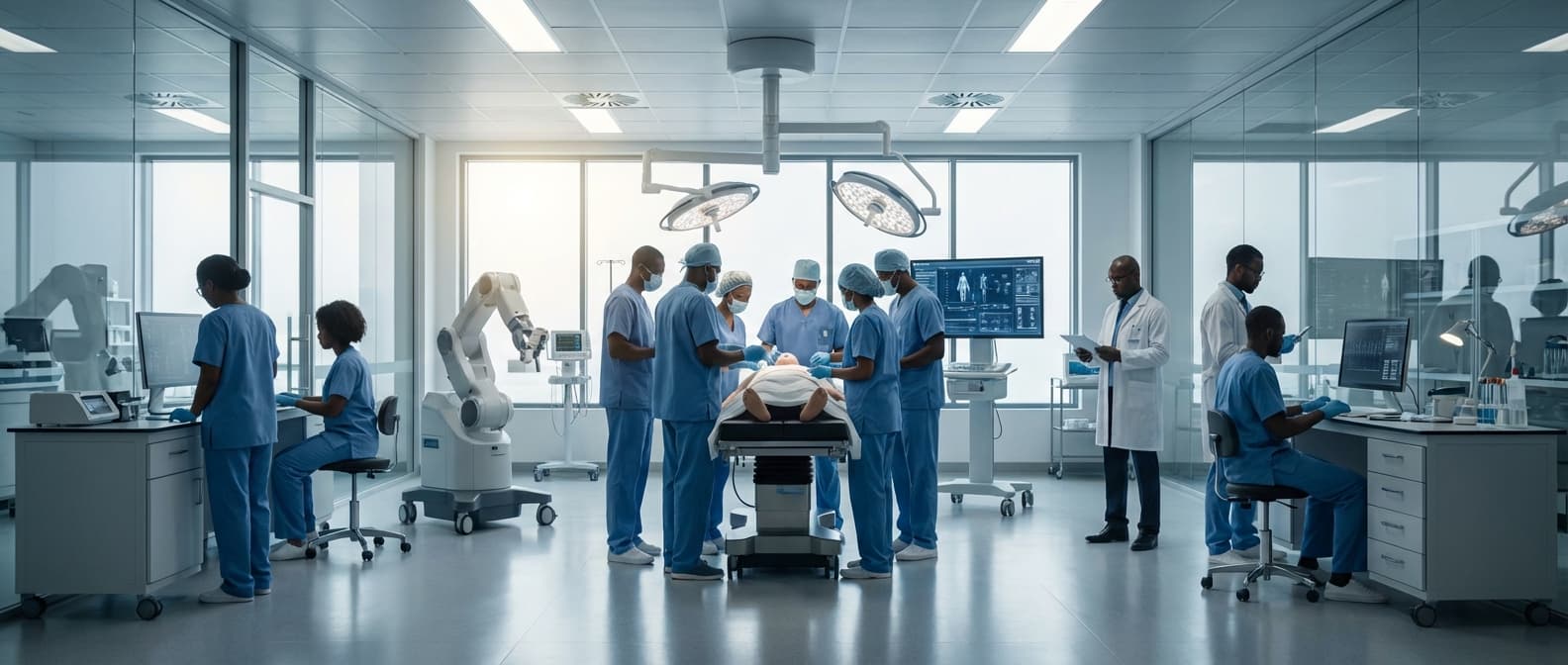
Biomedical Engineering Consulting in Zambia
Engineering Excellence & Technical Support
Equipment selection, procurement and implementation consulting High-standard technical execution following OEM protocols and local regulatory frameworks.
Advanced Medical Device Integration & Optimization
We provide expert consulting on the selection, integration, and optimization of cutting-edge medical devices for healthcare facilities across Zambia. Our services ensure seamless compatibility, enhance operational efficiency, and maximize the return on investment for advanced diagnostic and therapeutic equipment.
Navigating Zambian Medical Device Regulatory Pathways
Our specialized team offers comprehensive guidance through the Zambian medical device registration and regulatory compliance landscape. We streamline the approval process, ensuring adherence to local standards and facilitating the timely introduction of vital medical technologies into the Zambian market.
Biomedical Engineering & Healthcare Infrastructure Development
We partner with governments and private entities to design, implement, and manage robust biomedical engineering departments and healthcare infrastructure projects. Our solutions focus on sustainability, accessibility, and the effective deployment of medical technology to improve patient care outcomes throughout Zambia.
What Is Biomedical Engineering Consulting In Zambia?
Biomedical Engineering Consulting in Zambia encompasses the application of engineering principles and scientific knowledge to the healthcare sector, focusing on the development, implementation, maintenance, and optimization of medical technologies and systems. It involves providing expert advice and practical solutions to a range of stakeholders within Zambia's healthcare ecosystem, aiming to enhance patient care, improve operational efficiency, and ensure regulatory compliance. This specialized field bridges the gap between technology and medicine, addressing challenges unique to the Zambian context, such as resource limitations, infrastructure development, and the need for localized training and support.
| Stakeholder Group | Needs Addressed | Typical Use Cases |
|---|---|---|
| Government Ministries of Health & Public Hospitals: | Optimizing national healthcare infrastructure, ensuring equitable access to medical technology, managing large-scale procurement, and improving service delivery efficiency. | Developing national medical equipment strategies, establishing centralized maintenance depots, planning for new hospital wings or facilities, implementing national medical device registries. |
| Private Hospitals & Clinics: | Enhancing service offerings, improving operational efficiency, ensuring patient safety, and maintaining a competitive edge through advanced medical technology. | Selecting and procuring state-of-the-art diagnostic imaging equipment, developing robust in-house maintenance programs, advising on specialized unit development (e.g., ICU, operating theatres). |
| Medical Device Manufacturers & Distributors: | Navigating local regulatory pathways, establishing distribution and service networks, conducting market assessments, and providing technical after-sales support. | Assisting with import and registration of new medical devices, establishing authorized service centers, providing training to local technicians, conducting post-market surveillance. |
| Non-Governmental Organizations (NGOs) & International Development Agencies: | Facilitating the deployment of medical equipment in underserved areas, ensuring sustainability of technology interventions, and building local capacity for equipment management. | Planning equipment packages for mobile clinics or remote health posts, developing training modules for local healthcare workers, conducting needs assessments for specific health programs. |
| Academic & Research Institutions: | Advising on the acquisition and maintenance of research-grade laboratory equipment, developing specialized training programs for students, and supporting research infrastructure. | Specifying requirements for new biomedical engineering laboratories, providing expertise on the setup and operation of complex analytical instruments, developing curriculum components. |
Key Service Components
- Medical Equipment Planning & Procurement: Advising on the selection, acquisition, and integration of appropriate medical devices and technologies based on clinical needs, budget constraints, and long-term strategic goals.
- Equipment Management & Maintenance: Developing and implementing robust programs for planned preventative maintenance (PPM), corrective maintenance, and calibration of medical devices to ensure reliability, safety, and longevity.
- Facility Design & Infrastructure Development: Providing engineering input for the design, construction, and renovation of healthcare facilities, including critical infrastructure such as medical gas systems, power supply, and HVAC for specialized clinical environments.
- Technology Assessment & Implementation: Evaluating emerging biomedical technologies and advising on their suitability for the Zambian healthcare landscape, including their integration into existing workflows and systems.
- Regulatory Compliance & Standards Adherence: Assisting healthcare providers and manufacturers in navigating and complying with national and international regulations pertaining to medical devices, quality management systems, and healthcare facility standards.
- Training & Capacity Building: Developing and delivering specialized training programs for biomedical technicians, engineers, and clinical staff on the operation, maintenance, and troubleshooting of medical equipment.
- Risk Management & Patient Safety: Identifying and mitigating risks associated with medical technology use, ensuring patient safety through proper equipment selection, installation, maintenance, and user training.
- Biocompatibility & Sterilization Consulting: Providing expertise on the selection of biocompatible materials for medical devices and advising on effective sterilization and disinfection protocols.
- Healthcare IT & Data Management: Consulting on the implementation and integration of health information systems (HIS), electronic health records (EHRs), and medical imaging archives (PACS) to improve data management and accessibility.
Who Needs Biomedical Engineering Consulting In Zambia?
Biomedical Engineering Consulting in Zambia is a vital service addressing the growing needs of healthcare institutions and related industries. The demand stems from a desire to improve patient care, enhance operational efficiency, ensure regulatory compliance, and leverage advanced medical technologies. Consultants offer expertise in areas such as equipment selection, maintenance, validation, risk management, facility design, and training, ultimately contributing to a more robust and accessible healthcare system.
| Customer Type | Key Departments Involved | Common Consulting Needs |
|---|---|---|
| Hospitals (Public & Private) | Clinical Engineering/Biomedical Department, Procurement, Facilities Management, IT Department, Administration, Clinical Departments (e.g., Radiology, ICU, Surgery) | Equipment lifecycle management (selection, acquisition, installation, maintenance, decommissioning), Medical device risk management, Equipment validation and calibration, Training of clinical staff on equipment use, Development of preventative maintenance programs, Facility planning and infrastructure assessment, Regulatory compliance (e.g., medical device registration, safety standards), Tender/procurement support, Cybersecurity for medical devices. |
| Clinics & Health Centers | Clinic Management, Nursing Staff, Procurement Officer (if applicable) | Basic equipment needs assessment, Simple maintenance planning, Equipment safety checks, Procurement advice for essential equipment. |
| Medical Device Manufacturers & Distributors | Sales & Marketing, Technical Support, Regulatory Affairs, Operations | Market entry strategies, Local regulatory compliance assistance, Service and maintenance network development, Technical training for local staff, Post-market surveillance strategies. |
| Government Ministries & Agencies | Ministry of Health (various directorates), Medical Stores Limited (or equivalent), National Health Insurance Management Authority (NHIMA), Zambia Medicines Regulatory Authority (ZAMRA) | Development of national medical equipment policies and strategies, Procurement guidelines and framework development, Capacity building for public health institutions, Standards development for medical device safety and quality, Health technology assessment, National medical equipment inventory and management systems. |
| Educational & Research Institutions | Laboratory Management, Research Departments, Procurement, Facilities Management | Lab design and setup, Specialized research equipment procurement and installation, Equipment maintenance contracts, Safety protocols for laboratory equipment, Training on advanced instrumentation. |
| Non-Governmental Organizations (NGOs) & International Aid Organizations | Program Management, Logistics, Procurement, Technical Support | Needs assessments for specific projects, Equipment selection and procurement for development projects, Installation and commissioning of donated equipment, Training of local personnel for equipment operation and maintenance, Long-term sustainability planning for medical infrastructure. |
| Insurance Companies | Claims Department, Underwriting, Risk Management | Valuation of medical equipment for insurance policies, Assessment of equipment condition and maintenance history, Risk assessment related to medical device failures or safety issues, Expert opinions on medical device-related incidents. |
Target Customers and Departments in Zambia for Biomedical Engineering Consulting
- {"title":"Hospitals (Public & Private)","description":"Hospitals are the primary beneficiaries of biomedical engineering consulting. They require assistance with a wide range of needs related to their medical equipment and infrastructure."}
- {"title":"Clinics & Health Centers","description":"Smaller healthcare facilities, while often having fewer complex needs, still benefit from expert advice on equipment procurement, maintenance strategies, and basic safety protocols."}
- {"title":"Medical Device Manufacturers & Distributors","description":"Companies involved in the sale, distribution, and servicing of medical equipment in Zambia can leverage consulting services for market analysis, regulatory affairs, and technical support strategies."}
- {"title":"Government Ministries & Agencies (Ministry of Health, Regulatory Bodies)","description":"Government entities responsible for healthcare policy, regulation, and public health initiatives can utilize consultants for developing standards, procurement guidelines, and national strategies for medical technology management."}
- {"title":"Educational & Research Institutions","description":"Universities and research centers with medical programs or research facilities may require consulting for setting up labs, procuring specialized equipment, and ensuring its safe and effective operation."}
- {"title":"Non-Governmental Organizations (NGOs) & International Aid Organizations","description":"Organizations focused on improving healthcare in Zambia often need specialized biomedical engineering expertise to ensure the effective deployment and sustainability of donated or procured medical equipment."}
- {"title":"Insurance Companies","description":"Insurers may engage consultants to assess the condition and value of medical equipment for insurance purposes, or to advise on risk mitigation related to medical device usage."}
Biomedical Engineering Consulting Process In Zambia
The biomedical engineering consulting process in Zambia, like in many other regions, typically follows a structured workflow to ensure projects are executed efficiently and effectively. This process begins with an initial client inquiry and culminates in the final delivery and review of the project. Key stages include understanding client needs, assessing the existing infrastructure, developing solutions, procurement and implementation, training, and post-implementation support. Each phase requires meticulous planning, communication, and adherence to relevant Zambian regulations and international standards for medical devices and healthcare facilities.
| Stage | Description | Key Activities | Deliverables/Outcomes | Zambian Context Considerations |
|---|---|---|---|---|
| Inquiry & Initial Consultation | The client (hospital, clinic, government agency, etc.) expresses interest in biomedical engineering consulting services. | Initial meeting, discussion of project scope, preliminary identification of needs, explanation of consulting services offered. | Understanding of client requirements, preliminary project feasibility assessment. | Awareness of local healthcare landscape, potential funding sources, and key stakeholders in Zambia's health sector. |
| Needs Assessment & Site Survey | A detailed evaluation of the client's existing biomedical infrastructure, operational requirements, and identified gaps. | On-site visits, interviews with staff (clinicians, technicians, administrators), inventory of existing equipment, assessment of facility infrastructure (power, water, space), review of maintenance records. | Comprehensive needs assessment report, identification of specific challenges and opportunities, baseline data collection. | Understanding of typical equipment maintenance practices in Zambia, common infrastructure limitations, and the availability of skilled local technicians. |
| Proposal Development & Agreement | Formalizing the project scope, objectives, timeline, and budget based on the needs assessment. | Developing a detailed technical and financial proposal, outlining methodology, proposed solutions, timelines, cost breakdown, and terms of engagement. Negotiation and finalization of the consulting agreement. | Approved proposal, signed consulting contract. | Compliance with Zambian procurement regulations for public institutions, consideration of local currency fluctuations, and payment terms. |
| Solution Design & Planning | Developing tailored engineering solutions to address the identified needs, including equipment selection, facility upgrades, and workflow optimization. | System design, technical specifications development, drafting of blueprints (if applicable), development of maintenance protocols, risk assessment, and contingency planning. | Detailed design documents, technical specifications, project plan, risk management plan. | Ensuring solutions are appropriate for the Zambian context (e.g., power stability, availability of spare parts, ease of use by local staff) and alignment with Ministry of Health guidelines. |
| Procurement & Logistics | Acquisition and delivery of all necessary equipment, materials, and services. | Sourcing suppliers, managing tenders (if required), negotiating contracts, handling import/export procedures, customs clearance, and transportation to the site in Zambia. | Procured equipment and materials delivered to site. | Navigating Zambian customs regulations and import duties, identifying reliable local logistics partners, ensuring compliance with medical device import regulations. |
| Installation & Commissioning | The physical setup and testing of all new equipment and infrastructure, ensuring they function as per specifications. | Equipment installation, calibration, system integration, performance testing, validation, and quality assurance checks. | Installed and commissioned systems, functional equipment, validation reports. | Ensuring proper grounding and power supply, adherence to safety standards, availability of qualified technicians for installation. |
| Training & Handover | Equipping the client's staff with the knowledge and skills to operate and maintain the new systems. | Developing training materials, conducting hands-on training sessions for clinical and technical staff, providing user manuals and maintenance guides, formal handover of systems. | Trained personnel, comprehensive documentation, successful handover. | Tailoring training to the literacy levels and existing skill sets of Zambian healthcare professionals, providing training in local languages if necessary, incorporating practical case studies relevant to Zambian health issues. |
| Post-Implementation Support & Evaluation | Providing ongoing technical assistance, troubleshooting, and assessing the effectiveness of the implemented solutions. | Remote and on-site support, corrective maintenance, performance monitoring, gathering feedback from users, conducting post-implementation review to measure impact and identify areas for improvement. | Support services, performance reports, client satisfaction feedback. | Establishing sustainable maintenance frameworks, identifying and developing local capacity for ongoing support, addressing common equipment failures specific to the Zambian environment. |
| Project Closure | Formal completion of the consulting project, including final reporting and administrative close-out. | Submission of final project report, financial reconciliation, documentation archiving, formal sign-off by the client. | Final project report, project closure documentation. | Ensuring all contractual obligations are met, compliance with any Zambian financial reporting requirements. |
Biomedical Engineering Consulting Workflow in Zambia
- Inquiry & Initial Consultation
- Needs Assessment & Site Survey
- Proposal Development & Agreement
- Solution Design & Planning
- Procurement & Logistics
- Installation & Commissioning
- Training & Handover
- Post-Implementation Support & Evaluation
- Project Closure
Biomedical Engineering Consulting Cost In Zambia
Biomedical engineering consulting costs in Zambia can vary significantly based on several factors. These include the complexity of the project, the experience and reputation of the consultant, the duration of the engagement, and the specific services required. Clients can expect a range of pricing, typically expressed in Zambian Kwacha (ZMW). Understanding these elements will help in budgeting for consulting services in the Zambian healthcare and research sectors.
| Service Type/Consultant Level | Estimated Daily Rate (ZMW) | Estimated Project Rate (ZMW) | Notes |
|---|---|---|---|
| Junior Consultant/Basic Assessment (e.g., simple equipment inventory, initial feasibility) | 1,500 - 3,000 | 5,000 - 15,000 (for short projects) | Suitable for less complex, straightforward tasks. May involve limited local experience. |
| Mid-Level Consultant/Standard Projects (e.g., equipment procurement advice, training planning, moderate complexity assessments) | 3,000 - 6,000 | 15,000 - 50,000 (for typical projects) | Represents a good balance of experience and cost for common consulting needs. |
| Senior Consultant/Specialized & Complex Projects (e.g., regulatory affairs for new medical devices, strategic hospital planning, advanced technology integration, large-scale project management) | 6,000 - 12,000+ | 50,000 - 250,000+ (depending on scope and duration) | Requires deep expertise, significant experience, and often involves high-stakes decision-making. Can be highly specialized. |
| Regulatory Affairs & Compliance Consulting (specific) | 4,000 - 10,000+ | 20,000 - 100,000+ | Highly specialized field. Costs depend on the type of device/service and the complexity of regulatory pathways. |
| Project Management (large scale) | 5,000 - 15,000+ | Negotiable based on project value and duration | Often a percentage of project cost or a high daily rate for significant responsibility. |
Key Pricing Factors for Biomedical Engineering Consulting in Zambia
- Project Scope and Complexity: Intricate projects requiring specialized knowledge (e.g., advanced medical device design, regulatory compliance for novel technologies, or large-scale hospital equipment planning) will command higher fees than simpler tasks like basic equipment maintenance assessments or feasibility studies.
- Consultant's Expertise and Experience: Senior consultants with extensive track records, specialized certifications, and a proven history of successful projects in Zambia or similar African markets will generally charge more than junior consultants or those with limited local experience.
- Duration of Engagement: Consulting fees are often calculated on an hourly, daily, or project basis. Longer-term projects or those requiring continuous involvement will naturally incur higher overall costs.
- Specific Services Required: The type of service sought is a major determinant. This could range from needs assessments, strategic planning, equipment procurement advice, installation and commissioning support, training, quality assurance, to regulatory affairs consulting.
- Travel and Accommodation: For consultants who are not based locally or need to travel to different regions within Zambia, expenses related to travel, accommodation, and per diems will be factored into the total cost.
- Urgency of the Project: Projects with tight deadlines or requiring immediate attention may incur premium charges.
- Market Demand and Consultant Availability: High demand for specialized biomedical engineering expertise in Zambia, coupled with limited availability of qualified consultants, can drive up pricing.
- Overhead Costs: Consulting firms or independent consultants have overheads (office space, administrative support, insurance) that are incorporated into their fee structures.
Affordable Biomedical Engineering Consulting Options
Navigating the complexities of biomedical engineering can be a significant undertaking for startups, researchers, and established companies alike. However, access to expert guidance doesn't have to come with an exorbitant price tag. This guide explores affordable biomedical engineering consulting options, focusing on how value bundles and strategic cost-saving measures can make specialized expertise accessible.
| Cost-Saving Strategy | Description | Example Application |
|---|---|---|
| Define Clear Scope & Deliverables: | Precisely outlining project objectives, required outcomes, and specific deliverables before engaging a consultant. This prevents scope creep and ensures efficient use of consulting time. | Specifying that a design review should cover risk management and a subset of regulatory requirements, rather than an open-ended critique. |
| Phased Consulting Engagements: | Breaking down larger projects into smaller, manageable phases, each with its own defined scope and budget. This allows for iterative development and budget control. | Engaging consultants for initial feasibility studies, followed by separate engagements for prototype development and then regulatory submission support. |
| Leverage Remote & Virtual Consulting: | Utilizing video conferencing, collaborative software, and digital documentation for communication and knowledge sharing, reducing travel costs and increasing accessibility. | Conducting regular progress meetings via Zoom and using cloud-based platforms for document sharing and feedback. |
| Explore Niche or Specialized Consultancies: | Smaller, specialized firms or independent consultants often have lower overheads and can offer competitive rates for their specific areas of expertise. | Seeking out a consultant with deep expertise in a specific medical device material instead of a large, general engineering firm. |
| Consider Skill-Sharing or Knowledge Transfer: | Working with consultants to train internal teams in specific areas, reducing the long-term reliance on external expertise for repetitive tasks. | Having a consultant lead workshops on specific aspects of IEC 62304 software development for your in-house engineering team. |
| Utilize Existing Templates & Frameworks: | Leveraging consultants who employ pre-existing, well-vetted templates for documentation (e.g., design history files, risk management plans) can accelerate the process and reduce custom development time. | A consultant providing a pre-built template for a Quality Management System (QMS) that can be customized for your company. |
| Investigate Government Grants & Funding: | Exploring opportunities for grants or funding programs that may subsidize the cost of consulting services for innovative biomedical projects. | Researching Small Business Innovation Research (SBIR) grants that can cover R&D and consulting costs. |
Understanding Value Bundles in Consulting
- What are Value Bundles? Value bundles are packages of consulting services designed to offer a comprehensive solution for specific project phases or common needs, rather than billing for individual hours. They provide predictable costs and can include a defined scope of work, deliverables, and timelines.
- Benefits of Value Bundles:
- Predictable Budgeting: Fixed pricing eliminates uncertainty about overall project costs.
- Streamlined Processes: Bundles are often tailored to common project archetypes, leading to more efficient workflows.
- Comprehensive Support: They ensure all necessary aspects of a particular project phase are covered.
- Focus on Outcomes: Bundles emphasize the delivery of specific results rather than just time spent.
- Potential for Cost Savings: By bundling services, consultants can often offer a lower overall price compared to ad-hoc hourly rates.
Verified Providers In Zambia
In Zambia, ensuring you receive quality healthcare is paramount. This means seeking out verified providers who demonstrate a commitment to excellence, patient safety, and adherence to stringent medical standards. Franance Health stands out as a leading example of such a verified provider, offering a comprehensive suite of services underpinned by a dedication to best practices and patient well-being. Their credentials are a testament to their unwavering pursuit of quality healthcare.
| Credential Type | Description | Franance Health's Compliance |
|---|---|---|
| Ministry of Health Accreditation | Official recognition by the Zambian Ministry of Health signifying adherence to national healthcare standards and regulations. | Fully accredited and compliant with all Zambian Ministry of Health requirements. |
| Professional Licenses | Valid licenses for all medical practitioners, ensuring they are qualified and authorized to practice. | All medical staff hold current and valid professional licenses. |
| Quality Management Systems | Implementation of systems to monitor and improve the quality of services provided, focusing on patient safety and satisfaction. | Utilizes robust quality management systems for continuous improvement. |
| Continuing Professional Development (CPD) | Mandatory participation of medical staff in ongoing training and education to stay abreast of the latest medical advancements and practices. | Strong emphasis on CPD for all healthcare professionals. |
| Infection Control Protocols | Strict adherence to established protocols to prevent the spread of infections within the healthcare facility. | Implements and rigorously follows comprehensive infection control protocols. |
Why Franance Health is the Best Choice:
- Accreditation and Licensing: Franance Health operates under full compliance with Zambian Ministry of Health regulations and holds all necessary accreditations. This ensures they meet national healthcare standards.
- Qualified Medical Professionals: Their team comprises highly trained and experienced doctors, nurses, and specialists who are continuously updating their skills and knowledge through ongoing professional development.
- Patient-Centric Approach: Franance Health prioritizes patient comfort, privacy, and effective communication. They are committed to understanding individual needs and providing personalized care plans.
- Advanced Technology and Facilities: The clinic is equipped with modern medical technology and maintains clean, well-equipped facilities designed to ensure accurate diagnoses and effective treatments.
- Adherence to Ethical Standards: Integrity and ethical conduct are core values at Franance Health, guaranteeing that all patient interactions and treatments are conducted with the utmost professionalism and respect.
- Positive Patient Outcomes and Testimonials: A strong track record of successful treatments and positive feedback from satisfied patients further validates Franance Health's commitment to delivering superior healthcare.
Scope Of Work For Biomedical Engineering Consulting
This Scope of Work (SOW) outlines the services to be provided by [Consulting Firm Name] (hereinafter referred to as 'Consultant') to [Client Organization Name] (hereinafter referred to as 'Client') for biomedical engineering consulting. The objective of this engagement is to provide expert technical guidance, support, and deliverables in the area of [Specific Area of Biomedical Engineering, e.g., medical device design, regulatory compliance, clinical trial support]. This document details the technical deliverables and standard specifications that will be adhered to throughout the project lifecycle.
| Task/Phase | Description | Technical Deliverables | Standard Specifications/Methodologies | Timeline (Estimated) |
|---|---|---|---|---|
| Phase 1: Needs Assessment & Planning | Understand client requirements, define project scope, and develop a detailed project plan. | Project Charter, Detailed Project Plan, Stakeholder Analysis Report. | ISO 9001 (Quality Management), PMBOK (Project Management Body of Knowledge) principles, Client's internal guidelines. | 2-4 Weeks |
| Phase 2: [Specific Technical Area] Development/Analysis | Execute core biomedical engineering tasks as per project requirements. This may include conceptual design, feasibility studies, risk assessments, prototyping, or data analysis. | Design Specifications, Technical Reports (e.g., Feasibility Study Report, Risk Management Plan, Prototype Design Documentation), Test Protocols. | IEC 60601 Series (Medical Electrical Equipment), ISO 13485 (Medical Devices - Quality Management Systems), FDA Guidance Documents, IEEE standards relevant to specific technologies, Client's design control procedures. | Variable (Based on complexity) |
| Phase 3: Verification & Validation (V&V) | Conduct testing and analysis to confirm that the developed solution meets specified requirements and intended use. | Verification Test Reports, Validation Test Reports, Usability Testing Reports (if applicable). | ISO 14971 (Medical Devices - Application of Risk Management to Medical Devices), relevant IEC/ISO standards for testing specific device types, Good Clinical Practice (GCP) for clinical validation if applicable. | Variable (Based on complexity) |
| Phase 4: Regulatory Strategy & Documentation Support | Provide guidance on regulatory pathways and support the preparation of required documentation for regulatory submissions. | Regulatory Strategy Report, Outline of Submission Dossier, Draft Technical File Sections. | FDA 21 CFR Part 820 (Quality System Regulation), EU MDR/IVDR (Medical Device Regulation/In Vitro Diagnostic Medical Device Regulation), country-specific regulatory requirements. | 2-6 Weeks |
| Phase 5: Final Reporting & Knowledge Transfer | Summarize project findings, provide recommendations, and facilitate knowledge transfer to the client team. | Final Project Report, Executive Summary, Presentation of Findings, Recommendations for Future Steps. | Client's preferred reporting formats, best practice documentation principles. | 1-2 Weeks |
Project Objectives
- To provide expert biomedical engineering expertise in [Specific Area].
- To develop and deliver specified technical documentation and reports.
- To ensure adherence to relevant industry standards and regulatory requirements.
- To facilitate knowledge transfer and provide recommendations for future development.
Service Level Agreement For Biomedical Engineering Consulting
This Service Level Agreement (SLA) outlines the guaranteed response times and uptime for Biomedical Engineering Consulting services provided by [Your Company Name] to [Client Name]. This agreement is valid from [Start Date] to [End Date].
| Service Component | Priority Level | Response Time Guarantee | Uptime Guarantee |
|---|---|---|---|
| Email/Ticket Support | Critical (System Failure/Major Interruption) | 1 hour | 99.9% (Monthly) |
| Email/Ticket Support | High (Significant Performance Degradation) | 4 business hours | 99.9% (Monthly) |
| Email/Ticket Support | Medium (Minor Issue/Information Request) | 8 business hours | 99.9% (Monthly) |
| Email/Ticket Support | Low (General Inquiry/Future Planning) | 24 business hours | 99.9% (Monthly) |
| Scheduled Consultations/Meetings | All | Confirmed within 48 business hours of request | N/A (Scheduled events are subject to mutual availability) |
| Remote Access to Shared Resources (if applicable) | All | N/A | 99.9% (Monthly) |
Service Level Objectives
- The following are the defined response times for different priority levels of support requests.
- Uptime guarantees ensure the availability of consulting resources and communication channels.
Frequently Asked Questions

Ready when you are
Let's scope your Biomedical Engineering Consulting in Zambia project in Zambia.

Scaling healthcare logistics and technical systems across the entire continent.