
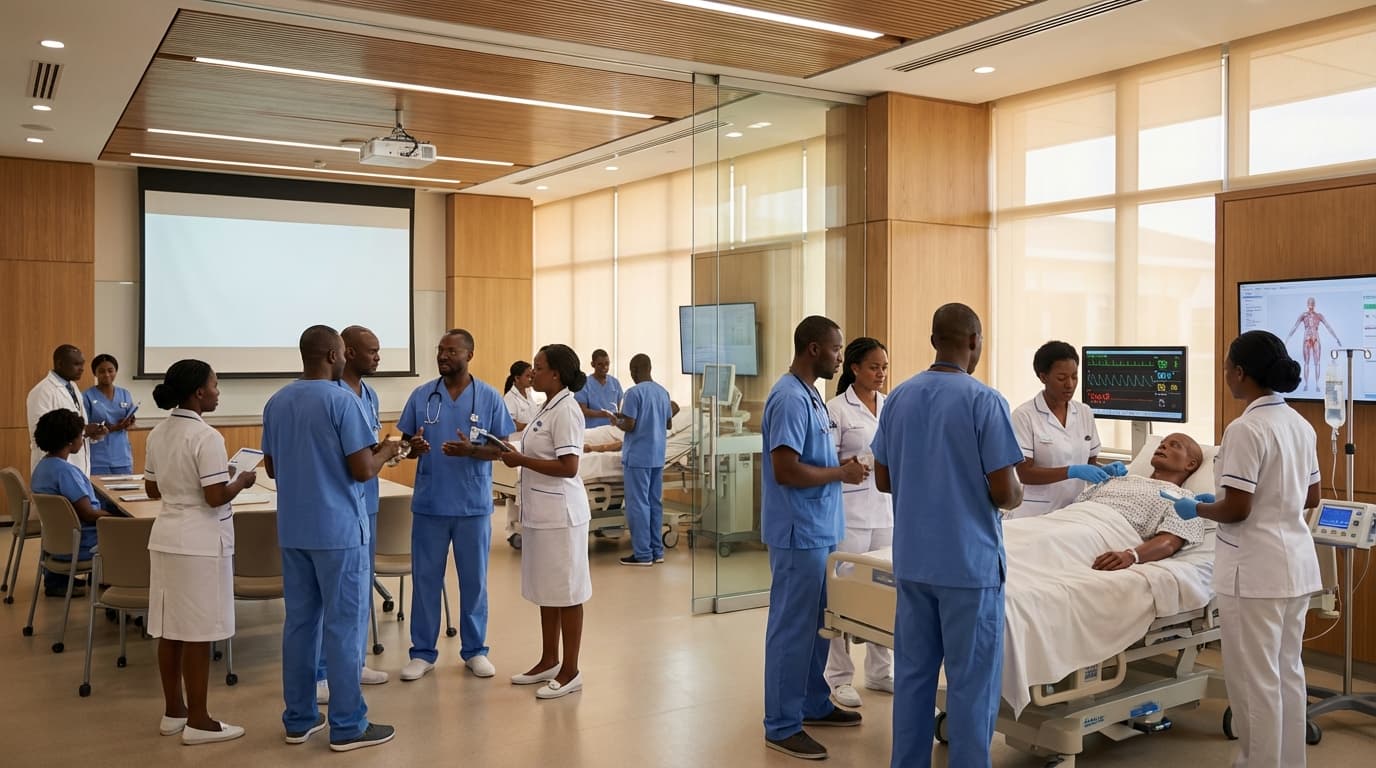
Equipment Training & Education in Uganda
Engineering Excellence & Technical Support
Comprehensive equipment training and certification programs High-standard technical execution following OEM protocols and local regulatory frameworks.
Digital Learning Platform for Agricultural Equipment
Deploying an interactive, mobile-first digital platform offering video tutorials, simulations, and knowledge checks for the operation and maintenance of modern agricultural machinery, directly accessible by farmers and technicians across Uganda.
Hands-On Training Workshops with Diagnostic Tools
Conducting regional, hands-on workshops for mechanics and operators, focusing on practical troubleshooting and repair techniques using specialized diagnostic equipment, ensuring real-world competency and reduced downtime for critical machinery.
Augmented Reality (AR) Assisted Maintenance Guides
Implementing AR applications that overlay step-by-step maintenance instructions and real-time diagnostics onto actual equipment, empowering field technicians with visual guidance and reducing reliance on extensive printed manuals, improving efficiency and accuracy.
What Is Equipment Training & Education In Uganda?
Equipment training and education in Uganda refers to the systematic process of imparting knowledge, skills, and competencies necessary for the safe, efficient, and effective operation, maintenance, and repair of specific machinery, tools, and technological systems. This service is crucial for bridging the skills gap and ensuring optimal asset utilization across various sectors. It encompasses theoretical instruction, practical hands-on experience, and ongoing professional development tailored to the Ugandan context, considering local regulations, environmental conditions, and prevalent technological landscapes.
| Who Needs Equipment Training & Education? | Typical Use Cases | ||
|---|---|---|---|
| Industrial Workers: Operators, technicians, and engineers in manufacturing, processing plants, and heavy industry. | Operating heavy machinery (e.g., excavators, cranes, forklifts) in construction and logistics. | Managing and maintaining production line equipment in factories. | Utilizing specialized laboratory or scientific instruments. |
| Agricultural Professionals: Farmers, farm managers, and extension workers. | Operating and maintaining tractors, harvesters, and irrigation systems. | Using advanced agricultural machinery for precision farming. | Implementing mechanized post-harvest handling techniques. |
| Healthcare Personnel: Doctors, nurses, and biomedical engineers. | Operating sophisticated medical diagnostic equipment (e.g., MRI scanners, X-ray machines). | Using life-support systems and surgical instruments. | Performing maintenance and calibration of medical devices. |
| IT and Communications Professionals: System administrators, network engineers, and support staff. | Configuring and managing servers, routers, and network infrastructure. | Deploying and troubleshooting telecommunications equipment. | Operating data center management systems. |
| Construction and Infrastructure Workers: Site supervisors, equipment operators, and maintenance staff. | Operating construction vehicles and heavy equipment. | Installing and maintaining building systems (HVAC, electrical). | Utilizing surveying and measurement equipment. |
| Energy Sector Personnel: Technicians and engineers in power generation, oil, and gas. | Operating and maintaining power turbines and generators. | Managing drilling and extraction equipment in the oil and gas industry. | Working with renewable energy systems (solar, wind). |
Key Components of Equipment Training & Education in Uganda
- Needs Assessment: Identifying specific skill deficiencies and training requirements within organizations or industries.
- Curriculum Development: Designing structured training programs, modules, and learning materials relevant to target equipment and user roles.
- Instructional Delivery: Employing diverse methodologies, including classroom lectures, simulations, on-the-job training (OJT), and e-learning platforms.
- Practical Skill Acquisition: Facilitating hands-on practice with actual equipment under expert supervision to build proficiency.
- Safety Protocols Training: Emphasizing adherence to national and international safety standards, hazard identification, and emergency procedures.
- Maintenance and Troubleshooting: Training personnel on routine maintenance schedules, diagnostic procedures, and common repair techniques.
- Certification and Assessment: Evaluating learner competency through practical tests, written examinations, and performance-based assessments to validate acquired skills.
- Continuous Professional Development: Offering advanced training, refresher courses, and updates on new technologies and equipment models.
- Customization: Adapting training content and delivery methods to the specific needs of different industries, organizational structures, and equipment types.
Who Needs Equipment Training & Education In Uganda?
Equipment training and education are crucial for a wide range of individuals and organizations in Uganda to ensure safe, efficient, and productive use of machinery and technology. This is vital across various sectors, from agriculture and manufacturing to healthcare and construction, to minimize accidents, prolong equipment lifespan, reduce downtime, and enhance overall operational effectiveness.
| Sector/Industry | Key Departments/Roles Requiring Training | Examples of Equipment |
|---|---|---|
| Agriculture | Farm Operators, Mechanics, Cooperative Managers, Extension Officers | Tractors, harvesters, irrigation systems, processing machinery, pesticides sprayers |
| Manufacturing | Machine Operators, Production Supervisors, Maintenance Technicians, Quality Control | Lathes, milling machines, welding equipment, packaging machines, CNC machines |
| Construction | Equipment Operators, Site Supervisors, Mechanics, Safety Officers | Excavators, bulldozers, cranes, concrete mixers, power tools |
| Healthcare | Medical Technicians, Nurses, Doctors, Biomedical Engineers | X-ray machines, MRI scanners, laboratory equipment, surgical instruments, dialysis machines |
| Mining | Plant Operators, Maintenance Engineers, Geologists, Safety Supervisors | Drilling rigs, crushers, haul trucks, loaders, conveyor systems |
| Logistics & Warehousing | Forklift Operators, Warehouse Supervisors, Maintenance Staff | Forklifts, pallet jacks, conveyor belts, automated storage systems |
| Energy | Power Plant Operators, Maintenance Technicians, Field Technicians | Generators, turbines, pumps, drilling equipment, solar panels installation tools |
Target Customers & Departments for Equipment Training & Education in Uganda
- Individuals:
- Operators: Those directly using machinery (e.g., tractors, excavators, generators, manufacturing machines, medical equipment).
- Maintenance Technicians: Individuals responsible for servicing, repairing, and troubleshooting equipment.
- Supervisors & Managers: Those overseeing operations and responsible for team performance, safety, and resource allocation.
- Health & Safety Officers: Professionals ensuring compliance with safety regulations and best practices.
- Entrepreneurs & Small Business Owners: Individuals starting or running businesses that rely on specific equipment.
- Students & Graduates: Individuals seeking to acquire practical skills for employability in technical fields.
- Organizations:
- Agricultural Sector: Farmers, cooperatives, agro-processing companies, agricultural extension services.
- Manufacturing & Industrial Sector: Factories, production units, assembly lines, processing plants.
- Construction Sector: Construction companies, civil engineering firms, infrastructure development projects.
- Mining & Extractive Industries: Mining companies, quarry operators.
- Healthcare Sector: Hospitals, clinics, diagnostic centers, pharmaceutical companies (for medical equipment).
- Logistics & Transportation Sector: Warehousing, fleet management companies, trucking services.
- Energy Sector: Power generation companies, oil and gas exploration firms, renewable energy providers.
- Educational Institutions: Vocational training centers, technical colleges, universities with technical programs.
- Government & Public Sector: Ministries (e.g., Works and Transport, Agriculture, Health), local government agencies, public utility companies.
- Non-Governmental Organizations (NGOs): Organizations involved in development projects, community empowerment, and humanitarian aid, often utilizing specialized equipment.
Equipment Training & Education Process In Uganda
The equipment training and education process in Uganda is a structured workflow designed to ensure individuals and organizations can effectively and safely operate and maintain various types of equipment. This process typically begins with an inquiry from a potential client or stakeholder, leading through needs assessment, curriculum development, trainer selection, scheduling, execution of training, and finally, evaluation and certification. The specific steps and their order may vary slightly depending on the equipment type, complexity, and the training provider, but the general flow remains consistent.
| Stage | Description | Key Activities | Responsible Parties |
|---|---|---|---|
| The process begins when an individual or organization expresses interest in equipment training. | Contacting training provider, initial discussion of needs. | Client, Training Provider Representative |
| Understanding the specific equipment, skill level of trainees, and learning objectives. | On-site visits, interviews, review of existing documentation. | Training Provider (Trainer/Consultant), Client |
| A detailed plan outlining the training program, costs, duration, and expected outcomes. | Developing training modules, outlining methodologies, cost breakdown. | Training Provider |
| Formalizing the terms and conditions of the training engagement. | Signing contract, agreeing on payment schedules, delivery timelines. | Client, Training Provider |
| Creating or adapting training materials to meet specific needs. | Designing presentations, manuals, practical exercises, assessments. | Training Provider (Curriculum Developers, Subject Matter Experts) |
| Identifying and preparing qualified trainers for the specific equipment and audience. | Assessing trainer expertise, briefing on curriculum and client context. | Training Provider (Training Manager/Coordinator) |
| Arranging the venue, equipment for training, and the schedule. | Booking training rooms, ensuring equipment availability, coordinating participant schedules. | Training Provider (Logistics Coordinator), Client |
| Informing participants about the training details, prerequisites, and expectations. | Sending welcome packs, agenda, pre-reading materials. | Training Provider, Client (for participant communication) |
| The actual delivery of the training program. | Lectures, demonstrations, hands-on practice, Q&A sessions. | Trainer(s), Participants |
| Providing immediate assistance during practical sessions or initial implementation. | Supervising practical work, addressing immediate operational issues. | Trainer(s), Technical Support Staff |
| Assessing the effectiveness of the training and gathering participant feedback. | Administering tests, collecting feedback forms, debriefing sessions. | Trainer(s), Participants |
| Issuing certificates to successful participants and providing a report to the client. | Analyzing assessment results, preparing certificates, generating training reports. | Training Provider |
| Providing continued assistance and refresher training as needed. | Answering queries, offering additional resources, scheduling follow-up sessions. | Training Provider |
Equipment Training & Education Workflow in Uganda
- Inquiry & Initial Contact
- Needs Assessment & Scope Definition
- Proposal & Quotation
- Contract Agreement
- Curriculum Development/Customization
- Trainer Selection & Briefing
- Logistics & Scheduling
- Pre-Training Communication
- Training Execution
- On-site Support & Troubleshooting (if applicable)
- Post-Training Evaluation & Feedback
- Certification & Reporting
- Follow-up & Ongoing Support
Equipment Training & Education Cost In Uganda
Equipment training and education in Uganda is a crucial investment for individuals and businesses seeking to upskill, enhance operational efficiency, and ensure safety. The cost of such training varies significantly depending on several factors. These include the type and complexity of the equipment, the duration and depth of the training program, the qualifications and reputation of the training provider, and the location of the training (on-site vs. off-site). Furthermore, the level of certification or accreditation offered can also influence the price. For specialized or high-risk equipment, training will naturally be more expensive due to the need for expert instructors, specialized facilities, and potentially higher insurance costs. Demand for specific skills also plays a role; high-demand vocational training might command premium pricing. Government subsidies or industry-specific training initiatives can sometimes reduce costs for eligible participants. The Ugandan Shilling (UGX) is the local currency, and all pricing discussed will be in UGX.
| Training Category | Typical Range (UGX) | Notes |
|---|---|---|
| Basic Hand Tool Usage (e.g., basic carpentry, plumbing) | 150,000 - 400,000 | Short duration, introductory level |
| Power Tool Operation (e.g., drills, saws, grinders) | 200,000 - 600,000 | Focus on safety and practical application |
| Agricultural Machinery Operation (e.g., tractors, tillers) | 300,000 - 800,000 | Includes basic maintenance and field operation |
| Construction Equipment Operation (e.g., excavators, loaders) | 500,000 - 1,500,000 | Often includes certification, higher safety standards |
| Industrial Machinery Operation (e.g., manufacturing, processing) | 600,000 - 2,000,000+ | Can be highly specialized, may require on-site training |
| IT & Software Training (e.g., specific industry software) | 250,000 - 1,000,000+ | Depends on software complexity and duration |
| Vehicle Maintenance & Repair (e.g., basic automotive) | 300,000 - 900,000 | Covers diagnostics and common repairs |
| Healthcare Equipment Operation (e.g., basic medical devices) | 400,000 - 1,200,000 | Requires specialized instructors and strict protocols |
| Safety Training (e.g., first aid, fire safety, working at heights) | 100,000 - 500,000 | Often standardized, includes practical drills |
| Custom/On-site Corporate Training | Negotiable (per participant or per day) | Tailored to specific company needs and equipment |
Key Pricing Factors for Equipment Training in Uganda
- Equipment Type and Complexity
- Training Program Duration and Depth
- Provider's Reputation and Qualifications
- Training Location (On-site/Off-site)
- Certification and Accreditation Level
- Instructor Expertise and Experience
- Specialized Facilities and Equipment Usage
- Demand for Specific Skills
- Government/Industry Subsidies
Affordable Equipment Training & Education Options
Acquiring the necessary equipment and ensuring your team is proficient in its use is crucial for operational success. Fortunately, there are numerous affordable training and education options available. This guide explores value bundles and cost-saving strategies to help you maximize your investment in equipment knowledge.
| Training Option | Typical Cost Range (USD) | Pros | Cons |
|---|---|---|---|
| Online Courses/Webinars | $50 - $500 per course | Flexible, accessible, often affordable | May lack hands-on experience, requires self-discipline |
| Manufacturer Workshops | $200 - $1000+ per person | Expert-led, specific to equipment, networking opportunities | Can be expensive, travel costs, fixed schedules |
| Community College/Vocational Programs | $100 - $700 per credit/course | Structured curriculum, accreditation, hands-on labs | Pacing may not suit everyone, limited course availability |
| Train-the-Trainer Programs | $500 - $2000+ per participant | Long-term cost savings, in-house expertise | Requires initial investment, need to identify suitable trainers |
| On-Demand Video Tutorials | Free - $100 | Highly accessible, self-paced, great for specific tasks | May lack depth, not always accredited, quality varies |
Key Cost-Saving Strategies
- {"title":"Leverage Online Learning Platforms","description":"Many reputable institutions and equipment manufacturers offer online courses, webinars, and video tutorials. These are often significantly cheaper than in-person training and offer flexibility in scheduling."}
- {"title":"Explore Manufacturer-Provided Resources","description":"Equipment manufacturers often provide free or low-cost training materials, user manuals, FAQs, and even basic online courses as part of their product support. Don't overlook these valuable resources."}
- {"title":"Consider Train-the-Trainer Programs","description":"Invest in training a few key individuals within your organization to become internal trainers. This creates a sustainable and cost-effective knowledge-sharing model."}
- {"title":"Seek Out Government & Non-Profit Grants","description":"Investigate local, state, or federal grants and subsidies that may be available for workforce development, vocational training, or specific industry education."}
- {"title":"Partner with Educational Institutions","description":"Community colleges and vocational schools often have partnerships with local businesses, offering customized training programs at competitive rates."}
- {"title":"Utilize Open-Source & Community Forums","description":"For software or more specialized equipment, online communities and forums can be a treasure trove of shared knowledge, tips, and troubleshooting advice, often for free."}
- {"title":"Bundle Training with Equipment Purchase","description":"When purchasing new equipment, inquire about bundled training packages. Sometimes, a slight negotiation can secure valuable training at a reduced price or even included."}
Verified Providers In Uganda
In Uganda's growing healthcare landscape, identifying trustworthy and highly qualified medical providers is paramount. Franance Health stands out as a premier platform for accessing verified healthcare professionals, ensuring patients receive exceptional care. Their stringent credentialing process and commitment to quality make them the best choice for those seeking reliable medical services. This document outlines why Franance Health is the benchmark for verified providers in Uganda.
| Credential Type | Franance Health Verification | Importance for Patients |
|---|---|---|
| Medical Degree/License | Confirmed by relevant Ugandan medical councils and issuing institutions. | Ensures the provider has met the basic educational and legal requirements to practice medicine. |
| Specialist Certifications | Verified through recognized postgraduate training programs and examination bodies. | Guarantees the provider possesses advanced knowledge and skills in a specific medical field. |
| Work Experience | Confirmed through employment records, references, and documented practice history. | Indicates practical application of knowledge and accumulated experience in patient care. |
| Professional Memberships | Verification of active membership in reputable professional medical associations. | Demonstrates commitment to professional standards, ethics, and ongoing learning within their specialty. |
| Continuing Professional Development (CPD) | Evidence of participation in ongoing training, workshops, and conferences. | Confirms the provider stays updated with the latest medical advancements and techniques. |
Why Franance Health is the Best Choice for Verified Providers in Uganda:
- Rigorous Verification Process: Franance Health employs a multi-layered verification system that goes beyond basic licensing. They meticulously check educational qualifications, professional certifications, specialist training, and work experience of all listed healthcare providers.
- Commitment to Quality and Patient Safety: Prioritizing patient well-being, Franance Health ensures all verified providers adhere to high ethical standards and best medical practices. This includes thorough background checks and a commitment to continuous professional development.
- Comprehensive Provider Network: The platform boasts a diverse range of medical specialists, general practitioners, dentists, therapists, and other healthcare professionals across various locations in Uganda.
- Transparency and Accessibility: Franance Health provides clear and accessible profiles for each verified provider, detailing their qualifications, specializations, experience, and often patient reviews, empowering patients to make informed decisions.
- User-Friendly Platform: Navigating Franance Health is intuitive, allowing patients to easily search for providers based on specialty, location, and availability, streamlining the process of finding the right healthcare professional.
- Enhanced Trust and Reliability: By exclusively featuring credentialed and verified professionals, Franance Health significantly reduces the risk of encountering unqualified practitioners, fostering trust and confidence in the healthcare system.
Scope Of Work For Equipment Training & Education
This Scope of Work (SOW) outlines the requirements for comprehensive training and educational services related to the use, operation, maintenance, and troubleshooting of [Specify Equipment Name/System]. The objective is to ensure that personnel are proficient and capable of maximizing the equipment's potential while adhering to safety protocols and best practices. This SOW details the technical deliverables and standard specifications expected from the training provider.
| Deliverable | Description | Standard Specification/Requirement | Format/Medium |
|---|---|---|---|
| Training Curriculum Development | Creation of a structured training program tailored to the specified equipment and target audience. | Must be modular, scalable, and cover all key training areas. Include learning objectives, content outlines, and assessment strategies. | Digital document (e.g., PDF, Word) |
| Training Manuals & User Guides | Detailed documentation for participants covering all aspects of equipment operation, maintenance, and troubleshooting. | Clear, concise language, high-quality diagrams/illustrations, indexed for easy reference. Must align with the developed curriculum. | Digital document (e.g., PDF) and potentially printed copies. |
| Hands-on Training Sessions | Practical, in-person or virtual sessions where participants actively engage with the equipment under expert guidance. | Sufficient instructor-to-participant ratio for effective learning. Realistic scenarios and exercises. Safe and appropriate training environment. | In-person or live virtual sessions |
| Demonstration Materials | Visual aids and demonstrations showcasing specific operational procedures, maintenance tasks, or troubleshooting techniques. | High-definition video or interactive simulations. Clearly illustrate actions and outcomes. | Video files (e.g., MP4), interactive simulations |
| Assessment Tools | Methods to evaluate participant comprehension and skill proficiency. | Quizzes, practical assessments, case studies, or knowledge tests. Clear passing criteria. Post-training evaluation forms. | Digital documents (e.g., Word, online quiz platform) and feedback forms |
| Train-the-Trainer Program (Optional) | If required, training for designated internal personnel to become qualified instructors for future training. | Covers advanced teaching methodologies, curriculum delivery, and assessment techniques. Focus on empowering internal expertise. | In-person or live virtual sessions with accompanying materials |
| Post-Training Support | Provision of support services to participants after the formal training period. | Access to subject matter experts via email or dedicated support channels. FAQs, troubleshooting guides. Defined response times. | Email, dedicated support portal, knowledge base |
| Training Report | A comprehensive report summarizing the training activities, participant performance, and feedback. | Includes number of participants, assessment results, feedback summary, and recommendations for future training. Must be objective and informative. | Digital document (e.g., PDF) |
Key Training Areas and Objectives
- Equipment Familiarization: Participants will gain a thorough understanding of the equipment's components, functionality, and intended applications.
- Safe Operation Procedures: Training will emphasize adherence to all safety regulations, hazard identification, and emergency response protocols.
- Standard Operating Procedures (SOPs): Participants will be trained on established SOPs for routine operation, configuration, and parameter setting.
- Preventive Maintenance: Comprehensive instruction on scheduled maintenance tasks, including inspections, cleaning, lubrication, and calibration.
- Basic Troubleshooting & Diagnostics: Equipping participants with the skills to identify and resolve common operational issues and perform basic diagnostic checks.
- Advanced Features & Optimization: Exploration of advanced functionalities, performance optimization techniques, and best practices for achieving desired outcomes.
- Reporting & Documentation: Training on required record-keeping, data logging, and reporting procedures related to equipment usage and maintenance.
Service Level Agreement For Equipment Training & Education
This Service Level Agreement (SLA) outlines the commitment of [Your Company Name] to providing comprehensive training and educational services for [Specific Equipment/Software]. It details response times for support requests and guarantees uptime for access to training resources.
| Service Component | Response Time Guarantee | Uptime Guarantee | Notes |
|---|---|---|---|
| Technical Support (Training Queries) | Within 4 business hours (initial acknowledgement) | N/A (Support is reactive) | Support available Monday-Friday, 9:00 AM - 5:00 PM [Your Time Zone] |
| Access to Online Learning Platform | N/A (Continuous access) | 99.5% monthly availability | Scheduled maintenance will be communicated with at least 48 hours' notice. |
| Scheduled Instructor-Led Training | Confirmation of booking within 2 business days | N/A (Scheduled events) | Subject to instructor availability and client scheduling. |
| Delivery of Training Materials | Within 1 business day of request/enrollment | N/A (One-time delivery) | Digital materials delivered via email or platform access. |
Scope of Service
- Provision of training materials (manuals, videos, online modules).
- Delivery of instructor-led training sessions (in-person or virtual).
- Technical support for training-related queries.
- Access to a dedicated online learning platform.
Frequently Asked Questions

Ready when you are
Let's scope your Equipment Training & Education in Uganda project in Uganda.

Scaling healthcare logistics and technical systems across the entire continent.