
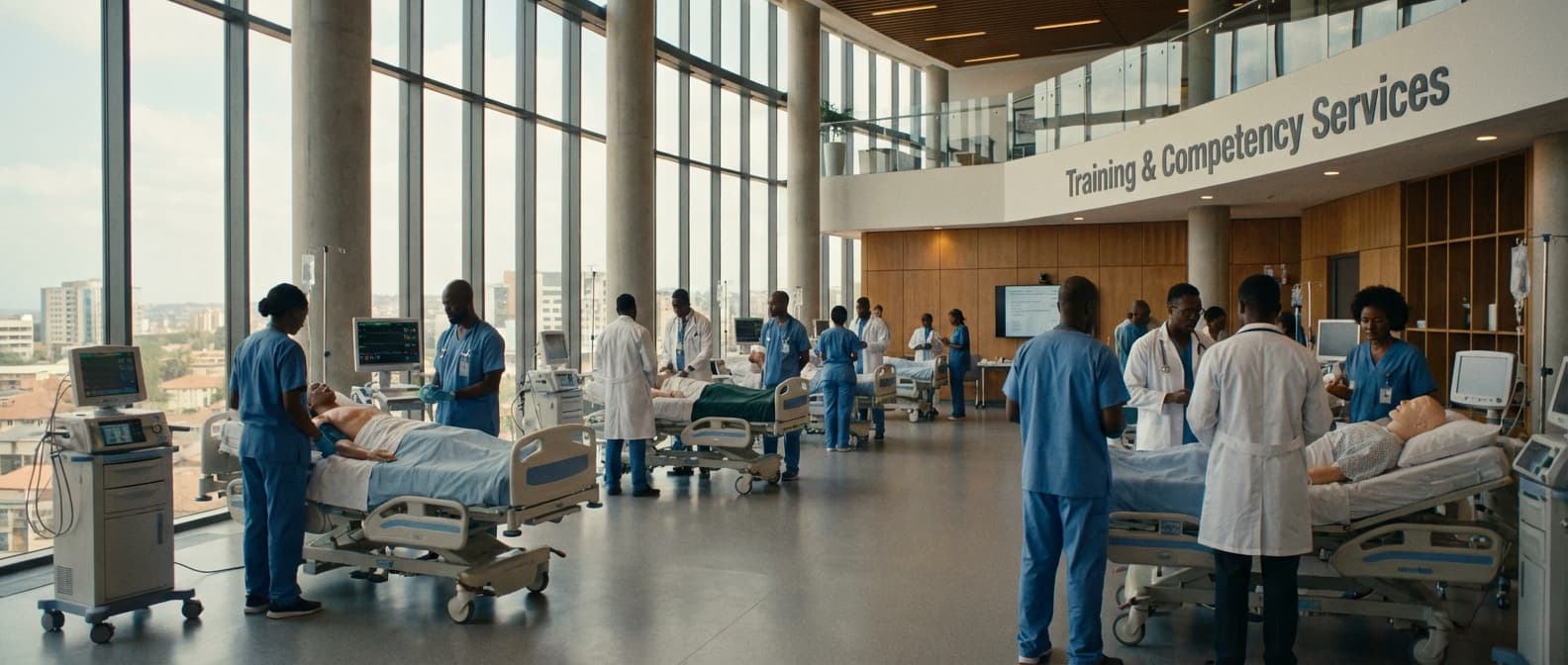
Ventilator User Training Service (Nurses) in Uganda
Engineering Excellence & Technical Support
Ventilator User Training Service (Nurses) High-standard technical execution following OEM protocols and local regulatory frameworks.
Mastering Ventilator Setup: From Box to Patient
Our training demystifies ventilator assembly and initial setup. Learn to connect circuits, calibrate sensors, and perform pre-use checks efficiently, ensuring patient safety and readiness for ventilation.
Ventilator Modes: Tailoring Support for Ugandan Patients
Understand key ventilation modes (e.g., AC, SIMV, PSV) and their clinical indications in the Ugandan context. Gain proficiency in selecting the most appropriate mode based on patient condition and resource availability.
Critical Monitoring & Alarm Management
Learn to interpret ventilator waveforms and numerical data in real-time. This module emphasizes proactive monitoring, understanding common alarms, and implementing timely interventions to optimize patient outcomes and prevent complications.
What Is Ventilator User Training Service (Nurses) In Uganda?
Ventilator User Training Service (Nurses) in Uganda refers to a specialized educational program designed to equip registered nurses and enrolled nurses with the theoretical knowledge and practical skills necessary for the safe and effective operation of mechanical ventilators within the Ugandan healthcare context. This service is crucial for ensuring optimal patient outcomes in critical care settings and addresses the need for skilled personnel to manage these complex life-support devices.
| Who Needs Ventilator User Training Service? | Typical Use Cases |
|---|---|
| Registered Nurses (RNs) and Enrolled Nurses (ENs) working in critical care units (ICUs, HDUs, CCUs) of hospitals in Uganda. | Management of patients with acute respiratory failure requiring mechanical ventilatory support. |
| Nurses in emergency departments who may encounter patients requiring immediate intubation and ventilation. | Post-operative care for patients who have undergone major surgery and are at risk of respiratory compromise. |
| Nurses in regional referral hospitals and district hospitals that may have limited access to specialized respiratory therapists. | Management of severe cases of infectious diseases with respiratory involvement (e.g., severe COVID-19, pneumonia). |
| Newly qualified nurses entering critical care specialties. | Patients with exacerbations of chronic respiratory conditions like COPD or severe asthma. |
| Nurses seeking to enhance their professional development and acquire advanced critical care skills. | Patients with neuromuscular diseases that impair respiratory function (e.g., Guillain-Barré syndrome, myasthenia gravis). |
| Nurses involved in the transport of critically ill patients requiring ongoing mechanical ventilation. | Patients experiencing respiratory distress due to trauma or sepsis. |
Key Components of Ventilator User Training Service (Nurses)
- Foundational Principles of Mechanical Ventilation: Understanding respiratory physiology, gas exchange, and the pathophysiology of common respiratory failures (e.g., ARDS, COPD exacerbations, pneumonia).
- Ventilator Modes and Settings: Comprehensive instruction on various ventilation modes (e.g., Volume Control, Pressure Control, Synchronized Intermittent Mandatory Ventilation - SIMV, Assist/Control - A/C), including their indications, contraindications, and appropriate parameter selection (tidal volume, respiratory rate, PEEP, FiO2, flow triggers, pressure triggers).
- Interface Management: Training on the selection, application, and maintenance of various patient interfaces, including endotracheal tubes, tracheostomy tubes, and non-invasive ventilation masks, with a focus on airway pressure management and leak detection.
- Monitoring and Assessment: Proficiency in interpreting ventilator waveforms (pressure-time, flow-time, volume-time), arterial blood gas (ABG) analysis, and clinical parameters to assess patient response to ventilation and identify potential complications.
- Troubleshooting and Alarms: Education on recognizing and responding to common ventilator alarms (e.g., high pressure, low tidal volume, apnea, disconnection), and systematic approaches to troubleshooting ventilator malfunctions.
- Weaning from Mechanical Ventilation: Understanding the principles and protocols for gradually reducing ventilatory support and initiating the weaning process, including patient selection criteria and assessment for extubation readiness.
- Infection Prevention and Control: Emphasis on sterile techniques during airway management, circuit changes, and suctioning to minimize the risk of ventilator-associated pneumonia (VAP).
- Equipment Maintenance and Safety: Basic understanding of ventilator maintenance schedules, troubleshooting minor equipment issues, and ensuring electrical and mechanical safety of the device.
- Ethical and Legal Considerations: Awareness of patient rights, informed consent for ventilation, and documentation requirements in critical care settings.
- Hands-on Simulation and Practical Application: Utilizing manikins, simulators, and supervised clinical experience with actual ventilator equipment to reinforce learning and develop psychomotor skills.
Who Needs Ventilator User Training Service (Nurses) In Uganda?
This document outlines the target customer base and departments within Uganda that would benefit from Ventilator User Training Services specifically tailored for nurses. Effective training is crucial for safe and optimal utilization of ventilators, ensuring patient well-being and efficient healthcare delivery.
| Department/Setting | Rationale for Training | Specific Skills Needed |
|---|---|---|
| Intensive Care Units (ICUs) | High concentration of critically ill patients requiring mechanical ventilation for respiratory failure. | Advanced ventilation modes, patient monitoring, weaning protocols, troubleshooting, airway management. |
| High Dependency Units (HDUs) | Patients requiring closer monitoring and potentially ventilatory support than general wards. | Basic and intermediate ventilation modes, patient assessment, recognizing deterioration. |
| Emergency Departments | Rapid assessment and stabilization of patients with acute respiratory distress. | Rapid initiation of ventilation, initial settings, transport ventilation considerations. |
| Operating Theatres | Management of patients during and immediately after surgical procedures requiring anesthesia and potential ventilation. | Anesthesia-related ventilation, immediate post-operative care, handover protocols. |
| Pediatric ICUs (PICUs) | Specific challenges of ventilating children, including smaller airways and different physiological needs. | Pediatric ventilation modes, sizing equipment, managing pediatric respiratory conditions. |
| Neonatal ICUs (NICUs) | Highly specialized ventilation techniques for premature infants and neonates. | Neonatal ventilation strategies (e.g., HFOV), surfactant administration, managing neonatal respiratory distress syndrome. |
| Regional/District Hospitals (with critical care units) | Providing essential critical care services in areas with limited access to specialized centers. | Core ventilation principles, common ventilation scenarios, managing limited resources. |
| Specialized Medical Centers (e.g., Cardiology, Pulmonology units) | Patients with specific underlying conditions requiring targeted ventilation support. | Ventilation for cardiac-related respiratory failure, advanced lung disease management. |
Target Customers & Departments for Ventilator User Training (Nurses) in Uganda
- Nurses working in Intensive Care Units (ICUs) are primary beneficiaries.
- Nurses in High Dependency Units (HDUs) require comprehensive training.
- Emergency department nurses who may encounter critically ill patients needing ventilation.
- Operating theatre nurses who might be involved in post-operative ventilation care.
- Pediatric intensive care unit (PICU) nurses dealing with younger patients requiring mechanical ventilation.
- Neonatal intensive care unit (NICU) nurses for specialized neonatal ventilation training.
- Nurses in public hospitals across all regions of Uganda.
- Nurses in private hospitals and specialized medical centers.
- Nurses in faith-based healthcare facilities.
- Nurses working in regional referral hospitals.
- Nurses in district hospitals with critical care capabilities.
- Nurses participating in medical outreach programs or mobile clinics that may require temporary ventilation support.
- Nurses in academic and teaching hospitals involved in training future healthcare professionals.
- Nurses in military hospitals or facilities serving security forces.
- Nurses in non-governmental organization (NGO) run health facilities.
Ventilator User Training Service (Nurses) Process In Uganda
This document outlines the workflow for the Ventilator User Training Service specifically designed for nurses in Uganda. The process begins with an initial inquiry and progresses through various stages, culminating in the successful execution of the training program.
| Stage | Description | Key Activities | Responsible Party/Department | Deliverables/Outcomes |
|---|---|---|---|---|
| The process begins when a healthcare facility or relevant organization expresses interest in ventilator user training for their nursing staff. | Contacting the training provider (e.g., via email, phone, website form). Initial discussion of training needs and objectives. | Prospective Client (Healthcare Facility/Organization) Training Provider (Sales/Inquiry Team) | Acknowledgement of inquiry Initial understanding of client's needs. |
| A detailed understanding of the client's specific requirements, existing knowledge base, and desired outcomes is established. | Conducting a needs assessment (e.g., questionnaires, interviews, observation). Defining training scope, modules, duration, and learning objectives. Developing a tailored training proposal including costs and logistics. | Training Provider (Training Needs Analyst/Curriculum Developer) Prospective Client (to provide input) | Detailed Training Needs Assessment Report Formal Training Proposal. |
| Formalizing the engagement and agreeing on the logistical details for the training. | Review and negotiation of the proposal. Signing of a service agreement/contract. Confirmation of training dates, venue, and participant numbers. | Prospective Client (Procurement/Management) Training Provider (Management/Legal) | Signed Service Agreement Confirmed Training Schedule. |
| Ensuring all necessary resources and arrangements are in place for a smooth training delivery. | Developing/finalizing training materials (presentations, manuals, practical guides). Arranging for trainers and facilitators. Securing training equipment (ventilators, simulators). Logistics coordination (venue setup, catering, participant registration). | Training Provider (Training Department/Logistics Team) | Finalized Training Materials Confirmed Trainer Assignments Booked Training Venue Prepared Training Equipment. |
| The actual delivery of the ventilator user training program to the nurses. | Conducting theoretical sessions (lectures, discussions). Facilitating practical hands-on sessions with ventilators. Demonstrating procedures and troubleshooting. Interactive exercises and case studies. | Training Provider (Certified Trainers/Facilitators) Participants (Nurses) | Delivered Training Sessions Engaged Participants Skills Development. |
| Assessing the effectiveness of the training and providing ongoing support. | Administering post-training assessments (knowledge and practical). Gathering feedback from participants and supervisors. Providing certificates of completion. Offering post-training support (e.g., Q&A sessions, remote assistance). | Training Provider (Trainers/Evaluation Team) Participants (Nurses) Client (Supervisors) | Post-Training Assessment Results Participant Feedback Reports Certificates of Completion Follow-up Support Plan. |
| Formalizing the training outcomes and providing comprehensive documentation to the client. | Preparing a comprehensive training report detailing participant attendance, assessment results, feedback, and recommendations. Archiving training records and materials. | Training Provider (Administration/Reporting Department) | Final Training Report Archived Training Documentation. |
Ventilator User Training Service (Nurses) in Uganda: Workflow
- Inquiry and Initial Contact
- Needs Assessment and Proposal Development
- Agreement and Scheduling
- Pre-Training Preparations
- Training Execution
- Post-Training Evaluation and Follow-up
- Reporting and Documentation
Ventilator User Training Service (Nurses) Cost In Uganda
Providing effective ventilator user training for nurses in Uganda is crucial for ensuring optimal patient care and reducing complications. The cost of such training services is influenced by several key factors, leading to a range of pricing. Understanding these factors helps healthcare facilities and individuals budget accurately for this essential professional development. The overall aim is to provide nurses with the theoretical knowledge and practical skills required to safely and effectively operate and manage ventilators in various clinical settings within Uganda.
| Training Type/Scope | Estimated Price Range (UGX) | Typical Inclusions |
|---|---|---|
| Basic Ventilator User Training (1-2 days) | 250,000 - 700,000 | Fundamentals of mechanical ventilation, basic ventilator modes, initial setup, alarm management. May include basic simulation. |
| Intermediate Ventilator User Training (2-3 days) | 500,000 - 1,500,000 | Covers basic concepts plus advanced modes, weaning strategies, patient assessment, troubleshooting, common ventilator-associated complications. Includes more hands-on practice. |
| Advanced/Specialized Ventilator Training (3-5 days or modular) | 1,000,000 - 3,000,000+ | Focus on specific ventilator models, non-invasive ventilation, high-frequency ventilation, pediatric/neonatal ventilation, complex patient scenarios, simulation-based learning. Often includes expert trainers. |
| On-site Training (Group Rate) | Negotiable (often higher than off-site for smaller groups) | Customized curriculum, trainer travel, accommodation, training materials. Price varies significantly based on group size and duration. |
| Online/Hybrid Ventilator Training Modules | 100,000 - 800,000 | Self-paced online theory, virtual simulations, potentially limited live Q&A sessions. May not include extensive hands-on practice with physical ventilators. |
Factors Influencing Ventilator User Training Costs for Nurses in Uganda:
- Duration of Training: Longer, more comprehensive courses, often including advanced topics and extended hands-on practice, will naturally incur higher costs than shorter introductory programs.
- Training Provider: Reputable institutions, specialized medical training centers, or highly experienced freelance educators may command higher fees due to their expertise, accreditation, and established track record.
- Curriculum Content & Specialization: The depth and breadth of the curriculum significantly impact cost. Training covering basic ventilation principles will be less expensive than programs delving into specific ventilator models, advanced modes, weaning protocols, or management of complex respiratory conditions.
- Location of Training: On-site training at a hospital or clinic might involve additional costs for travel and accommodation for the trainers, which are then factored into the overall price. Conversely, training at the trainer's facility might have a fixed fee.
- Number of Participants: While some providers offer per-person rates, others may have a flat fee for a group. Larger groups can sometimes lead to a lower per-participant cost, while very small groups might incur a higher individual rate to cover the trainer's time.
- Training Materials & Resources: The inclusion of high-quality training manuals, simulations, access to virtual labs, or loaner equipment for practical sessions can add to the overall expense.
- Trainer Qualifications & Experience: Highly qualified and experienced respiratory therapists, critical care nurses, or biomedical engineers with specific ventilator expertise will likely charge more for their services.
- Accreditation & Certification: Training programs that lead to recognized certifications or Continuing Professional Development (CPD) points often come with a higher price tag due to the rigorous standards and administrative processes involved.
- Post-Training Support: Some training packages might include follow-up support, online resources, or refresher sessions, which would influence the pricing.
- Customization of Training: Tailoring the training to the specific needs and existing equipment of a particular healthcare facility will generally result in a higher cost compared to a standardized program.
Affordable Ventilator User Training Service (Nurses) Options
This document outlines affordable ventilator user training service options specifically designed for nurses. We understand the critical need for skilled healthcare professionals to operate ventilators safely and effectively. Our aim is to provide accessible, high-quality training that minimizes costs without compromising on essential knowledge and practical skills. This includes exploring value bundles and implementing cost-saving strategies to make this vital training accessible to more healthcare facilities and individual nurses.
| Training Component | Value Bundle Option 1: Essentials Plus | Value Bundle Option 2: Comprehensive Care | Cost-Saving Strategies |
|---|---|---|---|
| Core Curriculum (Online Modules) | Includes all foundational knowledge, theoretical concepts, and initial assessment modules. | Includes all foundational knowledge, theoretical concepts, and initial assessment modules. | Leverage pre-recorded modules, open educational resources (OER) for some content, and standardized online learning platforms. |
| Virtual Hands-on Simulation | Interactive virtual simulations for practicing common scenarios and ventilator adjustments. | Includes advanced virtual simulations with more complex patient conditions and troubleshooting exercises. | Utilize cost-effective virtual simulation software; consider licensing shared simulation platforms. |
| Live Q&A / Expert Sessions | Scheduled live sessions with experienced respiratory therapists or critical care nurses for clarification and discussion. | More frequent and extended live Q&A sessions, potentially with specialized topics. | Group sessions for multiple nurses, asynchronous submission of questions, and leveraging existing institutional expert staff. |
| On-site Practical Training (Optional Add-on) | Limited on-site sessions for specific hands-on skills (e.g., ventilator connection, basic adjustments). | Extended on-site training with access to multiple ventilator models and advanced troubleshooting. | Train-the-trainer models to build in-house expertise, conduct training at multiple facilities simultaneously to reduce travel costs, and utilize simulation labs within healthcare institutions. |
| Assessment & Certification | Online quizzes and a final practical assessment (virtual or documented). | More in-depth assessments, including case studies and scenario-based evaluations. | Standardized, automated online assessments where possible. |
| Ongoing Support & Updates | Access to online resources and a basic update webinar annually. | Access to a comprehensive resource library and quarterly update webinars with expert insights. | Community forums for peer-to-peer learning, newsletters with key updates, and bundled subscriptions for access to educational materials. |
| Estimated Price Point (per nurse) | $150 - $250 | $275 - $450 | Bulk discounts for facility-wide training, tiered pricing based on number of participants, early bird registration discounts, partnerships with professional nursing organizations. |
Key Components of Affordable Ventilator Training for Nurses
- Comprehensive curriculum covering ventilator basics, modes of ventilation, patient assessment, troubleshooting, and weaning protocols.
- Hands-on practice with various ventilator models (where feasible).
- Emphasis on critical thinking and decision-making skills.
- Focus on infection control and safety protocols.
- Regular updates on evolving ventilator technology and best practices.
- Flexible learning formats to accommodate diverse schedules.
- Certification upon successful completion of the program.
Verified Providers In Uganda
In Uganda's evolving healthcare landscape, identifying reliable and trustworthy healthcare providers is paramount. Franance Health stands out as a beacon of quality and integrity, offering a network of verified providers committed to exceptional patient care. This commitment is underscored by their rigorous credentialing process, which ensures that every practitioner on their platform meets the highest standards of expertise, ethical conduct, and professional development. Choosing Franance Health means opting for a healthcare experience where your well-being is prioritized through vetted and competent medical professionals.
| Credentialing Aspect | Franance Health's Approach | Benefit to Patients |
|---|---|---|
| Medical Education & Training | Thorough verification of degrees, diplomas, and specialist certifications from accredited institutions. | Ensures providers have a strong foundational knowledge and specialized expertise. |
| Licensing & Registration | Confirmation of valid and current professional licenses with relevant Ugandan medical councils and regulatory bodies. | Guarantees that providers are legally permitted to practice medicine and adhere to professional regulations. |
| Experience & Competency | Assessment of clinical experience, case reviews, and often peer recommendations. | Confirms practical skills and proven ability to manage diverse medical conditions effectively. |
| Ethical Conduct & Professionalism | Review of past conduct, adherence to medical ethics codes, and professional references. | Assures patients of compassionate, honest, and respectful treatment. |
| Ongoing Quality Assurance | Regular performance reviews and engagement with continuous medical education programs. | Ensures providers remain current with medical advancements and maintain high-quality care over time. |
Why Franance Health Providers Represent the Best Choice in Uganda:
- Rigorous Verification Process: Franance Health employs a multi-faceted vetting system that goes beyond basic licensing. This includes in-depth background checks, verification of educational qualifications and certifications, and assessment of practical experience.
- Commitment to Excellence: All Franance Health providers are dedicated to upholding the highest standards of medical practice, patient safety, and ethical treatment.
- Continuous Professional Development: Providers are encouraged and often required to engage in ongoing training and education, ensuring they are up-to-date with the latest medical advancements and best practices.
- Patient-Centric Approach: The focus is always on the patient's needs, with an emphasis on clear communication, empathy, and personalized care plans.
- Accessibility and Convenience: Franance Health aims to make accessing quality healthcare simpler, connecting patients with a network of trusted professionals across various specialities.
- Trust and Reliability: By choosing Franance Health, patients gain peace of mind knowing they are being treated by qualified and vetted professionals, reducing the risk of encountering substandard care.
Scope Of Work For Ventilator User Training Service (Nurses)
This document outlines the Scope of Work (SOW) for a Ventilator User Training Service specifically designed for nurses. It details the technical deliverables and standard specifications to ensure effective and standardized training. The primary objective is to equip nurses with the necessary knowledge and skills to safely and effectively operate and manage ventilators in clinical settings.
| Deliverable | Description | Standard Specification | Format/Medium | Frequency/Timing |
|---|---|---|---|---|
| Training Curriculum Document | Detailed outline of all training modules, learning objectives, and assessment methods. | Comprehensive, evidence-based, and aligned with current clinical guidelines. Modules clearly defined with learning outcomes. | PDF Document | Provided prior to training commencement. |
| Training Manuals (Per Nurse) | Printed or digital copies of comprehensive training manuals for each nurse attending. | Includes all module content, diagrams, case studies, and key takeaways. Accessible offline. | Printed Booklet / Searchable PDF | Provided at the start of the training session. |
| PowerPoint Presentations/Visual Aids | Slide decks used by the instructor during the training sessions. | Clear, concise, visually appealing, and incorporating relevant graphics, images, and videos. | PPTX / PDF (for participant review) | Provided at the end of each module or session. |
| Hands-on Training Sessions | Practical demonstration and supervised practice on actual or simulated ventilators. | Sufficient time allocated for individual practice. Instructor-to-nurse ratio allowing for personalized feedback. Use of modern, representative ventilator models. | In-person / Virtual Simulation Lab | Scheduled as per the agreed training plan. |
| Competency Assessment Tools | Tools to evaluate the nurses' understanding and practical skills. | Includes written exams (multiple choice, short answer), case study analysis, and practical skills checklists. Passing score of 85% required for certification. | Online Quiz Platform / Paper-based exam / Skills Checklist | Administered at the conclusion of the training program. |
| Training Attendance Records | Documentation of nurse attendance for each training session. | Includes nurse name, employee ID, session date, and instructor signature. Maintained for audit purposes. | Digital Spreadsheet / Logbook | Maintained and provided to the client weekly. |
| Post-Training Evaluation Forms | Feedback forms for nurses to evaluate the training content, instructor, and overall effectiveness. | Anonymous submission encouraged. Structured questions and open-ended comments. Used for continuous improvement. | Online Survey / Paper Form | Distributed at the end of the training program. |
| Certificate of Completion | Official document confirming successful completion of the ventilator user training. | Includes nurse name, training title, date of completion, and issuing organization. Valid for a specified period (e.g., 2 years). | Digitally Signed PDF / Printed Certificate | Issued within 7 business days of successful competency assessment. |
| Instructor Qualifications Documentation | Verification of instructors' credentials and experience. | Evidence of clinical expertise in critical care, ventilator management, and adult education. Certified in BLS/ACLS. | CVs / Certifications | Provided prior to training commencement. |
Key Training Modules
- Ventilator Fundamentals: Principles of mechanical ventilation, types of ventilators, and their components.
- Modes of Ventilation: Understanding and selecting appropriate ventilation modes (e.g., AC, SIMV, PSV) based on patient conditions.
- Setting and Adjusting Ventilator Parameters: Tidal volume, respiratory rate, PEEP, FiO2, flow rate, and trigger sensitivity.
- Monitoring and Assessment: Interpreting ventilator waveforms, alarms, and patient response to ventilation.
- Troubleshooting and Alarm Management: Identifying common ventilator malfunctions and responding to alarms effectively.
- Ventilator Circuit Management: Principles of sterile technique, circuit changes, and troubleshooting circuit-related issues.
- Weaning from Mechanical Ventilation: Strategies and criteria for initiating and progressing weaning.
- Special Populations: Ventilation considerations for pediatric and critically ill patients.
- Ventilator-Associated Pneumonia (VAP) Prevention: Best practices and protocols.
Service Level Agreement For Ventilator User Training Service (Nurses)
This Service Level Agreement (SLA) outlines the response times and uptime guarantees for the Ventilator User Training Service provided to nurses. It defines the expected performance standards and remedies for service deviations.
| Service Metric | Tier 1 (Critical - System Outage) | Tier 2 (High - Training Blocked) | Tier 3 (Medium - Non-critical Issue) | Tier 4 (Low - Inquiry/Request) |
|---|---|---|---|---|
| Response Time Target | 15 minutes | 1 hour | 4 business hours | 8 business hours |
| Resolution Target | 4 hours | 8 business hours | 3 business days | 5 business days |
| Uptime Guarantee | 99.9% (excluding scheduled maintenance) | 99.9% (excluding scheduled maintenance) | 99.5% (excluding scheduled maintenance) | 99.5% (excluding scheduled maintenance) |
Key Service Metrics
- Response Time: The time taken to acknowledge and initiate action upon a reported issue or training request.
- Uptime Guarantee: The percentage of time the training platform and associated resources are available for use.
Frequently Asked Questions

Ready when you are
Let's scope your Ventilator User Training Service (Nurses) in Uganda project in Uganda.

Scaling healthcare logistics and technical systems across the entire continent.