
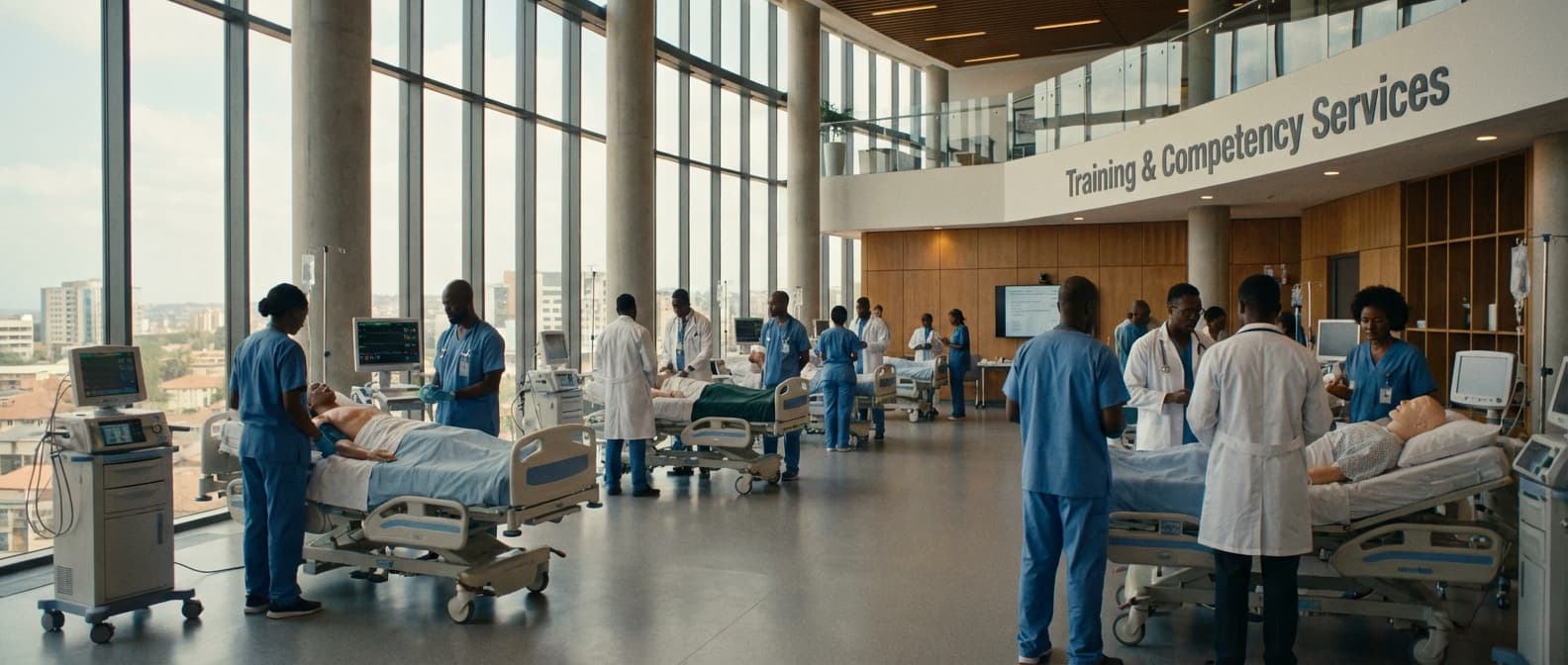
Ultrasound Application Training Service (Protocol-Based) in Uganda
Engineering Excellence & Technical Support
Ultrasound Application Training Service (Protocol-Based) High-standard technical execution following OEM protocols and local regulatory frameworks.
Standardized Protocol Mastery
Our training empowers Ugandan healthcare professionals to execute ultrasound examinations with unwavering adherence to globally recognized, protocol-based guidelines. This ensures consistent, reliable diagnostic accuracy and enhances patient care across diverse clinical settings.
Hands-On Simulation & Real-World Application
We bridge the gap between theory and practice through immersive, hands-on simulation using advanced ultrasound equipment, followed by supervised application on real patients. Trainees gain critical psychomotor skills and confidence in diagnosing a wide spectrum of pathologies relevant to Uganda's healthcare needs.
Performance Analytics & Continuous Improvement
Benefit from objective performance tracking and personalized feedback. Our training incorporates data-driven insights to identify individual learning curves and provide targeted interventions, fostering a culture of continuous professional development and maximizing ultrasound utilization for improved patient outcomes in Uganda.
What Is Ultrasound Application Training Service (Protocol-based) In Uganda?
Ultrasound Application Training Service (Protocol-Based) in Uganda refers to structured, curriculum-driven educational programs designed to equip healthcare professionals with the knowledge and practical skills necessary to perform diagnostic ultrasound examinations according to established medical protocols. This service emphasizes adherence to standardized imaging sequences and reporting guidelines for specific anatomical regions and clinical scenarios. The objective is to ensure consistent, accurate, and reproducible ultrasound findings, thereby improving diagnostic confidence and patient care within the Ugandan healthcare system. This training is typically delivered through a combination of theoretical instruction, hands-on simulation, and supervised clinical practice. The protocol-based approach ensures that trainees learn to acquire images systematically and interpret them within the context of accepted best practices, aiming to bridge the gap in specialized diagnostic imaging expertise.
| Who Needs It? | Typical Use Cases | Rationale for Protocol-Based Training |
|---|---|---|
| Medical Doctors: General practitioners, obstetricians, gynecologists, pediatricians, internists, surgeons, radiologists, and other specialists requiring diagnostic imaging capabilities. | Obstetrics & Gynecology: Antenatal fetal anomaly scans, pelvic ultrasound for gynecological pathologies, transvaginal imaging. | Standardization of Care: Ensures all practitioners perform exams consistently, reducing inter-observer variability and improving diagnostic reliability across different healthcare facilities. |
| Radiographers/Sonographers: Allied health professionals specializing in diagnostic imaging. | Abdominal Imaging: Evaluation of liver, gallbladder, spleen, pancreas, kidneys, and aorta for various pathologies (e.g., tumors, stones, inflammation). | Skill Enhancement & Specialization: Enables existing imaging staff to acquire new or advanced ultrasound skills in specific applications, expanding service offerings. |
| Clinical Officers: Healthcare professionals with extended scope of practice, particularly in rural or underserved areas. | Vascular Studies: Assessment of deep vein thrombosis (DVT), arterial insufficiency, and carotid artery disease. | Addressing Workforce Shortages: Provides a structured pathway for upskilling existing healthcare personnel to meet the demand for essential diagnostic imaging services where specialized personnel may be scarce. |
| Nurses: Particularly those in specialized units like critical care, emergency medicine, or midwifery. | Musculoskeletal (MSK) Imaging: Evaluation of joints, tendons, and soft tissues for injuries or inflammatory conditions. | Accreditation & Quality Improvement: Facilitates adherence to national and international quality standards for diagnostic imaging, essential for accreditation and continuous improvement initiatives. |
| Medical Students (Elective/Postgraduate): Individuals pursuing careers in diagnostic medicine. | Point-of-Care Ultrasound (POCUS): Rapid bedside assessments in emergency, critical care, and anesthesia settings (e.g., FAST exam, cardiac evaluation). | Evidence-Based Practice: Reinforces the importance of following established guidelines and protocols, fostering a culture of evidence-based medicine. |
Key Components of Ultrasound Application Training Service (Protocol-Based)
- Protocol Development & Adherence: Training focuses on understanding and meticulously following pre-defined imaging protocols for various anatomical systems (e.g., obstetric, abdominal, vascular, musculoskeletal).
- Image Acquisition Proficiency: Development of psychomotor skills to operate ultrasound equipment, manipulate transducers, and obtain optimal diagnostic quality images in accordance with protocol parameters.
- Anatomical Correlation & Pathology Recognition: Learning to identify normal anatomical structures and recognize common pathological findings relevant to the specific application being trained.
- Interpretation & Reporting: Training in the systematic interpretation of acquired images and the generation of comprehensive, standardized reports, often utilizing template-based structures.
- Quality Assurance & Optimization: Instruction on maintaining image quality, optimizing machine settings, and understanding artifact reduction techniques.
- Case-Based Learning & Supervised Practice: Application of learned principles in real-world scenarios under the guidance of experienced sonographers or radiologists, with constructive feedback.
Who Needs Ultrasound Application Training Service (Protocol-based) In Uganda?
This document outlines the essential need for a Protocol-Based Ultrasound Application Training Service within Uganda. The service aims to equip healthcare professionals with the standardized skills and knowledge required to effectively utilize ultrasound technology across various medical disciplines. By adhering to established protocols, the training ensures consistent, accurate, and reliable diagnostic imaging, ultimately improving patient care and outcomes in Uganda.
| Target Customer/Department | Specific Roles/Personnel | Primary Need for Training |
|---|---|---|
| Hospitals (Public & Private) | Radiologists, Sonographers, General Practitioners, Obstetricians & Gynecologists, Pediatricians, Surgeons, Emergency Medicine Physicians, Nurses | Standardizing diagnostic procedures, improving accuracy, expanding service offerings, managing increasing patient loads, skill enhancement for new equipment. |
| Health Centers & Clinics | Clinical Officers, Midwives, Nurses, General Practitioners | Basic point-of-care ultrasound for initial diagnosis, referral decision-making, antenatal care screening, basic abdominal and pelvic assessments. |
| Medical Schools & Training Institutions | Lecturers, Students (Medical, Nursing, Allied Health) | Integrating ultrasound into curriculum, providing hands-on practical training, preparing future healthcare professionals with essential skills. |
| Ministry of Health | Public Health Officials, Program Managers | Ensuring national standards for ultrasound services, capacity building for public health initiatives, monitoring and evaluation of ultrasound utilization. |
| NGOs & International Aid Organizations | Healthcare Program Staff, Local Healthcare Providers supported by the NGO | Implementing mobile or outreach ultrasound services, training local staff in remote areas, addressing specific health program needs (e.g., maternal health). |
| Specialized Medical Centers | Cardiologists, Gastroenterologists, Urologists, Oncologists | Advanced application-specific training in echocardiography, abdominal Doppler, urological ultrasound, interventional ultrasound guidance. |
Target Customers and Departments for Ultrasound Application Training Service in Uganda
- {"title":"Healthcare Facilities","description":"Hospitals (public and private), health centers, clinics, and specialized medical centers across Uganda."}
- {"title":"Educational Institutions","description":"Medical schools, nursing colleges, and allied health training institutions."}
- {"title":"Government Health Agencies","description":"Ministry of Health and its regional/district health offices."}
- {"title":"Non-Governmental Organizations (NGOs) & International Aid Organizations","description":"Organizations involved in healthcare delivery and capacity building in Uganda."}
Ultrasound Application Training Service (Protocol-based) Process In Uganda
This document outlines the typical workflow for an Ultrasound Application Training Service (Protocol-Based) in Uganda, from initial inquiry to the successful execution and completion of the training. The process is designed to be comprehensive and ensure all parties are aligned on objectives, logistics, and expected outcomes.
| Stage | Key Activities | Involved Parties | Deliverables |
|---|---|---|---|
| Inquiry & Initial Consultation | Expressing interest, initial discussions on needs and scope | Client, Training Provider | Understanding of client requirements |
| Needs Assessment & Proposal Development | Detailed assessment, curriculum design, cost estimation | Training Provider (with client input) | Formal training proposal |
| Proposal Review & Negotiation | Discussion, clarification, potential amendments | Client, Training Provider | Agreed-upon proposal |
| Contract & Agreement Signing | Formalizing terms and conditions | Client, Training Provider | Signed service agreement |
| Logistics & Pre-Training Preparations | Trainer assignment, material development, venue/equipment confirmation, participant registration | Training Provider, Client | Prepared training environment and materials |
| Training Execution | Didactic sessions, hands-on practice, case studies, assessments | Trainers, Participants | Acquired knowledge and skills |
| Post-Training Evaluation & Feedback | Collecting feedback on training effectiveness | Participants, Client, Training Provider | Feedback reports |
| Certification & Reporting | Issuing certificates and providing a summary report | Training Provider, Client | Certificates of completion, training report |
| Follow-up & Support (Optional) | Ongoing assistance and resource provision | Training Provider, Client | Sustained application of skills |
Ultrasound Application Training Service (Protocol-Based) Workflow in Uganda
- Inquiry & Initial Consultation: Potential clients (hospitals, clinics, training institutions) express interest in ultrasound application training. This typically involves an initial phone call, email, or in-person meeting to understand their specific needs, target audience, desired ultrasound applications (e.g., obstetrics, general radiology, point-of-care ultrasound), and preferred training duration.
- Needs Assessment & Proposal Development: Based on the initial consultation, a detailed needs assessment is conducted. This may involve questionnaires, site visits, and discussions with key personnel to understand existing skill levels, available equipment, and specific learning objectives. A tailored proposal is then developed, outlining the training curriculum, learning objectives, proposed dates, duration, trainers' profiles, required equipment, venue requirements, and a detailed cost breakdown.
- Proposal Review & Negotiation: The client reviews the proposal. This stage may involve further discussions, clarifications, and potential negotiation on aspects like content customization, scheduling, or pricing. Amendments are made to the proposal as needed until both parties reach an agreement.
- Contract & Agreement Signing: Once the proposal is finalized and accepted, a formal contract or service agreement is drafted and signed by both the training provider and the client. This document legally binds both parties and details all agreed-upon terms and conditions, including payment schedules, cancellation policies, and intellectual property rights.
- Logistics & Pre-Training Preparations: This is a crucial phase involving detailed planning. Key activities include:
- Trainer Assignment: Experienced and qualified trainers specializing in the agreed-upon ultrasound applications are assigned.
- Curriculum Finalization: The training protocol is finalized, ensuring it aligns with international standards and specific Ugandan healthcare needs. This includes developing lecture materials, practical scanning guides, case studies, and assessment tools.
- Equipment & Venue Confirmation: The training provider confirms the availability and functionality of any provided training equipment (e.g., ultrasound machines, phantoms). The client confirms the suitability of the training venue, ensuring it has adequate space, power, internet access (if required), and appropriate seating and projection facilities.
- Participant Registration: The client registers the participants, providing their details and any relevant prior experience information.
- Pre-Course Materials: If applicable, pre-course reading materials or online modules are shared with participants to prepare them for the training.
- Travel & Accommodation (if applicable): Arrangements for trainers' travel and accommodation are made if the training is off-site for the provider.
- Training Execution: The training is delivered according to the agreed-upon schedule and curriculum. This typically includes:
- Didactic Sessions: Lectures, presentations, and discussions covering theoretical aspects of the ultrasound applications, physics, anatomy, pathology, and protocol adherence.
- Hands-on Practical Sessions: Supervised scanning sessions using ultrasound simulators or actual patients (under strict ethical guidelines and patient consent). Emphasis is placed on protocol-based scanning techniques.
- Case Study Analysis: Review and discussion of real-world ultrasound cases to reinforce learning and problem-solving skills.
- Skill Assessment: Ongoing observation and feedback during practical sessions, and potentially formal assessments (e.g., practical exams, quizzes) to evaluate skill acquisition.
- Post-Training Evaluation & Feedback: Upon completion of the training, participants and the client are invited to provide feedback on the training content, delivery, trainers, and overall experience through evaluation forms or surveys. This feedback is invaluable for continuous improvement.
- Certification & Reporting: Participants who successfully meet the training objectives and pass any assessments are awarded certificates of completion. A comprehensive training report is provided to the client, summarizing the training activities, participant attendance, assessment results, and key observations.
- Follow-up & Support (Optional): Depending on the service agreement, there might be a period of follow-up support. This could include answering post-training queries, providing access to online resources, or offering further mentorship to ensure sustained learning and application of acquired skills in their clinical practice.
Ultrasound Application Training Service (Protocol-based) Cost In Uganda
Ultrasound application training services in Uganda, particularly those following a protocol-based approach, cater to a growing demand for skilled sonographers across various healthcare sectors. The cost of such training is influenced by several key factors, leading to a range of pricing that reflects the depth and breadth of the program. These factors include the duration and intensity of the training, the specific ultrasound applications covered (e.g., general, obstetrics/gynecology, cardiology, musculoskeletal), the qualifications and experience of the trainers, the accreditation and recognition of the training institution, the provision of hands-on practice with ultrasound equipment, and the inclusion of supplementary materials or assessments.
Pricing Factors:
- Duration and Intensity: Shorter, introductory courses will naturally be less expensive than comprehensive, multi-week programs. The number of hours dedicated to theory and practical sessions significantly impacts the overall cost.
- Specialization: Training focused on a single, broad application (e.g., general ultrasound) might be priced differently than specialized courses like echocardiography or interventional ultrasound, which often require more advanced equipment and highly specialized trainers.
- Trainer Expertise: Highly qualified and experienced sonographers or medical professionals with extensive clinical and teaching experience will command higher fees, which are reflected in the training cost.
- Accreditation and Certification: Training programs accredited by recognized medical bodies or offering internationally recognized certifications often come at a premium due to the rigorous standards they adhere to.
- Hands-on Practice: Access to functional ultrasound machines for supervised practical sessions is a crucial component. The availability and quality of this equipment, and the ratio of trainees to machines, can influence pricing.
- Training Location and Logistics: Whether the training is conducted at the institution's facility or offered as an on-site training at a hospital or clinic can affect costs. Factors like venue rental, accommodation, and travel for trainers are considered.
- Curriculum and Materials: Comprehensive training often includes detailed study guides, access to online resources, and assessment tools. The quality and extent of these materials can contribute to the overall price.
Cost Ranges in Ugandan Shillings (UGX):
The cost of ultrasound application training services in Uganda can vary significantly. For short, introductory courses focusing on basic principles, one might expect to pay in the range of UGX 500,000 to UGX 1,500,000. More comprehensive, protocol-based training covering specific applications like obstetric or general ultrasound for a duration of several days to a few weeks could range from UGX 1,500,000 to UGX 5,000,000. Highly specialized or advanced training programs, especially those leading to recognized certifications or involving extensive hands-on simulator time, might extend from UGX 5,000,000 to UGX 10,000,000 or more. It is advisable for potential trainees to inquire directly with training providers for the most accurate and up-to-date pricing information.
| Training Type/Duration | Estimated Cost Range (UGX) |
|---|---|
| Short/Introductory Courses (e.g., 1-3 days) | 500,000 - 1,500,000 |
| Comprehensive Protocol-Based Training (e.g., 1-3 weeks, specific applications) | 1,500,000 - 5,000,000 |
| Advanced/Specialized Training (e.g., with extensive hands-on, certification) | 5,000,000 - 10,000,000+ |
Key Factors Influencing Ultrasound Application Training Costs in Uganda
- Duration and intensity of the training program.
- Specific ultrasound applications covered (general, OB/GYN, cardiology, etc.).
- Qualifications and experience of the trainers.
- Accreditation and recognition of the training institution.
- Availability and quality of hands-on practice with ultrasound equipment.
- Inclusion of supplementary training materials and assessments.
- Training location and associated logistical costs.
- Certification or credentialing provided upon completion.
Affordable Ultrasound Application Training Service (Protocol-based) Options
This service offers comprehensive and affordable ultrasound application training, delivered through a structured, protocol-based approach. We understand that mastering ultrasound requires hands-on practice and expert guidance. Our training is designed to equip healthcare professionals with the skills and confidence to perform accurate and efficient ultrasound examinations. We offer flexible training options to suit various needs and budgets, focusing on value and cost-effectiveness.
| Value Bundle Name | Included Applications | Key Benefits | Estimated Cost-Saving Compared to Individual Modules | Target Audience |
|---|---|---|---|---|
| Foundation Bundle | Basic Abdominal, Pelvic, Thyroid, Musculoskeletal (MSK) Basics | Broad foundational knowledge, cost-effective introduction to core applications. | 15-20% | Entry-level sonographers, medical students, residents, general practitioners. |
| Advanced General Imaging Bundle | Comprehensive Abdominal (liver, gallbladder, pancreas, spleen, kidneys), Pelvic (transabdominal & transvaginal), Vascular (carotid, DVT) | In-depth understanding of common diagnostic ultrasounds, enhanced diagnostic accuracy. | 20-25% | Experienced sonographers seeking to expand their skill set, radiologists, advanced practitioners. |
| Specialized OB/GYN Bundle | First Trimester Screening, Anatomy Scans, Fetal Well-being, Gynecological Assessments | Expertise in obstetric and gynecological imaging, improved patient care for women's health. | 20-25% | Obstetricians, Gynecologists, specialized sonographers, midwives. |
| Comprehensive Imaging Specialist | All applications from Foundation and Advanced Bundles, plus Introduction to Echocardiography Basics | Holistic training for a versatile imaging specialist, maximizing career opportunities. | 25-30% | Aspiring sonographers, imaging departments seeking cross-trained personnel. |
| Customizable Module Package | Select any 3-5 individual modules | Tailored learning for specific departmental needs or individual career goals, maximum flexibility. | 10-15% (depending on selection) | Any professional with niche training requirements. |
Key Features & Benefits
- Protocol-Driven Curriculum: Ensures consistent and standardized training aligned with best practices.
- Expert-Led Instruction: Benefit from the experience of certified sonographers and radiologists.
- Hands-On Practice: Ample opportunity for supervised scanning on phantoms and, where applicable, supervised real-patient scenarios.
- Modular Training: Choose specific applications or opt for comprehensive bundles for broader skill development.
- Flexible Scheduling: Accommodate busy professional lives with customizable training timelines.
- Cost-Effective Solutions: Designed to provide high-value training without breaking the bank.
- Performance Assessment: Regular feedback and competency checks to track progress.
- Certification Preparation: Training tailored to prepare for relevant professional certifications.
Verified Providers In Uganda
In Uganda's evolving healthcare landscape, identifying reliable and accredited healthcare providers is paramount. Franance Health stands out as a leading platform, meticulously vetting and credentialing its network of medical professionals and facilities. This rigorous process ensures that patients have access to high-quality, safe, and effective medical care. Understanding Franance Health's credentialing process and the benefits it offers provides peace of mind and empowers individuals to make informed decisions about their health.
| Franance Health Credentialing Criteria | What it Means for Patients |
|---|---|
| Verification of Medical Licenses and Registrations | Ensures providers are legally authorized to practice medicine in Uganda. |
| Confirmation of Educational Background and Specializations | Guarantees providers possess the necessary training and expertise for their chosen field. |
| Assessment of Professional Experience and Work History | Confirms practical application of knowledge and a track record of successful patient care. |
| Background Checks and Criminal Record Verification | Prioritizes patient safety and trust by screening for potential risks. |
| Peer Reviews and Reputation Assessment | Provides insights into the provider's standing within the medical community and patient satisfaction. |
| Adherence to Ethical Guidelines and Professional Conduct | Ensures providers operate with integrity and prioritize patient interests. |
Why Franance Health Providers Are the Best Choice:
- Rigorous Vetting and Credentialing: Franance Health employs a comprehensive vetting process that goes beyond basic licensing. This includes verifying educational qualifications, professional experience, peer reviews, and adherence to ethical standards.
- Commitment to Quality Standards: Certified Franance Health providers consistently meet or exceed national and international quality benchmarks in patient care, hygiene, and operational efficiency.
- Patient-Centric Approach: The platform prioritizes patient well-being, ensuring that all credentialed providers offer compassionate care, transparent communication, and a focus on positive health outcomes.
- Access to Specialized Expertise: Franance Health's network encompasses a wide range of medical specialties, allowing patients to find trusted experts for their specific healthcare needs.
- Enhanced Patient Safety: By meticulously checking credentials, Franance Health significantly reduces the risk of encountering unqualified practitioners, thereby enhancing patient safety.
- Streamlined Healthcare Navigation: The platform simplifies the process of finding and booking appointments with verified providers, saving patients time and reducing the stress associated with healthcare searches.
- Continuous Monitoring and Improvement: Franance Health maintains an ongoing relationship with its providers, ensuring continued compliance with their standards and facilitating continuous improvement in healthcare delivery.
Scope Of Work For Ultrasound Application Training Service (Protocol-based)
This Scope of Work (SOW) outlines the requirements for a protocol-based Ultrasound Application Training Service. The service will focus on equipping trainees with the knowledge and practical skills necessary to perform ultrasound examinations according to established clinical protocols. This includes understanding ultrasound physics, equipment operation, image optimization, and the systematic acquisition of diagnostic ultrasound images for various anatomical regions and clinical applications. The training will be delivered through a combination of theoretical instruction and hands-on practice on ultrasound simulators and/or phantoms, adhering to predefined protocols. This document details the technical deliverables and standard specifications for this training service.
| Category | Technical Deliverable | Standard Specifications | Acceptance Criteria |
|---|---|---|---|
| Training Curriculum Development | Comprehensive Training Manuals (Digital/Print) | Modules covering Ultrasound Physics, Equipment Operation, Image Optimization, Protocol-Based Examination Procedures (e.g., Abdomen, Pelvis, OB/GYN, Vascular, Small Parts), Image Interpretation Basics, Quality Assurance, and Safety. Content aligned with current sonographic practices and guidelines. | Manuals are complete, accurate, and reviewed by subject matter experts. Content is easily understandable and logically structured. |
| Training Delivery | Instructor-Led Training Sessions (On-site/Remote) | Theoretical sessions delivered by certified and experienced sonographers or physicians. Practical sessions utilizing high-fidelity ultrasound simulators or phantoms. Sessions cover all aspects of the developed curriculum. Training duration tailored to specific protocols and trainee experience levels. | Training sessions are conducted as scheduled. Trainees demonstrate satisfactory engagement and comprehension during interactive portions. Instructor-to-trainee ratio is maintained at or below specified levels. |
| Protocol Library | Digital Repository of Standardized Ultrasound Protocols | Well-defined, step-by-step protocols for each ultrasound application (e.g., RLQ pain protocol, fetal biometry protocol). Protocols include probe selection, patient positioning, transducer manipulation, image acquisition parameters, and optimal views. Accessible via a secure online platform or provided as downloadable documents. | Protocols are clearly documented, comprehensive, and consistent with established clinical guidelines. Protocols are easily accessible and searchable. |
| Hands-on Practice | Simulated Ultrasound Scans | Trainees perform a minimum number of simulated scans per protocol using simulators or phantoms. Focus on correct probe handling, sweep pattern, and image optimization for diagnostic quality. Scenario-based training incorporating common and critical findings. | Trainees successfully acquire a defined percentage of key diagnostic images as per protocol for each simulated scan. Feedback provided by instructors on image quality and technique. |
| Competency Assessment | Written/Online Examinations | Assess understanding of theoretical concepts, physics, and protocol adherence. Questions are multiple-choice, true/false, or short answer. | Trainees achieve a minimum passing score (e.g., 80%) on examinations. |
| Competency Assessment | Practical Skills Assessment | Observed performance of simulated scans by instructors. Evaluation of image acquisition, protocol adherence, and troubleshooting skills. May involve a simulated patient encounter. | Trainees demonstrate proficiency in acquiring key images and adhering to protocols with minimal guidance. Instructors assess ability to optimize images and adapt to simulated scenarios. |
| Post-Training Support | Q&A Sessions/Online Forum | Scheduled sessions or an accessible forum for trainees to ask follow-up questions and discuss challenging cases after the initial training period. Duration and frequency to be specified. | Trainees are provided with opportunities for ongoing learning and clarification. Responsiveness to queries within agreed timelines. |
| Reporting and Certification | Training Completion Certificates | Issued to trainees who successfully complete all training modules and assessments. | Certificates are issued promptly upon successful completion of all requirements. Certificates include trainee name, training dates, covered topics, and issuing organization. |
| Reporting and Certification | Training Summary Report | Provided to the client outlining trainee attendance, assessment results, and overall program effectiveness. Includes anonymized aggregate data where applicable. | Report is delivered within a specified timeframe post-training. Data is accurate and presented clearly. |
| Equipment and Software Requirements | Access to Ultrasound Simulators/Phantoms | High-fidelity simulators or realistic phantoms capable of replicating various anatomical structures and pathologies. Software should be user-friendly and provide realistic feedback. | Simulators/phantoms are fully functional, well-maintained, and represent the specified anatomical regions accurately. |
| Equipment and Software Requirements | Learning Management System (LMS) / Training Platform | Secure platform for delivering digital learning materials, hosting assessments, tracking progress, and facilitating communication (optional but recommended). | Platform is accessible, stable, and meets data security and privacy requirements. |
Training Service Objectives
- To ensure trainees understand fundamental ultrasound physics and safety principles.
- To enable trainees to effectively operate and optimize ultrasound equipment for diagnostic imaging.
- To train trainees in the systematic acquisition of ultrasound images based on approved clinical protocols for specified anatomical regions and pathologies.
- To develop trainees' ability to identify normal and abnormal ultrasound findings.
- To foster critical thinking and problem-solving skills in ultrasound interpretation.
- To ensure adherence to all relevant healthcare regulations and best practices.
Service Level Agreement For Ultrasound Application Training Service (Protocol-based)
This Service Level Agreement (SLA) outlines the response times and uptime guarantees for the Protocol-Based Ultrasound Application Training Service. This SLA is designed to ensure timely support and consistent availability of the training platform.
| Service Component | Response Time Target (Business Hours) | Uptime Guarantee |
|---|---|---|
| General Inquiry/Information Request | 4 Business Hours | 99.5% (Monthly Average) |
| Technical Support (Issue Resolution) | 2 Business Hours (Acknowledgement)<br>8 Business Hours (Resolution Target for Critical Issues) | 99.7% (Monthly Average for Core Training Platform) |
| Application Access/Login Issues | 1 Business Hour (Acknowledgement)<br>4 Business Hours (Resolution Target) | 99.9% (Monthly Average for Core Training Platform) |
| Content Updates/New Protocol Additions (Scheduled) | As per agreed release schedule | N/A (Maintenance windows will be communicated in advance) |
Key Performance Indicators
- Response Times: The maximum time allowed for the Service Provider to acknowledge and begin addressing a reported issue or request.
- Uptime Guarantees: The percentage of time the Ultrasound Application Training Service is expected to be operational and accessible to Users.
Frequently Asked Questions

Ready when you are
Let's scope your Ultrasound Application Training Service (Protocol-Based) in Uganda project in Uganda.

Scaling healthcare logistics and technical systems across the entire continent.