
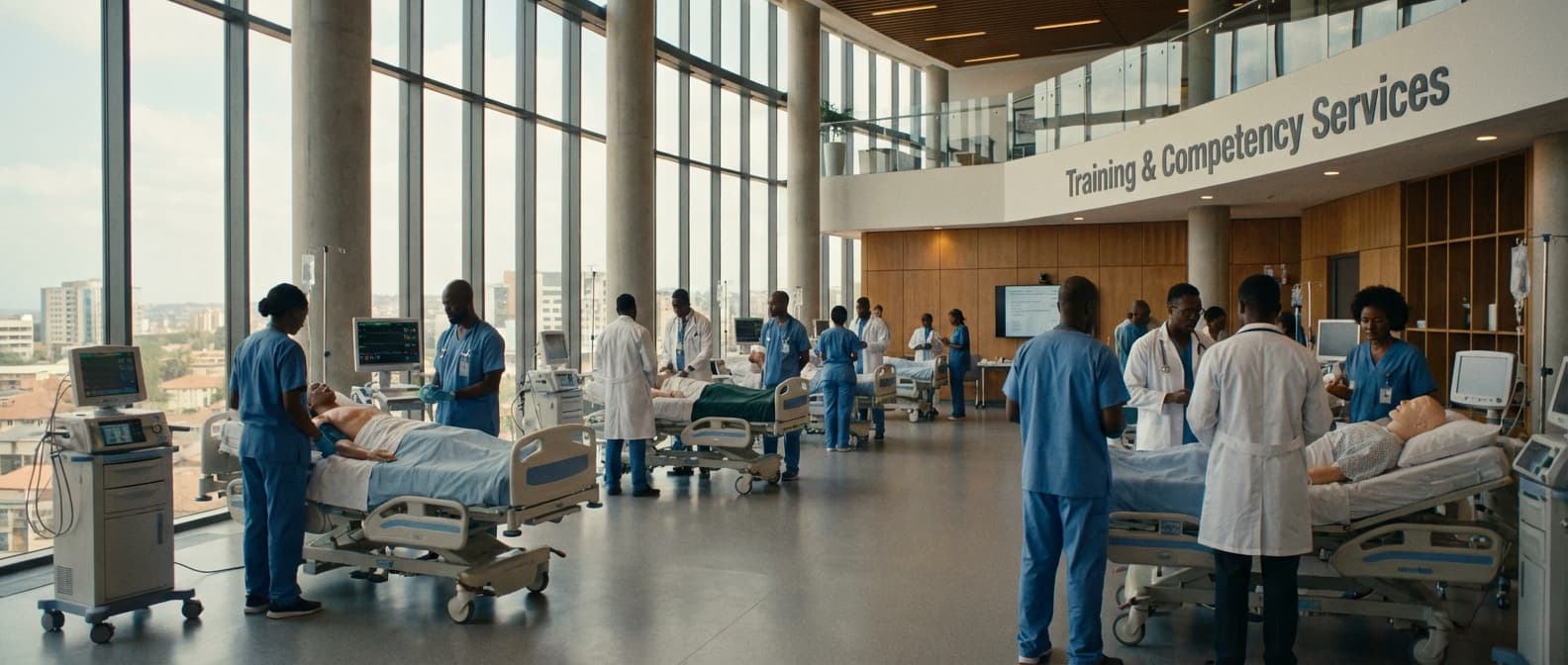
Biomedical Engineering First-Line Support Training Service in Uganda
Engineering Excellence & Technical Support
Biomedical Engineering First-Line Support Training Service High-standard technical execution following OEM protocols and local regulatory frameworks.
Advanced Biomedical Equipment Diagnostics
Empowering Ugandan technicians with the latest diagnostic techniques for a wide range of medical devices, ensuring rapid and accurate identification of technical issues to minimize downtime and maximize patient care.
Regulatory Compliance & Safety Protocols
Comprehensive training on Ugandan healthcare regulations, safety standards, and best practices for biomedical equipment maintenance and repair, guaranteeing adherence to national and international quality benchmarks.
Preventive Maintenance & Longevity Strategies
Hands-on modules focused on implementing robust preventive maintenance schedules and proactive troubleshooting, significantly extending the lifespan of critical medical equipment and optimizing resource allocation in Ugandan healthcare facilities.
What Is Biomedical Engineering First-line Support Training Service In Uganda?
Biomedical Engineering First-Line Support Training Service in Uganda refers to a specialized program designed to equip individuals with the foundational knowledge and practical skills necessary to perform initial troubleshooting, basic maintenance, and routine checks on medical equipment within healthcare facilities. This service is crucial for ensuring the operational readiness and safety of vital medical devices, thereby contributing to the continuity of patient care and the efficient functioning of health systems. The training focuses on empowering local personnel to address common equipment malfunctions and perform preventive maintenance, reducing reliance on external technicians for minor issues and minimizing downtime.
| Who Needs Biomedical Engineering First-Line Support Training? | Typical Use Cases | |||||||||||
|---|---|---|---|---|---|---|---|---|---|---|---|---|
| Healthcare Facility Technicians/Assistants: Personnel working in hospitals, clinics, and health centers who are the first point of contact for equipment issues. | Maintenance Department Staff: Individuals within the facility's engineering or maintenance departments tasked with initial equipment assessment. | Biomedical Engineering Students/Graduates: Providing foundational practical skills to enhance employability and on-the-job readiness. | Community Health Workers (with relevant equipment): In remote or resource-limited settings, equipping frontline health workers with basic equipment management skills for essential devices. | Biomedical Engineering Department Personnel (junior level): To build capacity for routine tasks and allow senior engineers to focus on complex issues. | Responding to routine device alerts and error messages on bedside monitors. | Performing scheduled cleaning and disinfection of medical devices. | Replacing consumable parts like batteries or tubing on infusion pumps. | Conducting basic pre-use checks and safety inspections of diagnostic equipment. | Identifying and reporting major equipment failures that require specialized intervention. | Troubleshooting minor connectivity issues with networked medical devices. | Ensuring proper storage and handling of non-operational equipment pending repair. | Calibrating basic measurement devices according to manufacturer guidelines. |
Key Components of Biomedical Engineering First-Line Support Training in Uganda
- Equipment Familiarization: Understanding the principles of operation, key components, and basic functionality of common medical devices (e.g., vital signs monitors, infusion pumps, basic diagnostic equipment).
- Troubleshooting Fundamentals: Learning systematic approaches to identify and diagnose common equipment faults, including error code interpretation and basic diagnostic procedures.
- Preventive Maintenance: Training on scheduled inspections, cleaning, lubrication, calibration checks, and battery management to prolong equipment lifespan and prevent failures.
- Basic Repair Techniques: Instruction on simple repair procedures, such as replacing fuses, cleaning connectors, and reassembling basic modules, using manufacturer-approved methods.
- Safety Protocols: Emphasis on electrical safety, infection control, and proper handling procedures for medical equipment to ensure the safety of both the operator and the patient.
- Documentation and Reporting: Training on maintaining accurate records of maintenance activities, repairs, and equipment status, and reporting issues to appropriate authorities.
- Logistics and Inventory Management: Basic understanding of spare parts management and proper storage of tools and test equipment.
Who Needs Biomedical Engineering First-line Support Training Service In Uganda?
Biomedical Engineering First-Line Support Training Service in Uganda is crucial for ensuring the efficient and effective operation of medical equipment, thereby enhancing healthcare delivery across the nation. This training focuses on empowering personnel to perform essential maintenance, troubleshooting, and basic repairs of a wide range of medical devices. This ultimately reduces downtime, minimizes the need for external specialists, and improves patient safety and care outcomes.
| Target Customer Group | Key Departments/Personnel Requiring Training | Specific Needs/Benefits |
|---|---|---|
| Public Hospitals (e.g., Mulago National Referral Hospital, Regional Referral Hospitals) | Biomedical Engineering Department, Clinical Engineering Units, Theatre Technicians, Laboratory Technicians, Ward Managers | Handling common equipment malfunctions, routine preventive maintenance, basic troubleshooting, ensuring operational readiness of critical equipment. |
| Private Hospitals and Clinics (e.g., International Hospital Kampala, Bugolobi Medical Centre) | Biomedical Technicians, IT Support Staff (with a focus on medical devices), Nursing Supervisors, Department Heads (e.g., Radiology, ICU) | Rapid response to equipment issues, cost-effective in-house maintenance, compliance with quality standards, improved patient flow. |
| Health Centers and District Hospitals | On-site Clinical Officers, Laboratory Assistants, Biomedical Technicians (if available), Nursing Officers | Empowering local staff to address basic equipment problems, reducing reliance on distant specialized support, improving access to functional medical devices in remote areas. |
| Medical Equipment Suppliers and Distributors | Field Service Engineers, Technical Support Staff, Sales Representatives (for basic understanding of product functionality and common issues) | Enhancing post-sales support, reducing return rates, building customer trust, providing immediate on-site solutions for clients. |
| Non-Governmental Organizations (NGOs) and Faith-Based Organizations (FBOs) with healthcare programs | Project Coordinators, Field Technicians, Healthcare Facility Managers implementing NGO/FBO projects | Ensuring sustainability of medical equipment provided, building local capacity for maintenance, maximizing the impact of donated equipment. |
| Ministry of Health and District Health Offices | Biomedical Engineering Unit Staff, Health Facility Managers, Procurement Officers | Establishing standardized maintenance protocols, training trainers for wider dissemination, assessing equipment status and needs, informed decision-making on equipment procurement and maintenance budgets. |
Target Customers and Departments
- Healthcare Facilities (Public and Private)
- Medical Equipment Suppliers and Distributors
- Non-Governmental Organizations (NGOs) involved in healthcare
- Government Health Agencies
Biomedical Engineering First-line Support Training Service Process In Uganda
This document outlines the typical workflow for a Biomedical Engineering First-Line Support Training Service in Uganda, covering the process from initial inquiry to the successful execution of the training. This service aims to equip healthcare facilities with trained personnel capable of basic troubleshooting, maintenance, and operation of biomedical equipment, thereby improving equipment uptime and patient care.
| Stage | Description | Key Activities | Responsible Parties | Deliverables/Outcomes | Key Considerations |
|---|---|---|---|---|---|
| The process begins when a healthcare facility (hospital, clinic, NGO) expresses interest in first-line biomedical equipment support training. | Initial contact (email, phone, meeting), understanding training needs (specific equipment, number of staff, existing skill levels), site visit (optional), detailed requirements gathering. | Client (Healthcare Facility), Service Provider (Training Organization/Consultant). | Understanding of training scope, identified equipment, target audience, facility constraints. | Clarity on client's existing infrastructure, availability of target trainees, budget indications. |
| Based on the needs assessment, a formal proposal is prepared outlining the training program and associated costs. | Drafting training curriculum, defining learning objectives, outlining training methodology, specifying equipment to be covered, developing a detailed budget, preparing a formal proposal document. | Service Provider. | Comprehensive training proposal, detailed quotation, outline of training schedule and modules. | Tailoring the proposal to specific needs, clear breakdown of costs, highlighting benefits. |
| The proposal is reviewed by the client, leading to potential negotiations and the signing of a formal contract. | Client review of proposal, negotiation of terms (cost, schedule, scope), legal review, contract signing. | Client, Service Provider. | Signed Service Level Agreement (SLA) or Contract. | Ensuring mutual understanding of obligations, payment terms, intellectual property, and confidentiality. |
| The training content is developed or adapted to meet the specific needs and context of the facility. | Developing training manuals, presentations, practical exercises, assessment tools. Customizing materials to specific equipment models and local conditions. | Service Provider. | Approved training modules, handbooks, practical guides. | Relevance to local equipment, clarity of language, use of visual aids. |
| Arrangements are made for the training delivery, including venue, trainers, and participant scheduling. | Confirming training dates and duration, booking training venue (on-site or off-site), assigning qualified trainers, coordinating participant availability, arranging for necessary tools and consumables. | Service Provider, Client. | Confirmed training schedule, allocated training space, confirmed trainer assignments. | Minimizing disruption to facility operations, ensuring adequate space and resources. |
| Final checks and setup are completed before the training commences. | Setting up the training venue, preparing equipment for practical sessions, distributing pre-reading materials (if any), confirming participant attendance. | Service Provider, Client. | Ready training environment, accessible equipment for practice. | Ensuring all practical equipment is functional and safe for use. |
| The actual training sessions are conducted, combining theoretical knowledge with hands-on practical experience. | Delivering lectures and presentations, conducting practical demonstrations, facilitating hands-on exercises, answering participant questions, conducting formative assessments. | Service Provider (Trainers). | Trained personnel, demonstrated competency in basic troubleshooting and maintenance. | Interactive learning, practical application, addressing diverse learning styles. |
| The effectiveness of the training is assessed, and feedback is gathered from participants and trainers. | Administering post-training assessments (tests, practical evaluations), collecting participant feedback forms, conducting a debriefing session with participants and facility management. | Service Provider, Client. | Training assessment results, participant feedback report, evaluation of training effectiveness. | Identifying areas for improvement in future training sessions. |
| Participants who successfully complete the training are certified, and ongoing support may be provided. | Issuing certificates of completion, providing post-training support (e.g., Q&A sessions, remote assistance), recommending further specialized training, documenting training outcomes. | Service Provider, Client. | Certified personnel, improved equipment maintenance capacity, ongoing support channel. | Ensuring sustained benefits of the training and reinforcing learned skills. |
Biomedical Engineering First-Line Support Training Service Workflow in Uganda
- Inquiry and Needs Assessment
- Proposal Development and Quotation
- Contract Negotiation and Agreement
- Training Material Development and Customization
- Logistics and Scheduling
- Pre-Training Preparations
- Training Delivery
- Post-Training Evaluation and Feedback
- Certification and Follow-up
Biomedical Engineering First-line Support Training Service Cost In Uganda
The cost of first-line support training for Biomedical Engineers in Uganda is influenced by several factors, leading to a range of pricing. These factors include the duration of the training, the depth and breadth of the curriculum, the experience and qualifications of the trainers, the training methodology (e.g., in-person, online, hybrid), the reputation and accreditation of the training provider, and the inclusion of practical hands-on sessions or specific equipment training. The current economic climate and the demand for such specialized skills within Uganda also play a role. Training providers may also offer different tiers of service, with basic support costing less than premium packages that include advanced troubleshooting, preventive maintenance, or regulatory compliance modules. Discounts may be available for group bookings or for institutions partnering with training providers on a long-term basis.
| Training Type/Level | Estimated Cost Range (UGX) | Typical Duration |
|---|---|---|
| Basic First-Line Support (Introduction to common issues, basic troubleshooting) | 500,000 - 1,500,000 | 2-3 Days |
| Intermediate First-Line Support (Advanced troubleshooting, preventive maintenance basics) | 1,000,000 - 3,000,000 | 3-5 Days |
| Specialized First-Line Support (e.g., specific imaging equipment, laboratory devices) | 1,500,000 - 4,000,000+ | 3-7 Days (can vary greatly) |
| Comprehensive First-Line Support (Includes regulatory aspects, reporting, vendor interaction) | 2,000,000 - 5,000,000+ | 5-10 Days |
| Custom/On-Demand Training (Tailored curriculum for specific needs) | Negotiable (based on scope and duration) | Variable |
Key Pricing Factors for First-Line Biomedical Engineering Support Training in Uganda:
- Training Duration (hours, days, weeks)
- Curriculum Scope and Complexity
- Trainer Expertise and Certifications
- Delivery Method (Onsite, Online, Hybrid)
- Provider Reputation and Accreditation
- Inclusion of Practical/Hands-on Sessions
- Specific Equipment or Technology Focus
- Training Materials and Resources Provided
- Assessment and Certification Processes
- Group Discounts and Institutional Partnerships
Affordable Biomedical Engineering First-line Support Training Service Options
This document outlines affordable training service options for biomedical engineering first-line support, focusing on value bundles and cost-saving strategies to equip technicians with essential skills without breaking the budget. Effective first-line support is crucial for maintaining operational efficiency of medical equipment, minimizing downtime, and ensuring patient safety. We aim to provide accessible and high-quality training that addresses common troubleshooting, preventive maintenance, and basic repair tasks for a range of biomedical devices.
| Service Option | Description | Value Bundle Inclusions | Cost-Saving Strategies | Target Audience |
|---|---|---|---|---|
| Foundational Skills Module | Covers core principles of biomedical equipment, safety, and basic troubleshooting. Ideal for new technicians or those transitioning into the field. | Online self-paced modules, downloadable workbooks, basic troubleshooting scenarios. | Group discounts for multiple enrollments, subscription-based access, tiered pricing based on content depth. | Entry-level technicians, new hires, general maintenance staff. |
| Device-Specific Troubleshooting Workshop | Focuses on common issues and repair procedures for a selected category of medical devices (e.g., vital signs monitors, infusion pumps). | Interactive online sessions, virtual labs with simulated equipment, case studies, Q&A with experienced engineers. | Bundled with foundational modules, regional training sessions to reduce travel costs, train-the-trainer programs. | Technicians working with specific device types, experienced personnel needing specialized knowledge. |
| Preventive Maintenance & Calibration Essentials | Trains technicians on performing routine maintenance, calibrations, and functional checks to extend equipment lifespan and ensure accuracy. | Practical guides, video demonstrations, calibration checklists, basic performance verification protocols. | Annual training packages, bundled with repair modules, discounts for equipment manufacturers' recommended schedules. | All first-line support technicians, staff responsible for equipment upkeep. |
| Comprehensive First-Line Support Certification Program | A holistic program combining foundational knowledge, device-specific skills, and best practices, culminating in a certification. | All previous module content, advanced troubleshooting simulations, practical assessments, certification exam. | Early bird registration discounts, extended payment plans, partnerships with healthcare institutions for bulk enrollment. | Aspiring and existing biomedical engineering support staff seeking formal recognition. |
| On-Demand Virtual Mentorship | Provides access to experienced biomedical engineers for live Q&A, guidance on complex issues, and remote assistance during troubleshooting. | Scheduled one-on-one or group sessions, access to a knowledge base of common issues and solutions. | Monthly or annual subscription models, tiered access based on hours of mentorship, shared mentorship slots within departments. | All levels of support staff facing challenging or unusual problems. |
Key Components of First-Line Support Training
- Introduction to Biomedical Equipment Fundamentals
- Basic Electrical and Mechanical Safety Procedures
- Common Troubleshooting Methodologies
- Preventive Maintenance Schedules and Procedures
- Introduction to Diagnostic Tools and Software
- Basic Repair and Component Replacement Techniques
- Documentation and Reporting Standards
- Regulatory Compliance Overview (e.g., FDA, local health authorities)
- Communication and Customer Service Skills
Verified Providers In Uganda
Finding verified healthcare providers in Uganda is crucial for ensuring quality care and patient safety. Franance Health stands out as a leading platform that meticulously vets its network of medical professionals and facilities. This rigorous credentialing process means that when you choose a provider through Franance Health, you are selecting from a pool of highly qualified and reputable practitioners. Their commitment to verification covers a range of essential aspects, from educational qualifications and professional licenses to accreditations and peer reviews. This thoroughness offers peace of mind to patients seeking reliable medical services. By prioritizing verified providers, Franance Health not only elevates the standard of healthcare access in Uganda but also empowers individuals to make informed decisions about their well-being, confident in the expertise and legitimacy of the care they receive.
| Verification Aspect | Franance Health's Approach | Patient Benefit |
|---|---|---|
| Educational Qualifications | Thorough checks of degrees, diplomas, and specialized training. | Ensures providers have the foundational knowledge and expertise. |
| Professional Licenses | Validates current and unencumbered medical licenses from relevant authorities. | Guarantees providers are legally authorized to practice. |
| Accreditations & Certifications | Confirms facilities meet national and international healthcare standards. | Assures a safe and well-equipped environment for treatment. |
| Peer Reviews & Reputation | Integrates feedback from other medical professionals and patient testimonials. | Provides an additional layer of assurance regarding quality of care and patient experience. |
| Disciplinary Records | Checks for any past or pending professional misconduct. | Minimizes risk of encountering unqualified or problematic practitioners. |
| Specialization Validation | Confirms specific areas of expertise and certifications. | Helps patients find the right specialist for their needs. |
Why Franance Health Providers are the Best Choice:
- Rigorous credentialing process for all listed providers.
- Verification of educational qualifications and professional licenses.
- Confirmation of facility accreditations and adherence to standards.
- Inclusion of peer reviews and patient feedback mechanisms.
- Commitment to transparency and patient safety.
- Access to a wide network of specialists and general practitioners.
- Streamlined platform for booking appointments and accessing services.
Scope Of Work For Biomedical Engineering First-line Support Training Service
This Scope of Work (SOW) outlines the requirements for a comprehensive training service focused on providing first-line support for biomedical engineering equipment. The objective is to equip personnel with the fundamental knowledge and practical skills necessary to effectively handle initial troubleshooting, routine maintenance, and escalation procedures for a range of biomedical devices. This service will ensure prompt and accurate resolution of common issues, thereby minimizing equipment downtime and enhancing patient care. The training will cover theoretical concepts, hands-on practical exercises, and simulated real-world scenarios. Technical deliverables will include training materials, competency assessments, and a final training report. Standard specifications for the training will emphasize practical application, adherence to safety protocols, and alignment with industry best practices in biomedical equipment management.
| Deliverable | Description | Format | Standard Specification/Acceptance Criteria | Responsible Party |
|---|---|---|---|---|
| Training Curriculum & Materials | Comprehensive set of training documents, including slides, manuals, handouts, and case studies. | Digital (PDF, PPTX) and/or Printed | Content accurate, up-to-date, and relevant to first-line support. Clearly organized by module. Accessible to trainees. | Training Provider |
| Hands-on Practical Exercises | Structured practical sessions for trainees to practice troubleshooting and maintenance on simulated or actual equipment. | Live Demonstration & Trainee Participation | Exercises directly map to training modules. Equipment used is representative of common biomedical devices. Safety protocols are strictly followed. | Training Provider & Trainee |
| Competency Assessment Tools | Quizzes, practical skill evaluations, and scenario-based assessments to measure trainee comprehension and skill acquisition. | Written tests, Practical Skill Checklists, Scenario Simulations | Assessments cover all key learning objectives. Passing score of X% required for each module/overall. Feedback provided to trainees. | Training Provider |
| Training Attendance & Performance Records | Documentation of trainee attendance, assessment scores, and any remedial actions taken. | Digital (Spreadsheet/Database) | Accurate and complete records for all participants. Confidentiality maintained. | Training Provider |
| Final Training Report | A summary report detailing the training conducted, participant performance, identified strengths and areas for improvement, and recommendations for future training. | Digital (PDF) | Includes aggregate performance data, instructor feedback, and a conclusion on training effectiveness. Submitted within X days of training completion. | Training Provider |
| Instructor Qualifications | Documentation of the trainers' experience, certifications, and expertise in biomedical engineering and adult education. | Resumes/CVs, Certifications | Minimum of X years of experience in biomedical equipment maintenance and/or training. Relevant industry certifications required. | Training Provider |
| Training Environment & Equipment | Designated training space with appropriate AV equipment and a selection of functional biomedical devices for practical sessions. | Physical Space & Functional Equipment | Training room adequately sized and equipped. Devices are safe, functional, and representative of typical hospital/clinic equipment. Adequate power and connectivity. | Training Provider (or designated facility) |
Key Training Modules
- Introduction to Biomedical Equipment Fundamentals
- Basic Electrical and Mechanical Safety Procedures
- Common Biomedical Device Categories (e.g., patient monitoring, infusion pumps, defibrillators)
- Initial Troubleshooting Methodologies and Flowcharts
- Routine Preventive Maintenance Checks and Procedures
- Proper Use of Diagnostic Tools and Test Equipment
- Documentation and Record-Keeping Standards
- Escalation Procedures and Communication Protocols
- Introduction to Regulatory Compliance (e.g., FDA, local regulations)
- Cybersecurity Basics for Connected Medical Devices
Service Level Agreement For Biomedical Engineering First-line Support Training Service
This Service Level Agreement (SLA) outlines the response times and uptime guarantees for the Biomedical Engineering First-Line Support Training Service. This training service is designed to equip first-line support personnel with the essential knowledge and skills to effectively handle initial inquiries and basic troubleshooting of biomedical equipment. The service includes training modules, practical exercises, and knowledge assessments. The goal is to improve first-line support efficiency and patient safety by ensuring prompt and accurate responses to equipment-related issues.
| Service Component | Response Time Guarantee | Uptime Guarantee |
|---|---|---|
| Access to Online Training Platform | 99.5% Uptime (Scheduled Maintenance excluded) | N/A (Uptime directly relates to platform availability) |
| Email/Ticket Submission for Training Content Queries | Within 2 business hours (during business hours) | N/A (Response time focused) |
| Live Training Session Availability | Scheduled at agreed-upon times. Technical issues impacting live sessions will be addressed within 1 hour. | 98% availability for scheduled live training sessions. |
| Access to Training Materials & Resources | 24/7 availability | 99.5% uptime (Scheduled Maintenance excluded) |
| Assessment Feedback | Within 3 business days of assessment submission | N/A (Response time focused) |
Scope of Service
- Comprehensive training modules covering common biomedical equipment types.
- Hands-on practical sessions for common troubleshooting scenarios.
- Knowledge assessments to evaluate trainee proficiency.
- Access to online training resources and documentation.
- Dedicated support for training-related queries.
Frequently Asked Questions

Ready when you are
Let's scope your Biomedical Engineering First-Line Support Training Service in Uganda project in Uganda.

Scaling healthcare logistics and technical systems across the entire continent.