
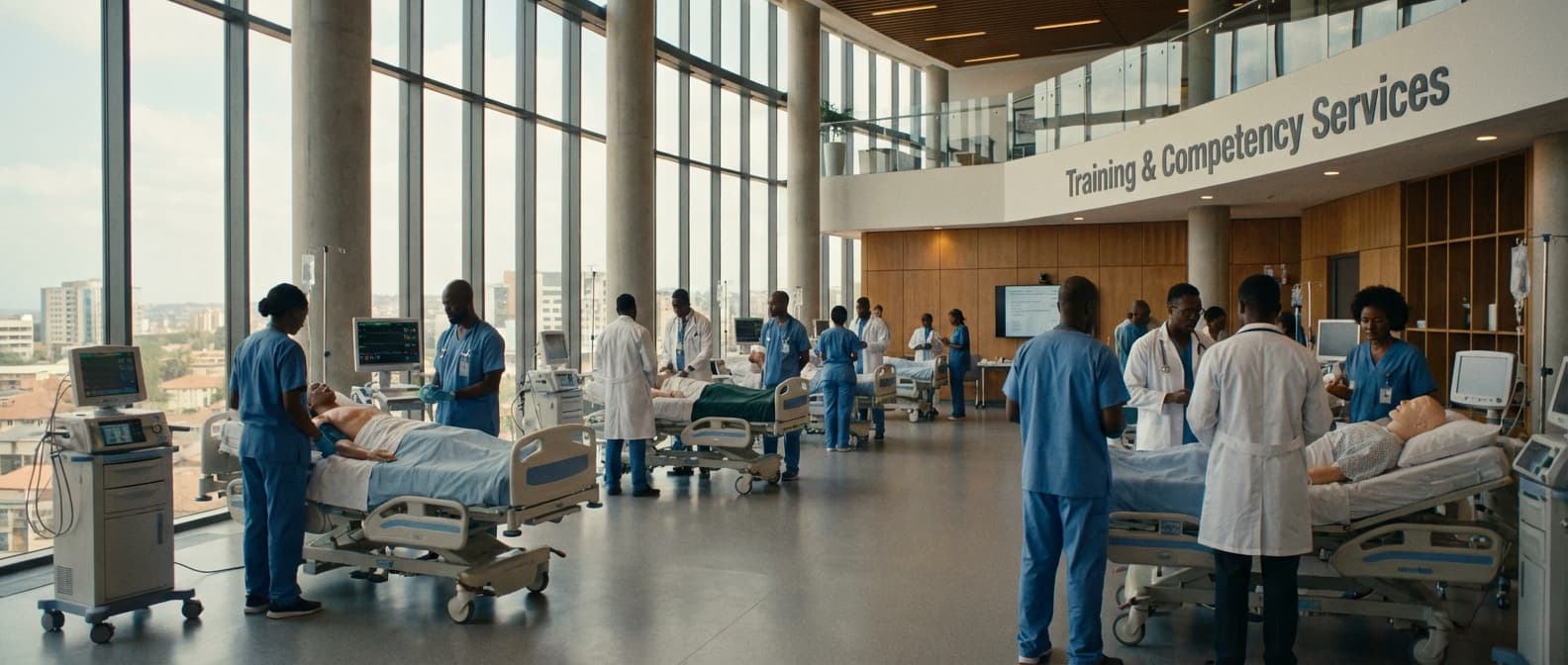
Anesthesia Workstation User Training Service in Uganda
Engineering Excellence & Technical Support
Anesthesia Workstation User Training Service High-standard technical execution following OEM protocols and local regulatory frameworks.
Advanced Anesthesia Machine Features Mastery
Gain hands-on expertise with the latest anesthesia workstation functionalities, including intelligent ventilation modes, integrated gas analysis, and advanced monitoring capabilities, tailored for the Ugandan healthcare environment.
Patient Safety Protocols & Error Prevention
Learn to effectively utilize built-in safety features, alarms, and pre-use checks to minimize the risk of medical errors and ensure optimal patient outcomes, focusing on common challenges in Ugandan clinical practice.
Seamless Workflow Integration & Troubleshooting
Master the efficient setup, operation, and routine maintenance of anesthesia workstations. Our training emphasizes practical troubleshooting techniques for common issues encountered in Ugandan hospitals, ensuring uninterrupted patient care.
What Is Anesthesia Workstation User Training Service In Uganda?
Anesthesia Workstation User Training Service in Uganda refers to specialized educational programs designed to equip healthcare professionals with the knowledge and practical skills necessary for the safe and effective operation of anesthesia workstations. These workstations are sophisticated medical devices integrating various functionalities such as ventilation, gas delivery, monitoring, and drug administration, crucial for maintaining patient vital signs during surgical and invasive procedures. The service ensures users understand the equipment's capabilities, limitations, troubleshooting protocols, and maintenance requirements, thereby optimizing patient safety, procedural efficiency, and adherence to established clinical protocols within the Ugandan healthcare context.
| Target Audience | Needs Addressed | Typical Use Cases |
|---|---|---|
| Anesthesiologists | Enhancing proficiency in advanced ventilation modes, complex patient management, and rapid troubleshooting in critical situations. | Routine surgical anesthesia, complex cases (cardiac, neurosurgery), critical care settings, and emergency response. |
| Anesthetic Nurses/Clinical Officers | Building foundational understanding of workstation operation, patient monitoring, and basic troubleshooting to support anesthesiologists. | Assisting in routine surgeries, managing stable patients, and monitoring during procedures under supervision. |
| Biomedical Engineers/Technicians | Acquiring in-depth knowledge for installation, calibration, preventive maintenance, and advanced repair of anesthesia workstations. | Equipment commissioning, scheduled maintenance, repair of malfunctions, and ensuring operational readiness. |
| Healthcare Facilities (Hospitals, Clinics) | Ensuring staff competency, optimizing equipment utilization, improving patient safety, reducing equipment downtime, and meeting accreditation standards. | Procurement of new workstations, refresher training for existing staff, and onboarding of new medical personnel. |
| Medical Equipment Distributors/Manufacturers | Providing comprehensive product training to end-users and support staff to facilitate adoption and ensure proper usage. | Pre-sales demonstrations, post-installation training, and ongoing customer support. |
Key Components of Anesthesia Workstation User Training Service:
- Theoretical Instruction: Covers principles of anesthesia delivery, workstation components (vaporizers, flowmeters, ventilators, gas scavenging systems), patient monitoring integration, alarm management, and emergency procedures.
- Practical Hands-on Training: Involves direct interaction with anesthesia workstations, simulating various clinical scenarios, practicing ventilation modes, troubleshooting common malfunctions, and performing pre-use checks.
- User Interface Navigation: Detailed training on the specific operating system and touchscreen interface of the target workstation model.
- Maintenance and Sterilization Protocols: Education on routine cleaning, disinfection, and basic preventive maintenance to ensure equipment longevity and infection control.
- Troubleshooting and Fault Diagnosis: Training on identifying and resolving common errors, error codes, and system alerts.
- Advanced Features and Applications: Depending on the workstation model, training may extend to specialized ventilation modes, integrated monitoring capabilities, and drug calculation software.
- Regulatory Compliance: Emphasis on adhering to local healthcare regulations and manufacturer guidelines for safe operation.
- Competency Assessment: Evaluation of user proficiency through practical assessments and theoretical examinations.
Who Needs Anesthesia Workstation User Training Service In Uganda?
Anesthesia Workstation User Training Service is crucial for ensuring the safe and effective operation of advanced anesthesia equipment in Uganda. This specialized training is designed to equip healthcare professionals with the knowledge and practical skills necessary to operate, maintain, and troubleshoot modern anesthesia workstations. Proper training minimizes risks of medical errors, optimizes patient care outcomes, and maximizes the lifespan and functionality of these critical medical devices.
| Target Customer Segment | Specific Departments/Roles | Key Training Needs |
|---|---|---|
| Public Hospitals | Anesthesiology Department, Surgical Wards, Intensive Care Units, Emergency Departments | Comprehensive training on operation, basic maintenance, troubleshooting common issues, emergency procedures related to workstation malfunction, and integration with other patient monitoring systems. |
| Private Hospitals & Specialist Clinics | Anesthesiology Department, Operating Theatres, Day Surgery Units, Pain Management Clinics | Advanced features utilization, specialized ventilation modes, integration with advanced patient monitoring, troubleshooting complex technical issues, and protocol adherence. |
| Surgical Centers | Anesthesiology Team, Surgical Nurses, Biomedical Engineering Department | Core operational skills, routine checks and calibration, safety protocols, and immediate response to alarms and errors. |
| Maternity Units (especially those with surgical capacity) | Anesthesiologists, Midwives (with anesthetic responsibilities), Nurses | Specific training for obstetric anesthesia, management of maternal emergencies related to anesthesia, and safe use of workstations in this context. |
| Intensive Care Units (ICUs) | Critical Care Physicians, Anesthesiologists, ICU Nurses, Respiratory Therapists | Long-term ventilation strategies, weaning protocols, advanced monitoring capabilities, and management of critically ill patients requiring complex ventilatory support. |
| Emergency Departments | Emergency Physicians, Anesthesiologists (on call), Paramedics (if applicable in hospital setting) | Rapid assessment and setup, management of trauma patients requiring anesthesia, and emergency ventilation strategies. |
| Medical Training Institutions (Universities, Medical Schools, Nursing Schools) | Medical Students, Anesthesiology Residents, Nursing Students, Faculty | Foundational understanding of anesthesia workstation principles, simulation-based training, and curriculum integration for future healthcare professionals. |
| Biomedical Engineering Departments | Biomedical Engineers, Technicians | In-depth technical training on maintenance, repair, calibration, and troubleshooting of specific anesthesia workstation models, ensuring equipment longevity and safety. |
Target Customers and Departments in Uganda Requiring Anesthesia Workstation User Training
- Hospitals (Public and Private)
- Surgical Centers
- Maternity Units
- Intensive Care Units (ICUs)
- Emergency Departments
- Medical Training Institutions
Anesthesia Workstation User Training Service Process In Uganda
This document outlines the standard workflow for providing Anesthesia Workstation User Training services in Uganda, from the initial client inquiry to the successful execution and follow-up.
| Phase | Step | Description | Key Activities | Deliverables/Outcomes | Responsible Party |
|---|---|---|---|---|---|
| Phase 1: Inquiry and Consultation | 1.1 Initial Inquiry | Client (e.g., hospital, clinic, training institution) expresses interest in anesthesia workstation user training. | Receive inquiry via email, phone, or website form. Acknowledge receipt promptly. | Initial acknowledgement of inquiry. | Service Provider |
| 1.2 Needs Assessment & Consultation | Understand the client's specific training requirements, including the type of anesthesia workstations, number of trainees, existing knowledge base, and desired learning outcomes. | Conduct a preliminary consultation (phone call or virtual meeting). Gather details on equipment models, user experience levels, and specific clinical applications. | Detailed understanding of client's training needs. | Service Provider & Client | |
| Phase 2: Proposal and Agreement | 2.1 Training Proposal Development | Develop a comprehensive proposal tailored to the client's identified needs. | Outline training objectives, curriculum, methodology (theory, practical, simulation), duration, venue, trainer qualifications, and cost breakdown. | Detailed Training Proposal. | Service Provider |
| 2.2 Proposal Review & Negotiation | Client reviews the proposal and may request modifications or clarification. | Engage in discussions to address any client concerns or propose adjustments. | Agreement on training scope and terms. | Service Provider & Client | |
| 2.3 Contract/Agreement Finalization | Formalize the training agreement once terms are mutually agreed upon. | Sign a service agreement outlining responsibilities, payment terms, cancellation policies, and confidentiality. | Signed Service Agreement. | Service Provider & Client | |
| Phase 3: Pre-Training Preparation | 3.1 Trainer Assignment & Briefing | Assign qualified trainers based on the specific workstation models and client requirements. | Brief trainers on client specifics, learning objectives, and any unique challenges. | Assigned and briefed trainer(s). | Service Provider |
| 3.2 Training Material Development/Customization | Prepare or customize training materials (presentations, manuals, case studies) relevant to the specific anesthesia workstations and clinical context. | Ensure materials are up-to-date and align with current best practices. | Developed/customized training materials. | Service Provider | |
| 3.3 Logistics & Scheduling | Coordinate all logistical aspects, including scheduling training dates, confirming venue, and ensuring availability of anesthesia workstations for practical sessions. | Confirm dates with client. Arrange for equipment setup and testing if required. Communicate training schedule to participants. | Confirmed training schedule, venue, and equipment readiness. | Service Provider & Client | |
| Phase 4: Training Execution | 4.1 Welcome & Introduction | Begin the training session with a formal welcome and overview. | Introduce trainers, participants, and outline the day's agenda and learning objectives. | Introduction and agenda overview. | Trainer |
| 4.2 Theoretical Training | Deliver theoretical knowledge on the anesthesia workstation's components, functions, safety features, and principles of operation. | Lectures, presentations, and Q&A sessions. | Understanding of theoretical concepts. | Trainer | |
| 4.3 Practical Demonstration & Hands-on Sessions | Provide hands-on training on the actual anesthesia workstations. | Demonstrate key procedures, allow participants to practice setup, ventilation modes, monitoring, and troubleshooting under supervision. | Proficiency in practical operation. | Trainer & Participants | |
| 4.4 Simulation & Case Studies | Incorporate simulation exercises or review relevant clinical case studies to apply learned knowledge in realistic scenarios. | Simulate common and critical events requiring workstation adjustments and management. | Application of knowledge in simulated scenarios. | Trainer & Participants | |
| 4.5 Q&A and Problem Solving | Facilitate open discussion for participants to ask questions and resolve any doubts or challenges encountered. | Address specific user queries and provide practical solutions. | Clarified doubts and resolved user issues. | Trainer | |
| Phase 5: Post-Training Evaluation and Follow-up | 5.1 Knowledge & Skills Assessment | Evaluate participant learning through quizzes, practical assessments, or observed performance. | Administer post-training assessments to gauge comprehension and skill acquisition. | Assessment results. | Trainer |
| 5.2 Feedback Collection | Gather feedback from participants and the client on the training program's effectiveness, content, and delivery. | Distribute and collect feedback forms or conduct post-training surveys. | Participant and client feedback. | Service Provider | |
| 5.3 Certification & Reporting | Issue certificates of completion to participants who meet the training requirements. Provide a training report to the client. | Prepare and submit a comprehensive training report detailing attendance, assessment results, and feedback summary. Issue certificates. | Certificates of Completion, Training Report. | Service Provider | |
| 5.4 Post-Training Support & Follow-up | Offer ongoing support and address any further queries that may arise after the training. | Provide contact details for follow-up questions. Schedule a follow-up call or visit if agreed upon. | Continued user support and relationship building. | Service Provider |
Anesthesia Workstation User Training Service Process in Uganda
- Phase 1: Inquiry and Consultation
- Phase 2: Proposal and Agreement
- Phase 3: Pre-Training Preparation
- Phase 4: Training Execution
- Phase 5: Post-Training Evaluation and Follow-up
Anesthesia Workstation User Training Service Cost In Uganda
The cost of anesthesia workstation user training services in Uganda is influenced by several factors, leading to a range of pricing. These services are crucial for healthcare professionals to safely and effectively operate complex anesthesia equipment, ensuring optimal patient care. Factors impacting the cost include the duration and depth of the training, the qualifications and experience of the trainers, the specific anesthesia workstation model being trained on (as some are more complex), the location where the training is conducted (on-site at a hospital versus a dedicated training facility), and the number of participants. Additionally, the inclusion of hands-on practical sessions, simulation exercises, and the provision of training materials can all affect the final price. Demand for these specialized training services within Uganda also plays a role in setting competitive rates.
| Service Component/Scope | Estimated Cost Range (UGX - Ugandan Shillings) | Notes |
|---|---|---|
| Basic User Training (1-2 Days) | 1,000,000 - 2,500,000 | Covers fundamental operation, safety features, and basic troubleshooting. Suitable for initial onboarding. |
| Intermediate User Training (3-4 Days) | 2,000,000 - 4,000,000 | Includes more in-depth understanding of functionalities, advanced settings, and common maintenance procedures. May involve more simulation. |
| Advanced/Specialized Training (5+ Days or specific modules) | 3,500,000 - 7,000,000+ | Focuses on specific advanced applications, troubleshooting complex issues, or training on newer/highly sophisticated models. Could be custom-designed. |
| On-site Training (Per Day Rate - Group of 5-10) | 500,000 - 1,500,000 | Cost for the trainer's time and expertise when conducted at the client's facility. Excludes travel & accommodation if applicable. |
| Certification/Assessment Fee (Per Participant) | 100,000 - 300,000 | For formal assessment and issuance of training certificates. |
| Customized Training Package (Variable) | Negotiable (Based on scope) | Tailored programs for specific hospital needs or equipment. Pricing determined after detailed needs assessment. |
Factors Influencing Anesthesia Workstation User Training Service Costs in Uganda
- Training Duration and Depth
- Trainer Qualifications and Experience
- Complexity of the Anesthesia Workstation Model
- Training Location (On-site vs. Off-site)
- Number of Participants
- Inclusion of Practical/Simulation Sessions
- Provision of Training Materials
- Market Demand for Specialized Training
Affordable Anesthesia Workstation User Training Service Options
Providing accessible and effective user training for affordable anesthesia workstations is crucial for maximizing their utility and ensuring patient safety. This service aims to empower healthcare professionals with the knowledge and skills to operate these systems efficiently and confidently. We offer flexible training options designed to meet diverse institutional needs and budgets, focusing on value-added bundles and practical cost-saving strategies.
| Value Bundle Name | Included Services | Target Audience | Estimated Cost Savings |
|---|---|---|---|
| Foundation Package | Basic Operation & Safety (On-site or Virtual) | New users, small departments | 10-15% (compared to individual sessions) |
| Proficiency Package | Foundation Package + Advanced Features & Troubleshooting (On-site or Virtual) | Experienced users, larger departments | 15-20% (compared to individual sessions) |
| Sustainability Package | Proficiency Package + Maintenance & Calibration Overview (On-site or Virtual) | Biomedical engineers, lead anesthesiologists | 20-25% (compared to individual sessions) |
| Enterprise Package | Customized bundle of all services, including Train-the-Trainer, tailored to organizational needs | Large healthcare systems, multi-site facilities | 25-35% (or more, based on customization) |
Key Training Service Options
- Basic Operation & Safety: Covers fundamental workstation functions, alarm management, and essential safety protocols. Ideal for new users or as a refresher.
- Advanced Features & Troubleshooting: Delves into specialized modes, ventilation strategies, and common troubleshooting scenarios to enhance user proficiency.
- Maintenance & Calibration Overview: Provides essential knowledge on routine checks, basic maintenance, and understanding calibration requirements for optimal performance and longevity.
- Customized On-Site Training: Tailored sessions delivered at your facility, allowing for hands-on experience with your specific workstation models and team workflows.
- Remote Virtual Training: Flexible and cost-effective sessions conducted online, offering convenience and accessibility for dispersed teams.
- Train-the-Trainer Programs: Equips designated individuals within your organization to become internal experts and deliver ongoing training to new staff.
Verified Providers In Uganda
In Uganda's healthcare landscape, distinguishing between genuine and fraudulent service providers is paramount for public health and safety. Verified providers offer a crucial layer of assurance, ensuring quality, safety, and ethical practices. Franance Health stands out as a leading example of a verified provider in Uganda, embodying the highest standards in healthcare delivery.
| Feature | Franance Health | Significance for Patients |
|---|---|---|
| Credential Verification | Thoroughly vetted and certified | Assurance of competence and legitimacy |
| Quality Standards | Adheres to national and international benchmarks | Reliable and effective medical services |
| Professional Expertise | Employs highly qualified and licensed practitioners | Accurate diagnoses and appropriate treatments |
| Patient Safety Protocols | Strict adherence to safety guidelines | Reduced risk of medical errors and infections |
| Ethical Conduct | Upholds principles of integrity and transparency | Trustworthy healthcare partner |
Why Franance Health Represents the Best Choice in Verified Healthcare Providers in Uganda:
- Rigorous Credentialing and Accreditation: Franance Health undergoes a stringent vetting process, adhering to national and international healthcare standards. This includes verification of all professional licenses, certifications, and operational compliance, ensuring they meet regulatory requirements.
- Commitment to Quality Care: The organization prioritizes patient well-being through evidence-based practices, continuous staff training, and investment in advanced medical technology. This dedication translates into superior diagnostic accuracy and effective treatment outcomes.
- Ethical Practices and Transparency: Franance Health operates with a strong ethical framework, ensuring patient confidentiality, informed consent, and fair pricing. Transparency in their services and operations builds trust and empowers patients.
- Experienced and Qualified Professionals: Their team comprises highly skilled and experienced healthcare professionals, including doctors, nurses, specialists, and support staff, all meticulously credentialed and dedicated to patient care.
- Patient-Centric Approach: Understanding that each patient is unique, Franance Health offers personalized care plans, fostering a supportive and compassionate environment. Their focus is on addressing individual needs and promoting long-term health.
- Accessibility and Affordability: While maintaining high standards, Franance Health strives to make quality healthcare accessible to a broader segment of the Ugandan population through strategic partnerships and efficient operational models.
- Positive Patient Feedback and Testimonials: The consistent positive feedback and strong testimonials from satisfied patients are a testament to Franance Health's dedication to excellence and patient satisfaction.
Scope Of Work For Anesthesia Workstation User Training Service
This Scope of Work (SOW) outlines the requirements for providing comprehensive Anesthesia Workstation User Training Services. The objective is to ensure that healthcare professionals are proficient in the safe and effective operation of the designated anesthesia workstations, maximizing patient safety and clinical outcomes. This document details the technical deliverables and standard specifications for the training program.
| Category | Deliverable | Standard Specifications | Format | Frequency/Trigger |
|---|---|---|---|---|
| Training Program Design | Anesthesia Workstation Training Curriculum | Modular design covering basic to advanced topics. Content to be evidence-based and aligned with current anesthesia practice guidelines. Includes theoretical knowledge and practical application. Specific modules to cover: workstation components, gas delivery systems, ventilation modes, monitoring capabilities, vaporizer settings, patient circuit management, troubleshooting, cleaning and disinfection protocols, and emergency scenarios. | Digital (PDF) and Printed Copies | Upon contract award |
| Training Delivery | Instructor-Led Training Sessions (On-site/Remote) | Delivered by certified and experienced anesthesia educators. Class sizes to facilitate interaction and hands-on practice (e.g., max 10 participants per instructor for practical sessions). Sessions to include lectures, demonstrations, case studies, and hands-on practice using actual workstations or high-fidelity simulators. | Live (In-person or Virtual) | As per training schedule (e.g., per cohort of new users, scheduled refresher courses) |
| Training Delivery | Hands-on Practical Sessions | Dedicated time for participants to interact with the anesthesia workstation under instructor supervision. Focus on practical skills like circuit setup, ventilation adjustments, alarm response, and troubleshooting simulated patient scenarios. | Hands-on (with actual equipment or simulators) | Integrated within instructor-led sessions |
| Training Materials | Participant Training Manuals | Comprehensive reference guide covering all aspects of the training curriculum. Includes diagrams, step-by-step instructions, and key takeaways. Must be easily navigable and up-to-date with workstation software versions. | Digital (PDF) and Printed Copies | Provided prior to or at the start of each training module |
| Training Materials | Presentation Slides | Visual aids used during lectures and demonstrations. Visually engaging with clear, concise information and relevant imagery. | Digital (PowerPoint/PDF) | Provided to participants after each session |
| Assessment & Evaluation | Knowledge Assessment Quizzes/Tests | Evaluate theoretical understanding of workstation operation and safety principles. Minimum passing score of 80% required. | Digital (online platform) or Paper-based | At the conclusion of relevant modules/training program |
| Assessment & Evaluation | Practical Skills Competency Checklists | Assess the ability of participants to perform key tasks safely and effectively on the anesthesia workstation. Evaluated by the instructor during hands-on sessions. | Paper-based or Digital Checklist | Throughout practical sessions and at the end of the training program |
| Assessment & Evaluation | Training Feedback Forms | Gather participant feedback on the training content, delivery, instructors, and materials to facilitate continuous improvement. | Digital (online survey) or Paper-based | At the conclusion of the training program |
| Certification | Certificate of Completion | Issued to participants who successfully complete all training modules and pass required assessments. Must include participant name, training date, workstation model trained on, and issuing organization. | Digital (PDF) and Printed Copies | Upon successful completion of the training program |
| Post-Training Support | Refresher Training Modules | Optional or mandatory sessions to reinforce knowledge and skills, address new features, or for users who require additional support. Content to be tailored to identified needs. | Digital (online modules, webinars) and Live Sessions | As requested or scheduled (e.g., annually, upon software updates) |
| Post-Training Support | On-Demand Technical Support & Resources | Access to a knowledge base, FAQs, troubleshooting guides, and potentially a dedicated hotline for urgent queries related to workstation operation. | Digital (online portal, email, phone) | Ongoing throughout the contract period |
| Documentation | Training Report | Summary report detailing training activities, number of participants, assessment results, and feedback received. To include recommendations for future training. | Digital (PDF) | Upon completion of each training cohort or as per agreed reporting schedule |
Key Training Objectives
- Understanding the fundamental principles of anesthesia delivery.
- Proficiently operating the specific anesthesia workstation model, including all its features and functionalities.
- Safe setup and pre-use checks of the anesthesia workstation.
- Performing routine maintenance and troubleshooting common issues.
- Adhering to best practices for patient monitoring and ventilation strategies.
- Understanding alarm management and emergency procedures.
- Compliance with relevant regulatory standards and hospital protocols.
Service Level Agreement For Anesthesia Workstation User Training Service
This Service Level Agreement (SLA) outlines the guaranteed response times and uptime for the Anesthesia Workstation User Training Service. It is designed to ensure timely support and maximum availability of the training platform to our valued users.
| Service Component | Severity Level | Response Time Guarantee | Uptime Guarantee |
|---|---|---|---|
| Anesthesia Workstation Training Platform Access | Critical (Service Unusable) | 1 hour | 99.5% |
| Anesthesia Workstation Training Platform Access | High (Major Functionality Impaired) | 2 hours | 99.5% |
| Anesthesia Workstation Training Platform Access | Medium (Minor Functionality Impaired) | 4 business hours | 99.5% |
| Anesthesia Workstation Training Platform Access | Low (General Inquiry or Cosmetic Issue) | 8 business hours | 99.5% |
| Training Content Availability | Critical (Content Unavailable) | 1 hour | 99.5% |
| Training Content Availability | High (Specific Module Unavailable) | 2 hours | 99.5% |
Key Service Level Objectives
- Response Time: The maximum time allowed to acknowledge and begin addressing a reported issue.
- Uptime Guarantee: The percentage of time the Anesthesia Workstation User Training Service is expected to be available and operational.
Frequently Asked Questions

Ready when you are
Let's scope your Anesthesia Workstation User Training Service in Uganda project in Uganda.

Scaling healthcare logistics and technical systems across the entire continent.