
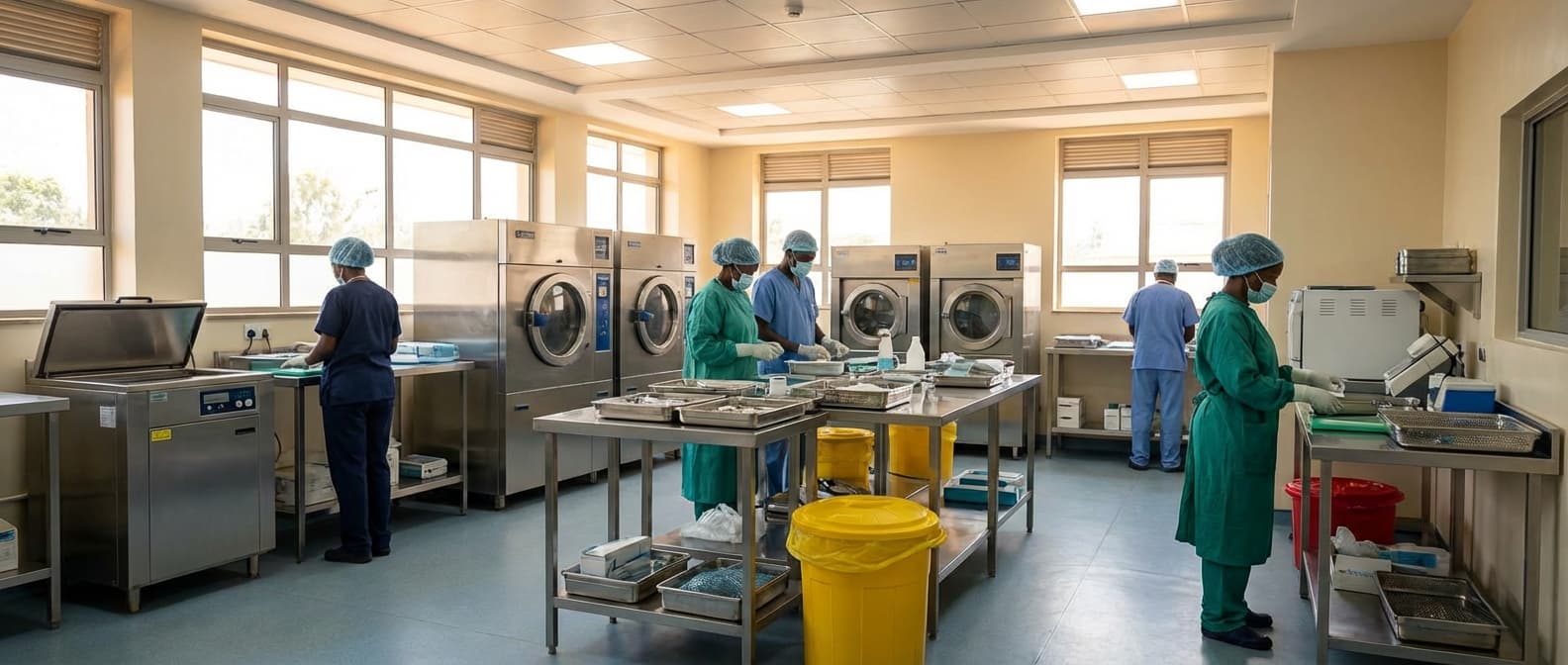
Medical Equipment Decontamination Service (Pre-Repair/Pre-Relocation) in Uganda
Engineering Excellence & Technical Support
Medical Equipment Decontamination Service (Pre-Repair/Pre-Relocation) High-standard technical execution following OEM protocols and local regulatory frameworks.
Advanced Bioburden Assessment
We employ state-of-the-art microbial detection techniques to identify and quantify bioburden on medical equipment, ensuring a comprehensive understanding of contamination levels prior to repair or relocation. Our Uganda-based technicians are trained in validated protocols for effective pre-cleaning assessment.
Validated Decontamination Protocols
Our service utilizes EPA-approved, hospital-grade disinfectants and a multi-step decontamination process specifically tailored for medical devices in Uganda. This ensures the elimination of a broad spectrum of pathogens, safeguarding technicians and patient safety during subsequent handling.
Safe & Compliant Handling Logistics
We provide secure, compliant packaging and transportation solutions for decontaminated medical equipment within Uganda. Our trained personnel adhere to strict chain-of-custody procedures, ensuring the integrity of the decontamination process from pick-up to delivery for repair or relocation.
What Is Medical Equipment Decontamination Service (Pre-repair/pre-relocation) In Uganda?
Medical Equipment Decontamination Service (Pre-Repair/Pre-Relocation) in Uganda refers to the specialized process of cleaning, disinfecting, and/or sterilizing medical devices prior to their transport for repair or relocation. This service is critical for preventing the transmission of infectious agents, ensuring the safety of personnel involved in handling, repair, and reinstallation, and maintaining the integrity of the equipment during transit and reintroduction into a clinical environment. The process is governed by established protocols and regulatory guidelines to achieve a state of bioburden reduction that minimizes cross-contamination risks.
This service involves a multi-step approach, typically encompassing initial gross soil removal, thorough cleaning using approved detergents and disinfectants, and subsequent disinfection or sterilization depending on the equipment's classification and intended use. Validation of the decontamination efficacy may be performed through biological or chemical indicators. Proper packaging and containment of the decontaminated equipment are also integral to prevent recontamination during transport.
| Who Needs This Service? | Typical Use Cases | |||||
|---|---|---|---|---|---|---|
| Hospitals and Clinics: Requiring repair or relocation of diagnostic, therapeutic, or patient monitoring equipment. | Diagnostic Laboratories: Sending sensitive analytical instruments for calibration or repair. | Surgical Centers: Preparing specialized surgical instruments or equipment for off-site servicing. | Medical Device Manufacturers/Distributors: Receiving returned equipment for refurbishment or reprocessing. | Biomedical Engineering Departments: Managing a fleet of equipment requiring routine maintenance or upgrades. | Emergency Medical Services (EMS): Decontaminating portable medical devices before transport to a repair facility. | Research Institutions: Preparing specialized laboratory equipment for relocation or maintenance. |
| Routine Maintenance: Sending equipment to an authorized service center for scheduled upkeep. | Breakdown Repairs: Dispatching malfunctioning equipment for immediate repair. | Equipment Upgrades: Transferring older equipment to a facility for refurbishment or component upgrades. | Facility Relocation: Moving entire departments or healthcare facilities, necessitating the safe transport of all medical devices. | Inter-Facility Transfer: Moving equipment between different hospital campuses or branches for specialized use or repair. | End-of-Life Servicing: Preparing equipment for decommissioning and disposal or recycling. |
Key Aspects of Medical Equipment Decontamination Service (Pre-Repair/Pre-Relocation) in Uganda
- Objective: To render medical equipment biologically safe for handling, transit, repair, and subsequent reintroduction into a healthcare setting.
- Scope: Includes cleaning, disinfection, and/or sterilization of various medical devices.
- Personnel Safety: Protects biomedical engineers, technicians, logistics staff, and healthcare workers from potential biohazards.
- Equipment Integrity: Prevents damage to sensitive components due to residual biological matter or harsh cleaning agents used without prior decontamination.
- Regulatory Compliance: Adherence to national health regulations, infection control guidelines, and potentially international standards.
- Process Stages: Gross soil removal, washing, rinsing, disinfection (high-level or intermediate), sterilization (where applicable), drying, and secure packaging.
- Validation: Employing appropriate indicators to confirm the effectiveness of the decontamination process.
- Documentation: Maintaining records of decontamination procedures, agents used, and validation results for audit purposes.
Who Needs Medical Equipment Decontamination Service (Pre-repair/pre-relocation) In Uganda?
Medical equipment decontamination is a critical, often overlooked, step before repairs or relocation of medical devices in Uganda. This process ensures that infectious agents are eliminated or significantly reduced, protecting technicians, other patients, and the environment from potential contamination. The demand for this specialized service is driven by a variety of healthcare facilities and organizations that handle medical equipment.
| Target Customer | Relevant Departments/Functions | Key Reasons for Decontamination |
|---|---|---|
| Hospitals (Public and Private) | Biomedical Engineering Department, Central Sterile Supply Department (CSSD), Operating Theatres, Intensive Care Units (ICUs), Radiology, Pathology, Infection Control Department | Ensuring technician safety during repairs, preventing cross-contamination between patients, compliance with infection control protocols, safe relocation of equipment between wards or facilities. |
| Clinics and Health Centers | Clinical Staff, Administrative Staff responsible for equipment management | Maintaining a safe environment for both staff and patients, especially in smaller facilities with limited specialized resources. |
| Diagnostic Laboratories | Laboratory Technicians, Equipment Maintenance Personnel | Preventing contamination of samples and reagents, protecting lab personnel from biohazards. |
| Surgical Centers | Surgical Teams, Biomedical Engineers, Infection Control Officers | Crucial for maintaining sterile environments and protecting surgical staff and subsequent patients. |
| Dental Clinics | Dentists, Dental Assistants, Equipment Technicians | Protecting staff and patients from bloodborne pathogens and other infectious agents transmitted via dental instruments. |
| Rehabilitation Centers | Therapists, Equipment Maintenance Staff | Ensuring the safety of therapists and patients using shared rehabilitation equipment. |
| Medical Equipment Suppliers and Manufacturers | Service & Repair Departments, Logistics and Relocation Teams | Maintaining the integrity of equipment during transit, protecting their own technicians, and adhering to product warranties and safety standards. |
| Medical Equipment Maintenance and Repair Companies | Field Service Technicians, Workshop Technicians | Primary users who require decontamination for their own safety and to prevent spread of pathogens to other equipment or environments. |
| Government Health Agencies (e.g., Ministry of Health) | Procurement and Logistics Departments, Health Facility Management | Overseeing the safe and efficient functioning of public health facilities, ensuring compliance with national health standards. |
| Non-Governmental Organizations (NGOs) involved in healthcare | Program Managers, Logistics Coordinators, Field Staff | Ensuring the safety and functionality of equipment in remote or resource-limited settings where decontamination protocols might be less established. |
| Research Institutions and Universities with medical departments | Researchers, Laboratory Technicians, Biomedical Support Staff | Protecting research integrity, preventing contamination of experimental samples, and ensuring the safety of personnel working with potentially hazardous materials. |
Who Needs Medical Equipment Decontamination Service (Pre-Repair/Pre-Relocation) in Uganda?
- Hospitals (Public and Private)
- Clinics and Health Centers
- Diagnostic Laboratories
- Surgical Centers
- Dental Clinics
- Rehabilitation Centers
- Medical Equipment Suppliers and Manufacturers
- Medical Equipment Maintenance and Repair Companies
- Government Health Agencies (e.g., Ministry of Health)
- Non-Governmental Organizations (NGOs) involved in healthcare
- Research Institutions and Universities with medical departments
Medical Equipment Decontamination Service (Pre-repair/pre-relocation) Process In Uganda
This document outlines the typical workflow for Medical Equipment Decontamination Services in Uganda, specifically for equipment undergoing repair or relocation. This process ensures that equipment is safely decontaminated before being handled by service technicians or transported, mitigating the risk of cross-contamination and protecting personnel.
| Stage | Description | Key Activities | Responsible Parties | Deliverables/Outcomes |
|---|---|---|---|---|
| Inquiry and Initial Consultation | The client (hospital, clinic, or individual) contacts the decontamination service provider to request services for equipment needing repair or relocation. | Client expresses need, provides equipment details (type, condition, quantity), and discusses contamination concerns. Service provider assesses preliminary needs and offers advice. | Client (Medical Facility/Owner), Decontamination Service Provider (Sales/Technical Team) | Understanding of client's needs, preliminary assessment of scope, initial client contact established. |
| Quotation and Agreement | Based on the initial consultation, the service provider prepares a detailed quotation and, upon acceptance, a formal agreement. | Provider estimates costs for decontamination (chemicals, labor, transport), generates a formal quote. Client reviews and accepts. Contract/Service Agreement is signed, outlining scope, timelines, terms, and conditions. | Decontamination Service Provider (Sales/Admin), Client (Procurement/Administration) | Formalized quotation, signed Service Agreement/Contract. |
| Scheduling and Logistics | The service provider coordinates the collection of equipment or the on-site decontamination process. | Scheduling the most convenient date and time for collection or on-site service, considering client's operational needs and provider's availability. Planning transport routes and resources if equipment is to be collected. | Decontamination Service Provider (Operations/Logistics) | Confirmed schedule for decontamination, coordinated transport if applicable. |
| On-site Collection/Preparation for Transport | If the equipment is to be decontaminated off-site, it is securely collected by the service provider. If on-site, preparation is made for the procedure. | For off-site: Careful packing and secure transport of equipment to the decontamination facility. For on-site: Ensuring a designated, safe area for the decontamination process, with adequate ventilation and waste disposal arrangements. | Decontamination Service Provider (Collection Team/Technicians), Client (Staff) | Equipment safely collected and transported, or a suitable on-site area prepared. |
| Decontamination Procedure | The core service where equipment is treated to eliminate biological and chemical contaminants. | Utilizing approved disinfectants and sterilization methods (e.g., chemical disinfection, UV irradiation, autoclaving depending on equipment sensitivity). Following established protocols and manufacturer guidelines. Ensuring proper contact times and concentrations. | Decontamination Service Provider (Trained Technicians) | Effectively decontaminated medical equipment. |
| Documentation and Certification | Comprehensive records are maintained, and a certificate of decontamination is issued. | Recording details of the decontamination process (date, time, chemicals used, personnel involved, equipment ID). Issuing a formal Certificate of Decontamination confirming the service was performed. | Decontamination Service Provider (Technicians/Admin) | Decontamination Record, Certificate of Decontamination. |
| Handover for Repair/Relocation | The decontaminated equipment is handed over to the repair technician or prepared for relocation. | Providing the decontaminated equipment, along with the Certificate of Decontamination, to the designated repair personnel or the transport team for relocation. Ensuring all necessary paperwork is exchanged. | Decontamination Service Provider (Technicians), Client (Repair Team/Logistics) | Decontaminated equipment and its certification delivered to the next stage of the process. |
| Post-Service Follow-up (Optional) | The service provider may follow up to ensure client satisfaction and address any queries. | Contacting the client to confirm satisfaction with the decontamination service. Addressing any feedback or concerns. | Decontamination Service Provider (Customer Service/Sales) | Client satisfaction confirmed, feedback gathered. |
Key Stages of the Medical Equipment Decontamination Service (Pre-Repair/Pre-Relocation) Process in Uganda
- Inquiry and Initial Consultation
- Quotation and Agreement
- Scheduling and Logistics
- On-site Collection/Preparation for Transport
- Decontamination Procedure
- Documentation and Certification
- Handover for Repair/Relocation
- Post-Service Follow-up (Optional)
Medical Equipment Decontamination Service (Pre-repair/pre-relocation) Cost In Uganda
The cost of medical equipment decontamination services in Uganda, specifically for pre-repair or pre-relocation, can vary significantly based on several key factors. These factors influence the complexity of the decontamination process, the type of equipment, and the service provider's operational costs. It's crucial for healthcare facilities and repair centers to understand these elements to budget effectively and ensure compliance with health and safety regulations. The pricing is typically quoted in Uganda Shillings (UGX).
| Equipment Category (Examples) | Estimated Cost Range (UGX) | Notes |
|---|---|---|
| Small Diagnostic/Monitoring Devices (e.g., BP monitor, thermometer, pulse oximeter) | 50,000 - 150,000 | Basic manual cleaning and disinfection. |
| Medium Sized Equipment (e.g., vital signs monitor, small ultrasound probe, portable ECG) | 100,000 - 300,000 | May involve more thorough manual cleaning, surface disinfection, and potentially fogging. |
| Laboratory Analyzers (e.g., small chemistry analyzers, microscopes) | 150,000 - 400,000 | Requires specialized cleaning agents for delicate components and surfaces. |
| Surgical Instruments (sets) | 20,000 - 50,000 per set | Focus on sterilization preparation, manual cleaning of intricate parts. |
| Large Diagnostic Imaging Equipment (e.g., Ultrasound machine with probes, X-ray machines) | 300,000 - 1,000,000+ | Complex surfaces, multiple components, may require specialized cleaning protocols and trained personnel. |
| High-Risk Equipment (e.g., Ventilators, Anesthesia Machines from ICU/Isolation) | 250,000 - 800,000+ | Requires advanced disinfection, virucidal agents, and meticulous attention to detail due to potential for high-level contamination. |
| Specialized/Large Medical Systems (e.g., MRI, CT Scanner - external surfaces) | 500,000 - 2,000,000+ | Decontamination of external casings and accessible surfaces. Internal decontamination is a separate, more complex service. |
Key Factors Influencing Medical Equipment Decontamination Costs in Uganda:
- {"item":"Type and Size of Medical Equipment","description":"Larger and more complex equipment (e.g., MRI machines, CT scanners, large laboratory analyzers) will naturally require more time, specialized chemicals, and potentially more personnel for thorough decontamination compared to smaller items like vital signs monitors or stethoscopes. The surface area and internal components to be cleaned are primary drivers."}
- {"item":"Level of Contamination","description":"Equipment that has been exposed to high-risk biological materials (e.g., infectious bodily fluids, pathogens from isolation wards) will necessitate a more rigorous and potentially multi-stage decontamination process using stronger disinfectants and virucides. This increases the cost of materials and labor."}
- {"item":"Decontamination Method Employed","description":"Different methods exist, including manual cleaning with disinfectants, fogging/misting with chemical agents, or more advanced techniques like UV-C light sterilization. The cost of specialized equipment, chemicals, and the expertise required for each method will vary."}
- {"item":"Urgency and Turnaround Time","description":"Emergency decontamination services or requests for rapid turnaround often incur higher charges due to the need for immediate deployment of resources, potentially requiring overtime or off-hours work."}
- {"item":"Service Provider's Expertise and Reputation","description":"Established decontamination companies with certified technicians, a proven track record, and adherence to international standards may charge a premium for their reliability and quality of service."}
- {"item":"Location and Accessibility","description":"Services in remote areas or locations that are difficult to access might incur additional transportation costs for personnel and equipment, which will be factored into the overall price."}
- {"item":"Scope of Service","description":"Does the service include only superficial cleaning, or does it involve deep decontamination of internal components, specialized sterilization, or even dismantling and reassembly? A comprehensive service package will naturally be more expensive."}
- {"item":"Disposal of Contaminated Materials","description":"Proper disposal of contaminated cleaning materials and waste is a regulatory requirement and adds to the service cost."}
Affordable Medical Equipment Decontamination Service (Pre-repair/pre-relocation) Options
Our affordable medical equipment decontamination service offers essential pre-repair and pre-relocation cleaning to ensure safety and compliance. We understand the importance of cost-effectiveness in healthcare, which is why we've developed value bundles and implemented cost-saving strategies to make our services accessible to a wider range of facilities. Our goal is to provide peace of mind without breaking your budget.
| Value Bundle Name | Description | Includes | Typical Savings (vs. Individual Services) |
|---|---|---|---|
| Basic Decon Bundle | Essential cleaning for standard equipment. | Surface wipe-down, visible debris removal, disinfectant application. | 10-15% |
| Comprehensive Decon Bundle | Thorough cleaning for complex or high-risk equipment. | Basic decon plus: removal of accessible internal components for cleaning, specialized disinfectant use, drying. | 15-20% |
| Bulk Equipment Discount | For facilities decontaminating multiple units simultaneously. | Discount applied per unit when a minimum quantity is met. | Up to 25% |
| Scheduled Maintenance Decon | Regular decontamination as part of a proactive maintenance plan. | Includes bi-annual or quarterly decontamination cycles for designated equipment. | 20-30% |
Why Decontaminate Before Repair/Relocation?
- Patient Safety: Prevents cross-contamination from residual biohazards to technicians and subsequent users.
- Technician Safety: Protects repair and moving personnel from potential exposure to infectious agents.
- Equipment Integrity: Removes debris and residues that could interfere with repair processes or damage sensitive components.
- Regulatory Compliance: Helps meet guidelines for equipment handling and infection control.
- Extended Equipment Lifespan: Proper cleaning can prevent corrosion or damage from accumulated contaminants.
- Reduced Repair Time: Clean equipment is easier and faster for technicians to work on, potentially lowering labor costs.
Verified Providers In Uganda
In Uganda's evolving healthcare landscape, identifying genuinely qualified and ethical healthcare providers is paramount for patients seeking quality care. Verified Providers are those who have undergone rigorous checks to ensure their credentials, ethical standing, and adherence to professional standards. Franance Health stands out as a leading platform in Uganda, not only listing but actively vetting these providers. This verification process is crucial as it offers patients peace of mind, knowing they are engaging with professionals who meet a high bar of competence and integrity. Franance Health's commitment to verification signifies a dedication to patient safety and improved health outcomes across Uganda.
| Verification Aspect | Franance Health's Approach | Patient Benefit |
|---|---|---|
| Medical Degrees & Licenses | Official verification of degrees, postgraduate qualifications, and current practicing licenses with relevant medical councils and regulatory bodies. | Ensures providers possess the foundational medical knowledge and legal authorization to practice. |
| Specialist Certifications | Confirmation of any advanced certifications or fellowships in specialized medical fields. | Guarantees that providers have undergone specific training and possess expertise in their chosen specialty. |
| Professional Ethics & Conduct | Background checks for any history of malpractice or disciplinary actions, and adherence to a strict code of conduct. | Reduces the risk of encountering unethical or substandard medical practices, promoting patient trust and safety. |
| Continuing Professional Development (CPD) | Encourages and, where possible, verifies participation in ongoing medical education and training programs. | Ensures providers stay updated with the latest medical advancements, techniques, and best practices. |
| Identity Verification | Confirms the true identity of the healthcare professional to prevent fraudulent representation. | Protects patients from impersonators and ensures they are dealing with the actual verified provider. |
Why Franance Health Providers Represent the Best Choice in Uganda:
- Rigorous Credential Verification: Franance Health meticulously checks the qualifications, licenses, and certifications of all listed healthcare professionals.
- Ethical Practice Assurance: Providers undergo background checks and are assessed for their adherence to ethical medical conduct.
- Patient Testimonials and Reviews: A system for verified patient feedback provides real-world insights into provider performance and patient satisfaction.
- Specialty Focus and Expertise: Access to a wide range of specialists with clearly defined areas of expertise, ensuring you find the right care for your specific needs.
- Accessibility and Convenience: Facilitating easy appointment booking and access to healthcare information, streamlining the patient journey.
- Commitment to Upholding Standards: Franance Health actively works with healthcare professionals to maintain and elevate the standard of care in Uganda.
Scope Of Work For Medical Equipment Decontamination Service (Pre-repair/pre-relocation)
This Scope of Work (SOW) outlines the requirements for providing comprehensive medical equipment decontamination services. The primary objective is to ensure that medical equipment is rendered safe for subsequent repair, maintenance, calibration, or relocation activities by eliminating biohazards, chemical contaminants, and other potential risks. This service is crucial for protecting personnel, preventing cross-contamination, and complying with relevant health and safety regulations.
| Technical Deliverable | Standard Specification / Requirement | Verification Method |
|---|---|---|
| Pre-Decontamination Assessment Report | Identification of equipment type, model, serial number, intended use, and potential bioburden/chemical hazards. Visual inspection for gross contamination. Photographic evidence of pre-decontamination state. | Review of documented assessment by client representative. |
| Decontamination Procedure Protocol | Detailed, step-by-step procedure tailored to the specific equipment type and identified hazards. Includes list of approved cleaning agents/disinfectants, contact times, rinsing procedures, and drying methods. Adherence to manufacturer's guidelines where applicable. | Review and approval of the protocol by the client before commencement of service. |
| Decontamination Execution | Application of the approved protocol to the specified equipment. Thorough cleaning and disinfection of all accessible surfaces and components. Removal of visible contaminants. | On-site observation by client representative (optional, as agreed). Photographic evidence of post-decontamination state. |
| Validation of Decontamination Effectiveness | Visual confirmation of absence of gross contamination. Where specified, may include ATP (Adenosine Triphosphate) testing for bioburden reduction to acceptable levels (e.g., < 10 Relative Light Units (RLU) for critical surfaces) or specific chemical residue testing. | Review of validation test results and reports. Client sign-off on effective decontamination. |
| Decontamination Certificate / Report | Formal documentation confirming that the equipment has been decontaminated according to the agreed-upon protocol. Includes: Equipment details (model, serial number), date of service, personnel performing decontamination, decontamination agents used, procedure followed, validation results (if applicable), and statement of compliance. Electronic or hard copy format. | Client acceptance and record-keeping. |
| Waste Management and Disposal | Proper segregation, containment, and disposal of all contaminated materials (cleaning wipes, solutions, used PPE) in accordance with local, state, and federal regulations for hazardous or biohazardous waste. | Confirmation of waste manifests and disposal receipts. |
| Personnel Training and Certification | Decontamination technicians must possess documented training in infection control, hazardous material handling, and specific decontamination techniques for medical equipment. Certification from recognized bodies (e.g., IAHCSMM, CBSPD) is preferred. | Review of technician training records and certifications. |
Key Objectives and Scope of Service
- Objective: To provide a thorough and documented decontamination of specified medical equipment prior to repair, relocation, or other handling by non-clinical personnel.
- Scope: The service includes the decontamination of external surfaces, accessible internal components (where specified and safe to access), and any associated accessories or detachable parts of the medical equipment.
- Hazard Identification: The decontamination process will be guided by an understanding of the likely contaminants based on the equipment's intended use and patient population (e.g., bloodborne pathogens, bodily fluids, chemical residues, radioactive isotopes).
- Personnel Safety: All decontamination personnel will be adequately trained, equipped with appropriate Personal Protective Equipment (PPE), and adhere to established safety protocols.
- Environmental Considerations: Decontamination agents and waste disposal will be managed in accordance with environmental regulations and best practices.
- Documentation: Comprehensive records of the decontamination process, including materials used, procedures followed, and verification of effectiveness, will be provided.
Service Level Agreement For Medical Equipment Decontamination Service (Pre-repair/pre-relocation)
This Service Level Agreement (SLA) outlines the response times and uptime guarantees for the Medical Equipment Decontamination Service (Pre-Repair/Pre-Relocation), provided by [Your Company Name] (hereinafter referred to as "Provider") to [Client Name] (hereinafter referred to as "Client"). This SLA is an addendum to the Master Service Agreement between the parties and specifically addresses the decontamination of medical equipment prior to repair or relocation.
| Service Component | Service Level Objective (SLO) | Measurement Method | Remedy for Failure |
|---|---|---|---|
| Scheduled Decontamination Response Time | 95% of requests acknowledged and on-site arrival or remote support initiated within 4 business hours. | Time-stamped logs of Decontamination Requests and service commencement. | For each instance where the SLO is not met, a 5% discount on the next decontamination service invoice for the affected equipment. |
| Emergency Decontamination Response Time | 90% of requests acknowledged and on-site arrival or remote support initiated within 2 business hours. | Time-stamped logs of Decontamination Requests and service commencement. | For each instance where the SLO is not met, a 10% discount on the next decontamination service invoice for the affected equipment. |
| Decontamination Service Availability (Uptime) | The decontamination service shall be available and capable of being scheduled and performed 99.5% of the time during scheduled business hours (Monday-Friday, 8:00 AM - 5:00 PM [Client's Time Zone], excluding public holidays). | Monthly analysis of scheduled service availability and actual service delivery, excluding planned maintenance windows communicated 48 hours in advance. | If the uptime guarantee falls below 99.5% in a given month, the Client will receive a credit equivalent to 1/30th of the monthly service fee for each full 24-hour period the service was unavailable beyond the allowed downtime. |
| Decontamination Quality | All decontamination procedures will be performed in accordance with [Relevant Standards, e.g., manufacturer guidelines, industry best practices, specific regulatory requirements]. | Post-decontamination inspection reports and client sign-off. | If a decontamination is deemed non-compliant by the Client within 24 hours of completion, the Provider will re-perform the decontamination at no additional charge. |
Definitions
- Decontamination Request: A formal request initiated by the Client to schedule decontamination of medical equipment.
- Equipment: Medical devices requiring decontamination as specified in the scope of services.
- Scheduled Decontamination: Decontamination services performed during agreed-upon business hours.
- Emergency Decontamination: Decontamination required outside of normal business hours due to urgent repair or relocation needs.
- Response Time: The time elapsed from the Provider's acknowledgement of a Decontamination Request to the commencement of service (on-site arrival or remote technical support initiation).
- Uptime Guarantee: Refers to the availability of the decontamination service itself, ensuring that the service is ready to be utilized when requested according to the agreed-upon response times.
Frequently Asked Questions

Ready when you are
Let's scope your Medical Equipment Decontamination Service (Pre-Repair/Pre-Relocation) in Uganda project in Uganda.

Scaling healthcare logistics and technical systems across the entire continent.