
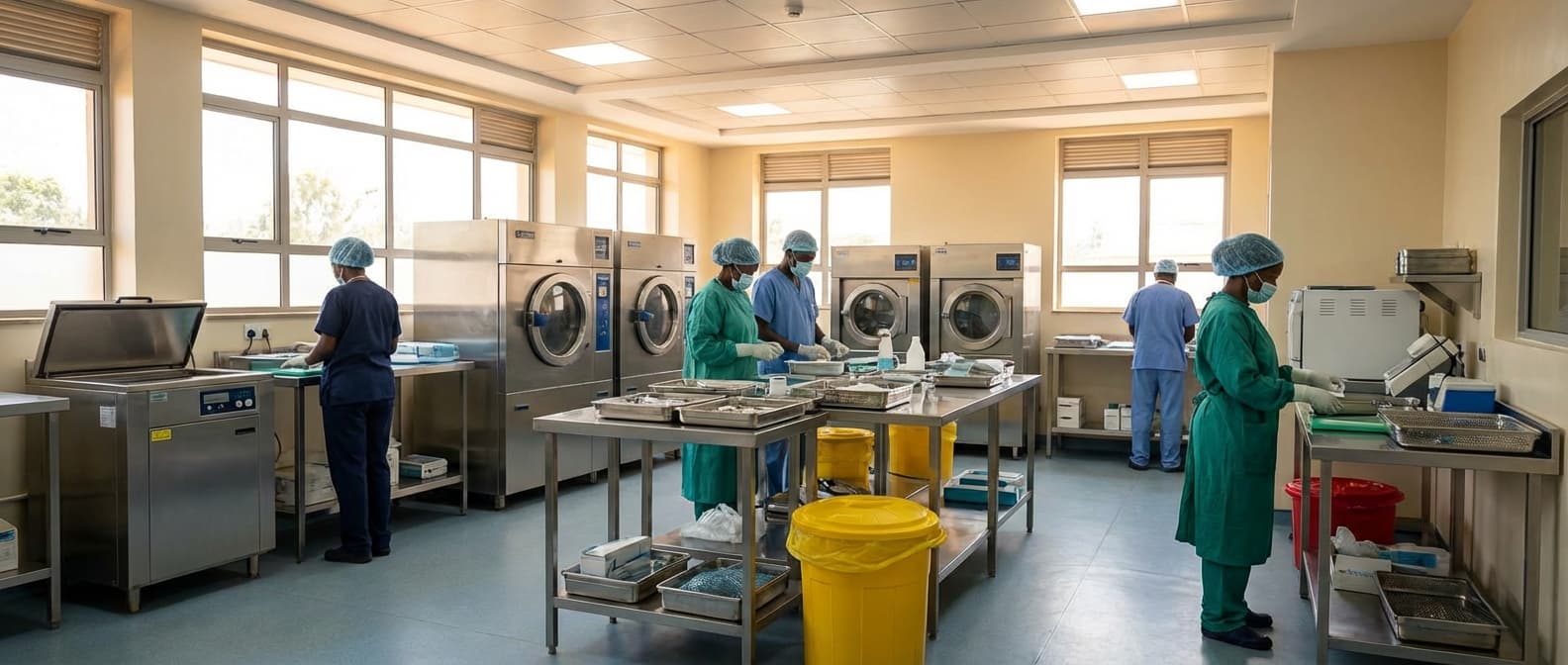
Endoscope Reprocessing Equipment Support Service in Uganda
Engineering Excellence & Technical Support
Endoscope Reprocessing Equipment Support Service High-standard technical execution following OEM protocols and local regulatory frameworks.
24/7 On-Demand Technical Support
Ensure uninterrupted patient care with our round-the-clock technical support for all endoscope reprocessing equipment in Uganda. Our expert technicians are available 24/7 via phone and online portal to address any immediate operational issues, minimizing downtime and maximizing equipment availability.
Proactive Preventive Maintenance Programs
Extend the lifespan and optimize the performance of your endoscope reprocessing equipment through our tailored preventive maintenance programs. We offer scheduled on-site inspections, calibration, and essential part replacements across Uganda, reducing the risk of costly breakdowns and ensuring consistent compliance with reprocessing standards.
Advanced Remote Diagnostics & Troubleshooting
Leverage the power of cutting-edge technology with our remote diagnostics capabilities. Our trained engineers in Uganda can often diagnose and resolve issues remotely for your endoscope reprocessing equipment, offering rapid solutions and reducing the need for on-site visits for minor concerns, saving you time and resources.
What Is Endoscope Reprocessing Equipment Support Service In Uganda?
Endoscope reprocessing equipment support service in Uganda refers to the specialized maintenance, repair, calibration, and validation of automated and semi-automated systems used for cleaning, disinfecting, and sterilizing flexible and rigid endoscopes. This service is critical for ensuring the safety and efficacy of endoscopic procedures by preventing the transmission of healthcare-associated infections (HAAs) through inadequately reprocessed instruments. The service encompasses a range of technical interventions to maintain the optimal performance and regulatory compliance of this specialized medical equipment.
| Who Needs This Service? | Typical Use Cases | |||||
|---|---|---|---|---|---|---|
| Hospitals and Healthcare Facilities: Particularly those performing endoscopic procedures (e.g., gastroenterology, pulmonology, urology, surgery) that utilize automated or semi-automated endoscope reprocessors. | Post-operative care units and sterile processing departments (SPDs) within hospitals. | Specialized clinics offering endoscopic diagnostic and therapeutic services. | Government-funded healthcare institutions and private medical centers. | Any facility where endoscopes are reprocessed to meet stringent infection control standards. | ||
| Routine cleaning and disinfection of flexible gastrointestinal endoscopes (gastroscopes, colonoscopes). | High-level disinfection of bronchoscopes, laryngoscopes, and cystoscopes. | Sterilization of rigid endoscopes used in surgical procedures (e.g., arthroscopes, laparoscopes). | Ensuring compliance with national and international guidelines for endoscope reprocessing (e.g., CDC, WHO, local Ministry of Health regulations). | Preventing outbreaks of infections transmitted via contaminated endoscopes. | Optimizing equipment uptime and reducing procedural delays due to equipment malfunction. | Maintaining the lifespan and operational efficiency of expensive reprocessing equipment. |
Key Components of Endoscope Reprocessing Equipment Support Service:
- Preventive Maintenance (PM): Scheduled inspections, lubrication, filter replacement, and functional testing to anticipate and mitigate potential equipment failures.
- Corrective Maintenance (CM): On-demand troubleshooting and repair of malfunctions, including component replacement and system diagnostics.
- Calibration Services: Ensuring that the equipment's parameters (e.g., temperature, flow rates, disinfectant concentration, wash cycle times) are accurate and within manufacturer specifications and regulatory standards.
- Validation and Verification: Documented confirmation that the reprocessing equipment consistently achieves the intended level of cleanliness and high-level disinfection (HLD) or sterilization, often involving chemical indicators, biological indicators, and performance testing.
- Software Updates and Diagnostics: Managing firmware updates, diagnosing software-related issues, and ensuring proper system operation.
- Training and Education: Providing technical training to in-house biomedical engineering staff or operating room personnel on the proper use, basic troubleshooting, and routine maintenance of the equipment.
- Parts and Consumables Management: Ensuring the availability of genuine and compatible spare parts and recommended consumables for the reprocessing equipment.
Who Needs Endoscope Reprocessing Equipment Support Service In Uganda?
Endoscope reprocessing equipment support services are crucial for ensuring the safe and effective decontamination of reusable medical endoscopes. In Uganda, where healthcare infrastructure is developing, these services play a vital role in preventing healthcare-associated infections (HAAs) and maintaining the longevity of expensive medical equipment. This support is essential for any facility that utilizes flexible or rigid endoscopes for diagnostic or therapeutic procedures. The services typically include installation, preventive maintenance, calibration, repair, and staff training on the proper operation and maintenance of automated endoscope reprocessors (AERs), washer-disinfectors, and associated accessories.
| Target Customer Category | Key Departments Requiring Support | Specific Endoscope Applications |
|---|---|---|
| Hospitals (Public and Private) | Gastroenterology, Pulmonology, Urology, Gynecology, Ear Nose and Throat (ENT), General Surgery, Intensive Care Unit (ICU) | Gastroscopy, Colonoscopy, Bronchoscopy, Cystoscopy, Hysteroscopy, Laparoscopy, Sigmoidoscopy, ENT Endoscopy |
| Specialty Clinics | Gastroenterology Clinics, Pulmonology Clinics, Urology Clinics, Gynecology Clinics | Gastroscopy, Colonoscopy, Bronchoscopy, Cystoscopy, Hysteroscopy |
| Diagnostic Centers | Endoscopy Units, Imaging Departments | Various diagnostic endoscopic procedures |
| Surgical Centers | Operating Rooms, Surgical Units | Laparoscopic surgery, minimally invasive procedures requiring endoscopes |
| Large Medical Practices | Multi-specialty practices with dedicated endoscopy suites | Outpatient endoscopic procedures |
Target Customers in Uganda Requiring Endoscope Reprocessing Equipment Support Service
- Hospitals (Public and Private)
- Specialty Clinics
- Diagnostic Centers
- Surgical Centers
- Large Medical Practices
Endoscope Reprocessing Equipment Support Service Process In Uganda
This document outlines the typical workflow for Endoscope Reprocessing Equipment Support Services in Uganda, covering the process from the initial client inquiry to the successful completion of the service.
| Stage | Key Activities | Deliverables/Outcomes | Responsible Party |
|---|---|---|---|
| Inquiry & Initial Contact | Client requests service; Provider gathers information; Service is prioritized. | Initial service request, basic equipment details, urgency level. | Client, Support Service Provider |
| Service Assessment & Quotation | Remote/on-site diagnosis; Estimate parts/labor; Generate & approve quotation. | Detailed diagnosis report, official quotation, client PO (if applicable). | Support Service Provider, Client |
| Scheduling & Logistics | Schedule service; Dispatch technician; Procure/prepare parts; Arrange travel. | Confirmed service date/time, assigned technician, prepared parts/equipment. | Support Service Provider |
| On-Site Execution | Technician arrives; Perform detailed assessment; Repair/maintain/calibrate; Test equipment; Client verification. | Repaired/maintained/calibrated equipment, successful test results, client sign-off on work. | Technician, Client |
| Completion & Documentation | Generate service report; Client signs report; Issue invoice; Process payment. | Signed service report, final invoice, payment confirmation. | Technician, Support Service Provider, Client |
| Follow-up & Support | Post-service check-in; Provide warranty info; Offer future support; Collect feedback. | Client satisfaction, warranty documentation, ongoing service relationship, performance feedback. | Support Service Provider, Client |
Endoscope Reprocessing Equipment Support Service Process Workflow
- 1. Inquiry & Initial Contact:
- Client Contact: A healthcare facility (hospital, clinic, laboratory) in Uganda contacts the support service provider with a need related to their endoscope reprocessing equipment. This could be for routine maintenance, repair, calibration, installation, or troubleshooting.
- Information Gathering: The support provider gathers initial details about the equipment (make, model, serial number, age), the nature of the problem (error codes, symptoms, specific functional issues), and the desired service.
- Service Prioritization: Based on the urgency of the request, the service provider prioritizes the inquiry.
- 2. Service Assessment & Quotation:
- Technical Assessment (Remote/On-site): A preliminary assessment may be conducted remotely (phone, email, video call) or an initial on-site visit might be scheduled to diagnose the issue more thoroughly.
- Parts & Labor Estimation: The provider estimates the required parts, labor hours, and any consumables needed for the service.
- Quotation Generation: A formal quotation is prepared, detailing the scope of work, estimated costs, payment terms, and estimated timeline.
- Client Approval: The client reviews and approves the quotation. This may involve purchase order (PO) generation by the client.
- 3. Scheduling & Logistics:
- Service Scheduling: Once the quotation is approved, a service appointment is scheduled. This involves coordinating with the client's operational schedule and the technician's availability.
- Technician Dispatch: A qualified and certified technician is assigned to the job.
- Parts Procurement & Logistics: Necessary spare parts and equipment are procured and prepared for transport to the client's location.
- Travel Arrangements: Transportation and accommodation (if required) for the technician are arranged.
- 4. On-Site Execution:
- Arrival & Site Induction: The technician arrives at the client's facility and undergoes any necessary site induction or safety protocols.
- Equipment Assessment (Detailed): A thorough on-site assessment of the endoscope reprocessing equipment is performed to confirm the diagnosis and identify any additional issues.
- Repairs/Maintenance/Calibration: The technician carries out the agreed-upon service. This may involve:
- Disassembly and reassembly of equipment.- Replacement of faulty parts.- Cleaning and lubrication.- Software updates or reconfigurations.- Calibration to manufacturer specifications.- Functional Testing: After the service, the equipment is rigorously tested to ensure it is functioning correctly and meets performance standards.
- Client Demonstration & Verification: The technician demonstrates the equipment's performance to the client and seeks their verification and sign-off.
- 5. Completion & Documentation:
- Service Report Generation: The technician completes a detailed service report, documenting the work performed, parts used, time spent, and any recommendations.
- Client Sign-off: The client signs the service report, acknowledging the completion of the service.
- Invoicing: The support provider generates the final invoice based on the approved quotation and the actual services rendered.
- Payment Processing: The client processes the payment according to the agreed-upon terms.
- 6. Follow-up & Support:
- Post-Service Follow-up: The support provider may follow up with the client to ensure satisfaction and address any immediate post-service queries.
- Warranty & Future Support: Information regarding any warranty on parts or labor is provided. The client is informed about ongoing support options and preventative maintenance plans.
- Feedback Collection: Feedback on the service quality and technician performance may be collected for continuous improvement.
Endoscope Reprocessing Equipment Support Service Cost In Uganda
The cost of endoscope reprocessing equipment support services in Uganda is influenced by several key factors, leading to a varied pricing landscape. These services are crucial for maintaining the functionality, safety, and longevity of expensive endoscope reprocessing equipment, which includes automated endoscope reprocessors (AERs), washer-disinfectors, drying and storage cabinets, and associated accessories. For healthcare facilities in Uganda, understanding these pricing dynamics is essential for budgeting and operational planning.
Key Pricing Factors:
- Type and Complexity of Equipment: The nature of the equipment being serviced is a primary driver. A simple washer-disinfector will typically have lower service costs than a multi-function AER with advanced drying and tracking capabilities. The more complex the machinery, the more specialized the technicians and parts required, thus increasing costs.
- Service Contract vs. Ad-Hoc Repairs: Facilities can opt for comprehensive service contracts that cover preventive maintenance, routine inspections, and a certain number of emergency call-outs, often at a fixed annual or monthly fee. Alternatively, they can engage services on an ad-hoc basis for specific repairs or maintenance, which can be more unpredictable in cost but might be suitable for facilities with minimal equipment or a very low frequency of issues.
- Scope of Service: The extent of the service package significantly impacts pricing. This can range from basic preventive maintenance (cleaning, calibration, filter replacement) to full-service contracts that include parts, labor, and even loaner equipment. Software updates and validation/qualification services also add to the overall cost.
- Frequency and Urgency of Service: Scheduled preventive maintenance is generally less expensive than emergency repairs. When equipment breaks down unexpectedly, facilities may incur higher costs due to the urgency of the call-out, potential overtime for technicians, and the need for expedited parts delivery.
- Manufacturer vs. Third-Party Service Providers: Services offered directly by the original equipment manufacturer (OEM) are often perceived as premium and may come with higher price tags due to genuine parts and certified technicians. However, reputable third-party service providers can offer competitive pricing, often with a good balance of expertise and cost-effectiveness.
- Availability of Spare Parts: The cost and availability of genuine or compatible spare parts for specific endoscope reprocessing equipment can fluctuate. If parts are rare or need to be imported, this will increase the service cost.
- Location and Travel Costs: For services requiring on-site visits, the geographical location of the healthcare facility within Uganda and the travel distance for the service technician will contribute to the overall expense. Remote or hard-to-reach areas might incur additional travel and accommodation charges.
- Technician Expertise and Certification: Highly skilled and certified technicians who are proficient in specific brands and models of reprocessing equipment will command higher rates. The training and ongoing professional development of these technicians are factored into service pricing.
- Warranty Status: Equipment still under warranty may have specific service requirements and costs dictated by the warranty agreement. Post-warranty service costs can differ significantly.
| Service Type/Equipment | Estimated Price Range (UGX) | Notes |
|---|---|---|
| Preventive Maintenance (AER/Washer-Disinfector) - Annual Contract | 1,500,000 - 5,000,000 | Covers 1-2 scheduled visits, cleaning, calibration, basic parts. Varies by equipment size and complexity. |
| Ad-hoc Repair Call-out Fee (Basic Troubleshooting) | 200,000 - 700,000 | Includes technician's travel and initial diagnosis. Excludes parts and extensive labor. |
| Major Equipment Repair (e.g., pump failure, control board issue) | 1,000,000 - 6,000,000+ | Highly dependent on the specific component failure and cost of replacement parts. Can exceed this range for very complex issues. |
| Validation Services (IQ/OQ/PQ) per machine | 1,000,000 - 4,000,000 | Includes documentation and testing. May vary based on the number of cycles and complexity of the validation protocol. |
| Annual Service Contract (Comprehensive - including parts/labor) | 3,000,000 - 10,000,000+ | Offers peace of mind. Covers PM, a set number of breakdown repairs, and sometimes priority response. Higher for larger facilities or multiple machines. |
| Spare Parts (e.g., filters, pumps, valves) | 50,000 - 2,000,000+ | Cost varies significantly based on the specific part and equipment model. OEM parts are generally more expensive. |
| Drying and Storage Cabinet Service | 800,000 - 3,000,000 (Annual PM) | Focuses on fan systems, filters, and UV sterilization components. Ad-hoc repairs would be additional. |
Common Endoscope Reprocessing Equipment Support Services in Uganda
- Preventive Maintenance (PM): Regular checks, cleaning, calibration, and replacement of consumables (filters, seals).
- Corrective Maintenance/Repairs: Diagnosing and fixing equipment malfunctions and breakdowns.
- Validation and Qualification (IQ/OQ/PQ): Ensuring equipment meets regulatory standards and performs as intended.
- Annual Service Contracts: Comprehensive packages covering PM, repairs, and sometimes parts.
- On-site Technical Support: Technicians dispatched to the facility for troubleshooting and repairs.
- Remote Diagnostics and Support: Troubleshooting via telecommunication for minor issues.
- Spare Parts Supply and Replacement: Sourcing and fitting necessary components.
- Software Updates and Upgrades: Ensuring the equipment's operating system is current.
Affordable Endoscope Reprocessing Equipment Support Service Options
Endoscope reprocessing is a critical aspect of infection control, and the equipment used for this process requires regular maintenance and support to ensure its optimal performance and longevity. Investing in reliable reprocessing equipment can be costly, making affordable support service options a key consideration for healthcare facilities. This guide explores various service options, focusing on value bundles and cost-saving strategies.
| Value Bundle Component | Description | Cost-Saving Benefit | |
|---|---|---|---|
| Preventive Maintenance (PM) Program | Scheduled inspections, cleaning, lubrication, and part replacements to prevent breakdowns. | Reduces the likelihood of costly emergency repairs and downtime. | Extends equipment lifespan, delaying replacement costs. |
| Corrective Maintenance (CM) Coverage | On-demand repair services for equipment malfunctions. | Predictable costs with a service contract, avoiding unexpected repair bills. | Faster resolution of issues minimizes operational disruptions. |
| Calibration and Validation Services | Ensuring equipment accuracy and compliance with regulatory standards. | Avoids non-compliance fines and potential re-sterilization costs. | Guarantees effective reprocessing, improving patient safety. |
| Parts and Consumables Discounts | Preferential pricing on replacement parts and approved cleaning/disinfection agents. | Direct reduction in ongoing operational expenses. | Ensures use of genuine or high-quality parts, preventing compatibility issues and further damage. |
| Remote Diagnostics and Technical Support | Access to expert technicians via phone or internet for troubleshooting. | Resolves minor issues without the need for an on-site visit, saving travel costs. | Faster initial response and potential for immediate resolution. |
| Staff Training Programs | Training for in-house technicians on basic maintenance and troubleshooting. | Reduces reliance on external service calls for minor issues. | Empowers staff to identify potential problems early. |
| Extended Warranty Options | Coverage beyond the standard manufacturer warranty period. | Protects against unexpected repair costs for older equipment. | Provides peace of mind and budget predictability. |
Key Considerations for Affordable Endoscope Reprocessing Equipment Support
- Understanding the importance of regular maintenance for equipment lifespan and patient safety.
- Identifying different types of support services available (preventive maintenance, corrective maintenance, calibration, validation).
- Evaluating the benefits of bundled service packages versus individual service calls.
- Exploring options for extended warranties and service contracts.
- Investigating the potential for training healthcare staff on basic troubleshooting and maintenance.
- Considering the role of remote diagnostics and support in reducing on-site service costs.
- Assessing the total cost of ownership, including consumables, repairs, and service contracts.
- Researching reputable service providers with proven track records and competitive pricing.
Verified Providers In Uganda
In Uganda's healthcare landscape, identifying verified and reputable providers is crucial for ensuring quality and trustworthy medical services. Franance Health stands out as a leading example of a credentialed organization that consistently delivers excellence. Their rigorous vetting processes and commitment to high standards make them a top choice for individuals seeking reliable healthcare solutions.
| Credentialing Aspect | Franance Health's Approach | Benefit to Patients |
|---|---|---|
| Professional Qualifications | Verification of medical degrees, licenses, and board certifications. | Ensures providers possess the fundamental knowledge and legal authority to practice. |
| Experience and Competence | Assessment of past performance, peer reviews, and areas of specialization. | Guarantees that providers have practical expertise and proven track records. |
| Ethical Standards | Adherence to a strict code of conduct and ethical practice guidelines. | Protects patients from malpractice and ensures respectful, professional interactions. |
| Continuing Medical Education (CME) | Mandatory participation in ongoing training and professional development. | Ensures providers stay updated with the latest medical knowledge and techniques. |
| Patient Feedback Mechanisms | Collection and review of patient testimonials and satisfaction surveys. | Drives continuous improvement in service delivery and identifies areas of excellence. |
Why Franance Health is the Best Choice:
- Rigorous Credentialing Process: Franance Health employs a stringent vetting mechanism for all its affiliated healthcare providers, ensuring they meet and exceed established medical and ethical standards.
- Commitment to Quality Care: Their network is comprised of professionals dedicated to patient well-being, continuous professional development, and the latest advancements in medical practice.
- Patient-Centric Approach: Franance Health prioritizes patient satisfaction and access to care, fostering a supportive and transparent healthcare experience.
- Comprehensive Service Network: They offer a wide range of medical specialties and services, catering to diverse healthcare needs within Uganda.
- Trust and Reliability: Their verified status provides peace of mind, assuring patients they are receiving care from qualified and dependable medical professionals.
Scope Of Work For Endoscope Reprocessing Equipment Support Service
This Scope of Work (SOW) outlines the technical deliverables and standard specifications for Endoscope Reprocessing Equipment Support Service. This service aims to ensure the optimal performance, reliability, and compliance of endoscope reprocessing equipment within the healthcare facility. The service will encompass preventive maintenance, corrective repairs, calibration, validation, and technical support, all performed in accordance with relevant regulatory standards and manufacturer guidelines.
| Deliverable Category | Specific Deliverables | Standard Specifications / Performance Criteria | Frequency / Trigger |
|---|---|---|---|
| Preventive Maintenance (PM) | Scheduled inspection, cleaning, lubrication, and functional testing of all specified endoscope reprocessing equipment (e.g., automated endoscope reprocessors, drying cabinets, leak testers, flushing devices). | Performance of PM tasks as per manufacturer's recommended schedule and established internal protocols. Use of approved parts and consumables. Verification of all safety features. Calibration of critical components (e.g., temperature, pressure, flow sensors) as per manufacturer specifications. Documentation of all PM activities and findings. | As per manufacturer's recommendations (e.g., semi-annually, annually) or as defined in the service agreement. |
| Corrective Maintenance (CM) | On-site response to equipment malfunctions or failures, including diagnosis, repair, and testing. | Emergency response within defined service level agreements (SLAs) (e.g., 4-8 business hours). Diagnosis of the root cause of the malfunction. Repair or replacement of faulty components using genuine or equivalent parts. Thorough testing and validation of repaired equipment to ensure full functionality and performance. Minimization of repair time and disruption to reprocessing workflow. | Upon equipment failure or reported malfunction. |
| Calibration | Calibration of critical measurement instruments and sensors within the reprocessing equipment. | Calibration performed using traceable standards. Calibration certificates issued for all calibrated instruments. Adherence to manufacturer's calibration intervals and accuracy specifications. Documented calibration procedures and results. | As per manufacturer's recommendations, regulatory requirements, or upon successful completion of CM. |
| Validation | Installation Qualification (IQ), Operational Qualification (OQ), and Performance Qualification (PQ) for new or significantly repaired/modified equipment. | IQ: Verification of proper installation and configuration. OQ: Verification of equipment operating within specified parameters. PQ: Verification of consistent and effective reprocessing performance under actual working conditions. All validation activities performed according to established protocols and documented thoroughly. Compliance with relevant validation standards (e.g., ISPE guidelines). | For new equipment installations, after major repairs or upgrades, or as per regulatory requirements/internal policy. |
| Technical Support and Troubleshooting | Provision of expert technical advice and remote/on-site troubleshooting assistance for equipment operation and issues. | Availability of qualified technicians via phone or email during specified support hours. Prompt response to inquiries. Effective remote troubleshooting capabilities. On-site support when remote resolution is not feasible. | On-demand, during specified support hours. |
| Documentation and Reporting | Maintenance of comprehensive service records, including PM reports, CM logs, calibration certificates, validation reports, and parts used. | All records to be accurate, legible, and readily retrievable. Reports to include equipment details, service performed, date of service, technician name, parts used, and findings. Compliance with data retention policies. | Upon completion of each service event. |
| Parts Management | Procurement and stocking of essential spare parts for timely repairs. | Maintenance of an adequate inventory of critical spare parts based on equipment type, age, and failure history. Use of genuine manufacturer parts or approved equivalent parts. Tracking of parts usage and inventory levels. | Ongoing, based on service history and projected needs. |
Key Objectives of the Endoscope Reprocessing Equipment Support Service
- Maximize equipment uptime and minimize operational disruptions.
- Ensure consistent and effective reprocessing of flexible endoscopes, adhering to infection control standards.
- Maintain equipment in optimal working condition through scheduled preventive maintenance.
- Respond promptly to corrective maintenance requests to minimize downtime.
- Provide expert technical support and troubleshooting.
- Ensure equipment is calibrated and validated to meet performance specifications.
- Maintain accurate and comprehensive service records.
- Ensure compliance with relevant regulatory requirements (e.g., FDA, ISO, local health authorities).
Service Level Agreement For Endoscope Reprocessing Equipment Support Service
This Service Level Agreement (SLA) outlines the support services provided for Endoscope Reprocessing Equipment, focusing on guaranteed response times and uptime to ensure continuous operational efficiency and patient safety. This SLA is designed to define clear expectations and commitments between the Service Provider and the Client.
| Service Component | Uptime Guarantee | Response Time (Remote Support) | Response Time (On-site Support) |
|---|---|---|---|
| Core Reprocessing Functionality | 99.5% Uptime (excluding scheduled maintenance) | Within 2 business hours | Within 8 business hours (for critical failures requiring on-site intervention) |
| Ancillary Functions (e.g., documentation systems) | 98.0% Uptime (excluding scheduled maintenance) | Within 4 business hours | Within 24 business hours (for non-critical failures) |
| Scheduled Preventative Maintenance | N/A (planned downtime) | N/A | Scheduled and agreed upon with the Client, typically during off-peak hours |
| Emergency Support (Critical Failures) | N/A (focus on immediate resolution) | Immediate acknowledgement and remote assessment | Within 4 business hours (mobilization for critical on-site repairs) |
Scope of Service
- Remote technical support for endoscope reprocessing equipment.
- On-site technical support for equipment malfunctions and repairs.
- Preventative maintenance services as per manufacturer's recommendations.
- Availability of replacement parts and consumables.
- Technical training for client personnel on equipment operation and basic troubleshooting.
Frequently Asked Questions

Ready when you are
Let's scope your Endoscope Reprocessing Equipment Support Service in Uganda project in Uganda.

Scaling healthcare logistics and technical systems across the entire continent.