
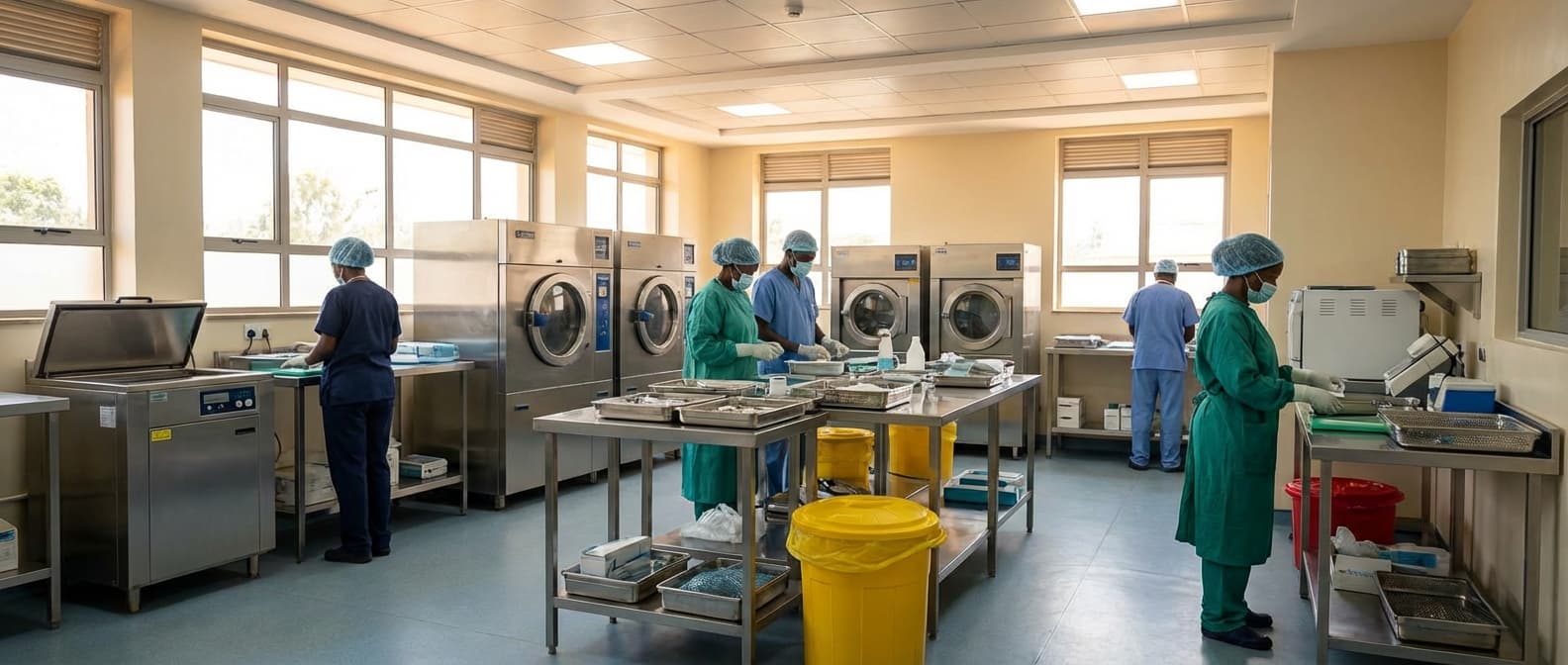
Autoclave Validation Support Service in Uganda
Engineering Excellence & Technical Support
Autoclave Validation Support Service High-standard technical execution following OEM protocols and local regulatory frameworks.
Rigorous Validation Protocols
We implement globally recognized validation protocols, including Installation Qualification (IQ), Operational Qualification (OQ), and Performance Qualification (PQ), tailored to Uganda's specific regulatory landscape and your autoclave's unique operational parameters, ensuring absolute compliance and sterility assurance.
Advanced Calibration & Monitoring
Our service includes precise calibration of critical autoclave components (temperature, pressure, time) using traceable, NIST-certified equipment. We deploy sophisticated monitoring systems to capture real-time operational data, providing irrefutable evidence of consistent and effective sterilization cycles.
Comprehensive Documentation & Reporting
We provide meticulously detailed validation reports that serve as a robust audit trail for regulatory bodies and internal quality assurance. Our documentation covers all aspects of the validation process, offering clear insights into autoclave performance and suitability for critical applications in Uganda.
What Is Autoclave Validation Support Service In Uganda?
Autoclave Validation Support Service in Uganda refers to the provision of specialized technical expertise and services aimed at ensuring that autoclaves (steam sterilizers) operate within specified parameters to achieve effective sterilization of medical devices, laboratory equipment, and other critical materials. This service is crucial for maintaining the integrity of sterilization processes, preventing cross-contamination, and ensuring patient safety and regulatory compliance within healthcare, research, and industrial settings in Uganda.
| Who Needs Autoclave Validation Support Service? | Typical Use Cases | |||||
|---|---|---|---|---|---|---|
| Hospitals and Clinics: For sterilizing surgical instruments, medical devices, and laboratory consumables to prevent healthcare-associated infections (HAIs). | Dental Practices: Sterilization of dental instruments to ensure patient safety and prevent transmission of pathogens. | Laboratories (Research & Diagnostic): Sterilizing glassware, media, and equipment used in microbiological, chemical, and biological research or diagnostic testing. | Pharmaceutical and Biotechnology Companies: Sterilizing raw materials, manufacturing equipment, and packaging components in compliance with Good Manufacturing Practices (GMP). | Veterinary Clinics and Animal Research Facilities: Sterilizing instruments and equipment for animal care and research. | Medical Device Manufacturers: Validating the sterilization processes for their products before market release and for ongoing production. | Food and Beverage Industry: Sterilizing equipment or packaging materials where aseptic processing is critical. |
| Ensuring sterility assurance of surgical packs for operating theatres. | Validating the efficacy of steam sterilization for reusable medical instruments in outpatient clinics. | Confirming the effectiveness of sterilization cycles for diagnostic equipment and consumables in pathology labs. | Meeting regulatory requirements for sterile product manufacturing in the pharmaceutical sector. | Maintaining a validated sterilization process for critical laboratory equipment in academic research institutions. | Verifying the consistent performance of autoclaves after installation or major servicing. |
What Autoclave Validation Support Service Involves:
- Installation Qualification (IQ): Verifying that the autoclave is installed correctly according to manufacturer specifications and relevant standards.
- Operational Qualification (OQ): Testing the autoclave's critical operational parameters (e.g., temperature, pressure, time, steam penetration) across its operational range to confirm it functions as intended.
- Performance Qualification (PQ): Demonstrating, with documented evidence, that the autoclave consistently performs its sterilization cycle effectively under normal operating conditions, typically using biological and chemical indicators.
- Validation Protocol Development: Creating detailed, documented plans outlining the procedures, acceptance criteria, and timelines for the validation process.
- Calibration and Maintenance Support: Ensuring the accuracy and reliability of measuring instruments (temperature probes, pressure gauges) and providing ongoing maintenance recommendations.
- Documentation and Reporting: Generating comprehensive validation reports that meet regulatory requirements and serve as auditable records.
- Troubleshooting and Remediation: Identifying and resolving any deviations or failures observed during the validation process.
- Revalidation Support: Assisting with periodic revalidation activities after significant repairs, modifications, or at prescribed intervals to maintain validated status.
Who Needs Autoclave Validation Support Service In Uganda?
Autoclave validation is a critical process for ensuring the effectiveness of sterilization equipment in various sectors. In Uganda, organizations that rely on sterile medical instruments, laboratory equipment, or pharmaceutical products require robust autoclave validation support services to maintain compliance, patient safety, and product integrity. This service is not just a regulatory formality but a fundamental component of quality assurance and risk management. The demand for these services spans multiple industries and departments, all of which share the common goal of preventing contamination and ensuring successful sterilization cycles.
| Customer Type | Key Departments Requiring Support | Reason for Autoclave Validation |
|---|---|---|
| Hospitals and Healthcare Facilities | Central Sterile Supply Department (CSSD), Operating Theatres, Infection Control Department, Outpatient Clinics | Ensuring sterility of surgical instruments, patient-care devices, and gowns to prevent hospital-acquired infections (HAIs) and maintain patient safety. |
| Diagnostic Laboratories | Microbiology Labs, Pathology Labs, Blood Banks, Research Labs | Sterilizing culture media, laboratory glassware, instruments, and waste to prevent cross-contamination, ensure accurate test results, and protect laboratory personnel. |
| Pharmaceutical Manufacturing Companies | Quality Control (QC) Department, Production Department, Quality Assurance (QA) Department | Sterilizing pharmaceutical packaging, stoppers, vials, and production equipment to maintain product sterility, comply with Good Manufacturing Practices (GMP), and prevent product spoilage. |
| Research and Development Institutions | Biotechnology Labs, Chemistry Labs, Life Sciences Labs | Sterilizing laboratory equipment and consumables for experiments, ensuring the integrity of research findings, and maintaining a sterile research environment. |
| Dental Clinics | Dental Surgery, Sterilization Area | Sterilizing dental instruments (e.g., handpieces, scalers, mirrors) to prevent the transmission of infections between patients and dental professionals. |
| Veterinary Clinics and Animal Hospitals | Surgical Suites, Diagnostic Labs, Treatment Areas | Ensuring the sterility of surgical instruments and equipment used in animal care to prevent infections and promote animal well-being. |
| Food and Beverage Processing Plants | Quality Control, Production, Packaging Departments | Sterilizing packaging materials and some processing equipment to ensure product safety, extend shelf life, and prevent microbial contamination. |
| Cosmetic and Personal Care Product Manufacturers | Quality Control, Production, Packaging Departments | Sterilizing components, packaging, and equipment for products like sterile wound dressings, contact lens solutions, or sterile cosmetic applicators to ensure product safety and efficacy. |
Target Customers and Departments for Autoclave Validation Support Service in Uganda
- Hospitals and Healthcare Facilities
- Diagnostic Laboratories
- Pharmaceutical Manufacturing Companies
- Research and Development Institutions
- Dental Clinics
- Veterinary Clinics and Animal Hospitals
- Food and Beverage Processing Plants
- Cosmetic and Personal Care Product Manufacturers
Autoclave Validation Support Service Process In Uganda
This document outlines the standard operating procedure for Autoclave Validation Support Services offered in Uganda. The process is designed to be comprehensive, transparent, and efficient, ensuring that autoclaves meet stringent regulatory and operational standards. It covers the entire lifecycle from initial client inquiry to the final execution and reporting of validation activities.
| Phase | Step | Description | Key Activities | Deliverables | Responsibility (Primary) |
|---|---|---|---|---|---|
| Phase 1: Inquiry & Scoping | 1.1 Initial Contact | Client expresses interest in autoclave validation services. | Receive client inquiry (phone, email, web form). Understand client's needs and autoclave type. | Acknowledgement of inquiry. | Client, Service Provider |
| 1.2 Information Gathering | Collect detailed information about the autoclave and facility. | Request autoclave make, model, serial number, age, usage frequency, current calibration status, and facility type (e.g., hospital, lab, pharmaceutical). | Completed client information form. | Client, Service Provider | |
| 1.3 Preliminary Assessment & Scope Definition | Determine the appropriate validation scope based on gathered information. | Discuss client's regulatory requirements (e.g., Ministry of Health, ISO). Define the specific validation parameters (e.g., Installation Qualification - IQ, Operational Qualification - OQ, Performance Qualification - PQ). | Defined validation scope and objectives. | Service Provider | |
| Phase 2: Proposal & Agreement | 2.1 Proposal Generation | Develop a detailed proposal outlining the service offering. | Include scope of work, methodology, validation parameters, timeline, cost breakdown, terms and conditions. | Formal service proposal. | Service Provider |
| 2.2 Proposal Review & Negotiation | Client reviews and provides feedback on the proposal. | Address any client queries, discuss potential modifications, and finalize terms. | Negotiated proposal. | Client, Service Provider | |
| 2.3 Contract & Agreement | Formalize the service agreement. | Sign contract, Service Level Agreement (SLA), and any necessary confidentiality agreements. | Signed contract. | Client, Service Provider | |
| Phase 3: Planning & Preparation | 3.1 Detailed Validation Plan | Develop a comprehensive validation plan. | Document specific test procedures, acceptance criteria, equipment calibration status, personnel qualifications, and a detailed schedule. | Approved Validation Plan. | Service Provider |
| 3.2 Equipment Preparation & Calibration | Ensure all validation equipment is calibrated and traceable. | Verify calibration certificates for temperature probes, pressure gauges, data loggers, etc. Procure or prepare necessary consumables (e.g., biological indicators, chemical indicators). | Calibrated validation equipment and prepared consumables. | Service Provider | |
| 3.3 Site Scheduling & Logistics | Coordinate on-site visit logistics. | Confirm site access, availability of autoclave, and relevant personnel. Arrange travel and accommodation if necessary. | Confirmed on-site schedule. | Client, Service Provider | |
| Phase 4: On-site Execution | 4.1 Pre-execution Checks | Verify readiness of the autoclave and facility. | Conduct visual inspection of the autoclave, check for power, steam supply, water quality, and ensure operators are available. | Pre-execution checklist completion. | Service Provider |
| 4.2 Installation Qualification (IQ) | Verify the autoclave is installed correctly according to manufacturer specifications. | Check physical installation, utilities, electrical connections, safety features, and documentation. | IQ test results. | Service Provider | |
| 4.3 Operational Qualification (OQ) | Verify the autoclave operates within defined parameters. | Test critical operational parameters like temperature, pressure, time, and cycle controls at various set points and under different load conditions. | OQ test results. | Service Provider | |
| 4.4 Performance Qualification (PQ) | Demonstrate consistent effective sterilization under normal operating conditions. | Conduct multiple test cycles with simulated or actual loads, using biological and chemical indicators, and data loggers to confirm efficacy and reproducibility. | PQ test results, including spore tests. | Service Provider | |
| 4.5 Data Collection & Recording | Meticulously record all test results and observations. | Use validated data loggers, fill out test sheets accurately, and document any deviations. | Raw data and completed test records. | Service Provider | |
| Phase 5: Data Analysis & Reporting | 5.1 Data Review & Analysis | Analyze collected data against acceptance criteria. | Evaluate temperature, pressure, time, and biological/chemical indicator results. Identify any deviations or out-of-specification results. | Analyzed data report. | Service Provider |
| 5.2 Deviation Investigation | Investigate any identified deviations. | Determine the root cause of deviations and propose corrective actions, if necessary. This may involve re-testing. | Deviation investigation report (if applicable). | Service Provider | |
| 5.3 Validation Report Generation | Compile a comprehensive validation report. | Include introduction, scope, methodology, results (IQ, OQ, PQ), data analysis, conclusions, and recommendations. Attach all supporting documentation. | Final Autoclave Validation Report. | Service Provider | |
| 5.4 Report Submission & Review | Submit the validation report to the client for review. | Present the report, explain findings, and address client queries. | Submitted validation report. | Service Provider, Client | |
| 5.5 Final Approval & Archiving | Obtain client's formal acceptance of the report. | Client provides written approval. Service provider archives all documentation. | Client-approved report and archived records. | Client, Service Provider | |
| Phase 6: Follow-up & Revalidation Support | 6.1 Post-Validation Support | Provide ongoing support and address any immediate post-validation questions. | Clarify report findings, provide guidance on operational improvements. | Post-validation consultation. | Service Provider |
| 6.2 Revalidation Planning | Advise on revalidation schedules based on regulatory requirements and usage. | Proactively remind clients of upcoming revalidation dates. Offer tailored revalidation packages. | Revalidation schedule recommendations. | Service Provider |
Autoclave Validation Support Service Process Workflow
- Phase 1: Inquiry & Scoping
- Phase 2: Proposal & Agreement
- Phase 3: Planning & Preparation
- Phase 4: On-site Execution
- Phase 5: Data Analysis & Reporting
- Phase 6: Follow-up & Revalidation Support
Autoclave Validation Support Service Cost In Uganda
Autoclave validation is a critical process for ensuring the sterility of medical and laboratory equipment, particularly in a country like Uganda where healthcare and research standards are paramount. The cost of autoclave validation support services in Uganda can fluctuate significantly based on several key factors. These factors include the type and number of autoclaves to be validated, the scope of the validation (e.g., initial qualification, re-validation, or routine performance testing), the complexity of the autoclave's design, the location of the facility, and the experience and reputation of the service provider. Geographical accessibility within Uganda also plays a role, with remote locations potentially incurring higher travel and logistics costs for technicians.
| Service Type | Estimated Price Range (UGX) | Notes |
|---|---|---|
| Initial Autoclave Validation (IQ/OQ/PQ) | 2,000,000 - 7,000,000+ | For a single standard autoclave. Price increases with complexity, size, and number of units. May include detailed reports and documentation. |
| Routine Performance Qualification (PQ) / Re-validation | 1,000,000 - 4,000,000 | Per autoclave, typically conducted annually or bi-annually. Focuses on confirming consistent performance. |
| Calibration of Validation Equipment (e.g., temperature probes) | 200,000 - 700,000 | May be included in the overall validation cost or charged separately. |
| Travel & Logistics (per visit) | 100,000 - 500,000+ | Highly variable depending on distance and location within Uganda. May include accommodation. |
| Rush Service / Expedited Validation | Additional 20% - 50% | For urgent requirements, prioritizing your facility. |
Key Pricing Factors for Autoclave Validation Support Services in Uganda:
- Type of Autoclave: Different autoclave types (e.g., gravity displacement, pre-vacuum) may require varying validation protocols and specialized equipment, influencing costs.
- Number of Autoclaves: The more autoclaves requiring validation at a single facility, the more economical the per-unit cost might become due to economies of scale.
- Scope of Validation: Initial Installation Qualification (IQ), Operational Qualification (OQ), and Performance Qualification (PQ) are distinct phases, with IQ/OQ typically being more involved and costly than routine PQ testing.
- Autoclave Complexity & Size: Larger or more sophisticated autoclaves with advanced features may require more time and specialized calibration equipment, leading to higher fees.
- Location of the Facility: Accessibility and travel time for validation technicians significantly impact costs. Facilities in remote areas may incur additional travel and accommodation expenses.
- Service Provider Expertise & Reputation: Established providers with a proven track record and certified technicians may command higher prices due to their reliability and quality of service.
- Frequency of Validation: Regular re-validation or performance monitoring might have different pricing structures compared to one-off validation events.
- Additional Services: Services like calibration of probes, lifecycle management consultation, or detailed report generation can add to the overall cost.
- Consumables and Calibration Standards: The cost of consumables used during testing (e.g., biological indicators, chemical indicators) and the calibration of the validation equipment itself are factored in.
Affordable Autoclave Validation Support Service Options
Finding affordable autoclave validation support is crucial for healthcare facilities, research labs, and any industry relying on sterile equipment. This service ensures your autoclaves are functioning correctly, meeting regulatory standards, and maintaining the highest levels of safety and efficacy. We offer flexible solutions designed to fit various budgets, focusing on transparent pricing and value-driven packages.
| Service Component | Description | Potential Cost Savings |
|---|---|---|
| Basic Validation (e.g., Cycle Performance Testing) | Verifies that your autoclave consistently achieves the required temperature, pressure, and time for effective sterilization. | Essential for compliance; helps avoid re-sterilization costs due to failed cycles. |
| Full Validation (IQ, OQ, PQ) | Comprehensive testing including Installation Qualification, Operational Qualification, and Performance Qualification, ensuring the autoclave meets all specified requirements. | Reduces risk of regulatory non-compliance and potential fines. |
| Calibration Services | Ensures the accuracy of your autoclave's critical parameters (temperature, pressure, timers). | Accurate calibration prevents over- or under-sterilization, saving resources and ensuring efficacy. |
| Preventative Maintenance | Regular inspections and servicing to keep your autoclave in optimal working condition. | Minimizes unexpected breakdowns and costly emergency repairs; extends autoclave lifespan. |
| Re-validation | Required after significant repairs, modifications, or at set intervals based on regulatory guidelines. | Bundled re-validation with other services can offer discounts. |
Understanding Autoclave Validation Support Service Options
- {"title":"Tiered Service Packages","description":"We offer a range of service levels, from essential validation checks to comprehensive validation and calibration, allowing you to choose the support that best suits your needs and budget."}
- {"title":"Value Bundles","description":"Combine multiple validation services or recurring appointments into a bundled package for significant cost savings. These bundles often include services like quarterly checks, annual full validation, and preventative maintenance at a discounted rate compared to individual bookings."}
- {"title":"On-Demand vs. Contractual Support","description":"Opt for on-demand services for specific validation needs or enter into a service contract for ongoing, scheduled support. Contracts typically offer lower per-service costs and priority scheduling."}
- {"title":"Remote Support Options","description":"For certain diagnostic and preliminary checks, remote support can be a cost-effective solution, reducing the need for an on-site visit and associated travel expenses."}
- {"title":"Preventative Maintenance Integration","description":"Bundling preventative maintenance with validation ensures your autoclave operates efficiently, reducing the likelihood of breakdowns and costly emergency repairs, ultimately saving you money in the long run."}
Verified Providers In Uganda
Finding verified healthcare providers in Uganda is crucial for ensuring quality and trustworthy medical services. Franance Health stands out as a premier platform that rigorously vets its network of healthcare professionals, offering peace of mind to individuals seeking reliable medical care. Their comprehensive credentialing process and commitment to excellence make them the best choice for accessing verified providers.
| Provider Type | Key Verification Aspects | Franance Health Advantage |
|---|---|---|
| Doctors (GPs & Specialists) | Medical Degree, Practicing License, Specialty Certifications, Hospital Affiliations | Verified qualifications and expertise, patient reviews available, easy appointment scheduling. |
| Nurses | Nursing Council Registration, Educational Qualifications, Relevant Training | Certified nursing professionals, ensuring quality patient care and support. |
| Pharmacists | Pharmacy Council License, Degree in Pharmacy, Good Standing with Regulatory Bodies | Reliable access to verified pharmaceutical services and expert advice. |
| Therapists (Physio, Occupational, etc.) | Professional Body Registration, Specific Therapeutic Certifications, Educational Background | Access to qualified therapists for comprehensive rehabilitation and wellness. |
| Diagnostic Centers | Accreditation, Equipment Calibration Records, Qualified Technicians | Trusted facilities for accurate and reliable diagnostic testing. |
Why Franance Health is the Best Choice for Verified Providers in Uganda:
- Rigorous Vetting Process: Franance Health employs a multi-faceted verification system that includes academic qualifications, professional licenses, certifications, and peer reviews. This ensures that every provider on their platform meets the highest standards of competence and ethical practice.
- Specialized Expertise: The platform offers a diverse range of specialists, allowing users to find the exact medical expertise they need, from general practitioners to highly specialized surgeons and consultants.
- Patient-Centric Approach: Franance Health prioritizes patient satisfaction by facilitating easy appointment booking, clear communication channels, and access to patient feedback, promoting transparency and trust.
- Commitment to Quality Assurance: Ongoing monitoring and feedback mechanisms are in place to ensure that providers consistently deliver excellent care, maintaining the integrity of the Franance Health network.
- Accessibility and Convenience: The platform makes it simple to search, compare, and connect with verified healthcare providers across Uganda, saving users valuable time and effort.
Scope Of Work For Autoclave Validation Support Service
This Scope of Work (SOW) outlines the services to be provided by [Service Provider Name] (hereinafter referred to as 'the Service Provider') to [Client Name] (hereinafter referred to as 'the Client') for Autoclave Validation Support. The objective is to ensure that the client's autoclaves consistently operate within specified parameters to achieve effective sterilization. This document details the technical deliverables and standard specifications required for successful project completion.
| Activity/Deliverable | Description | Standard Specifications/Reference Documents | Output/Deliverable |
|---|---|---|---|
| Installation Qualification (IQ) | Verification of the autoclave's proper installation and configuration against manufacturer's specifications and user requirements. | Manufacturer's Installation Manual, Client's User Requirement Specification (URS), relevant ISO standards (e.g., ISO 17665). | IQ Protocol, IQ Report (including equipment verification, calibration records, documentation review). |
| Operational Qualification (OQ) | Testing of the autoclave's operational capabilities within its designed limits to ensure it performs as intended. | OQ Protocol, Manufacturer's Operating Manual, Client's URS, relevant ISO standards (e.g., ISO 17665). | OQ Protocol, OQ Report (including system checks, alarm testing, parameter verification, functional tests). |
| Performance Qualification (PQ) | Demonstration that the autoclave consistently performs the intended sterilization process under normal operating conditions. | PQ Protocol, Validated Sterilization Cycle Definitions, Biological Indicators (BIs) and Chemical Indicators (CIs) specifications, relevant ISO standards (e.g., ISO 17665). | PQ Protocol, PQ Report (including cycle run data, BI/CI results, media fill simulations if applicable, statistical analysis, final validation report). |
| Validation Master Plan (VMP) Contribution | Input and review of the client's VMP to ensure it adequately addresses autoclave validation requirements. | Client's VMP, Regulatory Guidelines (e.g., FDA Process Validation Guidance). | Comments and recommendations on the VMP. |
| Protocol Development | Creation of detailed IQ, OQ, and PQ protocols for the specific autoclave and sterilization cycles. | Client's URS, Manufacturer's Specifications, Relevant Standards (ISO 17665). | IQ, OQ, PQ Protocols. |
| Execution of Validation Protocols | Performing the tests and trials as defined in the approved IQ, OQ, and PQ protocols. | Approved Protocols, Calibrated Test Equipment, Biological and Chemical Indicators. | Raw Data Logs, Test Results, Observation Records. |
| Data Analysis and Reporting | Analysis of all collected data and compilation of comprehensive validation reports. | Statistical Software (if applicable), Relevant Regulatory Guidelines. | IQ Report, OQ Report, PQ Report, Final Validation Report. |
| Deviation Management | Investigating, documenting, and recommending corrective actions for any deviations encountered during validation. | Client's Deviation Management System, Root Cause Analysis methodologies. | Deviation Reports, CAPA recommendations. |
| Calibration and Maintenance Support | Ensuring all critical instruments used for validation are calibrated and traceable. | Calibration Certificates, Traceability Documentation. | Summary of calibration status for critical equipment. |
| Final Validation Report | A consolidated report summarizing all validation activities, results, and conclusions. | All previous reports (IQ, OQ, PQ), Executive Summary, Recommendations. | Approved Final Validation Report. |
| Revalidation Support (Optional) | Assistance with revalidation activities due to changes, repairs, or scheduled revalidation periods. | Previous validation documentation, Change Control records. | Revalidation Protocol, Revalidation Report. |
Project Objectives
- To provide expert technical support for autoclave validation activities.
- To ensure the autoclave operates in compliance with relevant regulatory requirements (e.g., FDA, ISO, GMP).
- To generate comprehensive validation reports demonstrating the autoclave's ability to achieve and maintain validated sterilization cycles.
- To identify and address any deviations or non-conformities during the validation process.
- To provide recommendations for process optimization and ongoing monitoring.
Service Level Agreement For Autoclave Validation Support Service
This Service Level Agreement (SLA) outlines the response times and uptime guarantees for the Autoclave Validation Support Service provided by [Your Company Name]. This SLA is intended to ensure that clients receive prompt and reliable support for their autoclave validation needs.
| Service Component | Response Time Target | Uptime Guarantee |
|---|---|---|
| Critical Support Request: (e.g., autoclave validation failure impacting patient care/production) | Acknowledge: Within 1 hour Begin Resolution: Within 4 business hours | 99.8% monthly uptime |
| High Priority Support Request: (e.g., significant delay in validation process) | Acknowledge: Within 2 business hours Begin Resolution: Within 8 business hours | 99.5% monthly uptime |
| Standard Support Request: (e.g., general query, non-critical issue) | Acknowledge: Within 4 business hours Begin Resolution: Within 24 business hours | 99.0% monthly uptime |
| Non-Business Hours Support: (If applicable, specify coverage and potential premium charges) | Emergency escalation available 24/7 for Critical requests | N/A (specific uptime may vary based on subscription level) |
Key Service Commitments
- Response Times: Define the maximum time it will take for our support team to acknowledge and begin addressing a reported issue.
- Uptime Guarantees: Specify the minimum percentage of time the Autoclave Validation Support Service is expected to be available and functional.
- Scope of Support: Clearly delineate what is covered under this SLA, including the types of autoclave validation issues addressed.
- Exclusions: Detail any situations or services not covered by this SLA.
- Reporting and Escalation: Outline the process for reporting issues and how they will be escalated if not resolved within the agreed-upon timeframes.
- Remedies for SLA Breaches: Describe the consequences or compensations for failing to meet the defined response times or uptime guarantees.
Frequently Asked Questions

Ready when you are
Let's scope your Autoclave Validation Support Service in Uganda project in Uganda.

Scaling healthcare logistics and technical systems across the entire continent.