
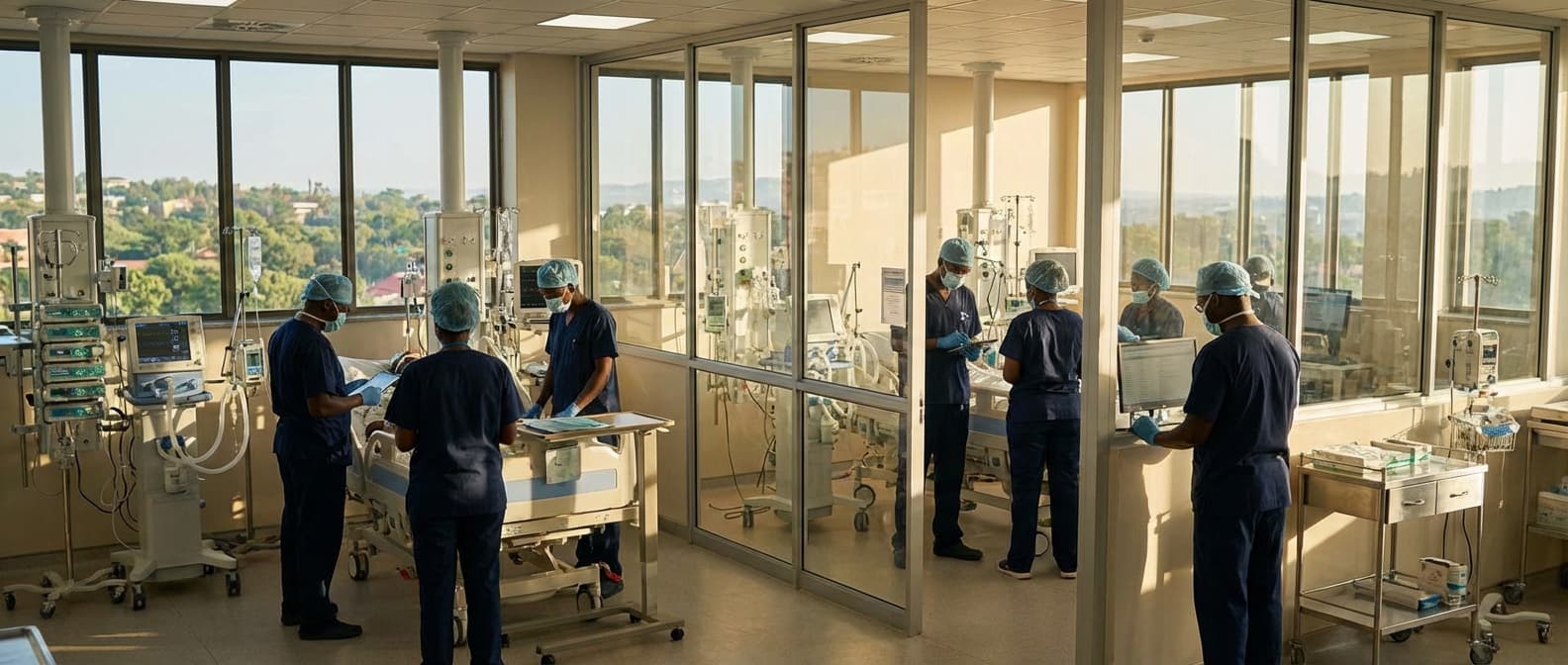
Ventilator Fleet Management & PM in Uganda
Engineering Excellence & Technical Support
Preventive maintenance and fleet management for ICU ventilators High-standard technical execution following OEM protocols and local regulatory frameworks.
Real-time Ventilator Fleet Visibility
Leveraging IoT sensors and a centralized dashboard, we provide Ugandan healthcare facilities with real-time data on ventilator location, operational status (in-use, standby, maintenance), and critical performance metrics, enabling proactive resource allocation and rapid response to patient needs.
Predictive Maintenance & Downtime Reduction
Our advanced analytics platform predicts potential equipment failures by monitoring usage patterns and sensor data. This allows for scheduled preventative maintenance, significantly reducing unexpected downtime and ensuring maximum ventilator availability during critical periods across Uganda's healthcare system.
Optimized Asset Tracking & Utilization
Implementing a robust asset management system, we track the entire lifecycle of ventilators from procurement to decommissioning. This ensures optimal utilization across different regions and facilities in Uganda, facilitates efficient inventory management, and supports informed purchasing decisions for future fleet expansion.
What Is Ventilator Fleet Management & Pm In Uganda?
Ventilator Fleet Management & Preventative Maintenance (PM) in Uganda refers to the comprehensive operational and upkeep strategy for a cohort of mechanical ventilators deployed within healthcare facilities. This service encompasses the entire lifecycle of ventilator assets, from acquisition and deployment to routine servicing, repair, and eventual decommissioning. The objective is to ensure consistent availability, optimal performance, and extended operational lifespan of these critical medical devices, thereby supporting patient care and institutional capacity.
| Who Needs Ventilator Fleet Management & PM? | Typical Use Cases |
|---|---|
| Public Hospitals & National Referral Centers: These facilities often manage large and diverse ventilator fleets across multiple departments and require robust systems for optimal resource utilization and maintenance. | Emergency Response & Disaster Preparedness: During outbreaks (e.g., pandemics) or natural disasters, effective management ensures rapid deployment and sustained operation of ventilators in temporary or overwhelmed facilities. |
| Private Hospitals & Specialized Clinics: While potentially having smaller fleets, these institutions still require reliable operation of critical equipment to maintain service quality and patient safety. | Regional & District Hospitals: Often operating with limited resources, these facilities benefit from centralized or outsourced management to ensure their essential equipment remains functional. |
| Non-Governmental Organizations (NGOs) & Humanitarian Organizations: Organizations involved in healthcare provision in resource-limited settings rely on effective fleet management to maximize the impact of donated or procured medical equipment. | Training & Teaching Hospitals: These institutions need to ensure that their ventilator equipment is consistently functional for both patient care and educational purposes, including simulations and practical training. |
| Ministry of Health & National Health Agencies: These bodies are responsible for setting standards, overseeing public health infrastructure, and may implement or facilitate fleet management programs for national benefit. | Remote & Rural Healthcare Facilities: Facilities with limited in-house technical expertise or access to specialized repair services benefit significantly from managed maintenance contracts and support. |
Key Components of Ventilator Fleet Management & PM in Uganda:
- Inventory Management: Establishing and maintaining a detailed register of all ventilator units, including make, model, serial number, acquisition date, warranty status, and current location.
- Deployment & Allocation: Strategizing the placement of ventilators across various healthcare facilities based on needs assessment, patient demographics, and clinical specialization. This includes tracking their in-use status and availability.
- Preventative Maintenance (PM) Scheduling: Implementing a proactive maintenance program based on manufacturer recommendations, usage patterns, and regulatory requirements. This involves scheduled inspections, calibration, cleaning, and replacement of worn parts.
- Corrective Maintenance & Repair: Establishing protocols for prompt identification, diagnosis, and repair of ventilator malfunctions. This includes managing spare parts inventory and coordinating with authorized service technicians.
- Calibration & Performance Verification: Regularly calibrating ventilators to ensure accuracy of delivered tidal volumes, pressures, respiratory rates, and other critical parameters, adhering to established clinical standards.
- Training & Competency Assessment: Providing comprehensive training to biomedical engineers, technicians, and clinical staff on the operation, basic troubleshooting, and routine maintenance of various ventilator models.
- Asset Tracking & Lifecycle Management: Monitoring the operational status, maintenance history, and overall condition of each ventilator unit to inform decisions regarding upgrades, replacements, and end-of-life disposal.
- Regulatory Compliance: Ensuring all maintenance and operational procedures adhere to national health regulations, standards, and best practices for medical equipment.
Who Needs Ventilator Fleet Management & Pm In Uganda?
Ventilator fleet management and preventative maintenance (PM) are crucial for ensuring the reliable and safe operation of life-saving medical equipment, especially in resource-limited settings like Uganda. Without proper management, ventilators can become non-functional due to lack of maintenance, improper usage, or insufficient training, leading to dire consequences for patients. This service is vital for healthcare facilities that rely on these devices to treat respiratory illnesses, critical care patients, and during surgical procedures.
| Customer Type | Key Departments Involved | Primary Needs/Benefits |
|---|---|---|
| Public Hospitals (National Referral, Regional, District) | Intensive Care Units (ICUs), Anesthesia Departments, Respiratory Therapy Departments, Biomedical Engineering Departments, Procurement Departments | Ensuring consistent availability of functional ventilators for critical care; reducing downtime; optimizing equipment lifespan; efficient resource allocation; improved patient outcomes; compliance with maintenance standards. |
| Private Hospitals & Clinics | ICUs, Operating Rooms, Biomedical Engineering/Maintenance Teams, Administration | Maintaining high standards of patient care; minimizing risk of equipment failure; ensuring competitive service delivery; efficient management of capital investments; customer satisfaction. |
| Ministry of Health (Uganda) | Directorates of Curative Services, Health Infrastructure Department, National Drug Authority (NDA) (for medical devices), Planning Department | National-level oversight of medical equipment; data for procurement and replacement planning; ensuring equitable access to functional equipment; monitoring equipment performance across the country; disaster preparedness (e.g., pandemics). |
| NGOs & International Aid Organizations | Project Management Teams, Technical Support Units, Field Operations | Ensuring the sustainability and effectiveness of donated or funded equipment; demonstrating impact of aid; training local staff; establishing standardized maintenance protocols. |
| Medical Training Institutions | Biomedical Engineering Departments, Clinical Training Departments, Simulation Centers | Providing hands-on training on functional equipment; teaching best practices in maintenance and troubleshooting; ensuring students learn with reliable technology. |
| Equipment Suppliers & Distributors | Sales Departments, Service & Maintenance Departments, Customer Support | Enhancing service offerings to clients; building long-term customer relationships; ensuring customer satisfaction and loyalty; proactive identification of service needs; reducing warranty claims due to improper use or maintenance. |
Target Customers & Departments in Uganda
- Hospitals (Public & Private): The primary users of ventilators, encompassing all levels from national referral hospitals to district and private healthcare providers.
- Ministry of Health: Responsible for national healthcare policy, procurement, and oversight of public health facilities. They benefit from data for resource allocation and planning.
- NGOs and International Aid Organizations: Often involved in providing medical equipment and support to Ugandan healthcare systems. They require robust management to ensure their investments are sustainable and effective.
- Medical Training Institutions: Teaching hospitals and institutions that train healthcare professionals on the use and maintenance of medical equipment.
- Equipment Suppliers & Distributors: Companies that sell and service medical equipment in Uganda. They can leverage these services to offer value-added support and ensure customer satisfaction.
Ventilator Fleet Management & Pm Process In Uganda
This document outlines the workflow for Ventilator Fleet Management and Preventive Maintenance (PM) processes in Uganda, covering the entire lifecycle from initial inquiry to successful execution and closure. The process is designed to ensure the optimal functioning and longevity of the ventilator fleet, thereby supporting critical healthcare services across the country.
| Phase | Step | Description | Responsible Parties | Key Deliverables/Outputs | Documentation Required |
|---|---|---|---|---|---|
| Inquiry & Initial Assessment |
| A healthcare facility or the MoH identifies a need for a new ventilator, a replacement, or a service request for an existing unit. This can be due to new project requirements, equipment failure, or planned upgrades. | Healthcare Facility/MoH | Formal Inquiry/Request Document | Letter of Request, Needs Assessment Report, Project Proposal (if new acquisition) |
| Inquiry & Initial Assessment |
| The MoH and relevant departments review the inquiry, assess the urgency and criticality, and validate the need against available resources and strategic priorities. This may involve site visits or consultations. | Ministry of Health (Biomedical Engineering Unit), Regional Health Offices | Prioritized List of Needs, Justification for Acquisition/Service | Needs Assessment Form, Site Visit Report, MoH Approval Memo |
| Procurement/Acquisition |
| Detailed technical specifications for the required ventilators are developed. This forms the basis for tender documents to solicit bids from potential suppliers. | MoH (Biomedical Engineering Unit), Procurement Unit | Technical Specifications Document, Tender Documents | Equipment Specifications Sheet, Standard Tender Templates |
| Procurement/Acquisition |
| The tender process is initiated, bids are received, evaluated based on technical and financial criteria, and a preferred supplier is selected. | Procurement Unit, MoH Evaluation Committee | Bid Evaluation Report, Supplier Recommendation, Award Notification | Tender Bids, Evaluation Criteria Checklist, Signed Tender Award Letter |
| Procurement/Acquisition |
| Contracts are negotiated with the selected supplier, covering supply, installation, training, warranty, and initial maintenance terms. | MoH Legal Department, Procurement Unit | Signed Supply Contract | Contractual Agreement, Performance Bonds (if applicable) |
| Logistics & Installation |
| The official purchase order is placed, and the supplier proceeds with manufacturing or sourcing the ventilators. | MoH Procurement Unit, Supplier | Purchase Order, Manufacturing/Delivery Schedule | Purchase Order (PO), Proof of Payment, Delivery Manifest |
| Logistics & Installation |
| Ventilators are shipped to Uganda, and customs procedures are managed for clearance. | MoH Logistics Team, Customs Agents, Supplier | Shipped Goods, Customs Clearance Documents | Bill of Lading, Air Waybill, Customs Declaration Forms, Import Permits |
| Logistics & Installation |
| Received ventilators are stored securely and then distributed to the designated healthcare facilities. | MoH Logistics Team, Biomedical Engineering Department | Stored Inventory, Distribution Plan, Delivery Confirmation | Inventory Records, Distribution Manifests, Signed Delivery Notes |
| Logistics & Installation |
| Healthcare facilities prepare the necessary infrastructure (e.g., power outlets, space) for the installation of ventilators. The supplier or trained personnel then install the equipment. | Healthcare Facility Biomedical Engineering, Supplier/Service Provider | Ready Installation Site, Installed Ventilator | Site Readiness Checklist, Installation Report, Photos of Installation |
| Logistics & Installation |
| Installed ventilators undergo rigorous testing to ensure they meet all technical specifications and are fully operational. This includes calibration and functional checks. | Biomedical Engineering Department, Supplier/Service Provider | Tested and Commissioned Ventilator, Commissioning Report | Test Protocols, Calibration Certificates, Commissioning Report Signed by Facility and Technician |
| Training & Handover |
| Clinical staff (doctors, nurses) and biomedical technicians are trained on the proper operation, basic troubleshooting, and maintenance of the new ventilators. | Supplier/Service Provider, MoH Training Unit | Trained Personnel, Training Materials | Training Attendance Sheets, Training Certificates, User Manuals |
| Training & Handover |
| The ventilators are formally handed over to the recipient healthcare facility, with all documentation and accessories transferred. | Supplier/Service Provider, Biomedical Engineering Department, Facility Management | Handed-over Equipment, Complete Documentation Package | Handover Certificate, Asset Registration Form, Warranty Documents |
| Preventive Maintenance (PM) |
| A PM schedule is developed based on manufacturer recommendations, usage patterns, and regulatory requirements. This may be managed by a central biomedical engineering unit or facility-level teams. | Biomedical Engineering Department (Central/Facility) | PM Schedule, PM Checklists | Equipment Register, PM Schedule Document, Standard PM Checklists |
| Preventive Maintenance (PM) |
| Scheduled preventive maintenance is performed by trained biomedical technicians, including cleaning, inspection, calibration, and replacement of worn parts. | Biomedical Engineering Department, Third-Party Service Providers | Performed PM Service, PM Service Report | PM Work Orders, Completed PM Checklists, Service Reports, Parts Replacement Records |
| Preventive Maintenance (PM) |
| All PM activities, findings, and parts replaced are meticulously documented and reported. This data informs future maintenance and replacement decisions. | Biomedical Engineering Department | PM Records, PM Performance Reports | Digital or Physical PM Logs, Equipment History Cards, Asset Management System Records |
| Corrective Maintenance & Repair |
| When a ventilator malfunctions, the issue is reported by the clinical staff to the biomedical engineering department. | Clinical Staff, Facility Management | Breakdown Notification, Fault Report | Incident Report Form, Electronic Fault Reporting System Entry |
| Corrective Maintenance & Repair |
| Biomedical technicians diagnose the fault and determine the necessary repair actions, including required parts and estimated time for repair. | Biomedical Engineering Department | Diagnosis Report, Repair Plan | Diagnostic Log, Parts Requisition Form, Estimated Repair Time |
| Corrective Maintenance & Repair |
| Necessary spare parts are sourced from approved vendors or the existing inventory. | Biomedical Engineering Department, Procurement Unit | Sourced Spare Parts | Spare Parts Catalogue, Purchase Orders for Parts, Inventory Stock Records |
| Corrective Maintenance & Repair |
| The actual repair work is carried out by qualified technicians. | Biomedical Engineering Department, Third-Party Service Providers | Repaired Ventilator, Repair Report | Repair Work Orders, Service Reports, Parts Replacement Documentation |
| Corrective Maintenance & Repair |
| The repaired ventilator is tested and verified to ensure it is functioning correctly and safely before being returned to service. | Biomedical Engineering Department | Verified Functionality, Post-Repair Test Report | Post-Repair Test Results, Calibration Certificates |
| Fleet Management & Lifecycle |
| A robust system is in place to track all ventilators, their location, status, maintenance history, and expected lifespan. | Biomedical Engineering Department, Ministry of Health IT Unit | Updated Asset Register, Real-time Fleet Status | Asset Management Software, Inventory Databases, Regular Audits |
| Fleet Management & Lifecycle |
| Data from PM, repairs, and usage is analyzed to identify trends, common issues, and assess overall fleet performance. This informs replacement strategies. | Biomedical Engineering Department, Ministry of Health Planning Unit | Fleet Performance Reports, Maintenance Cost Analysis | Statistical Reports, Trend Analysis Charts, Cost-Benefit Analysis |
| Fleet Management & Lifecycle |
| When ventilators reach the end of their useful life, a plan for their decommissioning, disposal (in an environmentally sound manner), or refurbishment is executed. | Biomedical Engineering Department, MoH Environmental Health Unit | Decommissioning Plan, Disposal Records | Decommissioning Protocol, Waste Disposal Certificates |
| Fleet Management & Lifecycle |
| Annual budgets are prepared for acquisition, maintenance, and replacement of ventilators, securing funding from government allocations, donors, or other sources. | Ministry of Health (Finance & Planning Units), Donor Agencies | Approved Budgets, Secured Funding | Budget Proposals, Funding Agreements, Financial Reports |
Key Stakeholders Involved
- Ministry of Health (MoH) - Uganda
- Regional Referral Hospitals (RRHs)
- District Hospitals
- Healthcare Facilities (e.g., Intensive Care Units - ICUs)
- Biomedical Engineering Department (at various levels)
- Third-Party Service Providers/Vendors
- Donors/Funding Agencies (if applicable)
- Logistics and Procurement Teams
Ventilator Fleet Management & Pm Cost In Uganda
Managing a ventilator fleet in Uganda, particularly in public healthcare facilities, involves a complex interplay of acquisition, maintenance, and operational costs. The pricing of ventilators themselves, along with their associated preventative maintenance (PM) and repair services, is influenced by a variety of factors, leading to a broad range of costs when expressed in Ugandan Shillings (UGX). Understanding these factors is crucial for effective budgeting, procurement, and ensuring the long-term availability and functionality of this life-saving equipment.
| Item/Service | Estimated Price Range (UGX) | Notes/Assumptions |
|---|---|---|
| Basic/Portable Ventilator (New) | 20,000,000 - 70,000,000 | Suitable for basic ventilation, often for emergency or transport. Excludes advanced features. |
| Intermediate/Adult Critical Care Ventilator (New) | 70,000,000 - 250,000,000 | Standard hospital ICU ventilator with a range of ventilation modes and monitoring. Brand dependent. |
| Advanced/High-End Ventilator (New) | 250,000,000 - 600,000,000+ | Includes features for complex patient populations, advanced diagnostics, and potentially integrated therapies. Top-tier brands. |
| Refurbished Ventilator (per unit) | 10,000,000 - 80,000,000 | Price varies significantly based on model, age, refurbishment quality, and warranty offered. Requires thorough vetting. |
| Annual Preventative Maintenance (PM) per Ventilator | 1,500,000 - 5,000,000 | Covers routine checks, calibration, cleaning, and replacement of minor consumables. Can be lower with in-house trained technicians and if part of a large fleet contract. |
| On-Demand Repair Call-out/Service | 500,000 - 3,000,000 (excluding parts) | Cost for a technician visit and diagnosis. Actual repair costs will be additional and depend on the complexity and cost of replacement parts. |
| Replacement Spare Parts (e.g., Sensors, Batteries, Valves) | 100,000 - 2,000,000+ | Highly variable depending on the specific part and ventilator model. Some critical components can be very expensive. |
| Training for Biomedical Engineers/Technicians (per course) | 5,000,000 - 20,000,000 | Cost for specialized training on specific ventilator models. Can be a significant upfront investment for building local capacity. |
Key Pricing Factors for Ventilators and PM in Uganda
- Ventilator Type and Technology: Basic, non-invasive ventilators will be significantly cheaper than advanced, invasive models with sophisticated monitoring capabilities, integrated humidifiers, and transport features. The underlying technology, brand reputation, and the complexity of the software also play a role.
- New vs. Refurbished/Second-hand: New ventilators represent the highest upfront cost. Refurbished or well-maintained second-hand units can offer substantial savings, but require rigorous inspection and assurance of functionality. The source and certification of refurbished units are critical.
- Procurement Channel and Volume: Direct purchase from manufacturers or authorized distributors generally offers better pricing than through multiple intermediaries. Bulk purchases can also lead to significant discounts.
- Warranty and Service Agreements: The inclusion of extended warranties and comprehensive preventative maintenance (PM) packages at the time of purchase can influence the initial unit price but may offer long-term cost savings by avoiding reactive repairs.
- Availability of Local Technical Expertise: The presence of trained local technicians capable of performing routine PM and basic repairs can reduce reliance on expensive expatriate services or manufacturer-led support, thereby lowering ongoing PM costs.
- Import Duties, Taxes, and Logistics: As a landlocked country, Uganda faces transportation costs and potential import duties and taxes on medical equipment. These add to the landed cost of ventilators.
- Currency Exchange Rates: Fluctuations in the UGX against major international currencies (USD, EUR) directly impact the cost of imported ventilators and spare parts.
- Age and Condition of Existing Fleet: For PM and repair costs, the age, model, and current condition of the existing ventilator fleet are paramount. Older, more complex machines may require more frequent and costly maintenance.
Affordable Ventilator Fleet Management & Pm Options
Managing a ventilator fleet efficiently and ensuring optimal preventative maintenance (PM) can be a significant operational challenge for healthcare facilities. This document outlines affordable options, focusing on value bundles and cost-saving strategies to maximize the lifespan and reliability of your ventilator assets while minimizing expenditures.
| Strategy/Option | Description | Key Benefits | Cost-Saving Potential |
|---|---|---|---|
| Tiered PM Service Contracts: | Service agreements offering different levels of PM, diagnostics, and parts coverage. Basic tiers focus on scheduled maintenance, while premium tiers include full repair and replacement. | Predictable budgeting, reduced unexpected repair costs, extended equipment life. | Moderate to High (by preventing major failures and leveraging bulk discounts on parts/labor). |
| Bundled Equipment & Service Packages: | Purchasing new ventilators along with integrated PM and potentially even loaner units as part of a package deal. | Simplified procurement, potential for upfront discounts, seamless integration. | High (through negotiated package pricing and reduced administrative overhead). |
| Managed Service Agreements (MSAs) for Fleet: | Outsourcing the entire management of your ventilator fleet, including PM, repairs, inventory, and asset tracking, to a third-party provider. | Complete peace of mind, access to specialized expertise, optimized fleet utilization, reduced in-house staffing needs. | High (through economies of scale and specialized efficiency gains). |
| Predictive Maintenance Integration: | Utilizing sensor data and advanced analytics to predict potential failures before they occur, allowing for scheduled, proactive repairs. | Minimizes unscheduled downtime, reduces costly emergency repairs, optimizes PM scheduling. | High (by averting expensive catastrophic failures and reducing unnecessary PMs). |
| Strategic Parts Inventory Management: | Optimizing the stocking of essential spare parts based on usage, failure rates, and lead times, potentially through shared inventory with other facilities or third-party suppliers. | Reduces holding costs for excess parts, minimizes downtime due to part unavailability, leverages bulk purchasing. | Moderate (by reducing inventory carrying costs and expedited shipping fees). |
| Refurbishment and Repair Programs: | Partnering with certified third-party providers for cost-effective refurbishment and repair of older or out-of-warranty ventilators, extending their useful life. | Significant cost savings compared to purchasing new equipment, environmentally friendly. | High (for extending the life of existing assets). |
| In-House PM Training & Certification: | Investing in training your internal biomedical engineering staff to perform PM and basic repairs, reducing reliance on external service providers for routine tasks. | Reduced per-incident service costs, faster response times for routine issues, increased staff expertise. | Moderate (requires initial investment in training but yields long-term savings). |
Key Components of Affordable Ventilator Fleet Management & PM Options
- Value Bundles: Combining services for greater cost-effectiveness.
- Preventative Maintenance (PM) Optimization: Streamlining PM schedules and execution.
- Cost-Saving Strategies: Proactive approaches to reduce overall expenses.
- Extended Equipment Lifespan: Maximizing the return on investment for your ventilators.
- Improved Operational Efficiency: Reducing downtime and resource allocation challenges.
Verified Providers In Uganda
In Uganda's evolving healthcare landscape, identifying trustworthy and skilled medical professionals is paramount. Franance Health stands out as a beacon of reliability, offering a curated network of verified providers who meet stringent credentialing standards. This rigorous verification process ensures that patients receive high-quality care from qualified and ethical practitioners. Choosing a Franance Health-affiliated provider means opting for expertise, patient-centricity, and peace of mind. Our commitment to transparency and excellence makes Franance Health the best choice for your healthcare needs in Uganda.
| Provider Type | Franance Health Verification Focus | Benefits for Patients |
|---|---|---|
| General Practitioners | Medical Degree, Licensing, Continuing Education, Clean Disciplinary Record | Accurate Diagnosis, Comprehensive Primary Care, Referrals to Specialists |
| Specialists (e.g., Cardiologists, Dermatologists) | Specialty Board Certification, Fellowship Training, Experience in Specific Field | Expert Diagnosis and Treatment for Complex Conditions, Advanced Medical Knowledge |
| Surgeons | Surgical Board Certification, Extensive Surgical Experience, Patient Outcomes Data | Safe and Effective Surgical Interventions, High Success Rates |
| Nurses | Nursing Degree, Professional License, Specialized Training (if applicable) | Skilled Patient Care, Medication Administration, Health Education |
| Pharmacists | Pharmacy Degree, Professional License, Drug Knowledge and Dispensing Expertise | Safe Medication Management, Drug Interaction Checks, Pharmaceutical Advice |
Why Franance Health Providers are the Best Choice:
- Rigorous Credentialing and Verification Process
- Commitment to Ethical Medical Practices
- Access to Highly Skilled and Experienced Professionals
- Focus on Patient-Centric Care
- Ensured Quality and Safety Standards
- Transparency and Trustworthiness
Scope Of Work For Ventilator Fleet Management & Pm
This Scope of Work (SOW) outlines the requirements for a comprehensive Ventilator Fleet Management and Preventive Maintenance (PM) program. The objective is to ensure the optimal performance, reliability, and safety of the organization's entire ventilator fleet through proactive maintenance, efficient management, and adherence to technical standards. This SOW details the technical deliverables and standard specifications expected from the service provider.
| Category | Technical Deliverables | Standard Specifications / Requirements |
|---|---|---|
| Fleet Inventory & Asset Management | Comprehensive digital inventory of all ventilators, including make, model, serial number, acquisition date, location, and service history. | Inventory database must be secure, accessible (with appropriate user permissions), and auditable. Must integrate with existing asset management systems (if applicable). |
| Preventive Maintenance (PM) | Development and implementation of a detailed PM schedule for each ventilator model based on manufacturer recommendations and best practices. | PM procedures must include functional checks, calibration, cleaning, lubrication, replacement of wear-and-tear parts, and software updates. All PM activities must be documented. |
| Corrective Maintenance & Repair | 24/7 availability for emergency repair services, with defined response times for critical equipment failures. | Service technicians must be factory-trained and certified for the specific ventilator models. Use of genuine OEM or equivalent certified spare parts is mandatory. All repairs must be documented with details of work performed and parts used. |
| Calibration & Performance Verification | Regular calibration and performance verification of all ventilators to ensure accurate delivery of set parameters. | Calibration must be performed using traceable, calibrated test equipment. Results must be documented, and devices labeled with calibration status and next due date. |
| Parts & Consumables Management | Management and stocking of critical spare parts and consumables to minimize downtime. | Inventory levels to be determined based on fleet size, usage patterns, and lead times. A system for tracking part usage and reordering is required. Parts must be stored in appropriate conditions to maintain integrity. |
| Documentation & Reporting | Provision of detailed service reports for all PM and corrective maintenance activities. | Reports must include date of service, technician name, work performed, parts used, calibration status, and any recommendations. Monthly and quarterly fleet performance reports, including uptime statistics, PM completion rates, and repair costs, are required. |
| Training & Competency | Ongoing training and certification for service technicians on new equipment and updated procedures. | Technicians must maintain current certifications. Training records must be provided to the organization. |
| Quality Assurance & Compliance | Adherence to all relevant regulatory requirements (e.g., FDA, local health authorities) and manufacturer guidelines. | Service provider must have a robust quality management system. All activities must be performed in accordance with established protocols and safety procedures. Regular audits of service quality may be conducted by the organization. |
| Software Updates & Cybersecurity | Management of software updates and patches for ventilators. | Updates to be applied only after thorough testing and with appropriate downtime notifications. Cybersecurity best practices must be followed for any connected devices or data handling. |
| End-of-Life Management | Assistance with the decommissioning and disposal of ventilators at the end of their service life. | Disposal must be performed in an environmentally responsible and compliant manner, in accordance with local regulations. Data sanitization of devices prior to disposal is mandatory. |
Key Objectives
- Maximize ventilator uptime and operational readiness.
- Ensure compliance with all relevant regulatory and manufacturer guidelines.
- Minimize unscheduled downtime and associated costs.
- Maintain the highest standards of patient safety and care quality.
- Optimize resource allocation and inventory management for spare parts and consumables.
- Provide detailed reporting on fleet status, maintenance activities, and performance metrics.
Service Level Agreement For Ventilator Fleet Management & Pm
This Service Level Agreement (SLA) outlines the terms and conditions for Ventilator Fleet Management and Preventive Maintenance (PM) services. It defines the expected response times for critical incidents and the guaranteed uptime for the managed ventilator fleet. This agreement is designed to ensure the optimal performance, reliability, and availability of the ventilator equipment, thereby supporting patient care and operational efficiency.
| Service Category | Priority Level | Response Time Target | Resolution Target | Uptime Guarantee |
|---|---|---|---|---|
| Ventilator Fleet Management | Critical (System-wide Outage) | 15 minutes (initial contact) | 4 hours (initiation of corrective action) | 99.5% (for critical equipment) |
| Ventilator Fleet Management | High (Individual Unit Failure) | 30 minutes (initial contact) | 8 hours (initiation of corrective action) | 99.0% (for non-critical equipment) |
| Preventive Maintenance (PM) | Scheduled | N/A (PM scheduled in advance) | As per PM schedule | N/A (scheduled downtime is planned) |
| Breakdown Maintenance/Repair | Critical (Affecting Multiple Patients) | 15 minutes (initial contact) | 2 hours (dispatch of technician) | 99.5% (for critical equipment) |
| Breakdown Maintenance/Repair | High (Affecting Single Patient/Non-critical) | 30 minutes (initial contact) | 4 hours (dispatch of technician) | 99.0% (for non-critical equipment) |
Key Service Components
- Ventilator Fleet Management
- Preventive Maintenance (PM) Scheduling and Execution
- Breakdown Maintenance and Repair Services
- Inventory Management of Spare Parts
- Performance Monitoring and Reporting
- Technical Support and Consultation
Frequently Asked Questions

Ready when you are
Let's scope your Ventilator Fleet Management & PM in Uganda project in Uganda.

Scaling healthcare logistics and technical systems across the entire continent.