
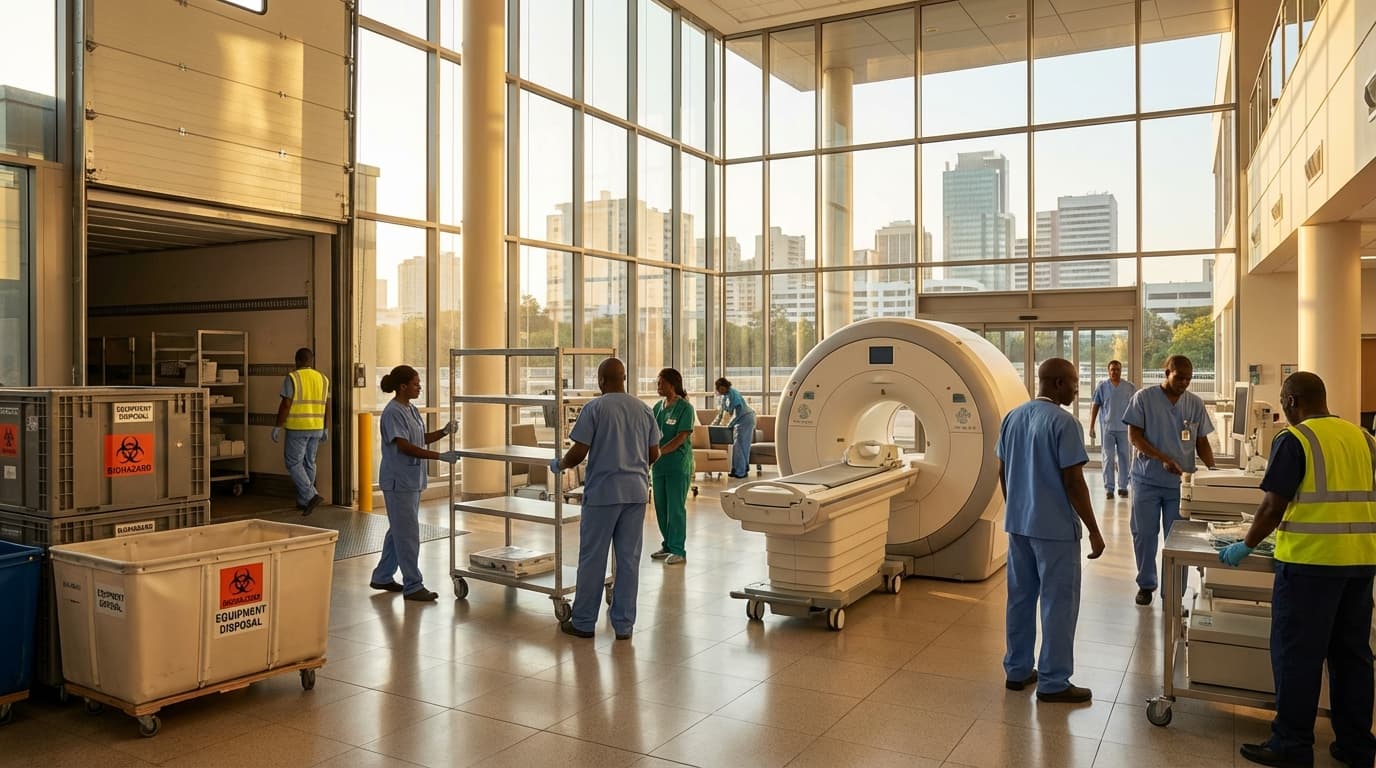
Decommissioning Service for Medical Devices in Uganda
Engineering Excellence & Technical Support
Decommissioning Service for Medical Devices High-standard technical execution following OEM protocols and local regulatory frameworks.
Certified Secure Data Erasure & Destruction
Ensuring complete and irreversible erasure or physical destruction of all sensitive patient data stored on medical devices, adhering to international privacy standards and Ugandan data protection regulations.
Environmentally Responsible Disposal & Recycling
Prioritizing sustainable practices through accredited recycling programs, minimizing landfill waste, and managing hazardous materials responsibly to protect Uganda's environment.
Regulatory Compliance & Documentation
Providing comprehensive documentation and certificates of disposal that meet the requirements of Ugandan Ministry of Health, NEMA, and international regulatory bodies, ensuring full compliance for healthcare facilities.
What Is Decommissioning Service For Medical Devices In Uganda?
Decommissioning service for medical devices in Uganda refers to the systematic process of retiring, disposing of, or repurposing medical equipment in a safe, compliant, and environmentally responsible manner. This service is crucial for healthcare facilities to manage their asset lifecycle, mitigate risks associated with obsolete or malfunctioning equipment, and adhere to regulatory requirements and ethical considerations. The service encompasses a range of activities designed to ensure that medical devices are no longer used for their intended clinical purpose and are handled appropriately at the end of their operational life.
| Who Needs Medical Device Decommissioning Service? | Typical Use Cases |
|---|---|
| Hospitals (Public and Private) | End-of-life for imaging equipment (MRI, CT scanners, X-ray machines) requiring specialized disposal. |
| Clinics and Diagnostic Centers | Replacement of outdated laboratory analyzers or diagnostic tools. |
| Government Health Institutions | Phasing out of legacy medical technology to upgrade to newer, more efficient systems. |
| Medical Equipment Manufacturers/Distributors (for returns or recalls) | Management of defective or recalled medical devices that cannot be repaired or resold. |
| Research and Academic Institutions | Retirement of specialized research equipment that is no longer supported or functional. |
| Non-Governmental Organizations (NGOs) involved in healthcare | Disposition of donated equipment that has reached its service life or is no longer suitable for use. |
| Healthcare Facilities undergoing renovation or relocation | Removal and disposal of all medical equipment from a facility being shut down or moved. |
Key Components of Medical Device Decommissioning Services:
- Asset Identification and Inventory: Comprehensive cataloging of all medical devices slated for decommissioning, including serial numbers, make, model, acquisition date, and current status.
- Clinical Assessment and Justification: Evaluation of the device's functionality, maintenance history, and clinical obsolescence to confirm the need for decommissioning.
- Data Sanitization and Destruction: Secure and irretrievable removal or destruction of all patient-identifiable information (PHI) and proprietary data stored on or within the device, complying with data privacy regulations.
- Disassembly and Component Segregation: Safe dismantling of the device into its constituent parts, with segregation of hazardous materials (e.g., mercury, lead, batteries) for appropriate disposal or recycling.
- Environmental Disposal and Recycling: Management of discarded devices and their components in accordance with local and international environmental regulations, prioritizing reuse and recycling of materials where feasible.
- Asset Transfer or Donation: Facilitating the transfer of functional but surplus equipment to other institutions or charitable organizations, subject to refurbishment and functional verification.
- Decommissioning Documentation and Certification: Provision of detailed records of the decommissioning process, including proof of data destruction, certificates of disposal, and environmental compliance reports.
- Regulatory Compliance Assurance: Ensuring adherence to relevant Ugandan healthcare regulations, environmental protection laws, and international standards governing medical device disposal.
Who Needs Decommissioning Service For Medical Devices In Uganda?
Decommissioning service for medical devices in Uganda is crucial for ensuring compliance with regulations, protecting patient data, and facilitating responsible disposal or repurposing of old equipment. The service caters to a range of healthcare providers and organizations.
| Customer Type | Relevant Departments/Functions | Key Needs |
|---|---|---|
| Hospitals (Public/Private) | Biomedical Engineering Department, IT Department, Procurement Department, Administration | Secure data erasure, environmentally sound disposal, asset tracking, compliance with healthcare regulations, cost-effective solutions. |
| Clinics and Health Centers | Clinic Management, Operations Manager, IT Support (if applicable) | Simple and efficient decommissioning process, data privacy assurance, compliance with local disposal guidelines. |
| Diagnostic Laboratories | Laboratory Manager, IT Department, Quality Assurance Department | Specialized disposal for lab-specific equipment, data security for patient results, adherence to laboratory standards. |
| Research Institutions/Universities | Research Department Heads, IT Department, Facilities Management, Procurement | Secure handling of research data, compliance with ethical research guidelines, asset management for academic inventory. |
| Government Health Agencies | Public Health Department, Procurement Unit, Regulatory Affairs, IT Security | Ensuring compliance across the healthcare sector, managing government assets, data protection standards, environmental responsibility. |
| Medical Device Manufacturers/Distributors | Service Department, Returns and Logistics, Compliance Department | Streamlined end-of-life management, fulfilling contractual obligations, brand reputation management, regulatory adherence. |
| NGOs/Charities | Program Manager, Operations Coordinator, Finance Department | Cost-effective decommissioning, ensuring compliance with donor requirements, responsible asset disposal. |
Target Customers for Medical Device Decommissioning in Uganda
- {"title":"Hospitals (Public and Private)","description":"These are the primary users of a vast array of medical devices, from diagnostic imaging equipment to patient monitoring systems. As devices age, become obsolete, or are upgraded, decommissioning is essential. This includes large national referral hospitals, regional hospitals, and private hospitals of all sizes."}
- {"title":"Clinics and Health Centers","description":"Smaller healthcare facilities, including private clinics, specialized centers (e.g., dental, physiotherapy), and community health centers, also operate medical equipment. Decommissioning ensures these smaller entities can manage their inventory responsibly."}
- {"title":"Diagnostic Laboratories","description":"Laboratories that utilize sophisticated diagnostic equipment such as analyzers, centrifuges, and microscopes will require decommissioning services when these devices reach the end of their lifespan or are replaced."}
- {"title":"Research Institutions and Universities (Medical Faculties)","description":"Academic and research bodies often have advanced medical equipment for teaching and research purposes. Decommissioning is necessary for managing their asset lifecycle and adhering to ethical research standards."}
- {"title":"Government Health Agencies and Ministries","description":"Organizations responsible for public health oversight, procurement, and regulation will need decommissioning services for any government-owned medical equipment, as well as for ensuring compliance among other healthcare providers."}
- {"title":"Medical Device Manufacturers and Distributors (for End-of-Life Management)","description":"While not direct users of the devices, manufacturers and distributors may contract decommissioning services to manage end-of-life equipment, especially in cases of recalls, warranty returns, or providing comprehensive service packages to their clients."}
- {"title":"Non-Governmental Organizations (NGOs) and Charities involved in Healthcare","description":"Many NGOs operate clinics and health programs in Uganda. They also manage medical equipment and will require decommissioning services for their assets."}
Decommissioning Service For Medical Devices Process In Uganda
This document outlines the standard workflow for decommissioning medical devices in Uganda. The process is designed to ensure safe, environmentally responsible, and legally compliant disposal or repurposing of medical equipment. It typically involves several key stages, from initial inquiry to final execution and documentation.
| Stage | Key Activities | Responsible Parties | Deliverables/Outcomes |
|---|---|---|---|
| Client (healthcare facility) contacts the decommissioning service provider with a request to decommission medical devices. Discussion of scope, urgency, and general requirements. Provider may offer preliminary advice. | Healthcare Facility, Decommissioning Service Provider | Understanding of client's needs, initial service interest. |
| Provider conducts a site visit to assess the location, access, and safety considerations. A detailed inventory of devices to be decommissioned is created, including model, serial number, condition, and intended disposal/repurposing path. | Decommissioning Service Provider, Healthcare Facility Representative | Comprehensive device inventory, assessment of site logistics, identification of potential hazards. |
| Based on the assessment, the provider submits a detailed proposal outlining the scope of work, timeline, costs, methodology, and compliance measures. Upon acceptance, a formal service agreement is signed. | Decommissioning Service Provider, Healthcare Facility | Formal proposal, signed service agreement, agreed-upon terms and conditions. |
| Detailed decommissioning plan is developed, including safety protocols, environmental considerations, waste management strategy, and logistical arrangements for transport. Necessary permits or licenses are secured if required. Procurement of specialized equipment and materials. | Decommissioning Service Provider | Detailed decommissioning plan, safety and environmental management plans, secured permits (if applicable), prepared resources. |
| On-site activities commence. This includes powering down, disconnecting, dismantling, cleaning, and packaging devices according to established procedures and safety standards. Data sanitization for devices containing sensitive information. | Decommissioning Service Provider (trained technicians) | Safely decommissioned devices, data securely erased (where applicable), devices ready for transport. |
| Decommissioned devices are transported by specialized logistics to the designated facility for disposal, recycling, or refurbishment. Adherence to regulations for hazardous waste transport and disposal (if applicable). | Decommissioning Service Provider (logistics team), Licensed Disposal/Recycling Facilities | Devices safely transported, disposed of, recycled, or repurposed in an environmentally compliant manner. |
| Upon completion, the provider issues a Certificate of Decommissioning for each device, confirming its safe and compliant disposal/repurposing. A comprehensive report detailing the entire process, including waste manifests, is provided to the client. | Decommissioning Service Provider | Certificate of Decommissioning, final decommissioning report, waste manifests, proof of compliant disposal/repurposing. |
| Provider addresses any client queries regarding the service and documentation. Follow-up may include ensuring the client has copies of all necessary records for their own compliance. | Decommissioning Service Provider, Healthcare Facility | Client satisfaction, complete record-keeping for the healthcare facility. |
Decommissioning Service for Medical Devices Process in Uganda: Workflow
- Inquiry and Initial Consultation
- Site Assessment and Device Inventory
- Proposal and Agreement
- Planning and Preparation
- Execution of Decommissioning
- Transportation and Disposal/Repurposing
- Certification and Documentation
- Post-Service Follow-up
Decommissioning Service For Medical Devices Cost In Uganda
Decommissioning medical devices in Uganda involves a range of services to ensure safe, environmentally responsible, and compliant disposal or repurposing. The cost of these services is influenced by several key factors, making it challenging to provide a single definitive price. These factors include the type and complexity of the medical device, its size and weight, the level of hazardous material it contains, the required disposal method (e.g., incineration, secure landfill, recycling), transportation distances, and the decommissioning provider's overheads and expertise.
| Device Category (Example) | Estimated Cost Range (UGX) | Notes |
|---|---|---|
| Small Non-Hazardous Devices (e.g., Stethoscopes, BP Monitors) | 10,000 - 50,000 | Primarily labor and basic disposal. |
| Medium Electronic Devices (e.g., ECG Machines, Infusion Pumps) | 50,000 - 250,000 | Includes data wiping, specialized handling, and electronics disposal. |
| Large Imaging Equipment (e.g., X-ray Machines, Ultrasound - excluding radioactive components) | 300,000 - 1,500,000+ | Complex disassembly, hazardous material management (e.g., mercury in older units), and specialized transport. |
| Highly Specialized/Hazardous Equipment (e.g., MRI/CT Scanners, Dialysis Machines, Anaesthesia Machines with gas cylinders) | 1,000,000 - 5,000,000+ | Significant disassembly, potential refrigerant recovery, hazardous material containment, and complex disposal protocols. May require specialized international expertise for certain components. |
| Hospital Beds (Non-powered) | 20,000 - 70,000 | Disassembly, material sorting (metal/plastic), and disposal. |
| Data Destruction Services (Standalone) | 50,000 - 300,000 (per device/server) | Depending on the method (shredding, degaussing, software wiping) and volume. |
Key Pricing Factors for Medical Device Decommissioning in Uganda
- Device Type and Complexity: Simple devices like basic examination tables will be significantly cheaper to decommission than complex imaging equipment (e.g., MRI, CT scanners) or devices containing hazardous biological or chemical agents. The presence of electronics, refrigerants, or radioactive materials adds to the cost.
- Hazardous Material Content: Devices containing substances like mercury (thermometers), lead (X-ray shielding), or specialized chemicals require special handling and disposal procedures, incurring higher costs.
- Size and Weight: Larger and heavier equipment necessitates more labor, specialized lifting equipment, and potentially higher transportation fees.
- Decommissioning Method: Incineration, especially for biohazardous waste, is generally more expensive than secure landfill. Recycling and refurbishment, while potentially offering some cost recovery, can still incur significant upfront costs for data wiping, testing, and proper breakdown.
- Data Security and Erasure: For devices storing patient data (e.g., electronic health records systems, imaging devices), secure data erasure or destruction is a critical and often costly component.
- Transportation and Logistics: The distance from the healthcare facility to the decommissioning facility and the accessibility of both locations will impact transportation costs.
- Regulatory Compliance: Adhering to Ugandan regulations for medical waste disposal and environmental protection adds to the service cost, as providers must invest in compliant processes and documentation.
- Provider Expertise and Certification: Reputable decommissioning providers with specialized training, certifications, and adherence to international best practices may charge a premium for their services.
- Volume of Decommissioning: Larger projects may benefit from economies of scale, potentially leading to a lower per-unit cost.
- Urgency of Service: Emergency or rush decommissioning services may incur additional charges.
Affordable Decommissioning Service For Medical Devices Options
Decommissioning medical devices is a critical, yet often overlooked, aspect of healthcare facility management. Ensuring proper data sanitization, environmental compliance, and secure disposal minimizes risks and costs. This document outlines affordable decommissioning service options, focusing on value bundles and cost-saving strategies to help your organization manage this process efficiently.
| Decommissioning Service Component | Description | Cost-Saving Strategies | Value Bundle Example |
|---|---|---|---|
| Data Sanitization & Destruction | Securely erasing or physically destroying storage media to remove all patient data, ensuring HIPAA compliance. | Bulk data erasure, standardized wiping protocols, certification of data destruction. | Basic: Standardized DoD 5220.22-M wipe for all devices. Premium: Physical destruction for high-security devices + certification. |
| Asset Tracking & Inventory | Detailed logging of each device's serial number, model, and decommissioning status for audit purposes. | Digital asset tracking systems, pre-decommissioning inventory audits. | Basic: Spreadsheet-based inventory. Premium: Cloud-based asset management portal with real-time updates. |
| Environmental Disposal & Recycling | Responsible handling of e-waste and hazardous components according to local and federal regulations. | Partnerships with certified R2/e-Stewards recyclers, bulk transport of devices. | Basic: Standardized eco-friendly recycling. Premium: Segregated disposal of hazardous materials with full documentation. |
| Logistics & Transportation | Safe and secure pickup and transport of devices from your facility to the decommissioning site. | Optimized route planning, scheduled pickups, secure packaging. | Basic: Scheduled pickup within a defined service area. Premium: On-demand pickup with specialized equipment for large or sensitive items. |
| Documentation & Certification | Providing comprehensive reports and certificates confirming proper data sanitization and disposal. | Standardized reporting templates, digital certification archiving. | Basic: Certificate of Data Destruction. Premium: Comprehensive decommissioning report including asset inventory, data sanitization certificates, and recycling manifests. |
Why Affordable Medical Device Decommissioning is Essential:
- Data Security and HIPAA Compliance: Securely erasing sensitive patient data prevents breaches and regulatory penalties.
- Environmental Responsibility: Proper disposal of electronic waste and hazardous materials meets environmental regulations.
- Cost Control: Proactive planning and smart service selection can significantly reduce overall expenses.
- Asset Management: Tracking and documenting the decommissioning process ensures accurate inventory and compliance.
- Operational Efficiency: Outsourcing to specialists streamlines the process, freeing up internal resources.
Verified Providers In Uganda
Finding reliable and qualified healthcare providers in Uganda can be a daunting task. However, the emergence of verified provider networks offers a crucial solution, bringing transparency and trust to healthcare access. Franance Health stands out as a leading platform dedicated to credentialing and connecting individuals with top-tier medical professionals and facilities across Uganda. Their rigorous vetting process ensures that all listed providers meet stringent standards of expertise, ethical practice, and patient care. This commitment to quality makes Franance Health the premier choice for anyone seeking dependable healthcare in the region.
| Provider Type | Franance Health Verification Key Aspects | Benefits for Patients |
|---|---|---|
| General Practitioners | Valid medical license, established practice history, positive patient feedback, adherence to ethical guidelines. | Access to reliable primary care, early detection of health issues, trusted referrals. |
| Specialists (e.g., Cardiologists, Pediatricians) | Board certification in their specialty, extensive clinical experience, advanced training, strong reputation within the medical community. | Expert diagnosis and treatment for specific conditions, access to specialized knowledge and procedures. |
| Hospitals and Clinics | Accreditation status, quality of infrastructure, patient safety protocols, staff qualifications, infection control measures. | Safe and well-equipped facilities, access to a multidisciplinary team, comprehensive medical services. |
| Diagnostic Laboratories | Accreditation by relevant bodies, accuracy and reliability of test results, qualified technicians, adherence to quality control standards. | Accurate and timely diagnostic results, supporting informed medical decisions. |
| Pharmacies | Valid operating license, dispensing of authentic medications, qualified pharmacists, adherence to storage and handling protocols. | Access to safe and prescribed medications, professional advice on drug usage and interactions. |
Why Franance Health is Your Best Choice for Verified Providers in Uganda:
- Comprehensive Credentialing Process: Franance Health employs a multi-stage verification system, scrutinizing medical licenses, educational qualifications, professional experience, and patient reviews.
- Focus on Quality and Safety: Their platform prioritizes the well-being of patients by only endorsing providers who demonstrate a commitment to high standards of care and ethical conduct.
- Extensive Network: Franance Health boasts a diverse network of specialists, general practitioners, and healthcare facilities, catering to a wide range of medical needs.
- User-Friendly Platform: Easily search and connect with verified providers through an intuitive and accessible online interface.
- Trust and Transparency: By providing verified credentials, Franance Health eliminates the guesswork and anxiety associated with finding healthcare, fostering trust and transparency in the Ugandan medical landscape.
Scope Of Work For Decommissioning Service For Medical Devices
This document outlines the Scope of Work (SOW) for decommissioning services of medical devices. It details the technical deliverables and standard specifications required for safe and compliant removal, data sanitization, and disposal or recycling of medical equipment. The goal is to ensure the secure handling of sensitive patient data and adherence to environmental regulations.
| Phase/Activity | Description | Technical Deliverables | Standard Specifications/Requirements |
|---|---|---|---|
| Assessment and Planning | Initial site survey, risk assessment, and development of a detailed decommissioning plan. | Decommissioning Plan Document, Risk Assessment Report. | Compliance with relevant local, national, and international regulations (e.g., HIPAA for data privacy, environmental disposal laws). Detailed inventory of devices and their criticality. |
| Asset Identification and Inventory | Accurate cataloging of all medical devices to be decommissioned. | Master Asset Inventory List (including serial numbers, model numbers, location, status). | Bar-code or RFID tagging for real-time tracking. Verification against existing hospital inventory records. |
| Data Sanitization and Destruction | Secure removal of all patient data from devices and media. | Data Sanitization Certificate for each device, Secure Data Destruction Report. | Adherence to NIST SP 800-88 guidelines for media sanitization. Use of certified data wiping software or physical destruction methods. |
| Physical Removal and Transportation | Safe and secure disconnection, removal, and transportation of devices from the facility. | Decommissioning Completion Report, Chain of Custody documentation. | Trained personnel with experience in handling sensitive medical equipment. Secure, climate-controlled transportation where necessary. Compliance with DOT and hazardous material transport regulations if applicable. |
| Environmental Disposal/Recycling | Responsible disposal or recycling of devices and associated components. | Certificate of Disposal/Recycling for each device, Waste Manifests. | Partnership with certified e-waste recyclers. Compliance with EPA and local environmental regulations. Minimization of landfill waste through recycling. |
| Documentation and Certification | Comprehensive record-keeping throughout the entire decommissioning process. | Final Project Report, Audit Trail of all activities, Certificates of Completion for each phase. | All documentation to be retained for a specified period (e.g., 7 years post-decommissioning). Readily auditable records. |
Key Phases of Medical Device Decommissioning
- Assessment and Planning
- Asset Identification and Inventory
- Data Sanitization and Destruction
- Physical Removal and Transportation
- Environmental Disposal/Recycling
- Documentation and Certification
Service Level Agreement For Decommissioning Service For Medical Devices
This Service Level Agreement (SLA) outlines the response times and uptime guarantees for the Decommissioning Service for Medical Devices provided by [Your Company Name] to [Client Company Name]. This SLA is an integral part of the Master Services Agreement (MSA) between the parties.
| Service Component/Device Type | Priority Level | Response Time Target | Uptime Guarantee (Monthly) |
|---|---|---|---|
Definitions
- Decommissioning Service: The process of safely and securely rendering a medical device unusable, including data sanitization, physical destruction, and proper disposal in accordance with relevant regulations.
- Critical Device: A medical device whose failure or unavailability would pose an immediate and significant risk to patient safety or disrupt critical healthcare operations.
- Standard Device: A medical device that is not classified as Critical.
- Downtime: Any period during which the Decommissioning Service is unavailable for use by the Client, excluding Scheduled Maintenance.
- Scheduled Maintenance: Pre-announced periods of unavailability for system updates, upgrades, or routine maintenance. Notice will be provided at least [Number] business days in advance.
- Response Time: The maximum time allowed for [Your Company Name] to acknowledge and begin working on a reported Incident.
- Resolution Time: The maximum time allowed for [Your Company Name] to resolve an Incident and restore the Decommissioning Service to its agreed-upon operational state.
- Incident: Any event that disrupts or degrades the Decommissioning Service provided by [Your Company Name].
Frequently Asked Questions

Ready when you are
Let's scope your Decommissioning Service for Medical Devices in Uganda project in Uganda.

Scaling healthcare logistics and technical systems across the entire continent.