
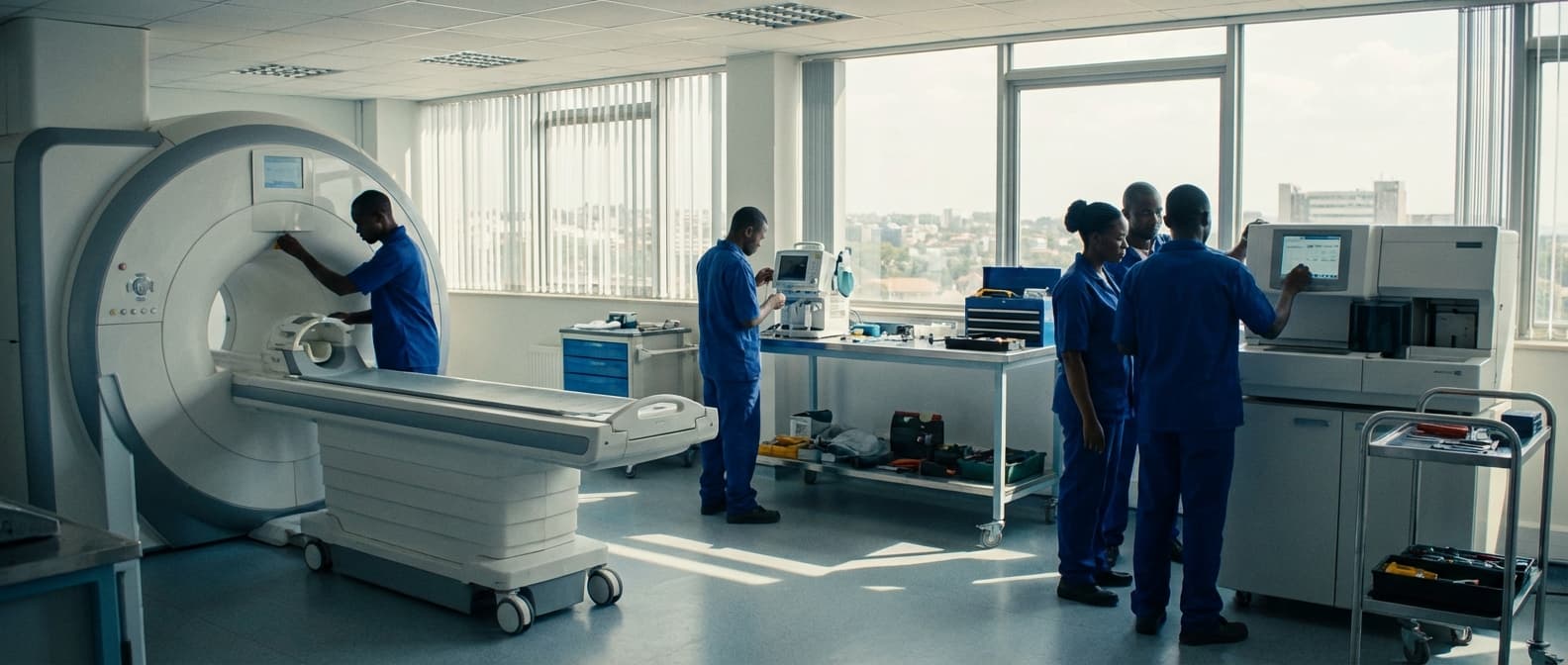
Uptime, Downtime & Root-Cause Analysis Reporting Service in Uganda
Engineering Excellence & Technical Support
Uptime, Downtime & Root-Cause Analysis Reporting Service High-standard technical execution following OEM protocols and local regulatory frameworks.
Real-Time Uptime & Downtime Visibility
Gain instant, 24/7 insights into your infrastructure's availability across Uganda. Our service provides live dashboards and alerts, ensuring you're always aware of critical uptime statuses and immediate downtime incidents.
Automated Root-Cause Analysis (RCA)
Don't just know it's down, know why. Our platform automatically analyzes logs and metrics to pinpoint the root cause of incidents, drastically reducing Mean Time To Resolution (MTTR) for services in Uganda.
Comprehensive Uptime & RCA Reporting
Access detailed, customizable reports on uptime performance, incident trends, and RCA findings tailored for Ugandan operations. Empower your teams with data-driven insights for continuous service improvement and SLA adherence.
What Is Uptime, Downtime & Root-cause Analysis Reporting Service In Uganda?
In Uganda's evolving digital landscape, Uptime, Downtime, and Root-Cause Analysis (RCA) Reporting Services are critical for ensuring the reliability, availability, and performance of IT infrastructure and services. These services provide systematic methods for monitoring, measuring, and understanding the operational status of systems, enabling organizations to proactively address issues and optimize performance. Uptime refers to the period during which a system or service is operational and accessible. Downtime is the inverse, representing the duration a system is unavailable. RCA is a structured process designed to identify the fundamental causes of incidents or failures, rather than just addressing immediate symptoms.
| Who Needs This Service? | Typical Use Cases | |||||||||||
|---|---|---|---|---|---|---|---|---|---|---|---|---|
| Businesses with critical IT systems: Including financial institutions, e-commerce platforms, telecommunication providers, government agencies, and healthcare organizations. | Ensuring uninterrupted service delivery: Maintaining continuous operation of websites, applications, and core business processes. | Financial sector: Monitoring transaction processing systems, ATM networks, and online banking platforms for availability and latency. | Telecommunication companies: Tracking network uptime, call center availability, and data service performance. | E-commerce and Retail: Guaranteeing website availability and transaction success rates, especially during peak sales periods. | Government and Public Services: Ensuring access to essential online services like tax portals, national registration systems, and public health information platforms. | IT Service Providers (MSPs): Managing and reporting on the uptime and performance of client infrastructures. | Healthcare Providers: Maintaining the availability of electronic health records (EHRs), medical imaging systems, and patient portals. | Educational Institutions: Ensuring access to online learning platforms, administrative systems, and research facilities. | Manufacturing and Logistics: Monitoring operational technology (OT) systems, supply chain management software, and warehouse management systems. | Compliance and Auditing: Providing evidence of system reliability and incident management processes for regulatory compliance. | Performance Optimization: Identifying bottlenecks and areas for improvement within the IT infrastructure to enhance user experience and efficiency. | Disaster Recovery and Business Continuity Planning: Informing and validating DR/BC strategies by understanding system resilience and recovery times. |
Key Components and Objectives of Uptime, Downtime & RCA Reporting Services:
- Uptime Monitoring: Continuous tracking of system availability and performance metrics (e.g., response times, error rates) using specialized monitoring tools and agents.
- Downtime Detection & Alerting: Real-time notification of system outages or performance degradation through configurable alert mechanisms (e.g., email, SMS, ticketing systems).
- Performance Benchmarking: Establishing baseline performance indicators to identify deviations and potential issues before they impact users.
- Incident Logging & Tracking: Comprehensive recording of all reported incidents, including timestamps, affected systems, severity, and impact.
- Root-Cause Analysis (RCA): A structured investigation methodology (e.g., Five Whys, Fishbone diagrams, Fault Tree Analysis) to pinpoint the underlying causes of incidents.
- Reporting & Documentation: Generation of detailed reports on uptime percentages, downtime duration, incident frequency, RCA findings, and remediation efforts.
- Proactive Problem Identification: Leveraging historical data and trends to anticipate future failures and implement preventative measures.
- Service Level Agreement (SLA) Compliance: Verifying and reporting on adherence to agreed-upon service availability and performance levels.
Who Needs Uptime, Downtime & Root-cause Analysis Reporting Service In Uganda?
In today's fast-paced digital landscape, reliable IT infrastructure is paramount for any organization's success. For businesses and government entities in Uganda, ensuring continuous operation, understanding the impact of service disruptions, and swiftly resolving underlying issues are critical. This is where a comprehensive Uptime, Downtime & Root-Cause Analysis Reporting Service becomes indispensable. This service provides crucial insights into system availability, identifies the causes of outages, and offers actionable recommendations to prevent future occurrences, ultimately safeguarding productivity, reputation, and revenue.
| Customer Segment | Why They Need the Service | Relevant Departments |
|---|---|---|
| Large Enterprises | High dependence on IT systems for operations, customer service, and revenue generation. Minimizing downtime is crucial for maintaining market leadership and customer trust. Understanding root causes helps optimize complex IT environments. | IT Operations, NOC, System Administration, Application Support, DevOps, Executive Leadership |
| Medium-Sized Businesses | Growing reliance on IT for efficiency and competitiveness. Even short downtimes can significantly impact productivity and customer satisfaction. Cost-effective solutions for understanding and improving IT performance are key. | IT Operations, System Administration, Service Desk, Management |
| Government Agencies | Ensuring uninterrupted public service delivery, data integrity, and national security. Downtime can lead to significant disruption and loss of public confidence. Compliance with regulations and efficient resource allocation are vital. | IT Operations, National IT Security Agencies, Departmental IT Teams, Compliance Officers |
| Financial Institutions | Absolute requirement for 24/7 availability of banking, trading, and payment systems. Downtime translates directly to massive financial losses, regulatory penalties, and reputational damage. Rigorous root-cause analysis is essential for security and compliance. | IT Operations, NOC, System Administration, Application Support, Information Security, Compliance & Auditing, Executive Leadership |
| Telecommunication Companies | Customer-facing services are their core business. Network outages directly affect revenue and customer churn. Proactive monitoring and swift resolution of issues are paramount for maintaining service quality. | Network Operations Center (NOC), System Administration, Application Support, Customer Support Management |
| Healthcare Providers | Critical systems for patient care, diagnostics, and record management. Downtime can have life-threatening consequences. Ensuring system availability for critical medical applications is a top priority. | IT Operations, System Administration, Application Support, Biomedical Engineering (for connected devices), Compliance Officers |
| Educational Institutions | Dependence on IT for learning management systems, student portals, research, and administrative functions. Downtime disrupts learning and research activities. Effective resource management is important. | IT Operations, System Administration, Application Support, Academic Departments (for specialized systems) |
| E-commerce Platforms | Direct revenue loss for every minute of downtime. Customer trust is built on a seamless shopping experience. Understanding and addressing performance bottlenecks and outages is critical for sales. | IT Operations, DevOps, Application Support, Marketing & Sales Departments |
| Cloud Service Providers | Their reputation and business model are built on high availability. They need robust reporting to demonstrate uptime guarantees to their clients and to quickly identify and resolve issues within their infrastructure. | NOC, System Administration, DevOps, Incident Management Teams |
| IT Service Providers/MSPs | Responsible for managing the IT infrastructure of their clients. Providing transparent and accurate uptime and downtime reports is a key service offering. Root-cause analysis helps them improve client services and demonstrate value. | NOC, System Administration, Application Support, Account Management, Service Delivery Managers |
Who Needs Uptime, Downtime & Root-Cause Analysis Reporting Service in Uganda? Target Customers and Departments
- {"items":["Large Enterprises","Medium-Sized Businesses","Government Agencies","Financial Institutions (Banks, Microfinance)","Telecommunication Companies","Healthcare Providers (Hospitals, Clinics)","Educational Institutions (Universities, Colleges)","E-commerce Platforms","Cloud Service Providers","IT Service Providers/Managed Service Providers (MSPs)"],"title":"Target Customers"}
- {"items":["IT Operations & Infrastructure","Network Operations Center (NOC)","System Administration","Application Support","DevOps Teams","Information Security","Business Continuity & Disaster Recovery Planning","Service Desk/Help Desk","Compliance & Auditing","Executive Leadership/Management"],"title":"Key Departments That Benefit"}
Uptime, Downtime & Root-cause Analysis Reporting Service Process In Uganda
This document outlines the workflow for an Uptime, Downtime & Root-Cause Analysis Reporting Service offered in Uganda. The process is designed to be transparent, efficient, and deliver actionable insights to clients experiencing service interruptions.
| Stage | Activity | Description | Key Deliverable/Outcome |
|---|---|---|---|
| Inquiry | Client expresses interest in Uptime/Downtime & RCA Reporting Services. | Initial client contact and interest. |
| Consultation & Scoping | Understanding client needs, systems, and defining monitoring parameters. | Defined scope of service, identified critical metrics. |
| Proposal & Agreement | Submission of a detailed proposal and signing of a service contract. | Signed service agreement and SLA. |
| Integration & Configuration | Installing monitoring tools, configuring alerts, and integrating with client systems. | Operational monitoring infrastructure. |
| Continuous Monitoring | 24/7 surveillance of client systems for uptime and performance. | Real-time system availability data. |
| Downtime Detection & Notification | Automatic alerts generated upon service interruption. | Immediate notification of outages. |
| Incident Triage & RCA Initiation | Initial assessment of downtime and commencement of root-cause investigation. | Severity assessment, RCA plan. |
| Data Collection & Analysis | Gathering and analyzing logs, configurations, and other relevant data. | Identified root causes of downtime. |
| Report Generation | Compiling uptime, downtime, and RCA findings into comprehensive reports. | Uptime/Downtime reports with RCA findings. |
| Report Presentation & Discussion | Presenting reports to the client and discussing findings and recommendations. | Client understanding of service performance and outage causes. |
| Action Implementation Support | Assisting the client in implementing recommended corrective measures. | Improved system reliability. |
| Feedback & Continuous Improvement | Collecting client feedback to enhance service delivery. | Refined service processes. |
Uptime, Downtime & Root-Cause Analysis Reporting Service Process
- Inquiry and Scoping: The process begins with a client contacting the service provider with a need for reporting on their system's uptime, downtime, and an analysis of the root causes of any outages.
- Initial Consultation & Information Gathering: A meeting is held with the client to understand their systems, define the scope of monitoring (what services/applications to track), identify critical uptime metrics, and establish reporting frequency and format.
- Proposal and Agreement: Based on the consultation, a detailed proposal is submitted, outlining the services, methodologies, deliverables, pricing, and service level agreements (SLAs). Upon agreement, a formal contract is signed.
- Setup and Integration: The service provider configures monitoring tools and agents on the client's infrastructure or integrates with existing monitoring solutions. This stage involves setting up alerts and data collection mechanisms.
- Continuous Monitoring: Once setup is complete, the service actively monitors the client's systems 24/7, collecting data on availability, performance, and any detected anomalies or outages.
- Downtime Detection and Notification: Upon detecting a deviation from expected uptime (i.e., downtime), the system automatically triggers an alert to the service provider and, if configured, to the client.
- Incident Triage and Initial Assessment: The service provider's technical team performs an initial assessment of the detected downtime to determine its severity and potential impact. This may involve cross-referencing with other system logs.
- Root-Cause Analysis (RCA) Initiation: For significant or recurring downtime events, a formal RCA process is initiated. This involves deep-diving into logs, configurations, network traffic, and other relevant data points to identify the underlying cause of the outage.
- Data Collection and Analysis for RCA: The team gathers all relevant data from various sources, analyzes it systematically, and may conduct interviews with client personnel if necessary.
- Report Generation: Comprehensive reports are generated periodically (e.g., weekly, monthly) or ad-hoc as requested. These reports include: * Uptime percentages for monitored services. * Detailed logs of downtime incidents (start time, end time, duration). * Identified root causes of downtime. * Recommended corrective actions and preventative measures. * Performance metrics and trends.
- Report Presentation and Review: The generated reports are presented to the client. This often involves a review meeting to discuss findings, answer questions, and elaborate on the recommended actions.
- Actionable Recommendations Implementation Support: The service provider may offer support or guidance in implementing the recommended corrective and preventative actions to improve system reliability.
- Feedback and Continuous Improvement: Client feedback on the reports and the overall service is solicited. This feedback is used to refine the monitoring and reporting processes for ongoing improvement.
Uptime, Downtime & Root-cause Analysis Reporting Service Cost In Uganda
The cost of Uptime, Downtime & Root-Cause Analysis (RCA) Reporting Services in Uganda is influenced by several key factors. These services are crucial for businesses to maintain operational continuity, identify the underlying reasons for disruptions, and implement preventative measures. The pricing typically reflects the complexity of the systems being monitored, the frequency of reporting, the depth of analysis required, and the expertise of the service provider.
Key Pricing Factors:
- Scope of Monitoring: The number of systems, applications, servers, and network devices to be monitored directly impacts cost. More extensive infrastructure necessitates more resources and sophisticated tools.
- Downtime Sensitivity: Critical business operations that cannot afford any downtime will require more proactive monitoring, faster response times, and more detailed RCA, leading to higher costs.
- Reporting Frequency & Granularity: Daily, weekly, monthly, or on-demand reports, and the level of detail within these reports (e.g., basic alerts vs. in-depth performance metrics and trend analysis), affect pricing.
- Root-Cause Analysis Depth: Simple RCA might involve identifying the immediate cause, while complex RCA can involve deep dives into logs, configurations, and interdependencies, requiring specialized skills and tools.
- Tools & Technology: The sophistication of the monitoring and RCA tools employed by the service provider. Proprietary or advanced AI-powered tools can command higher prices.
- Service Level Agreements (SLAs): Guarantees on uptime, response times for incidents, and report delivery times often come with tiered pricing.
- Provider Expertise & Reputation: Highly experienced and reputable IT service providers or specialized cybersecurity firms may charge a premium for their knowledge and track record.
- Customization: Bespoke reporting formats or integration with existing internal systems can add to the overall cost.
- On-site vs. Remote Support: While most RCA is remote, any on-site investigation or deployment of monitoring agents could incur additional charges for travel and labor.
Pricing Ranges in Ugandan Shillings (UGX):
It's important to note that these are approximate ranges and can vary significantly. Small to medium-sized businesses (SMEs) with less complex infrastructure will be at the lower end, while large enterprises with mission-critical operations will be at the higher end. Most providers will offer custom quotes based on specific needs.
| Service Level | Estimated Monthly Cost (UGX) | Typical Inclusions |
|---|---|---|
| Basic (SMEs, 5-10 systems) | 300,000 - 800,000 | Automated downtime alerts, basic performance dashboards, weekly/monthly summary reports. |
| Intermediate (Growing Businesses, 10-30 systems) | 700,000 - 2,500,000 | Real-time monitoring, anomaly detection, detailed incident RCA reports, trend analysis, proactive recommendations. |
| Advanced (Enterprises, 30+ critical systems) | 2,000,000 - 7,000,000+ | 24/7/365 monitoring, advanced AI-driven RCA, in-depth forensic analysis, custom reporting, dedicated support, SLA guarantees. |
| Project-Based RCA (Ad-hoc) | 500,000 - 3,000,000+ per incident | Investigation of specific downtime events, deep-dive analysis, comprehensive report with root cause and remediation steps. |
Typical Pricing Breakdown for Uptime, Downtime & RCA Reporting Services in Uganda
- Basic Monitoring & Reporting: Includes automated alerts for downtime and basic performance metrics. Simple weekly or monthly summary reports.
- Intermediate Monitoring & RCA: More detailed performance tracking, proactive anomaly detection, and detailed RCA reports for significant incidents. Includes trend analysis.
- Advanced & Critical Infrastructure Monitoring: Comprehensive, real-time monitoring of complex, high-availability systems. In-depth, immediate RCA with actionable insights and recommendations. May include proactive threat hunting related to downtime causes.
Affordable Uptime, Downtime & Root-cause Analysis Reporting Service Options
This document outlines affordable service options for Uptime, Downtime, and Root-Cause Analysis (RCA) reporting. We understand the critical need for robust monitoring and analysis to ensure service availability and rapid problem resolution. This guide focuses on delivering high-value solutions at competitive price points, employing strategic bundling and cost-saving measures to maximize your return on investment. Our services are designed to provide actionable insights, empowering your team to proactively address issues and minimize costly downtime.
| Service Bundle | Included Features | Ideal For | Monthly Cost (USD) | Cost-Saving Strategy |
|---|---|---|---|---|
| Essential Uptime | Real-time Uptime Monitoring (up to 5 services), Automated Downtime Alerts | Small businesses, startups with basic monitoring needs | $49 | Bundled basic monitoring at a reduced per-service cost. |
| Standard Reliability | Essential Uptime features + Automated Downtime Reporting, Basic RCA for critical incidents | Growing businesses, teams requiring incident logging and initial diagnosis | $129 | Discounted combined pricing for monitoring, reporting, and basic RCA. |
| Pro Performance | Standard Reliability features + In-depth RCA, Historical Trend Analysis, Monthly Performance Review | Medium to large enterprises, mission-critical applications, proactive performance optimization | $299 | Tiered pricing with increasing value. Long-term commitment discounts available. |
| Custom Enterprise | Tailored monitoring, advanced RCA, dedicated support, SLA-driven reporting | Large organizations with complex infrastructure and unique requirements | Contact Us | Scalable pricing, negotiation based on specific needs, volume discounts. |
Key Service Offerings
- Real-time Uptime Monitoring: Continuous tracking of your critical systems and services.
- Downtime Incident Detection & Alerting: Immediate notification upon service interruption.
- Automated Downtime Reporting: Comprehensive logs and summaries of all outages.
- Root-Cause Analysis (RCA): In-depth investigation to identify the underlying reasons for incidents.
- Actionable Recommendation Reports: Clear guidance on preventing future occurrences.
- Historical Performance Trend Analysis: Insights into long-term reliability and potential areas for improvement.
Verified Providers In Uganda
In Uganda's evolving healthcare landscape, the assurance of quality and ethical practice is paramount. Verified providers stand out, offering a guarantee of competence and patient-centered care. Franance Health has emerged as a leading entity in this regard, meticulously vetting and credentialing healthcare professionals and facilities. This rigorous process ensures that all Franance Health-affiliated providers meet the highest standards, making them the preferred choice for individuals seeking reliable and trustworthy medical services.
| Provider Type | Verification Criteria Examples | Benefits for Patients |
|---|---|---|
| Doctors | Valid Medical License, Postgraduate Qualifications, Hospital Affiliations, Clean Disciplinary Record | Accurate diagnosis, effective treatment, safe medical procedures |
| Hospitals & Clinics | Accreditation by Ministry of Health, Compliance with Health Regulations, Availability of Essential Equipment, Qualified Medical Staff | Access to comprehensive medical services, sterile environments, reliable infrastructure |
| Specialists (e.g., Surgeons, Dentists) | Specialty Board Certification, Proven Experience in Area of Expertise, Patient Testimonials | Expertise in specific medical conditions, advanced treatment options, specialized care |
| Pharmacies | Valid Pharmacy License, Proper Storage of Medications, Dispensing by Licensed Pharmacists | Authentic and safe medications, correct dosage information, professional advice |
Why Franance Health Represents the Best Choice for Verified Providers in Uganda:
- Rigorous Vetting Process: Franance Health employs a multi-faceted approach to verify credentials, including educational qualifications, professional licenses, and peer reviews. This ensures that only highly qualified individuals and institutions are accredited.
- Commitment to Ethical Practices: Beyond technical skills, Franance Health assesses providers on their adherence to ethical guidelines and patient rights. This fosters a culture of trust and transparency in healthcare delivery.
- Continuous Quality Improvement: Franance Health actively monitors the performance of its verified providers, encouraging ongoing professional development and ensuring that standards are consistently met and exceeded.
- Enhanced Patient Safety and Trust: By choosing a Franance Health verified provider, patients gain peace of mind, knowing they are receiving care from professionals who have been thoroughly scrutinized and deemed trustworthy.
- Access to a Network of Excellence: Franance Health connects patients with a curated network of the best healthcare professionals and facilities across Uganda, simplifying the search for quality medical care.
Scope Of Work For Uptime, Downtime & Root-cause Analysis Reporting Service
This document outlines the Scope of Work for the Uptime, Downtime, and Root-Cause Analysis (RCA) Reporting Service. It defines the objectives, deliverables, and standard specifications required for effective monitoring, reporting, and incident resolution.
| Deliverable | Description | Frequency/Trigger | Standard Specifications |
|---|---|---|---|
| Uptime Report | Detailed report of system availability over a defined period. | Daily, Weekly, Monthly (configurable) | Includes: System Name, Component, Uptime Percentage, Total Uptime (hours/minutes), Total Downtime (hours/minutes), Scheduled Maintenance, Unscheduled Downtime Events, Availability SLA adherence. Data source: Monitoring tools. |
| Downtime Report | Summary of all unplanned service interruptions. | Daily, Weekly, Monthly (configurable) | Includes: Incident ID, System Name, Component, Start Time, End Time, Duration, Impact Level (Critical, Major, Minor), Affected Users/Services. Data source: Incident Management System and Monitoring Tools. |
| Root-Cause Analysis (RCA) Report | In-depth investigation into the underlying cause of significant downtime events. | Triggered by Critical or Major incidents, or at the discretion of the service owner. | Includes: Incident Summary, Timeline of Events, Impact Assessment, Identified Root Cause(s) (e.g., software bug, hardware failure, configuration error, human error), Contributing Factors, Corrective Actions (immediate and preventative), Preventative Actions (long-term), Lessons Learned, Responsible Teams, Completion Dates for Actions. |
| Trend Analysis Report | Analysis of historical uptime and downtime data to identify recurring issues and potential risks. | Monthly, Quarterly | Includes: Downtime trends by system, component, and incident type; Mean Time Between Failures (MTBF), Mean Time To Recover (MTTR) metrics; identification of recurring issues; recommendations for proactive maintenance or system upgrades. |
| Incident Summary Dashboard | Visual representation of current and recent incidents, system status, and key performance indicators. | Real-time (updated as incidents occur) | Includes: Live system status (Green/Yellow/Red), Active Incidents list, SLA status indicators, Key Uptime/Downtime metrics for the current period. Accessible via a web portal. |
Service Objectives
- To provide accurate and timely reporting of system uptime and downtime.
- To conduct thorough root-cause analysis for all critical and major incidents.
- To identify trends and patterns in downtime to proactively address potential issues.
- To facilitate informed decision-making for system improvements and preventative measures.
- To ensure clear communication and transparency regarding system availability and incident resolution.
- To comply with defined Service Level Agreements (SLAs).
Service Level Agreement For Uptime, Downtime & Root-cause Analysis Reporting Service
This Service Level Agreement (SLA) outlines the guaranteed uptime, acceptable downtime, and root-cause analysis (RCA) reporting procedures for the Uptime, Downtime & Root-Cause Analysis Reporting Service (hereinafter referred to as "the Service"). This agreement is between [Your Company Name/Provider] (hereinafter referred to as "Provider") and [Client Company Name] (hereinafter referred to as "Client").
| Service Component | Uptime Guarantee | Maximum Permitted Downtime per Month (Excluding Scheduled/Permitted) | Response Time for Critical Incidents | Response Time for Major Incidents | Response Time for Minor Incidents | RCA Report Delivery Time |
|---|---|---|---|---|---|---|
| Core Service Availability | 99.9% | 43.2 minutes | 15 minutes (to acknowledge) | 30 minutes (to acknowledge) | 2 business hours (to acknowledge) | 2 business days (after resolution of critical/major incident) |
| Data Reporting & Analytics Module | 99.5% | 2.6 hours | 30 minutes (to acknowledge) | 1 hour (to acknowledge) | 4 business hours (to acknowledge) | 3 business days (after resolution of critical/major incident) |
| Notification System | 99.8% | 1.4 hours | 15 minutes (to acknowledge) | 30 minutes (to acknowledge) | 2 business hours (to acknowledge) | 2 business days (after resolution of critical/major incident) |
Key Definitions
- Uptime: The percentage of time the Service is available and functioning as intended, excluding Scheduled Downtime and Permitted Downtime.
- Downtime: The percentage of time the Service is unavailable or not functioning as intended, excluding Scheduled Downtime and Permitted Downtime.
- Scheduled Downtime: Pre-announced periods when the Service will be intentionally taken offline for maintenance, upgrades, or other planned activities. Clients will be notified at least [Number] days in advance.
- Permitted Downtime: Downtime that occurs due to events outside of the Provider's reasonable control, including but not limited to force majeure events, third-party service failures (e.g., internet outages), and Client-induced issues.
- Root-Cause Analysis (RCA): A detailed report identifying the underlying cause of a service incident, outlining corrective actions taken, and recommending preventive measures to avoid recurrence.
- Service Incident: Any event that causes the Service to be unavailable or function below the agreed-upon performance levels.
Frequently Asked Questions

Ready when you are
Let's scope your Uptime, Downtime & Root-Cause Analysis Reporting Service in Uganda project in Uganda.

Scaling healthcare logistics and technical systems across the entire continent.