
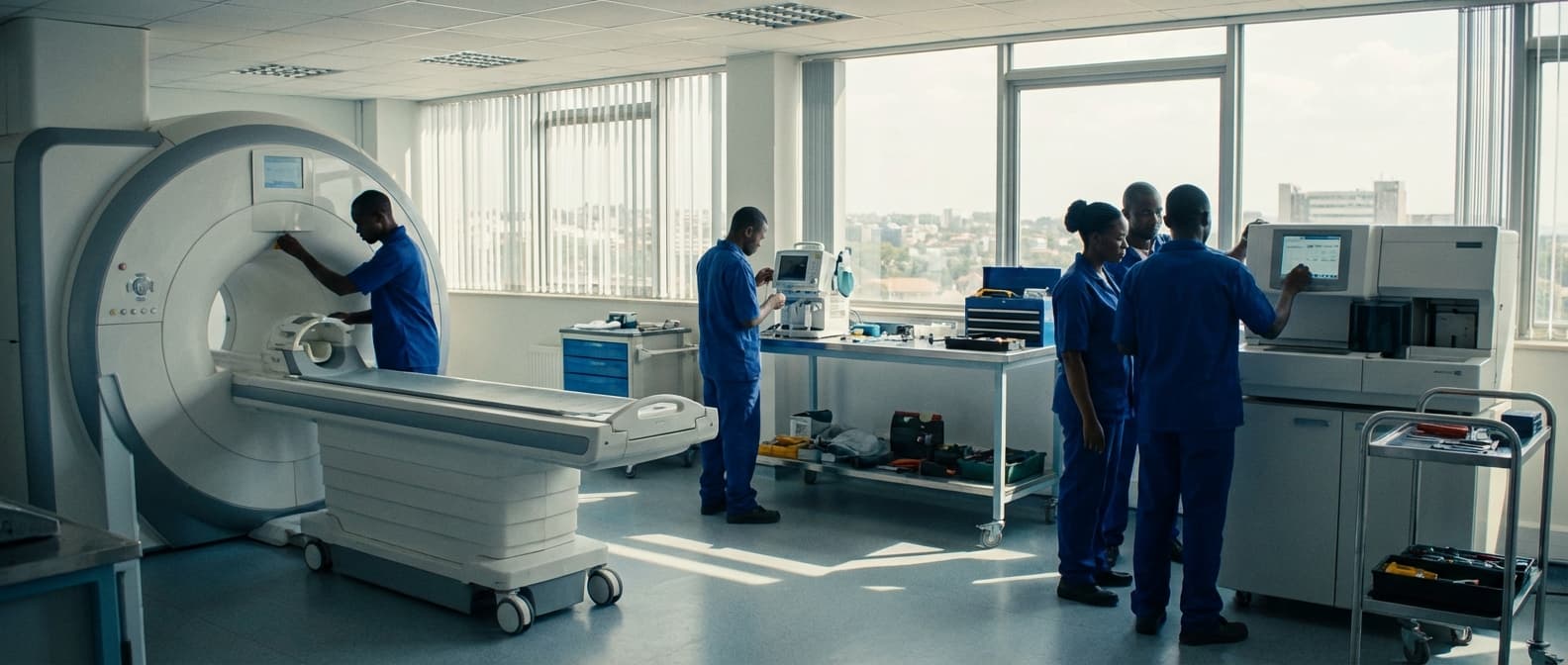
Preventive Maintenance Visit Service (On-Demand) in Uganda
Engineering Excellence & Technical Support
Preventive Maintenance Visit Service (On-Demand) High-standard technical execution following OEM protocols and local regulatory frameworks.
Rapid Response & Scheduling
Our on-demand service in Uganda ensures a qualified technician arrives within hours of your request. We offer flexible scheduling to minimize disruption to your operations, providing prompt and efficient preventive maintenance when you need it most.
Proactive Equipment Health Monitoring
Utilizing advanced diagnostic tools, our Ugandan technicians perform thorough inspections to identify potential issues before they cause downtime. We provide detailed reports on equipment condition, enabling informed decisions and maximizing asset lifespan.
Optimized Performance & Safety Assurance
Our preventive maintenance visits in Uganda are designed to ensure your equipment operates at peak efficiency, reducing energy consumption and operational costs. We adhere to stringent safety protocols, safeguarding your personnel and assets against preventable hazards.
What Is Preventive Maintenance Visit Service (On-demand) In Uganda?
Preventive Maintenance Visit Service (On-Demand) in Uganda refers to a proactive, scheduled inspection and servicing of equipment or systems that is performed at the request of the client, rather than on a fixed, recurring schedule. This service aims to identify and address potential issues before they lead to breakdowns, malfunctions, or reduced performance. Unlike scheduled maintenance which is pre-booked, on-demand preventive maintenance allows clients to initiate the service based on their operational needs, observed performance degradation, or a trigger event, ensuring critical assets are maintained efficiently and cost-effectively. This approach optimizes asset lifespan, minimizes unscheduled downtime, and enhances operational reliability.
| Who Needs Preventive Maintenance Visit Service (On-Demand)? | Typical Use Cases in Uganda | |||||
|---|---|---|---|---|---|---|
| Industries reliant on continuous operation: Manufacturing plants, food processing facilities, mining operations, and construction companies where unplanned downtime incurs significant financial losses. | Critical infrastructure providers: Telecommunication companies (for base stations, network equipment), energy utilities (for power generation and distribution assets), water treatment facilities. | Healthcare institutions: Hospitals and clinics (for medical equipment like imaging machines, life support systems) to ensure patient safety and service availability. | Logistics and transportation companies: Fleet operators (trucks, buses) for scheduled checks between major overhaul periods. | Agricultural enterprises: For key machinery like tractors, harvesters, irrigation systems during off-peak seasons or before critical planting/harvesting periods. | Commercial building management: For HVAC systems, elevators, and generators to ensure occupant comfort and safety. | Businesses with specialized or high-value equipment: Any entity operating equipment with a high cost of replacement or significant impact on revenue generation. |
| Post-seasonal performance checks: Inspecting agricultural machinery after a harvest or planting season before storage. | Pre-operational readiness for specific events: Servicing generators before an anticipated power outage period or ensuring critical machinery is ready for a new project phase. | Responding to minor performance anomalies: A slight increase in noise, vibration, or a minor drop in efficiency prompting a diagnostic visit before it escalates. | End-of-warranty inspections: Proactive checks to identify any issues before manufacturer warranties expire. | Compliance-driven maintenance: Ensuring equipment meets specific regulatory or safety standards. | Optimizing asset lifespan: Extending the operational life of expensive machinery through regular, targeted maintenance. | Contingency planning: Ensuring critical operational assets are in optimal condition to mitigate risks during periods of high demand or uncertainty. |
Key Components of Preventive Maintenance Visit Service (On-Demand):
- Pre-visit Consultation & Scope Definition: Initial discussion with the client to understand the specific equipment, its operational context, any observed anomalies, and to define the scope of the maintenance visit.
- On-Site Inspection & Diagnostics: Thorough visual inspection, functional testing, and diagnostic assessments of the equipment using specialized tools and techniques to identify wear, damage, or potential failure points.
- Lubrication & Adjustments: Application of appropriate lubricants, tightening of fasteners, and adjustment of components to ensure optimal operation and prevent friction-related wear.
- Cleaning & Debris Removal: Thorough cleaning of internal and external components to prevent overheating, contamination, and to facilitate effective inspections.
- Component Replacement (Minor): Replacement of readily available wear-and-tear parts, such as filters, seals, or belts, if identified as part of the preventive strategy.
- Performance Monitoring & Calibration: Verification of operational parameters against manufacturer specifications and recalibration where necessary to ensure accuracy and efficiency.
- Reporting & Recommendations: Detailed report of findings, including identified issues, performed actions, recommended corrective measures, and suggested timelines for further interventions.
- System Log Updates: Documentation of all maintenance activities in the client's or service provider's asset management system.
Who Needs Preventive Maintenance Visit Service (On-demand) In Uganda?
Preventive Maintenance (PM) visits, especially on-demand services, are crucial for ensuring the optimal performance, longevity, and reliability of equipment and infrastructure across various sectors in Uganda. This service helps minimize unexpected breakdowns, reduce costly emergency repairs, and maintain operational efficiency. Understanding who benefits most from these on-demand PM services allows businesses and organizations to strategically allocate resources and ensure their assets are consistently in top condition.
| Target Customer Type | Specific Departments / Roles | Reason for On-Demand PM Visit |
|---|---|---|
| Manufacturing Companies | Production Line Management, Maintenance Departments, Operations Management | Minimizing unplanned downtime on critical machinery (e.g., assembly lines, CNC machines, packaging equipment); ensuring product quality and consistency; extending equipment lifespan. |
| Healthcare Facilities (Hospitals, Clinics) | Biomedical Engineering Departments, Facilities Management, Administration | Ensuring the continuous availability and reliability of medical equipment (e.g., MRI machines, X-ray units, life support systems, sterilization equipment); adhering to health and safety regulations; preventing patient care disruptions. |
| Telecommunications Providers | Network Operations Centers (NOC), Field Operations, Technical Support | Maintaining the uptime of base stations, network switches, and data centers; preventing service interruptions for subscribers; ensuring signal strength and quality. |
| Energy and Utilities Companies | Operations and Maintenance (O&M) Departments, Power Plant Management, Grid Operations | Ensuring the reliable operation of power generation equipment (turbines, generators), transmission lines, and distribution networks; preventing blackouts and service disruptions; optimizing energy efficiency. |
| Agricultural Enterprises | Farm Management, Operations Managers, Equipment Supervisors | Ensuring the operational readiness of farm machinery (tractors, harvesters, irrigation systems) during planting and harvesting seasons; preventing crop loss due to equipment failure; maximizing yield. |
| Transportation and Logistics Firms | Fleet Management, Operations Management, Maintenance Supervisors | Keeping vehicles and equipment (trucks, buses, forklifts, cargo handling systems) operational; minimizing delivery delays; ensuring safety of passengers and goods; reducing operational costs through efficient maintenance. |
| Hospitality Industry (Hotels, Resorts) | Engineering Departments, Facilities Management, Operations Managers | Ensuring the smooth functioning of HVAC systems, elevators, kitchen equipment, water treatment plants, and backup generators; maintaining guest comfort and satisfaction; preventing service disruptions. |
| Financial Institutions (Banks, Data Centers) | IT Departments, Facilities Management, Security Operations | Maintaining the uptime of servers, cooling systems, power backup units (UPS), and security infrastructure; protecting critical data and ensuring continuous service for customers. |
| Government Agencies & Public Infrastructure | Public Works Departments, Transport Authorities, Utility Management | Ensuring the reliability of public transportation systems, water supply infrastructure, street lighting, and essential public services; preventing disruptions to public life and economic activity. |
| Small and Medium Enterprises (SMEs) | Owner-Operators, Operations Managers | Ensuring the continued operation of essential equipment in their business (e.g., retail POS systems, office equipment, specialized machinery); avoiding costly emergency repairs that could impact cash flow. |
Target Customers and Departments for On-Demand Preventive Maintenance Visits in Uganda
- Businesses with critical operational equipment that cannot afford downtime.
- Organizations operating in remote or challenging logistical environments where immediate technician access might be limited.
- Companies that experience seasonal peaks in demand, requiring assurance of equipment reliability during those periods.
- Sectors with stringent regulatory or safety requirements where equipment failure could have severe consequences.
- Businesses undergoing rapid expansion or managing a diverse range of machinery and systems.
Preventive Maintenance Visit Service (On-demand) Process In Uganda
This document outlines the workflow for an On-Demand Preventive Maintenance (PM) Visit Service in Uganda, detailing the process from initial customer inquiry to the successful completion and follow-up of the service. The aim is to ensure a streamlined, efficient, and customer-centric approach.
| Stage | Description | Key Activities | Responsible Party | Key Outputs/Deliverables |
|---|---|---|---|---|
| The process begins when a customer expresses interest in an on-demand preventive maintenance service for their equipment or facility in Uganda. |
| Customer, Service Provider (Customer Service/Sales) | Initial customer request, basic equipment/facility information |
| Based on the gathered information, a tailored quotation is prepared, and a suitable service appointment is scheduled. |
| Service Provider (Sales/Technical Team), Customer | Formal quotation, confirmed service appointment |
| A qualified technician is dispatched to the customer's location to perform the scheduled preventive maintenance. |
| Service Provider (Operations/Dispatch), Technician, Customer (site access/guidance) | On-site technician, completed maintenance tasks |
| Upon completion of the on-site work, a comprehensive report is generated and communicated to the customer. |
| Technician, Service Provider (Operations/Administration) | Completed PM checklist, detailed service report, customer confirmation of work |
| The service is invoiced to the customer, and payment is processed. |
| Service Provider (Finance/Accounts), Customer | Final invoice, proof of payment |
| The service provider seeks feedback to ensure customer satisfaction and plans for future maintenance. |
| Service Provider (Customer Service/Sales), Customer | Customer satisfaction feedback, future maintenance recommendations/agreements |
Key Stages of the On-Demand Preventive Maintenance Visit Service Workflow:
- Inquiry & Information Gathering
- Quotation & Scheduling
- Technician Dispatch & On-Site Execution
- Service Completion & Reporting
- Billing & Payment
- Customer Feedback & Follow-up
Preventive Maintenance Visit Service (On-demand) Cost In Uganda
This document outlines the typical costs associated with an on-demand preventive maintenance visit service for various assets in Uganda, considering prevalent pricing factors and providing estimated cost ranges in Ugandan Shillings (UGX). Preventive maintenance is crucial for prolonging the lifespan of assets, ensuring optimal performance, and avoiding costly breakdowns. The on-demand nature implies that these services are typically scheduled outside of regular, pre-planned maintenance contracts and may incur slightly higher rates due to immediate dispatch and availability.
Several factors influence the final cost of an on-demand preventive maintenance visit. These include the type and complexity of the asset being serviced, the technician's expertise and qualifications, the duration of the visit, the geographical location within Uganda (with urban centers potentially having higher rates), the urgency of the request, and the specific service provider's pricing structure. Additionally, the cost of any replacement parts required during the visit will be separate from the labor charges.
| Asset Category | Estimated On-Demand Preventive Maintenance Cost (UGX) | Notes |
|---|---|---|
| Small Household Appliances (e.g., Refrigerators, Washing Machines, Microwaves) | 100,000 - 300,000 | Includes basic inspection, cleaning, and minor adjustments. Major part replacements are extra. |
| Air Conditioners (Residential) | 150,000 - 400,000 | Covers cleaning of filters and coils, checking refrigerant levels, and system diagnostics. |
| Generators (Small to Medium Residential/Commercial) | 200,000 - 700,000 | Includes oil change, filter replacement, spark plug check, and general system inspection. |
| Plumbing Fixtures and Systems (e.g., Water Heaters, Pumps) | 120,000 - 350,000 | Focuses on leak detection, pressure checks, and component functionality. |
| Basic Office Equipment (e.g., Printers, Photocopiers) | 80,000 - 250,000 | Includes cleaning, calibration, and basic troubleshooting. |
| Commercial Kitchen Equipment (e.g., Ovens, Stoves - per unit) | 250,000 - 800,000 | More complex, requiring specialized technicians. Costs vary significantly by equipment type. |
| Industrial Machinery (e.g., Compressors, Pumps - smaller units) | 400,000 - 1,500,000+ | Requires skilled technicians and potentially longer visit durations. Prices can escalate rapidly for larger/more complex machinery. |
| HVAC Systems (Commercial Buildings - per zone/system) | 300,000 - 1,000,000+ | Involves detailed checks of multiple components, electrical systems, and airflow. |
Key Pricing Factors for On-Demand Preventive Maintenance in Uganda:
- Asset Type and Complexity: Servicing a simple appliance like a refrigerator will differ significantly in cost from maintaining a complex industrial machine or a sophisticated HVAC system.
- Technician's Skill Level: Highly specialized technicians with advanced certifications will command higher rates than general maintenance personnel.
- Duration of the Visit: The estimated time required for a thorough preventive check and any minor adjustments directly impacts the labor cost.
- Geographical Location: Service calls to remote areas might incur additional travel charges. Major cities like Kampala may also have slightly higher base rates.
- Urgency of the Request: Emergency or same-day service requests are often priced at a premium compared to scheduled appointments.
- Service Provider's Reputation and Overhead: Established companies with a strong reputation and higher operational costs may charge more.
- Scope of Work: The specific tasks included in the preventive maintenance checklist for the particular asset.
- Inclusion of Consumables/Minor Parts: While major parts are usually extra, some service packages might include basic consumables like filters or lubricants.
- Travel and Transportation Costs: The distance to the service location and the mode of transport used.
Affordable Preventive Maintenance Visit Service (On-demand) Options
Regular preventive maintenance is crucial for extending the lifespan of your equipment, preventing costly breakdowns, and ensuring optimal performance. Our affordable, on-demand preventive maintenance visit service offers flexible options designed to fit your budget and needs. We understand that unexpected expenses can be a concern, so we've developed value bundles and cost-saving strategies to make proactive care accessible and economical.
| Service Bundle | What's Included | Benefits | Cost-Saving Strategies | Starting Price (On-Demand) |
|---|---|---|---|---|
| Basic Tune-Up | Visual inspection, lubrication, filter check/replacement, basic cleaning. | Catch minor issues, maintain basic functionality. | Bundled pricing for standard checks, discounted parts on select items. | $120 |
| Standard Maintenance Package | All Basic Tune-Up services plus: diagnostic checks, minor adjustments, comprehensive cleaning, recommended part replacements (e.g., belts, seals). | Enhanced reliability, improved efficiency, prevention of common failures. | Slight discount on labor compared to individual visits, priority scheduling for bundled services, loyalty discounts for recurring customers. | $220 |
| Comprehensive Care Plan | All Standard Package services plus: in-depth diagnostics, performance testing, calibration, safety checks, detailed report of findings and recommendations, discounted rate on any immediate repair needs identified during the visit. | Maximized equipment lifespan, significant reduction in breakdown probability, optimized performance, proactive risk management. | Best value pricing, waived diagnostic fees for repairs initiated during the visit, exclusive access to seasonal maintenance promotions, extended warranty options on replaced parts. | $350 |
Why Choose Our Preventive Maintenance Service?
- Proactive Problem Solving: Identify and address minor issues before they escalate into major, expensive repairs.
- Extended Equipment Lifespan: Regular servicing keeps your assets in top condition, maximizing their operational life.
- Improved Efficiency & Performance: Ensure your equipment runs at its peak, reducing energy consumption and increasing productivity.
- Reduced Downtime: Minimize unexpected breakdowns that disrupt operations and lead to lost revenue.
- Peace of Mind: Know that your equipment is being cared for by experienced professionals.
Verified Providers In Uganda
In Uganda's burgeoning healthcare sector, identifying truly Verified Providers is paramount for ensuring quality and trustworthy medical services. Franance Health stands out as a leading example, embodying a commitment to excellence that sets them apart. This document outlines Franance Health's key credentials and explains why they represent the best choice for individuals and organizations seeking reliable healthcare solutions in Uganda.
| Credential/Attribute | Significance for Patients | Franance Health's Commitment |
|---|---|---|
| Regulatory Compliance | Ensures adherence to safety, quality, and ethical standards. | Proactive engagement with and exceeding requirements from the Uganda Ministry of Health and relevant accreditation bodies. |
| Experienced Medical Staff | Leads to accurate diagnoses, effective treatment plans, and better patient safety. | Rigorous selection, ongoing training, and continuous professional development for all medical personnel. |
| Modern Infrastructure | Facilitates precise diagnostics and advanced treatment options. | Consistent investment in cutting-edge medical technology and well-maintained facilities. |
| Holistic Service Portfolio | Convenient access to a wide spectrum of healthcare needs under one roof. | Development and expansion of diverse medical specialties and services to meet evolving patient demands. |
| Patient Rights and Privacy | Guarantees respectful, confidential, and informed medical care. | Implementation of robust patient consent protocols, privacy policies, and a culture of empathy. |
| Community Health Focus | Contributes to a healthier society and promotes preventive care. | Active participation in health awareness campaigns, outreach programs, and partnerships with local health organizations. |
Franance Health Credentials and Strengths
- Accreditation and Certifications: Franance Health adheres to stringent national and international healthcare standards. Their facilities and practices are regularly audited and certified by relevant regulatory bodies, guaranteeing compliance with best practices in patient care, safety, and operational efficiency.
- Highly Qualified Medical Professionals: The organization boasts a team of experienced and board-certified doctors, nurses, and allied health professionals. Continuous professional development and rigorous recruitment processes ensure that all staff possess the expertise and dedication necessary to provide superior medical services.
- State-of-the-Art Facilities and Technology: Franance Health invests in modern medical equipment and advanced diagnostic tools. This commitment to technology enables accurate diagnoses, effective treatments, and improved patient outcomes, placing them at the forefront of healthcare innovation in Uganda.
- Comprehensive Service Offerings: From primary care and specialized consultations to advanced surgical procedures and preventive health programs, Franance Health offers a holistic range of medical services. This comprehensive approach caters to diverse healthcare needs, making them a one-stop solution for many patients.
- Patient-Centric Approach and Ethical Practices: At the core of Franance Health's philosophy is a deep commitment to patient well-being. They prioritize compassionate care, transparent communication, and ethical medical practices, ensuring that every patient receives personalized attention and respects their dignity and rights.
- Community Engagement and Public Health Initiatives: Franance Health actively participates in and sponsors community health programs, contributing to the overall health and wellness of Ugandan society. Their dedication extends beyond individual patient care to broader public health improvements.
Scope Of Work For Preventive Maintenance Visit Service (On-demand)
This Scope of Work (SOW) outlines the requirements for an On-Demand Preventive Maintenance (PM) Visit Service. The service aims to ensure the optimal performance, reliability, and longevity of [Specify System/Equipment Type, e.g., HVAC Systems, Industrial Machinery, IT Infrastructure]. This SOW details the technical deliverables and standard specifications for each PM visit.
| Section | Description | Technical Deliverables | Standard Specifications / Requirements |
|---|---|---|---|
| Coordination and preparation for the on-demand PM visit. | Confirmation of service window, access requirements, and any special instructions. | Service request acknowledgement within [e.g., 2 business hours]. Scheduled visit within [e.g., 24-48 business hours] of confirmation, unless otherwise agreed. Clear communication of technician arrival time. |
| Thorough visual and functional inspection of the [System/Equipment Type]. | Detailed inspection checklist report, including photographic evidence of any anomalies. | Inspection performed by certified and experienced technicians. Use of standardized inspection checklists relevant to [System/Equipment Type]. All identified issues documented with severity levels (e.g., Minor, Moderate, Critical). |
| Removal of dust, debris, and other contaminants. Application of appropriate lubricants. | Cleanliness report. Lubrication schedule adherence. | Cleaning methods compliant with manufacturer guidelines. Use of approved cleaning agents and lubricants. Lubrication points and frequency as per manufacturer's recommendations or industry best practices. |
| Calibration of controls, adjustment of moving parts, and tightening of loose fasteners. | Record of adjustments made and parameters set. Torque values recorded for critical fasteners. | Adjustments made to bring the system within manufacturer-specified operating parameters. Tightening of all accessible fasteners to the recommended torque specifications using calibrated tools. |
| Testing of critical components for proper operation and performance. | Test results documented, including any performance deviations from baseline. | Testing of electrical, mechanical, and control components as per applicable standards. Comparison of test results against manufacturer specifications or established performance benchmarks. Verification of safety features. |
| Replacement of minor worn or damaged parts during the visit, if pre-approved. | List of replaced parts and associated costs. | Use of genuine or OEM-equivalent replacement parts. Prior written authorization required for any part replacement exceeding [e.g., $100] or if the part is not a standard consumable. Technicians will provide a quote for approval before proceeding. |
| Collection of operational data to establish a performance baseline. | Performance baseline report including key metrics (e.g., temperature, pressure, current draw, vibration levels). | Data collection using calibrated measuring instruments. Baseline data used for future comparative analysis and predictive maintenance. |
| Comprehensive report detailing all activities, findings, and recommendations. | Final PM report, including executive summary, detailed findings, recommended actions (short-term and long-term), and cost estimates for any required repairs or upgrades. Report submitted within [e.g., 2 business days] of visit completion. | Report format to be standardized. Recommendations to prioritize safety, operational efficiency, and cost-effectiveness. Clear justification for all recommended actions. |
| Ensuring technicians possess the necessary skills and adhere to safety protocols. | Technician qualifications and certifications documented. Safety incident reports (if any). | Technicians to hold relevant certifications for [System/Equipment Type]. Adherence to all site-specific safety rules and regulations, as well as general occupational safety standards (e.g., OSHA). PPE to be worn at all times. |
| Maintaining accurate and organized records of all PM activities. | Digital copies of all inspection checklists, test results, reports, and invoices. | Records to be maintained for a minimum of [e.g., 5 years]. Easy retrieval and access to historical maintenance data. |
Key Objectives of Preventive Maintenance
- Minimize unscheduled downtime and operational disruptions.
- Extend the lifespan of [System/Equipment Type].
- Identify and address potential issues before they escalate into major failures.
- Ensure compliance with safety regulations and manufacturer recommendations.
- Optimize energy efficiency and operational performance.
- Reduce long-term maintenance and repair costs.
Service Level Agreement For Preventive Maintenance Visit Service (On-demand)
This Service Level Agreement (SLA) outlines the guaranteed response times and uptime for On-Demand Preventive Maintenance Visit Services. This SLA is supplementary to the main Service Agreement between [Your Company Name] and [Client Company Name].
| Service Level | Response Time Target (Business Hours) | Response Time Target (After-Hours) | Uptime Guarantee (Applicable Period) |
|---|---|---|---|
| Standard Preventive Maintenance Visit | 4 Business Hours | 8 Business Hours | 99.5% |
| Critical Equipment Preventive Maintenance Visit | 2 Business Hours | 4 Business Hours | 99.9% |
Key Service Definitions
- On-Demand Preventive Maintenance Visit Service: A scheduled or unscheduled visit by a qualified technician to perform preventive maintenance tasks on client-owned equipment as defined in the Service Agreement or a separate work order.
- Response Time: The maximum allowable time from the moment a service request is logged and confirmed by [Your Company Name] to the point where a technician is dispatched or begins remote diagnostics (if applicable).
- Uptime Guarantee: The percentage of time that the client's critical equipment is available for use, considering the impact of scheduled preventive maintenance and potential downtime due to necessary repairs following a visit.
- Business Hours: [Specify your standard business hours, e.g., Monday to Friday, 9:00 AM to 5:00 PM local time, excluding public holidays].
- After-Hours: Any time outside of Business Hours.
- Critical Equipment: Equipment designated as critical for the client's core operations, as identified in the Service Agreement.
Frequently Asked Questions

Ready when you are
Let's scope your Preventive Maintenance Visit Service (On-Demand) in Uganda project in Uganda.

Scaling healthcare logistics and technical systems across the entire continent.