
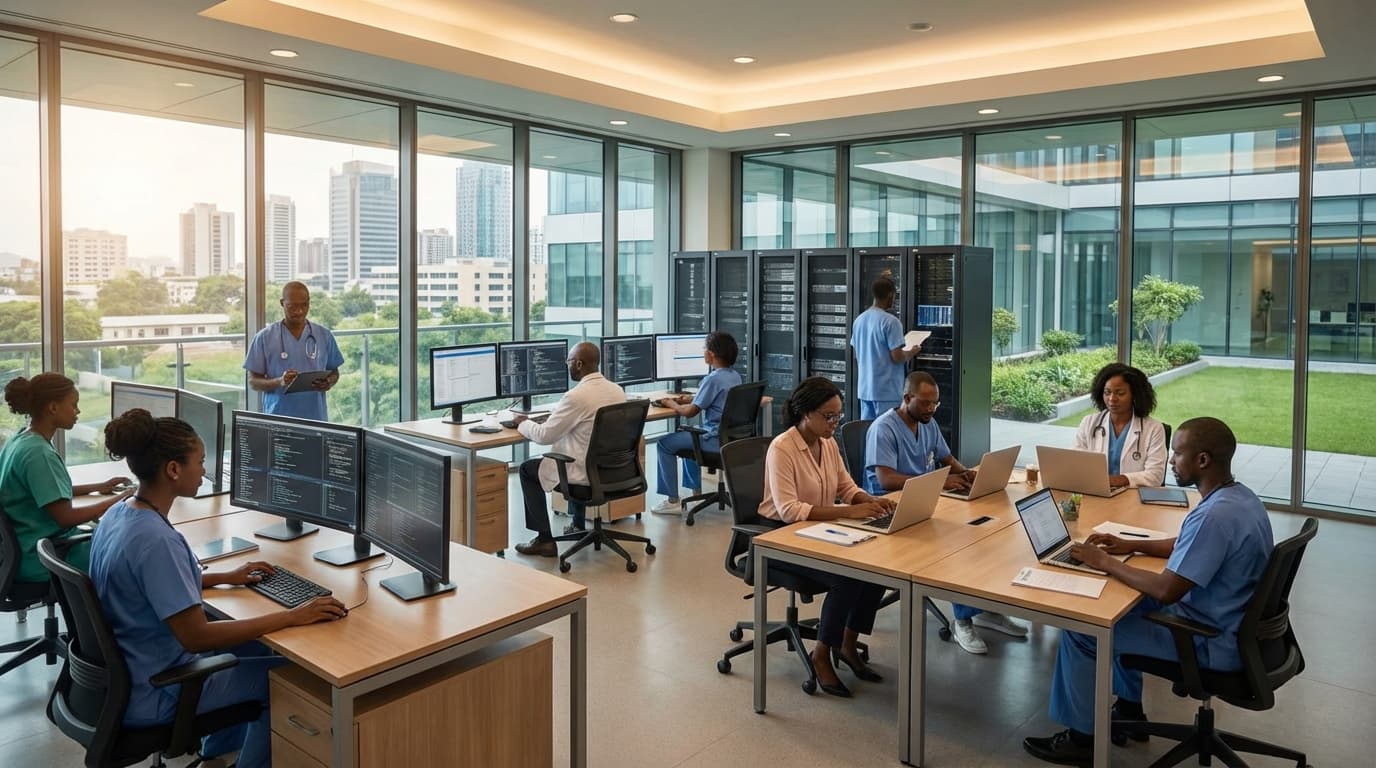
Radiology Reader & Reporting Support in Uganda
Engineering Excellence & Technical Support
Remote radiology reading and reporting services High-standard technical execution following OEM protocols and local regulatory frameworks.
Streamlined Reporting Workflow
Our platform digitizes and optimizes the radiology reporting process, reducing manual data entry and minimizing transcription errors. This allows Ugandan radiologists to generate high-quality reports faster, improving turnaround times and patient care.
AI-Powered Image Analysis Support
Leveraging cutting-edge AI algorithms, our solution assists in the detection and characterization of potential abnormalities in radiological images. This empowers Ugandan radiologists with an additional layer of confidence and efficiency in their diagnostic assessments.
Secure Remote Access & Collaboration
Enables secure, remote access to imaging studies and reporting tools for radiologists across Uganda. This facilitates seamless collaboration among specialists, supports remote consultation for underserved areas, and enhances overall radiology service delivery.
What Is Radiology Reader & Reporting Support In Uganda?
Radiology Reader & Reporting Support in Uganda refers to the provision of specialized services that assist radiologists and healthcare facilities in interpreting medical images and generating comprehensive diagnostic reports. This service leverages a combination of advanced technology, often including Artificial Intelligence (AI) algorithms, and human expertise to enhance the accuracy, efficiency, and accessibility of radiological diagnoses within the Ugandan healthcare landscape. It addresses the challenges posed by a potential shortage of specialized radiologists, limited access to advanced diagnostic equipment in remote areas, and the growing demand for high-quality medical imaging services. The core function is to augment the capabilities of existing radiology departments, facilitate timely patient care, and contribute to improved health outcomes.
| Who Needs Radiology Reader & Reporting Support? | Typical Use Cases | ||||||
|---|---|---|---|---|---|---|---|
| Hospitals & Clinics: Particularly those in urban centers with high patient volumes but potentially strained radiology departments. | Rural & Remote Healthcare Facilities: Facilities lacking on-site specialist radiologists or advanced imaging interpretation capabilities. | Private Diagnostic Centers: Seeking to expand their service offerings, improve turnaround times, and enhance diagnostic accuracy. | Public Health Programs: For screening initiatives (e.g., tuberculosis detection via chest X-rays) and population health management. | Medical Schools & Training Institutions: As a tool for resident training and continuous professional development. | Emergency Departments: Requiring rapid interpretation of critical imaging studies (e.g., trauma, stroke). | Specialty Clinics (e.g., Oncology, Cardiology): Needing specialized interpretation of complex imaging findings. | Remote Teleradiology Hubs: Serving as a central point for image interpretation for multiple originating facilities. |
| Tuberculosis (TB) Screening: AI-assisted interpretation of chest X-rays to identify potential TB cases in high-prevalence areas. | Stroke Detection: Rapid analysis of CT scans for the presence of intracranial hemorrhage or ischemia, facilitating timely intervention. | Fracture Detection: AI algorithms aiding in the identification of bone fractures on X-rays, especially in busy emergency settings. | Cancer Screening & Diagnosis: Supporting the interpretation of mammograms, CT scans for lung nodules, and MRI for prostate or breast cancer. | Post-Operative Imaging: Evaluating surgical outcomes and detecting complications. | Chronic Disease Management: Monitoring disease progression through serial imaging studies (e.g., liver fibrosis on ultrasound, emphysema on CT). | Referral Pathways: Facilitating timely consultations and second opinions for complex or ambiguous cases. | Mass Screening Events: Enabling efficient interpretation of large volumes of images during public health campaigns. |
Key Components of Radiology Reader & Reporting Support
- Image Interpretation: AI-powered tools and/or remote radiologist consultations for analyzing various imaging modalities (X-ray, CT, MRI, Ultrasound).
- Report Generation: Structured and standardized report creation, often utilizing templates and AI-assisted phrasing to ensure clarity and completeness.
- Quality Assurance: Mechanisms for peer review and validation of interpretations and reports to maintain diagnostic accuracy.
- Workflow Optimization: Integration with existing Picture Archiving and Communication Systems (PACS) and Electronic Health Records (EHRs) to streamline the imaging process.
- Remote Access & Teleradiology: Enabling image transmission and interpretation from geographically dispersed locations.
- Training & Education: Providing resources and support to local healthcare professionals involved in radiology.
Who Needs Radiology Reader & Reporting Support In Uganda?
Radiology Reader & Reporting Support services are crucial for enhancing diagnostic accuracy, improving patient care, and optimizing the workflow of healthcare facilities in Uganda. These services leverage expert radiologists, often remotely, to interpret medical images and generate comprehensive reports. This is particularly beneficial in areas with a shortage of specialized radiologists, overburdened local departments, or for complex cases requiring a second opinion.
| Customer Type | Key Departments Benefiting | Specific Needs Addressed |
|---|---|---|
| Public Hospitals (e.g., Mulago National Referral Hospital, Regional Hospitals) | Radiology Department, Emergency Department, Intensive Care Unit (ICU), Surgery, Internal Medicine | Reducing reporting backlog, providing expert interpretation for complex cases, covering for staff shortages, access to subspecialty reads (e.g., neuroimaging, pediatric radiology). |
| Private Hospitals (e.g., Kampala Hospital, Nakasero Hospital) | Radiology Department, Cardiology, Neurology, Oncology, Orthopedics | Enhancing diagnostic turnaround times, offering subspecialty expertise not available in-house, providing a second opinion for critical cases, supporting growing patient volumes. |
| Specialized Clinics (e.g., Cardiac Clinics, Neurological Centers) | Radiology Unit (if present), Cardiology, Neurology | Specialized interpretation of cardiac MRI/CT, neuroimaging (MRI/CT brain), interventional radiology procedures. |
| Diagnostic Centers (e.g., Mall diagnostic centers) | Radiology Department | High-volume interpretation of X-rays, ultrasounds, CTs, and MRIs, ensuring timely reporting for outpatient and referred patients. |
| NGOs & Global Health Programs (e.g., Partners In Health, MSF) | Radiology Services in remote or underserved clinics | Providing essential radiology interpretation where local expertise is scarce, supporting public health screening programs (e.g., TB detection), facilitating remote diagnosis for community health workers. |
| Mobile Medical Units | Onboard X-ray/Ultrasound Technicians | Enabling remote interpretation of images acquired in the field, allowing for immediate diagnosis and treatment decisions without the need for a radiologist on-site. |
| Medical Training Institutions | Radiology Training Departments, Undergraduate and Postgraduate Medical Students | Educational tool for learning to interpret medical images, access to a diverse range of case studies, mentorship for aspiring radiologists. |
Target Customers and Departments for Radiology Reader & Reporting Support in Uganda:
- Hospitals (Public and Private): Both large referral hospitals and smaller district hospitals can benefit from increased reading capacity and access to subspecialty expertise.
- Specialized Clinics and Diagnostic Centers: Facilities focusing on specific areas like cardiology, neurology, or oncology may require specialized radiology interpretations.
- Non-Governmental Organizations (NGOs) and Global Health Initiatives: Organizations providing healthcare services in underserved regions can utilize remote reading to extend their reach and diagnostic capabilities.
- Mobile and Outreach Medical Services: Field operations can send images for remote interpretation, enabling timely diagnoses in remote locations.
- Medical Training Institutions: These can leverage the service for educational purposes, allowing trainees to review expert interpretations and case studies.
Radiology Reader & Reporting Support Process In Uganda
The Radiology Reader & Reporting Support Process in Uganda outlines the systematic steps involved from receiving an imaging request to the final delivery of a radiology report. This process is crucial for accurate diagnosis and effective patient management within the Ugandan healthcare system.
| Stage | Key Actor(s) | Input | Output | Considerations in Uganda |
|---|---|---|---|---|
| Inquiry/Request Generation | Clinician | Patient Clinical Assessment, History | Identified need for radiology exam | Availability of trained clinicians, clarity of clinical indications. |
| Request Submission | Clinician | Patient Data, Clinical History, Imaging Modality | Formal Request Form/EHR Entry | Challenges with paper-based systems, limited EHR penetration, language barriers in forms. |
| Scheduling and Patient Preparation | Radiology Admin/Technologist | Radiology Request, Patient Availability | Scheduled Appointment, Prepared Patient | Long waiting lists, limited equipment availability, patient awareness of preparations, transport challenges. |
| Image Acquisition | Radiographer/Technologist | Patient, Imaging Modality, Protocol | Radiological Images | Equipment maintenance, power supply reliability, availability of skilled technologists, consumables (contrast agents). |
| Image Archiving and Transfer | Radiology IT/Technologist | Acquired Images | Archived Images in PACS/Storage | Limited PACS implementation, reliance on manual methods, data security concerns, bandwidth limitations. |
| Image Interpretation/Reading | Radiologist | Radiological Images, Clinical History | Radiological Findings and Impression | Severe radiologist shortage, heavy workload, need for subspecialists, access to continuing medical education. |
| Report Generation | Radiologist (or trainee) | Radiological Findings, Clinical Information | Draft Radiology Report | Typing skills, dictation equipment availability, standardized reporting templates. |
| Report Review and Approval | Senior Radiologist | Draft Report, Images | Approved Radiology Report | Dependent on availability of senior radiologists for supervision and quality assurance. |
| Report Dissemination | Radiology Admin/IT | Approved Report | Delivered Report to Clinician | Reliability of communication channels (fax, email, EHR), potential for delays, ensuring report reaches the correct clinician. |
| Clinical Integration and Patient Management | Clinician | Radiology Report, Patient Data | Informed Clinical Decision Making | Clinician's understanding of radiology reports, prompt action based on findings, multidisciplinary team collaboration. |
Workflow Stages
- {"title":"1. Inquiry/Request Generation","description":"A clinician (doctor, nurse practitioner) identifies the need for a radiological examination for a patient. This involves a clinical assessment, patient history, and a clear indication for the imaging modality (e.g., X-ray, CT, Ultrasound, MRI)."}
- {"title":"2. Request Submission","description":"The clinician formally requests the imaging study. This is typically done through a written requisition form or an electronic health record (EHR) system where available. The request must include patient demographics, clinical history, suspected diagnosis, and the specific imaging modality and views required."}
- {"title":"3. Scheduling and Patient Preparation","description":"Upon receiving the request, the radiology department schedules the examination. Patients are informed about the appointment time, date, and any necessary preparations (e.g., fasting, contrast agent instructions, removing metal objects). For urgent cases, this stage is expedited."}
- {"title":"4. Image Acquisition","description":"The patient arrives at the radiology department. A radiographer or technologist performs the imaging procedure using the specified modality. Quality control measures are implemented to ensure optimal image acquisition."}
- {"title":"5. Image Archiving and Transfer","description":"Acquired images are digitally archived in a Picture Archiving and Communication System (PACS) or, in less advanced settings, on physical media. The images are then made accessible to the reporting radiologist."}
- {"title":"6. Image Interpretation/Reading","description":"A qualified radiologist reviews the acquired images. They analyze the findings in conjunction with the clinical information provided on the requisition form. This is a critical step requiring expertise and experience."}
- {"title":"7. Report Generation","description":"The radiologist dictates or types a comprehensive radiology report. This report includes findings, impressions, and recommendations. In some cases, a radiology trainee or fellow may draft the report under the supervision of a senior radiologist."}
- {"title":"8. Report Review and Approval","description":"For training institutions or in cases of complex findings, the report may be reviewed and approved by a senior or consultant radiologist to ensure accuracy and completeness."}
- {"title":"9. Report Dissemination","description":"The finalized report is communicated to the requesting clinician. This can be through electronic delivery via PACS/EHR, fax, or a physical copy. Urgent reports are prioritized."}
- {"title":"10. Clinical Integration and Patient Management","description":"The requesting clinician receives and interprets the radiology report. This information is integrated into the patient's overall management plan, guiding further treatment, investigations, or follow-up."}
Radiology Reader & Reporting Support Cost In Uganda
Radiology reader and reporting support in Uganda is a crucial service for healthcare providers, especially in areas with a shortage of specialized radiologists. The cost of these services is influenced by several factors, leading to a range of pricing. These factors include the complexity of the imaging study (e.g., X-ray, CT scan, MRI), the specific body part being imaged, the urgency of the report, the experience and qualifications of the reporting radiologist, and the volume of work. Geographic location within Uganda can also play a minor role, with services in urban centers potentially having slightly different cost structures than those in more remote areas. The rise of teleradiology has made these services more accessible and often more cost-effective. Pricing is typically quoted in Uganda Shillings (UGX).
| Service Type | Typical Price Range (UGX) | Notes |
|---|---|---|
| Standard X-ray Interpretation (per study) | 20,000 - 60,000 | Basic interpretation, often for common findings. |
| CT Scan Interpretation (per study) | 70,000 - 250,000 | Varies significantly based on scan complexity (e.g., head, chest, abdomen). |
| MRI Scan Interpretation (per study) | 100,000 - 400,000+ | Generally the most expensive due to scan complexity and equipment. |
| Ultrasound Interpretation (per study) | 30,000 - 100,000 | Dependent on the specific ultrasound examination. |
| Urgent Report Fee | Add 20% - 50% | For reports required within a few hours. |
| Subscription/Volume-Based Pricing | Negotiable | Teleradiology providers often offer discounted rates for high-volume clients. |
| Specialized Reporting (e.g., Neuro, MSK) | Slightly Higher | May incur a premium due to sub-specialist expertise. |
Key Pricing Factors for Radiology Reading & Reporting Support in Uganda
- Complexity of the imaging modality (X-ray, CT, MRI, Ultrasound)
- Anatomical region examined
- Report turnaround time (standard vs. urgent)
- Radiologist's expertise and sub-specialization
- Volume of studies/reports
- Service provider (in-house vs. external teleradiology provider)
- Ancillary services (e.g., image storage, PACS integration)
Affordable Radiology Reader & Reporting Support Options
In today's healthcare landscape, efficiently managing radiology workflows is paramount. Many practices and hospitals are seeking cost-effective solutions for radiology reading and reporting. This guide explores affordable options, focusing on value bundles and strategic cost-saving measures to optimize your radiology services without compromising quality.
| Value Bundle Type | Description | Cost-Saving Strategy | Potential Benefits |
|---|---|---|---|
| Comprehensive Teleradiology Package | Includes 24/7 coverage, subspecialty reads, and preliminary/final reports. | Eliminates need for full-time in-house radiologists, reduces recruitment/retention costs, and provides access to specialized expertise. | Improved turnaround times, enhanced diagnostic accuracy through subspecialty reads, extended service hours, and significant overhead reduction. |
| AI-Assisted Workflow Bundle | Combines AI software for anomaly detection, preliminary reporting, and integrated PACS viewer. | Reduces radiologist fatigue, increases reading efficiency, and allows for higher throughput of studies. | Faster report turnaround, reduced diagnostic errors, enhanced radiologist productivity, and potential for lower reading fees per study. |
| Hybrid Reading Service | Combines in-house reads for routine cases with teleradiology for subspecialty or after-hours coverage. | Optimizes in-house resources for common cases while accessing external expertise when needed, controlling costs based on actual demand. | Cost-effective utilization of in-house staff, access to subspecialists without full-time hiring, and flexible coverage options. |
| Reporting Outsourcing & Template Optimization | Includes outsourced transcription, structured reporting template development, and AI-driven report generation. | Reduces administrative burden on radiologists, standardizes report quality, and minimizes transcription costs. | Faster reporting, improved report consistency and completeness, reduced administrative overhead, and higher radiologist satisfaction. |
Key Considerations for Affordable Radiology Support
- Remote Reading Services (Teleradiology): Leverage qualified radiologists working remotely. This significantly reduces overhead associated with in-house staff and infrastructure.
- AI-Powered Diagnostic Tools: Integrate artificial intelligence to assist radiologists. AI can flag critical findings, automate measurements, and improve turnaround times, enhancing efficiency and potentially reducing the need for additional human readers for routine tasks.
- Outsourcing Non-Core Tasks: Consider outsourcing tasks like preliminary report generation, image archival, or billing to specialized providers. This frees up your core radiology team to focus on interpretation and diagnosis.
- Flexible Staffing Models: Explore options like per-dictation pricing or on-demand reading services, which can be more cost-effective than full-time salaries for fluctuating workloads.
- Software Standardization and Integration: Opt for integrated PACS and RIS solutions that streamline workflows and reduce the need for multiple disparate systems, minimizing IT costs and training.
- Training and Skill Development: Invest in training your existing staff to handle a broader range of studies or to become proficient with new technologies, increasing internal capacity and reducing external reliance.
Verified Providers In Uganda
Finding verified healthcare providers in Uganda is crucial for ensuring quality and trustworthy medical care. Franance Health stands out as a leading platform that meticulously vets its network of healthcare professionals, offering peace of mind to patients seeking reliable services. Their rigorous credentialing process goes beyond basic licensing, focusing on a holistic evaluation of each provider's expertise, ethical standing, and patient-centric approach. This commitment to verification makes Franance Health the best choice for individuals and families prioritizing their health and well-being.
| Credential Type | Franance Health Verification | Importance for Patients |
|---|---|---|
| Medical License | Verified against Uganda National Health Practitioners Council (UHPC) records | Ensures the provider is legally qualified to practice medicine. |
| Professional Certifications | Confirmed with relevant professional bodies and institutions | Validates specialized training and expertise in specific medical fields. |
| Educational Background | Cross-referenced with accredited medical schools and universities | Confirms the foundational knowledge and training of the healthcare professional. |
| Work Experience & Reputation | Reference checks and professional reviews compiled | Provides insight into the provider's practical experience and standing within the medical community. |
| Ethical Conduct | Background checks and adherence to a code of ethics | Guarantees that the provider operates with integrity and prioritizes patient welfare. |
Why Franance Health is Your Best Choice for Verified Providers in Uganda:
- Rigorous Vetting Process: Franance Health employs a multi-stage verification system, including checking medical licenses, professional certifications, educational background, and peer reviews.
- Focus on Quality and Patient Safety: Their primary objective is to connect patients with providers who demonstrate a commitment to the highest standards of medical care and patient safety.
- Comprehensive Provider Network: Franance Health offers access to a diverse range of specialists and general practitioners across various medical disciplines.
- Transparency and Trust: By clearly displaying verified credentials, Franance Health builds trust and empowers patients to make informed decisions about their healthcare.
- Enhanced Patient Experience: The platform simplifies the process of finding and booking appointments with trusted healthcare professionals, improving the overall patient journey.
Scope Of Work For Radiology Reader & Reporting Support
This Scope of Work (SOW) outlines the requirements for Radiology Reader & Reporting Support services. The objective is to provide qualified radiologists to interpret medical images and generate comprehensive reports, ensuring timely and accurate diagnostic information for patient care. This SOW details the technical deliverables and standard specifications for these services.
| Technical Deliverable | Standard Specification | Description |
|---|---|---|
| Radiology Reports | HL7 v2.x / FHIR | Reports generated in a standardized format compatible with the Hospital Information System (HIS) and Electronic Health Record (EHR). |
| Image Access and Viewing | DICOM standards | Ability to access, view, and manipulate images according to Digital Imaging and Communications in Medicine (DICOM) standards. |
| Reporting Software Integration | Vendor-neutral / HL7-compliant | Seamless integration with existing or provided Computer-Aided Detection (CAD) and radiology reporting software. |
| Data Security and Privacy | HIPAA / GDPR compliant | Adherence to all relevant data security and patient privacy regulations, including encryption and access controls. |
| Audit Trails | Immutable logging | Maintenance of comprehensive and immutable audit trails for all image access, interpretation, and reporting activities. |
| Performance Metrics | Defined KPIs (e.g., TAT, accuracy rate) | Regular reporting on key performance indicators, including turnaround times for different study types and interpretation accuracy. |
| System Compatibility | Cross-platform compatible | Reporting tools and systems must be compatible with standard operating systems and web browsers used by the client. |
| Data Archiving and Retrieval | PACS/RIS integration | Support for data archiving and retrieval processes through integration with the Picture Archiving and Communication System (PACS) and Radiology Information System (RIS). |
Key Services and Deliverables
- Image Interpretation: Reading and analyzing various medical imaging modalities (e.g., X-ray, CT, MRI, Ultrasound, Nuclear Medicine).
- Report Generation: Producing clear, concise, and clinically relevant radiology reports.
- Quality Assurance: Ensuring reports meet established quality standards and departmental protocols.
- Turnaround Time (TAT) Compliance: Adhering to defined TAT for routine, urgent, and STAT interpretations.
- Communication: Facilitating communication with referring physicians for critical findings or clarification.
- Data Management: Ensuring accurate and secure storage and retrieval of images and reports within the PACS/RIS.
Service Level Agreement For Radiology Reader & Reporting Support
This Service Level Agreement (SLA) outlines the performance standards and guarantees for the Radiology Reader & Reporting Support service provided by [Provider Name] to [Client Name]. This agreement covers response times for critical requests and uptime guarantees for the reporting platform.
| Service Level | Description | Target Response Time | Guaranteed Uptime |
|---|---|---|---|
| Critical Support | Immediate assistance for system outages, critical errors impacting patient care, or urgent report amendments. | Within 15 minutes | 99.9% (for the Reporting Platform) |
| Standard Support | Assistance for non-urgent inquiries, minor system issues, or standard report generation requests. | Within 2 business hours | 99.5% (for the Reporting Platform) |
| System Availability | The overall accessibility and functionality of the radiology reporting platform. | N/A | 99.9% (measured monthly) |
Definitions
- Critical Request: An urgent request requiring immediate attention to prevent patient care delays or significant operational disruption. This includes system outages impacting reporting access, critical system errors preventing report generation, or requests for urgent report amendments flagged by a clinician.
- Standard Request: A non-urgent request for support, typically related to routine inquiries, minor system issues, or standard report generation. These requests do not immediately impact patient care.
- Reporting Platform Uptime: The percentage of time the radiology reporting system is fully operational and accessible to authorized users.
- Response Time: The maximum time allowed for the support team to acknowledge and begin working on a reported issue or request.
- Resolution Time: The maximum time allowed to permanently fix an issue or fulfill a request. This may vary based on the complexity of the issue.
Frequently Asked Questions

Ready when you are
Let's scope your Radiology Reader & Reporting Support in Uganda project in Uganda.

Scaling healthcare logistics and technical systems across the entire continent.