
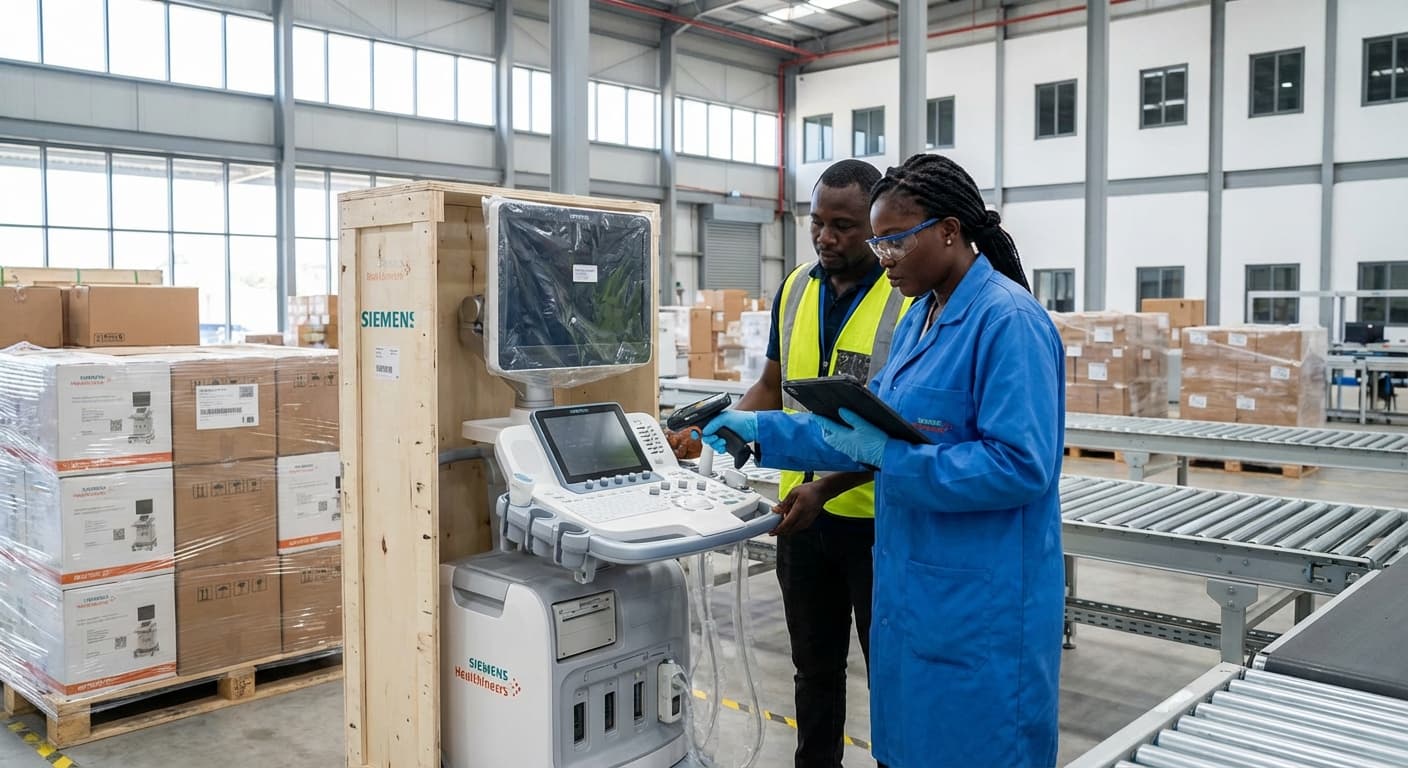
Warehouse Receiving Inspection Service (Medical Equipment) in Uganda
Engineering Excellence & Technical Support
Warehouse Receiving Inspection Service (Medical Equipment) High-standard technical execution following OEM protocols and local regulatory frameworks.
Precision Equipment Verification
Our trained technicians meticulously verify the serial numbers, model numbers, and configurations of all incoming medical equipment against purchase orders and manufacturer specifications, ensuring absolute accuracy and compliance.
Damage & Defect Assessment
We conduct thorough visual inspections and functional checks for any signs of transit damage, defects, or missing components, documenting all findings with photographic evidence to facilitate prompt resolution with suppliers.
Regulatory Compliance Assurance
Our inspection process guarantees adherence to Ugandan Ministry of Health regulations and relevant international standards for medical equipment, providing comprehensive documentation to support import licenses and audit readiness.
What Is Warehouse Receiving Inspection Service (Medical Equipment) In Uganda?
Warehouse Receiving Inspection Service (Medical Equipment) in Uganda refers to a specialized quality assurance process conducted upon the arrival of medical equipment into a designated warehouse facility. This service meticulously verifies that received medical equipment conforms to predefined specifications, regulatory requirements, and contractual agreements before its acceptance into inventory and subsequent distribution. The primary objective is to mitigate risks associated with counterfeit, damaged, substandard, or incorrect medical devices entering the Ugandan healthcare supply chain. This proactive measure safeguards patient safety, ensures operational efficiency, and upholds the integrity of medical device procurement and deployment.
| Who Needs This Service? | Typical Use Cases in Uganda |
|---|---|
| Government Health Agencies & Ministries: (e.g., Ministry of Health, National Medical Stores - NMS) Responsible for procuring and distributing medical equipment to public healthcare facilities nationwide. They require assurance of the quality and authenticity of acquired devices. | Non-Governmental Organizations (NGOs) & Humanitarian Organizations: Involved in healthcare provision and medical aid, often importing specialized medical equipment for specific projects or regions. Verification ensures efficient resource utilization and patient safety. |
| Private Healthcare Providers & Hospitals: Purchasing medical equipment for their facilities. Receiving inspection services help them avoid acquiring faulty or counterfeit items that could compromise patient care and lead to financial losses. | Medical Equipment Suppliers & Distributors: Companies that import and distribute medical equipment within Uganda. They may utilize this service to ensure their own incoming inventory meets quality standards before onward sale, bolstering their reputation and contractual obligations. |
| International Donors & Funding Agencies: Providing medical equipment as part of aid programs. They often mandate independent inspection services to ensure accountability, transparency, and the effective use of donated resources. | Manufacturers & Their Local Representatives: Establishing quality control at the point of receipt to ensure their products are handled and stored correctly upon arrival in the country, and to identify any transit-related damage or discrepancies. |
Key Components of Warehouse Receiving Inspection Service for Medical Equipment:
- Documentation Verification: Cross-referencing received shipments against purchase orders, invoices, packing lists, certificates of origin, and manufacturer's declarations. This includes verifying lot numbers, serial numbers, expiration dates, and quantities against order details.
- Physical Inspection: Conducting visual assessments for external damage (e.g., dents, scratches, punctures), packaging integrity, and proper labeling. This also involves confirming the presence of all accessories, user manuals, and essential components as per the product specification.
- Identity and Authentication: Verifying the authenticity of the medical equipment through unique identifiers (serial numbers, batch codes), holographic seals, and comparing product markings against known authentic samples or manufacturer databases. This is critical in combating counterfeit medical devices.
- Basic Functional Testing (where applicable): Performing initial, non-intrusive functional checks to ensure the equipment powers on, displays basic readouts, and exhibits fundamental operational characteristics as per manufacturer guidelines. More in-depth calibration and performance testing are typically conducted at a later stage or by specialized personnel.
- Regulatory Compliance Check: Ensuring that the received medical equipment meets the standards and registration requirements stipulated by Ugandan regulatory bodies, such as the National Drug Authority (NDA) for medical devices. This may involve reviewing import permits, product registration certificates, and conformity assessment documents.
- Environmental Conditions Assessment: Verifying that the equipment was transported and stored under appropriate environmental conditions (temperature, humidity) as specified by the manufacturer, and inspecting for any signs of environmental damage.
- Record Keeping and Reporting: Documenting all inspection findings, discrepancies, and corrective actions taken. Comprehensive reports are generated for each inspected consignment, providing a clear audit trail and facilitating informed decision-making.
Who Needs Warehouse Receiving Inspection Service (Medical Equipment) In Uganda?
In Uganda's growing healthcare sector, ensuring the quality, safety, and compliance of medical equipment upon arrival is paramount. Warehouse receiving inspection services play a critical role in mitigating risks associated with faulty, counterfeit, or improperly handled equipment. These services are essential for a wide range of stakeholders who procure, manage, and utilize medical equipment, guaranteeing that investments are sound and patient care is not compromised.
| Target Customer Group | Specific Departments/Roles | Key Needs Addressed by Inspection Service |
|---|---|---|
| Hospitals and Clinics (Public & Private) | Procurement Department, Biomedical Engineering Department, Stores/Warehouse Management, Quality Assurance Department, Clinical Departments (e.g., Radiology, Surgery) | Verification of equipment against purchase orders, identification of damage during transit, confirmation of functionality, ensuring compliance with safety standards and certifications, preventing acceptance of substandard or counterfeit products, ensuring proper documentation (manuals, warranties). |
| Medical Equipment Distributors & Suppliers | Logistics and Warehouse Management, Quality Control Department, Sales and Procurement Teams | Ensuring received goods match orders from manufacturers, identifying supplier errors or damage before onward distribution, maintaining product integrity, compliance with import regulations, optimizing inventory management. |
| Ministry of Health & Regional Health Authorities | Procurement Unit, Medical Equipment Management Unit, Central Medical Stores, Quality Assurance Directorate | Ensuring public funds are utilized for quality-assured equipment, verifying compliance with national health standards, preventing the influx of unsafe or unapproved devices, supporting public health initiatives with reliable equipment, tracking equipment lifecycle and performance. |
| Non-Governmental Organizations (NGOs) & International Aid Agencies | Logistics & Supply Chain Management, Program Managers, Procurement Officers, Health Coordinators | Ensuring donated or procured equipment is fit for purpose in challenging environments, verifying condition upon arrival at remote locations, maximizing the impact of aid through reliable equipment, accountability for donor funds, compliance with international aid standards. |
| Research Institutions & Universities | Laboratory Managers, Procurement Officers, Research Principal Investigators, Equipment Technicians | Confirming the specifications and functionality of specialized research equipment, ensuring accuracy and reliability for scientific experiments, verifying compliance with specific research protocols and safety requirements. |
| Insurance Companies (involved in medical equipment claims) | Claims Adjusters, Risk Management Departments | Verifying the condition and specifications of equipment involved in insurance claims or evaluations, assessing potential damage or loss, ensuring the validity of equipment for replacement or repair assessments. |
Who Needs Warehouse Receiving Inspection Service (Medical Equipment) in Uganda?
- Healthcare facilities that regularly import or receive large quantities of medical equipment.
- Organizations involved in the distribution and supply chain of medical devices.
- Government bodies responsible for public health infrastructure and procurement.
- Non-governmental organizations (NGOs) and humanitarian aid organizations involved in healthcare provision.
- Research institutions and laboratories requiring specialized medical equipment.
Warehouse Receiving Inspection Service (Medical Equipment) Process In Uganda
This document outlines the comprehensive workflow for the Warehouse Receiving Inspection Service for Medical Equipment in Uganda. This service ensures that medical equipment procured by various entities meets the required quality, safety, and specifications before being accepted into the warehouse. The process begins with an inquiry from a client and culminates in a detailed inspection report, facilitating informed decision-making.
| Stage | Description | Key Activities | Responsible Party | Deliverables/Outcomes |
|---|---|---|---|---|
| The client expresses interest in the receiving inspection service for medical equipment. | Receive and acknowledge client inquiry, understand the scope of inspection (type of equipment, quantity, client requirements, relevant standards), gather initial documentation (purchase orders, supplier details). | Client, Inspection Service Provider (ISP) | Initial understanding of project requirements, clarity on scope. |
| Based on the scoped requirements, the ISP provides a cost proposal and the parties formalize the engagement. | Prepare a detailed quotation (fees, timelines, terms), negotiate terms and conditions, formalize the agreement/contract with the client. | ISP, Client | Signed agreement, agreed-upon quotation, defined service level agreement (SLA). |
| The ISP prepares for the inspection and informs relevant parties. | Schedule inspection dates and times, communicate with the client and the warehouse management, gather specific inspection checklists and reference documents (e.g., manufacturer specifications, regulatory requirements). | ISP | Confirmed inspection schedule, access arrangements for the warehouse. |
| The core inspection activities are carried out at the warehouse. | Receive equipment at the warehouse, visually inspect for damage (packaging and product), verify equipment against documentation (e.g., serial numbers, model numbers, quantities), check for completeness of accessories and manuals, perform functional tests (if applicable and within scope), assess compliance with quality standards and specifications, document observations (photos, notes). | ISP, Warehouse Staff, Client Representative (optional) | On-the-spot findings, preliminary assessment of equipment condition. |
| A comprehensive report detailing the inspection findings is generated. | Compile all inspection data, prepare a detailed inspection report including findings, discrepancies, and recommendations, include photographic evidence, submit the report to the client for review and decision-making. | ISP | Formal Inspection Report, recommendations for acceptance, rejection, or further action. |
| Actions based on the report are taken, and the service engagement is concluded. | Address any client queries regarding the report, facilitate re-inspections if necessary, obtain client confirmation for closure, archive inspection records, invoice the client and process payment. | ISP, Client | Resolved queries, closed inspection file, final payment. |
Key Stages of the Warehouse Receiving Inspection Service Workflow:
- Inquiry and Scoping
- Quotation and Agreement
- Pre-Inspection Notification
- On-site Inspection Execution
- Reporting and Documentation
- Follow-up and Closure
Warehouse Receiving Inspection Service (Medical Equipment) Cost In Uganda
The cost of warehouse receiving inspection services for medical equipment in Uganda can vary significantly based on several key factors. These services are crucial for ensuring that medical equipment arriving at a warehouse is in good condition, meets specifications, and complies with regulatory requirements before it is accepted into inventory. Therefore, the pricing reflects the expertise, time, and resources involved in conducting these inspections.
Several factors influence the pricing of these services. The complexity and type of medical equipment are paramount. Highly specialized, intricate, or sensitive equipment (e.g., advanced imaging machines, surgical robots) requires more skilled inspectors and potentially specialized testing equipment, leading to higher costs. Conversely, simpler medical supplies or basic devices will generally incur lower inspection fees.
The volume of equipment being inspected is another major determinant. Larger shipments often benefit from economies of scale, potentially leading to a lower per-unit inspection cost. However, the sheer number of items may also necessitate a longer inspection period and more personnel, which could offset some of the per-unit savings.
The level of inspection required also dictates the price. This can range from a basic visual check for obvious damage and correct labeling to more in-depth functional testing, calibration checks, and verification against purchase orders and import documentation. More comprehensive inspections naturally command higher fees.
Geographic location within Uganda can also play a role. Inspections conducted in major urban centers like Kampala might have slightly different pricing than those in more remote areas due to variations in operational costs and travel expenses for the inspection team. Urgency of the inspection can also incur premium charges, especially if immediate turnaround is requested outside of standard operating hours or for critical shipments.
The qualifications and experience of the inspection team are critical. Companies employing certified inspectors with specialized knowledge in medical equipment handling and regulatory compliance will typically charge more due to their expertise and the assurance of quality they provide.
Finally, the service provider's overhead and profit margins will be factored into the overall cost. Established inspection firms with robust quality management systems and insurance will likely have higher pricing than smaller, less established operations.
In Uganda, the pricing for warehouse receiving inspection services for medical equipment is typically quoted in Ugandan Shillings (UGX). While exact figures can fluctuate, a general range can be estimated.
For basic visual inspections of standard medical supplies or less complex equipment, costs might range from UGX 50,000 to UGX 150,000 per consignment or batch. This would typically cover verification of quantity, packaging integrity, and labeling accuracy.
For more detailed inspections of moderate complexity medical equipment, involving some functional checks or documentation verification, the cost could range from UGX 150,000 to UGX 500,000 per consignment or per significant equipment item. This might apply to items like diagnostic kits, basic laboratory equipment, or smaller medical devices.
When dealing with highly complex, specialized, or high-value medical equipment, requiring extensive functional testing, calibration, and in-depth regulatory compliance checks, the costs can be significantly higher, potentially ranging from UGX 500,000 to UGX 2,000,000 or more per item or per specialized inspection service. This could be for items like CT scanners, MRI machines, advanced patient monitoring systems, or specialized surgical instruments.
These are indicative ranges, and it is always recommended to obtain detailed quotes from multiple reputable inspection service providers based on the specific requirements of your medical equipment and shipment.
| Type of Inspection/Equipment | Indicative Cost Range (UGX) |
|---|---|
| Basic Visual Inspection (Standard Medical Supplies, Less Complex Equipment) | 50,000 - 150,000 per consignment/batch |
| Detailed Inspection (Moderate Complexity Equipment, Functional Checks) | 150,000 - 500,000 per consignment/significant item |
| Comprehensive Inspection (Highly Complex/Specialized/High-Value Equipment, Extensive Testing, Regulatory Compliance) | 500,000 - 2,000,000+ per item/specialized service |
Factors Influencing Warehouse Receiving Inspection Costs for Medical Equipment in Uganda
- Complexity and Type of Medical Equipment
- Volume of Equipment to be Inspected
- Level of Inspection Required (Visual, Functional, Calibration, Regulatory)
- Geographic Location of the Warehouse
- Urgency of the Inspection Service
- Qualifications and Experience of the Inspection Team
- Service Provider's Overhead and Profit Margins
Affordable Warehouse Receiving Inspection Service (Medical Equipment) Options
Finding affordable warehouse receiving inspection services for medical equipment is crucial for ensuring compliance, safety, and efficient inventory management. This service involves a thorough examination of incoming medical equipment to verify its condition, identify any damages, confirm specifications against purchase orders, and ensure proper documentation. High-quality inspection minimizes the risk of accepting faulty or non-compliant devices, preventing costly returns, delays, and potential patient harm. Affordable options often stem from streamlined processes, tiered service levels, and strategic outsourcing.
| Value Bundle Option | Description | Cost-Saving Strategy Alignment | Ideal For |
|---|---|---|---|
| Basic Inspection & Verification | Covers essential visual checks, documentation verification against POs, and basic packaging integrity. Focuses on identifying obvious damage and confirming key identifiers. | Reduced labor hours per inspection; streamlined process for standard items. | High-volume, low-complexity equipment; organizations with a strong internal quality assurance team for advanced testing. |
| Standard Inspection with Basic Functionality Check | Includes all features of the Basic bundle plus a more in-depth visual inspection and a simple power-on or basic functional test (e.g., does the screen light up, does a basic button press register). | Proactive identification of minor functional issues before they escalate; balancing thoroughness with efficiency. | Mid-volume medical equipment; businesses prioritizing early detection of potential defects. |
| Comprehensive Inspection & Compliance Audit | Encompasses all standard checks, plus in-depth functional testing, review of calibration certificates (if applicable), and a more rigorous compliance check against specific regulatory requirements. | Minimizes risk of non-compliance and costly rework; reduces future regulatory scrutiny. | High-value, complex medical equipment; organizations with strict regulatory demands or those dealing with critical care devices. |
| On-Demand / Ad-Hoc Inspection Services | Engage inspectors on an as-needed basis for specific shipments or when internal resources are stretched. Often priced per inspection or per hour. | Avoids fixed overhead costs for a dedicated inspection team; flexibility to scale based on incoming volume. | Businesses with fluctuating shipment volumes; smaller organizations or those outsourcing most warehouse operations. |
| Managed Service Partnership | Outsource the entire receiving inspection process to a third-party provider. They manage personnel, processes, and reporting, often with Service Level Agreements (SLAs). | Leverages economies of scale of the provider; reduces internal training and management overhead; potential for optimized logistics. | Organizations seeking to offload operational complexities; businesses focused on core competencies and seeking predictable costs. |
Key Components of Warehouse Receiving Inspection for Medical Equipment
- Visual Inspection: Checking for physical damage, dents, scratches, or signs of tampering.
- Documentation Verification: Cross-referencing serial numbers, model numbers, lot numbers, and expiration dates with purchase orders and manufacturer documentation.
- Functional Testing (Basic): Verifying essential functions and power-on capabilities for certain equipment types.
- Packaging Integrity: Assessing the condition of outer and inner packaging for damage or compromise.
- Labeling and Compliance Checks: Ensuring proper labeling, regulatory markings (e.g., FDA, CE), and user manual presence.
- Damage Reporting: Detailed documentation and photographic evidence of any identified issues.
- Inventory System Update: Confirming accurate entry into the warehouse management system.
Verified Providers In Uganda
In Uganda's healthcare landscape, identifying truly verified and reputable providers is paramount for individuals seeking quality medical services. Franance Health stands out as a leading organization committed to this very mission. Their rigorous credentialing process ensures that all affiliated healthcare providers meet the highest standards of professionalism, expertise, and ethical practice. Choosing a Franance Health verified provider means entrusting your well-being to medical professionals who have undergone thorough vetting, guaranteeing a higher level of care and peace of mind.
| Provider Type | Franance Health Verification Criteria | Benefits for Patients |
|---|---|---|
| General Practitioners | Valid Medical Council License, Verified Educational Qualifications, Clean Disciplinary Record | Accurate Diagnosis, Comprehensive Primary Care, Referral to Specialists when needed |
| Specialist Doctors (e.g., Cardiologists, Pediatricians, Surgeons) | Board Certification, Verified Fellowship Training, Proven Clinical Experience, Peer Reviews | Expert diagnosis and treatment for complex conditions, Access to advanced medical procedures |
| Nurses and Midwives | Registered Nursing/Midwifery License, Verified Training Programs, Competency Assessments | Compassionate care, Skilled assistance during medical procedures, Safe delivery and post-natal support |
| Hospitals and Clinics | Accreditation by recognized bodies, Compliance with health and safety regulations, Qualified medical staff ratios, Patient feedback mechanisms | Access to a range of medical services under one roof, Improved patient outcomes, Streamlined healthcare experience |
Why Franance Health Verified Providers are the Best Choice:
- Rigorous Credentialing: Franance Health employs a multi-faceted vetting process that scrutinizes qualifications, licenses, and professional history of all affiliated providers.
- Commitment to Quality: Verified providers adhere to strict quality of care protocols, ensuring evidence-based medical practices and patient-centered approaches.
- Enhanced Patient Safety: The credentialing process minimizes risks by ensuring providers have a clean professional record and possess the necessary skills and experience.
- Access to Expertise: Franance Health networks with a diverse range of specialists, offering patients access to a broad spectrum of medical expertise across various disciplines.
- Trust and Reliability: Patients can have confidence in the integrity and competence of Franance Health verified providers, fostering stronger doctor-patient relationships.
- Continuous Monitoring: Franance Health engages in ongoing performance monitoring to ensure sustained high standards among its network of providers.
Scope Of Work For Warehouse Receiving Inspection Service (Medical Equipment)
This Scope of Work (SOW) outlines the requirements for providing comprehensive receiving inspection services for medical equipment at the designated warehouse facility. The objective is to ensure that all received medical equipment meets the specified quality, safety, and regulatory standards before being accepted into inventory. This includes verifying the integrity of the packaging, confirming the accuracy of the documentation, and performing initial visual and functional checks.
| Category | Description | Standard Specification / Action |
|---|---|---|
| Documentation Verification | All received medical equipment must be accompanied by accurate and complete documentation as per the PO and manufacturer requirements. | Match received items against PO line items and packing lists. Verify serial numbers, lot numbers, and quantities. Review and confirm the presence of Certificate of Origin, Manufacturer's Certificate of Compliance, User Manuals, Service Manuals, Safety Data Sheets (SDS), Warranty Cards, and any other specified regulatory or quality documents. |
| Packaging Integrity | Inspect external packaging for any signs of damage, contamination, or compromise. | Examine cartons, crates, and pallets for dents, tears, punctures, water damage, mold, or evidence of tampering. Check for proper sealing and integrity of pallets. Note any signs of pest infestation. |
| Visual Inspection | Perform a thorough visual examination of the medical equipment itself. | Inspect for cosmetic flaws (scratches, dents, discoloration), physical damage, missing parts, loose connections, or any other abnormalities. Verify that the equipment matches the description and model number specified on the documentation. |
| Basic Functional Check | Perform limited, non-invasive functional tests to confirm basic operational status. | Power on the device (if applicable). Verify display and basic user interface functionality. Check for indicator lights and audible alarms. (Note: Comprehensive performance testing and calibration are outside the scope of this receiving inspection unless explicitly stated for specific equipment types). |
| Labeling and Markings | Ensure all required labeling and markings are present and legible. | Verify presence of serial number, lot number, manufacturer name and address, model number, CE marking (if applicable), FDA registration number (if applicable), and any other mandated markings as per regulatory requirements and product specifications. |
| Environmental Conditions | Observe and report on the environmental conditions during receiving. | Note ambient temperature, humidity, and any unusual odors at the receiving dock. Report any conditions that may have adversely affected the equipment during transit or while awaiting inspection. |
| Discrepancy Reporting | Accurately document and report any deviations from expected conditions or specifications. | Generate a detailed Receiving Inspection Report (RIR) for each shipment. The RIR shall include details of the inspection, any identified non-conformances, photographic evidence of damage or issues, and recommendations for disposition (e.g., accept, reject, quarantine, return to vendor). |
| Material Handling | Ensure safe and appropriate handling of medical equipment during the inspection process. | Utilize appropriate lifting equipment and techniques to prevent damage. Maintain cleanliness of the inspection area. Follow Material Safety Data Sheets (MSDS) guidelines for any specific chemicals or components. |
Key Objectives
- Verify received medical equipment against purchase orders (POs) and packing lists.
- Ensure packaging integrity and identify any signs of damage, tampering, or environmental exposure.
- Confirm the presence and accuracy of all required documentation (e.g., Certificates of Analysis, User Manuals, Warranty Information, regulatory compliance documents).
- Perform initial visual inspection of the equipment for cosmetic defects, missing components, or obvious damage.
- Conduct basic functional checks as defined in the Standard Specifications to verify operational readiness.
- Document all inspection findings accurately and promptly.
- Report any discrepancies, damages, or non-conformances to the designated point of contact.
- Adhere to all relevant industry standards, regulations, and client-specific procedures.
Service Level Agreement For Warehouse Receiving Inspection Service (Medical Equipment)
This Service Level Agreement (SLA) outlines the performance standards and guarantees for the Warehouse Receiving Inspection Service specifically for medical equipment. It defines the responsibilities of both the Service Provider and the Client, as well as the metrics and remedies for ensuring timely and accurate inspection processes.
| Metric | Service Level Objective (SLO) | Measurement Method | Uptime Guarantee | Remedy for Failure |
|---|---|---|---|---|
| Inspection Completion Time | Within 4 business hours of confirmed delivery to the receiving dock. | Timestamp of confirmed delivery vs. timestamp of completed inspection report generation. | 99.5% of inspections completed within SLO. | For each instance of exceeding the SLO by more than 2 business hours, a credit of 5% of the inspection fee for that specific item/shipment will be applied to the next invoice. For repeated failures (more than 3 times in a calendar month), a root cause analysis will be conducted, and a corrective action plan agreed upon. If the issue persists after the corrective action plan, a further penalty of 10% of the monthly service fee may be applied. |
| Notification of Discrepancies/Damage | Within 1 business hour of identification during inspection. | Timestamp of discrepancy/damage identified vs. timestamp of notification sent to Client's designated contact. | 99.8% of discrepancies/damages notified within SLO. | For each instance of exceeding the notification SLO by more than 1 business hour, a credit of $50 per identified issue will be applied. Repeated failures will trigger a review of the inspection process and potential performance improvement plans. |
| Inspection Report Accuracy | 99.7% accuracy in reported findings (no material omissions or factual errors). | Client review and feedback on inspection reports. Any material corrections required due to Service Provider error will be tracked. | N/A (This is primarily a quality metric addressed by the remedy). | For any report requiring material correction due to Service Provider error, a credit of $75 per correction will be applied to the next invoice. Repeated significant errors (more than 2 per month) will lead to a formal performance review and potential contractual renegotiation. |
| System Uptime (for reporting/access) | 99.9% uptime for the inspection reporting portal/system during the Client's standard business hours (9:00 AM - 5:00 PM Local Time, Monday-Friday, excluding public holidays). | Monitoring of the inspection reporting system availability. | 99.9% uptime during defined business hours. | For every cumulative hour of unplanned downtime exceeding the SLO within a calendar month, a credit of 1/30th of the monthly service fee will be applied. For downtime exceeding 8 cumulative hours in a month, a credit of 1/15th of the monthly service fee will be applied. |
Key Service Components
- Scope of Service: Comprehensive inspection of incoming medical equipment, including visual inspection for damage, verification of part numbers against purchase orders, check of documentation (certificates of origin, user manuals, etc.), and preliminary functional checks where applicable.
- Service Provider Responsibilities: Timely and accurate execution of inspection procedures, maintaining detailed inspection reports, prompt notification of discrepancies or damages, adherence to all relevant regulatory and safety standards.
- Client Responsibilities: Providing accurate and complete purchase order information, making receiving areas accessible, notifying the Service Provider of any special handling or inspection requirements in advance, timely review and acknowledgment of inspection reports.
- Confidentiality: All inspection data and client-specific information shall be treated with strict confidentiality.
Frequently Asked Questions

Ready when you are
Let's scope your Warehouse Receiving Inspection Service (Medical Equipment) in Uganda project in Uganda.

Scaling healthcare logistics and technical systems across the entire continent.