
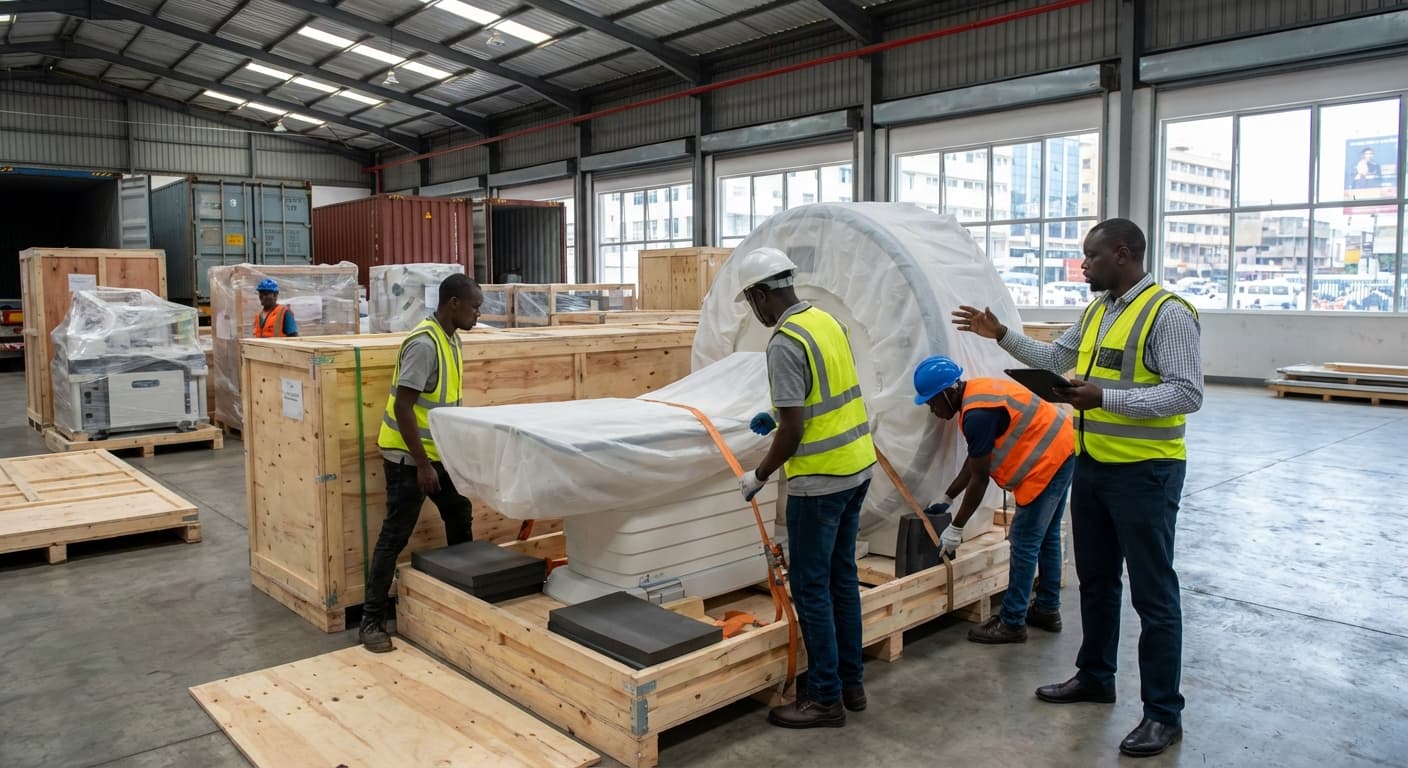
Packaging & Crating Supervision Service for Medical Equipment in Uganda
Engineering Excellence & Technical Support
Packaging & Crating Supervision Service for Medical Equipment High-standard technical execution following OEM protocols and local regulatory frameworks.
ISO 13485 Certified Processes
Our packaging and crating supervision adheres to stringent ISO 13485 quality management system standards, ensuring every step meets the highest international benchmarks for medical device packaging. This guarantees the integrity, sterility, and traceability of your valuable medical equipment throughout the entire logistics chain.
Optimized Cold Chain Logistics
We specialize in supervising the packaging and crating of temperature-sensitive medical equipment, implementing robust cold chain solutions. Our expertise ensures the correct use of insulated containers, phase change materials (PCMs), and real-time temperature monitoring, guaranteeing efficacy and compliance with critical temperature requirements during transit within Uganda's diverse climate.
Compliance & Regulatory Assurance
Our expert supervisors are deeply familiar with Ugandan and international regulations pertaining to the transportation of medical equipment. We meticulously oversee the selection of compliant packaging materials, correct labeling (including hazard symbols and handling instructions), and documentation, minimizing risks of customs delays and ensuring your equipment arrives safely and legally.
What Is Packaging & Crating Supervision Service For Medical Equipment In Uganda?
Packaging & Crating Supervision Service for Medical Equipment in Uganda refers to the professional oversight and management of the packing and crating processes specifically for medical devices and instruments within Uganda. This service ensures that medical equipment is prepared for transport, storage, or deployment in a manner that maintains its integrity, functionality, and sterile condition. It encompasses adherence to stringent industry standards, regulatory requirements, and the unique environmental and logistical challenges present in Uganda. The service aims to mitigate risks associated with damage, contamination, obsolescence, and loss during transit and handling.
| Stakeholder/Entity | Need for Service | Typical Use Cases |
|---|---|---|
| Medical Equipment Manufacturers (Domestic & International) | To ensure their products arrive at their destination in Uganda in pristine, functional condition, meeting warranty requirements and brand reputation. | Exporting new medical devices to Ugandan hospitals/clinics. Returning equipment for repair/refurbishment. Internal warehousing and distribution within Uganda. |
| Healthcare Facilities (Hospitals, Clinics, Laboratories) | To safeguard investments in expensive and critical medical equipment, minimize downtime due to damage, and ensure patient safety. | Receiving new installations of imaging machines (MRI, CT scanners), surgical equipment, diagnostic tools. Relocating existing equipment within a facility or to a new site. Preparing equipment for donation or decommissioning. |
| Logistics and Freight Forwarding Companies | To offer specialized, value-added services for high-value, sensitive cargo and to meet client-specific requirements for medical equipment. | Handling inbound shipments of medical devices. Managing outbound logistics for locally manufactured medical supplies. Providing specialized packing and crating solutions for complex medical instruments. |
| Government Agencies and NGOs | To ensure the efficient and secure deployment of medical equipment procured for public health initiatives and disaster relief efforts. | Distributing medical supplies and equipment to remote health centers. Managing the logistics of donated medical equipment. Equipping new public health facilities. |
| Third-Party Logistics (3PL) Providers | To fulfill contractual obligations for the safe handling and transport of medical equipment for their clients. | Providing end-to-end supply chain management for medical device companies. Specialized warehousing and distribution services for medical equipment. |
Key Aspects of Packaging & Crating Supervision for Medical Equipment:
- Material Selection and Specification: Ensuring the use of appropriate, compliant, and protective packaging materials (e.g., anti-static, moisture-barrier, shock-absorbent) suitable for medical devices.
- Crating Design and Construction: Overseeing the fabrication of custom or standardized crates designed to withstand the rigors of transport and protect sensitive equipment.
- Handling Procedures: Establishing and supervising protocols for the safe and secure manual or mechanical handling of medical equipment during the packaging and crating phases.
- Environmental Control: Implementing measures to control temperature, humidity, and cleanliness within the packaging environment to prevent degradation or contamination.
- Documentation and Labeling: Ensuring accurate and compliant labeling with hazard warnings, handling instructions, origin/destination details, and serialization for traceability.
- Quality Assurance and Inspection: Conducting rigorous inspections at various stages of the packaging and crating process to verify compliance with specifications and standards.
- Regulatory Compliance: Verifying adherence to national and international regulations pertaining to the transport of medical devices, including those related to hazardous materials if applicable.
- Risk Assessment and Mitigation: Identifying potential risks to the equipment during packing and crating and implementing strategies to mitigate them.
- Logistics Coordination: Liaising with freight forwarders, customs agents, and transportation providers to ensure seamless integration of the packaging process with the overall supply chain.
Who Needs Packaging & Crating Supervision Service For Medical Equipment In Uganda?
In Uganda, the specialized services of Packaging & Crating Supervision for medical equipment are crucial for a range of organizations and departments that prioritize the safe, secure, and compliant transport of sensitive and valuable medical assets. This service ensures that delicate machinery, diagnostic tools, and vital supplies are handled with the utmost care throughout the logistics chain, minimizing the risk of damage, contamination, or operational failure.
| Target Customer | Key Departments Involved | Specific Needs/Concerns |
|---|---|---|
| Hospitals and Clinics | Procurement, Biomedical Engineering, Logistics/Stores, IT (for networked equipment) | Maintaining equipment integrity during relocation, expansion, or repair. Ensuring sterile packaging for sensitive diagnostic and surgical equipment. Protecting expensive investments. |
| Medical Equipment Manufacturers/Suppliers | Logistics, Quality Control, Sales Support, Export/Import Departments | Ensuring products arrive at their destination in pristine condition. Meeting international shipping standards. Protecting brand reputation. Compliance with regulatory requirements. |
| Medical Research Institutions | Research Operations, Lab Management, IT (for data-intensive equipment), Procurement | Safeguarding highly sensitive and calibrated research instruments. Protecting specialized laboratory equipment from environmental factors. Ensuring data integrity of networked devices. |
| Government Health Ministries/Agencies | Procurement, Logistics, Public Health Programs, Infrastructure Development | Efficient and safe distribution of medical supplies and equipment to public health facilities across the country. Managing large-scale deployments and ensuring value for taxpayer money. |
| NGOs/International Aid Organizations | Program Management, Logistics, Procurement, Medical Teams | Delivering critical medical equipment to underserved areas. Ensuring equipment is functional upon arrival in challenging environments. Managing donations and grants effectively. |
| Diagnostic Laboratories | Laboratory Management, Quality Assurance, Technical Operations | Protecting precision diagnostic instruments. Ensuring no contamination during transit. Maintaining calibration and operational readiness. |
| Logistics/Freight Forwarders | Operations, Special Cargo Handling, Client Management | Offering specialized medical equipment handling as a value-added service. Minimizing liability and insurance claims through expert packaging. Meeting client expectations for high-value shipments. |
Target Customers for Medical Equipment Packaging & Crating Supervision in Uganda:
- Hospitals and Clinics (Public and Private)
- Medical Equipment Manufacturers and Suppliers
- Medical Research Institutions
- Government Health Ministries and Agencies
- Non-Governmental Organizations (NGOs) involved in healthcare
- International Aid Organizations
- Diagnostic Laboratories
- Pharmaceutical Companies (for specialized equipment)
- Logistics and Freight Forwarding Companies specializing in healthcare
- Medical Training and Educational Facilities
Packaging & Crating Supervision Service For Medical Equipment Process In Uganda
This document outlines the comprehensive workflow for our Packaging & Crating Supervision Service for Medical Equipment in Uganda, ensuring meticulous handling and secure transit of sensitive and valuable medical devices. The process is designed to be transparent, efficient, and tailored to the specific needs of each client.
| Stage | Description | Key Activities | Client Involvement | Deliverables |
|---|---|---|---|---|
| Inquiry & Needs Assessment | Initial contact to understand client requirements for medical equipment packaging and crating. | Receive client inquiry, conduct initial consultation (phone, email, or in-person), understand equipment type, dimensions, weight, fragility, destination, and any special handling requirements. | Provide detailed information about the equipment and logistical needs. | Understanding of client's core requirements and scope of service. |
| Quotation & Proposal | Developing a detailed cost estimate and service plan based on the assessed needs. | Analyze information from the needs assessment, determine required resources (supervisors, materials, specialized tools), calculate costs, and prepare a formal quotation and detailed service proposal. | Review and approve quotation/proposal. | Formal quotation and comprehensive service proposal outlining scope, methodology, timeline, and pricing. |
| Agreement & Planning | Formalizing the engagement and detailed operational planning. | Client accepts proposal, formal agreement/contract signed. Detailed project plan developed, including specific timelines, personnel assignment, site logistics, and communication protocols. Pre-operational meetings with the client's logistics or operational team. | Sign agreement, provide necessary site access and contact information, participate in planning meetings. | Signed agreement/contract, detailed project plan, confirmed team and schedule. |
| Pre-Operation Inspection | On-site assessment of the packing location and existing conditions. | Supervisors visit the site where packing will occur. Inspect the facility for adequate space, lighting, temperature/humidity control, safety protocols, and availability of necessary packing materials (if client-provided). Identify any potential challenges or risks. | Provide site access, introduce key personnel, answer questions about the site. | Pre-operation inspection report highlighting findings and recommendations. |
| Supervision of Packing & Crating | Overseeing the entire packing and crating process to ensure adherence to best practices and client specifications. | Direct supervision of packing personnel (whether internal or outsourced by the client). Ensuring correct use of anti-static materials, cushioning, moisture barriers, blocking and bracing within crates. Verification of correct labeling (handling instructions, fragile, destination, etc.). Overseeing the assembly and securing of crates. | Access to the packing area, availability of packing materials and personnel. | Continuous oversight and guidance during packing and crating. |
| Quality Control & Documentation | Ensuring all aspects of the packing meet quality standards and are properly recorded. | Conducting thorough quality checks at various stages of packing. Documenting the process through photographs and detailed notes. Verifying that all equipment is correctly secured, protected, and that crates are robust and properly sealed. Ensuring compliance with international shipping standards where applicable. | Provide access for QC checks, confirm critical details. | Detailed quality control reports, photographic evidence of packing and crating, inventory of packed items. |
| Handover & Final Reporting | Formal handover of the crated equipment and provision of all relevant documentation. | Supervisors officially hand over the crated and documented medical equipment to the designated client representative or logistics provider. Provide a final service report summarizing activities, any issues encountered, and confirmation of successful completion. Include all collected documentation (packing lists, QC reports, photos). | Receive the crated equipment, review and sign off on the final report. | Completed crated medical equipment, comprehensive final service report, all supporting documentation. |
| Post-Service Follow-up | Ensuring client satisfaction and addressing any lingering queries. | Follow-up with the client a few days after the service to ensure satisfaction and to address any further questions or concerns. Gather feedback for continuous service improvement. | Provide feedback on the service received. | Client satisfaction confirmation, valuable feedback for service enhancement. |
Workflow Stages
- Inquiry & Needs Assessment
- Quotation & Proposal
- Agreement & Planning
- Pre-Operation Inspection
- Supervision of Packing & Crating
- Quality Control & Documentation
- Handover & Final Reporting
- Post-Service Follow-up
Packaging & Crating Supervision Service For Medical Equipment Cost In Uganda
The cost of packaging and crating supervision services for medical equipment in Uganda can vary significantly based on several key factors. This service is crucial for ensuring the safe transit and handling of sensitive and valuable medical devices, from their point of origin to their final destination. Proper supervision minimizes the risk of damage, loss, or non-compliance with regulations. Understanding the pricing determinants will help organizations budget effectively for these specialized services.
| Service Component | Estimated Cost Range (UGX) | Notes |
|---|---|---|
| Basic Supervision (Simple, low-value equipment) | 150,000 - 400,000 | Covers standard packaging oversight for less sensitive items. |
| Standard Supervision (Moderately complex equipment) | 400,000 - 1,000,000 | For a wider range of medical devices, requiring adherence to some specific packaging guidelines. |
| Specialized Supervision (High-value, fragile, complex medical equipment) | 1,000,000 - 3,500,000+ | Includes detailed oversight for sensitive equipment like imaging machines, laboratory analyzers, or surgical robots. Costs can escalate significantly with complexity and duration. |
| Hourly Rate for Extended Supervision/Consultation | 70,000 - 200,000 per hour | Applicable for ongoing projects or when specific expert consultation is needed beyond standard supervision. |
| Daily Rate for Dedicated Supervisor | 500,000 - 1,500,000 per day | For prolonged projects requiring a full-time, dedicated supervisor on-site. |
Key Pricing Factors for Packaging & Crating Supervision Services in Uganda
- Complexity and Fragility of Equipment: Highly sophisticated, fragile, or exceptionally large medical equipment will require more specialized packaging materials, techniques, and therefore, more skilled supervision. Items like MRI machines, X-ray units, or complex laboratory analyzers will command higher costs than less delicate instruments.
- Volume and Number of Items: The sheer quantity of items to be packaged and supervised directly impacts the labor hours and time required from the supervision team. A single large item might be less costly than a batch of smaller, intricate pieces.
- Required Packaging Standards & Regulations: Medical equipment often has stringent packaging requirements due to its sensitivity to temperature, humidity, shock, and vibration. Compliance with international (e.g., IATA, ISO) or specific manufacturer guidelines necessitates specialized knowledge and adherence, increasing supervision costs.
- Destination and Transit Method: The origin and destination of the equipment, and the mode of transport (air, sea, road), influence the type of crating and packaging required. Air freight often demands lighter yet more robust packaging, while sea freight may require more extensive moisture protection. Supervision costs will reflect these differences.
- Duration of Supervision: The length of time the supervisor needs to be on-site or actively involved in the packaging and crating process is a primary cost driver. This can range from a few hours for a simple shipment to several days for a complex project.
- Level of Expertise Required: The specialized knowledge and experience of the supervising personnel are paramount. Supervisors with extensive experience in medical equipment handling, understanding of specific device requirements, and knowledge of international shipping standards will charge more.
- Materials and Tools Used: While the supervision service itself is primarily labor-based, the choice and cost of specialized packaging materials (e.g., anti-static bags, shock-absorbing foam, desiccants, custom-built crates) can indirectly influence the overall budget and the time spent by the supervisor overseeing their correct application.
- Geographic Location within Uganda: While less of a primary factor, accessibility to the packaging location might influence logistical costs for the supervisor, particularly if it's in a remote area.
- Additional Services: Some providers may offer bundled services such as pre-shipment inspections, documentation review, or on-site coordination with logistics partners, which will add to the overall cost.
Affordable Packaging & Crating Supervision Service For Medical Equipment Options
Ensuring the safe and compliant packaging and crating of medical equipment is paramount, especially when dealing with sensitive, high-value, or regulated items. Our Affordable Packaging & Crating Supervision Service provides expert oversight to guarantee your medical equipment is handled, packed, and crated to meet stringent industry standards, protecting it from damage during transit and ensuring regulatory compliance. We offer flexible value bundles and strategic cost-saving measures to make this essential service accessible.
| Cost-Saving Strategy | Description | Benefit for Medical Equipment |
|---|---|---|
| Pre-packaging Material Audit | Reviewing your existing or proposed packaging materials to ensure they are appropriate and cost-effective for medical equipment. Recommending durable, lightweight alternatives where suitable. | Reduces material waste and avoids overspending on unnecessary or incompatible supplies. Ensures materials meet cushioning and protective needs without being excessive. |
| Standardized Crate Design Recommendations | Leveraging our expertise to suggest modular or standardized crate designs that can be reused or adapted for similar equipment, rather than always opting for custom builds. | Minimizes custom fabrication costs and lead times. Facilitates efficient packing and unpacking processes for recurring shipments. |
| Optimized Loading and Securing Techniques | Supervising the loading and securing process within crates to maximize space utilization and minimize movement during transit, preventing damage. | Reduces the need for larger or multiple crates. Prevents damage caused by shifting contents, which can be costly to repair or replace. |
| Risk-Based Material Selection | Applying a risk-assessment approach to material selection, ensuring that only necessary protective measures are implemented, thereby avoiding unnecessary expense on over-packaging. | Focuses budget on critical protection points. Prevents overspending on materials for non-sensitive components. |
| Vendor Negotiation Support | Providing guidance or direct negotiation support for packaging and crating material suppliers, leveraging our industry knowledge for better pricing. | Achieves bulk discounts or better rates from material providers, directly reducing overall packaging costs. |
| Preventative Maintenance and Reusability Assessment | Advising on crates and packaging that can be inspected, repaired, and reused for future shipments of the same or similar medical equipment. | Significant long-term cost reduction by amortizing the initial investment over multiple uses. Sustainable practice for medical facilities. |
Value Bundles for Comprehensive Medical Equipment Packaging & Crating Supervision:
- {"title":"Essential Oversight Bundle","description":"Ideal for standard medical devices and less critical shipments. Includes on-site supervision of packing procedures, basic material selection guidance, and pre-shipment inspection. Focuses on preventing common transit damage."}
- {"title":"Advanced Protection Bundle","description":"Recommended for sensitive diagnostics, imaging equipment, or items requiring specialized handling. Incorporates all 'Essential Oversight' features plus guidance on advanced cushioning, climate-controlled packaging, and custom crate design. Includes documentation review for regulatory adherence."}
- {"title":"Regulatory Compliance Bundle","description":"Tailored for medical equipment subject to strict regulations (e.g., FDA, international shipping). Combines 'Advanced Protection' features with in-depth review of packaging and labeling requirements, compliance documentation verification, and hazard material assessment if applicable."}
- {"title":"Custom Project Bundle","description":"For unique or complex medical equipment requiring a bespoke packaging and crating solution. Includes a full assessment, custom protocol development, material sourcing advice, and comprehensive supervision throughout the entire process."}
Verified Providers In Uganda
In Uganda's evolving healthcare landscape, identifying truly verified and reputable providers is paramount for ensuring quality patient care. Franance Health stands out as a leading entity, distinguished by its rigorous credentialing process and commitment to excellence. This document outlines why Franance Health's verified providers represent the best choice for individuals seeking reliable and high-standard medical services in Uganda.
| Aspect | Franance Health Verification Standard | Benefit to Patients |
|---|---|---|
| Professional Licenses & Certifications | Mandatory validation of all current and relevant professional licenses and certifications. | Ensures providers are legally qualified and meet industry standards. |
| Educational Background | Verification of degrees, diplomas, and specialized training from accredited institutions. | Guarantees a strong foundation of medical knowledge and expertise. |
| Professional Experience | Thorough review of past work history, clinical experience, and references. | Confirms practical application of skills and proven competence. |
| Criminal & Ethical Background Checks | Comprehensive checks to ensure a clean professional record and ethical conduct. | Provides peace of mind and assures patient safety. |
| Specialty Competency | Assessment of specific skills, training, and proven success within their medical specialization. | Ensures patients receive care from experts in their particular health condition. |
| Patient Feedback & Performance Monitoring | Ongoing collection and analysis of patient satisfaction and clinical outcomes. | Drives continuous improvement and upholds high service standards. |
Why Franance Health Providers are the Best Choice:
- Rigorous Verification Process: Franance Health employs a multi-faceted verification system that goes beyond surface-level checks. This includes thorough background checks, validation of educational qualifications and licenses, assessment of professional experience, and continuous monitoring of performance and ethical conduct.
- Commitment to Quality and Safety: All Franance Health verified providers adhere to stringent quality control measures and patient safety protocols. This ensures that patients receive care that is not only effective but also safe and delivered with the utmost professionalism.
- Specialized Expertise: The network comprises healthcare professionals with a diverse range of specializations. Franance Health meticulously vets each provider to confirm their expertise in their respective fields, ensuring patients are matched with the most suitable specialists for their specific health needs.
- Patient-Centric Approach: Verified providers under the Franance Health umbrella are committed to a patient-centric approach, prioritizing clear communication, empathy, and respect. Patients can expect a supportive and understanding healthcare experience.
- Transparency and Trust: Franance Health fosters an environment of transparency. Patients have access to verified information about their healthcare providers, building trust and empowering them to make informed decisions about their health.
- Access to Advanced Technologies and Practices: Many Franance Health verified facilities and professionals are at the forefront of adopting advanced medical technologies and evidence-based practices, ensuring patients benefit from the latest advancements in healthcare.
- Accountability and Continuous Improvement: Franance Health maintains a system of accountability for its providers. Regular performance reviews and feedback mechanisms contribute to a culture of continuous improvement within the network.
Scope Of Work For Packaging & Crating Supervision Service For Medical Equipment
This Scope of Work (SOW) outlines the services for the supervision of packaging and crating of medical equipment. The objective is to ensure that all medical equipment is packaged and crated according to industry best practices, regulatory requirements, and client specifications to prevent damage during transit and storage. This service will be provided by experienced supervisors who will oversee the entire packaging and crating process, from material selection to final sealing and labeling.
| Technical Deliverable | Standard Specification / Description | Acceptance Criteria |
|---|---|---|
| Packaging & Crating Plan Review | A detailed plan outlining packaging materials, methods, and procedures specific to each piece of medical equipment, considering its dimensions, weight, fragility, and intended transit. | Plan is reviewed and approved by the client's designated representative prior to commencement of work. |
| Material Verification Checklist | A checklist of all approved packaging materials (e.g., foam, bubble wrap, anti-static bags, corrugated boxes, plywood, lumber, fasteners) used for each shipment. | All materials used match the approved plan and meet specified quality standards. |
| Cushioning & Dunnage Application | Appropriate use of shock-absorbing materials and internal bracing to prevent movement and absorb impact during transit. | No visible signs of equipment shifting within the package; cushioning is distributed effectively. |
| Crate Construction Standards | Crates are constructed from quality materials (e.g., ISPM 15 compliant lumber), built to withstand the weight and stresses of transit, and properly sealed. | Crate structure is sound, joints are secure, and all seams are sealed appropriately to prevent ingress of dust and moisture. |
| Environmental Protection Implementation | Correct application of moisture barriers (e.g., poly liners, desiccants) and anti-static packaging as required for sensitive medical equipment. | Visual confirmation of moisture barriers and desiccants, where applicable. |
| Labeling & Marking Compliance | Accurate and clear labeling of all packages and crates, including but not limited to: consignee and shipper information, destination address, handling instructions (e.g., 'Fragile,' 'This Way Up'), weight, dimensions, and any required regulatory markings. | All labels are legible, correctly positioned, and include all necessary information as per client and regulatory requirements. |
| Pre-Shipment Inspection Report | A formal report documenting the results of the final inspection of each packaged and crated item, confirming compliance with all specifications. | Report signed by the supervisor and client representative, indicating full compliance or detailing any non-conformities and corrective actions. |
| Packaging & Crating Logbook | A comprehensive log detailing the date, time, equipment ID, packaging materials used, personnel involved, any issues encountered, and actions taken for each item packaged. | Logbook is up-to-date, accurate, and maintained throughout the service period. |
Key Objectives of Supervision
- Ensure proper material selection for packaging and crating based on equipment type, fragility, destination, and transit mode.
- Verify adherence to all applicable international and domestic shipping regulations (e.g., IATA, IMDG, DOT).
- Confirm compliance with specific client packaging and crating specifications.
- Oversee the correct application of cushioning, bracing, and securing methods to prevent movement and impact damage.
- Ensure proper environmental protection (e.g., moisture barriers, anti-static measures, temperature control).
- Supervise accurate labeling with all necessary information, including handling instructions, destination, contents, and hazardous material markings if applicable.
- Maintain a detailed log of all packaging and crating activities performed.
- Conduct pre-shipment inspections to identify and rectify any deficiencies.
- Ensure the safety and security of personnel involved in the packaging and crating process.
Service Level Agreement For Packaging & Crating Supervision Service For Medical Equipment
This Service Level Agreement (SLA) outlines the response times and uptime guarantees for the Packaging & Crating Supervision Service for Medical Equipment, hereinafter referred to as 'the Service'. This SLA is an integral part of the Master Services Agreement (MSA) between [Client Name] (hereinafter referred to as 'Client') and [Service Provider Name] (hereinafter referred to as 'Provider').
| Service Level | Response Time Target | Resolution Target | Uptime Guarantee | ||
|---|---|---|---|---|---|
| 24/7 On-Demand Supervision (for immediate shipment needs) | 2 hours for acknowledgment and commencement of service scheduling/mobilization. | Commencement of supervision within 8 hours of confirmed scheduling (subject to travel time and resource availability). | N/A (Service is on-demand) | ||
| Scheduled Supervision (pre-booked) | 4 business hours for acknowledgment and confirmation of scheduling. | Supervision commences at the agreed-upon scheduled time. | N/A (Service is scheduled) | ||
| Technical Support & Issue Resolution (for service-related queries or minor disruptions) | 4 business hours for acknowledgment of Critical Issues. | 8 business hours for acknowledgment of Major Issues. | 24 business hours for acknowledgment of Minor Issues. | Resolution targets will be communicated upon issue assessment, aiming for the fastest possible resolution. | 99.5% monthly uptime for the operational framework supporting supervision scheduling and communication. |
Definitions
- Response Time: The maximum allowable time from the Client's initiation of a request (e.g., scheduling a crating session, reporting an issue) to the Provider's acknowledgment and commencement of action.
- Downtime: Any period during which the Service is unavailable for use due to reasons within the Provider's control, excluding Scheduled Maintenance.
- Scheduled Maintenance: Planned periods for system updates, upgrades, or repairs, communicated to the Client at least [e.g., 48] hours in advance.
- Critical Issue: An issue that renders the packaging or crating supervision service completely unusable for a specific medical equipment shipment, posing an immediate risk to the integrity or compliance of the shipment.
- Major Issue: An issue that significantly impairs the packaging or crating supervision service but does not render it completely unusable, or impacts a smaller scope of shipments.
- Minor Issue: An issue that has minimal impact on the packaging or crating supervision service and can be worked around.
- Uptime Guarantee: The percentage of time the Service is expected to be available and operational over a defined period.
Frequently Asked Questions

Ready when you are
Let's scope your Packaging & Crating Supervision Service for Medical Equipment in Uganda project in Uganda.

Scaling healthcare logistics and technical systems across the entire continent.