
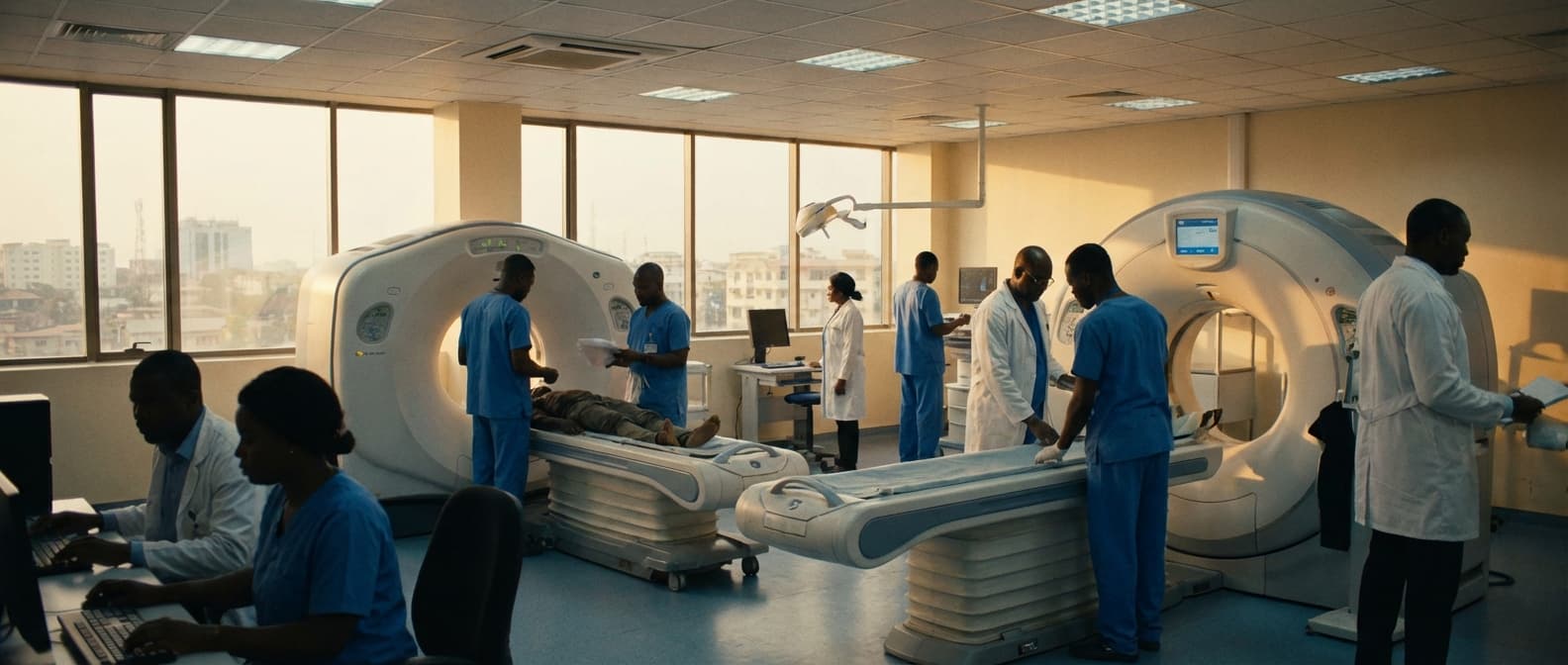
Radiology Room Design & Shielding Calculation in Uganda
Engineering Excellence & Technical Support
Turnkey room planning, shielding drawings and approvals for imaging suites. High-standard technical execution following OEM protocols and local regulatory frameworks.
Optimized Diagnostic Workflow
Engineered intelligent room layouts and equipment placement for seamless patient throughput and efficient radiologist review in Ugandan healthcare facilities, reducing wait times and enhancing diagnostic accuracy.
Localized Radiation Safety Standards
Developed and implemented radiation shielding calculations compliant with Ugandan regulatory guidelines and international best practices, ensuring the highest safety standards for patients and staff across diverse clinical environments.
Cost-Effective Shielding Solutions
Designed and specified cost-effective lead and concrete shielding solutions tailored to the specific needs and budgetary constraints of Ugandan hospitals, maximizing radiation protection without compromising on essential diagnostic imaging capabilities.
What Is Radiology Room Design & Shielding Calculation In Uganda?
Radiology room design and shielding calculation in Uganda refers to the comprehensive process of planning, engineering, and specifying the physical layout and radiation protection measures for medical imaging facilities. This service is critical for ensuring the safety of patients, staff, and the general public from ionizing radiation emitted by diagnostic imaging equipment, such as X-ray machines, CT scanners, and fluoroscopy units. The design phase involves optimizing workflow, patient comfort, and equipment placement within the available space, while the shielding calculation specifically determines the type and thickness of radiation attenuating materials (e.g., lead, concrete) required for walls, floors, ceilings, and doors to comply with national and international radiation safety standards. This is particularly crucial in Uganda, where the adoption of advanced medical imaging technologies necessitates robust safety protocols and adherence to regulatory guidelines set by bodies like the Uganda Radiation Protection Board (URPB).
| Who Needs This Service? | Typical Use Cases in Uganda | |||||
|---|---|---|---|---|---|---|
| Hospitals (public and private) installing new or upgrading existing radiology departments. | Establishment of new diagnostic imaging centers. | Clinics and medical facilities offering diagnostic imaging services (e.g., orthopedic clinics, specialized diagnostic centers). | Research institutions utilizing X-ray or other radiation-generating equipment for non-medical applications. | Manufacturers and installers of diagnostic imaging equipment requiring compliance verification. | ||
| Installation of general X-ray rooms. | Implementation of Computed Tomography (CT) suites. | Development of Magnetic Resonance Imaging (MRI) facilities (while MRI doesn't use ionizing radiation, room design principles for acoustics and magnetic shielding are relevant). | Setting up Fluoroscopy rooms for interventional procedures. | Designing rooms for Mammography and Bone Densitometry units. | Retrofitting existing structures to accommodate new imaging equipment. | Ensuring compliance with URPB licensing and inspection requirements. |
Key Components of Radiology Room Design & Shielding Calculation:
- Facility Layout Planning: Optimizing spatial arrangement for patient flow, staff efficiency, and equipment accessibility.
- Radiation Shielding Calculations: Determining the necessary thickness and composition of shielding materials based on equipment specifications, workload, and occupancy factors to maintain radiation dose rates below regulatory limits.
- Structural Integrity Assessment: Ensuring the building structure can support the weight of shielding materials and equipment.
- Ventilation and HVAC Design: Providing adequate air exchange for patient comfort and equipment functionality, while considering the containment of potential airborne contaminants.
- Electrical and Plumbing Integration: Planning for power supply, grounding, and water/drainage systems required for imaging equipment and ancillary facilities.
- Ancillary Room Considerations: Designing control rooms, viewing areas, waiting rooms, and changing facilities with appropriate safety and comfort standards.
- Compliance with Standards: Adhering to URPB regulations, international guidelines (e.g., ICRP, IAEA), and best practices in radiation protection.
- Commissioning and Quality Assurance: Verifying that the installed shielding and room design meet the calculated specifications and operational requirements.
Who Needs Radiology Room Design & Shielding Calculation In Uganda?
Radiology room design and shielding calculations are crucial for ensuring the safety of both patients and healthcare professionals from harmful radiation in Uganda. This specialized service is essential for any facility that utilizes or plans to utilize X-ray, CT scanners, fluoroscopy, or other imaging modalities emitting ionizing radiation. The primary goal is to prevent radiation exposure that exceeds regulatory limits, thus mitigating long-term health risks. This involves meticulous planning of room layout, material selection for walls, doors, and windows, and precise calculation of the required thickness and type of shielding materials like lead, concrete, or specialized composites. Effective design also considers workflow efficiency and patient comfort within the radiology suite. The demand for these services in Uganda is driven by the continuous development and expansion of healthcare infrastructure, increasing adoption of advanced imaging technologies, and the growing emphasis on adhering to international radiation safety standards.
| Department/Facility Type | Specific Imaging Modalities Involved | Key Needs Addressed |
|---|---|---|
| Radiology/Medical Imaging Department (Hospitals, Diagnostic Centers) | X-ray, CT Scanner, Fluoroscopy, Mammography, Interventional Radiology | Radiation safety for staff and patients, compliance with regulations, optimal workflow, equipment protection, prevention of image degradation due to scattered radiation. |
| Oncology Department (Hospitals) | CT Simulators (for radiotherapy planning), diagnostic CT/X-ray for staging and monitoring | Accurate radiation shielding for treatment planning areas, safety during diagnostic imaging for cancer patients. |
| Surgical Departments (Hospitals) | C-arm fluoroscopy (Orthopedics, Urology, Cardiology, General Surgery) | Shielding in operating rooms to protect surgical teams during intraoperative imaging, minimizing radiation exposure to patients. |
| Emergency Departments (Hospitals) | X-ray, potentially portable CT scanners | Rapid and safe deployment of imaging services, effective shielding in high-traffic areas, protection during emergency procedures. |
| Maternity/Obstetrics Departments (Hospitals) | X-ray (for specific indications), potentially ultrasound (though not ionizing radiation) | Strict radiation safety protocols for pregnant patients and staff, minimizing exposure to unborn children. |
| Research and Development Labs (Universities, Specialized Institutes) | Specialized X-ray systems, potentially small particle accelerators for research | Containment of radiation for experimental purposes, protection of researchers and the public, compliance with research-specific safety guidelines. |
Target Customers and Departments in Uganda Requiring Radiology Room Design & Shielding Calculation:
- Hospitals (Public and Private): These are the primary beneficiaries, encompassing a wide range of sizes from large referral hospitals to smaller private clinics with imaging capabilities.
- Diagnostic Imaging Centers: Standalone facilities dedicated to providing a variety of radiological imaging services.
- Specialized Medical Clinics: Clinics focusing on specific medical fields that require diagnostic imaging, such as oncology, orthopedics, or cardiology.
- Government Health Facilities: National and regional referral hospitals, district hospitals, and health centers that are upgrading or establishing radiology departments.
- Non-Governmental Organization (NGO) Health Projects: NGOs involved in establishing or improving healthcare services in underserved areas, often including the installation of medical imaging equipment.
- Educational Institutions with Medical Programs: Universities, medical schools, and training colleges that operate teaching hospitals or have research facilities requiring radiological equipment.
- Veterinary Clinics and Research Institutions (with advanced imaging): Facilities using CT scanners or X-ray equipment for animal diagnostics and research.
- Industrial and Research Facilities (with specific radiation applications): Though less common for medical radiology, some industrial or research settings might require similar shielding design for specific non-destructive testing or research equipment emitting ionizing radiation.
Radiology Room Design & Shielding Calculation Process In Uganda
Designing a radiology room and calculating its radiation shielding requirements in Uganda involves a structured workflow, often initiated by an inquiry from a healthcare facility. This process integrates architectural planning, medical imaging equipment specifications, and radiation safety regulations to ensure the safety of patients, staff, and the public. The workflow can be broadly categorized into several key stages, from initial consultation to final commissioning.
| Phase | Key Activities | Responsible Parties | Output/Deliverables |
|---|---|---|---|
| Understand client needs, identify modalities, assess scope. | Client, Project Manager, Radiology Consultant | Project brief, Initial scope of work |
| Measure space, analyze structure, check existing services. | Architect, Structural Engineer, Radiation Physicist/Engineer | Site survey report, Existing conditions documentation |
| Gather manufacturer data (output, workload, etc.). | Equipment Supplier, Medical Physicist/Engineer | Equipment technical datasheets |
| Consult NRPA guidelines and standards. | Radiation Physicist/Engineer, Legal/Compliance Officer | Compliance checklist, Understanding of regulatory requirements |
| Determine required shielding thickness using data and standards. | Radiation Physicist/Engineer | Shielding calculation report, Required material specifications |
| Develop room layout, control booth, door/window placement. | Architect, Radiation Physicist/Engineer | Architectural drawings, Room layout plans |
| Select and specify lead, concrete, etc. | Architect, Radiation Physicist/Engineer | Bill of quantities, Material specification sheets |
| Build room, install shielding and equipment. | Main Contractor, Specialized Installers, Equipment Technicians | Constructed radiology room, Installed equipment |
| Measure radiation levels, check equipment and safety systems. | Radiation Physicist/Engineer, Equipment Technicians | QA/QC report, Shielding verification certificate |
| Submit documentation, obtain NRPA license. | Project Manager, Radiation Physicist/Engineer, Client | NRPA approval letter, Commissioning certificate, Operational facility |
Radiology Room Design & Shielding Calculation Process in Uganda: Workflow
- Inquiry & Initial Consultation: The process begins when a client (hospital, clinic, diagnostic center) expresses interest in setting up or upgrading a radiology facility. This involves understanding their needs, including the types of imaging modalities to be installed (X-ray, CT, MRI, mammography, etc.), the intended patient throughput, and the available space.
- Site Assessment & Data Collection: A site visit is crucial. This involves measuring the available space, identifying structural elements (walls, floors, ceilings), and noting proximity to occupied areas (offices, waiting rooms, other patient areas, external buildings). Existing infrastructure like power, ventilation, and plumbing is also assessed.
- Equipment Specification Gathering: Detailed specifications for each radiology unit are obtained from the equipment manufacturer. This includes the maximum X-ray beam output (kVp, mA, time), workload (patient hours per week), duty cycle, beam angle, and any specific shielding recommendations provided by the manufacturer.
- Regulatory Framework Review: Understanding and adhering to Uganda's radiation safety regulations and guidelines, typically overseen by the National Radiation Protection Authority (NRPA) or equivalent body, is paramount. This includes consulting relevant standards for shielding calculations and room layout.
- Shielding Calculation: This is a core technical step. Using the collected data on equipment output, workload, occupancy factors, and relevant NRPA/international standards (e.g., NCRP, ICRP recommendations adapted for local context), engineers or radiation physicists perform detailed shielding calculations. These calculations determine the required thickness of lead, concrete, or other shielding materials for walls, doors, windows, and floors to limit radiation exposure to acceptable levels.
- Architectural Design & Layout: Based on the shielding calculations and equipment requirements, architects and designers develop the room layout. This includes: * Room Size and Shape: Ensuring adequate space for the equipment, patient positioning, and staff access. * Door and Window Placement: Strategic placement to minimize shielding requirements and maintain access. * Control Booth Design: A shielded area for the radiographer to operate the equipment safely. * Patient Waiting Areas: Located to minimize exposure from the imaging room. * Ancillary Spaces: Such as changing rooms, equipment storage, and technical rooms.
- Material Selection & Specification: Appropriate shielding materials are selected (e.g., lead-lined drywall, leaded glass, specific concrete mixes) based on the required attenuation and structural considerations. Specifications for these materials are detailed.
- Construction & Installation: The radiology room is constructed according to the approved design and specifications. This includes the installation of all shielding materials, radiation-proof doors, and interlocks. The imaging equipment is then installed within the designed space.
- Quality Assurance & Verification Testing: Upon completion of construction and equipment installation, rigorous testing is performed. This includes: * Shielding Verification: Measuring radiation levels at various points around the room to confirm that the installed shielding meets the calculated requirements. This is typically done with calibrated survey meters. * Equipment Performance Testing: Ensuring the imaging equipment functions as specified by the manufacturer. * Interlock Testing: Verifying that safety interlocks (e.g., door interlocks that shut off the X-ray beam when the door is opened) are functioning correctly.
- Regulatory Approval & Commissioning: The final step involves submitting the design documentation, shielding calculations, and verification test results to the relevant Ugandan regulatory authority (NRPA) for approval. Once approved, the room is officially commissioned and ready for clinical operation.
- Ongoing Monitoring & Maintenance: Post-commissioning, regular maintenance of the shielding and equipment, along with periodic radiation safety surveys, are crucial to ensure continued compliance and safety.
Radiology Room Design & Shielding Calculation Cost In Uganda
Designing and shielding a radiology room is a critical undertaking in Uganda, requiring careful consideration of both functionality and radiation safety. The cost is influenced by a range of factors, from the complexity of the imaging equipment to the specific shielding materials and the expertise of the design and installation teams. This discussion will explore these pricing factors and provide estimated cost ranges in Ugandan Shillings (UGX).
| Service/Component | Estimated Cost Range (UGX) - Per Room | Notes |
|---|---|---|
| Architectural & Engineering Design (Shielding Calculations) | 3,000,000 - 10,000,000 | Varies with complexity and the type of equipment. |
| Lead Shielding Materials (Supply & Installation) | 5,000,000 - 25,000,000+ | Heavily dependent on the thickness and area to be shielded. CT rooms are at the higher end. |
| Concrete/Barytes Plaster Shielding (Supply & Installation) | 2,000,000 - 8,000,000 | Cost varies with thickness and specific mix ratios. |
| Specialized Radiation Shielding Doors | 3,000,000 - 15,000,000 | Includes manual and automatic options, with lead lining. |
| Radiation Shielding Window (Lead Glass) | 1,000,000 - 5,000,000 | Depends on size and lead equivalent. |
| Room Renovation & Construction (Walls, Flooring, Ceiling) | 4,000,000 - 12,000,000 | Basic to moderate finishes. |
| Ventilation & HVAC System | 3,000,000 - 10,000,000 | Standard to specialized systems. |
| Electrical & Data Cabling Installation | 1,000,000 - 4,000,000 | For imaging equipment and control systems. |
| Regulatory Approvals & Inspections | 500,000 - 2,000,000 | Government fees and potential consultancy. |
| Project Management & Contingency (10-15%) | Variable | Applied to the total project cost. |
| Estimated Total Cost (Basic X-ray Room) | 15,000,000 - 35,000,000 | Excluding high-end equipment and extensive renovations. |
| Estimated Total Cost (CT Scanner Room) | 40,000,000 - 100,000,000+ | Significant increase due to higher shielding needs and equipment requirements. |
Key Pricing Factors for Radiology Room Design & Shielding in Uganda
- {"title":"Type and Size of Imaging Equipment","description":"The primary determinant of shielding requirements is the type and power of the X-ray equipment (e.g., general X-ray, CT scanner, fluoroscopy unit, mammography). Higher energy outputs and larger equipment generally necessitate more substantial and costly shielding. Room size also impacts material quantities."}
- {"title":"Shielding Materials","description":"Lead is the most common and effective shielding material, but its cost fluctuates. Other materials like concrete (varying thicknesses and densities), barytes plaster, and specialized composites can also be used, each with different cost implications and installation complexities."}
- {"title":"Room Layout and Geometry","description":"The layout of the room, including the placement of the X-ray tube, patient table, control area, and doors, directly affects the amount and type of shielding needed. Complex layouts or rooms with multiple exposure points will increase costs."}
- {"title":"Occupancy Factor and Use Factor","description":"Regulations dictate shielding based on how often the adjacent areas are occupied and the directionality of the X-ray beam. Higher occupancy and more frequent use in certain directions require more robust shielding."}
- {"title":"Ventilation and HVAC Requirements","description":"Radiology rooms often require specialized ventilation systems to manage heat generated by equipment and maintain air quality. This adds to the overall design and installation cost."}
- {"title":"Electrical and Data Cabling","description":"Adequate electrical power and data connectivity for the imaging equipment and associated systems are essential. The cost of installation and ensuring compliance with safety standards is a factor."}
- {"title":"Architectural and Engineering Design Fees","description":"Professional fees for architects and radiation physicists/engineers who design the room, perform shielding calculations, and oversee compliance are a significant component of the total cost."}
- {"title":"Construction and Renovation Costs","description":"The cost of structural modifications, wall construction, flooring, ceiling work, and painting will vary based on the existing infrastructure and the chosen finishes."}
- {"title":"Installation and Labor Costs","description":"The cost of skilled labor for installing shielding materials, fitting doors, windows, and other components can be substantial, especially if specialized installers are required."}
- {"title":"Regulatory Approvals and Inspections","description":"Obtaining necessary permits and undergoing radiation safety inspections by Ugandan regulatory bodies will incur fees and potentially require reworks, adding to the overall budget."}
- {"title":"Project Management and Contingency","description":"Effective project management ensures timely completion and adherence to budget. A contingency fund is crucial to cover unforeseen issues or design changes."}
Affordable Radiology Room Design & Shielding Calculation Options
Designing and equipping a radiology room involves significant investment, particularly concerning structural shielding to protect staff and patients from radiation. This guide explores affordable design options and shielding calculation strategies, focusing on value bundles and cost-saving approaches without compromising safety or diagnostic quality. Understanding these elements can lead to substantial savings in both initial construction and ongoing operational costs.
| Value Bundle/Strategy | Description | Cost-Saving Aspect | Potential Considerations |
|---|---|---|---|
| Comprehensive Design Consultation Packages | Engaging a specialized radiology design firm that offers bundled services including architectural design, shielding calculations, and equipment integration. These packages can streamline the process and offer predictable costs. | Reduces the need for separate consultants, potentially lower overall project management fees, bulk discounts on design software/tools. | Ensure the package clearly defines deliverables and scope. Compare quotes from multiple providers. |
| Integrated Shielding Solutions | Opting for pre-fabricated shielding panels or systems that combine structural support with lead or other shielding materials. These are often designed for specific equipment types. | Faster installation, reduced on-site labor, potential for factory-controlled quality, less material waste. | May have less flexibility for custom layouts. Compatibility with existing structures needs verification. |
| Material Combinations & Thickness Optimization | Collaborating with a radiation physicist to precisely calculate the required shielding thickness for each barrier (walls, doors, windows) using a combination of materials (e.g., lead-lined drywall, concrete block). | Avoids over-shielding, which is costly and adds unnecessary weight/thickness. Optimizes material usage. | Requires accurate expertise in radiation physics and detailed understanding of equipment output and usage protocols. |
| Phased Implementation of Features | For new facilities or expansions, consider implementing basic shielding and essential workflow elements initially, with plans to upgrade or add features like advanced ventilation or specialized flooring in later phases as budget allows. | Spreads capital expenditure over time, allows for adaptation to future needs and technologies. | Requires careful planning to ensure future upgrades are feasible and don't require significant rework. Initial phase must meet essential safety standards. |
| 'Smart' Door and Window Technology | While radiation shielding doors and windows can be expensive, exploring options with enhanced safety features (interlocks, visual indicators) that also contribute to efficient space utilization and workflow. | Can potentially reduce the need for additional visual barriers or separate waiting areas near the imaging suite. | Higher upfront cost compared to standard doors. Evaluate long-term benefits against initial investment. |
| Leveraging Existing Infrastructure (where applicable) | If renovating an existing space, thoroughly assess the existing structural elements and their potential contribution to shielding. Sometimes, existing concrete walls or floor slabs can reduce the need for additional shielding. | Reduces the amount of new shielding material and construction required. | Requires careful structural assessment and radiation physics consultation to confirm existing capabilities. |
Key Considerations for Affordable Radiology Room Design & Shielding:
- Strategic Placement: Locating the radiology room away from high-traffic areas or sensitive zones (like patient waiting rooms or offices) can reduce the extent of shielding required for those adjacent spaces.
- Shielding Material Optimization: While lead is the traditional and most effective shielding material, exploring combinations with other materials like concrete or drywall, appropriately calculated, can be more cost-effective for certain applications. The thickness and density of these materials are crucial.
- Modular Design: Utilizing modular construction for certain elements, such as prefabricated shielding panels or equipment mounting structures, can streamline installation and potentially reduce labor costs.
- Right-Sizing Equipment and Space: Over-specifying equipment or room size leads to unnecessary costs. Carefully assess the types of imaging modalities to be installed and the required workflow to determine the optimal room dimensions and equipment specifications.
- Efficient Layout: A well-planned layout minimizes wasted space and optimizes workflow, which can indirectly reduce the overall footprint and, consequently, the amount of shielding needed. Consider door placement, equipment positioning, and patient access.
- Energy Efficiency: Incorporating energy-efficient lighting, HVAC systems, and potentially natural light where appropriate can reduce operational expenses over the life of the facility.
Verified Providers In Uganda
Navigating Uganda's healthcare landscape can be challenging. Ensuring you receive quality care from legitimate and reputable medical professionals is paramount. This guide explores verified providers in Uganda, focusing on Franance Health credentials and why they stand out as a superior choice for your healthcare needs. We'll delve into what makes Franance Health a trusted name and how to identify other credible healthcare services.
| Franance Health Credential | Significance for Patients | Why it Represents the Best Choice |
|---|---|---|
| Certified Medical Professionals (Doctors, Nurses, Specialists) | Ensures competence, adherence to ethical standards, and up-to-date medical knowledge. | Franance Health employs rigorously vetted professionals, guaranteeing that you are treated by experienced and qualified practitioners who have met stringent academic and practical requirements. |
| Accreditation with National Regulatory Bodies (e.g., Ministry of Health) | Confirms compliance with national healthcare standards, safety regulations, and quality control measures. | Accreditation signifies that Franance Health has passed official inspections and meets the highest benchmarks set by Uganda's health authorities, providing peace of mind regarding service quality and safety. |
| Affiliation with Reputable Medical Associations and Societies | Indicates ongoing professional development, commitment to best practices, and networking with leading medical experts. | These affiliations demonstrate Franance Health's dedication to continuous learning and staying at the forefront of medical advancements, ensuring patients benefit from the latest treatments and techniques. |
| Commitment to Patient-Centered Care and Ethical Practices | Guarantees respectful treatment, informed consent, and a focus on individual patient needs and well-being. | Franance Health places a premium on ethical conduct and a compassionate approach, fostering trust and ensuring that every patient's journey is handled with dignity and personalized attention. |
| Investment in Modern Medical Technology and Infrastructure | Enables accurate diagnosis, effective treatment, and improved patient outcomes. | By investing in state-of-the-art equipment and facilities, Franance Health provides a superior diagnostic and treatment environment, leading to more precise interventions and faster recovery times. |
What to Look For in Verified Healthcare Providers in Uganda:
- Accreditation and Licensing: Confirm that the healthcare facility and its practitioners hold current licenses and accreditations from relevant Ugandan authorities (e.g., Uganda Medical and Dental Practitioners Council, Uganda Nurses and Midwives Council).
- Professional Qualifications: Verify the credentials, educational background, and specialization of individual doctors, nurses, and other healthcare professionals.
- Patient Testimonials and Reviews: Seek out independent reviews and testimonials from previous patients to gauge satisfaction and the quality of care received.
- Cleanliness and Hygiene Standards: Observe the overall cleanliness and adherence to hygiene protocols within the facility.
- Transparency in Pricing and Services: Ensure clear communication regarding costs, treatment plans, and available services.
- Commitment to Patient Safety: Look for providers who prioritize patient safety through established protocols and procedures.
Scope Of Work For Radiology Room Design & Shielding Calculation
This Scope of Work (SOW) outlines the requirements for the design and shielding calculations for a new radiology room. It details the technical deliverables and standard specifications necessary to ensure the safety of patients, staff, and the public from ionizing radiation. The project aims to create a fully compliant and functional radiology suite that meets all regulatory requirements and industry best practices.
| Deliverable | Description | Standard/Specification | Responsibility |
|---|---|---|---|
| Radiology Room Architectural Design Drawings | Detailed plans showing room layout, dimensions, door/window placements, patient access, and staff areas. | Architectural graphic standards, local building codes. | Design Consultant |
| Radiology Room Equipment Layout Drawings | Illustrations indicating the precise placement of all radiology equipment (e.g., X-ray unit, CT scanner, control console). | Equipment manufacturer specifications, ALARA principles. | Design Consultant, Equipment Vendor |
| Radiation Shielding Calculations Report | Comprehensive report detailing the methodology, assumptions, incident radiation levels, and required shielding for each structural element. | NCRP Report 147, IEC 60601-2-33, local radiation safety regulations. | Radiation Physicist / Shielding Specialist |
| Shielding Material Specifications | Detailed specifications for all shielding materials (e.g., lead thickness, concrete density, specialized glass). | Material datasheets, manufacturer specifications, industry standards. | Radiation Physicist / Shielding Specialist |
| Structural Integration Details | Drawings showing how shielding elements integrate with the building structure. | Building codes, structural engineering standards. | Design Consultant, Structural Engineer |
| Electrical and Mechanical Coordination Drawings | Plans showing the integration of electrical and mechanical systems within the shielded room. | Building codes, relevant engineering standards. | Design Consultant, MEP Engineers |
| Final Design Report | Consolidated report summarizing all design aspects, calculations, and specifications. | Project requirements, regulatory compliance. | Design Consultant, Radiation Physicist |
Key Project Objectives
- Develop a comprehensive architectural and engineering design for the radiology room, including layout, equipment placement, and workflow considerations.
- Perform detailed radiation shielding calculations to determine the appropriate materials and thicknesses for walls, doors, windows, and floors.
- Ensure compliance with all relevant national and local radiation safety regulations and standards.
- Provide detailed technical documentation for all design elements and shielding calculations.
- Facilitate a safe and efficient operational environment for radiology procedures.
Service Level Agreement For Radiology Room Design & Shielding Calculation
This Service Level Agreement (SLA) outlines the guaranteed response times and uptime for our Radiology Room Design & Shielding Calculation services. It aims to ensure prompt assistance and reliable access to our expert services for our clients.
| Service Component | Response Time Target | Uptime Guarantee | Notes |
|---|---|---|---|
| Initial Request Acknowledgment (for new project inquiries) | Within 4 business hours | N/A | Acknowledgment confirms receipt of inquiry. A dedicated point of contact will be assigned within 24 business hours. |
| Technical Support (for access issues with our platform) | Within 2 business hours | 99.5% | Excludes scheduled maintenance periods. |
| Delivery of Preliminary Design Concepts (after full project details are provided) | Within 5 business days | N/A | Timeline may vary based on project complexity. This includes initial layout and preliminary shielding estimations. |
| Delivery of Final Shielding Calculations and Design Report (after client approval of concepts) | Within 7 business days | N/A | Timeline may vary based on project complexity. This includes detailed shielding specifications and final design drawings. |
| Responses to Client Queries during the Design/Calculation Phase | Within 1 business day | N/A | Applies to questions submitted via designated project portal or email. |
Service Level Objectives
- This SLA applies to all clients who have engaged our Radiology Room Design & Shielding Calculation services.
- All times referenced in this SLA are in [Specify Timezone, e.g., Eastern Standard Time (EST)].
- Uptime refers to the availability of our consultation portal and the ability for clients to submit requests and receive initial acknowledgments.
Frequently Asked Questions

Ready when you are
Let's scope your Radiology Room Design & Shielding Calculation in Uganda project in Uganda.

Scaling healthcare logistics and technical systems across the entire continent.