
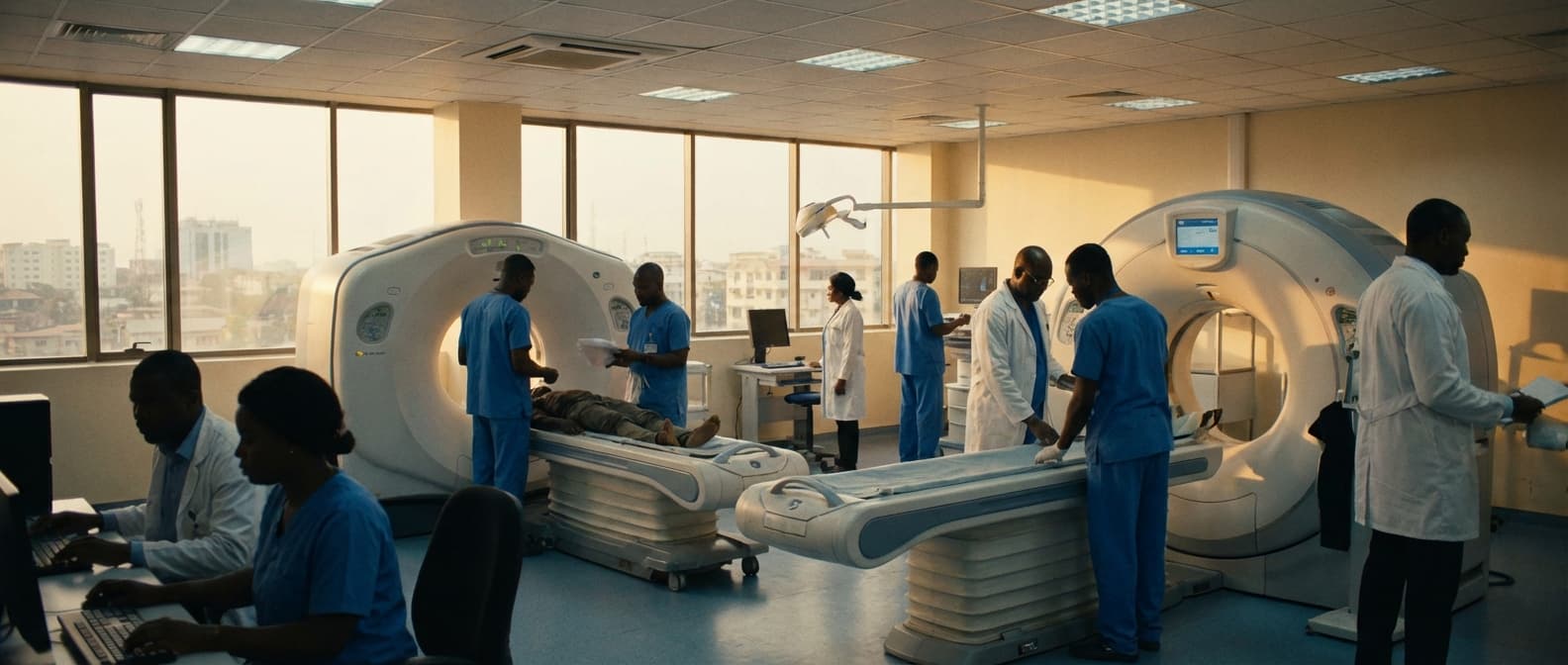
Imaging Acceptance Testing & QA in Uganda
Engineering Excellence & Technical Support
Commissioning and periodic QA for CT/MRI/X‑ray/US/Mammo. High-standard technical execution following OEM protocols and local regulatory frameworks.
AI-Powered Diagnostic Imaging Quality Assurance
Leveraging cutting-edge AI algorithms to automate the detection of common imaging artifacts and deviations from established quality standards in X-ray, CT, and MRI scans, significantly reducing manual review time and improving diagnostic accuracy for Ugandan healthcare facilities.
Standardized Imaging Protocol Validation for Local Conditions
Developing and implementing a robust framework for validating imaging protocols against international best practices while also ensuring their suitability and effectiveness under Uganda's specific environmental and infrastructure constraints, guaranteeing optimal image acquisition for diverse patient populations.
Remote Imaging Acceptance Testing Platform
Establishing a secure, cloud-based platform for remote acceptance testing and ongoing quality assurance of imaging equipment across Uganda. This enables real-time performance monitoring, issue identification, and rapid deployment of corrective actions, enhancing equipment uptime and patient care accessibility in remote regions.
What Is Imaging Acceptance Testing & Qa In Uganda?
Imaging Acceptance Testing & QA in Uganda refers to the comprehensive process of verifying and validating that medical imaging systems and associated workflows meet predefined specifications, regulatory requirements, and end-user needs within the Ugandan healthcare context. This service ensures that imaging equipment (e.g., X-ray, CT, MRI, Ultrasound, PACS) and the software that controls them function correctly, produce accurate and diagnostically useful images, and integrate seamlessly into the clinical environment. It encompasses functional, performance, usability, security, and compliance testing tailored to the specific infrastructure, operational practices, and regulatory landscape of Uganda.
| Who Needs Imaging Acceptance Testing & QA in Uganda? | Typical Use Cases | |||||||||||
|---|---|---|---|---|---|---|---|---|---|---|---|---|
| Hospitals and Clinics (Public and Private): Implementing new imaging equipment, upgrading existing systems, or integrating new PACS/RIS solutions. | Procurement of New Medical Imaging Equipment: Ensuring purchased systems meet technical specifications and clinical requirements before final acceptance and payment. | Healthcare Facilities undergoing Digital Transformation: Migrating from film-based systems to digital imaging (CR/DR) or implementing PACS/RIS. | Organizations utilizing Tele-radiology Services: Verifying the quality and transmission integrity of images sent to remote radiologists for interpretation. | Medical Equipment Vendors and Distributors: Providing documented proof of system performance and compliance to their clients in Uganda. | Government Health Ministries and Regulatory Bodies: Ensuring that deployed imaging technologies meet national standards for patient safety and diagnostic efficacy. | Research Institutions and Universities: Validating imaging systems used for research studies and medical education. | Healthcare IT Integrators and Consultants: Offering comprehensive validation services as part of their project implementation for clients. | Maintenance and Service Providers: Performing validation after significant repairs or upgrades to ensure systems are functioning correctly. | New PACS/RIS Implementations: Validating the successful integration and operational readiness of archiving and reporting systems. | Upgrades to Imaging Modalities: Ensuring new software versions or hardware components function as expected and do not negatively impact image quality or workflow. | Establishment of new Radiology Departments: Ensuring all components of the new department function cohesively and meet operational demands. | Compliance Audits: Providing documentation for internal or external audits demonstrating system validation and quality assurance. |
Key Components of Imaging Acceptance Testing & QA in Uganda:
- System Functionality Verification: Ensuring all hardware and software components perform their intended functions according to technical specifications and user requirements.
- Image Quality Assessment: Evaluating image resolution, contrast, noise, artifacts, and geometric accuracy to guarantee diagnostic adequacy.
- Workflow Validation: Testing the end-to-end imaging process, from patient registration and examination to image acquisition, processing, storage (PACS), reporting, and retrieval.
- Interoperability Testing: Verifying seamless data exchange between different imaging modalities, Picture Archiving and Communication Systems (PACS), Radiology Information Systems (RIS), and Electronic Health Records (EHRs) using relevant standards like DICOM and HL7.
- Performance Testing: Assessing system response times, throughput, and stability under various load conditions relevant to Ugandan healthcare settings.
- Usability and User Experience: Evaluating the ease of use for radiologists, technologists, and other clinical staff, ensuring intuitive interfaces and efficient workflows.
- Security and Data Integrity: Testing for compliance with data protection regulations (e.g., patient confidentiality) and ensuring the integrity and security of medical imaging data.
- Regulatory Compliance: Verifying adherence to national healthcare standards, equipment certifications, and any specific Ugandan regulations pertaining to medical imaging technology.
- Disaster Recovery and Business Continuity: Assessing the robustness of backup and recovery mechanisms for imaging data and systems.
- Training Verification: Ensuring that end-users are adequately trained and can effectively operate the imaging systems.
Who Needs Imaging Acceptance Testing & Qa In Uganda?
Imaging Acceptance Testing & Quality Assurance (QA) are critical for ensuring the reliable and accurate performance of medical imaging equipment and the integrity of the diagnostic images produced. In Uganda, where healthcare infrastructure is rapidly developing and access to advanced medical technologies is expanding, robust testing and QA processes are essential. These processes safeguard patient safety, improve diagnostic accuracy, and optimize the efficiency of healthcare facilities.
| Target Customer/Department | Specific Needs & Benefits of Imaging Acceptance Testing & QA |
|---|---|
| Hospitals (Public and Private) | Ensures new imaging modalities (X-ray, CT, MRI, Ultrasound, Mammography) meet performance standards before patient use. Improves diagnostic confidence for radiologists and referring physicians. Reduces equipment downtime and associated costs. Enhances patient safety by minimizing radiation exposure and ensuring image quality. |
| Diagnostic Imaging Centers | Verifies that equipment is calibrated and producing accurate images for efficient throughput. Crucial for maintaining a competitive edge and building patient trust. Supports compliance with regulatory standards. |
| Specialty Clinics (e.g., Cardiology, Oncology, Neurology) | Confirms specialized imaging equipment (e.g., echo machines, PET scanners) is functioning optimally for precise diagnoses and treatment planning. Ensures image quality meets the high demands of specific medical specialties. |
| Research Institutions and Universities | Guarantees the reliability and reproducibility of imaging data for research studies. Ensures educational equipment is functional for training future medical professionals. |
| Government Health Agencies and Ministry of Health | Supports the establishment of national imaging standards and guidelines. Facilitates procurement of reliable medical equipment for public health facilities. Monitors the quality of imaging services across the country. |
| Non-Governmental Organizations (NGOs) | Ensures donated or acquired imaging equipment functions correctly to provide essential healthcare services in underserved areas. Maximizes the impact of their healthcare interventions. |
| Manufacturers and Suppliers of Medical Imaging Equipment | Confirms that equipment delivered to Ugandan clients meets agreed-upon specifications and performs as intended in the local environment. Reduces post-installation issues and customer dissatisfaction. |
| Service Providers and Maintenance Companies | Provides a systematic approach to verifying that equipment has been properly serviced and repaired. Ensures the efficacy of maintenance interventions and prevents recurring problems. |
| Radiology Departments | Responsible for the day-to-day use of imaging equipment. QA ensures images are of diagnostic quality, enabling accurate interpretation. Acceptance testing is crucial for new equipment being introduced to their workflow. |
| Medical Physics Departments (or equivalent) | Plays a key role in the technical aspects of acceptance testing and ongoing QA, including radiation safety, image quality measurements, and performance characterization. |
| IT Departments (PACS/RIS Administrators) | Ensures seamless integration of imaging equipment with Picture Archiving and Communication Systems (PACS) and Radiology Information Systems (RIS). QA verifies image transfer, archiving, and retrieval integrity. |
| Biomedical Engineering Departments | Often responsible for the installation, maintenance, and initial acceptance testing of medical equipment, including imaging devices. QA ensures equipment remains functional and safe over its lifespan. |
Who Needs Imaging Acceptance Testing & QA in Uganda? Target Customers and Departments
- Hospitals (Public and Private)
- Diagnostic Imaging Centers
- Specialty Clinics (e.g., Cardiology, Oncology, Neurology)
- Research Institutions and Universities with Medical Imaging Programs
- Government Health Agencies and Ministry of Health
- Non-Governmental Organizations (NGOs) involved in healthcare delivery
- Manufacturers and Suppliers of Medical Imaging Equipment
- Service Providers and Maintenance Companies for Medical Imaging Equipment
Imaging Acceptance Testing & Qa Process In Uganda
This document outlines the Imaging Acceptance Testing and Quality Assurance (QA) process implemented in Uganda. The process ensures that imaging equipment and systems meet predefined standards and functional requirements before full deployment and operational use. It is a systematic approach to verify and validate that the installed imaging solutions perform as expected, adhering to both technical specifications and user needs. The workflow encompasses several key stages, beginning with the initial inquiry and culminating in the successful execution of acceptance tests.
| Phase | Key Activities | Responsible Parties | Deliverables |
|---|---|---|---|
| Inquiry & Requirement Gathering | Understand needs, define specifications, identify stakeholders. | Client/Stakeholders, Project Team | Requirements Document, Scope of Work |
| Vendor Selection & Proposal | RFP issuance, proposal evaluation, vendor shortlisting. | Procurement Team, Technical Committee | Vendor Proposals, Evaluation Report |
| Contract Negotiation & Award | Agreement on terms, contract signing. | Legal, Procurement, Project Management | Signed Contract, Purchase Order |
| Site Preparation & Installation Planning | Site assessment, installation strategy development. | Client Facilities, IT, Vendor | Site Readiness Report, Installation Plan |
| Delivery & Installation | Equipment arrival, system setup. | Vendor Technicians, Logistics | Installed Equipment, Basic Configuration |
| Pre-Acceptance Testing (PAT) | Vendor's internal verification and calibration. | Vendor QA Team | Vendor Test Report |
| Acceptance Testing Plan (ATP) Development | Defining test cases, scenarios, and criteria. | Client QA Team, Vendor QA Team | Acceptance Testing Plan (ATP) |
| User Acceptance Testing (UAT) | Executing ATP, functional and performance testing, defect logging. | Client QA Team, End-Users | Test Results Log, Defect Report |
| Defect Management | Fixing reported issues, re-testing. | Vendor Technical Team, Client QA Team | Resolved Defect Tickets, Updated Test Reports |
| Final Acceptance & Sign-off | Formal approval of the system. | Client Management, Project Sponsor | Acceptance Certificate |
| Go-Live & Post-Acceptance | Production deployment, ongoing support. | Client IT Operations, Vendor Support | Live System, Support Agreement |
Imaging Acceptance Testing & QA Process Workflow in Uganda
- 1. Inquiry & Requirement Gathering:
- Initial contact from the client or stakeholder regarding the need for imaging equipment/systems.
- Detailed discussion to understand the specific requirements, intended use cases, and desired outcomes.
- Defining technical specifications, performance benchmarks, and regulatory compliance needs.
- Identifying key stakeholders for the project (e.g., IT department, clinical users, procurement).
- 2. Vendor Selection & Proposal Submission:
- Issuing a Request for Proposal (RFP) or Tender to potential vendors.
- Vendors submit proposals detailing their proposed solution, technical specifications, pricing, and implementation plan.
- Evaluation of proposals based on pre-defined criteria, including technical merit, cost-effectiveness, vendor experience, and support capabilities.
- 3. Contract Negotiation & Award:
- Negotiation of contract terms, including delivery timelines, payment schedules, warranty, and service level agreements (SLAs).
- Formal award of the contract to the selected vendor.
- 4. Pre-Acceptance Site Preparation & Installation Planning:
- Site assessment to ensure readiness for installation (e.g., power, network connectivity, physical space, environmental controls).
- Development of a detailed installation plan, including timelines, resource allocation, and potential risks.
- Coordination between the client, vendor, and any third-party installers.
- 5. Equipment/System Delivery & Installation:
- Shipment and delivery of the imaging equipment and associated software/hardware.
- Installation of the equipment and system components by the vendor's qualified technicians.
- Initial system configuration and basic checks.
- 6. Pre-Acceptance Testing (PAT) / Vendor Testing:
- Vendor performs internal testing to verify that the system meets its specifications.
- This may include calibration, functional checks, and basic performance tests.
- Vendor provides preliminary test reports to the client.
- 7. Acceptance Testing Plan Development:
- Joint development of a comprehensive Acceptance Testing Plan (ATP) by the client's QA team and the vendor.
- The ATP outlines specific test cases, scenarios, expected results, and pass/fail criteria.
- Tests cover functionality, performance, integration, security, and usability.
- 8. User Acceptance Testing (UAT) / Client Acceptance Testing:
- Execution of the ATP by the client's designated QA team and end-users.
- Testing is performed in a controlled environment, simulating real-world usage.
- Documenting all test results, including any deviations or defects found.
- Key activities during UAT:
- **Functional Testing:** Verifying all features and functions operate as designed.- **Performance Testing:** Assessing speed, throughput, and responsiveness under various loads.- **Integration Testing:** Ensuring seamless interaction with existing systems (e.g., PACS, RIS, EMR).- **Usability Testing:** Evaluating the ease of use and intuitiveness for end-users.- **Security Testing:** Verifying data protection and access control mechanisms.- **Documentation Review:** Checking the accuracy and completeness of user manuals and training materials.- 9. Defect Management & Resolution:
- Identification, logging, and prioritization of any defects or issues encountered during testing.
- Vendor is responsible for addressing and resolving reported defects.
- Re-testing of resolved defects to confirm successful remediation.
- 10. Final Acceptance & Sign-off:
- Upon successful completion of all test cases and resolution of critical defects, the client provides formal acceptance.
- Signing of the Acceptance Certificate, signifying that the system meets all agreed-upon requirements.
- 11. Go-Live & Post-Acceptance Support:
- Deployment of the system into the production environment.
- Commencement of post-acceptance support and warranty period.
- Ongoing monitoring and performance evaluation.
- Continuous improvement through feedback mechanisms.
Imaging Acceptance Testing & Qa Cost In Uganda
Imaging Acceptance Testing & Quality Assurance (QA) costs in Uganda are influenced by several factors, making a universal price difficult to pinpoint. The complexity of the imaging system, the extent of the testing required, the duration of the engagement, and the expertise of the testing team all play significant roles. For medical imaging equipment, for instance, testing might involve verifying image quality across various modalities (X-ray, CT, MRI, Ultrasound), ensuring proper functioning of hardware and software, and validating compliance with relevant Ugandan health regulations. For non-medical imaging (e.g., industrial inspection, satellite imagery analysis), the focus shifts to accuracy, resolution, and specific application requirements. The testing environment, whether on-site at the client's facility or conducted remotely (where feasible), also impacts costs due to travel, accommodation, and logistical considerations.
| Service Level / Scope | Estimated Range (UGX - Ugandan Shillings) | Notes |
|---|---|---|
| Basic System Functionality Check (e.g., simple camera system, basic imaging software) | 800,000 - 2,500,000 | Covers initial setup verification, essential operational checks, and basic image capture. |
| Standard Imaging System Acceptance Testing (e.g., typical medical imaging modality, industrial inspection system) | 2,000,000 - 7,000,000 | Includes detailed performance checks, image quality assessment, user interface validation, and basic integration testing. May involve 1-3 days of work. |
| Comprehensive Imaging System Acceptance Testing & QA (e.g., advanced medical imaging, complex analysis platforms) | 5,000,000 - 20,000,000+ | Involves extensive testing across all features, advanced image analysis, integration with existing systems, regulatory compliance checks, and thorough documentation. Can span several days to weeks. |
| Specialized Imaging QA (e.g., AI model validation for medical imaging, niche industrial imaging applications) | Negotiable, often higher than standard rates | Requires highly specialized expertise and may involve custom test development and validation methodologies. Typically billed on a project basis. |
| Daily Rate for Senior Imaging QA Specialist | 400,000 - 1,200,000 | Applicable for extended engagements or ad-hoc expert consultation. Varies based on experience and specific technology. |
Key Pricing Factors for Imaging Acceptance Testing & QA in Uganda
- Complexity of the Imaging System: More sophisticated systems (e.g., high-resolution CT scanners, advanced AI-powered imaging analysis software) require more in-depth and specialized testing, thus increasing costs.
- Scope and Depth of Testing: The number of tests to be performed, the specific functionalities to be validated, and the level of detail in the QA process directly affect the time and resources needed.
- Duration of Engagement: Longer-term testing or ongoing QA services will naturally incur higher total costs, though daily or hourly rates might decrease with commitment.
- Expertise and Specialization of the QA Team: Highly skilled technicians or engineers with specific experience in the particular imaging technology command higher rates.
- Location of Testing: On-site testing involves additional costs for travel, accommodation, and potential per diems for the QA personnel.
- Reporting and Documentation Requirements: The level of detail and format of the acceptance testing reports and QA documentation can influence the time spent and thus the cost.
- Regulatory Compliance: Testing to meet specific Ugandan health standards or other industry regulations may require specialized knowledge and procedures, adding to the cost.
- Client-Specific Requirements: Unique workflows, integration needs, or performance benchmarks defined by the client can necessitate custom testing protocols.
- Hardware and Software Dependencies: The need for specific calibration equipment, software licenses, or access to certain IT infrastructure for testing can add to the overall expense.
Affordable Imaging Acceptance Testing & Qa Options
Ensuring the accuracy and reliability of medical imaging equipment through acceptance testing and quality assurance (QA) is crucial. However, the costs associated with these processes can be a significant concern for many healthcare facilities, especially smaller clinics and those with limited budgets. Fortunately, several affordable imaging acceptance testing and QA options are available, focusing on value bundles and strategic cost-saving measures. These approaches aim to deliver comprehensive services without breaking the bank.
| Strategy | Description | Potential Cost Savings |
|---|---|---|
| Bundled Service Packages | Combining acceptance testing, initial QA, and routine QA for multiple modalities or a department. | 10-20% discount on individual service costs. |
| Multi-Year Contracts | Committing to 2-3 year agreements for QA services. | 5-15% reduction in annual service fees compared to month-to-month. |
| Remote Monitoring & Tele-QA | Utilizing software for remote equipment checks and data analysis. | Reduces on-site travel costs, potentially saving $100-$500 per remote session. |
| Tiered Service Levels | Selecting a plan based on essential needs (e.g., compliance only vs. performance optimization). | Can save 15-30% by avoiding unneeded advanced features. |
| Consolidated Vendor Partnerships | Engaging one provider for all imaging QA needs. | Volume discounts and reduced administrative overhead. |
Key Value Bundles and Cost-Saving Strategies
- Bundled Service Packages: Many providers offer discounts when multiple services are bundled together. This can include a combination of acceptance testing, initial QA, and ongoing routine QA for several modalities or an entire imaging department.
- Multi-Year Contracts: Committing to a longer-term contract can often result in lower per-visit or per-service rates. This provides cost predictability and can be financially advantageous for facilities planning their budgets well in advance.
- Remote Monitoring & Tele-QA: Leveraging technology for remote monitoring of imaging equipment and performing certain QA tasks off-site can significantly reduce on-site visit costs. This is particularly effective for routine checks and calibration.
- Tiered Service Levels: Opting for tiered service plans allows facilities to select the level of service that best fits their needs and budget. Basic packages might cover essential compliance testing, while higher tiers include more in-depth analysis and predictive maintenance.
- In-House Training & Support: Investing in training for internal staff to perform certain basic QA tasks can reduce the reliance on external service providers for routine checks. This requires careful consideration of staff time, expertise, and regulatory requirements.
- Consolidated Vendor Partnerships: Working with a single vendor that can provide comprehensive services across multiple imaging modalities can lead to better pricing and streamlined logistics compared to engaging multiple specialized providers.
- Flexible Scheduling: Negotiating flexible scheduling for on-site visits, potentially during off-peak hours or when multiple pieces of equipment are due for service, can sometimes lead to reduced labor costs.
- Utilizing Existing Infrastructure: For acceptance testing, exploring if existing internal IT infrastructure can be leveraged for data collection and reporting can cut down on vendor-provided hardware or software costs.
- Focus on Essential Compliance: Prioritizing acceptance testing and QA that directly addresses regulatory compliance and patient safety, rather than performing excessive or non-essential checks, can optimize resource allocation.
Verified Providers In Uganda
In Uganda's evolving healthcare landscape, identifying trustworthy and skilled medical professionals is paramount. Franance Health stands out by rigorously vetting its network of providers, ensuring that patients receive exceptional care backed by verified credentials and a commitment to excellence. This commitment to quality makes Franance Health the premier choice for accessing reliable healthcare services in Uganda.
| Provider Type | Key Verification Aspects | Benefit to Patients |
|---|---|---|
| Doctors (GPs & Specialists) | Medical License, Degree/Diploma, Specialty Board Certification, Good Standing with Medical Council | Accurate diagnoses, effective treatment plans, expert care for specific conditions |
| Nurses | Nursing License, Relevant Certifications (e.g., Midwifery, Critical Care) | Compassionate care, patient support, skilled assistance in medical procedures |
| Pharmacists | Pharmacy License, Registration with Pharmacy Council | Accurate dispensing of medications, expert advice on drug interactions and usage |
| Therapists (Physio, Occupational, etc.) | Professional Registration, Relevant Degree/Diploma, Specialty Certifications | Rehabilitation, improved mobility, enhanced quality of life |
| Dentists | Dental License, Registration with Dental Board | Oral health expertise, preventative care, treatment for dental issues |
Why Franance Health Providers are the Best Choice:
- Rigorous Credential Verification: Every healthcare professional on the Franance Health platform undergoes a comprehensive verification process, including checks on medical licenses, educational qualifications, and professional certifications. This ensures that you are connecting with legitimate and competent practitioners.
- Experienced and Qualified Professionals: Franance Health prioritizes experienced practitioners with proven track records in their respective fields. This translates to higher quality diagnoses, more effective treatments, and a greater likelihood of positive health outcomes.
- Patient-Centric Approach: Verified Franance Health providers are committed to patient satisfaction. They emphasize clear communication, empathy, and personalized care plans tailored to individual needs and concerns.
- Diverse Range of Specialties: Access a broad spectrum of medical expertise, from general practitioners and pediatricians to specialists in fields like cardiology, dermatology, and obstetrics/gynecology, all within a trusted network.
- Accessibility and Convenience: Franance Health simplifies the process of finding and booking appointments with verified providers, offering convenience and reducing the stress often associated with seeking medical attention.
Scope Of Work For Imaging Acceptance Testing & Qa
This Scope of Work (SOW) outlines the requirements for Imaging Acceptance Testing and Quality Assurance (QA). The objective is to ensure that all imaging systems and related software meet predefined technical specifications and functional requirements prior to their full deployment and operational use. This includes verifying image acquisition, processing, storage, retrieval, and display functionalities, along with ensuring data integrity, security, and compliance with relevant standards.
| Category | Technical Deliverable | Standard Specification / Requirement |
|---|---|---|
| Image Acquisition | Acquired Image Quality Report | Resolution, Signal-to-Noise Ratio (SNR), contrast, geometric accuracy, artifact levels within specified tolerances (e.g., according to modality-specific QC phantoms and benchmarks). |
| Image Acquisition | Modality Interface Connectivity | Successful connection and data transfer protocol adherence (e.g., DICOM Conformance Statement verification). |
| Image Processing | Image Enhancement Functionality | Verification of algorithms for noise reduction, edge enhancement, contrast adjustment to meet clinical imaging needs. |
| Image Processing | Image Manipulation Capabilities | Validation of tools for windowing/leveling, zooming, panning, rotating, and measurement accuracy. |
| Image Storage & Archiving | PACS Integration Test Report | Successful storage, retrieval, and management of images in the PACS, adhering to DICOM storage commitment, query/retrieve, and association protocols. |
| Image Storage & Archiving | Data Integrity Checks | Verification of image pixel data and metadata integrity during transfer and storage; checksums and error detection mechanisms. |
| Image Display | Workstation Image Display Performance | Accurate display of image parameters (pixel values, orientation, patient information), consistent luminance and contrast ratios on calibrated monitors (e.g., DICOM Part 14 Grayscale Display Function). |
| Image Display | Image Viewing Software Functionality | All viewing tools (annotation, measurement, MPR, 3D rendering) function as per specification. |
| Data Management & Security | User Access Control Validation | Role-based access controls enforced, ensuring only authorized personnel can access, modify, or delete images/data. |
| Data Management & Security | Audit Trail Report | Comprehensive logging of all user activities, image access, modifications, and system events, compliant with HIPAA or equivalent regulations. |
| Performance & Reliability | System Throughput Report | Image acquisition, transfer, and retrieval times meet defined Service Level Agreements (SLAs). |
| Performance & Reliability | System Uptime and Stability Metrics | System operates continuously without critical failures for defined periods, with acceptable error rates. |
| Compliance & Standards | DICOM Conformance Statement Review | Verification that the system adheres to its declared DICOM capabilities and interoperates with other DICOM entities. |
| Compliance & Standards | HL7 Integration Testing | Successful exchange of patient demographic, order, and report data with HIS/RIS systems. |
Key Activities and Responsibilities
- Define and document detailed test cases based on user requirements and technical specifications.
- Execute test cases to validate system functionality, performance, and reliability.
- Identify, document, and track defects and issues throughout the testing lifecycle.
- Perform regression testing to ensure bug fixes do not introduce new problems.
- Validate system performance under various load conditions.
- Verify data integrity and security measures.
- Conduct user acceptance testing (UAT) with end-users.
- Generate comprehensive test reports, including defect summaries and pass/fail status.
- Collaborate with development and implementation teams to resolve issues.
- Ensure compliance with relevant healthcare imaging standards (e.g., DICOM, HL7).
Service Level Agreement For Imaging Acceptance Testing & Qa
This Service Level Agreement (SLA) defines the standards for Imaging Acceptance Testing and Quality Assurance (QA) services provided by [Your Company/Department Name] to [Client/Department Name]. It outlines the expected response times for testing requests and the guaranteed uptime for the testing environment and relevant tools.
| Service Component | Service Level Objective (SLO) | Measurement Method | Remedy for Failure |
|---|---|---|---|
| Response Time for New Testing Requests | 24 Business Hours | Time from when a complete and valid testing request is received (via designated portal/email) to acknowledgement by the QA team. | Service Credit of 5% of monthly QA service fee per occurrence. |
| Response Time for Critical Issues (e.g., blocking bugs preventing further testing, environment unavailability) | 4 Business Hours | Time from when a critical issue is reported (via designated priority channel) to acknowledgement and initiation of investigation by the QA team. | Service Credit of 10% of monthly QA service fee per occurrence. Escalation to management if resolution not initiated within 8 Business Hours. |
| Uptime Guarantee for Testing Environment (e.g., staging servers, test data repositories) | 99.5% Monthly Uptime | Calculated as (Total Minutes in Month - Downtime Minutes) / Total Minutes in Month. Downtime is defined as periods where the environment is inaccessible or unusable for testing due to reasons within the provider's control. | Service Credit of 5% of monthly QA service fee for every 0.5% decrease below the guaranteed uptime. |
| Uptime Guarantee for QA Tools (e.g., test management tools, defect tracking systems) | 99.0% Monthly Uptime | Calculated as (Total Minutes in Month - Downtime Minutes) / Total Minutes in Month. Downtime is defined as periods where the tools are inaccessible or unusable for QA activities due to reasons within the provider's control. | Service Credit of 3% of monthly QA service fee for every 1.0% decrease below the guaranteed uptime. |
Key Performance Indicators (KPIs)
- Response Time for New Testing Requests
- Response Time for Critical Issues
- Uptime Guarantee for Testing Environment
- Uptime Guarantee for QA Tools
Frequently Asked Questions

Ready when you are
Let's scope your Imaging Acceptance Testing & QA in Uganda project in Uganda.

Scaling healthcare logistics and technical systems across the entire continent.