
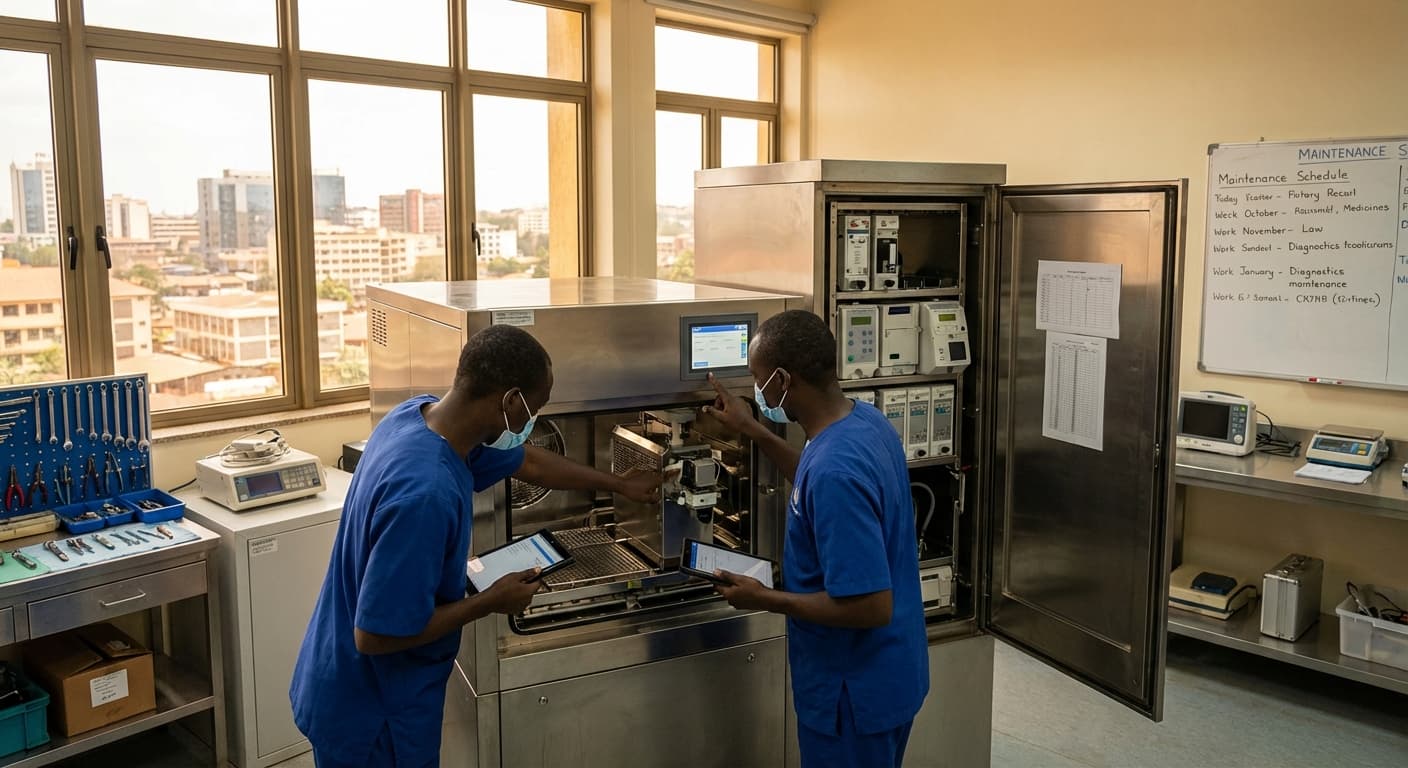
Total Cost of Ownership (TCO) & Lifecycle Budgeting Service in Uganda
Engineering Excellence & Technical Support
Total Cost of Ownership (TCO) & Lifecycle Budgeting Service High-standard technical execution following OEM protocols and local regulatory frameworks.
Predictive Cost Modeling for Infrastructure Longevity
Leverage advanced data analytics and predictive algorithms to accurately forecast the Total Cost of Ownership (TCO) for critical infrastructure projects in Uganda. Our service identifies potential cost escalations and lifecycle risks, enabling proactive budget allocation and informed investment decisions for long-term asset performance and sustainability.
Optimized Lifecycle Budgeting for Operational Efficiency
Implement comprehensive lifecycle budgeting strategies tailored to the Ugandan economic landscape. We analyze procurement, operational, maintenance, and disposal costs to create robust, adaptable budgets that minimize waste, maximize resource utilization, and ensure predictable financial outflows throughout the asset's lifespan, enhancing overall operational efficiency.
Risk-Adjusted TCO Analysis for Strategic Planning
Provide detailed risk-adjusted TCO analyses for businesses and government entities in Uganda. Our service quantifies the impact of economic volatility, regulatory changes, and unforeseen operational challenges on long-term expenditure. This enables strategic planning, better risk mitigation, and the identification of cost-effective alternatives, ensuring financial resilience and optimal asset value.
What Is Total Cost Of Ownership (Tco) & Lifecycle Budgeting Service In Uganda?
Total Cost of Ownership (TCO) & Lifecycle Budgeting (LCB) services in Uganda represent a comprehensive financial management approach that extends beyond initial acquisition costs. TCO quantifies all direct and indirect expenses associated with an asset, system, or project throughout its entire operational lifespan, from procurement and implementation to operation, maintenance, upgrades, and eventual disposal. Lifecycle Budgeting, a closely related discipline, involves forecasting and allocating funds for all these phases, ensuring financial sustainability and predictability.
These services are crucial for optimizing resource allocation, identifying hidden costs, and making informed investment decisions within the Ugandan economic and operational context. They aim to move away from short-term, CAPEX-focused budgeting towards a long-term, strategic view that accounts for the total financial impact of an entity's assets and initiatives.
| Who Needs TCO & Lifecycle Budgeting Services in Uganda? | Typical Use Cases in Uganda |
|---|---|
| Government Agencies & Public Sector Organizations: For infrastructure projects (roads, power, water), public transportation systems, IT systems, and public utilities to ensure long-term fiscal responsibility and service delivery efficiency. | Procurement of Large-Scale Infrastructure: Evaluating the TCO of new road construction, power generation plants, or water treatment facilities, considering maintenance, operational costs, and eventual upgrades/decommissioning. Fleet Management: Determining the most economical choice for vehicle fleets (government, corporate, logistics), factoring in purchase price, fuel efficiency, maintenance schedules, and resale value. Information Technology (IT) Systems & Software: Assessing the TCO of enterprise resource planning (ERP) systems, cloud infrastructure, or software licenses, including implementation, support, training, and ongoing subscription fees. Real Estate & Facilities Management: Calculating the TCO of buildings, including construction, utilities, maintenance, repairs, renovations, and eventual demolition or sale. Manufacturing & Industrial Equipment: Analyzing the lifecycle costs of machinery, including purchase, installation, energy consumption, spare parts, maintenance contracts, and end-of-life disposal. Energy Projects: Evaluating the TCO of renewable energy installations (solar, wind) or conventional power plants, considering fuel, O&M, and expected lifespan. Development Projects & Aid Programs: Ensuring that development initiatives are financially sustainable throughout their operational phases, beyond initial funding. Strategic Investment Decisions: Supporting organizations in making informed choices about investing in new assets or replacing aging infrastructure by comparing the TCO of alternatives. |
| Corporations & Private Sector Enterprises: Particularly those with significant capital investments, long-term assets, and complex operational expenditures. This includes manufacturing, logistics, telecommunications, energy, and financial services. | |
| Non-Governmental Organizations (NGOs) & Development Partners: To ensure the sustainability and cost-effectiveness of programs and projects, particularly those involving physical assets or long-term operational commitments. | |
| Financial Institutions & Lenders: When assessing the viability and long-term financial health of projects or businesses requiring substantial capital investment, to understand the full cost burden. | |
| Consulting Firms & Service Providers: Offering specialized expertise in financial analysis, asset management, and procurement to clients in Uganda. |
Key Components of TCO & Lifecycle Budgeting Services in Uganda:
- Cost Identification & Quantification: Exhaustive cataloging of all cost categories across the asset lifecycle (e.g., acquisition, installation, training, energy consumption, maintenance, repairs, upgrades, decommissioning, disposal).
- Data Collection & Analysis: Establishing robust methodologies for gathering accurate cost data from various sources, including internal records, vendor quotes, market research, and expert opinions, followed by rigorous financial analysis.
- Lifecycle Modeling: Developing financial models that project costs and benefits over the entire lifespan of an asset or project, often incorporating variables such as inflation, discount rates, and technological obsolescence.
- Risk Assessment & Mitigation: Identifying potential cost overruns and operational risks throughout the lifecycle and developing strategies to mitigate them.
- Scenario Planning & Sensitivity Analysis: Evaluating the financial impact of different operational scenarios, technological advancements, and economic fluctuations on TCO and LCB.
- Budgetary Alignment & Forecasting: Translating TCO analysis into actionable lifecycle budgets, ensuring alignment with organizational financial planning and strategic objectives.
- Performance Benchmarking: Comparing TCO against industry benchmarks or best-in-class examples to identify areas for improvement.
- Recommendation & Optimization: Providing data-driven recommendations for cost reduction, efficiency improvements, and strategic asset management.
- Reporting & Documentation: Generating comprehensive reports that clearly articulate TCO, LCB, and recommended actions for stakeholders.
Who Needs Total Cost Of Ownership (Tco) & Lifecycle Budgeting Service In Uganda?
In Uganda's evolving economic landscape, understanding the true cost of assets and projects is paramount for sustainable growth and efficient resource allocation. A Total Cost of Ownership (TCO) & Lifecycle Budgeting service provides crucial insights into the financial implications of acquiring, operating, maintaining, and eventually disposing of assets or completing projects. This service is indispensable for organizations aiming to maximize value, minimize hidden expenses, and make informed strategic decisions.
| Customer Segment | Typical Departments Involved |
|---|---|
| Large Corporations (Manufacturing, Telecommunications, Energy, Banking) | Finance & Accounting, Procurement, Operations, Asset Management, Engineering, IT, Facilities Management, Strategic Planning |
| Government Ministries & Agencies (Infrastructure, Energy, Health, Education, Finance) | Planning & Budgeting Departments, Procurement Units, Project Management Offices (PMOs), Engineering & Technical Departments, Audit & Compliance |
| Public Utilities (Water, Electricity, Transportation) | Operations Management, Finance, Engineering, Asset Management, Maintenance, Planning |
| Real Estate Developers & Construction Companies | Project Management, Finance, Procurement, Engineering, Facilities Management, Legal |
| Healthcare Providers (Hospitals, Clinics) | Finance, Procurement, Biomedical Engineering, Facilities Management, Operations |
| Educational Institutions (Universities, Large Schools) | Finance, Procurement, Facilities Management, IT Department, Administration |
| Non-Governmental Organizations (NGOs) & International Development Agencies | Finance & Administration, Program Management, Procurement, Monitoring & Evaluation |
| Mining & Extractive Industries | Finance, Operations, Engineering, Procurement, Asset Management, Environmental, Health & Safety (EHS) |
| Agricultural Sector (Large Agribusinesses) | Operations Management, Finance, Procurement, Farm Management, Asset Management |
Who Needs TCO & Lifecycle Budgeting Services in Uganda? Target Customers & Departments
- Organizations aiming for enhanced financial predictability and risk management.
- Companies seeking to optimize operational efficiency and reduce waste.
- Businesses investing in significant capital expenditures or long-term projects.
- Entities focused on sustainable practices and responsible resource management.
- Government bodies and public sector organizations managing large-scale infrastructure and public services.
- International organizations and NGOs operating in Uganda, requiring transparent and accountable financial planning.
Total Cost Of Ownership (Tco) & Lifecycle Budgeting Service Process In Uganda
This document outlines the typical workflow for a Total Cost of Ownership (TCO) and Lifecycle Budgeting Service Process in Uganda, from initial inquiry to successful execution and reporting. This process is designed to provide clients with a comprehensive understanding of the financial implications of acquiring, operating, maintaining, and disposing of assets over their entire lifespan.
| Stage | Description | Key Activities | Deliverables | Typical Duration (Uganda Context) | Key Stakeholders |
|---|---|---|---|---|---|
| Inquiry & Initial Consultation | The client expresses interest in TCO and Lifecycle Budgeting services and seeks preliminary information. This stage focuses on understanding the client's general needs and determining if the service is a good fit. | Initial contact (email, phone, meeting). Understanding client's objectives. Discussing service overview and benefits. Answering preliminary questions. | Confirmation of interest, preliminary scope understanding. | 1-3 business days | Potential Client, Service Provider Representative |
| Needs Assessment & Scope Definition | A detailed understanding of the client's specific requirements, assets, operational context, and desired outcomes is established. This phase defines the boundaries and depth of the service. | On-site or remote meetings. Gathering information on assets, operational processes, existing data, and financial constraints. Identifying key decision-makers. Defining specific TCO elements and lifecycle phases to be covered. | Detailed Scope of Work (SOW) document, agreed-upon project objectives, identified asset categories and lifecycle stages. | 3-7 business days | Client Project Team (Procurement, Finance, Operations, IT), Service Provider Consultants |
| Proposal Development & Negotiation | Based on the defined scope, a tailored proposal outlining the methodology, timelines, resources, and costs for the TCO and Lifecycle Budgeting service is prepared and presented to the client. | Developing a detailed proposal including methodology, approach, work breakdown structure, deliverables, pricing, and payment terms. Presenting proposal to client. Negotiating terms and conditions. Addressing client feedback. | Formal Proposal, Statement of Work (SOW), Contract/Agreement. | 5-10 business days | Service Provider, Client Procurement and Management Teams |
| Data Collection & Analysis | Gathering all relevant quantitative and qualitative data necessary for TCO calculation and lifecycle budgeting. This involves accessing internal client data and potentially external benchmarks. | Identifying data sources (procurement records, maintenance logs, energy bills, HR data, vendor contracts). Data extraction, cleaning, and validation. Collecting information on acquisition costs, operational expenses (energy, maintenance, labor, consumables), downtime costs, disposal costs, residual values, and potential risks. | Cleaned and validated dataset, preliminary data analysis summary. | 1-4 weeks (highly dependent on data availability and complexity) | Client Data Custodians (Finance, IT, Operations, Facilities), Service Provider Analysts |
| TCO Model Development | Constructing a robust TCO model that accurately reflects the identified cost drivers across all relevant lifecycle stages for each asset or asset category. | Selecting appropriate TCO calculation methodology (e.g., Net Present Value - NPV, simple sum). Defining cost categories and sub-categories. Developing formulas and logic within the TCO model. Incorporating inflation, discount rates, and risk factors. | Functional TCO model spreadsheet or software, documented assumptions and methodologies. | 1-3 weeks | Service Provider TCO Specialists, Client Finance/Asset Managers for validation |
| Lifecycle Budgeting & Forecasting | Extending the TCO model to forecast future expenditures over the defined lifecycle, creating a comprehensive budget for planning and resource allocation. | Projecting future operational and maintenance costs. Estimating replacement or upgrade costs. Forecasting disposal costs and residual values. Developing scenario analysis (e.g., best-case, worst-case). Aligning forecasts with client's strategic financial planning. | Lifecycle budget projections, financial forecasts for asset acquisition, operation, and disposal. Scenario analysis reports. | 1-2 weeks | Service Provider Financial Analysts, Client Budgeting and Finance Teams |
| Report Generation & Presentation | Synthesizing the findings from the TCO model and lifecycle budget into clear, actionable reports and presenting them to key stakeholders. | Compiling a comprehensive TCO report and lifecycle budget document. Creating executive summaries and detailed breakdowns. Visualizing data through charts and graphs. Presenting findings to client management, highlighting key cost drivers, optimization opportunities, and financial implications. Facilitating Q&A and discussion. | Final TCO Report, Lifecycle Budget Presentation slides, Executive Summary, Actionable recommendations. | 1-2 weeks | Service Provider Consultants, Client Management and Key Stakeholders |
| Implementation Support & Monitoring | Assisting the client in implementing the recommendations derived from the TCO analysis and establishing mechanisms for ongoing monitoring. | Supporting the development of procurement strategies based on TCO insights. Assisting in the implementation of maintenance and operational efficiency improvements. Setting up systems for tracking actual costs against the lifecycle budget. Providing guidance on asset management and replacement planning. | Implementation plan, monitoring framework, progress reports (if applicable). | Ongoing (as per contract, can be weeks to months) | Service Provider Consultants, Client Implementation Teams (Procurement, Operations, Finance) |
| Post-Project Review & Refinement | Evaluating the effectiveness of the TCO analysis and lifecycle budgeting process and making adjustments for future engagements. | Gathering feedback from the client on the service provided. Reviewing the accuracy of initial forecasts against actual costs. Identifying lessons learned. Proposing improvements to the TCO methodology or data collection processes for future projects. Discussing potential for ongoing TCO management services. | Post-project review meeting, client feedback summary, recommendations for future service improvements. | 1-3 business days | Service Provider Team, Client Project Lead |
Service Workflow Stages
- Inquiry & Initial Consultation
- Needs Assessment & Scope Definition
- Proposal Development & Negotiation
- Data Collection & Analysis
- TCO Model Development
- Lifecycle Budgeting & Forecasting
- Report Generation & Presentation
- Implementation Support & Monitoring
- Post-Project Review & Refinement
Total Cost Of Ownership (Tco) & Lifecycle Budgeting Service Cost In Uganda
The Total Cost of Ownership (TCO) and Lifecycle Budgeting service in Uganda is a crucial, yet often complex, undertaking for businesses aiming to optimize their financial planning and asset management. This service goes beyond initial purchase prices to encompass all direct and indirect costs associated with an asset or project throughout its entire lifespan, from acquisition to disposal. Understanding and accurately budgeting for TCO and lifecycle costs helps Ugandan businesses make informed decisions, reduce unexpected expenses, improve operational efficiency, and maximize return on investment.
| Service Component | Typical Cost Range (UGX) | Notes |
|---|---|---|
| Initial TCO Assessment (Simple Asset/Project) | 1,500,000 - 5,000,000 | For a single, well-defined asset with good data. |
| Comprehensive TCO Analysis (Medium Complexity) | 5,000,000 - 15,000,000 | For multiple assets or a project with moderate data needs and analysis depth. |
| Full Lifecycle Costing & Budgeting (Complex/Large Scale) | 15,000,000 - 50,000,000+ | Involves extensive data gathering, detailed modeling, risk analysis, and long-term forecasting. Can go significantly higher for major infrastructure projects. |
| Data Collection & Validation (Per Asset/System) | 200,000 - 1,000,000 | If significant effort is required to gather and clean existing data. |
| Risk Assessment & Sensitivity Analysis (Add-on) | 1,000,000 - 5,000,000 | For a more robust understanding of potential cost variations. |
| Custom TCO Software/Dashboard Development | 5,000,000 - 20,000,000+ | Depending on the complexity and features of the custom solution. |
| Hourly Consulting Rate (Senior Analyst) | 150,000 - 400,000 | Often used for specific advisory tasks or when the scope is fluid. |
Key Pricing Factors for TCO & Lifecycle Budgeting Services in Uganda
- Scope and Complexity of the Project/Asset: The larger and more intricate the asset (e.g., a large-scale manufacturing plant, an extensive IT infrastructure, a fleet of vehicles) or the project requiring TCO analysis, the more time and expertise will be needed, thus increasing costs.
- Data Availability and Quality: The ease of access to reliable historical data (maintenance records, energy consumption, operational logs, disposal costs) significantly impacts the time and effort required for analysis. Poor or missing data will necessitate more extensive data collection and validation, leading to higher service fees.
- Depth of Analysis Required: A basic TCO calculation will be less expensive than a comprehensive lifecycle cost analysis that includes detailed risk assessments, sensitivity analyses, and scenario planning.
- Number of Assets/Components Analyzed: TCO analysis for a single piece of equipment will differ in cost from analyzing an entire portfolio of assets or a complex integrated system.
- Industry and Sector Specificity: Certain industries have unique cost structures and regulatory requirements that may necessitate specialized knowledge and more in-depth analysis, influencing pricing.
- Consultant Expertise and Reputation: The experience, qualifications, and established reputation of the consulting firm or individual providing the service are significant drivers of cost. Highly specialized and reputable consultants command higher fees.
- Geographic Location within Uganda: While less of a primary driver, logistical considerations for on-site assessments in remote areas might add minor costs.
- Reporting and Deliverables: The format, detail, and frequency of reports, along with any custom dashboards or tools developed, will influence the overall service cost.
- Duration of the Engagement: Longer-term engagements or ongoing TCO monitoring services will be priced differently than one-off project analyses.
- Technology and Tools Used: The use of advanced TCO software, simulation tools, or data analytics platforms can impact the cost structure.
Affordable Total Cost Of Ownership (Tco) & Lifecycle Budgeting Service Options
Our Affordable Total Cost of Ownership (TCO) & Lifecycle Budgeting Services are designed to empower organizations with a clear understanding of their asset expenditures over their entire lifespan. We go beyond initial purchase price to encompass all costs, from acquisition and deployment to operation, maintenance, upgrades, and eventual disposal. Our services provide comprehensive insights, enabling proactive financial planning, informed decision-making, and significant cost savings through optimized resource allocation and strategic lifecycle management.
| Cost-Saving Strategy | Description | Impact on TCO |
|---|---|---|
| Predictive Maintenance Implementation | Utilizing data analytics and sensor technology to anticipate equipment failures and perform maintenance proactively, preventing costly breakdowns and downtime. | Reduces unexpected repair costs, minimizes downtime, and extends asset lifespan. |
| Standardization of Assets | Consolidating the number of different asset types and models used across the organization to simplify maintenance, training, and spare parts inventory. | Lowers training costs, reduces inventory holding costs, and streamlines maintenance operations. |
| Energy Efficiency Upgrades | Investing in more energy-efficient equipment and operational practices to reduce utility consumption. | Directly lowers operational expenses (electricity, gas, etc.) over the asset's lifecycle. |
| Strategic Procurement & Negotiation | Leveraging TCO insights during the procurement process to negotiate better purchase prices and favorable maintenance contracts. | Reduces initial acquisition costs and long-term service agreements. |
| Extended Asset Lifespan Strategies | Implementing best practices for asset care, regular servicing, and timely upgrades to maximize the useful life of existing assets. | Delays or avoids the need for costly replacements, reducing capital expenditure. |
| Optimized Disposal & Recycling | Planning for the end-of-life of assets to ensure responsible disposal, potential resale of components, or tax benefits from recycling. | Minimizes disposal fees and can generate residual value. |
Value Bundles
- {"title":"Essentials TCO Assessment","description":"A foundational package for initial understanding. Includes TCO calculation for up to 5 key asset categories, identification of major cost drivers, and basic reporting on operational expenses."}
- {"title":"Proactive Lifecycle Budgeting","description":"Builds on the Essentials package. Incorporates detailed lifecycle cost projections, predictive maintenance cost modeling, and scenario analysis for future budgeting. Includes recommendations for extending asset life."}
- {"title":"Strategic Asset Optimization","description":"Our most comprehensive offering. Features in-depth TCO analysis across all organizational assets, detailed lifecycle cost optimization strategies, risk assessment for obsolescence, and custom budget forecasting tools. Includes guidance on procurement strategies and disposal planning."}
- {"title":"Custom TCO & Budgeting Solution","description":"Tailored to your unique needs. We'll work with you to design a service package that precisely addresses your specific asset classes, operational complexities, and financial objectives."}
Verified Providers In Uganda
In Uganda's evolving healthcare landscape, identifying truly Verified Providers is paramount. Franance Health stands out as a beacon of trust and quality, offering a comprehensive network of healthcare professionals and institutions that have undergone rigorous credentialing. This meticulous vetting process ensures that every provider affiliated with Franance Health meets the highest standards of medical expertise, ethical practice, and patient care. Choosing Franance Health means opting for reliability, transparency, and a commitment to your well-being. Their dedication to verifying provider credentials not only safeguards patients from unqualified practitioners but also fosters a more accountable and efficient healthcare system in Uganda.
| Credentialing Aspect | Franance Health's Verification Standard | Benefit to Patients |
|---|---|---|
| Medical Licenses & Certifications | Thoroughly checked against official Ugandan regulatory bodies. | Ensures providers possess legitimate and up-to-date qualifications. |
| Professional Experience | Verified through work history, references, and peer reviews. | Guarantees access to seasoned and competent medical professionals. |
| Continuing Medical Education (CME) | Confirmation of ongoing professional development and updated knowledge. | Ensures providers are current with the latest medical advancements and practices. |
| Ethical Conduct & Disciplinary History | Background checks and review of any past disciplinary actions. | Protects patients from unethical practices and ensures a high standard of integrity. |
| Infrastructure & Facilities (for clinics/hospitals) | Assessment of hygiene, equipment, and overall patient care environment. | Confirms a safe, clean, and well-equipped setting for medical treatments. |
Why Franance Health is the Premier Choice for Verified Providers in Uganda
- Rigorous Credentialing Process: Franance Health employs a multi-stage verification system for all affiliated providers, ensuring they meet stringent medical and ethical standards.
- Uncompromising Quality of Care: By partnering with only the most qualified and experienced professionals, Franance Health guarantees a superior level of healthcare for its users.
- Enhanced Patient Safety: The verification process directly contributes to patient safety by eliminating the risk of encountering uncertified or substandard medical services.
- Transparent and Trustworthy Network: Franance Health provides a transparent platform where patients can confidently access verified healthcare providers.
- Commitment to Excellence: Franance Health's dedication to maintaining the highest provider standards reflects a deep commitment to improving healthcare outcomes in Uganda.
- Access to Specialized Expertise: Their network includes a diverse range of specialists, ensuring you can find the right expertise for your specific health needs.
- Peace of Mind: Knowing you are receiving care from a verified provider offers invaluable peace of mind and reduces healthcare-related anxieties.
Scope Of Work For Total Cost Of Ownership (Tco) & Lifecycle Budgeting Service
This Scope of Work (SOW) outlines the services to be provided for a comprehensive Total Cost of Ownership (TCO) and Lifecycle Budgeting (LCB) analysis. The objective is to establish a clear understanding of all costs associated with an asset, system, or project throughout its entire lifespan, from acquisition to disposal. This will enable informed decision-making, strategic planning, and optimized resource allocation.
| Phase/Activity | Description | Key Activities | Deliverables (Technical) | Standard Specifications/Methodology |
|---|---|---|---|---|
| Define project scope, objectives, and methodology for TCO/LCB analysis. | Stakeholder interviews, scope definition workshop, project plan development, data collection strategy. | Project Charter, Detailed Project Plan, Communication Plan, Data Collection Template. | Agreed-upon project management methodology (e.g., Agile, Waterfall). Defined project roles and responsibilities. |
| Gather all relevant cost data across the entire lifecycle. | Identify and document cost categories (e.g., acquisition, operation, maintenance, disposal). Collect historical data, quotes, vendor information, and operational metrics. | Comprehensive Data Repository, Data Validation Report. | Standardized data collection templates. Cross-referencing of data sources. Data quality checks and validation procedures. |
| Develop and apply a TCO model to quantify all associated costs. | Define lifecycle phases. Assign costs to each phase. Apply relevant financial metrics (e.g., NPV, IRR, ROI). Perform sensitivity analysis. | TCO Model (spreadsheet or specialized software), Detailed TCO Calculation Report, Sensitivity Analysis Report. | Established TCO framework (e.g., industry-specific standards, internal guidelines). Discount rates and inflation assumptions clearly documented. Defined calculation methodologies. |
| Translate TCO findings into a practical, multi-year budget. | Forecast future expenditures based on TCO model. Align budget with strategic plans and funding cycles. Develop contingency plans. | Lifecycle Budget Forecast, Annual Budget Integration Plan, Contingency Budget Recommendations. | Alignment with organizational budgeting cycles. Use of rolling forecasts. Clear linkage between TCO outputs and budget line items. |
| Analyze TCO and LCB results to provide actionable insights and recommendations. | Identify cost optimization opportunities. Benchmark against industry best practices. Propose strategies for cost reduction and improved asset performance. | TCO/LCB Analysis Report, Cost Optimization Recommendations, Risk Assessment Report, Strategic Decision Support Briefings. | Benchmarking against relevant industry data. Application of value engineering principles. Prioritization of recommendations based on impact and feasibility. |
| Communicate findings and recommendations to stakeholders. | Prepare comprehensive reports and presentations. Conduct review meetings. Finalize deliverables. | Final TCO & LCB Report, Executive Summary Presentation, Stakeholder Feedback Summary. | Clear and concise reporting language. Visualizations for data representation. Tailored presentations for different stakeholder groups. |
| Review the accuracy of the TCO/LCB model and identify lessons learned. | Compare actual costs with projected costs. Update TCO model with actual data. Document lessons learned for future projects. | Post-Implementation Review Report, Updated TCO Model (if applicable), Lessons Learned Document. | Defined review period. Methodology for comparing projected vs. actual costs. Standardized lessons learned documentation format. |
Key Objectives of TCO & Lifecycle Budgeting Service
- Quantify all direct and indirect costs over the asset's lifecycle.
- Identify cost drivers and potential areas for cost reduction.
- Provide a robust framework for long-term financial planning and budgeting.
- Support strategic investment decisions by comparing alternative solutions based on TCO.
- Enhance asset management and operational efficiency.
- Ensure compliance with financial reporting and sustainability standards.
Service Level Agreement For Total Cost Of Ownership (Tco) & Lifecycle Budgeting Service
This Service Level Agreement (SLA) outlines the guaranteed response times and uptime for the Total Cost of Ownership (TCO) & Lifecycle Budgeting Service. This service is designed to provide clients with accurate, data-driven insights into the full cost and financial planning required for their assets throughout their entire lifecycle. Adherence to these Service Levels is crucial for ensuring timely decision-making and effective financial management.
| Service Component | Priority Level | Response Time Target | Uptime Guarantee |
|---|---|---|---|
| Platform Accessibility & Core Functionality | Critical (e.g., System outage, inability to access platform) | 15 minutes | 99.9% monthly |
| Platform Accessibility & Core Functionality | High (e.g., Major feature malfunction, significant performance degradation) | 1 hour | 99.9% monthly |
| Platform Accessibility & Core Functionality | Medium (e.g., Minor feature bug, non-critical performance issue) | 4 business hours | 99.9% monthly |
| Platform Accessibility & Core Functionality | Low (e.g., General inquiry, request for documentation update) | 8 business hours | 99.9% monthly |
| Report Generation & Data Retrieval | Critical (e.g., Failure to generate essential reports, data corruption) | 2 business hours | 99.5% monthly |
| Report Generation & Data Retrieval | High (e.g., Significant delay in report generation, incomplete data) | 8 business hours | 99.5% monthly |
| Support & Consultation Requests | Critical (e.g., Urgent query impacting critical financial decisions) | 2 business hours | N/A |
| Support & Consultation Requests | High (e.g., Complex query requiring in-depth analysis) | 1 business day | N/A |
| Support & Consultation Requests | Medium (e.g., Standard query, request for configuration assistance) | 2 business days | N/A |
| Data Accuracy & Integrity Correction | Critical (e.g., Major data error impacting calculations) | 4 business hours for initial assessment, resolution time TBD based on complexity | N/A |
| Data Accuracy & Integrity Correction | High (e.g., Minor data discrepancy) | 1 business day for initial assessment, resolution time TBD based on complexity | N/A |
Service Level Objectives (SLOs)
- Response Times: Defined as the time from when a request is logged through the designated support portal or email until an initial acknowledgement and assessment is provided by the service team.
- Uptime Guarantees: Refers to the percentage of time the TCO & Lifecycle Budgeting Service platform and its core functionalities are available and operational for client use, excluding scheduled maintenance periods.
- Data Accuracy & Integrity: While not directly a time-based SLA, the service commits to maintaining high standards of data accuracy and integrity, with mechanisms for identifying and rectifying any discrepancies within defined timeframes.
- Reporting Availability: The ability for clients to access and generate TCO and lifecycle budget reports as per their subscription level and configuration.
Frequently Asked Questions

Ready when you are
Let's scope your Total Cost of Ownership (TCO) & Lifecycle Budgeting Service in Uganda project in Uganda.

Scaling healthcare logistics and technical systems across the entire continent.