
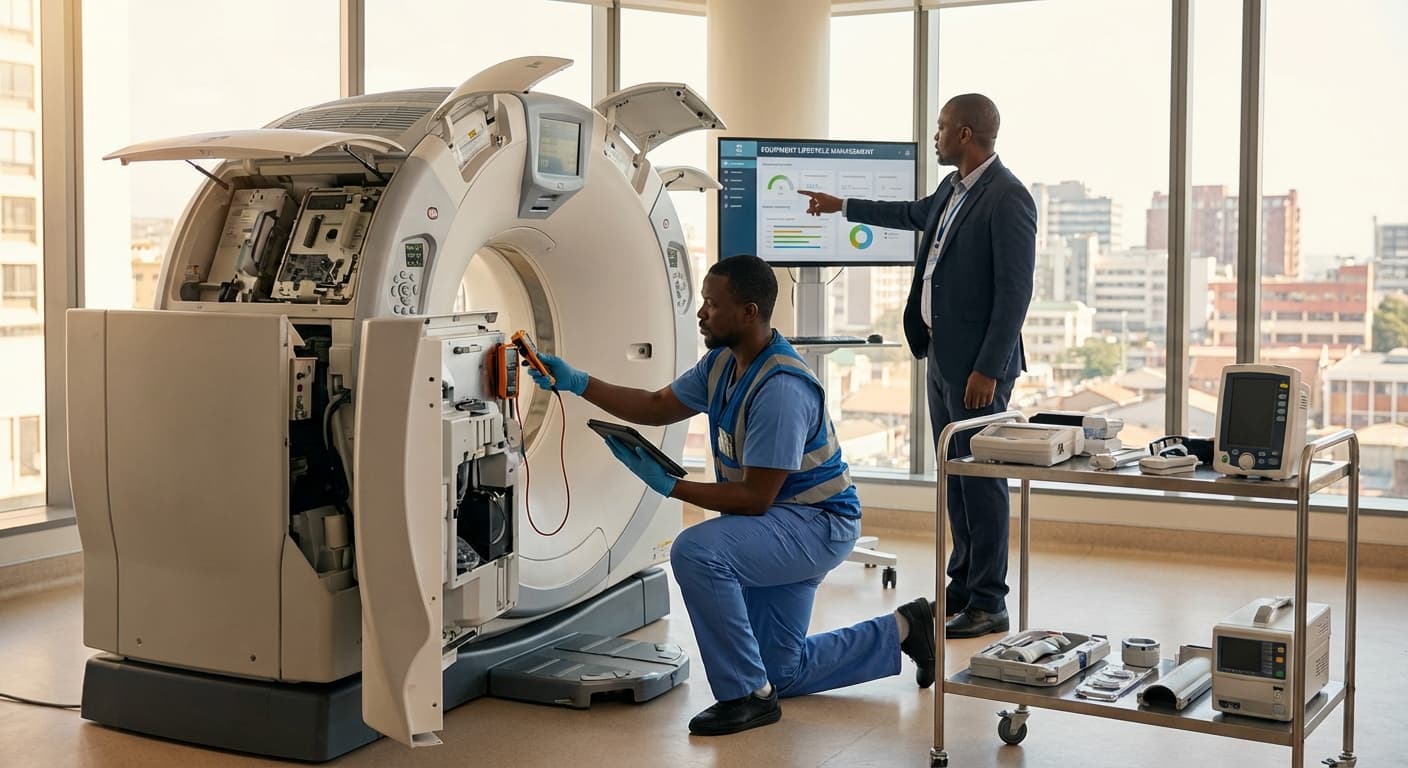
Equipment Replacement Planning & Obsolescence Strategy Service in Uganda
Engineering Excellence & Technical Support
Equipment Replacement Planning & Obsolescence Strategy Service High-standard technical execution following OEM protocols and local regulatory frameworks.
Predictive Lifecycle Analytics
Leveraging advanced analytics and historical data, our service forecasts equipment lifecycles, identifies critical obsolescence points, and proactively plans replacements to minimize operational disruptions and maximize ROI in Uganda's unique industrial landscape.
Customized Obsolescence Mitigation
We develop tailored obsolescence management strategies, including sourcing alternative components, engineering workarounds, and phased technology upgrades, ensuring Ugandan businesses maintain operational continuity and competitive advantage despite supply chain challenges.
Integrated Replacement & Upgrade Roadmaps
Our service provides detailed, actionable roadmaps for equipment replacement and modernization, aligning with Uganda's infrastructure development goals and economic realities. We optimize capital expenditure by prioritizing critical assets and integrating new technologies for enhanced efficiency and sustainability.
What Is Equipment Replacement Planning & Obsolescence Strategy Service In Uganda?
Equipment Replacement Planning & Obsolescence Strategy Service in Uganda refers to a specialized consulting and advisory offering aimed at assisting organizations in Uganda to proactively manage their asset lifecycle, specifically focusing on the timely and cost-effective replacement of equipment and mitigating the risks associated with technological obsolescence. This service encompasses a systematic approach to evaluating existing assets, forecasting future needs, and developing strategic frameworks to ensure operational continuity, minimize downtime, and optimize capital expenditure related to equipment acquisition and retirement.
| Who Needs This Service? | Typical Use Cases | ||||||||||||
|---|---|---|---|---|---|---|---|---|---|---|---|---|---|
| Manufacturing Companies: Requiring reliable and up-to-date production machinery to maintain output quality and efficiency. | Upgrade of aging manufacturing lines to incorporate Industry 4.0 technologies (e.g., IoT, automation). | Telecommunications Providers: Needing to maintain and upgrade network infrastructure to support increasing data demands and evolving technologies. | Phased replacement of legacy network switches and base stations with newer, higher-capacity models. | Energy and Utilities Sector: Operating critical infrastructure (power plants, water treatment facilities) that require continuous availability and adherence to safety standards. | Strategic replacement of aging turbines or pumps to improve energy efficiency and reduce maintenance costs. | Mining Operations: Utilizing heavy machinery and specialized equipment in demanding environments. | Planned replacement cycles for haul trucks, excavators, and processing equipment based on utilization and repair cost escalation. | Healthcare Institutions: Operating medical equipment with strict performance and safety requirements. | Scheduled replacement of diagnostic imaging equipment (e.g., MRI, CT scanners) to ensure diagnostic accuracy and patient safety. | Transportation and Logistics Companies: Relying on fleets of vehicles and specialized handling equipment. | Fleet modernization program for delivery trucks to improve fuel efficiency and reduce environmental impact. | Public Sector Agencies: Managing infrastructure and operational assets with long lifecycles and public accountability. | Replacement of aging public transport vehicles or water management system components. |
Key Components of the Service:
- Asset Inventory and Condition Assessment: Comprehensive cataloging of all relevant equipment, including its age, condition, maintenance history, and performance metrics.
- Lifecycle Cost Analysis (LCCA): Detailed evaluation of the total cost of ownership for each asset, encompassing acquisition, operation, maintenance, and disposal costs over its projected lifespan.
- Obsolescence Risk Assessment: Identification of factors contributing to obsolescence, such as technological advancements, component unavailability, diminishing support, and regulatory changes.
- Demand Forecasting and Capacity Planning: Projection of future operational requirements and the equipment capacity needed to meet those demands.
- Replacement Strategy Development: Formulation of strategic plans for equipment retirement, refurbishment, or replacement, considering factors like ROI, risk mitigation, and technological roadmap alignment.
- Financial Planning and Budgeting: Development of multi-year capital expenditure budgets and financing strategies for equipment replacement initiatives.
- Vendor and Technology Evaluation: Assessment of available replacement technologies and potential vendors, including market analysis and due diligence.
- Implementation Support: Guidance and oversight during the procurement, installation, and commissioning of new equipment.
- Disposal and Decommissioning Planning: Strategies for the safe, environmentally responsible, and cost-effective disposal or repurposing of retired assets.
- Change Management and Training: Planning for the impact of new equipment on operational processes and personnel, including training requirements.
Who Needs Equipment Replacement Planning & Obsolescence Strategy Service In Uganda?
Equipment Replacement Planning & Obsolescence Strategy services are crucial for organizations in Uganda that rely on sophisticated or long-lived assets. These services help businesses proactively manage the lifecycle of their equipment, mitigate risks associated with aging technology, and optimize capital expenditure. By planning for replacements and obsolescence, companies can ensure operational continuity, maintain competitive advantage, and avoid costly emergency repairs or production downtime.
| Target Customer Segment | Key Departments Involved | Specific Needs Addressed |
|---|---|---|
| Manufacturing Companies | Operations, Engineering, Maintenance, Finance, Procurement | Minimizing production downtime, ensuring output quality, managing capital expenditure for machinery upgrades, avoiding supply chain disruptions due to obsolete parts. |
| Telecommunications Providers | Network Operations, Engineering, IT, Finance, Procurement | Maintaining network reliability and capacity, managing the lifecycle of network hardware (routers, switches, base stations), avoiding service disruptions due to end-of-life equipment, planning for technology upgrades (e.g., 5G). |
| Power Generation and Distribution Utilities | Operations, Maintenance, Engineering, Asset Management, Finance, Regulatory Affairs | Ensuring grid stability and reliability, managing aging infrastructure (transformers, turbines, transmission lines), compliance with safety and environmental regulations, long-term investment planning for asset replacement. |
| Mining and Extractive Industries | Operations, Maintenance, Engineering, Health & Safety, Procurement, Finance | Maximizing operational efficiency in harsh environments, managing wear and tear on heavy machinery, ensuring safety with updated equipment, planning for significant capital investments in new mining technology, sourcing replacement parts for specialized equipment. |
| Transportation and Logistics Firms | Fleet Management, Operations, Maintenance, Procurement, Finance | Optimizing fleet performance and fuel efficiency, managing vehicle replacement cycles, ensuring compliance with safety standards, minimizing maintenance costs for aging vehicles, planning for adoption of new technologies (e.g., electric vehicles, advanced tracking). |
| Healthcare Institutions | Biomedical Engineering, IT, Clinical Operations, Procurement, Finance, Risk Management | Ensuring patient safety and diagnostic accuracy, managing the lifecycle of medical equipment (MRI machines, X-ray units, ventilators), compliance with medical device regulations, planning for technological advancements in healthcare, budgeting for high-cost equipment replacement. |
| Construction and Infrastructure Development Companies | Fleet Management, Operations, Maintenance, Procurement, Project Management, Finance | Ensuring project timelines are met, managing wear and tear on heavy construction equipment, planning for upgrades to more efficient or specialized machinery, minimizing equipment breakdowns on-site, optimizing equipment utilization. |
| Government Agencies (Defense, Public Works) | Procurement, Logistics, Engineering, Maintenance, Operations, Finance | Ensuring national security and public service continuity, managing the lifecycle of specialized or long-duration assets (military vehicles, infrastructure components), compliance with stringent procurement and lifecycle management regulations, strategic long-term planning for modernization. |
| Large-Scale Agricultural Operations | Farm Management, Operations, Maintenance, Procurement, Finance | Maximizing crop yields and operational efficiency, managing the wear and tear on agricultural machinery (tractors, harvesters), planning for technological upgrades (e.g., precision agriculture), ensuring timely availability of parts for critical seasonal operations. |
| Oil and Gas Sector | Operations, Maintenance, Engineering, Asset Integrity, HSE, Procurement, Finance | Ensuring safe and reliable operations in high-risk environments, managing the lifecycle of complex and specialized equipment (drilling rigs, pipelines, processing plants), compliance with strict industry regulations, planning for significant capital expenditure on asset modernization and replacement to maintain production and safety. |
Who Needs Equipment Replacement Planning & Obsolescence Strategy in Uganda?
- Manufacturing Companies
- Telecommunications Providers
- Power Generation and Distribution Utilities
- Mining and Extractive Industries
- Transportation and Logistics Firms
- Healthcare Institutions (hospitals, diagnostic centers)
- Construction and Infrastructure Development Companies
- Government Agencies (defense, public works)
- Large-Scale Agricultural Operations
- Oil and Gas Sector
Equipment Replacement Planning & Obsolescence Strategy Service Process In Uganda
This document outlines the typical workflow for an Equipment Replacement Planning & Obsolescence Strategy Service offered to clients in Uganda. The process is designed to be comprehensive, starting from an initial client inquiry and culminating in the successful execution of a tailored strategy.
| Stage | Description | Key Activities | Deliverables/Outcomes | Ugandan Context Considerations |
|---|---|---|---|---|
| The client expresses interest in services related to equipment replacement and obsolescence management. | Initial discussion to understand client needs, objectives, and current challenges. Introduction to the service offering. | Clear understanding of client's problem statement, preliminary scope of work. | Establishing rapport, understanding local business culture and communication styles. Potential language nuances. |
| A deep dive into the client's existing equipment inventory, operational requirements, and strategic goals. | On-site visits, interviews with key personnel (operations, maintenance, finance), data collection on asset register, maintenance history, usage patterns, purchase dates, and original specifications. | Comprehensive asset inventory, operational performance data, financial data related to equipment. | Logistical challenges for site visits (infrastructure, travel time). Data availability and format variations. Need for local translators if required. |
| Evaluating the current and future risk of equipment obsolescence based on various factors. | Analyzing manufacturer's end-of-life (EOL) notices, technology trends, availability of spare parts, maintenance support, regulatory compliance, and operational impact of potential failures. Identifying critical assets. | Obsolescence risk assessment report, identification of high-risk equipment, prioritization of assets for replacement. | Availability and reliability of manufacturer's EOL data. Local availability of technicians for specialized repairs. Impact of regional supply chain disruptions. |
| Developing a strategic roadmap for equipment replacement, considering financial, operational, and technological aspects. | Defining replacement criteria, developing phased replacement schedules, exploring alternative solutions (refurbishment, upgrade), conducting total cost of ownership (TCO) analysis, and aligning with client's budget and long-term vision. | Detailed equipment replacement plan, obsolescence mitigation strategy, financial projections, proposed procurement timelines. | Local currency fluctuations, import duties and taxes, availability of financing options, local vendor capabilities, and lead times for new equipment procurement. Understanding local procurement regulations. |
| Presenting the developed strategy and securing client approval. | Submitting a formal proposal outlining scope, methodology, deliverables, timeline, and pricing. Negotiations and contract finalization. | Signed service agreement, detailed project plan. | Ensuring contract terms are clear and legally sound within Ugandan jurisdiction. Clarity on payment terms and currency. |
| Putting the approved strategy into action. | Procurement of new equipment, decommissioning of old assets, installation, testing, and commissioning. Training of personnel. Managing vendors and contractors. | Successfully replaced equipment, operational efficiency improvements, reduced obsolescence risks. | Navigating local customs and import procedures. Sourcing and managing local contractors and technicians. Managing logistical challenges for delivery and installation. Ensuring adherence to local safety and environmental regulations. |
| Ensuring the long-term effectiveness of the implemented strategy and providing ongoing support. | Regular performance monitoring of new equipment, review of obsolescence risks, providing recommendations for continuous improvement, post-implementation review. | Performance reports, updated obsolescence risk assessments, recommendations for future asset management. | Establishing effective communication channels for ongoing feedback. Understanding any post-implementation operational issues specific to the Ugandan environment. |
Equipment Replacement Planning & Obsolescence Strategy Service Workflow (Uganda)
- Client Inquiry & Initial Consultation
- Needs Assessment & Data Gathering
- Obsolescence Risk Analysis
- Replacement Planning & Strategy Development
- Proposal & Agreement
- Implementation & Execution
- Monitoring & Review
Equipment Replacement Planning & Obsolescence Strategy Service Cost In Uganda
Planning for equipment replacement and developing obsolescence strategies are critical for businesses in Uganda to maintain operational efficiency, avoid costly breakdowns, and adapt to technological advancements. The cost of such specialized services in Uganda can vary significantly based on several factors. These factors include the scope and complexity of the existing equipment, the number of assets to be assessed, the level of detail required in the analysis, the expertise and reputation of the service provider, and the specific deliverables expected (e.g., a basic report vs. a comprehensive implementation plan).
Typically, consultancy firms or specialized engineering services offer these solutions. Smaller, less complex projects might involve a straightforward assessment of a limited asset pool, while larger industrial facilities with diverse and numerous equipment types will naturally incur higher costs. The urgency of the project and the need for specialized technical skills can also influence pricing. Furthermore, ongoing support or retainer services for continuous monitoring and strategy updates will have a different pricing structure than a one-time project.
| Service Level/Scope | Estimated Cost Range (UGX) | Typical Inclusions |
|---|---|---|
| Basic Equipment Inventory & Ageing Analysis (Small Business/Limited Assets) | 5,000,000 - 15,000,000 | Inventory list, age profiling, basic risk identification, general recommendations. |
| Standard Equipment Replacement Planning (Medium-Sized Enterprise/Moderate Assets) | 15,000,000 - 40,000,000 | Detailed asset condition assessment, failure analysis, lifecycle cost projections, preliminary replacement schedules, basic obsolescence identification. |
| Comprehensive Obsolescence Strategy & Replacement Planning (Large Industrial Facility/Complex Assets) | 40,000,000 - 150,000,000+ | In-depth technical and economic analysis of all critical assets, advanced obsolescence forecasting (technology, parts, skills), detailed financial modeling for replacement/upgrade scenarios, risk mitigation strategies, implementation roadmap, supplier analysis, potential for software tool recommendations. |
| Retainer/Ongoing Support (Annual) | 10,000,000 - 50,000,000+ | Regular performance monitoring, strategy updates, advisory services, response to emerging obsolescence issues. |
Key Pricing Factors for Equipment Replacement Planning & Obsolescence Strategy Services in Uganda:
- Scope of Assessment: The number and types of equipment to be analyzed.
- Complexity of Equipment: The technical sophistication and maintenance history of the assets.
- Data Availability & Quality: The ease of accessing reliable information on equipment performance, maintenance records, and costs.
- Provider Expertise & Reputation: The experience, qualifications, and market standing of the consulting firm or individual.
- Depth of Analysis: The level of detail in risk assessment, financial modeling, and strategic recommendations.
- Deliverables Required: Basic reports, detailed implementation plans, or software integration.
- Project Urgency: Expedited service may command a premium.
- Geographic Location (within Uganda): While less of a factor for desk-based analysis, site visits might incur travel costs.
- Ongoing Support & Monitoring: The need for continuous strategy review and updates.
- Technology Integration: If the service involves implementing new asset management software.
Affordable Equipment Replacement Planning & Obsolescence Strategy Service Options
Our Affordable Equipment Replacement Planning & Obsolescence Strategy Service is designed to help organizations proactively manage their asset lifecycle, minimize downtime, and optimize capital expenditure. We offer flexible value bundles and implement cost-saving strategies to ensure you get the most out of your investment. This service helps you avoid costly emergency replacements, mitigate risks associated with outdated technology, and make informed decisions about when and how to upgrade your critical equipment. By understanding your unique operational needs and budget constraints, we tailor a strategy that aligns with your business objectives.
| Value Bundle Option | Description | Ideal For | Potential Cost-Saving Strategies Integrated |
|---|---|---|---|
| Essential Planning | Covers core asset inventory, basic obsolescence risk assessment, and a foundational replacement roadmap. | Small to medium-sized businesses with limited budgets, prioritizing critical equipment. | Bulk purchasing discounts, phased replacement implementation, extending lifespan of low-risk assets. |
| Strategic Optimization | Includes advanced risk analysis, predictive maintenance integration, detailed financial modeling for replacements, and vendor pre-qualification. | Medium to large enterprises seeking to optimize their entire asset lifecycle and budget. | Lease vs. buy analysis, negotiation for extended warranties, alternative technology sourcing, leveraging vendor financing. |
| Comprehensive Lifecycle Management | Encompasses all aspects of strategic optimization plus advanced disposal and recycling strategies, custom KPI development, and ongoing performance monitoring. | Large corporations with complex asset portfolios and a focus on sustainability and long-term operational efficiency. | Refurbishment and resale opportunities, cradle-to-grave asset tracking, optimization of spare parts inventory, risk mitigation through preventative measures. |
Key Service Components
- Comprehensive Asset Inventory & Assessment
- Obsolescence Risk Analysis & Prioritization
- Predictive Maintenance Integration
- Replacement & Upgrade Planning (Phased & Strategic)
- Vendor Negotiation & Procurement Support
- Disposal & Recycling Strategy
Verified Providers In Uganda
Navigating the healthcare landscape in Uganda can be challenging, but identifying verified providers is crucial for ensuring quality and trustworthy medical services. Franance Health stands out as a beacon of reliability and excellence, offering a comprehensive network of healthcare professionals and facilities that meet stringent credentialing standards. Their commitment to verification means patients can have peace of mind knowing they are receiving care from qualified and vetted individuals and institutions. This focus on transparency and patient safety is what makes Franance Health the best choice for healthcare needs in Uganda.
| Provider Type | Franance Health Verification Criteria | Benefits for Patients |
|---|---|---|
| Doctors (Specialists & General Practitioners) | Valid medical license from the Uganda Medical and Dental Practitioners Council (UMDPC), verified postgraduate qualifications, clean professional record, adherence to ethical guidelines. | Access to experienced and licensed medical professionals, confidence in diagnosis and treatment, reduced risk of medical malpractice. |
| Hospitals & Clinics | Accreditation from the Ministry of Health, adherence to safety and hygiene standards, qualified medical staff, availability of essential equipment and services, sound financial standing. | Safe and sterile treatment environments, access to appropriate medical technology, comprehensive care services, reliable infrastructure. |
| Laboratories & Diagnostic Centers | Licensing by relevant authorities (e.g., Ministry of Health, UMDPC), accreditation for specific tests, qualified technicians, use of calibrated and well-maintained equipment. | Accurate and reliable diagnostic results, timely reporting, access to advanced testing capabilities. |
| Pharmacies | Licensing by the National Drug Authority (NDA), presence of registered pharmacists, secure storage of medications, adherence to dispensing regulations. | Access to genuine and safe medications, professional advice on drug usage, prevention of counterfeit drugs. |
Why Franance Health is the Top Choice for Verified Providers in Uganda:
- Rigorous Credentialing Process: Franance Health employs a multi-faceted verification system for all its partner providers, ensuring they meet educational, professional, and ethical standards.
- Extensive Network: Access a wide array of specialists, general practitioners, and healthcare facilities across Uganda, all pre-vetted for your convenience.
- Commitment to Quality: By partnering only with verified providers, Franance Health guarantees a high standard of medical care and patient experience.
- Enhanced Patient Safety: Our verification protocols significantly reduce the risk of encountering unqualified or fraudulent healthcare practitioners.
- Streamlined Access: Franance Health simplifies the process of finding reliable healthcare, saving you time and stress in crucial moments.
- Continuous Monitoring: We regularly review and update the credentials of our network to ensure ongoing compliance and quality assurance.
Scope Of Work For Equipment Replacement Planning & Obsolescence Strategy Service
This document outlines the Scope of Work (SOW) for a consulting service focused on Equipment Replacement Planning and Obsolescence Strategy. The objective is to assist the client in developing a comprehensive and proactive approach to managing their equipment lifecycle, ensuring operational continuity, mitigating risks associated with obsolescence, and optimizing capital expenditure for replacements and upgrades.
| Phase/Activity | Description | Key Tasks | Deliverables (Technical) | Standard Specifications/Methodologies |
|---|---|---|---|---|
| Phase 1: Assessment & Analysis | Understanding the current state of equipment assets and identifying immediate risks. | 1.1. Data Gathering & Inventory Verification 1.2. Equipment Condition Assessment 1.3. Obsolescence Risk Identification 1.4. Performance & Cost Analysis | 1.1. Comprehensive Equipment Inventory Database (with details: manufacturer, model, serial, installation date, criticality, vendor support status) 1.2. Equipment Condition Assessment Report (including failure history, maintenance records, visual inspection findings) 1.3. Obsolescence Risk Register (categorized by type: technical, support, regulatory, end-of-life) 1.4. Performance & Cost Benchmark Report | ISO 55000 (Asset Management) Gartner Asset Management Framework Reliability Centered Maintenance (RCM) principles Manufacturer's End-of-Life (EOL) / End-of-Support (EOS) data sources Condition Monitoring techniques (e.g., vibration analysis, thermography, ultrasonic testing) |
| Phase 2: Strategy Development | Establishing the framework for future decision-making and planning. | 2.1. Define Replacement Criteria 2.2. Develop Obsolescence Management Process 2.3. Establish Prioritization Matrix 2.4. Define Spare Parts Strategy | 2.1. Equipment Replacement Criteria Document (e.g., age, cost of repair vs. replacement, performance degradation, safety concerns) 2.2. Obsolescence Management Process Flow & Guidelines 2.3. Prioritization Matrix for Replacement/Upgrade 2.4. Spare Parts & Obsolescence Mitigation Strategy | Decision Tree analysis Total Cost of Ownership (TCO) modeling Risk-Based approach Life Cycle Costing (LCC) principles Industry best practices for spare parts management |
| Phase 3: Planning & Roadmap | Creating a actionable plan for executing the strategy over a defined period. | 3.1. Develop Multi-Year Replacement Plan 3.2. Capital Expenditure (CAPEX) Forecasting 3.3. Technology/Vendor Evaluation Framework 3.4. Risk Mitigation Plan | 3.1. Multi-Year Equipment Replacement & Upgrade Roadmap (visualized timeline with cost estimates) 3.2. CAPEX Budget Proposal & Justification 3.3. Technology Evaluation Checklist & Vendor Selection Criteria 3.4. Risk Mitigation and Contingency Plan | Project management methodologies (e.g., PRINCE2, Agile) Financial modeling & forecasting techniques Value engineering principles Supply chain risk assessment |
| Phase 4: Implementation Support & Monitoring | Assisting with the initial rollout and establishing mechanisms for ongoing management. | 4.1. Training & Knowledge Transfer 4.2. KPI Definition & Dashboard Development 4.3. Pilot Project Support (if applicable) 4.4. Final Report & Recommendations | 4.1. Training Material & Session Records 4.2. KPI Dashboard Design & Implementation Guidance 4.3. Pilot Project Review & Lessons Learned 4.4. Final Project Report & Executive Summary | Balanced Scorecard approach for KPIs Data visualization tools (e.g., Tableau, Power BI) Continuous Improvement methodologies (e.g., Lean, Six Sigma) |
Key Objectives of the Service
- Develop a robust equipment inventory and classification system.
- Assess the current condition, performance, and remaining useful life of critical equipment.
- Identify and prioritize equipment at risk of obsolescence (technical, support, regulatory).
- Define criteria for equipment replacement and upgrade decisions.
- Develop a multi-year equipment replacement and capital planning roadmap.
- Establish a proactive obsolescence management strategy and process.
- Provide recommendations for spare parts management and end-of-life support.
- Define key performance indicators (KPIs) for tracking the effectiveness of the strategy.
Service Level Agreement For Equipment Replacement Planning & Obsolescence Strategy Service
This Service Level Agreement (SLA) outlines the response times and uptime guarantees for the Equipment Replacement Planning & Obsolescence Strategy Service. This service is designed to proactively manage the lifecycle of your IT and operational equipment, ensuring optimal performance, minimizing downtime, and mitigating risks associated with obsolescence.
| Service Component/Incident Type | Severity Level | Response Time Target | Uptime Guarantee |
|---|---|---|---|
| Platform Access & Functionality | Critical (e.g., Platform unresponsive, unable to access critical data) | 15 minutes | 99.9% |
| Platform Access & Functionality | High (e.g., Key features malfunctioning, impacting planning) | 1 hour | 99.9% |
| Platform Access & Functionality | Medium (e.g., Minor UI glitches, non-critical feature issues) | 4 business hours | 99.9% |
| Platform Access & Functionality | Low (e.g., Cosmetic issues, minor usability enhancements) | 8 business hours | 99.9% |
| Data Ingestion & Processing Issues | Critical (e.g., Major data corruption, inability to process new data) | 30 minutes | N/A (Focus on resolution) |
| Data Ingestion & Processing Issues | High (e.g., Partial data loss, significant delays in processing) | 2 business hours | N/A (Focus on resolution) |
| Data Ingestion & Processing Issues | Medium (e.g., Minor data discrepancies, reporting inaccuracies) | 8 business hours | N/A (Focus on resolution) |
| Strategic Consultation & Reporting Requests | Standard Request | 2 business days | N/A (Focus on delivery) |
| Strategic Consultation & Reporting Requests | Expedited Request (requires justification) | 1 business day | N/A (Focus on delivery) |
| Obsolescence Alerts & Notifications | Automated System Functionality | N/A (Monitored 24/7) | 99.9% |
| Support Channel Availability (Email, Ticketing System) | N/A | 24/7 Monitoring | 99.9% |
Key Service Commitments
- Response Times: Defined as the time from initial notification of an issue or request until the Service Provider's technical team begins active work to address it.
- Uptime Guarantees: Refers to the guaranteed availability of the core functionalities of the Equipment Replacement Planning & Obsolescence Strategy Service platform and its associated support channels.
Frequently Asked Questions

Ready when you are
Let's scope your Equipment Replacement Planning & Obsolescence Strategy Service in Uganda project in Uganda.

Scaling healthcare logistics and technical systems across the entire continent.