
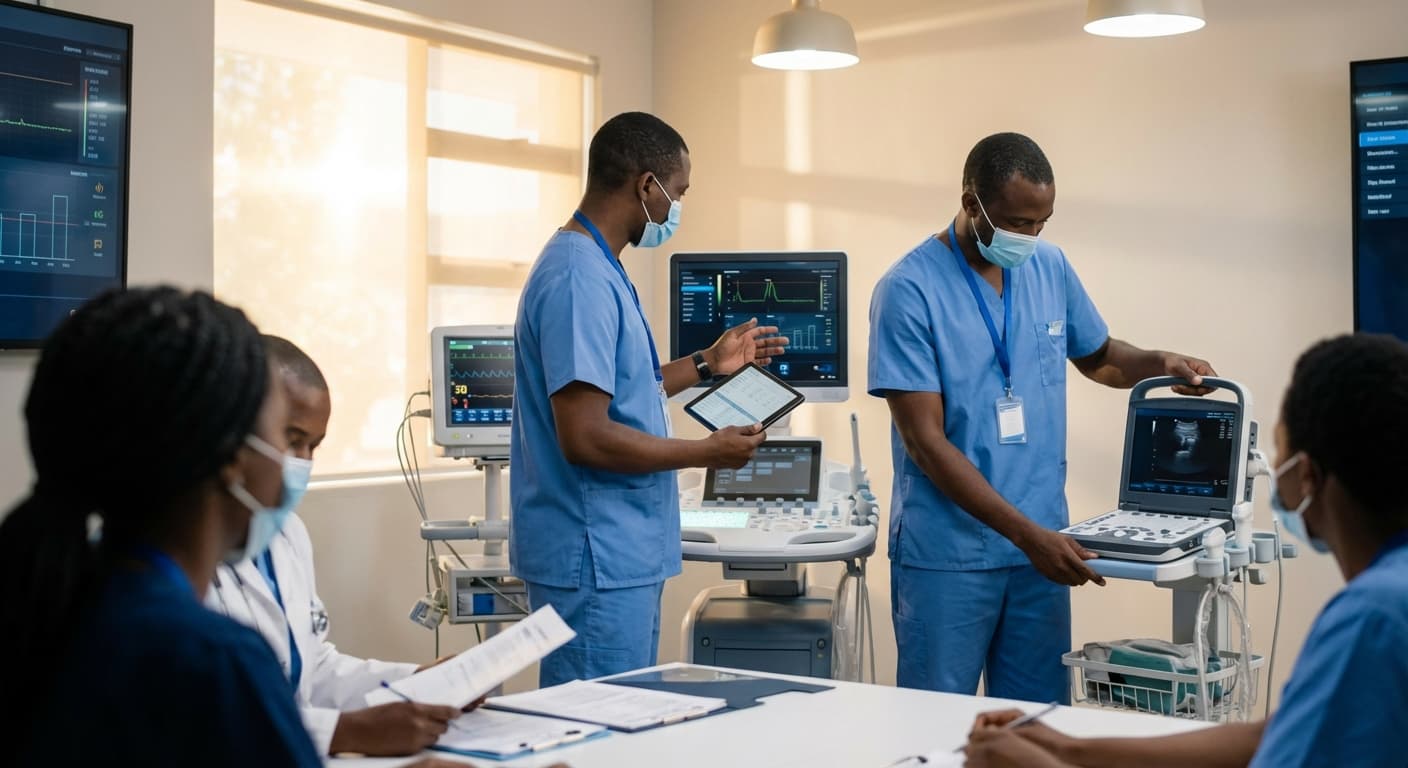
Clinical Needs Assessment for Medical Equipment in Uganda
Engineering Excellence & Technical Support
Clinical Needs Assessment for Medical Equipment High-standard technical execution following OEM protocols and local regulatory frameworks.
Data-Driven Needs Identification
Leveraging a robust data collection framework incorporating facility surveys, patient demographic analysis, and disease burden statistics to pinpoint critical medical equipment gaps and prioritize procurement based on evidence of greatest impact on public health outcomes in Uganda.
Contextual Suitability & Sustainability Assessment
Evaluating medical equipment proposals against Uganda's specific healthcare infrastructure, power availability, local technical capacity for maintenance, and supply chain logistics to ensure long-term operational viability and prevent obsolescence.
Integrated Stakeholder & User Feedback
Facilitating collaborative workshops and direct consultations with healthcare professionals, biomedical engineers, Ministry of Health officials, and community representatives to gather nuanced user requirements and ensure procured equipment meets the practical needs of end-users on the ground.
What Is Clinical Needs Assessment For Medical Equipment In Uganda?
A Clinical Needs Assessment for Medical Equipment in Uganda is a systematic and data-driven process to identify, prioritize, and quantify the specific medical equipment requirements of healthcare facilities, programs, or the national health system. It goes beyond simple inventory of existing equipment to critically evaluate current and future healthcare demands, the clinical efficacy and appropriateness of available technologies, and the capacity of the healthcare infrastructure to support their deployment and maintenance. This assessment is crucial for optimizing resource allocation, ensuring patient safety, improving health outcomes, and aligning medical technology acquisition with national health policies and strategies.
| Who Needs This Service? | Typical Use Cases in Uganda | ||
|---|---|---|---|
| Ministry of Health (MoH) Uganda: For national health sector planning, resource allocation, and development of procurement strategies. | Developing national guidelines for essential medical equipment lists. | Planning for the modernization of public healthcare facilities. | Responding to disease outbreaks and emerging health threats by identifying critical equipment needs. |
| Regional Referral Hospitals and District Hospitals: To assess and upgrade their equipment portfolios to meet local and regional health demands. | Planning for new hospital wings or specialized clinical services. | Replacing outdated or broken-down equipment. | Ensuring availability of equipment for specific surgical procedures or diagnostic services. |
| Non-Governmental Organizations (NGOs) and International Development Partners: To ensure effective and sustainable deployment of donated or procured medical equipment in their supported facilities. | Assessing needs for specific health programs (e.g., maternal and child health, HIV/AIDS care, non-communicable diseases). | Evaluating the impact and sustainability of past equipment donations. | Planning for future interventions and resource mobilization. |
| Private Healthcare Providers and For-Profit Hospitals: To optimize their service offerings and ensure compliance with regulatory standards. | Expanding service lines or introducing new diagnostic/therapeutic capabilities. | Benchmarking their equipment inventory against industry best practices. | Justifying capital investment in new medical technologies. |
| Medical Training Institutions: To ensure their teaching facilities are equipped with relevant and modern medical equipment for training healthcare professionals. | Updating curricula to reflect current medical practices and technologies. | Acquiring equipment for practical skills training and simulation centers. |
Key Components of a Clinical Needs Assessment for Medical Equipment in Uganda:
- Data Collection and Analysis: Gathering comprehensive data on disease prevalence, patient demographics, existing equipment inventory, utilization rates, maintenance records, and available human resources. This includes both quantitative and qualitative data.
- Gap Identification: Identifying discrepancies between the current equipment stock and the equipment required to meet identified clinical needs and service delivery standards. This involves assessing both the quantity and the technological sophistication of existing equipment.
- Prioritization Framework: Developing and applying a structured methodology to prioritize equipment needs based on factors such as impact on morbidity and mortality, cost-effectiveness, feasibility of integration, technical sustainability, and alignment with national health priorities.
- Technical Specification Development: Defining precise technical specifications for required equipment, including performance characteristics, safety standards, power requirements, and compatibility with existing infrastructure and consumables.
- Total Cost of Ownership (TCO) Analysis: Evaluating not only the initial procurement cost but also ongoing expenses related to installation, training, maintenance, consumables, and eventual disposal.
- Infrastructure and Human Resource Capacity Assessment: Evaluating the existing physical infrastructure (e.g., power supply, space, environmental controls) and the availability of trained personnel for operation, maintenance, and repair of proposed equipment.
- Risk Assessment and Mitigation: Identifying potential risks associated with equipment acquisition and implementation (e.g., obsolescence, counterfeiting, inadequate training) and developing strategies to mitigate them.
- Reporting and Recommendations: Producing detailed reports outlining findings, identified needs, prioritized recommendations, and justification for proposed equipment acquisitions.
Who Needs Clinical Needs Assessment For Medical Equipment In Uganda?
A thorough clinical needs assessment for medical equipment is crucial for ensuring that healthcare facilities in Uganda are adequately equipped to provide effective and safe patient care. This process goes beyond simply identifying available technology; it delves into understanding the specific clinical demands, patient populations, existing infrastructure, and the overall healthcare strategy of an institution. Without a proper assessment, there's a significant risk of procuring equipment that is either underutilized, inappropriate for the intended use, or exceeds the facility's capacity to maintain and operate. This leads to wasted resources, potential patient harm, and a decline in the quality of healthcare services. Therefore, understanding who needs this assessment is vital for strategic resource allocation and improving health outcomes across Uganda.
| Target Department | Key Needs Assessed | Examples of Equipment Considerations |
|---|---|---|
| Emergency Department/Casualty | Resuscitation equipment, trauma care capabilities, patient monitoring during critical events. | Defibrillators, ventilators, portable ultrasound, advanced cardiac monitors, trauma kits. |
| Intensive Care Unit (ICU) | Advanced life support, continuous monitoring, specialized ventilation and dialysis. | Mechanical ventilators, dialysis machines, advanced hemodynamic monitors, infusion pumps, specialized ICU beds. |
| Surgical Theatres | Surgical instruments, anesthesia machines, lighting, imaging for intraoperative guidance, sterilization equipment. | Laparoscopic sets, electrosurgical units, C-arms, operating microscopes, sterilizers. |
| Maternity & Neonatal Care | Antenatal screening, labor and delivery support, neonatal resuscitation, and intensive care. | Ultrasound machines (obstetric), fetal dopplers, incubators, phototherapy units, neonatal ventilators, delivery tables. |
| Diagnostic Imaging (Radiology) | Diagnostic capabilities for various conditions, patient throughput, image quality, radiation safety. | X-ray machines (fixed and portable), CT scanners, MRI scanners, mammography units, ultrasound machines. |
| Laboratory Services | Diagnostic testing capabilities, sample processing, automation, quality control. | Hematology analyzers, chemistry analyzers, microscopes, PCR machines, centrifuges. |
| Outpatient Clinics | General diagnostics, treatment support, minor procedure capabilities. | ECG machines, spirometers, examination couches, minor surgical instrument sets, basic diagnostic tools. |
| Rehabilitation Services | Physical therapy, occupational therapy, assistive devices. | Therapy mats, exercise equipment, ultrasound therapy units, occupational therapy tools, mobility aids. |
| Pharmacy | Medication storage, dispensing, compounding. | Refrigerators for vaccines/medications, compounding equipment, medication dispensing systems. |
| Sterilization & CSSD (Central Sterile Supply Department) | Ability to adequately sterilize instruments to prevent hospital-acquired infections. | Autoclaves (various sizes), washer-disinfectors, sterile packaging equipment. |
Target Customers for Clinical Needs Assessment in Uganda
- Public Hospitals (National Referral, Regional, District)
- Private Hospitals (Not-for-profit & For-profit)
- Health Centre IVs and IIIs
- Specialized Medical Centers (e.g., Cancer Institutes, Cardiac Units)
- Medical Training Institutions with Clinical Rotations
- Non-Governmental Organizations (NGOs) involved in healthcare provision
- Government Ministries and Agencies responsible for health policy and procurement
- International Development Partners funding healthcare projects
Clinical Needs Assessment For Medical Equipment Process In Uganda
This document outlines the workflow for conducting a Clinical Needs Assessment for Medical Equipment in Uganda, from initial inquiry to the final execution of recommendations. The process aims to ensure that healthcare facilities acquire appropriate, functional, and sustainable medical equipment that directly addresses identified clinical needs, ultimately improving patient care and health outcomes. The workflow is designed to be systematic, transparent, and collaborative, involving various stakeholders throughout the cycle.
| Stage | Description | Key Activities | Responsible Parties | Key Outputs |
|---|---|---|---|---|
| Inquiry and Initiation | The process begins with a request or identification of a need for a clinical needs assessment. | Formal request submission (e.g., from a Ministry of Health department, hospital management, donor agency). | Initiating body (e.g., Ministry of Health), requesting facility, potential funding agency. | Approved assessment proposal, defined scope and objectives. |
| Needs Identification and Prioritization | Understanding the current healthcare landscape, service delivery gaps, and existing equipment status. | Reviewing national health policies, strategic plans, service delivery guidelines. Mapping existing health services and infrastructure. Identifying areas with critical equipment shortages or malfunctioning equipment. Prioritizing needs based on impact on patient care, disease burden, and resource availability. | Ministry of Health (policy and strategic planning departments), District Health Teams, Facility Management, Clinical Staff. | List of prioritized clinical areas and services requiring equipment assessment, defined scope of assessment. |
| Data Collection and Analysis | Gathering comprehensive information on current equipment, usage, maintenance, and clinical needs at the facility level. | Site visits to healthcare facilities. Interviews with clinical staff, biomedical engineers, and administrators. Review of equipment inventories, maintenance logs, and usage data. Assessment of infrastructure (power, space, water). Analysis of disease prevalence, patient caseloads, and current treatment protocols. Gap analysis between existing and needed equipment. | Assessment team (clinical experts, biomedical engineers, health economists), Facility staff. | Detailed report on existing equipment status, functionality, and maintenance. Comprehensive list of identified clinical needs and service delivery gaps. Data on equipment utilization and repair history. |
| Equipment Specification and Recommendation | Translating identified clinical needs into specific, appropriate, and technically sound medical equipment requirements. | Defining technical specifications for required equipment (e.g., performance standards, safety features, power requirements). Considering local context (availability of consumables, spare parts, technical support, user training needs). Recommending specific equipment models or types based on best practices and cost-effectiveness. Developing justification for each recommended item. | Assessment team (biomedical engineers, clinical specialists), Ministry of Health (standards and procurement units). | Detailed equipment specifications for each identified need. List of recommended equipment with justifications. Estimated costs for procurement and installation. |
| Procurement Planning | Developing a roadmap for acquiring the recommended medical equipment. | Developing a procurement plan based on recommended equipment, budget, and timelines. Identifying potential funding sources. Defining procurement strategy (e.g., tender process, framework agreements). Developing pre-qualification criteria for suppliers. | Ministry of Health (procurement and finance departments), Funding agencies, Facility Management. | Procurement plan with timelines and budget allocation. Tender documents and specifications. Pre-qualification criteria. |
| Implementation and Installation | Ensuring the procured equipment is delivered, installed, and ready for use. | Overseeing the procurement process. Ensuring quality control of delivered equipment. Managing logistics and transportation. Coordinating installation and initial testing by qualified technicians. Verifying installation against specifications. | Ministry of Health (procurement and technical departments), Suppliers, Facility Management, Biomedical Engineering Department. | Successfully installed and tested medical equipment. Commissioning reports. Handover of equipment to the facility. |
| Training and Capacity Building | Equipping healthcare workers and technical staff with the knowledge and skills to operate and maintain the new equipment effectively. | Developing training modules for clinical users and biomedical technicians. Conducting training sessions on equipment operation, troubleshooting, and basic maintenance. Developing a plan for ongoing technical support and maintenance. | Training institutions, Biomedical Engineering Department, Equipment suppliers, Facility staff. | Trained clinical staff. Trained biomedical technicians. User manuals and maintenance guidelines. Capacity building plan. |
| Monitoring and Evaluation | Tracking the utilization, performance, and impact of the new equipment on patient care. | Establishing monitoring systems for equipment usage, breakdown rates, and repair turnaround times. Collecting feedback from users on equipment performance and satisfaction. Evaluating the impact of new equipment on service delivery and patient outcomes. Assessing the sustainability of equipment management. | Ministry of Health (monitoring and evaluation units), Facility Management, Biomedical Engineering Department, Users. | Regular monitoring reports on equipment performance and utilization. Feedback reports from users. Impact assessment reports. Identification of areas for improvement. |
| Review and Feedback | Periodically reviewing the entire needs assessment and implementation process to identify lessons learned and inform future assessments. | Conducting post-implementation reviews. Collecting feedback from all stakeholders on the effectiveness of the needs assessment and procurement process. Documenting lessons learned and best practices. Updating assessment methodologies and guidelines. | Ministry of Health, Assessment team, Facility Management, Stakeholders. | Lessons learned document. Revised needs assessment protocols and guidelines. Recommendations for future procurements and health system strengthening. |
Workflow Stages
- Inquiry and Initiation
- Needs Identification and Prioritization
- Data Collection and Analysis
- Equipment Specification and Recommendation
- Procurement Planning
- Implementation and Installation
- Training and Capacity Building
- Monitoring and Evaluation
- Review and Feedback
Clinical Needs Assessment For Medical Equipment Cost In Uganda
This document outlines a clinical needs assessment for medical equipment costs in Uganda. Understanding the financial landscape of medical equipment procurement is crucial for effective healthcare planning, resource allocation, and ensuring access to quality patient care. The cost of medical equipment in Uganda is influenced by a complex interplay of factors, including import duties, taxes, transportation logistics, supplier margins, brand reputation, technological sophistication, and the overall economic climate. Local currency pricing, primarily in Ugandan Shillings (UGX), reflects these dynamics. This assessment aims to provide a foundational understanding of these pricing structures and offer indicative cost ranges for common medical equipment categories.
| Equipment Category | Indicative Price Range (UGX) | Notes |
|---|---|---|
| Basic Diagnostic Tools (e.g., Stethoscopes, Thermometers, Blood Pressure Monitors) | UGX 50,000 - UGX 500,000 | Varies significantly by brand and quality. Digital versions are generally more expensive. |
| Laboratory Equipment (e.g., Microscopes, Centrifuges, Basic Analyzers) | UGX 1,000,000 - UGX 15,000,000 | Depends on throughput, automation level, and specific tests. |
| Patient Monitoring Systems (e.g., Vital Signs Monitors) | UGX 3,000,000 - UGX 25,000,000 | Includes parameters monitored (ECG, SpO2, NIBP, etc.) and portability. |
| Surgical Instruments (Basic Sets) | UGX 200,000 - UGX 2,000,000 | Stainless steel quality and the number of instruments in a set are key factors. |
| Imaging Equipment (e.g., Portable X-ray, Ultrasound - Entry Level) | UGX 30,000,000 - UGX 150,000,000 | Digital vs. analog, resolution, and probe types influence ultrasound costs. Portable X-rays are at the lower end. |
| Anesthesia Machines (Basic) | UGX 20,000,000 - UGX 80,000,000 | Features like vaporizers and ventilation modes impact price. |
| Sterilization Equipment (e.g., Autoclaves - Medium Size) | UGX 5,000,000 - UGX 30,000,000 | Capacity, cycle times, and safety features. |
| Ward Beds (Manual & Electric) | UGX 500,000 - UGX 5,000,000 | Electric beds are significantly more expensive but offer patient comfort and nurse efficiency. |
| Oxygen Concentrators (Portable & Stationary) | UGX 1,000,000 - UGX 8,000,000 | Flow rate and purity of oxygen output are critical. |
| Defibrillators (AEDs & Manual) | UGX 4,000,000 - UGX 20,000,000 | AEDs are simpler and less expensive than manual defibrillators with pacing capabilities. |
Key Pricing Factors for Medical Equipment in Uganda
- Import Duties and Taxes: Significant levies are imposed on imported medical equipment, directly increasing the final cost.
- Transportation and Logistics: Costs associated with shipping, customs clearance, warehousing, and last-mile delivery within Uganda.
- Supplier Markups and Distribution Channels: Local distributors and suppliers add their profit margins, which can vary.
- Brand Reputation and Manufacturer: Established international brands often command higher prices than generic or lesser-known alternatives.
- Technological Sophistication: Advanced features, higher accuracy, and newer technologies generally translate to higher costs.
- Warranty and After-Sales Service: The inclusion of comprehensive warranties and local service support can influence initial pricing.
- Currency Exchange Rates: Fluctuations in the UGX against major international currencies (USD, EUR) impact imported equipment costs.
- Bulk Purchasing and Negotiation: Larger orders can often lead to discounted pricing.
- Local Manufacturing and Assembly: If any components or assembly are done locally, it can potentially reduce costs, though this is less common for complex medical equipment.
- Regulatory Compliance and Certification: Meeting Ugandan regulatory standards can add to the cost of specific equipment.
Affordable Clinical Needs Assessment For Medical Equipment Options
Acquiring the right medical equipment is crucial for quality patient care, but it can also represent a significant financial investment. An affordable clinical needs assessment is the cornerstone of making informed purchasing decisions, ensuring that resources are allocated effectively and that the equipment aligns with your specific clinical objectives and budget. This process goes beyond simply identifying necessary items; it involves understanding how equipment integrates into workflows, evaluating total cost of ownership, and exploring innovative procurement strategies like value bundles and strategic cost-saving measures.
| Cost-Saving Strategy | Description | Implementation Tip |
|---|---|---|
| Value Bundles | Purchasing multiple related pieces of equipment or services from a single vendor at a reduced combined price compared to individual acquisition. This can include equipment, software, training, and maintenance packages. | Negotiate bundled pricing for complementary equipment (e.g., imaging system with associated consumables and a 5-year service plan) to secure volume discounts and streamline purchasing. |
| Refurbished or Pre-Owned Equipment | Acquiring certified pre-owned or refurbished medical devices that have been tested, restored, and often come with a warranty. This significantly reduces the initial capital outlay. | Source from reputable vendors specializing in refurbished medical equipment and verify their certification and warranty terms thoroughly. |
| Leasing vs. Purchasing | Opting for a lease agreement instead of outright purchase can offer lower upfront costs, predictable monthly payments, and easier access to newer technology at the end of the lease term. | Compare lease terms, including residual value, buyout options, and included maintenance, against the long-term costs of purchasing. |
| Consumables Management | Optimizing the procurement and usage of disposable supplies associated with medical equipment to reduce ongoing expenses. | Implement inventory management systems and negotiate bulk purchase agreements for high-volume consumables. |
| Preventive Maintenance Programs | Investing in robust preventive maintenance reduces the likelihood of costly emergency repairs and extends the lifespan of equipment. | Negotiate comprehensive service contracts that include regular maintenance checks and priority response times. |
| Standardization | Consolidating the number of different equipment manufacturers and models used within an organization to simplify training, maintenance, and parts inventory. | Develop a standardized list of preferred equipment and vendors for common clinical needs. |
| Group Purchasing Organizations (GPOs) | Joining a GPO allows healthcare organizations to leverage collective purchasing power to negotiate better prices and terms with vendors. | Research and join a GPO that aligns with your organization's size and specialty needs. |
Key Components of an Affordable Clinical Needs Assessment
- Define Clinical Objectives: Clearly articulate what you aim to achieve with new or updated equipment. This includes patient demographics, common procedures, diagnostic capabilities, and desired patient outcomes.
- Assess Current Infrastructure & Workflows: Understand how existing equipment and processes can accommodate new technology. Identify potential bottlenecks or areas for improvement.
- Identify Essential Equipment Needs: Based on objectives and workflows, list the specific equipment required. Prioritize based on clinical impact, patient safety, and regulatory compliance.
- Evaluate Technology & Feature Requirements: Research available technologies and their functionalities. Differentiate between 'must-have' features and 'nice-to-have' options to avoid overspending.
- Consider Interoperability & Integration: Ensure new equipment can seamlessly integrate with existing IT systems (e.g., EMR, PACS) to avoid data silos and enhance efficiency.
- Analyze Total Cost of Ownership (TCO): Look beyond the initial purchase price to include maintenance, service contracts, consumables, training, and potential upgrade costs over the equipment's lifespan.
- Explore Procurement Models: Investigate options like outright purchase, leasing, rental, or refurbished equipment to find the most financially viable solution.
- Engage Stakeholders: Involve clinicians, IT personnel, procurement specialists, and finance departments to gather diverse perspectives and ensure buy-in.
Verified Providers In Uganda
In Uganda's evolving healthcare landscape, identifying trusted and qualified medical service providers is paramount for ensuring quality care. 'Verified Providers' signifies an individual or institution that has undergone a rigorous vetting process, confirming their adherence to established standards of medical practice, ethical conduct, and regulatory compliance. This verification is often conducted by independent bodies, government agencies, or professional associations. Franance Health stands out as a leading example of such a verified provider. Their commitment to excellence, patient-centric approach, and comprehensive services make them a compelling choice for individuals seeking reliable healthcare solutions in Uganda.
| Aspect | Franance Health's Offering | Significance of Verification |
|---|---|---|
| Medical Expertise | Employs a team of specialists and general practitioners with extensive training and experience. | Ensures patients receive treatment from competent and knowledgeable professionals. |
| Regulatory Compliance | Adheres strictly to all Ugandan Ministry of Health regulations and licensing requirements. | Guarantees that the facility and its staff meet legal and safety standards. |
| Patient Safety & Quality | Implements robust protocols for infection control, medical error prevention, and quality assurance. | Minimizes risks and ensures a high standard of care delivery. |
| Ethical Conduct | Operates with transparency, respect for patient rights, and a commitment to confidentiality. | Builds trust and fosters a secure environment for patients. |
| Technological Advancement | Invests in modern medical equipment and diagnostic tools. | Enhances diagnostic accuracy and treatment effectiveness. |
Why Franance Health is a Top Verified Provider in Uganda:
- Rigorous Credentialing and Verification Process
- Commitment to International Standards of Care
- Highly Qualified and Experienced Medical Professionals
- Patient-Centric Approach and Personalized Treatment Plans
- Comprehensive Range of Specialized Healthcare Services
- State-of-the-Art Facilities and Technology
- Emphasis on Ethical Practices and Patient Confidentiality
- Positive Patient Testimonials and Reputation
Scope Of Work For Clinical Needs Assessment For Medical Equipment
This Scope of Work (SOW) outlines the requirements for a comprehensive clinical needs assessment for medical equipment for [Hospital/Clinic Name]. The objective is to identify, evaluate, and prioritize medical equipment requirements based on current and projected clinical services, patient populations, technological advancements, and budgetary constraints. This assessment will serve as the foundation for informed procurement decisions and strategic equipment planning.
1. Introduction and Objectives
The primary objective of this SOW is to define the scope, methodologies, and deliverables for a clinical needs assessment focused on medical equipment. Key objectives include:
- Identifying current gaps in medical equipment availability and functionality.
- Assessing the suitability and performance of existing equipment.
- Forecasting future equipment needs based on service line expansion, technological trends, and anticipated patient volume.
- Prioritizing equipment acquisition based on clinical impact, cost-effectiveness, and strategic alignment.
- Developing detailed technical specifications for identified equipment.
- Ensuring compliance with relevant regulatory standards and best practices.
2. Scope of Assessment
The assessment will encompass all clinical departments and service lines requiring medical equipment, including but not limited to:
- [List specific departments/service lines, e.g., Cardiology, Oncology, Radiology, Emergency Department, Intensive Care Unit, Operating Rooms, Laboratories, Rehabilitation Services, etc.]
3. Methodology
The assessment will employ a multi-faceted approach, including:
- Stakeholder Interviews: Engaging with clinicians, department heads, biomedical engineers, procurement specialists, and administrative leadership.
- Data Analysis: Reviewing patient utilization data, clinical outcome data, equipment maintenance records, and existing asset inventories.
- Workflow Analysis: Observing clinical workflows to identify equipment bottlenecks and areas for improvement.
- Benchmarking: Researching industry best practices and competitor equipment strategies.
- Technology Review: Investigating emerging medical technologies and their potential application.
4. Deliverables
The following technical deliverables will be produced as part of this Scope of Work:
- Needs Assessment Report: A comprehensive report detailing findings, identified gaps, prioritized equipment needs, and recommendations.
- Equipment Prioritization Matrix: A matrix outlining recommended equipment for acquisition or upgrade, ranked by clinical importance, urgency, and strategic value.
- Technical Specifications: Detailed technical specifications for each identified medical equipment item, ensuring interoperability and compliance.
- Budgetary Estimates: Preliminary cost estimates for proposed equipment acquisitions, including acquisition, installation, training, and maintenance.
5. Timeline
The project is expected to be completed within [Number] weeks/months, with key milestones to be defined in the project plan.
6. Standard Specifications Considerations
All technical specifications will adhere to the following general considerations:
- Safety and Efficacy: Compliance with national and international safety standards (e.g., IEC 60601 series, FDA regulations).
- Performance: Meeting defined clinical performance requirements and diagnostic accuracy.
- Usability: Ease of operation, intuitive user interface, and minimal training requirements.
- Interoperability: Compatibility with existing IT infrastructure and other medical devices (e.g., HL7, DICOM standards).
- Maintainability: Ease of maintenance, availability of spare parts, and service support.
- Durability and Reliability: Robust construction for demanding clinical environments.
- Cost-Effectiveness: Balancing initial acquisition cost with total cost of ownership (TCO).
- Scalability and Future-Proofing: Ability to adapt to future technological advancements and service needs.
- Ergonomics: Designed for comfortable and efficient use by healthcare professionals.
- Environmental Considerations: Energy efficiency and disposal protocols.
7. Project Management
A dedicated project manager will oversee the assessment process, ensuring timely completion and adherence to the SOW. Regular progress reports and meetings will be conducted.
| Specification Category | Key Considerations | Relevant Standards/Examples |
|---|---|---|
| Safety and Efficacy | Compliance with established safety regulations to prevent patient harm. | IEC 60601 Series (Medical Electrical Equipment), FDA Regulations, CE Marking. |
| Performance | Meeting precise clinical requirements for accuracy, speed, and diagnostic capabilities. | Specific parameters for imaging resolution, analytical sensitivity, measurement precision, etc. |
| Usability | Intuitive interface, ease of operation, and minimal learning curve for clinical staff. | Touchscreen interfaces, clear labeling, ergonomic design, availability of user manuals. |
| Interoperability | Seamless integration with existing hospital IT systems and other medical devices. | HL7 for data exchange, DICOM for imaging, standard network protocols (TCP/IP, Wi-Fi). |
| Maintainability | Ease of servicing, availability of spare parts, and reliable technical support. | Modular design, readily available service manuals, established vendor support agreements. |
| Durability and Reliability | Withstanding continuous use in a demanding clinical environment. | IP ratings for dust/water resistance, material durability, Mean Time Between Failures (MTBF) specifications. |
| Cost-Effectiveness | Balancing initial investment with long-term operational and maintenance costs. | Total Cost of Ownership (TCO) analysis, energy efficiency ratings, warranty periods. |
| Scalability and Future-Proofing | Ability to upgrade or expand capabilities to meet future clinical demands. | Software upgrade paths, modular hardware design, compatibility with emerging technologies. |
| Ergonomics | Designed for comfort and efficiency during prolonged use by healthcare professionals. | Adjustable height/angles, comfortable grip, reduced physical strain during operation. |
| Environmental Considerations | Energy consumption, materials used, and end-of-life disposal. | Energy Star ratings, recyclable materials, compliance with WEEE directives. |
Key Technical Deliverables
- Comprehensive Needs Assessment Report
- Equipment Prioritization Matrix
- Detailed Technical Specifications for Identified Medical Equipment
- Preliminary Budgetary Estimates for Proposed Equipment
Service Level Agreement For Clinical Needs Assessment For Medical Equipment
This Service Level Agreement (SLA) outlines the guaranteed response times and uptime for clinical needs assessment services related to medical equipment. It aims to ensure timely and effective evaluation of clinical requirements to support informed procurement and utilization decisions.
| Service Component | Response Time (Business Hours) | Uptime Guarantee |
|---|---|---|
| Initial CNA Request Acknowledgement | 2 Business Hours | N/A |
| Commencement of CNA (Kick-off Meeting/Initial Data Collection) | 4 Business Hours from Acknowledgement | N/A |
| Provision of Draft CNA Report for Review | 5 Business Days from Commencement | N/A |
| Response to Review Feedback/Clarification Requests | 2 Business Days from Receipt | N/A |
| Provision of Final CNA Report | 3 Business Days from Approval of Draft | N/A |
| Availability of Assessment Personnel (for urgent queries post-report) | N/A | 99.5% during scheduled assessment periods |
Key Service Components
- Clinical Needs Assessment (CNA) initiation and execution.
- Identification and documentation of clinical requirements.
- Alignment of equipment capabilities with clinical workflows.
- Support for equipment selection and justification.
- Post-assessment consultation and clarification.
Frequently Asked Questions

Ready when you are
Let's scope your Clinical Needs Assessment for Medical Equipment in Uganda project in Uganda.

Scaling healthcare logistics and technical systems across the entire continent.