
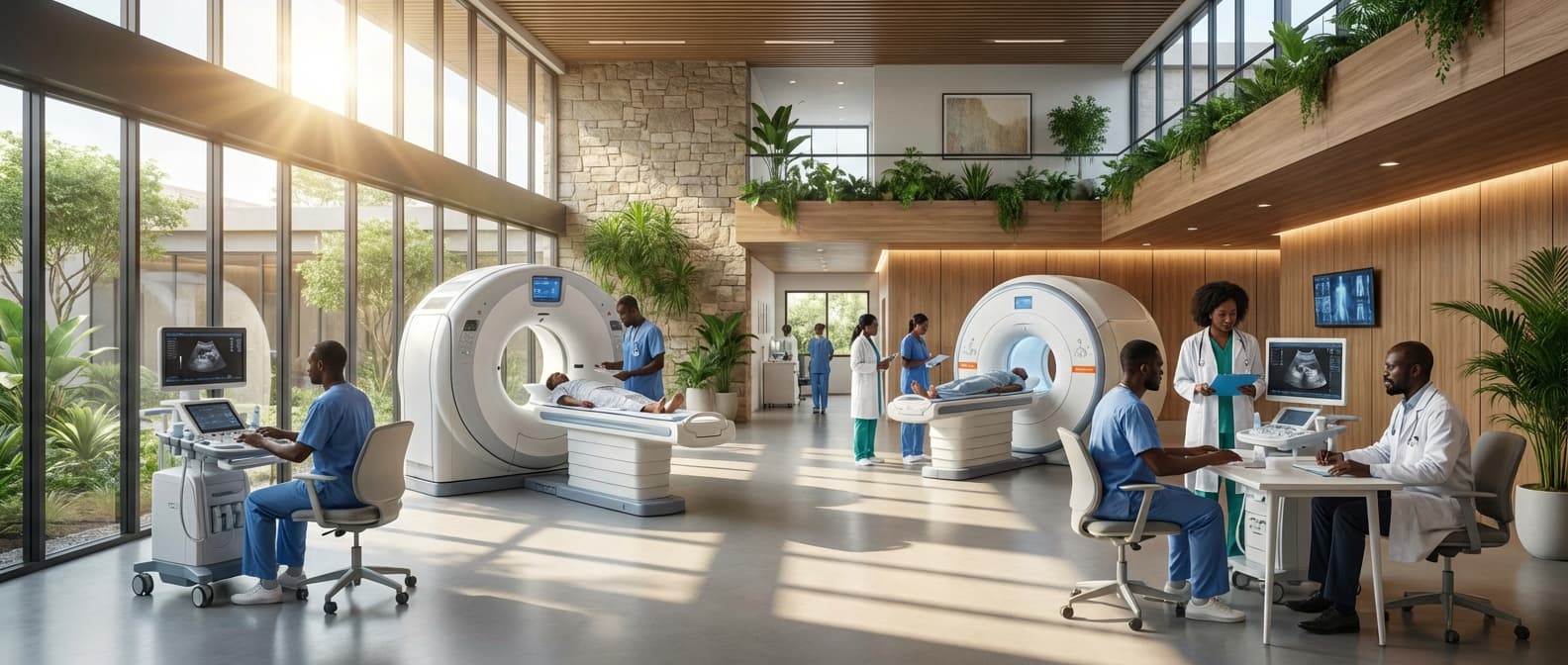
Endoscopy Solutions in Uganda
Engineering Excellence & Technical Support
Advanced endoscopic equipment delivering superior visualization and diagnostic precision for minimally invasive procedures. High-standard technical execution following OEM protocols and local regulatory frameworks.
High-Definition Endoscopic Imaging
Our state-of-the-art endoscopy systems deliver crystal-clear, high-definition visuals, enabling Ugandan healthcare professionals to detect even the most subtle abnormalities in the gastrointestinal and respiratory tracts. This enhanced visualization aids in earlier and more accurate diagnoses.
Minimally Invasive Diagnostic & Therapeutic Tools
We provide a comprehensive range of minimally invasive endoscopic instruments designed for a variety of procedures in Uganda. From biopsies and polyp removal to stent placement and foreign body retrieval, our solutions minimize patient discomfort and recovery time, improving patient outcomes.
Advanced Training & Technical Support
Beyond equipment, we offer specialized training programs and ongoing technical support to healthcare institutions across Uganda. This ensures clinicians are proficient in utilizing our endoscopy solutions, maximizing their effectiveness and promoting the highest standards of patient care.
What Is Endoscopy Solutions In Uganda?
Endoscopy Solutions in Uganda refer to the provision of diagnostic and therapeutic procedures utilizing endoscopic technology. This involves the insertion of an endoscope, a flexible or rigid tube equipped with a light source and camera, into a body cavity or organ to visualize internal structures. These solutions are crucial for the accurate diagnosis, staging, and management of a wide spectrum of gastrointestinal, respiratory, and urological conditions. The accessibility and quality of these services are vital for improving patient outcomes and public health in Uganda.
| Service Type | Description | Indications | Target Population |
|---|---|---|---|
| Upper Endoscopy (Esophagogastroduodenoscopy - EGD) | Insertion of an endoscope into the esophagus, stomach, and duodenum. | Suspected peptic ulcer disease, GERD, dysphagia, hematemesis, chronic nausea/vomiting, screening for esophageal or gastric cancer. | Individuals experiencing upper gastrointestinal symptoms, those with a history of gastrointestinal bleeding, or with risk factors for upper GI malignancy. |
| Lower Endoscopy (Colonoscopy/Sigmoidoscopy) | Insertion of an endoscope into the rectum and colon. | Screening for colorectal cancer, evaluation of rectal bleeding, change in bowel habits, inflammatory bowel disease, abdominal pain. | Individuals aged 50 and above (screening), those with symptoms of lower gastrointestinal distress, or individuals with a family history of colorectal cancer. |
| Bronchoscopy | Insertion of an endoscope into the airways (trachea and bronchi). | Persistent cough, hemoptysis, suspected lung cancer, pneumonia, airway obstruction, evaluation of interstitial lung disease. | Patients with chronic respiratory symptoms, abnormal chest imaging findings, or suspected airway pathology. |
| Cystoscopy and Ureteroscopy | Insertion of an endoscope into the bladder and/or ureters. | Hematuria, recurrent urinary tract infections, bladder stones, suspected bladder or urothelial cancer, evaluation of upper urinary tract obstruction. | Individuals presenting with urinary symptoms, abnormal urine analysis, or suspicion of urinary tract malignancy. |
Key Aspects of Endoscopy Solutions in Uganda
- Diagnostic Endoscopy: Visualizing internal organs to identify abnormalities, inflammation, ulcers, tumors, or bleeding.
- Therapeutic Endoscopy: Performing interventions such as polyp removal (polypectomy), stricture dilation, bleeding control (hemostasis), foreign body retrieval, and stent placement.
- Advanced Endoscopic Techniques: Including endoscopic retrograde cholangiopancreatography (ERCP) for biliary and pancreatic duct evaluation, endoscopic ultrasound (EUS) for detailed imaging, and capsule endoscopy for small bowel visualization.
- Equipment and Infrastructure: Availability of modern endoscopes, associated accessories, processing units for disinfection, and specialized examination rooms.
- Trained Personnel: Availability of endoscopists (gastroenterologists, pulmonologists, urologists), endoscope technicians, and nursing staff trained in endoscopic procedures and patient care.
- Quality Assurance: Adherence to international standards for disinfection, patient safety, and procedural documentation to minimize complications and ensure efficacy.
Who Needs Endoscopy Solutions In Uganda?
Endoscopy solutions are critical for diagnosing and treating a wide range of gastrointestinal and respiratory conditions. In Uganda, the demand for these advanced medical technologies is driven by an increasing burden of diseases like peptic ulcers, gastritis, gastrointestinal cancers, and inflammatory bowel diseases. Access to reliable and high-quality endoscopy services can significantly improve patient outcomes, reduce morbidity, and contribute to the overall advancement of healthcare in the country. This document outlines the key stakeholders and departments that would benefit from and require comprehensive endoscopy solutions in Uganda.
| Department/Customer Type | Primary Needs/Applications | Specific Endoscopy Solutions Required |
|---|---|---|
| Gastroenterology Department | Diagnosis and management of upper and lower GI diseases (e.g., ulcers, reflux, polyps, cancers, IBD). | Upper GI Endoscopes (Gastroscopes), Lower GI Endoscopes (Colonoscopes, Sigmoidoscopes), Video Endoscopy Systems, Biopsy Forceps, Polypectomy Snares, Endoscopic Ultrasound (EUS) if available. |
| Surgery Department (General, Laparoscopic, Thoracic) | Pre-operative assessment, intra-operative guidance, and post-operative follow-up for GI and thoracic conditions. | Similar to Gastroenterology, with potential need for flexible bronchoscopes for thoracic surgery planning. |
| Internal Medicine Department | Investigation of unexplained abdominal pain, bleeding, weight loss, and changes in bowel habits. | Standard Upper and Lower GI Endoscopes, Video Endoscopy Systems. |
| Pulmonology Department | Diagnosis of lung diseases (e.g., pneumonia, tumors, hemoptysis, interstitial lung disease). | Flexible Bronchoscopes, Video Bronchoscopy Systems, Biopsy Brushes, Forceps. |
| Oncology Department | Diagnosis and staging of GI and lung cancers, surveillance of high-risk patients. | Advanced imaging capabilities in endoscopes (e.g., NBI - Narrow Band Imaging), Endoscopic Ultrasound (EUS) for staging, Therapeutic Endoscopes. |
| Pediatric Department | Diagnosis of pediatric GI issues (e.g., reflux, foreign body ingestion, bleeding). | Pediatric Endoscopes (smaller diameter), Sedation Equipment. |
| Private Clinics & Diagnostic Centers | Providing outpatient endoscopy services for diagnosis and screening. | Reliable, user-friendly endoscopy systems with good image quality. Cost-effectiveness is often a consideration. |
| Medical Training Institutions | Training future healthcare professionals in endoscopic procedures and interpretation. | High-fidelity simulators, training scopes, advanced video systems for demonstration and recording. |
| Public Hospitals & Government Health Facilities | Providing essential diagnostic and therapeutic endoscopy services to the general population, especially in underserved areas. | Durable and reliable equipment, potentially with a focus on lower-cost but effective solutions. Training and maintenance support are crucial. |
Target Customers and Departments for Endoscopy Solutions in Uganda
- Hospitals (Public and Private)
- Referral Centers
- Specialty Clinics (Gastroenterology, Pulmonology, Surgery)
- Medical Training Institutions
- Government Health Agencies (for public health initiatives and surveillance)
Endoscopy Solutions Process In Uganda
This document outlines the typical workflow for Endoscopy Solutions in Uganda, detailing the process from initial inquiry to the successful execution of endoscopic procedures. This process is designed to ensure patient safety, efficient resource allocation, and effective communication between patients, healthcare providers, and the endoscopy service.
| Stage | Description | Key Activities | Responsible Parties | Documentation/Tools |
|---|---|---|---|---|
| The process begins when a patient or their healthcare provider expresses interest in an endoscopy service. | Patient/Doctor contacts the endoscopy unit. Discusses symptoms, medical history, and the need for endoscopy. Information on the procedure, risks, and benefits is provided. Initial eligibility assessment. | Patient, Referring Physician, Endoscopy Nurse/Coordinator | Inquiry forms, Patient medical history notes, Initial consultation records, Patient information leaflets |
| Following the initial consultation, a formal referral is made, and a more detailed assessment is conducted. | Formal referral from a physician. Detailed medical history review. Physical examination and vital signs assessment. Review of relevant investigations (blood tests, imaging). Assessment of contraindications. Informed consent discussion and signing. | Referring Physician, Endoscopy Physician, Endoscopy Nurse | Referral forms, Detailed medical history forms, Physical examination charts, Informed consent forms, Laboratory and imaging reports |
| Once deemed suitable for the procedure, scheduling and detailed preparation instructions are provided to the patient. | Procedure date and time confirmation. Instructions on dietary restrictions (fasting). Medication adjustments (if any). Bowel preparation instructions (for colonoscopies). Arrangements for transportation and escort (if needed). Confirmation of all pre-procedure tests completed. | Endoscopy Nurse/Coordinator, Patient | Appointment schedule, Patient preparation instruction sheets, Pre-procedure checklist, Medication reconciliation forms |
| This is the stage where the actual endoscopic procedure is performed by the medical team. | Patient check-in and verification. Administration of sedation/anesthesia (if applicable). Positioning of the patient. Performance of the endoscopy by the physician. Collection of biopsies/specimens (if required). Monitoring of vital signs throughout the procedure. Immediate post-procedure recovery observation. | Endoscopy Physician, Endoscopy Nurse, Anesthetist (if applicable), Patient | Procedure report, Sedation/anesthesia records, Biopsy/specimen labels and requisition forms, Vital signs monitoring charts |
| After the procedure, the patient receives care and instructions for recovery, and follow-up arrangements are made. | Recovery room monitoring. Discharge instructions regarding diet, activity, and potential symptoms. Discussion of preliminary findings (if possible). Arrangements for biopsy results. Scheduling of follow-up appointments (if needed). Referral to other specialists if further management is required. | Endoscopy Nurse, Endoscopy Physician, Patient | Discharge summary, Post-procedure care instructions, Biopsy result reports, Follow-up appointment records, Referral letters |
Endoscopy Solutions Process in Uganda: Workflow Stages
- Patient Inquiry and Initial Consultation
- Referral and Pre-Procedure Assessment
- Scheduling and Preparation
- Procedure Execution
- Post-Procedure Care and Follow-up
Endoscopy Solutions Cost In Uganda
Endoscopy is a crucial diagnostic and therapeutic tool in modern medicine, allowing visualization of internal body cavities. In Uganda, the cost of endoscopic procedures can vary significantly due to several influencing factors. These include the type of endoscopy performed (e.g., gastroscopy, colonoscopy, bronchoscopy), the specific hospital or clinic (public vs. private, and the reputation of the facility), the expertise and specialization of the endoscopist, the need for sedation or anesthesia, and any additional procedures or biopsies performed during the endoscopy. The availability of advanced equipment and the consumables used also play a role. Generally, private hospitals and specialized centers tend to have higher costs compared to public healthcare facilities.
| Procedure Type (Approximate) | Estimated Cost Range (UGX) | Notes |
|---|---|---|
| Gastroscopy (Upper Endoscopy) | 300,000 - 800,000 | Includes examination of esophagus, stomach, and duodenum. Costs can increase with biopsy. |
| Colonoscopy (Lower Endoscopy) | 400,000 - 1,000,000 | Examines the colon and rectum. May involve polypectomy, increasing cost. |
| Bronchoscopy | 500,000 - 1,200,000 | Used to visualize airways. Biopsies or therapeutic interventions will add to the cost. |
| Flexible Sigmoidoscopy | 250,000 - 600,000 | Examines the lower part of the colon. Generally less expensive than a full colonoscopy. |
| ERCP (Endoscopic Retrograde Cholangiopancreatography) | 1,000,000 - 2,500,000+ | Complex procedure involving bile and pancreatic ducts. Often requires specialized centers and can be significantly more expensive, especially with interventions like stone removal or stenting. |
| Sedation/Anesthesia Fee | 50,000 - 200,000 | Often an additional charge depending on the type and duration. |
| Biopsy Processing & Histopathology | 30,000 - 100,000 per sample | Cost for analyzing tissue samples. |
Factors Influencing Endoscopy Costs in Uganda:
- Type of Endoscopy (Gastroscopy, Colonoscopy, Bronchoscopy, etc.)
- Healthcare Facility (Public vs. Private, Hospital Reputation)
- Endoscopist's Experience and Specialization
- Sedation or Anesthesia Requirements
- Need for Biopsies or Other Interventions
- Equipment and Consumables Used
- Geographic Location within Uganda
Affordable Endoscopy Solutions Options
Affordable endoscopy solutions are crucial for accessible healthcare. This involves understanding the various cost components and exploring strategies to reduce expenses without compromising quality. Value bundles and strategic procurement are key to achieving this.
| Strategy/Concept | Description | Cost-Saving Impact |
|---|---|---|
| Value Bundles | A package deal that includes an endoscope, essential accessories (e.g., light source, processor), and sometimes service or training. Often offered by manufacturers to provide a comprehensive solution at a potentially lower combined price. | Reduced upfront cost by bundling multiple items. Simplified procurement. Predictable budgeting. Potential for integrated service and support. |
| Leasing Programs | Renting endoscopy equipment for a fixed period (e.g., 3-5 years) with options to upgrade or purchase at the end of the term. Often includes maintenance and service agreements. | Lower initial capital outlay. Access to the latest technology without large upfront investment. Predictable monthly expenses. Reduced risk of equipment obsolescence. |
| Refurbished/Pre-owned Equipment | Purchasing endoscopy systems that have been previously used, professionally inspected, refurbished to full working order, and often come with a limited warranty. | Significant reduction in purchase price compared to new equipment. Still offers a functional and reliable solution for many clinical needs. |
| Service and Maintenance Contracts | Agreements with manufacturers or third-party providers for routine maintenance, repairs, and sometimes loaner equipment. Can be bundled with equipment purchase/lease. | Prevents costly unexpected breakdowns. Ensures optimal equipment performance and longevity. Can be more cost-effective than paying for repairs on an ad-hoc basis. |
| Consumable Management | Strategies to optimize the use and purchasing of disposable components (e.g., biopsy forceps, brushes, cleaning solutions). | Bulk purchasing discounts. Reduced waste through efficient usage. Negotiation with suppliers for better pricing on high-volume items. |
| Standardization | Adopting a standardized set of endoscopy equipment and disposables across a department or institution. | Streamlined training for staff. Simplified inventory management. Increased purchasing power due to higher volume of standardized items. Easier integration and interoperability. |
Key Considerations for Affordable Endoscopy Solutions
- Understanding the total cost of ownership, including upfront purchase, maintenance, disposables, and staff training.
- Evaluating the benefits of leasing vs. purchasing equipment.
- Exploring refurbished or pre-owned equipment options.
- Negotiating with manufacturers and suppliers for bulk discounts and long-term contracts.
- Implementing efficient workflow processes to maximize equipment utilization.
- Leveraging technology for remote support and diagnostics to reduce travel costs.
- Partnering with other institutions for shared purchasing power or equipment utilization.
Verified Providers In Uganda
In Uganda's healthcare landscape, distinguishing between legitimate and questionable providers can be challenging. Verified providers offer a crucial layer of assurance, ensuring quality care and patient safety. Franance Health stands out as a premier example of such a provider, upholding rigorous standards and demonstrating a commitment to excellence that makes them the best choice for many seeking reliable healthcare services in Uganda.
| Aspect | Franance Health's Assurance | Significance for Patients |
|---|---|---|
| Quality of Care | Adherence to international best practices and evidence-based medicine. | Ensures patients receive effective and up-to-date medical treatment. |
| Safety Standards | Strict protocols for infection control, equipment maintenance, and patient safety. | Minimizes risks and ensures a secure healthcare environment. |
| Professionalism | Highly trained and continuously educated medical staff. | Guarantees that patients are treated by competent and knowledgeable professionals. |
| Accessibility | While not always the cheapest, their value for money is high due to the quality and comprehensiveness of services. | Provides a reliable option for those seeking consistent and high-quality healthcare without compromising on safety. |
| Trust and Reliability | Proven track record and positive patient testimonials. | Builds confidence and peace of mind for individuals and families seeking healthcare. |
Why Franance Health is a Top Verified Provider in Uganda:
- Rigorous Accreditation and Licensing: Franance Health undergoes thorough vetting processes and adheres to all national and international healthcare accreditation standards. This ensures they meet and exceed regulatory requirements.
- Qualified and Experienced Medical Professionals: Their team comprises highly skilled doctors, nurses, and allied health professionals with extensive experience and specialized training.
- State-of-the-Art Facilities and Technology: Franance Health invests in modern medical equipment and maintains well-equipped facilities, enabling accurate diagnostics and effective treatments.
- Patient-Centric Approach: They prioritize patient well-being, offering compassionate care, clear communication, and personalized treatment plans.
- Commitment to Ethical Practices: Upholding the highest ethical standards in all operations, Franance Health builds trust through transparency and integrity.
- Comprehensive Service Offerings: From primary care to specialized treatments, Franance Health provides a wide spectrum of medical services to cater to diverse patient needs.
Scope Of Work For Endoscopy Solutions
This document outlines the Scope of Work (SOW) for the provision and implementation of Endoscopy Solutions. It details the technical deliverables required and the standard specifications that must be met to ensure optimal functionality, integration, and compliance of the endoscopy systems within the healthcare facility. The objective is to procure, install, and commission high-quality endoscopy equipment and associated software, providing a comprehensive solution for diagnostic and therapeutic endoscopic procedures.
| Category | Technical Deliverable | Standard Specifications / Requirements | Acceptance Criteria |
|---|---|---|---|
| Endoscopes (Flexible & Rigid) | High-definition (HD) or 4K resolution flexible and rigid endoscopes (e.g., gastroscopes, colonoscopes, bronchoscopes, laparoscopes, arthroscopes). | Minimum Field of View (FOV) as per procedure type. Angulation range: Up/Down, Left/Right as per procedure type. Working channel diameter suitable for instrumentation. Durability and biocompatibility of materials. Waterproofing for reprocessing. Ergonomic design for handling. | Visual inspection, functional testing of articulation and imaging quality. Verification of working channel patency. Documentation of material certifications. |
| Video Processor / Light Source | Advanced digital video processor with integrated or separate high-intensity LED or Xenon light source. | Image enhancement features (e.g., digital zoom, contrast enhancement, color adjustment). Multiple illumination modes. Connectivity for multiple endoscopes. Compatibility with existing display systems (e.g., HDMI, SDI). DICOM compatibility for image management. | Testing of image processing capabilities and color reproduction. Verification of light output intensity and consistency. Successful connection and data transfer to PACS/EMR. Demonstration of DICOM conformance. |
| Video Capture & Documentation System | Integrated or standalone system for real-time image and video capture, storage, and retrieval. | High-resolution still image and video recording capabilities. Storage capacity sufficient for projected usage. User-friendly interface for annotation and retrieval. Integration with hospital EMR/PACS. DICOM 3.0 compliance for storage and worklist management. Secure data handling and audit trails. | Successful capture and storage of images/videos. Ease of searching and retrieving recorded data. Verification of EMR/PACS integration and DICOM conformance. Testing of security features. |
| Electrosurgical Unit (ESU) & Accessories | Modern electrosurgical unit with multiple output modes (e.g., monopolar, bipolar) and safety features. | Precise power control. Various modes for cutting, coagulation, and dissection. Smoke evacuation integration. Compatibility with a wide range of endoscopic accessories (e.g., snares, forceps, injection needles). HF leakage current within safety limits. Audible and visual alarms. | Functional testing of all ESU modes and power settings. Verification of smoke evacuation integration. Successful use of common endoscopic accessories. Measurement of HF leakage current to confirm compliance. |
| Instrument Sterilization & Reprocessing | Automated endoscope reprocessor (AEP) meeting AAMI ST91 and HTM 01-06 standards. | Multi-channel washing and disinfection capabilities. Cycle validation for effective cleaning and disinfection. Chemical compatibility with recommended disinfectants. Leak testing. Drying function. Printout of cycle parameters and validation. Integration with tracking system. | Successful completion of a full reprocessing cycle with documented validation parameters. Verification of cleaning efficacy. Demonstration of printout functionality. Confirmation of leak test results. Integration with instrument tracking system. |
| Monitoring & Display Systems | High-resolution medical-grade monitors and potentially control carts/workstations. | Minimum resolution of 1920x1080 (Full HD) or higher. High contrast ratio and color accuracy. Suitable screen size for procedure room. Ergonomic design for the control cart. Multiple input/output ports. Compliance with medical device display standards. | Visual assessment of image clarity, color fidelity, and brightness. Verification of connectivity and signal compatibility. Ergonomic evaluation of the control cart. |
| Software & Integration | System software for image management, patient data entry, procedure reporting, and device management. | Intuitive user interface. Configurable reporting templates. Integration with hospital EMR/HIS/PACS. HL7 compatibility for data exchange. Cybersecurity measures to protect patient data. Audit trails for all system access and modifications. | Demonstration of all software functionalities. Successful data exchange with EMR/HIS/PACS via HL7. Verification of cybersecurity protocols and audit trail functionality. |
| Training | Comprehensive training programs for clinical users (physicians, nurses) and technical staff (biomedical engineers). | Training on equipment operation, troubleshooting, basic maintenance, and reprocessing protocols. Hands-on sessions. Training manuals and documentation. Post-training competency assessment. | Successful completion of training modules by all designated staff. Positive feedback from trainees. Demonstrated competency in operating and maintaining the equipment. |
| Installation & Commissioning | On-site installation, configuration, and complete system commissioning. | Installation by certified technicians. System integration with existing infrastructure. Calibration and testing of all components. Site preparation guidance. Final acceptance testing by hospital stakeholders. | Successful installation and integration. Completion of all specified tests. Sign-off by hospital project team upon successful commissioning. |
| Service & Support | Post-installation service and maintenance agreement. | Defined response times for technical support. Preventative maintenance schedule. Availability of spare parts. Extended warranty period. Access to remote diagnostics. | Agreement on service level objectives (SLOs) and response times. Plan for scheduled maintenance. Confirmation of spare parts availability. |
Key Objectives
- To procure state-of-the-art endoscopy equipment that meets or exceeds industry standards.
- To ensure seamless integration of new endoscopy solutions with existing hospital IT infrastructure.
- To provide comprehensive training for clinical and technical staff on the operation and maintenance of the equipment.
- To establish robust service and support agreements for ongoing system reliability.
- To ensure compliance with all relevant healthcare regulations and safety standards.
Service Level Agreement For Endoscopy Solutions
This Service Level Agreement (SLA) outlines the guaranteed response times and uptime for our Endoscopy Solutions. It is designed to ensure optimal performance and minimize disruption to your clinical operations.
| Incident Severity | Definition | Response Time Guarantee | Resolution Target |
|---|---|---|---|
| Critical | Complete system outage or loss of core functionality impacting patient care. | 1 Hour | 4 Business Hours |
| Major | Significant degradation of system performance or loss of a key feature, impacting workflow. | 4 Business Hours | 1 Business Day |
| Minor | Non-critical functional issue, cosmetic defect, or question regarding functionality. | 8 Business Hours | 3 Business Days |
Key Performance Indicators (KPIs)
- Uptime Guarantee: We guarantee a minimum of 99.5% uptime for the Endoscopy Solutions platform, measured monthly.
- Response Times for Critical Incidents: For issues impacting the primary functionality of the Endoscopy Solutions (e.g., inability to access patient data, system crash), we guarantee a response within 1 hour.
- Response Times for Major Incidents: For issues significantly impacting functionality but not rendering the system completely unusable (e.g., slow performance, intermittent access issues), we guarantee a response within 4 business hours.
- Response Times for Minor Incidents: For issues affecting non-critical features or aesthetic concerns (e.g., minor UI bugs, feature request clarifications), we guarantee a response within 8 business hours.
Frequently Asked Questions

Ready when you are
Let's scope your Endoscopy Solutions in Uganda project in Uganda.

Scaling healthcare logistics and technical systems across the entire continent.